


Important features of Algae
BY
Harinatha Reddy Aswartha
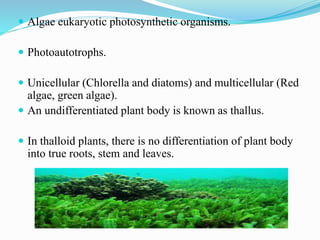
 Algae eukaryotic photosynthetic organisms.
 Photoautotrophs.
 Unicellular (Chlorella and diatoms) and multicellular (Red
algae, green algae).
 An undifferentiated plant body is known as thallus.
 In thalloid plants, there is no differentiation of plant body
into true roots, stem and leaves.
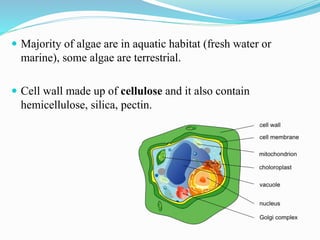
 Majority of algae are in aquatic habitat (fresh water or
marine), some algae are terrestrial.
 Cell wall made up of cellulose and it also contain
hemicellulose, silica, pectin.
 Membrane enclosed organelles are present.
 Chloroplast is present
Reserved food materials in algae:
 Starch and oils.
Pigments:
 All major algal groups have at least one characteristic pigment:
 Cyanophyceae (blue green algae): Phycocyanin.
 Chlorophyceae (green algae): Chlorophyll b.
 Pheophyceae (brown algae): Fucoxanthin.
 Rhodophyceae (red algae): Phycoerythrin .
 Chlorophyll a is universally present in all algal groups.
Algae reproduce by three methods:
(1).Vegetative reproduction:
 Fragmentation, binary fission and buddings etc. are the
important vegetative reproduction methods in algae.
(2). Asexual reproduction:
 By a variety of motile or non-motile spores.
 Zoospore, aplanospore, tetraspore, autospore etc.
(3). Sexual reproduction:
 The union of gametes are involved: Autogamy, isogamy,
anisogamy and oogamy are the different types of sexual
reproduction algae.
Classification of algae:
 F.E. Fritsch (1935) a British biologist classified the whole
of the algae into eleven classes on the basis of type of
pigments, nature of reserve food material, mode of
reproduction etc.
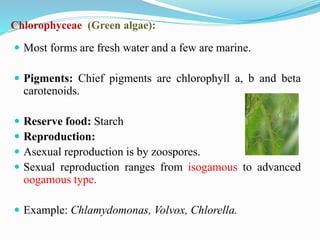
Chlorophyceae (Green algae):
 Most forms are fresh water and a few are marine.
 Pigments: Chief pigments are chlorophyll a, b and beta
carotenoids.
 Reserve food: Starch
 Reproduction:
 Asexual reproduction is by zoospores.
 Sexual reproduction ranges from isogamous to advanced
oogamous type.
 Example: Chlamydomonas, Volvox, Chlorella.
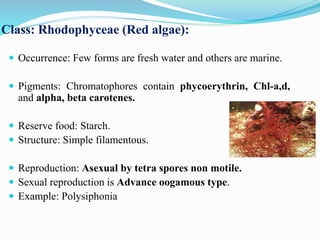
Class: Rhodophyceae (Red algae):
 Occurrence: Few forms are fresh water and others are marine.
 Pigments: Chromatophores contain phycoerythrin, Chl-a,d,
and alpha, beta carotenes.
 Reserve food: Starch.
 Structure: Simple filamentous.
 Reproduction: Asexual by tetra spores non motile.
 Sexual reproduction is Advance oogamous type.
 Example: Polysiphonia
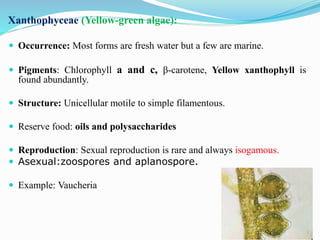
Xanthophyceae (Yellow-green algae):
 Occurrence: Most forms are fresh water but a few are marine.
 Pigments: Chlorophyll a and c, β-carotene, Yellow xanthophyll is
found abundantly.
 Structure: Unicellular motile to simple filamentous.
 Reserve food: oils and polysaccharides
 Reproduction: Sexual reproduction is rare and always isogamous.
 Asexual:zoospores and aplanospore.
 Example: Vaucheria
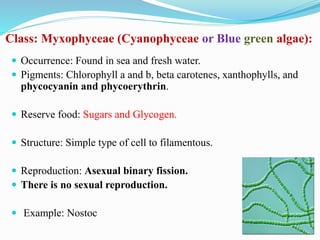
Class: Myxophyceae (Cyanophyceae or Blue green algae):
 Occurrence: Found in sea and fresh water.
 Pigments: Chlorophyll a and b, beta carotenes, xanthophylls, and
phycocyanin and phycoerythrin.
 Reserve food: Sugars and Glycogen.
 Structure: Simple type of cell to filamentous.
 Reproduction: Asexual binary fission.
 There is no sexual reproduction.
 Example: Nostoc
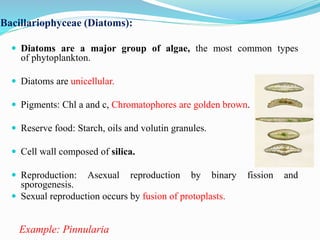
Bacillariophyceae (Diatoms):
 Diatoms are a major group of algae, the most common types
of phytoplankton.
 Diatoms are unicellular.
 Pigments: Chl a and c, Chromatophores are golden brown.
 Reserve food: Starch, oils and volutin granules.
 Cell wall composed of silica.
 Reproduction: Asexual reproduction by binary fission and
sporogenesis.
 Sexual reproduction occurs by fusion of protoplasts.
Example: Pinnularia
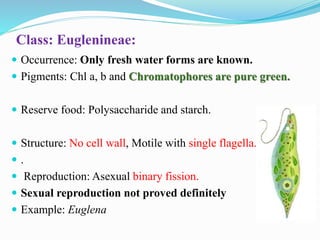
Class: Euglenineae:
 Occurrence: Only fresh water forms are known.
 Pigments: Chl a, b and Chromatophores are pure green.
 Reserve food: Polysaccharide and starch.
 Structure: No cell wall, Motile with single flagella.
 .
 Reproduction: Asexual binary fission.
 Sexual reproduction not proved definitely
 Example: Euglena
l
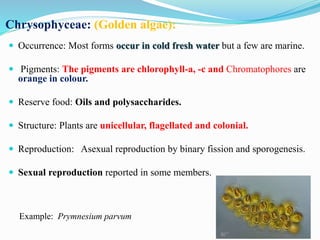
Chrysophyceae: (Golden algae):
 Occurrence: Most forms occur in cold fresh water but a few are marine.
 Pigments: The pigments are chlorophyll-a, -c and Chromatophores are
orange in colour.
 Reserve food: Oils and polysaccharides.
 Structure: Plants are unicellular, flagellated and colonial.
 Reproduction: Asexual reproduction by binary fission and sporogenesis.
 Sexual reproduction reported in some members.
Example: Prymnesium parvum
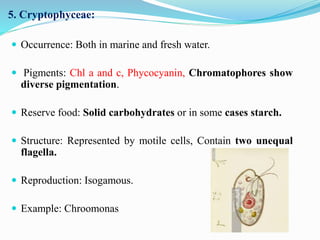
5. Cryptophyceae:
 Occurrence: Both in marine and fresh water.
 Pigments: Chl a and c, Phycocyanin, Chromatophores show
diverse pigmentation.
 Reserve food: Solid carbohydrates or in some cases starch.
 Structure: Represented by motile cells, Contain two unequal
flagella.
 Reproduction: Isogamous.
 Example: Chroomonas
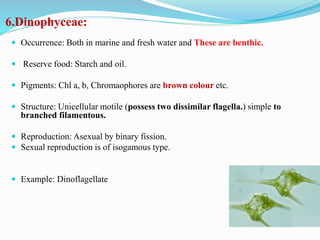
6.Dinophyceae:
 Occurrence: Both in marine and fresh water and These are benthic.
 Reserve food: Starch and oil.
 Pigments: Chl a, b, Chromaophores are brown colour etc.
 Structure: Unicellular motile (possess two dissimilar flagella.) simple to
branched filamentous.
 Reproduction: Asexual by binary fission.
 Sexual reproduction is of isogamous type.
 Example: Dinoflagellate
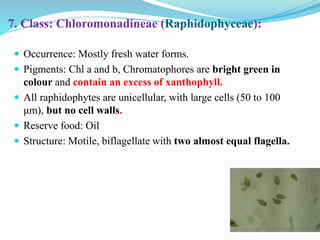
7. Class: Chloromonadineae (Raphidophyceae):
 Occurrence: Mostly fresh water forms.
 Pigments: Chl a and b, Chromatophores are bright green in
colour and contain an excess of xanthophyll.
 All raphidophytes are unicellular, with large cells (50 to 100
μm), but no cell walls.
 Reserve food: Oil
 Structure: Motile, biflagellate with two almost equal flagella.
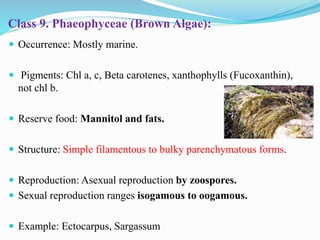
Class 9. Phaeophyceae (Brown Algae):
 Occurrence: Mostly marine.
 Pigments: Chl a, c, Beta carotenes, xanthophylls (Fucoxanthin),
not chl b.
 Reserve food: Mannitol and fats.
 Structure: Simple filamentous to bulky parenchymatous forms.
 Reproduction: Asexual reproduction by zoospores.
 Sexual reproduction ranges isogamous to oogamous.
 Example: Ectocarpus, Sargassum
Algae classification and structure

Algae classification and structure

  • 1.
    Important features ofAlgae BY Harinatha Reddy Aswartha
  • 2.
     Algae eukaryoticphotosynthetic organisms.  Photoautotrophs.  Unicellular (Chlorella and diatoms) and multicellular (Red algae, green algae).  An undifferentiated plant body is known as thallus.  In thalloid plants, there is no differentiation of plant body into true roots, stem and leaves.
  • 3.
     Majority ofalgae are in aquatic habitat (fresh water or marine), some algae are terrestrial.  Cell wall made up of cellulose and it also contain hemicellulose, silica, pectin.
  • 4.
     Membrane enclosedorganelles are present.  Chloroplast is present
  • 5.
    Reserved food materialsin algae:  Starch and oils.
  • 6.
    Pigments:  All majoralgal groups have at least one characteristic pigment:  Cyanophyceae (blue green algae): Phycocyanin.  Chlorophyceae (green algae): Chlorophyll b.  Pheophyceae (brown algae): Fucoxanthin.  Rhodophyceae (red algae): Phycoerythrin .  Chlorophyll a is universally present in all algal groups.
  • 7.
    Algae reproduce bythree methods: (1).Vegetative reproduction:  Fragmentation, binary fission and buddings etc. are the important vegetative reproduction methods in algae. (2). Asexual reproduction:  By a variety of motile or non-motile spores.  Zoospore, aplanospore, tetraspore, autospore etc. (3). Sexual reproduction:  The union of gametes are involved: Autogamy, isogamy, anisogamy and oogamy are the different types of sexual reproduction algae.
  • 8.
    Classification of algae: F.E. Fritsch (1935) a British biologist classified the whole of the algae into eleven classes on the basis of type of pigments, nature of reserve food material, mode of reproduction etc.
  • 9.
    Chlorophyceae (Green algae): Most forms are fresh water and a few are marine.  Pigments: Chief pigments are chlorophyll a, b and beta carotenoids.  Reserve food: Starch  Reproduction:  Asexual reproduction is by zoospores.  Sexual reproduction ranges from isogamous to advanced oogamous type.  Example: Chlamydomonas, Volvox, Chlorella.
  • 10.
    Class: Rhodophyceae (Redalgae):  Occurrence: Few forms are fresh water and others are marine.  Pigments: Chromatophores contain phycoerythrin, Chl-a,d, and alpha, beta carotenes.  Reserve food: Starch.  Structure: Simple filamentous.  Reproduction: Asexual by tetra spores non motile.  Sexual reproduction is Advance oogamous type.  Example: Polysiphonia
  • 11.
    Xanthophyceae (Yellow-green algae): Occurrence: Most forms are fresh water but a few are marine.  Pigments: Chlorophyll a and c, β-carotene, Yellow xanthophyll is found abundantly.  Structure: Unicellular motile to simple filamentous.  Reserve food: oils and polysaccharides  Reproduction: Sexual reproduction is rare and always isogamous.  Asexual:zoospores and aplanospore.  Example: Vaucheria
  • 12.
    Class: Myxophyceae (Cyanophyceaeor Blue green algae):  Occurrence: Found in sea and fresh water.  Pigments: Chlorophyll a and b, beta carotenes, xanthophylls, and phycocyanin and phycoerythrin.  Reserve food: Sugars and Glycogen.  Structure: Simple type of cell to filamentous.  Reproduction: Asexual binary fission.  There is no sexual reproduction.  Example: Nostoc
  • 13.
    Bacillariophyceae (Diatoms):  Diatomsare a major group of algae, the most common types of phytoplankton.  Diatoms are unicellular.  Pigments: Chl a and c, Chromatophores are golden brown.  Reserve food: Starch, oils and volutin granules.  Cell wall composed of silica.  Reproduction: Asexual reproduction by binary fission and sporogenesis.  Sexual reproduction occurs by fusion of protoplasts. Example: Pinnularia
  • 14.
    Class: Euglenineae:  Occurrence:Only fresh water forms are known.  Pigments: Chl a, b and Chromatophores are pure green.  Reserve food: Polysaccharide and starch.  Structure: No cell wall, Motile with single flagella.  .  Reproduction: Asexual binary fission.  Sexual reproduction not proved definitely  Example: Euglena l
  • 15.
    Chrysophyceae: (Golden algae): Occurrence: Most forms occur in cold fresh water but a few are marine.  Pigments: The pigments are chlorophyll-a, -c and Chromatophores are orange in colour.  Reserve food: Oils and polysaccharides.  Structure: Plants are unicellular, flagellated and colonial.  Reproduction: Asexual reproduction by binary fission and sporogenesis.  Sexual reproduction reported in some members. Example: Prymnesium parvum
  • 16.
    5. Cryptophyceae:  Occurrence:Both in marine and fresh water.  Pigments: Chl a and c, Phycocyanin, Chromatophores show diverse pigmentation.  Reserve food: Solid carbohydrates or in some cases starch.  Structure: Represented by motile cells, Contain two unequal flagella.  Reproduction: Isogamous.  Example: Chroomonas
  • 17.
    6.Dinophyceae:  Occurrence: Bothin marine and fresh water and These are benthic.  Reserve food: Starch and oil.  Pigments: Chl a, b, Chromaophores are brown colour etc.  Structure: Unicellular motile (possess two dissimilar flagella.) simple to branched filamentous.  Reproduction: Asexual by binary fission.  Sexual reproduction is of isogamous type.  Example: Dinoflagellate
  • 18.
    7. Class: Chloromonadineae(Raphidophyceae):  Occurrence: Mostly fresh water forms.  Pigments: Chl a and b, Chromatophores are bright green in colour and contain an excess of xanthophyll.  All raphidophytes are unicellular, with large cells (50 to 100 μm), but no cell walls.  Reserve food: Oil  Structure: Motile, biflagellate with two almost equal flagella.
  • 19.
    Class 9. Phaeophyceae(Brown Algae):  Occurrence: Mostly marine.  Pigments: Chl a, c, Beta carotenes, xanthophylls (Fucoxanthin), not chl b.  Reserve food: Mannitol and fats.  Structure: Simple filamentous to bulky parenchymatous forms.  Reproduction: Asexual reproduction by zoospores.  Sexual reproduction ranges isogamous to oogamous.  Example: Ectocarpus, Sargassum