Chapter 18   Classification
 
18 – 1 Finding Order in Diversity
Evolution has lead to a staggering variety or organisms Biologists have identified and named about  1.5 million  species so far They estimate anywhere between 2 and 100 million additional species have yet to be discovered
Taxonomy   The science of classifying and naming organisms
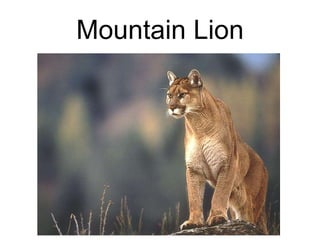
Assigning Scientific Names   By the 18th century, European scientists recognized that referring to organisms by common names was confusing Common names vary among regions within a country
Mountain Lion
Cougar
Puma
Panther
Early Efforts at Naming Organisms First attempts at standard scientific names often described physical characteristics As a result, these names could be 20 words long! Ex.) The English translation of the scientific name of a particular tree might be “Oak with deeply divided leaves that have no hairs on their undersides and no teeth around their edges.”
Binomial Nomenclature Carolus Linnaeus (18th Century) Swedish Botanist Developed a system for naming organisms
Binomial Nomenclature   Two word naming system
Rules for Binomial Nomenclature   Written in  italics First word is capitalized Second word is lowercased Ex.)  Genus species Genus species G. species
The name often tells you something about the species Ex.) Tyranosaurus Rex  Tyrant Lizard King
 
Taxon (taxonomic category)   A group or level of organization
 
Linnaeus’s system of classification uses seven taxonomic categories Kingdom Phylum Class Order Family Genus species Largest / Least Specific Smallest / Most Specific
Mnemonic Device Kingdom Phylum Class Order Family Genus species King Phillip Came Over For Good Soup
 
18 -2 Modern Evolutionary Classification
Problems with Traditional Classification  Sometimes, due to convergent Evolution organisms that are quite different from each other evolve similar body structures Ex.) Crab, limpet, barnacle
 
Evolutionary Classification   Darwin’s theory of evolution changed the entire way that biologists thought about classification Biologists now group organisms into categories that represent  lines of evolutionary descent , not just physical similarities
Classification Using Cladograms Many biologists now prefer a method called  cladistic analysis This method of classification identifies and considers only those characteristics that arise as lineages evolve over time
Derived characteristics   Characteristics that appear in recent parts of a lineage but not in its older members
Cladograms Diagram that shows the evolutionary relationships among a group of organisms
 
Similarities in DNA and RNA Suppose you were trying to compare diverse organisms such as yeast and humans It wouldn’t make sense to try to classify anatomical similarities The genes of many organisms show important similarities at the molecular level These similarities can be used as criteria to help determine classification Ex.) Myosin in humans & yeast
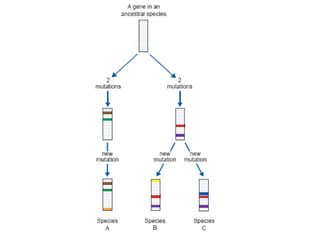
Molecular Clocks Use DNA comparison to estimate the length of time that two species have been evolving independently
Molecular Clocks Mutations happen all the time at about the same rate A comparison of DNA sequences in two species can reveal how dissimilar the genes are The degree of dissimilarity is an indication of how long ago the two species shared a common ancestor
 
18 -3 Kingdoms and Domains
In taxonomy, as in all areas of science, ideas and models change as new information arises, some explanations have been discarded altogether, whereas others such as Darwin’s theory of evolution by natural selection, have been upheld So it should not be surprising that since the 1800’s, the tree of life has been revised and edited since the discovery of all this new information
The Tree of Life Evolves Before Linnaeus’s time, the only two Kingdoms that existed were  Plants and Animals As scientists discovered new organisms that didn’t fit into the plant or animal category, they made a new category
The Old 5 Kingdom System Animals Plants Fungi Protist Bacteria
In recent years, as evidence about microorganisms continued to accumulate, biologists come to recognize that the Monera were composed of two distinct groups
The New 6 Kingdom System Animals Plants Fungi Protist Eubacteria Archaebacteria
 
The Three Domain System Molecular analysis has given rise to a new taxonomic category that is now recognized by many scientists
Domain   Larger than a kingdom
3 Domains Bacteria Eubacteria 2. Archaea Archaebacteria 3. Eukarya Protists, fungi, plants, animals (Everything with a nucleus)
Domain Bacteria Unicellular Prokaryotic  - no nucleus, no membrane bound organelles Thick walls (containing peptigoglycan) Free living and parasitic Important decomposers Some photosynthesize Some don’t need oxygen Anerobic Some need oxygen Aerobic


Petri   dish Agar Bacteria Colonies
What is this used for?
 
Domain Archaea Unicellular Small Prokaryotic Live in extreme environments Ex.) volcanic hotsprings, brine pools, black organic mud without oxygen
Acidophiles – live in acidic environments Thermophiles – can tolerate hot temperatures 50 – 110 degrees Halophiles – can stand extreme concentrations of NaCl Methanogens – Produce methane  CO 2  + H    CH 4
Acidophiles
Thermophile
Halophile
Domain Eukarya Consists of all organisms that have a nucleus
Protista Small Mostly unicellular Eukaryotic – has a nucleus, and membrane bound organelles Cannot be classified as animals, plants or fungi, but share many characteristics with plants, animals and fungi
Plant like Protists Algae Photosynthetic – can make their own food
Euglenas Flagella
Diatoms
Dinoflagellates
Dinoflagellates Red tide
Green Algae
Red Algae
Brown Algae
Animal like Protists Protozoans Heterotrophic – can’t make their own food


Fungus like Protists Slime molds, water molds Decompose their food
 
Fungi Mostly multicellular Ex.) Mushroom, yeast Cell walls
Fungi Heterotrophs Feed on  decaying organic matter Secrete digestive enzymes into food source then  Spread and reproduce by  spores
Spores Reproductive cells that form new organisms without fertilization
Many are used in medicine Antibiotics Anti rejection Anti viral
Penicillium
Plantae Multicellular Photosynthetic autotrophs – make their own food by photosynthesis Non-motile Cell walls (cellulose)
Animalia Multicellular Heterotrophic No cell walls Most move Incredible diversity

Biology - Chp 18 - Classification - PowerPoint

  • 1.
    Chapter 18 Classification
  • 2.
  • 3.
    18 – 1Finding Order in Diversity
  • 4.
    Evolution has leadto a staggering variety or organisms Biologists have identified and named about 1.5 million species so far They estimate anywhere between 2 and 100 million additional species have yet to be discovered
  • 5.
    Taxonomy The science of classifying and naming organisms
  • 6.
    Assigning Scientific Names By the 18th century, European scientists recognized that referring to organisms by common names was confusing Common names vary among regions within a country
  • 7.
  • 8.
  • 9.
  • 10.
  • 11.
    Early Efforts atNaming Organisms First attempts at standard scientific names often described physical characteristics As a result, these names could be 20 words long! Ex.) The English translation of the scientific name of a particular tree might be “Oak with deeply divided leaves that have no hairs on their undersides and no teeth around their edges.”
  • 12.
    Binomial Nomenclature CarolusLinnaeus (18th Century) Swedish Botanist Developed a system for naming organisms
  • 13.
    Binomial Nomenclature Two word naming system
  • 14.
    Rules for BinomialNomenclature Written in italics First word is capitalized Second word is lowercased Ex.) Genus species Genus species G. species
  • 15.
    The name oftentells you something about the species Ex.) Tyranosaurus Rex Tyrant Lizard King
  • 16.
  • 17.
    Taxon (taxonomic category) A group or level of organization
  • 18.
  • 19.
    Linnaeus’s system ofclassification uses seven taxonomic categories Kingdom Phylum Class Order Family Genus species Largest / Least Specific Smallest / Most Specific
  • 20.
    Mnemonic Device KingdomPhylum Class Order Family Genus species King Phillip Came Over For Good Soup
  • 21.
  • 22.
    18 -2 ModernEvolutionary Classification
  • 23.
    Problems with TraditionalClassification Sometimes, due to convergent Evolution organisms that are quite different from each other evolve similar body structures Ex.) Crab, limpet, barnacle
  • 24.
  • 25.
    Evolutionary Classification Darwin’s theory of evolution changed the entire way that biologists thought about classification Biologists now group organisms into categories that represent lines of evolutionary descent , not just physical similarities
  • 26.
    Classification Using CladogramsMany biologists now prefer a method called cladistic analysis This method of classification identifies and considers only those characteristics that arise as lineages evolve over time
  • 27.
    Derived characteristics Characteristics that appear in recent parts of a lineage but not in its older members
  • 28.
    Cladograms Diagram thatshows the evolutionary relationships among a group of organisms
  • 29.
  • 30.
    Similarities in DNAand RNA Suppose you were trying to compare diverse organisms such as yeast and humans It wouldn’t make sense to try to classify anatomical similarities The genes of many organisms show important similarities at the molecular level These similarities can be used as criteria to help determine classification Ex.) Myosin in humans & yeast
  • 31.
    Molecular Clocks UseDNA comparison to estimate the length of time that two species have been evolving independently
  • 32.
    Molecular Clocks Mutationshappen all the time at about the same rate A comparison of DNA sequences in two species can reveal how dissimilar the genes are The degree of dissimilarity is an indication of how long ago the two species shared a common ancestor
  • 33.
  • 34.
    18 -3 Kingdomsand Domains
  • 35.
    In taxonomy, asin all areas of science, ideas and models change as new information arises, some explanations have been discarded altogether, whereas others such as Darwin’s theory of evolution by natural selection, have been upheld So it should not be surprising that since the 1800’s, the tree of life has been revised and edited since the discovery of all this new information
  • 36.
    The Tree ofLife Evolves Before Linnaeus’s time, the only two Kingdoms that existed were Plants and Animals As scientists discovered new organisms that didn’t fit into the plant or animal category, they made a new category
  • 37.
    The Old 5Kingdom System Animals Plants Fungi Protist Bacteria
  • 38.
    In recent years,as evidence about microorganisms continued to accumulate, biologists come to recognize that the Monera were composed of two distinct groups
  • 39.
    The New 6Kingdom System Animals Plants Fungi Protist Eubacteria Archaebacteria
  • 40.
  • 41.
    The Three DomainSystem Molecular analysis has given rise to a new taxonomic category that is now recognized by many scientists
  • 42.
    Domain Larger than a kingdom
  • 43.
    3 Domains BacteriaEubacteria 2. Archaea Archaebacteria 3. Eukarya Protists, fungi, plants, animals (Everything with a nucleus)
  • 44.
    Domain Bacteria UnicellularProkaryotic - no nucleus, no membrane bound organelles Thick walls (containing peptigoglycan) Free living and parasitic Important decomposers Some photosynthesize Some don’t need oxygen Anerobic Some need oxygen Aerobic
  • 45.
  • 46.
  • 47.
  • 48.
    Petri dish Agar Bacteria Colonies
  • 49.
    What is thisused for?
  • 50.
  • 51.
    Domain Archaea UnicellularSmall Prokaryotic Live in extreme environments Ex.) volcanic hotsprings, brine pools, black organic mud without oxygen
  • 52.
    Acidophiles – livein acidic environments Thermophiles – can tolerate hot temperatures 50 – 110 degrees Halophiles – can stand extreme concentrations of NaCl Methanogens – Produce methane CO 2 + H  CH 4
  • 53.
  • 54.
  • 55.
  • 56.
    Domain Eukarya Consistsof all organisms that have a nucleus
  • 57.
    Protista Small Mostlyunicellular Eukaryotic – has a nucleus, and membrane bound organelles Cannot be classified as animals, plants or fungi, but share many characteristics with plants, animals and fungi
  • 58.
    Plant like ProtistsAlgae Photosynthetic – can make their own food
  • 59.
  • 60.
  • 61.
  • 62.
  • 63.
  • 64.
  • 65.
  • 66.
    Animal like ProtistsProtozoans Heterotrophic – can’t make their own food
  • 67.
  • 68.
  • 69.
  • 70.
    Fungus like ProtistsSlime molds, water molds Decompose their food
  • 71.
  • 72.
    Fungi Mostly multicellularEx.) Mushroom, yeast Cell walls
  • 73.
    Fungi Heterotrophs Feedon decaying organic matter Secrete digestive enzymes into food source then Spread and reproduce by spores
  • 74.
    Spores Reproductive cellsthat form new organisms without fertilization
  • 75.
    Many are usedin medicine Antibiotics Anti rejection Anti viral
  • 76.
  • 77.
    Plantae Multicellular Photosyntheticautotrophs – make their own food by photosynthesis Non-motile Cell walls (cellulose)
  • 78.
    Animalia Multicellular HeterotrophicNo cell walls Most move Incredible diversity