•Algae
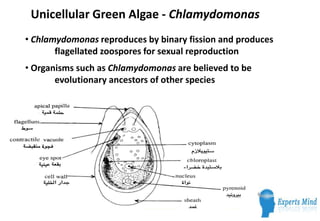
Unicellular Green Algae - Chlamydomonas
• Chlamydomonas reproduces by binary fission and produces
       flagellated zoospores for sexual reproduction
• Organisms such as Chlamydomonas are believed to be
       evolutionary ancestors of other species
Kingdom Protista
The most ancient eukaryotic kingdom
Protists include a variety of eukaryotic    forms;
they are mostly solitary, some colonial or
multicellular, autotrophic, or    heterotrophic and
mostly aerobic

Perhaps they are best defined as eukaryotes
     that are NOT fungi, animals, or plants
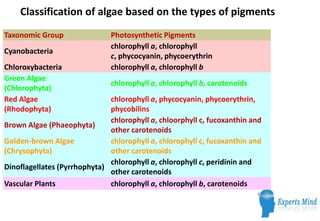
Classification of algae based on the types of pigments
Taxonomic Group                Photosynthetic Pigments
                               chlorophyll a, chlorophyll
Cyanobacteria
                               c, phycocyanin, phycoerythrin
Chloroxybacteria               chlorophyll a, chlorophyll b
Green Algae
                               chlorophyll a, chlorophyll b, carotenoids
(Chlorophyta)
Red Algae                     chlorophyll a, phycocyanin, phycoerythrin,
(Rhodophyta)                  phycobilins
                              chlorophyll a, chloorphyll c, fucoxanthin and
Brown Algae (Phaeophyta)
                              other carotenoids
Golden-brown Algae            chlorophyll a, chlorophyll c, fucoxanthin and
(Chrysophyta)                 other carotenoids
                              chlorophyll a, chlorophyll c, peridinin and
Dinoflagellates (Pyrrhophyta)
                              other carotenoids
Vascular Plants               chlorophyll a, chlorophyll b, carotenoids
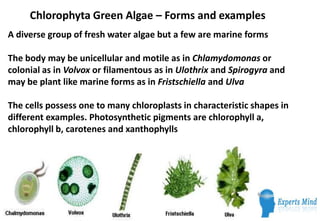
Chlorophyta Green Algae – Forms and examples
A diverse group of fresh water algae but a few are marine forms

The body may be unicellular and motile as in Chlamydomonas or
colonial as in Volvox or filamentous as in Ulothrix and Spirogyra and
may be plant like marine forms as in Fristschiella and Ulva

The cells possess one to many chloroplasts in characteristic shapes in
different examples. Photosynthetic pigments are chlorophyll a,
chlorophyll b, carotenes and xanthophylls
Green Algae - Reproduction
Vegetative reproduction occurs by cell division, fragmentation
and stolon formation
Asexual reproduction occurs by the formation of akinites ,
zoospores or aplanospores
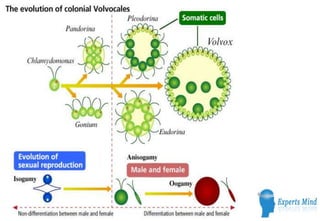
Sexual reproduction involves isogamy or anisogamy or oogamy.
Zygote is the only diploid structure in the life cycle. There is a
regular alternation of haploid gametophytic and diploid
sporophytic generations in the life cycle.

• Zoospores: flagellates with eye-spot and contractile vacuole
• Aplanospores: non-flagellated cells with contractile vacuole
• Autospores: non-flagellated cells lacking contractile vacuole
• Terrestrial species predominantly form autospores
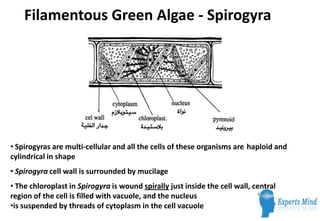
Filamentous Green Algae - Spirogyra


• Spirogyras are multi-cellular and all the cells of these organisms are haploid and
cylindrical in shape
• Spirogyra cell wall is surrounded by mucilage
• The chloroplast in Spirogyra is wound spirally just inside the cell wall, central
region of the cell is filled with vacuole, and the nucleus
•is suspended by threads of cytoplasm in the cell vacuole
Reproduction in Spirogyra
Asexual reproduction in Spirogyra happens via the
      fragmentation of cells (below left)

Sexual reproduction in Spirogyra is of two types, scalariform
       conjugation and lateral conjugation (below right)
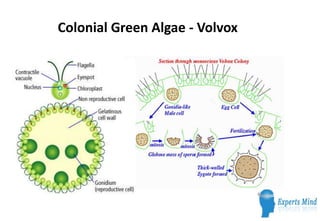
Colonial Green Algae - Volvox
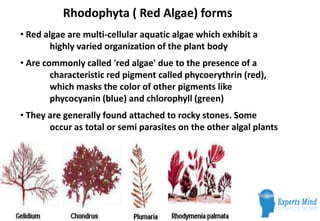
Rhodophyta ( Red Algae) forms
• Red algae are multi-cellular aquatic algae which exhibit a
        highly varied organization of the plant body
• Are commonly called 'red algae' due to the presence of a
        characteristic red pigment called phycoerythrin (red),
        which masks the color of other pigments like
        phycocyanin (blue) and chlorophyll (green)
• They are generally found attached to rocky stones. Some
       occur as total or semi parasites on the other algal plants

Algae

  • 1.
  • 2.
    Unicellular Green Algae- Chlamydomonas • Chlamydomonas reproduces by binary fission and produces flagellated zoospores for sexual reproduction • Organisms such as Chlamydomonas are believed to be evolutionary ancestors of other species
  • 3.
    Kingdom Protista The mostancient eukaryotic kingdom Protists include a variety of eukaryotic forms; they are mostly solitary, some colonial or multicellular, autotrophic, or heterotrophic and mostly aerobic Perhaps they are best defined as eukaryotes that are NOT fungi, animals, or plants
  • 4.
    Classification of algaebased on the types of pigments Taxonomic Group Photosynthetic Pigments chlorophyll a, chlorophyll Cyanobacteria c, phycocyanin, phycoerythrin Chloroxybacteria chlorophyll a, chlorophyll b Green Algae chlorophyll a, chlorophyll b, carotenoids (Chlorophyta) Red Algae chlorophyll a, phycocyanin, phycoerythrin, (Rhodophyta) phycobilins chlorophyll a, chloorphyll c, fucoxanthin and Brown Algae (Phaeophyta) other carotenoids Golden-brown Algae chlorophyll a, chlorophyll c, fucoxanthin and (Chrysophyta) other carotenoids chlorophyll a, chlorophyll c, peridinin and Dinoflagellates (Pyrrhophyta) other carotenoids Vascular Plants chlorophyll a, chlorophyll b, carotenoids
  • 5.
    Chlorophyta Green Algae– Forms and examples A diverse group of fresh water algae but a few are marine forms The body may be unicellular and motile as in Chlamydomonas or colonial as in Volvox or filamentous as in Ulothrix and Spirogyra and may be plant like marine forms as in Fristschiella and Ulva The cells possess one to many chloroplasts in characteristic shapes in different examples. Photosynthetic pigments are chlorophyll a, chlorophyll b, carotenes and xanthophylls
  • 6.
    Green Algae -Reproduction Vegetative reproduction occurs by cell division, fragmentation and stolon formation Asexual reproduction occurs by the formation of akinites , zoospores or aplanospores Sexual reproduction involves isogamy or anisogamy or oogamy. Zygote is the only diploid structure in the life cycle. There is a regular alternation of haploid gametophytic and diploid sporophytic generations in the life cycle. • Zoospores: flagellates with eye-spot and contractile vacuole • Aplanospores: non-flagellated cells with contractile vacuole • Autospores: non-flagellated cells lacking contractile vacuole • Terrestrial species predominantly form autospores
  • 7.
    Filamentous Green Algae- Spirogyra • Spirogyras are multi-cellular and all the cells of these organisms are haploid and cylindrical in shape • Spirogyra cell wall is surrounded by mucilage • The chloroplast in Spirogyra is wound spirally just inside the cell wall, central region of the cell is filled with vacuole, and the nucleus •is suspended by threads of cytoplasm in the cell vacuole
  • 8.
    Reproduction in Spirogyra Asexualreproduction in Spirogyra happens via the fragmentation of cells (below left) Sexual reproduction in Spirogyra is of two types, scalariform conjugation and lateral conjugation (below right)
  • 9.
  • 11.
    Rhodophyta ( RedAlgae) forms • Red algae are multi-cellular aquatic algae which exhibit a highly varied organization of the plant body • Are commonly called 'red algae' due to the presence of a characteristic red pigment called phycoerythrin (red), which masks the color of other pigments like phycocyanin (blue) and chlorophyll (green) • They are generally found attached to rocky stones. Some occur as total or semi parasites on the other algal plants