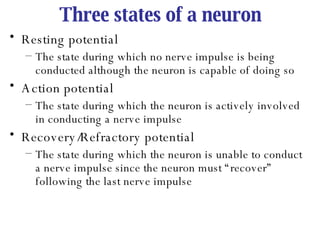
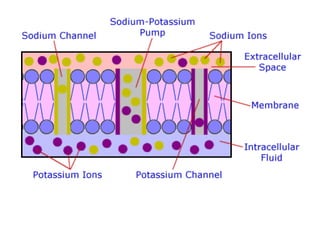
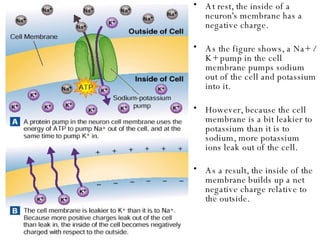
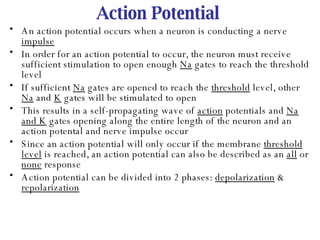
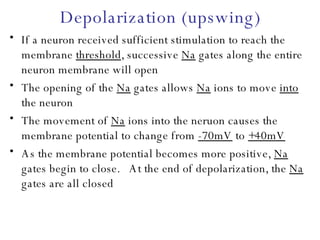
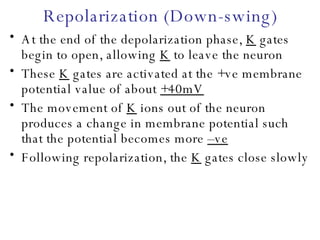
An action potential occurs when a neuron reaches its membrane threshold. This causes sodium channels to open, allowing sodium ions to enter the neuron and depolarize the membrane. Then, potassium channels open, allowing potassium ions to exit the neuron and repolarize the membrane back to its resting potential. This process of depolarization and repolarization propagates as a self-sustaining wave along the neuron, conducting the nerve impulse. Myelinated neurons enhance conduction velocity through salutatory conduction, where the action potential jumps between nodes of Ranvier.