Acute infectious diarrhea
Food poisoning
&
Acute gastroenteritis
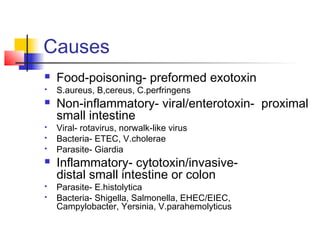
Causes
 Food-poisoning- preformed exotoxin
 S.aureus, B,cereus, C.perfringens
 Non-inflammatory- viral/enterotoxin- proximal
small intestine
 Viral- rotavirus, norwalk-like virus
 Bacteria- ETEC, V.cholerae
 Parasite- Giardia
 Inflammatory- cytotoxin/invasive-
distal small intestine or colon
 Parasite- E.histolytica
 Bacteria- Shigella, Salmonella, EHEC/EIEC,
Campylobacter, Yersinia, V.parahemolyticus
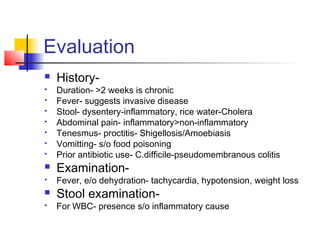
Evaluation
 History-
 Duration- >2 weeks is chronic
 Fever- suggests invasive disease
 Stool- dysentery-inflammatory, rice water-Cholera
 Abdominal pain- inflammatory>non-inflammatory
 Tenesmus- proctitis- Shigellosis/Amoebiasis
 Vomitting- s/o food poisoning
 Prior antibiotic use- C.difficile-pseudomembranous colitis
 Examination-
 Fever, e/o dehydration- tachycardia, hypotension, weight loss
 Stool examination-
 For WBC- presence s/o inflammatory cause
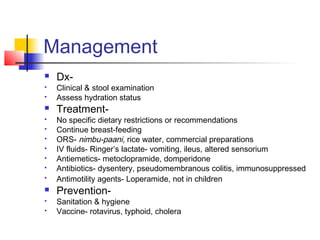
Management
 Dx-
 Clinical & stool examination
 Assess hydration status
 Treatment-
 No specific dietary restrictions or recommendations
 Continue breast-feeding
 ORS- nimbu-paani, rice water, commercial preparations
 IV fluids- Ringer’s lactate- vomiting, ileus, altered sensorium
 Antiemetics- metoclopramide, domperidone
 Antibiotics- dysentery, pseudomembranous colitis, immunosuppressed
 Antimotility agents- Loperamide, not in children
 Prevention-
 Sanitation & hygiene
 Vaccine- rotavirus, typhoid, cholera
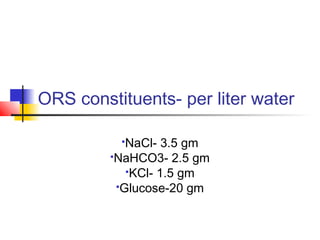
ORS constituents- per liter water
NaCl- 3.5 gm
NaHCO3- 2.5 gm
KCl- 1.5 gm
Glucose-20 gm
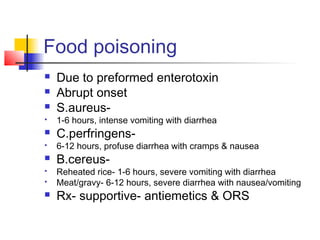
Food poisoning
 Due to preformed enterotoxin
 Abrupt onset
 S.aureus-
 1-6 hours, intense vomiting with diarrhea
 C.perfringens-
 6-12 hours, profuse diarrhea with cramps & nausea
 B.cereus-
 Reheated rice- 1-6 hours, severe vomiting with diarrhea
 Meat/gravy- 6-12 hours, severe diarrhea with nausea/vomiting
 Rx- supportive- antiemetics & ORS
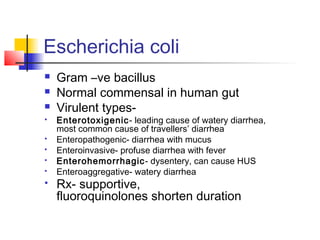
Escherichia coli
 Gram –ve bacillus
 Normal commensal in human gut
 Virulent types-
 Enterotoxigenic- leading cause of watery diarrhea,
most common cause of travellers’ diarrhea
 Enteropathogenic- diarrhea with mucus
 Enteroinvasive- profuse diarrhea with fever
 Enterohemorrhagic- dysentery, can cause HUS
 Enteroaggregative- watery diarrhea
 Rx- supportive,
fluoroquinolones shorten duration
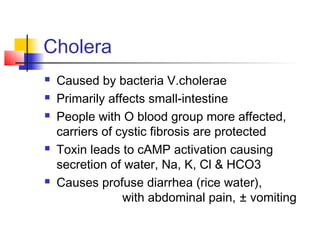
Cholera
 Caused by bacteria V.cholerae
 Primarily affects small-intestine
 People with O blood group more affected,
carriers of cystic fibrosis are protected
 Toxin leads to cAMP activation causing
secretion of water, Na, K, Cl & HCO3
 Causes profuse diarrhea (rice water),
with abdominal pain, ± vomiting
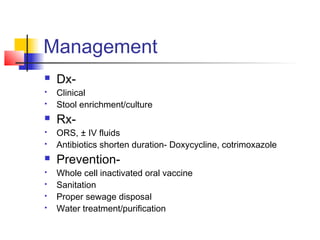
Management
 Dx-
 Clinical
 Stool enrichment/culture
 Rx-
 ORS, ± IV fluids
 Antibiotics shorten duration- Doxycycline, cotrimoxazole
 Prevention-
 Whole cell inactivated oral vaccine
 Sanitation
 Proper sewage disposal
 Water treatment/purification
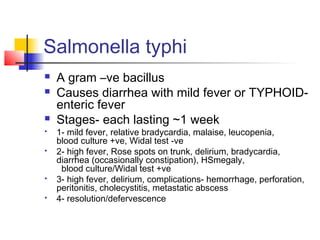
Salmonella typhi
 A gram –ve bacillus
 Causes diarrhea with mild fever or TYPHOID-
enteric fever
 Stages- each lasting ~1 week
 1- mild fever, relative bradycardia, malaise, leucopenia,
blood culture +ve, Widal test -ve
 2- high fever, Rose spots on trunk, delirium, bradycardia,
diarrhea (occasionally constipation), HSmegaly,
blood culture/Widal test +ve
 3- high fever, delirium, complications- hemorrhage, perforation,
peritonitis, cholecystitis, metastatic abscess
 4- resolution/defervescence
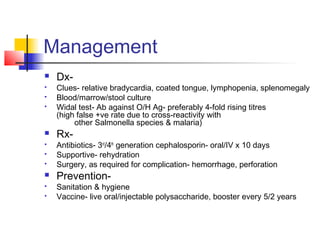
Management
 Dx-
 Clues- relative bradycardia, coated tongue, lymphopenia, splenomegaly
 Blood/marrow/stool culture
 Widal test- Ab against O/H Ag- preferably 4-fold rising titres
(high false +ve rate due to cross-reactivity with
other Salmonella species & malaria)
 Rx-
 Antibiotics- 3rd
/4th
generation cephalosporin- oral/IV x 10 days
 Supportive- rehydration
 Surgery, as required for complication- hemorrhage, perforation
 Prevention-
 Sanitation & hygiene
 Vaccine- live oral/injectable polysaccharide, booster every 5/2 years

Acute infectious diarrhea

  • 1.
    Acute infectious diarrhea Foodpoisoning & Acute gastroenteritis
  • 2.
    Causes  Food-poisoning- preformedexotoxin  S.aureus, B,cereus, C.perfringens  Non-inflammatory- viral/enterotoxin- proximal small intestine  Viral- rotavirus, norwalk-like virus  Bacteria- ETEC, V.cholerae  Parasite- Giardia  Inflammatory- cytotoxin/invasive- distal small intestine or colon  Parasite- E.histolytica  Bacteria- Shigella, Salmonella, EHEC/EIEC, Campylobacter, Yersinia, V.parahemolyticus
  • 3.
    Evaluation  History-  Duration->2 weeks is chronic  Fever- suggests invasive disease  Stool- dysentery-inflammatory, rice water-Cholera  Abdominal pain- inflammatory>non-inflammatory  Tenesmus- proctitis- Shigellosis/Amoebiasis  Vomitting- s/o food poisoning  Prior antibiotic use- C.difficile-pseudomembranous colitis  Examination-  Fever, e/o dehydration- tachycardia, hypotension, weight loss  Stool examination-  For WBC- presence s/o inflammatory cause
  • 4.
    Management  Dx-  Clinical& stool examination  Assess hydration status  Treatment-  No specific dietary restrictions or recommendations  Continue breast-feeding  ORS- nimbu-paani, rice water, commercial preparations  IV fluids- Ringer’s lactate- vomiting, ileus, altered sensorium  Antiemetics- metoclopramide, domperidone  Antibiotics- dysentery, pseudomembranous colitis, immunosuppressed  Antimotility agents- Loperamide, not in children  Prevention-  Sanitation & hygiene  Vaccine- rotavirus, typhoid, cholera
  • 5.
    ORS constituents- perliter water NaCl- 3.5 gm NaHCO3- 2.5 gm KCl- 1.5 gm Glucose-20 gm
  • 6.
    Food poisoning  Dueto preformed enterotoxin  Abrupt onset  S.aureus-  1-6 hours, intense vomiting with diarrhea  C.perfringens-  6-12 hours, profuse diarrhea with cramps & nausea  B.cereus-  Reheated rice- 1-6 hours, severe vomiting with diarrhea  Meat/gravy- 6-12 hours, severe diarrhea with nausea/vomiting  Rx- supportive- antiemetics & ORS
  • 7.
    Escherichia coli  Gram–ve bacillus  Normal commensal in human gut  Virulent types-  Enterotoxigenic- leading cause of watery diarrhea, most common cause of travellers’ diarrhea  Enteropathogenic- diarrhea with mucus  Enteroinvasive- profuse diarrhea with fever  Enterohemorrhagic- dysentery, can cause HUS  Enteroaggregative- watery diarrhea  Rx- supportive, fluoroquinolones shorten duration
  • 8.
    Cholera  Caused bybacteria V.cholerae  Primarily affects small-intestine  People with O blood group more affected, carriers of cystic fibrosis are protected  Toxin leads to cAMP activation causing secretion of water, Na, K, Cl & HCO3  Causes profuse diarrhea (rice water), with abdominal pain, ± vomiting
  • 9.
    Management  Dx-  Clinical Stool enrichment/culture  Rx-  ORS, ± IV fluids  Antibiotics shorten duration- Doxycycline, cotrimoxazole  Prevention-  Whole cell inactivated oral vaccine  Sanitation  Proper sewage disposal  Water treatment/purification
  • 10.
    Salmonella typhi  Agram –ve bacillus  Causes diarrhea with mild fever or TYPHOID- enteric fever  Stages- each lasting ~1 week  1- mild fever, relative bradycardia, malaise, leucopenia, blood culture +ve, Widal test -ve  2- high fever, Rose spots on trunk, delirium, bradycardia, diarrhea (occasionally constipation), HSmegaly, blood culture/Widal test +ve  3- high fever, delirium, complications- hemorrhage, perforation, peritonitis, cholecystitis, metastatic abscess  4- resolution/defervescence
  • 11.
    Management  Dx-  Clues-relative bradycardia, coated tongue, lymphopenia, splenomegaly  Blood/marrow/stool culture  Widal test- Ab against O/H Ag- preferably 4-fold rising titres (high false +ve rate due to cross-reactivity with other Salmonella species & malaria)  Rx-  Antibiotics- 3rd /4th generation cephalosporin- oral/IV x 10 days  Supportive- rehydration  Surgery, as required for complication- hemorrhage, perforation  Prevention-  Sanitation & hygiene  Vaccine- live oral/injectable polysaccharide, booster every 5/2 years