Tips on using my ppt.
1. You can freely download, edit, modify and put your
name etc.
2. Don’t be concerned about number of slides. Half the
slides are blanks except for the title.
3. First show the blank slides (eg. Aetiology ) > Ask
students what they already know about ethology of
today's topic. > Then show next slide which enumerates
aetiologies.
4. At the end rerun the show – show blank> ask questions >
show next slide.
5. This will be an ACTIVE LEARNING SESSION x
three revisions.
6. Good for self study also. Good for self study also.
Display blank slide> Think what you already know about
this > Read next slide.
Format
Format
1. Introduction & History
2. Relevant Anatomy, Physiology
3. Aetiology
4. Pathophysiology
5. Pathology
6. Classification
7. Clinical Features
8. Investigations
9. Management
10.Prevention
Introduction & History.
• Purulent exudate (inflammatory cells,
infectious organisms, and necrotic,
sloughed urothelium) collects in the
hydronephrotic collecting system ("pus
under pressure")
• results from urinary tract obstruction in the
presence of pyelonephritis.
•
Introduction & History.
• The walled-oiff exudate is protected from
the body's natural immune system and from
antibiotics.
• If not recognized and treated promptly, this
infectious process may progress, often
resulting in clinical deterioration with
urosepsis, which can occur swiftly.
• Thus, early recognition and treatment of
acute infections of the kidney, especially in
patients with suspected urinary tract
obstruction, are of paramount importance.
Aetiology
Aetiology
• Idiopathic
• Congenital/ Genetic
• Nutritional Deficiency/excess
• Traumatic
• Infections /Infestation
• Autoimmune
• Neoplastic (Benign/Malignant)
• Degenerative
• Iatrogenic
• Psychosomatic
Aetiology
• Risk factors for pyonephrosis include the
following:
– Immunosuppression due to medications (eg,
steroids)
– Disease (eg, diabetes mellitus, acquired
immunodeficiency syndrome [AIDS])
– Anatomic urinary tract obstruction (eg, from
stones, tumors, ureteropelvic junction [UPJ]
obstruction, pelvic kidney, horseshoe kidney).
Pathophysiology
Pathophysiology
• Pyonephrosis may be caused by
1. ascending infection of the urinary tract
2. the hematogenous spread of a bacterial
pathogen.
• upper urinary tract obstruction secondary to
various causes
1. Stones
2. Tumors
3. ureteropelvic junction [UPJ] obstruction).
Clinical Features
Clinical Features
• Demography
• Symptoms
• Hiistory
• Signs
• Prognosis
• Complications
Epidemiology
Epidemiology
• may develop in any age group.
• uncommon in adults and rare in children,
• extremely rare in neonates.
Symptoms
Symptoms
• Similar to an abscess, pyonephrosis is
typically associated with fever, chills, and
flank pain,
• although some patients may be
asymptomatic.
• Triad of-
1. Anemia
2. Fever
3. Flank swelling.
History
History
• Similar complaints
• Urethral instrumentation/ operations
• UTIs
Investigations
Investigations
• Laboratory Studies
– Routine
– Special
• Imaging Studies
• Tissue diagnosis
– Cytology
• FNAC
– Histology
Diagnostic Studies
Diagnostic Studies
Imaging Studies
• X-Ray
• USG
• CT
• Angiography
• MRI
• Endoscopy
• Nuclear scan
Management
Management
• Drainage—either percutaneous or
retrograde with a ureteral stent—has
become the mainstay of treatment, in
conjunction with intravenous antibiotics.
• placement of a percutaneous nephrostomy
• In selected healthy, stable patients, consider
retrograde decompression with a stent as an
option.
• Retrograde decompression with a stent
• Nephrectomy
Prevention
Prevention
• Prompt treatment of obstructive leisons of
urinary tract.
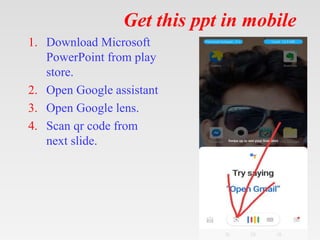
Get this ppt in mobile
1. Download Microsoft
PowerPoint from play
store.
2. Open Google assistant
3. Open Google lens.
4. Scan qr code from
next slide.
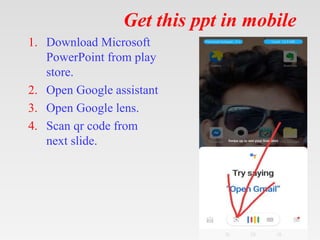
Get this ppt in mobile
1. Download Microsoft
PowerPoint from play
store.
2. Open Google assistant
3. Open Google lens.
4. Scan qr code from
next slide.
Get my ppt collection
• https://www.slideshare.net/drpradeeppande/
edit_my_uploads
• https://www.dropbox.com/sh/x600md3cvj8
5woy/AACVMHuQtvHvl_K8ehc3ltkEa?dl
=0
• https://www.facebook.com/doctorpradeeppa
nde/?ref=pages_you_manage

Pyonephrosis.pptx

  • 1.
    Tips on usingmy ppt. 1. You can freely download, edit, modify and put your name etc. 2. Don’t be concerned about number of slides. Half the slides are blanks except for the title. 3. First show the blank slides (eg. Aetiology ) > Ask students what they already know about ethology of today's topic. > Then show next slide which enumerates aetiologies. 4. At the end rerun the show – show blank> ask questions > show next slide. 5. This will be an ACTIVE LEARNING SESSION x three revisions. 6. Good for self study also. Good for self study also. Display blank slide> Think what you already know about this > Read next slide.
  • 2.
  • 3.
    Format 1. Introduction &History 2. Relevant Anatomy, Physiology 3. Aetiology 4. Pathophysiology 5. Pathology 6. Classification 7. Clinical Features 8. Investigations 9. Management 10.Prevention
  • 4.
  • 5.
    Introduction & History. •Purulent exudate (inflammatory cells, infectious organisms, and necrotic, sloughed urothelium) collects in the hydronephrotic collecting system ("pus under pressure") • results from urinary tract obstruction in the presence of pyelonephritis. •
  • 6.
    Introduction & History. •The walled-oiff exudate is protected from the body's natural immune system and from antibiotics. • If not recognized and treated promptly, this infectious process may progress, often resulting in clinical deterioration with urosepsis, which can occur swiftly. • Thus, early recognition and treatment of acute infections of the kidney, especially in patients with suspected urinary tract obstruction, are of paramount importance.
  • 7.
  • 8.
    Aetiology • Idiopathic • Congenital/Genetic • Nutritional Deficiency/excess • Traumatic • Infections /Infestation • Autoimmune • Neoplastic (Benign/Malignant) • Degenerative • Iatrogenic • Psychosomatic
  • 9.
    Aetiology • Risk factorsfor pyonephrosis include the following: – Immunosuppression due to medications (eg, steroids) – Disease (eg, diabetes mellitus, acquired immunodeficiency syndrome [AIDS]) – Anatomic urinary tract obstruction (eg, from stones, tumors, ureteropelvic junction [UPJ] obstruction, pelvic kidney, horseshoe kidney).
  • 10.
  • 11.
    Pathophysiology • Pyonephrosis maybe caused by 1. ascending infection of the urinary tract 2. the hematogenous spread of a bacterial pathogen. • upper urinary tract obstruction secondary to various causes 1. Stones 2. Tumors 3. ureteropelvic junction [UPJ] obstruction).
  • 12.
  • 13.
    Clinical Features • Demography •Symptoms • Hiistory • Signs • Prognosis • Complications
  • 14.
  • 15.
    Epidemiology • may developin any age group. • uncommon in adults and rare in children, • extremely rare in neonates.
  • 16.
  • 17.
    Symptoms • Similar toan abscess, pyonephrosis is typically associated with fever, chills, and flank pain, • although some patients may be asymptomatic. • Triad of- 1. Anemia 2. Fever 3. Flank swelling.
  • 18.
  • 19.
    History • Similar complaints •Urethral instrumentation/ operations • UTIs
  • 20.
  • 21.
    Investigations • Laboratory Studies –Routine – Special • Imaging Studies • Tissue diagnosis – Cytology • FNAC – Histology
  • 22.
  • 23.
    Diagnostic Studies Imaging Studies •X-Ray • USG • CT • Angiography • MRI • Endoscopy • Nuclear scan
  • 24.
  • 25.
    Management • Drainage—either percutaneousor retrograde with a ureteral stent—has become the mainstay of treatment, in conjunction with intravenous antibiotics. • placement of a percutaneous nephrostomy • In selected healthy, stable patients, consider retrograde decompression with a stent as an option. • Retrograde decompression with a stent • Nephrectomy
  • 26.
  • 27.
    Prevention • Prompt treatmentof obstructive leisons of urinary tract.
  • 28.
    Get this pptin mobile 1. Download Microsoft PowerPoint from play store. 2. Open Google assistant 3. Open Google lens. 4. Scan qr code from next slide.
  • 30.
    Get this pptin mobile 1. Download Microsoft PowerPoint from play store. 2. Open Google assistant 3. Open Google lens. 4. Scan qr code from next slide.
  • 33.
    Get my pptcollection • https://www.slideshare.net/drpradeeppande/ edit_my_uploads • https://www.dropbox.com/sh/x600md3cvj8 5woy/AACVMHuQtvHvl_K8ehc3ltkEa?dl =0 • https://www.facebook.com/doctorpradeeppa nde/?ref=pages_you_manage

Editor's Notes

  • #2 drpradeeppande@gmail.com 7697305442
  • #33 drpradeeppande@gmail.com 7697305442