Acute and Chronic DiarrheaCrystal Byerly, MEd., PA-CSeton Hill University PA Program Assistant ProfessorAnd Family Practice PA
Learning ObjectivesDefine acute vs. chronic diarrhea etiologiesCreate a differential diagnosis for each type of diarrheaDifferentiate when further testing,  including a colonoscopy,  should be orderedDiscuss treatment options including symptom management
Definitions of diarrheaSymptomatic:Increased frequencyIncreased fluidityIncreased volumeOr any combination of abovePhysiologic definition:Decreased absorption or increased secretion, or both, causing > 200 mL liquid BM excretion/day
Normal stool frequency ranges from three times a week to three times a dayAcute diarrheas are those lasting less than 2 to 3 weeks or, rarely, 6 to 8 weeks.The most common cause of acute diarrhea is infection. Learn infectious vs. non-infectious.Chronic diarrheas are those lasting at least 4 weeks, and more usually 6 to 8 weeks or longer.There are three categories of chronic diarrhea:osmotic (malabsorptive) diarrheasecretory diarrhea, and inflammatory vs. non-inflammatory diarrhea.
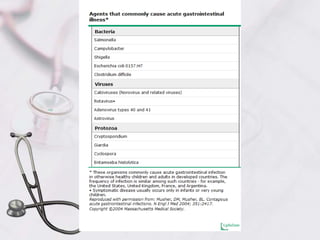
Approximately 80% of acute diarrheas are due to infections with viruses, bacteria, helminths, and protozoa.The remainder are secondary to the ingestion of medications, poorly absorbed sugars (fructose polymers or sorbitol), fecal impaction, pelvic inflammation.Diarrhea results from imbalance of the intestines to handle water and electrolytes
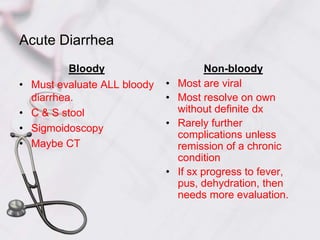
Acute DiarrheaBloodyMust evaluate ALL bloody diarrhea.C & S stoolSigmoidoscopyMaybe CTNon-bloodyMost are viralMost resolve on own without definite dxRarely further complications unless remission of a chronic conditionIf sx progress to fever, pus, dehydration, then needs more evaluation.
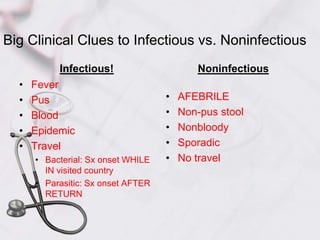
Big Clinical Clues to Infectious vs. NoninfectiousInfectious!Fever PusBloodEpidemicTravelBacterial: Sx onset WHILE IN visited countryParasitic: Sx onset AFTER RETURNNoninfectiousAFEBRILENon-pus stoolNonbloodySporadicNo travel
Acute infectious diarrheaMost infectious diarrheas are acquired through fecal-oral transmission from water, food, or person-to-person contactPatients with infectious diarrhea often complain of nausea, vomiting, and abdominal pain and have watery, malabsorptive, or bloody diarrhea and fever (dysentery)
Some of the short-lived watery diarrheas diagnosed as “viral gastroenteritis” are likely to be mild, sporadic, food-borne bacterial infections.Since diagnostic work up is not always indicated, you may not be able to label the exact etiology of the acute diarrhea.
Get a thorough history from your patient!Nutritional supplements should be reviewed, including the intake of “sugar-free” foods (containing nonabsorbable carbohydrates), fat substitutes, milk products, and shellfish, and heavy intake of fruits, fruit juices, or caffeine.
Diarrhea is one of the most frequent adverse effects of prescription medications; it is important to note that drug-related diarrhea usually occurs after a new drug is initiated or the dosage increased.Especially antibioticsAugmentin, EES
Food- or waterborne outbreaks of diarrhea are becoming more common. The history should include place of residence, drinking water (treated city water or well water), rural conditions, with consumption of raw milk, consumption of raw meat or fishFish can become contaminated in their own environment (especially the filter-feeding bivalve mollusks, such as mussels, clams, oysters, and scallops) or by food handlers, and exposure to farm animals that may spread Salmonella or Brucella organismsUnwashed vegetablesoutbreaks of E. coli O157:H7 have been associated with petting zoos and unwashed lettuce.
Sexual history is important, because specific organisms can cause diarrhea in homosexual men and HIV-infected patients.
 Symptoms that begin within six hours suggest ingestion of a preformed toxin of Staphylococcus aureus or Bacillus cereusSymptoms that begin at 8 to 16 hours suggest infection with Clostridium perfringensSymptoms that begin at more than 16 hours can result from viral or bacterial infection (eg, contamination of food with enterotoxigenic or enterohemorrhagic E. coli).
 It is also important to ask about recent antibiotic use (as a clue to the presence of C. difficile infection, although it is possible for community-associated C. difficile infection to occur in patients without antibiotic exposure), other medications, and to obtain a complete past medical history (eg, to identify an immunocompromised host or the possibility of nosocomial infection)
Syndromes that may begin with diarrhea but progress to fever and more systemic complaints such as headache, muscle aches, stiff neck may suggest infection with Listeriamonocytogenes, particularly in pregnant woman.Women who are pregnant have a 20-fold increased risk of developing listeriosis from meat products or unpasteurized dairy products (such as soft cheeses).
PEThe physical examination in acute diarrhea is helpful in determining the severity of disease and hydration status. Vital signs (including temperature and orthostatic evaluation of pulse and blood pressure) and signs of volume depletion (including dry mucous membranes, decreased skin turgor, and confusion) should be carefully evaluated. A careful abdominal examination to evaluate for tenderness and distention and a stool examination to evaluate for grossly bloody stools are warranted. Nonbloody stools should be evaluated for heme positivity.
Viral acute diarrhea“Acute Viral Gastroenteritis”Sx onsetSelf-limited illnesses commonly due toNorovirusRotovirusAdenovirusAstrovirus
Bacterial acute diarrheaEven though bacteria is the cause, many of these acute outbreaks are self-limited.  Often patient will not even present for treatment and will never need antibiotic.
Salmonellaconsuming food that is contaminated with animal feces8-48 hours incubationFever with chillsNausea and vomitingCramping and abdominal painDiarrhea often grossly bloody 3-5 daysTx if not self-limited: Trimethoprim-sulfamethoxazole, ampicillin, ciprofloxin
Campylobactertypically caused by Campylobacter jejuni or C. coli; it is largely a foodborne disease.Primarily uncooked poultryDiarrhea (bloody ~10%), abdominal painAzithromycin (500 mg orally one time a day for 3 days) should be first line Rx therapy for symptoms lasting >7days, otherwise self-limited symptomatic therapy recommended.
ShigellosisFever with chillsAbdominal crampsDiarrhea often with blood and mucusHeadache, malaiseDirect person-to-person spreadTxTrimethoprim-sulfamethoxazole, ciprofloxin, levofloxacin, ampicillinIncreasing resistance to antibiotics notedAzithromycin, 500 mg orally on day 1 and 250 mg orally one time a day for 4 days, may be an effective alternative treatment for resistant strains
E. Coli/Enterohemorrhagic Escherichia coli (EHEC)Sx abdominal pain and bloody diarrhea No feverTwo strains now0157:H7 (since 1982)O104:H4 (May 2011)Antbiotictx is not recommended at present, the incidence of complications (hemolytic-uremic syndrome) may be greater after antibiotic therapyHemolytic-uremic syndrome (HUS) is the major systemic complication, and is characterized by the triad of acute renal failure, microangiopathic hemolytic anemia and thrombocytopenia; these typically begin 5 to 10 days after the onset of diarrhea.
C. diffClostridium difficile20% chance after completing broad spectrum antibioticThe A and B toxins produced by C. difficile can cause severe diarrhea, pseudomembranous colitis, or toxic megacolon.High risk pts: nursing home residents and employees, hospitalized pts and employeesmetronidazole (250 mg orally four times a day or 500 mg orally three times a day for 10 days)
CholeraHistory of travel to endemic areasVibriocholeraeIngestion in contaminated foodMassive diarrhea-nonbloody, liquid, gray, “rice water diarrhea”, No odorDehydration occurs quicklyVaccine available but short-livedTx with hydration and antibioticsTetracycline, ampicillin, azithromycin, trimethoprim-sulfamethoxazole, fluoroquinolones
Protozoa induced diarrhea
GiardiaGiardia protozoa infection (giardiasis) is one of the most common causes of diarrhea in the United States. Giardia infection can be transmitted through water, food, and person-to-person contact.
Watery yellow, sometimes foul-smelling diarrhea that may alternate with soft, greasy stoolsFatigueAbdominal cramps and bloatingNauseaWeight loss — as much as 10 percent of your body weight
Infections usually clear up within six weeks. But you may have recurrent episodes or have intestinal problems long after the parasites are gone. Several drugs are generally effective against giardia parasites, but not everyone responds to them. Tinidazole 2 g orally as a single doseMetronidazole (Flagyl) 250mg potidx 5d
Noninfectious causes of diarrhea include inflammatory bowel disease, irritable bowel syndrome, ischemic bowel disease, partial small bowel obstruction, pelvic abscess in the rectosigmoid area, fecal impaction, and the ingestion of poorly absorbable sugars, such as lactulose and acute alcohol ingestion.
Diagnostic evaluationA medical evaluation of acute diarrhea is not warranted in the previously healthy individual if symptoms are mild, moderate, spontaneously improve within 48 hours, and are not accompanied by fever, chills, severe abdominal pain, or blood in the stool.
evaluation is indicated if symptoms are severe or prolonged, the patient appears “toxic,” there is evidence of colitis (occult or gross blood in the stools, severe abdominal pain or tenderness, and fever), Hospitalized patients or recent use of antibiotics,Diarrhea in the elderly (≥70 years of age) or the immunocompromised,Systemic illness with diarrhea, especially in pregnant women (in which case listeriosis should be suspected),or empirical therapy has failed.
Diagnostic evaluation of diarrheaThe use of the laboratory to make the diagnosis of infectious diarrhea of Campylobacter, Salmonella, Shigella, and C. difficile and if only liquid stools are cultured.“C & S” = culture and sensitivity of stool“C diff” = needs requested separately in local labs
Organisms that can cause diarrhea but are not sought routinely by most clinical microbiology laboratories unless specifically requested include Yersinia, Plesiomonas, enterohemorrhagic E. coli serotype O157:H7, Cryptosporidium, Cyclospora, Microsporidia, and noncholeraVibrio.
“O & P” stool studyParasites such as Giardia and Strongyloides and enteroadherent bacteria can be difficult to detect in stool but may be diagnosed by intestinal biopsy. Even with the use of all available laboratory techniques, the cause of 20 to 40% of all acute infectious diarrheas remains undiagnosed.
Stool evaluation for fecal leukocytes “Fecal WBCs” is a useful initial test, because it may support a diagnosis of inflammatory diarrhea. If the test is negative, stool culture may not be necessary, but culture is indicated if the test is positive.
TxThe treatment of diarrhea can be symptomatic (fluid replacement and antidiarrheal agents) or specific (antimicrobial therapy) or both.Because death in acute diarrhea is caused by dehydration, the first task is to assess the degree of dehydration and replace fluid and electrolyte deficits.
Severely dehydrated patients should be rehydrated with intravenous Ringer's lactate or saline solution, to which additional K+ and NaHCO3− may be added as necessary. In mild-to-moderate dehydration, ORS (oral rehydration solution) can be given to infants and children in volumes of 50 to 100 mL/kg over 4 to 6 hours; adults may need to drink 1000 mL/hr.
DietTotal food abstinence is unnecessary and not recommended. Foods providing calories are necessary to facilitate renewal of enterocytes. Patients should be encouraged to take frequent feedings of fruit drinks, tea, “flat” carbonated beverages, and soft, easily digested foods such as bananas, applesauce, rice, potatoes, noodles, crackers, toast, and soups.
Dairy products should be avoided, because transient lactase deficiency can be caused by enteric, viral, and bacterial infections. Caffeinated beverages and alcohol, which can enhance intestinal motility and secretions, should be avoided.
Bismuth subsalicylate (Pepto-Bismol, 525 mg orally every 30 minutes to 1 hour for five doses, may repeat on day 2) is safe and efficacious in bacterial infectious diarrheas.
Anxiolytics (e.g., diazepam 2 mg orally two to four times daily) and antiemetics (e.g., promethazine 12.5 to 25 mg orally once or twice daily) that decrease sensory perception may make symptoms more tolerable and are safe.Some foods or food-derived substances (green bananas, pectins [amylase-resistant starch], zinc) lessen the amount and/or duration of diarrhea. Zinc supplementation (20 mg of elemental zinc orally once a day) is effective in preventing recurrences of diarrhea in malnourished children.
Probiotics are live, nonpathogenic, human microorganisms that provide a health benefit. Level 1 evidence has been reported for the therapeutic use of probiotics.Most species are lactic acid bacteria. Lactobacillus GG (1010 colony-forming units [CFU]/250 mL ORS daily until diarrhea stops) added to an ORS decreases the duration of diarrhea in children with acute diarrhea, particularly with rotavirus infection.
Who you must treat!Regardless of the cause of infectious diarrhea, patients should be treated if they areimmunosupressed;have valvular, vascular, or orthopedic prostheses;have congenital hemolytic anemias (especially if salmonellosis is involved);or are extremely young or old.
If you must tx empirically without significant suspicion of cause...While the clinician is awaiting stool culture results to guide specific therapy the fluoroquinolones (e.g., ciprofloxacin 500 mg orally two times a day for 5 days) are the treatment of choice.Trimethoprim-sulfamethoxazole is second-line therapy.
Chronic Diarrhea >4 weeksStool culture and examination may detect organisms that often cause protracted infectious diarrhea in adults:enteropathogenic(enteroadherent) E. coli,Giardia,Entamoeba,Cryptosporidium,Aeromonas, andYersiniaenterocolitica.
Chronic diarrhea evalFecal WBCsStool C&SO&PC. difficile stool testTSHCBC
Fecal WBCsPresent fecal WBCs:C. difficile colitisChrohn’s diseaseUlcerative colitisShigellosisSalmonellosisTyphoid fever (s. typhi)Invasive e. coliY. enterocoliticaAbsent fecal WBCs:GiardiasisAmebiasisViral enteritisToxigenicecoliMicroscopic colitisDrug-induced diarrhea
Malabsorptioncaused by many different diseases, drugs, or nutritional products that impair intraluminal digestion, mucosal absorption, or nutrient delivery to the systemic circulation.Steatorrhea (excess fat in the stool) is the hallmark of malabsorption; a stool test for fat is the best screening test for malabsorption.
A careful history is crucial in guiding further testing to confirm the suspicion of malabsorption and to make a specific diagnosisThe goals of treatment are to correct or treat the underlying disease and to replenish water, electrolyte, and nutritional losses.
Conditions of malabsorption include:Celiac sprueBacterial overgrowthLactase deficiency
Malabsorption Clinical presentationIndividuals typically present with: bulky, fat-laden stools(usually >30 g of fat per day),abdominal pain,and diabetes,although some present with diabetes in the absence of gastrointestinal symptoms.
Diagnostic evaluation for malabsorptionQuantitative stool fat testGold standard test of fat malabsorption, with which all other tests are compared.Requires ingestion of a high-fat diet (100 g) for 2 days before and during the collection.Stool is collected for 3 days.
Qualitative stool fat testSudan stain of a stool sample for fat.determines the percentage of fat in the stool (normal, <20%).The test depends on an adequate fat intake (100 g/day).There is high sensitivity (90%) and specificity (90%) with fat malabsorption of >10 g/24 hr.
Acid steatocritReliable screening test for fat malabsorption that is inexpensive and easy to perform.Centrifugation of acidified stool in a hematocrit capillary yields solid, liquid, and fatty layers.Results are expressed as volumetric percentages (lipid phase on solid phase); normal, <10%.High sensitivity (100%) and specificity (95%) compared with the 72-hr stool quantitative fat test.Depends on adequate fat intake (100 g/day).
D-XylosetestA test of small intestinal mucosal absorption, used to distinguish mucosal malabsorption from malabsorption due to pancreatic insufficiency.An oral dose of D-xylose (25 g/500 mL water) is administered, and D-xylose excretion is measured in a 5-hr urine collection
Hydrogen breath testMost useful in the diagnosis of lactase deficiency.An oral dose of lactose (1 g/kg body weight) is administered after measurement of basal breath H2 levels.A late peak (within 3–6 hr) of >20 ppm of exhaled H2 after lactose ingestion suggests lactose malabsorption.Absorption of other carbohydrates (e.g., sucrose, glucose, fructose) also can be tested.
Small-bowel biopsyObtained for a specific diagnosis when there is a high index of suspicion for small intestinal disease.Several biopsy specimens (4–5) must be obtained to maximize the diagnostic yield.Small intestinal biopsy provides a specific diagnosis in some diseasesintestinal infection,Whipple's diseaselymphoma,Amyloidosisceliac disease and tropical sprue
TxPancreatic enzyme replacement and analgesics are the mainstays of treatment.
Celiac SprueAka: gluten enteropathy, celiac diseaseDiffuse damage to proximal small intestinal mucosa causes malabsorption of most nutrientsPresent more commonly in infancy, but also between 20-40 and again > 60
Removal of gluten from the diet results in disappearance of symptoms and healing in mostGluten is a protein component of some grains, wheat, rye, oats, barley.Not in rice or cornThought to elicit both humoral and cellular inflammatory responses in the mucosal liningInflammation leads to destruction
Celiac dxSmall bowel biopsy showing is blunting and flattening of villi.First line labs:IgA tissue transglutaminase antibodiesIgAendomysial antibodies
Lactose deficiencyLactase is a brush border enzyme that breaks down lactulose to glucose to galactoseDeficiency may be from:congenital prematurity < 30 wks gestationA decline in quantity as person maturesSecondary to conditions that effect the proximal small bowel
Lactose deficiencyClinical findingsSymptomatology depends on the amount of deficiencyAnd the amount of lactose ingestionBloating, crampingFlatusOsmotic diarrheaNo weight loss
Lab testsHydrogen breath testTrial of lactose free diet
TRUE SECRETORY DIARRHEASEndocrine Tumor DiarrheasNonendocrine malignanciesFactitious diarrheaDiabetic diarrheaAlcoholic diarrheaClinical clue:  Secretory diarrheas continue with fasting and osmotic diarrheas cease with fasting!
Endocrine tumor diarrheaCarcinoid SyndromePatients with metastatic carcinoid tumors of the gastrointestinal tract may develop a watery diarrhea and cramping abdominal pain in addition to other symptomsBecause one third of these patients do not have other symptoms at the time the diarrhea begins, carcinoid should be considered in patients with secretory diarrhea.
Nonendocrine malignanciesVillous Adenomas-Large (4 to 10 cm) villous adenomas of the rectum or rectosigmoid may cause a secretory form of diarrhea (500 to 3000 mL/24 hours) characterized by hypokalemia, chloride-rich stool, and metabolic alkalosis
Radiation EnteritisPatients receiving pelvic radiation for malignancies of the female urogenital tract or the male prostate may develop chronic radiation enterocolitis 6 to 12 months after total doses of radiationSymptoms can develop 20 years after treatment
Questions?Thank You!
ReferencesCecil Medicine. 23rd ed. Philadelphia, Pa: Saunders Elsevier; 2007:chap.DuPont HL. Guidelines on acute infectious diarrhea in adults. The Practice Parameters Committee of the American College of Gastroenterology. Am J Gastroenterol 1997; 92:1962.Thielman NM, Guerrant RL. Clinical practice. Acute infectious diarrhea. N Engl J Med 2004; 350:38.Fine KD, Schiller LR. AGA technical review on the evaluation and management of chronic diarrhea. Gastroenterology 1999; 116:1464.

Acute and chronic diarrhea summary

  • 1.
    Acute and ChronicDiarrheaCrystal Byerly, MEd., PA-CSeton Hill University PA Program Assistant ProfessorAnd Family Practice PA
  • 2.
    Learning ObjectivesDefine acutevs. chronic diarrhea etiologiesCreate a differential diagnosis for each type of diarrheaDifferentiate when further testing,  including a colonoscopy,  should be orderedDiscuss treatment options including symptom management
  • 3.
    Definitions of diarrheaSymptomatic:IncreasedfrequencyIncreased fluidityIncreased volumeOr any combination of abovePhysiologic definition:Decreased absorption or increased secretion, or both, causing > 200 mL liquid BM excretion/day
  • 4.
    Normal stool frequencyranges from three times a week to three times a dayAcute diarrheas are those lasting less than 2 to 3 weeks or, rarely, 6 to 8 weeks.The most common cause of acute diarrhea is infection. Learn infectious vs. non-infectious.Chronic diarrheas are those lasting at least 4 weeks, and more usually 6 to 8 weeks or longer.There are three categories of chronic diarrhea:osmotic (malabsorptive) diarrheasecretory diarrhea, and inflammatory vs. non-inflammatory diarrhea.
  • 5.
    Approximately 80% ofacute diarrheas are due to infections with viruses, bacteria, helminths, and protozoa.The remainder are secondary to the ingestion of medications, poorly absorbed sugars (fructose polymers or sorbitol), fecal impaction, pelvic inflammation.Diarrhea results from imbalance of the intestines to handle water and electrolytes
  • 7.
    Acute DiarrheaBloodyMust evaluateALL bloody diarrhea.C & S stoolSigmoidoscopyMaybe CTNon-bloodyMost are viralMost resolve on own without definite dxRarely further complications unless remission of a chronic conditionIf sx progress to fever, pus, dehydration, then needs more evaluation.
  • 8.
    Big Clinical Cluesto Infectious vs. NoninfectiousInfectious!Fever PusBloodEpidemicTravelBacterial: Sx onset WHILE IN visited countryParasitic: Sx onset AFTER RETURNNoninfectiousAFEBRILENon-pus stoolNonbloodySporadicNo travel
  • 9.
    Acute infectious diarrheaMostinfectious diarrheas are acquired through fecal-oral transmission from water, food, or person-to-person contactPatients with infectious diarrhea often complain of nausea, vomiting, and abdominal pain and have watery, malabsorptive, or bloody diarrhea and fever (dysentery)
  • 10.
    Some of theshort-lived watery diarrheas diagnosed as “viral gastroenteritis” are likely to be mild, sporadic, food-borne bacterial infections.Since diagnostic work up is not always indicated, you may not be able to label the exact etiology of the acute diarrhea.
  • 11.
    Get a thoroughhistory from your patient!Nutritional supplements should be reviewed, including the intake of “sugar-free” foods (containing nonabsorbable carbohydrates), fat substitutes, milk products, and shellfish, and heavy intake of fruits, fruit juices, or caffeine.
  • 12.
    Diarrhea is oneof the most frequent adverse effects of prescription medications; it is important to note that drug-related diarrhea usually occurs after a new drug is initiated or the dosage increased.Especially antibioticsAugmentin, EES
  • 13.
    Food- or waterborneoutbreaks of diarrhea are becoming more common. The history should include place of residence, drinking water (treated city water or well water), rural conditions, with consumption of raw milk, consumption of raw meat or fishFish can become contaminated in their own environment (especially the filter-feeding bivalve mollusks, such as mussels, clams, oysters, and scallops) or by food handlers, and exposure to farm animals that may spread Salmonella or Brucella organismsUnwashed vegetablesoutbreaks of E. coli O157:H7 have been associated with petting zoos and unwashed lettuce.
  • 14.
    Sexual history isimportant, because specific organisms can cause diarrhea in homosexual men and HIV-infected patients.
  • 15.
     Symptoms that beginwithin six hours suggest ingestion of a preformed toxin of Staphylococcus aureus or Bacillus cereusSymptoms that begin at 8 to 16 hours suggest infection with Clostridium perfringensSymptoms that begin at more than 16 hours can result from viral or bacterial infection (eg, contamination of food with enterotoxigenic or enterohemorrhagic E. coli).
  • 16.
     It is alsoimportant to ask about recent antibiotic use (as a clue to the presence of C. difficile infection, although it is possible for community-associated C. difficile infection to occur in patients without antibiotic exposure), other medications, and to obtain a complete past medical history (eg, to identify an immunocompromised host or the possibility of nosocomial infection)
  • 17.
    Syndromes that maybegin with diarrhea but progress to fever and more systemic complaints such as headache, muscle aches, stiff neck may suggest infection with Listeriamonocytogenes, particularly in pregnant woman.Women who are pregnant have a 20-fold increased risk of developing listeriosis from meat products or unpasteurized dairy products (such as soft cheeses).
  • 18.
    PEThe physical examinationin acute diarrhea is helpful in determining the severity of disease and hydration status. Vital signs (including temperature and orthostatic evaluation of pulse and blood pressure) and signs of volume depletion (including dry mucous membranes, decreased skin turgor, and confusion) should be carefully evaluated. A careful abdominal examination to evaluate for tenderness and distention and a stool examination to evaluate for grossly bloody stools are warranted. Nonbloody stools should be evaluated for heme positivity.
  • 19.
    Viral acute diarrhea“AcuteViral Gastroenteritis”Sx onsetSelf-limited illnesses commonly due toNorovirusRotovirusAdenovirusAstrovirus
  • 20.
    Bacterial acute diarrheaEventhough bacteria is the cause, many of these acute outbreaks are self-limited. Often patient will not even present for treatment and will never need antibiotic.
  • 21.
    Salmonellaconsuming food thatis contaminated with animal feces8-48 hours incubationFever with chillsNausea and vomitingCramping and abdominal painDiarrhea often grossly bloody 3-5 daysTx if not self-limited: Trimethoprim-sulfamethoxazole, ampicillin, ciprofloxin
  • 22.
    Campylobactertypically caused byCampylobacter jejuni or C. coli; it is largely a foodborne disease.Primarily uncooked poultryDiarrhea (bloody ~10%), abdominal painAzithromycin (500 mg orally one time a day for 3 days) should be first line Rx therapy for symptoms lasting >7days, otherwise self-limited symptomatic therapy recommended.
  • 23.
    ShigellosisFever with chillsAbdominalcrampsDiarrhea often with blood and mucusHeadache, malaiseDirect person-to-person spreadTxTrimethoprim-sulfamethoxazole, ciprofloxin, levofloxacin, ampicillinIncreasing resistance to antibiotics notedAzithromycin, 500 mg orally on day 1 and 250 mg orally one time a day for 4 days, may be an effective alternative treatment for resistant strains
  • 24.
    E. Coli/Enterohemorrhagic Escherichiacoli (EHEC)Sx abdominal pain and bloody diarrhea No feverTwo strains now0157:H7 (since 1982)O104:H4 (May 2011)Antbiotictx is not recommended at present, the incidence of complications (hemolytic-uremic syndrome) may be greater after antibiotic therapyHemolytic-uremic syndrome (HUS) is the major systemic complication, and is characterized by the triad of acute renal failure, microangiopathic hemolytic anemia and thrombocytopenia; these typically begin 5 to 10 days after the onset of diarrhea.
  • 25.
    C. diffClostridium difficile20%chance after completing broad spectrum antibioticThe A and B toxins produced by C. difficile can cause severe diarrhea, pseudomembranous colitis, or toxic megacolon.High risk pts: nursing home residents and employees, hospitalized pts and employeesmetronidazole (250 mg orally four times a day or 500 mg orally three times a day for 10 days)
  • 26.
    CholeraHistory of travelto endemic areasVibriocholeraeIngestion in contaminated foodMassive diarrhea-nonbloody, liquid, gray, “rice water diarrhea”, No odorDehydration occurs quicklyVaccine available but short-livedTx with hydration and antibioticsTetracycline, ampicillin, azithromycin, trimethoprim-sulfamethoxazole, fluoroquinolones
  • 27.
  • 28.
    GiardiaGiardia protozoa infection(giardiasis) is one of the most common causes of diarrhea in the United States. Giardia infection can be transmitted through water, food, and person-to-person contact.
  • 29.
    Watery yellow, sometimesfoul-smelling diarrhea that may alternate with soft, greasy stoolsFatigueAbdominal cramps and bloatingNauseaWeight loss — as much as 10 percent of your body weight
  • 30.
    Infections usually clearup within six weeks. But you may have recurrent episodes or have intestinal problems long after the parasites are gone. Several drugs are generally effective against giardia parasites, but not everyone responds to them. Tinidazole 2 g orally as a single doseMetronidazole (Flagyl) 250mg potidx 5d
  • 31.
    Noninfectious causes ofdiarrhea include inflammatory bowel disease, irritable bowel syndrome, ischemic bowel disease, partial small bowel obstruction, pelvic abscess in the rectosigmoid area, fecal impaction, and the ingestion of poorly absorbable sugars, such as lactulose and acute alcohol ingestion.
  • 32.
    Diagnostic evaluationA medicalevaluation of acute diarrhea is not warranted in the previously healthy individual if symptoms are mild, moderate, spontaneously improve within 48 hours, and are not accompanied by fever, chills, severe abdominal pain, or blood in the stool.
  • 33.
    evaluation is indicatedif symptoms are severe or prolonged, the patient appears “toxic,” there is evidence of colitis (occult or gross blood in the stools, severe abdominal pain or tenderness, and fever), Hospitalized patients or recent use of antibiotics,Diarrhea in the elderly (≥70 years of age) or the immunocompromised,Systemic illness with diarrhea, especially in pregnant women (in which case listeriosis should be suspected),or empirical therapy has failed.
  • 34.
    Diagnostic evaluation ofdiarrheaThe use of the laboratory to make the diagnosis of infectious diarrhea of Campylobacter, Salmonella, Shigella, and C. difficile and if only liquid stools are cultured.“C & S” = culture and sensitivity of stool“C diff” = needs requested separately in local labs
  • 35.
    Organisms that cancause diarrhea but are not sought routinely by most clinical microbiology laboratories unless specifically requested include Yersinia, Plesiomonas, enterohemorrhagic E. coli serotype O157:H7, Cryptosporidium, Cyclospora, Microsporidia, and noncholeraVibrio.
  • 36.
    “O & P”stool studyParasites such as Giardia and Strongyloides and enteroadherent bacteria can be difficult to detect in stool but may be diagnosed by intestinal biopsy. Even with the use of all available laboratory techniques, the cause of 20 to 40% of all acute infectious diarrheas remains undiagnosed.
  • 37.
    Stool evaluation forfecal leukocytes “Fecal WBCs” is a useful initial test, because it may support a diagnosis of inflammatory diarrhea. If the test is negative, stool culture may not be necessary, but culture is indicated if the test is positive.
  • 38.
    TxThe treatment ofdiarrhea can be symptomatic (fluid replacement and antidiarrheal agents) or specific (antimicrobial therapy) or both.Because death in acute diarrhea is caused by dehydration, the first task is to assess the degree of dehydration and replace fluid and electrolyte deficits.
  • 39.
    Severely dehydrated patientsshould be rehydrated with intravenous Ringer's lactate or saline solution, to which additional K+ and NaHCO3− may be added as necessary. In mild-to-moderate dehydration, ORS (oral rehydration solution) can be given to infants and children in volumes of 50 to 100 mL/kg over 4 to 6 hours; adults may need to drink 1000 mL/hr.
  • 40.
    DietTotal food abstinenceis unnecessary and not recommended. Foods providing calories are necessary to facilitate renewal of enterocytes. Patients should be encouraged to take frequent feedings of fruit drinks, tea, “flat” carbonated beverages, and soft, easily digested foods such as bananas, applesauce, rice, potatoes, noodles, crackers, toast, and soups.
  • 41.
    Dairy products shouldbe avoided, because transient lactase deficiency can be caused by enteric, viral, and bacterial infections. Caffeinated beverages and alcohol, which can enhance intestinal motility and secretions, should be avoided.
  • 42.
    Bismuth subsalicylate (Pepto-Bismol,525 mg orally every 30 minutes to 1 hour for five doses, may repeat on day 2) is safe and efficacious in bacterial infectious diarrheas.
  • 43.
    Anxiolytics (e.g., diazepam2 mg orally two to four times daily) and antiemetics (e.g., promethazine 12.5 to 25 mg orally once or twice daily) that decrease sensory perception may make symptoms more tolerable and are safe.Some foods or food-derived substances (green bananas, pectins [amylase-resistant starch], zinc) lessen the amount and/or duration of diarrhea. Zinc supplementation (20 mg of elemental zinc orally once a day) is effective in preventing recurrences of diarrhea in malnourished children.
  • 44.
    Probiotics are live,nonpathogenic, human microorganisms that provide a health benefit. Level 1 evidence has been reported for the therapeutic use of probiotics.Most species are lactic acid bacteria. Lactobacillus GG (1010 colony-forming units [CFU]/250 mL ORS daily until diarrhea stops) added to an ORS decreases the duration of diarrhea in children with acute diarrhea, particularly with rotavirus infection.
  • 45.
    Who you musttreat!Regardless of the cause of infectious diarrhea, patients should be treated if they areimmunosupressed;have valvular, vascular, or orthopedic prostheses;have congenital hemolytic anemias (especially if salmonellosis is involved);or are extremely young or old.
  • 46.
    If you musttx empirically without significant suspicion of cause...While the clinician is awaiting stool culture results to guide specific therapy the fluoroquinolones (e.g., ciprofloxacin 500 mg orally two times a day for 5 days) are the treatment of choice.Trimethoprim-sulfamethoxazole is second-line therapy.
  • 47.
    Chronic Diarrhea >4weeksStool culture and examination may detect organisms that often cause protracted infectious diarrhea in adults:enteropathogenic(enteroadherent) E. coli,Giardia,Entamoeba,Cryptosporidium,Aeromonas, andYersiniaenterocolitica.
  • 48.
    Chronic diarrhea evalFecalWBCsStool C&SO&PC. difficile stool testTSHCBC
  • 49.
    Fecal WBCsPresent fecalWBCs:C. difficile colitisChrohn’s diseaseUlcerative colitisShigellosisSalmonellosisTyphoid fever (s. typhi)Invasive e. coliY. enterocoliticaAbsent fecal WBCs:GiardiasisAmebiasisViral enteritisToxigenicecoliMicroscopic colitisDrug-induced diarrhea
  • 50.
    Malabsorptioncaused by manydifferent diseases, drugs, or nutritional products that impair intraluminal digestion, mucosal absorption, or nutrient delivery to the systemic circulation.Steatorrhea (excess fat in the stool) is the hallmark of malabsorption; a stool test for fat is the best screening test for malabsorption.
  • 51.
    A careful historyis crucial in guiding further testing to confirm the suspicion of malabsorption and to make a specific diagnosisThe goals of treatment are to correct or treat the underlying disease and to replenish water, electrolyte, and nutritional losses.
  • 52.
    Conditions of malabsorptioninclude:Celiac sprueBacterial overgrowthLactase deficiency
  • 53.
    Malabsorption Clinical presentationIndividualstypically present with: bulky, fat-laden stools(usually >30 g of fat per day),abdominal pain,and diabetes,although some present with diabetes in the absence of gastrointestinal symptoms.
  • 54.
    Diagnostic evaluation formalabsorptionQuantitative stool fat testGold standard test of fat malabsorption, with which all other tests are compared.Requires ingestion of a high-fat diet (100 g) for 2 days before and during the collection.Stool is collected for 3 days.
  • 55.
    Qualitative stool fattestSudan stain of a stool sample for fat.determines the percentage of fat in the stool (normal, <20%).The test depends on an adequate fat intake (100 g/day).There is high sensitivity (90%) and specificity (90%) with fat malabsorption of >10 g/24 hr.
  • 56.
    Acid steatocritReliable screeningtest for fat malabsorption that is inexpensive and easy to perform.Centrifugation of acidified stool in a hematocrit capillary yields solid, liquid, and fatty layers.Results are expressed as volumetric percentages (lipid phase on solid phase); normal, <10%.High sensitivity (100%) and specificity (95%) compared with the 72-hr stool quantitative fat test.Depends on adequate fat intake (100 g/day).
  • 57.
    D-XylosetestA test ofsmall intestinal mucosal absorption, used to distinguish mucosal malabsorption from malabsorption due to pancreatic insufficiency.An oral dose of D-xylose (25 g/500 mL water) is administered, and D-xylose excretion is measured in a 5-hr urine collection
  • 58.
    Hydrogen breath testMostuseful in the diagnosis of lactase deficiency.An oral dose of lactose (1 g/kg body weight) is administered after measurement of basal breath H2 levels.A late peak (within 3–6 hr) of >20 ppm of exhaled H2 after lactose ingestion suggests lactose malabsorption.Absorption of other carbohydrates (e.g., sucrose, glucose, fructose) also can be tested.
  • 59.
    Small-bowel biopsyObtained fora specific diagnosis when there is a high index of suspicion for small intestinal disease.Several biopsy specimens (4–5) must be obtained to maximize the diagnostic yield.Small intestinal biopsy provides a specific diagnosis in some diseasesintestinal infection,Whipple's diseaselymphoma,Amyloidosisceliac disease and tropical sprue
  • 60.
    TxPancreatic enzyme replacementand analgesics are the mainstays of treatment.
  • 61.
    Celiac SprueAka: glutenenteropathy, celiac diseaseDiffuse damage to proximal small intestinal mucosa causes malabsorption of most nutrientsPresent more commonly in infancy, but also between 20-40 and again > 60
  • 62.
    Removal of glutenfrom the diet results in disappearance of symptoms and healing in mostGluten is a protein component of some grains, wheat, rye, oats, barley.Not in rice or cornThought to elicit both humoral and cellular inflammatory responses in the mucosal liningInflammation leads to destruction
  • 63.
    Celiac dxSmall bowelbiopsy showing is blunting and flattening of villi.First line labs:IgA tissue transglutaminase antibodiesIgAendomysial antibodies
  • 64.
    Lactose deficiencyLactase isa brush border enzyme that breaks down lactulose to glucose to galactoseDeficiency may be from:congenital prematurity < 30 wks gestationA decline in quantity as person maturesSecondary to conditions that effect the proximal small bowel
  • 65.
    Lactose deficiencyClinical findingsSymptomatologydepends on the amount of deficiencyAnd the amount of lactose ingestionBloating, crampingFlatusOsmotic diarrheaNo weight loss
  • 66.
    Lab testsHydrogen breathtestTrial of lactose free diet
  • 67.
    TRUE SECRETORY DIARRHEASEndocrineTumor DiarrheasNonendocrine malignanciesFactitious diarrheaDiabetic diarrheaAlcoholic diarrheaClinical clue: Secretory diarrheas continue with fasting and osmotic diarrheas cease with fasting!
  • 68.
    Endocrine tumor diarrheaCarcinoidSyndromePatients with metastatic carcinoid tumors of the gastrointestinal tract may develop a watery diarrhea and cramping abdominal pain in addition to other symptomsBecause one third of these patients do not have other symptoms at the time the diarrhea begins, carcinoid should be considered in patients with secretory diarrhea.
  • 69.
    Nonendocrine malignanciesVillous Adenomas-Large(4 to 10 cm) villous adenomas of the rectum or rectosigmoid may cause a secretory form of diarrhea (500 to 3000 mL/24 hours) characterized by hypokalemia, chloride-rich stool, and metabolic alkalosis
  • 70.
    Radiation EnteritisPatients receivingpelvic radiation for malignancies of the female urogenital tract or the male prostate may develop chronic radiation enterocolitis 6 to 12 months after total doses of radiationSymptoms can develop 20 years after treatment
  • 71.
  • 72.
    ReferencesCecil Medicine. 23rded. Philadelphia, Pa: Saunders Elsevier; 2007:chap.DuPont HL. Guidelines on acute infectious diarrhea in adults. The Practice Parameters Committee of the American College of Gastroenterology. Am J Gastroenterol 1997; 92:1962.Thielman NM, Guerrant RL. Clinical practice. Acute infectious diarrhea. N Engl J Med 2004; 350:38.Fine KD, Schiller LR. AGA technical review on the evaluation and management of chronic diarrhea. Gastroenterology 1999; 116:1464.