COPD
Chronic bronchitis
&
Emphysema
COPD
 6th
leading cause of death worldwide
 Prevalence- ~5%
 Chronic progressive lung disease
 Characterized by narrowing of airways
 Partially reversible, unlike asthma
 Commonly associated with smoking
 Cause SOB & cough with expectoration
 Diagnosis requires PFT
Types
 Chronic bronchitis
 Cough with sputum production on most days for 3 months of a year, for
2 consecutive years
 Hyperplasia & hypertrophy of goblet cells & mucous glands, with
inflammation of the airways
 Progression causes metaplasia & fibrosis
 Advanced disease causes cyanosis & fluid retention- blue bloater
 Emphysema
 Permanent enlargement of air-spaces distal to terminal bronchioles,
leading to reduced surface area for exchange of gases
 Elasticity of lungs is reduced
 Patient makes effort to breathe giving looks of pink puffer
Causes
 Smoking- cumulative exposure
 Occupational exposure
 Air pollution
 Genetic- α-1 anti-trypsin deficiency
 Repeated lung infection
 ?autoimmunity
 Acute exacerbation- infection, pollutants, PE
Clinical features
 Symptoms
 Chronic cough with
expectoration
 Shortness of breath
 Wheezing
 Chest tightness
 h/o smoking
 Signs
 Tachypnea
 Active accessory
muscles
 Barrel-shaped chest
 Prolonged expiration
 Rhonchi
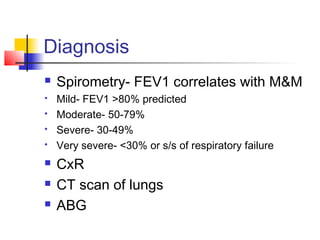
Diagnosis
 Spirometry- FEV1 correlates with M&M
 Mild- FEV1 >80% predicted
 Moderate- 50-79%
 Severe- 30-49%
 Very severe- <30% or s/s of respiratory failure
 CxR
 CT scan of lungs
 ABG
Management
 Assess & monitor
 Reduce risk factors- smoking, pollution, dust
 Manage stable COPD
 Prevent & treat acute exacerbations
Pneumococcal & annual Influenza vaccination
 Manage comorbidity
 Pulmonary rehabilitation
 Only measures to reduce mortality-
smoking cessation & supplemental oxygen
Drug treatment
For symptomatic relief
No effect on rate of decline
of lung function
Treatment
 Bronchodilators- relax smooth-muscle around
airways, providing an improved quality of life
 Given as inhalers
 Anticholinergics- Tiotropium, Ipratropium
 Beta-agonists- Salmeterol/Formoterol, Salbutamol
 Oral Theophylline
 Steroids- inhaled or oral, to treat & prevent
acute exacerbations in those with moderate
or severe COPD
Treatment- severity
 Mild- short-acting bronchodilator SOS
 Moderate- regular long-acting
bronchodilators
 Severe- +inhaled steroids, oral steroids
for acute exacerbations
 Very severe- +LTOT, ± regular oral
steroids
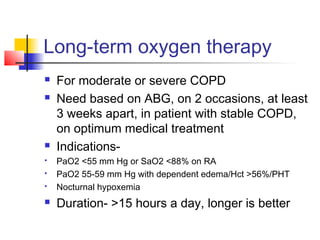
Long-term oxygen therapy
 For moderate or severe COPD
 Need based on ABG, on 2 occasions, at least
3 weeks apart, in patient with stable COPD,
on optimum medical treatment
 Indications-
 PaO2 <55 mm Hg or SaO2 <88% on RA
 PaO2 55-59 mm Hg with dependent edema/Hct >56%/PHT
 Nocturnal hypoxemia
 Duration- >15 hours a day, longer is better
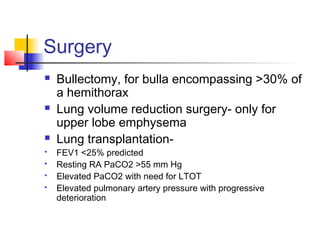
Surgery
 Bullectomy, for bulla encompassing >30% of
a hemithorax
 Lung volume reduction surgery- only for
upper lobe emphysema
 Lung transplantation-
 FEV1 <25% predicted
 Resting RA PaCO2 >55 mm Hg
 Elevated PaCO2 with need for LTOT
 Elevated pulmonary artery pressure with progressive
deterioration
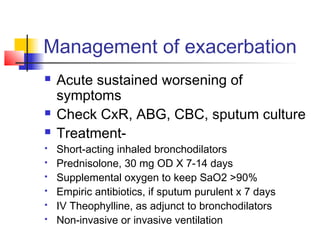
Management of exacerbation
 Acute sustained worsening of
symptoms
 Check CxR, ABG, CBC, sputum culture
 Treatment-
 Short-acting inhaled bronchodilators
 Prednisolone, 30 mg OD X 7-14 days
 Supplemental oxygen to keep SaO2 >90%
 Empiric antibiotics, if sputum purulent x 7 days
 IV Theophylline, as adjunct to bronchodilators
 Non-invasive or invasive ventilation
Prognosis
 COPD is a progressive disease
 Poor prognostic markers are-
 Severe airflow obstruction
 Poor exercise capacity
 Severe SOB
 Significantly over/underweight
 Respiratory failure or cor pulmonale
 Continued smoking
 Frequent acute exacerbations

Chronic obstructive pulmonary disease

  • 1.
  • 2.
    COPD  6th leading causeof death worldwide  Prevalence- ~5%  Chronic progressive lung disease  Characterized by narrowing of airways  Partially reversible, unlike asthma  Commonly associated with smoking  Cause SOB & cough with expectoration  Diagnosis requires PFT
  • 3.
    Types  Chronic bronchitis Cough with sputum production on most days for 3 months of a year, for 2 consecutive years  Hyperplasia & hypertrophy of goblet cells & mucous glands, with inflammation of the airways  Progression causes metaplasia & fibrosis  Advanced disease causes cyanosis & fluid retention- blue bloater  Emphysema  Permanent enlargement of air-spaces distal to terminal bronchioles, leading to reduced surface area for exchange of gases  Elasticity of lungs is reduced  Patient makes effort to breathe giving looks of pink puffer
  • 4.
    Causes  Smoking- cumulativeexposure  Occupational exposure  Air pollution  Genetic- α-1 anti-trypsin deficiency  Repeated lung infection  ?autoimmunity  Acute exacerbation- infection, pollutants, PE
  • 5.
    Clinical features  Symptoms Chronic cough with expectoration  Shortness of breath  Wheezing  Chest tightness  h/o smoking  Signs  Tachypnea  Active accessory muscles  Barrel-shaped chest  Prolonged expiration  Rhonchi
  • 6.
    Diagnosis  Spirometry- FEV1correlates with M&M  Mild- FEV1 >80% predicted  Moderate- 50-79%  Severe- 30-49%  Very severe- <30% or s/s of respiratory failure  CxR  CT scan of lungs  ABG
  • 7.
    Management  Assess &monitor  Reduce risk factors- smoking, pollution, dust  Manage stable COPD  Prevent & treat acute exacerbations Pneumococcal & annual Influenza vaccination  Manage comorbidity  Pulmonary rehabilitation  Only measures to reduce mortality- smoking cessation & supplemental oxygen
  • 8.
    Drug treatment For symptomaticrelief No effect on rate of decline of lung function
  • 9.
    Treatment  Bronchodilators- relaxsmooth-muscle around airways, providing an improved quality of life  Given as inhalers  Anticholinergics- Tiotropium, Ipratropium  Beta-agonists- Salmeterol/Formoterol, Salbutamol  Oral Theophylline  Steroids- inhaled or oral, to treat & prevent acute exacerbations in those with moderate or severe COPD
  • 10.
    Treatment- severity  Mild-short-acting bronchodilator SOS  Moderate- regular long-acting bronchodilators  Severe- +inhaled steroids, oral steroids for acute exacerbations  Very severe- +LTOT, ± regular oral steroids
  • 11.
    Long-term oxygen therapy For moderate or severe COPD  Need based on ABG, on 2 occasions, at least 3 weeks apart, in patient with stable COPD, on optimum medical treatment  Indications-  PaO2 <55 mm Hg or SaO2 <88% on RA  PaO2 55-59 mm Hg with dependent edema/Hct >56%/PHT  Nocturnal hypoxemia  Duration- >15 hours a day, longer is better
  • 12.
    Surgery  Bullectomy, forbulla encompassing >30% of a hemithorax  Lung volume reduction surgery- only for upper lobe emphysema  Lung transplantation-  FEV1 <25% predicted  Resting RA PaCO2 >55 mm Hg  Elevated PaCO2 with need for LTOT  Elevated pulmonary artery pressure with progressive deterioration
  • 13.
    Management of exacerbation Acute sustained worsening of symptoms  Check CxR, ABG, CBC, sputum culture  Treatment-  Short-acting inhaled bronchodilators  Prednisolone, 30 mg OD X 7-14 days  Supplemental oxygen to keep SaO2 >90%  Empiric antibiotics, if sputum purulent x 7 days  IV Theophylline, as adjunct to bronchodilators  Non-invasive or invasive ventilation
  • 14.
    Prognosis  COPD isa progressive disease  Poor prognostic markers are-  Severe airflow obstruction  Poor exercise capacity  Severe SOB  Significantly over/underweight  Respiratory failure or cor pulmonale  Continued smoking  Frequent acute exacerbations