Congenital Inguinal HerniaCongenital Inguinal Hernia
 Indirect Inguinal HerniaIndirect Inguinal Hernia
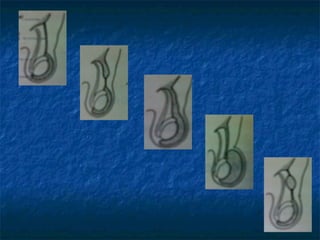
 Continued patency of the ProcessusContinued patency of the Processus
VaginalisVaginalis
 Patent PV sac is potentialPatent PV sac is potential
hernia/hydrocoelehernia/hydrocoele
 In hernia the sac is wider & contains anIn hernia the sac is wider & contains an
intraabdominal structureintraabdominal structure
 In hydrocoele the sac is narrow & containsIn hydrocoele the sac is narrow & contains
Processus VaginalisProcessus Vaginalis . . .. . .
 PV develops during12th wk of gestationPV develops during12th wk of gestation
 Out pouching of the peritoneal cavity through theOut pouching of the peritoneal cavity through the
internal ringinternal ring
 PV plays an integral role in the descent of testesPV plays an integral role in the descent of testes
 PV obliterates spontaneously from the deep ring to thePV obliterates spontaneously from the deep ring to the
testistestis
 possible role of CGRP in fusion of PVpossible role of CGRP in fusion of PV
 Distal portion persists as tunica vaginalisDistal portion persists as tunica vaginalis
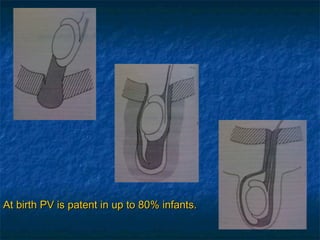
At birth PV is patent in up to 80% infants.At birth PV is patent in up to 80% infants.
IncidenceIncidence
 0.8 – 4 %0.8 – 4 %
 Highest in 1st year of lifeHighest in 1st year of life
 Incidence in premature infants 16 – 25%Incidence in premature infants 16 – 25%
 M:F is 6:1M:F is 6:1
 Right 60%, Left 30%, Bilateral 10%Right 60%, Left 30%, Bilateral 10%
Factors contributing to development ofFactors contributing to development of
herniahernia
 Undescended testisUndescended testis
 Increased peritoneal fluid :Increased peritoneal fluid :
Ascites, VP shuntAscites, VP shunt
 Increased abdominal pressure :Increased abdominal pressure :
Severe ascites, Meconium peritonitis,Severe ascites, Meconium peritonitis,
post repair of Exomphalos / CDHpost repair of Exomphalos / CDH
 Chronic respiratory disease :Chronic respiratory disease :
Cystic fibrosisCystic fibrosis
 Connective tissue disorders:Connective tissue disorders:
Ehlers –Danlos, Marfans, MucopolysaccharidosisEhlers –Danlos, Marfans, Mucopolysaccharidosis
Clinical FeaturesClinical Features
 Bulge in inguinal area extending towards / intoBulge in inguinal area extending towards / into
scrotum with crying / strainingscrotum with crying / straining
 may be present at birth or appear latermay be present at birth or appear later
 reduces in size when the child is relaxed / asleepreduces in size when the child is relaxed / asleep
 smooth soft-firm mass that emerges from thesmooth soft-firm mass that emerges from the
external ring lateral and above pubic tubercle,external ring lateral and above pubic tubercle,
enlarges with increased abdominal pressureenlarges with increased abdominal pressure
 Can be reduced with gentle pressure, mayCan be reduced with gentle pressure, may
reduce with gurgling noisereduce with gurgling noise
 Examine position of testis – undescended /Examine position of testis – undescended /
retractileretractile
 Reappears on crying / valsalva (blowing aReappears on crying / valsalva (blowing a
balloon / coughing ) preferably whileballoon / coughing ) preferably while
standingstanding
 Thickening & silkiness on palpating the cordThickening & silkiness on palpating the cord
as it crosses pubic tubercle –as it crosses pubic tubercle – Silk GloveSilk Glove
signsign
 If in doubt re-evaluate at second visitIf in doubt re-evaluate at second visit
ManagementManagement
 Inguinal hernia does not resolveInguinal hernia does not resolve
spontaneouslyspontaneously
 Must be operated because of high riskMust be operated because of high risk
of incarcerationof incarceration
 Operation :Operation :
HerniotomyHerniotomy - High suture ligation of the- High suture ligation of the
sac at the internal ringsac at the internal ring
 Open technique / LaparoscopyOpen technique / Laparoscopy
TechniqueTechnique
 Anaesthesia:Anaesthesia:
In infants – ETGAIn infants – ETGA
Older children – facial or laryngeal maskOlder children – facial or laryngeal mask
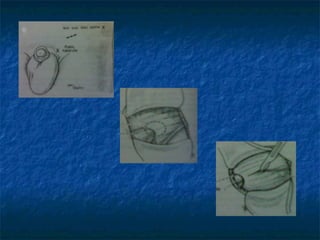
 Transverse groin skin crease incisionTransverse groin skin crease incision
 Open layersOpen layers
 Incision in external oblique aponeurosisIncision in external oblique aponeurosis
lateral to external ringlateral to external ring
 Fibres of cremasteric fascia are separatedFibres of cremasteric fascia are separated
 Shiny glistening white hernial sac identified &Shiny glistening white hernial sac identified &
lifted with blunt forcepslifted with blunt forceps
 In males the sac lies anterior & medial to vasIn males the sac lies anterior & medial to vas
& vessels& vessels
 Vas & vessels are never held with forceps,Vas & vessels are never held with forceps,
dissected off the sac with overlying areolardissected off the sac with overlying areolar
tissuetissue
 In females there are no significant structures otherIn females there are no significant structures other
than round ligament of uterusthan round ligament of uterus
 Ensure there are no contents in the sac, divideEnsure there are no contents in the sac, divide
between clampsbetween clamps
 Dissect proximally upto neck of the sacDissect proximally upto neck of the sac
 Twist the proximal sac & transfix the neck at the levelTwist the proximal sac & transfix the neck at the level
of deep ringof deep ring
 Traction on the testis to return it to the scrotumTraction on the testis to return it to the scrotum
 Closure in layersClosure in layers
Contralateral explorationContralateral exploration
Selected contralateral exploration:Selected contralateral exploration:
 Age:Age: 40% contralateral hernias occur after unilateral surgery in40% contralateral hernias occur after unilateral surgery in
children under 1 yrchildren under 1 yr
 Side of hernia:Side of hernia: LeftLeft
 Sex:Sex: FemaleFemale
 Patency of PV sac on opposite side:Patency of PV sac on opposite side: Herniography,Herniography,
intraoperative pnuemoperitoneum, Choledochoscope /intraoperative pnuemoperitoneum, Choledochoscope /
laparoscopelaparoscope
 Conditions predisposing to hernia on the opposite side:Conditions predisposing to hernia on the opposite side:
VP Shunt, connective tissue disordersVP Shunt, connective tissue disorders
 Poor risk for GAPoor risk for GA
Irreducible HerniaIrreducible Hernia
Incarcerated hernia: contents cannot beIncarcerated hernia: contents cannot be
easily reduced into peritoneal cavityeasily reduced into peritoneal cavity
 Irritability, pain in the groin / abdomen,Irritability, pain in the groin / abdomen,
vomitingvomiting
 Tense, tender, non fluctuant mass in theTense, tender, non fluctuant mass in the
groin, may extend into scrotum, notgroin, may extend into scrotum, not
transilluminanttransilluminant
 Bilious vomiting, abdominal distensionBilious vomiting, abdominal distension
indicates obstruction of bowelindicates obstruction of bowel
Strangulated hernia: Tightly constricted atStrangulated hernia: Tightly constricted at
the neck resulting in ischemia ofthe neck resulting in ischemia of
contents.contents.
 Pain intensifies, vomiting becomes bilious.Pain intensifies, vomiting becomes bilious.
Blood in stoolsBlood in stools
 Mass is tender, edema & reddening ofMass is tender, edema & reddening of
overlying skin, feveroverlying skin, fever
Management:Management:
 Non operative:Non operative: only when there is noonly when there is no
e/o ischemiae/o ischemia
 Under sedation & analgesia reduce theUnder sedation & analgesia reduce the
hernia by gentle compressionhernia by gentle compression
 Elective herniotomy after 48 hrs byElective herniotomy after 48 hrs by
which time there is less edemawhich time there is less edema
 Operative:Operative: When hernia cannot beWhen hernia cannot be
reduced or hernia is strangulatedreduced or hernia is strangulated
 Hernial sac opened. Look for viability ofHernial sac opened. Look for viability of
bowelbowel
 Deep ring can be enlarged by incising theDeep ring can be enlarged by incising the
arching fibres of conjoint tendon superiorlyarching fibres of conjoint tendon superiorly
 Tell tale e/o ischemia – bloody or foulTell tale e/o ischemia – bloody or foul
smelling fluid in the sac. Explore thesmelling fluid in the sac. Explore the
abdomenabdomen
Complications of herniotomyComplications of herniotomy
 Ascending / trapped testisAscending / trapped testis
 Recurrence – 0.8%Recurrence – 0.8%
 Injury to vasInjury to vas
 Testicular atrophyTesticular atrophy
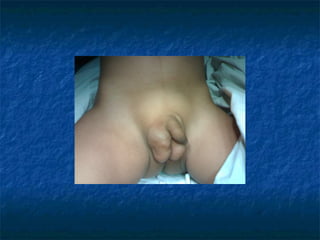
Congenital HydrocoeleCongenital Hydrocoele
 Usually noted in early infancy, can occur atUsually noted in early infancy, can occur at
anytimeanytime
 Often bilateralOften bilateral
 Soft, bluish, fluctuant swelling surrounding theSoft, bluish, fluctuant swelling surrounding the
testistestis
 Fluctuate in size: smaller at night when theFluctuate in size: smaller at night when the
child is relaxedchild is relaxed
 Neck of the hydrocoele narrows at the externalNeck of the hydrocoele narrows at the external
ring & usually does not extend into the inguinalring & usually does not extend into the inguinal
canalcanal
 Hallmark: Brilliant transilluminationHallmark: Brilliant transillumination
 In most children with congenital hydrocoele theIn most children with congenital hydrocoele the
PV sac closes and hydrocoele resolvesPV sac closes and hydrocoele resolves
between 12 – 24 monthsbetween 12 – 24 months
 There is no e/o hydrocoele will evolve intoThere is no e/o hydrocoele will evolve into
herniahernia
ManagementManagement
 Observation for first 2 years unless large,Observation for first 2 years unless large,
painfulpainful
 Herniotomy if it persists > 2 yrsHerniotomy if it persists > 2 yrs

CONGENITAL HERNIA AND HYDROCELE

  • 2.
    Congenital Inguinal HerniaCongenitalInguinal Hernia  Indirect Inguinal HerniaIndirect Inguinal Hernia  Continued patency of the ProcessusContinued patency of the Processus VaginalisVaginalis  Patent PV sac is potentialPatent PV sac is potential hernia/hydrocoelehernia/hydrocoele  In hernia the sac is wider & contains anIn hernia the sac is wider & contains an intraabdominal structureintraabdominal structure  In hydrocoele the sac is narrow & containsIn hydrocoele the sac is narrow & contains
  • 3.
    Processus VaginalisProcessus Vaginalis. . .. . .  PV develops during12th wk of gestationPV develops during12th wk of gestation  Out pouching of the peritoneal cavity through theOut pouching of the peritoneal cavity through the internal ringinternal ring  PV plays an integral role in the descent of testesPV plays an integral role in the descent of testes  PV obliterates spontaneously from the deep ring to thePV obliterates spontaneously from the deep ring to the testistestis  possible role of CGRP in fusion of PVpossible role of CGRP in fusion of PV  Distal portion persists as tunica vaginalisDistal portion persists as tunica vaginalis
  • 4.
    At birth PVis patent in up to 80% infants.At birth PV is patent in up to 80% infants.
  • 6.
    IncidenceIncidence  0.8 –4 %0.8 – 4 %  Highest in 1st year of lifeHighest in 1st year of life  Incidence in premature infants 16 – 25%Incidence in premature infants 16 – 25%  M:F is 6:1M:F is 6:1  Right 60%, Left 30%, Bilateral 10%Right 60%, Left 30%, Bilateral 10%
  • 7.
    Factors contributing todevelopment ofFactors contributing to development of herniahernia  Undescended testisUndescended testis  Increased peritoneal fluid :Increased peritoneal fluid : Ascites, VP shuntAscites, VP shunt  Increased abdominal pressure :Increased abdominal pressure : Severe ascites, Meconium peritonitis,Severe ascites, Meconium peritonitis, post repair of Exomphalos / CDHpost repair of Exomphalos / CDH  Chronic respiratory disease :Chronic respiratory disease : Cystic fibrosisCystic fibrosis  Connective tissue disorders:Connective tissue disorders: Ehlers –Danlos, Marfans, MucopolysaccharidosisEhlers –Danlos, Marfans, Mucopolysaccharidosis
  • 8.
    Clinical FeaturesClinical Features Bulge in inguinal area extending towards / intoBulge in inguinal area extending towards / into scrotum with crying / strainingscrotum with crying / straining  may be present at birth or appear latermay be present at birth or appear later  reduces in size when the child is relaxed / asleepreduces in size when the child is relaxed / asleep  smooth soft-firm mass that emerges from thesmooth soft-firm mass that emerges from the external ring lateral and above pubic tubercle,external ring lateral and above pubic tubercle, enlarges with increased abdominal pressureenlarges with increased abdominal pressure
  • 9.
     Can bereduced with gentle pressure, mayCan be reduced with gentle pressure, may reduce with gurgling noisereduce with gurgling noise  Examine position of testis – undescended /Examine position of testis – undescended / retractileretractile  Reappears on crying / valsalva (blowing aReappears on crying / valsalva (blowing a balloon / coughing ) preferably whileballoon / coughing ) preferably while standingstanding  Thickening & silkiness on palpating the cordThickening & silkiness on palpating the cord as it crosses pubic tubercle –as it crosses pubic tubercle – Silk GloveSilk Glove signsign  If in doubt re-evaluate at second visitIf in doubt re-evaluate at second visit
  • 10.
    ManagementManagement  Inguinal herniadoes not resolveInguinal hernia does not resolve spontaneouslyspontaneously  Must be operated because of high riskMust be operated because of high risk of incarcerationof incarceration  Operation :Operation : HerniotomyHerniotomy - High suture ligation of the- High suture ligation of the sac at the internal ringsac at the internal ring  Open technique / LaparoscopyOpen technique / Laparoscopy
  • 11.
    TechniqueTechnique  Anaesthesia:Anaesthesia: In infants– ETGAIn infants – ETGA Older children – facial or laryngeal maskOlder children – facial or laryngeal mask  Transverse groin skin crease incisionTransverse groin skin crease incision  Open layersOpen layers  Incision in external oblique aponeurosisIncision in external oblique aponeurosis lateral to external ringlateral to external ring
  • 13.
     Fibres ofcremasteric fascia are separatedFibres of cremasteric fascia are separated  Shiny glistening white hernial sac identified &Shiny glistening white hernial sac identified & lifted with blunt forcepslifted with blunt forceps  In males the sac lies anterior & medial to vasIn males the sac lies anterior & medial to vas & vessels& vessels  Vas & vessels are never held with forceps,Vas & vessels are never held with forceps, dissected off the sac with overlying areolardissected off the sac with overlying areolar tissuetissue
  • 15.
     In femalesthere are no significant structures otherIn females there are no significant structures other than round ligament of uterusthan round ligament of uterus  Ensure there are no contents in the sac, divideEnsure there are no contents in the sac, divide between clampsbetween clamps  Dissect proximally upto neck of the sacDissect proximally upto neck of the sac  Twist the proximal sac & transfix the neck at the levelTwist the proximal sac & transfix the neck at the level of deep ringof deep ring  Traction on the testis to return it to the scrotumTraction on the testis to return it to the scrotum  Closure in layersClosure in layers
  • 16.
    Contralateral explorationContralateral exploration Selectedcontralateral exploration:Selected contralateral exploration:  Age:Age: 40% contralateral hernias occur after unilateral surgery in40% contralateral hernias occur after unilateral surgery in children under 1 yrchildren under 1 yr  Side of hernia:Side of hernia: LeftLeft  Sex:Sex: FemaleFemale  Patency of PV sac on opposite side:Patency of PV sac on opposite side: Herniography,Herniography, intraoperative pnuemoperitoneum, Choledochoscope /intraoperative pnuemoperitoneum, Choledochoscope / laparoscopelaparoscope  Conditions predisposing to hernia on the opposite side:Conditions predisposing to hernia on the opposite side: VP Shunt, connective tissue disordersVP Shunt, connective tissue disorders  Poor risk for GAPoor risk for GA
  • 17.
    Irreducible HerniaIrreducible Hernia Incarceratedhernia: contents cannot beIncarcerated hernia: contents cannot be easily reduced into peritoneal cavityeasily reduced into peritoneal cavity  Irritability, pain in the groin / abdomen,Irritability, pain in the groin / abdomen, vomitingvomiting  Tense, tender, non fluctuant mass in theTense, tender, non fluctuant mass in the groin, may extend into scrotum, notgroin, may extend into scrotum, not transilluminanttransilluminant  Bilious vomiting, abdominal distensionBilious vomiting, abdominal distension indicates obstruction of bowelindicates obstruction of bowel
  • 18.
    Strangulated hernia: Tightlyconstricted atStrangulated hernia: Tightly constricted at the neck resulting in ischemia ofthe neck resulting in ischemia of contents.contents.  Pain intensifies, vomiting becomes bilious.Pain intensifies, vomiting becomes bilious. Blood in stoolsBlood in stools  Mass is tender, edema & reddening ofMass is tender, edema & reddening of overlying skin, feveroverlying skin, fever
  • 19.
    Management:Management:  Non operative:Nonoperative: only when there is noonly when there is no e/o ischemiae/o ischemia  Under sedation & analgesia reduce theUnder sedation & analgesia reduce the hernia by gentle compressionhernia by gentle compression  Elective herniotomy after 48 hrs byElective herniotomy after 48 hrs by which time there is less edemawhich time there is less edema
  • 20.
     Operative:Operative: Whenhernia cannot beWhen hernia cannot be reduced or hernia is strangulatedreduced or hernia is strangulated  Hernial sac opened. Look for viability ofHernial sac opened. Look for viability of bowelbowel  Deep ring can be enlarged by incising theDeep ring can be enlarged by incising the arching fibres of conjoint tendon superiorlyarching fibres of conjoint tendon superiorly  Tell tale e/o ischemia – bloody or foulTell tale e/o ischemia – bloody or foul smelling fluid in the sac. Explore thesmelling fluid in the sac. Explore the abdomenabdomen
  • 21.
    Complications of herniotomyComplicationsof herniotomy  Ascending / trapped testisAscending / trapped testis  Recurrence – 0.8%Recurrence – 0.8%  Injury to vasInjury to vas  Testicular atrophyTesticular atrophy
  • 22.
    Congenital HydrocoeleCongenital Hydrocoele Usually noted in early infancy, can occur atUsually noted in early infancy, can occur at anytimeanytime  Often bilateralOften bilateral  Soft, bluish, fluctuant swelling surrounding theSoft, bluish, fluctuant swelling surrounding the testistestis  Fluctuate in size: smaller at night when theFluctuate in size: smaller at night when the child is relaxedchild is relaxed
  • 23.
     Neck ofthe hydrocoele narrows at the externalNeck of the hydrocoele narrows at the external ring & usually does not extend into the inguinalring & usually does not extend into the inguinal canalcanal  Hallmark: Brilliant transilluminationHallmark: Brilliant transillumination  In most children with congenital hydrocoele theIn most children with congenital hydrocoele the PV sac closes and hydrocoele resolvesPV sac closes and hydrocoele resolves between 12 – 24 monthsbetween 12 – 24 months  There is no e/o hydrocoele will evolve intoThere is no e/o hydrocoele will evolve into herniahernia
  • 25.
    ManagementManagement  Observation forfirst 2 years unless large,Observation for first 2 years unless large, painfulpainful  Herniotomy if it persists > 2 yrsHerniotomy if it persists > 2 yrs