Acute Diarrhea in children
Acute Diarrhea
• Defined as change in consistency and
frequency of stools, i.e. liquid or watery
stools, that occur >3 times a day.
• However it is the consistency of the stools
rather than the number that is more
important.
• If stools associated with blood it is termed
as dysentery.
• Frequent passage of normal stool is not
diarrhoea.
Classification
• Diarrhoea is classified as
• acute if <2 weeks,
• persistent if 2–4 weeks,
• chronic if >4 weeks
Magnitude of the problem: World
 Diarrhoeal disease is the 2nd leading
cause of death in children under 5 yrs of
age.
 Globally, there are about 3-5 Bn cases of
diarrhoeal disease every yr.
 Diarrhoeal disease kills 2 Mn children
every yr.
 Diarrhea accounts for over 20% of all
deaths in under 5 children.
 It is both preventable and treatable.
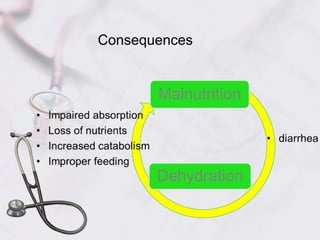
Consequences
Malnutrition
Dehydration
Risk Factors
• Poor sanitation & personal hygiene
• Contaminated food & drinking water
• Low rates of BF & immunization
• Malnutrition in younger children (2yr)
• For prolonged episodes
• Presence of hypo or achlorohydria (d/t
H.pylori or use of PPI’s)
• Selective IgA deficiency
• HIV infection
• C.difficile infection (d/t antibiotic usage)
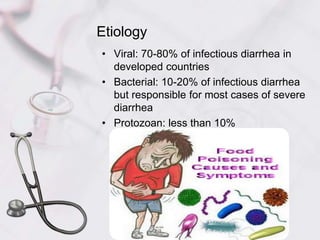
Etiology
• Viral: 70-80% of infectious diarrhea in
developed countries
• Bacterial: 10-20% of infectious diarrhea
but responsible for most cases of severe
diarrhea
• Protozoan: less than 10%
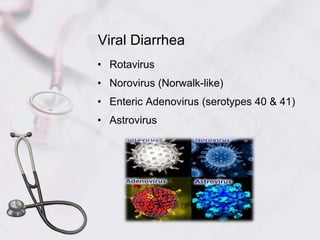
Viral Diarrhea
• Rotavirus
• Norovirus (Norwalk-like)
• Enteric Adenovirus (serotypes 40 & 41)
• Astrovirus
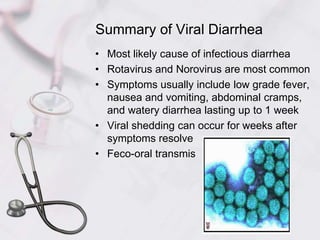
Summary of Viral Diarrhea
• Most likely cause of infectious diarrhea
• Rotavirus and Norovirus are most common
• Symptoms usually include low grade fever,
nausea and vomiting, abdominal cramps,
and watery diarrhea lasting up to 1 week
• Viral shedding can occur for weeks after
symptoms resolve
• Feco-oral transmis
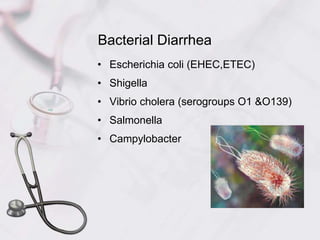
Bacterial Diarrhea
• Escherichia coli (EHEC,ETEC)
• Shigella
• Vibrio cholera (serogroups O1 &O139)
• Salmonella
• Campylobacter
Summary of Bacterial Diarrhea
• Can affect all age groups
• Fecal-oral transmission, often through
contaminated food & water
• Typical symptoms include bloody diarrhea,
severe cramping, and malaise
• Antibiotic treatment not always necessary
Parasitic
• Giardia lamblia
• Cryptosporidium parvum
• Entamoeba histolytica
• Cyclospora cayetanensis
• Isospora belli
Clinical Features
• Mild
• Slightly irritable & thirsty
• Moderate
• More irritable, pinched look, depressed
fontanelle, sunken eyes, dry tongue,
distended abd. urine output at longer
intervals
• Extreme case
• Moribund look, weak and thready pulse,
low blood pressure, reduced urine output
Assessment of Child
• Type of diarrhea
• Look for dehydration
• Assess for malnutrition
• Rule out systemic infection
• Assess feeding
History
• Onset, duration and no.of stools per day
• Blood in stools
• No. of episodes of vomiting
• Associated symptoms
• Oral intake
• Drugs or other local remedies taken
• Immunization history
Physical Examination
• Vitals, vitals, vitals!
• Abdominal exam
• Presence of occult blood
• Signs of dehydration
Laboratory Evaluation
• Can be managed effectively without lab
investigations
• Stool microscopy in selected situations like
cholera (darting motion)
giardiasis (trophozoites)
• Stool culture to decide on antibiotic
therapy in patients with shigella dysentery
Principles of Management
• 4 Major components:
• Rehydration and maintaining hydration
• Ensuring adequate feeding
• Oral supplementation of Zn
• Early recognition of danger signs and
treatment of complications
Rehydration and maintaining hydration
• Diarrhea with no dehydration (Plan-A)
• normal diet and supplemental ORS with
each diarrheal episode.
• Diarrhea with some dehydration (Plan-
B)
• seek medical care, give ORS in the
doctor's office, and cont. ORS and normal
diet at home.
• Severe dehydration (Plan-C)
• consider intravenous hydration, especially
if patient is also vomiting
Early Refeeding
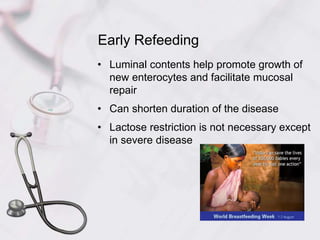
• Luminal contents help promote growth of
new enterocytes and facilitate mucosal
repair
• Can shorten duration of the disease
• Lactose restriction is not necessary except
in severe disease
Oral Zn Supplementation
• 3-6 months 10mg daily x 2 weeks.
• >6 months 20mg daily x 2 weeks.
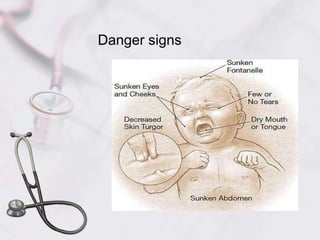
Danger signs
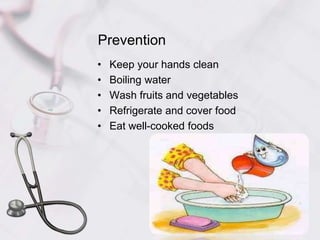
Prevention
• Keep your hands clean
• Boiling water
• Wash fruits and vegetables
• Refrigerate and cover food
• Eat well-cooked foods
Contd…
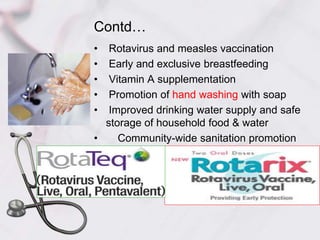
• Rotavirus and measles vaccination
• Early and exclusive breastfeeding
• Vitamin A supplementation
• Promotion of hand washing with soap
• Improved drinking water supply and safe
storage of household food & water
• Community-wide sanitation promotion
Acute diarrhea 2015

Acute diarrhea 2015

  • 1.
  • 2.
    Acute Diarrhea • Definedas change in consistency and frequency of stools, i.e. liquid or watery stools, that occur >3 times a day. • However it is the consistency of the stools rather than the number that is more important. • If stools associated with blood it is termed as dysentery. • Frequent passage of normal stool is not diarrhoea.
  • 3.
    Classification • Diarrhoea isclassified as • acute if <2 weeks, • persistent if 2–4 weeks, • chronic if >4 weeks
  • 4.
    Magnitude of theproblem: World  Diarrhoeal disease is the 2nd leading cause of death in children under 5 yrs of age.  Globally, there are about 3-5 Bn cases of diarrhoeal disease every yr.  Diarrhoeal disease kills 2 Mn children every yr.  Diarrhea accounts for over 20% of all deaths in under 5 children.  It is both preventable and treatable.
  • 5.
  • 6.
    Risk Factors • Poorsanitation & personal hygiene • Contaminated food & drinking water • Low rates of BF & immunization • Malnutrition in younger children (2yr) • For prolonged episodes • Presence of hypo or achlorohydria (d/t H.pylori or use of PPI’s) • Selective IgA deficiency • HIV infection • C.difficile infection (d/t antibiotic usage)
  • 7.
    Etiology • Viral: 70-80%of infectious diarrhea in developed countries • Bacterial: 10-20% of infectious diarrhea but responsible for most cases of severe diarrhea • Protozoan: less than 10%
  • 8.
    Viral Diarrhea • Rotavirus •Norovirus (Norwalk-like) • Enteric Adenovirus (serotypes 40 & 41) • Astrovirus
  • 9.
    Summary of ViralDiarrhea • Most likely cause of infectious diarrhea • Rotavirus and Norovirus are most common • Symptoms usually include low grade fever, nausea and vomiting, abdominal cramps, and watery diarrhea lasting up to 1 week • Viral shedding can occur for weeks after symptoms resolve • Feco-oral transmis
  • 10.
    Bacterial Diarrhea • Escherichiacoli (EHEC,ETEC) • Shigella • Vibrio cholera (serogroups O1 &O139) • Salmonella • Campylobacter
  • 11.
    Summary of BacterialDiarrhea • Can affect all age groups • Fecal-oral transmission, often through contaminated food & water • Typical symptoms include bloody diarrhea, severe cramping, and malaise • Antibiotic treatment not always necessary
  • 12.
    Parasitic • Giardia lamblia •Cryptosporidium parvum • Entamoeba histolytica • Cyclospora cayetanensis • Isospora belli
  • 14.
    Clinical Features • Mild •Slightly irritable & thirsty • Moderate • More irritable, pinched look, depressed fontanelle, sunken eyes, dry tongue, distended abd. urine output at longer intervals • Extreme case • Moribund look, weak and thready pulse, low blood pressure, reduced urine output
  • 15.
    Assessment of Child •Type of diarrhea • Look for dehydration • Assess for malnutrition • Rule out systemic infection • Assess feeding
  • 16.
    History • Onset, durationand no.of stools per day • Blood in stools • No. of episodes of vomiting • Associated symptoms • Oral intake • Drugs or other local remedies taken • Immunization history
  • 17.
    Physical Examination • Vitals,vitals, vitals! • Abdominal exam • Presence of occult blood • Signs of dehydration
  • 18.
    Laboratory Evaluation • Canbe managed effectively without lab investigations • Stool microscopy in selected situations like cholera (darting motion) giardiasis (trophozoites) • Stool culture to decide on antibiotic therapy in patients with shigella dysentery
  • 19.
    Principles of Management •4 Major components: • Rehydration and maintaining hydration • Ensuring adequate feeding • Oral supplementation of Zn • Early recognition of danger signs and treatment of complications
  • 20.
    Rehydration and maintaininghydration • Diarrhea with no dehydration (Plan-A) • normal diet and supplemental ORS with each diarrheal episode. • Diarrhea with some dehydration (Plan- B) • seek medical care, give ORS in the doctor's office, and cont. ORS and normal diet at home. • Severe dehydration (Plan-C) • consider intravenous hydration, especially if patient is also vomiting
  • 21.
    Early Refeeding • Luminalcontents help promote growth of new enterocytes and facilitate mucosal repair • Can shorten duration of the disease • Lactose restriction is not necessary except in severe disease
  • 22.
    Oral Zn Supplementation •3-6 months 10mg daily x 2 weeks. • >6 months 20mg daily x 2 weeks.
  • 23.
  • 24.
    Prevention • Keep yourhands clean • Boiling water • Wash fruits and vegetables • Refrigerate and cover food • Eat well-cooked foods
  • 25.
    Contd… • Rotavirus andmeasles vaccination • Early and exclusive breastfeeding • Vitamin A supplementation • Promotion of hand washing with soap • Improved drinking water supply and safe storage of household food & water • Community-wide sanitation promotion