IBS
Irritable bowel syndrome,
a functional bowel disorder
IBS
Common in OPD ~20%
Common in young/middle-aged
A positive clinical diagnosis
Pathophysiology
 Symptoms of IBS are not pathological
 Factors that affect symptoms are-
 Altered gut reactivity- motility or secretion-
in response to luminal/environmental stimuli
 Hypersensitive gut,
with enhanced visceral perception/pain
 Dysregulation of brain-gut axis,
associated with greater stress reactivity
Symptoms
 Chronic abdominal pain/discomfort
 Bloating or distension of abdomen- ‘gas’
 Altered bowel habits- constipation or diarrhea
 Feeling of incomplete evacuation
 Symptoms relieved by bowel movements
 Associated gastro-esophageal reflux, ill-
defined bodyaches, depression/anxiety
 No organic cause
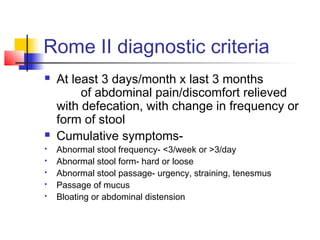
Rome II diagnostic criteria
 At least 3 days/month x last 3 months
of abdominal pain/discomfort relieved
with defecation, with change in frequency or
form of stool
 Cumulative symptoms-
 Abnormal stool frequency- <3/week or >3/day
 Abnormal stool form- hard or loose
 Abnormal stool passage- urgency, straining, tenesmus
 Passage of mucus
 Bloating or abdominal distension
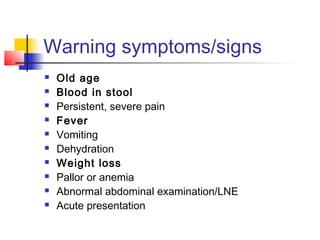
Warning symptoms/signs
 Old age
 Blood in stool
 Persistent, severe pain
 Fever
 Vomiting
 Dehydration
 Weight loss
 Pallor or anemia
 Abnormal abdominal examination/LNE
 Acute presentation
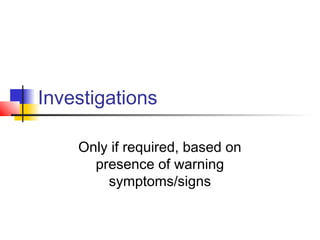
Investigations
Only if required, based on
presence of warning
symptoms/signs
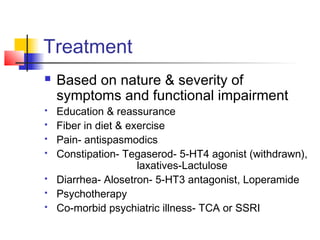
Treatment
 Based on nature & severity of
symptoms and functional impairment
 Education & reassurance
 Fiber in diet & exercise
 Pain- antispasmodics
 Constipation- Tegaserod- 5-HT4 agonist (withdrawn),
laxatives-Lactulose
 Diarrhea- Alosetron- 5-HT3 antagonist, Loperamide
 Psychotherapy
 Co-morbid psychiatric illness- TCA or SSRI

Irritable bowel syndrome

  • 1.
    IBS Irritable bowel syndrome, afunctional bowel disorder
  • 2.
    IBS Common in OPD~20% Common in young/middle-aged A positive clinical diagnosis
  • 3.
    Pathophysiology  Symptoms ofIBS are not pathological  Factors that affect symptoms are-  Altered gut reactivity- motility or secretion- in response to luminal/environmental stimuli  Hypersensitive gut, with enhanced visceral perception/pain  Dysregulation of brain-gut axis, associated with greater stress reactivity
  • 4.
    Symptoms  Chronic abdominalpain/discomfort  Bloating or distension of abdomen- ‘gas’  Altered bowel habits- constipation or diarrhea  Feeling of incomplete evacuation  Symptoms relieved by bowel movements  Associated gastro-esophageal reflux, ill- defined bodyaches, depression/anxiety  No organic cause
  • 5.
    Rome II diagnosticcriteria  At least 3 days/month x last 3 months of abdominal pain/discomfort relieved with defecation, with change in frequency or form of stool  Cumulative symptoms-  Abnormal stool frequency- <3/week or >3/day  Abnormal stool form- hard or loose  Abnormal stool passage- urgency, straining, tenesmus  Passage of mucus  Bloating or abdominal distension
  • 6.
    Warning symptoms/signs  Oldage  Blood in stool  Persistent, severe pain  Fever  Vomiting  Dehydration  Weight loss  Pallor or anemia  Abnormal abdominal examination/LNE  Acute presentation
  • 7.
    Investigations Only if required,based on presence of warning symptoms/signs
  • 8.
    Treatment  Based onnature & severity of symptoms and functional impairment  Education & reassurance  Fiber in diet & exercise  Pain- antispasmodics  Constipation- Tegaserod- 5-HT4 agonist (withdrawn), laxatives-Lactulose  Diarrhea- Alosetron- 5-HT3 antagonist, Loperamide  Psychotherapy  Co-morbid psychiatric illness- TCA or SSRI