Downloaded 24 times

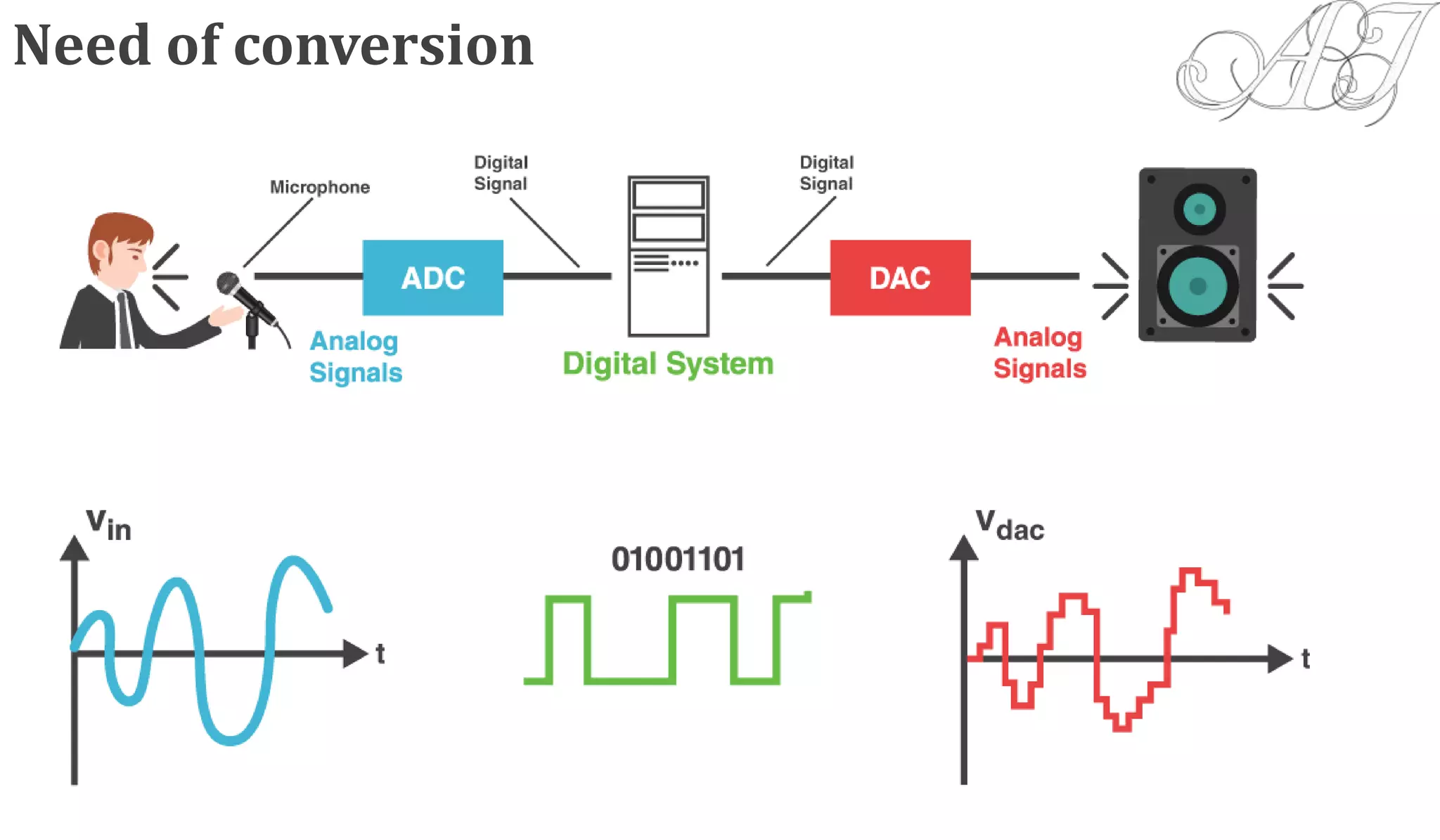
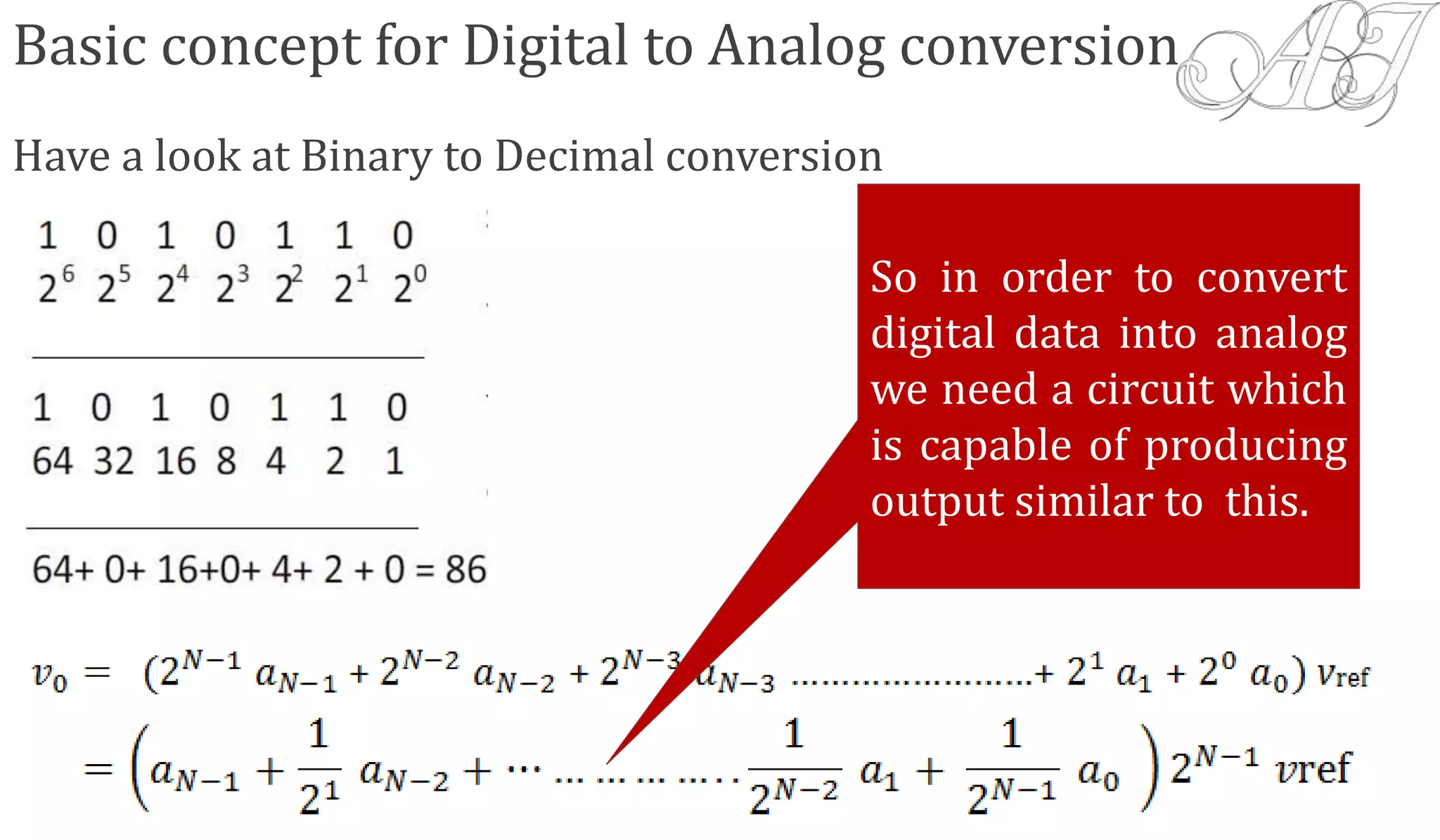
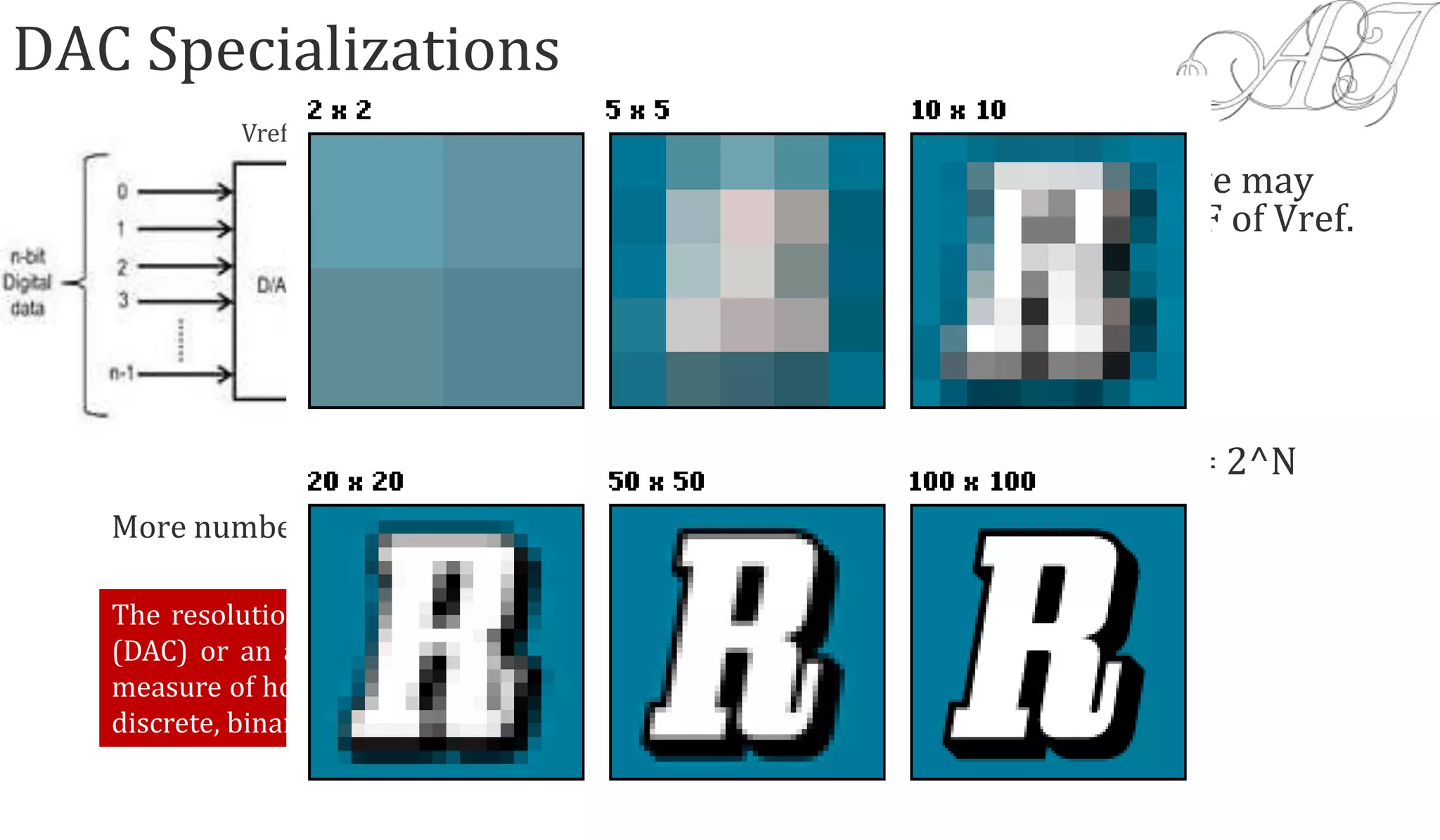
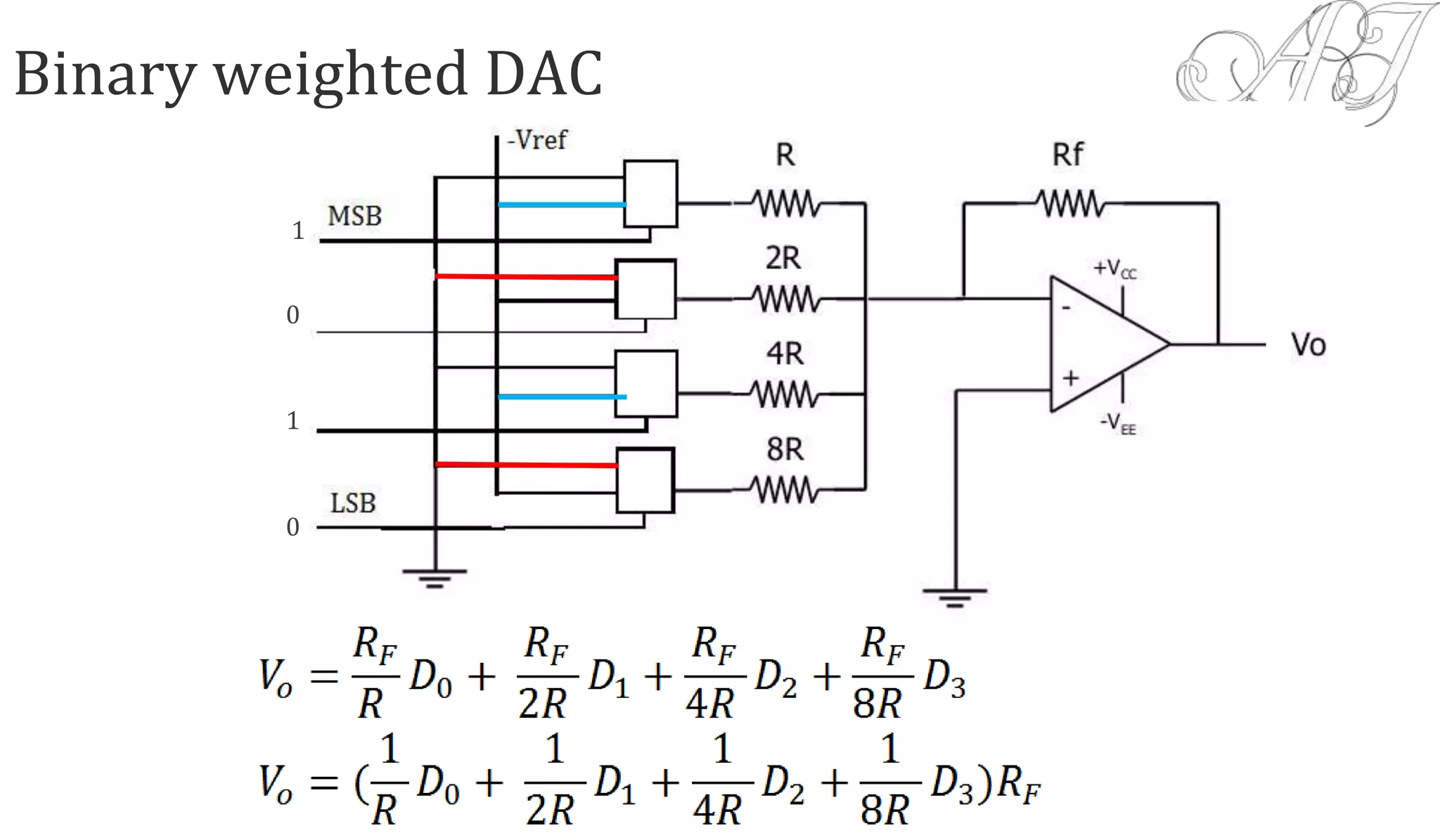
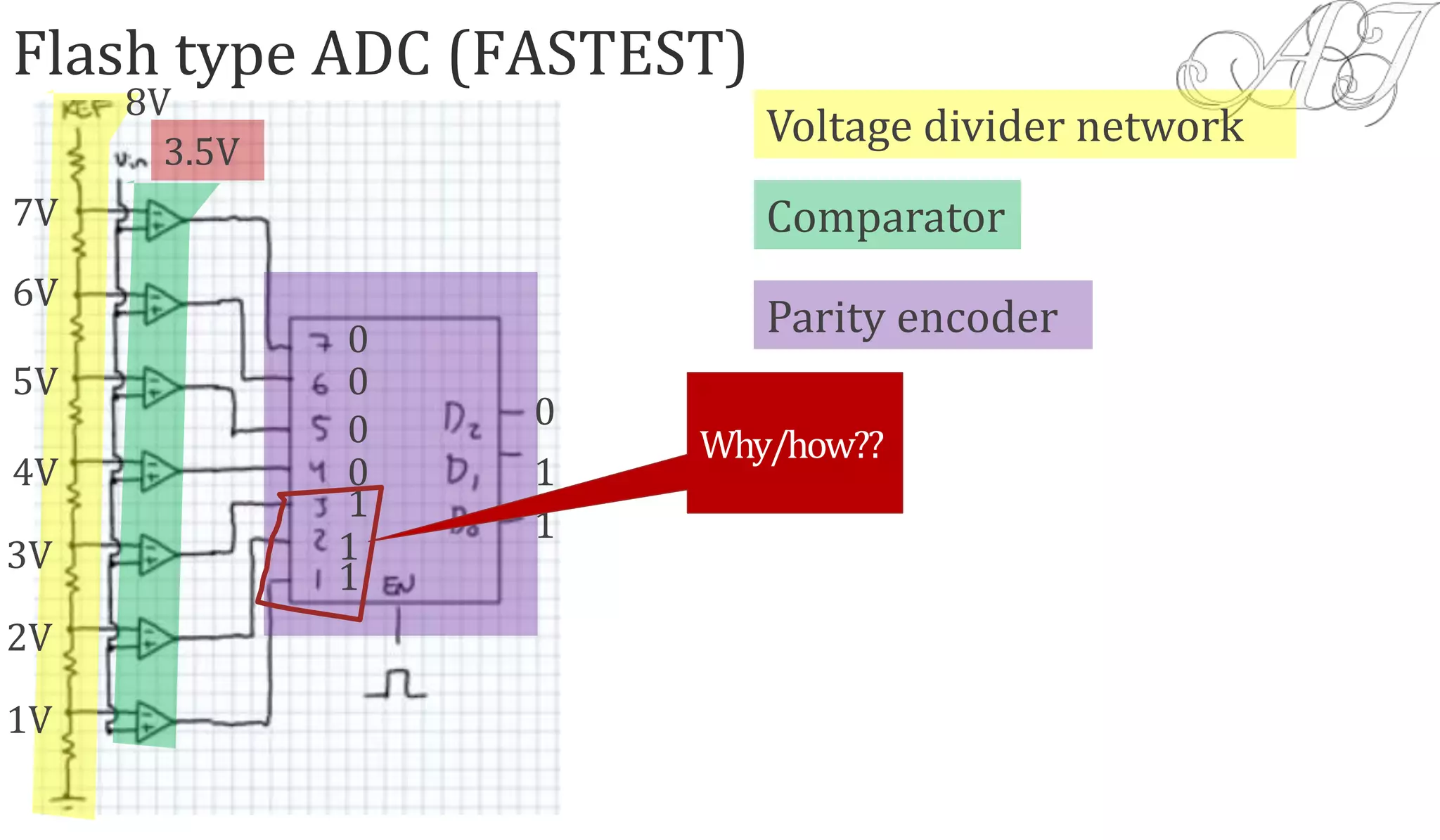
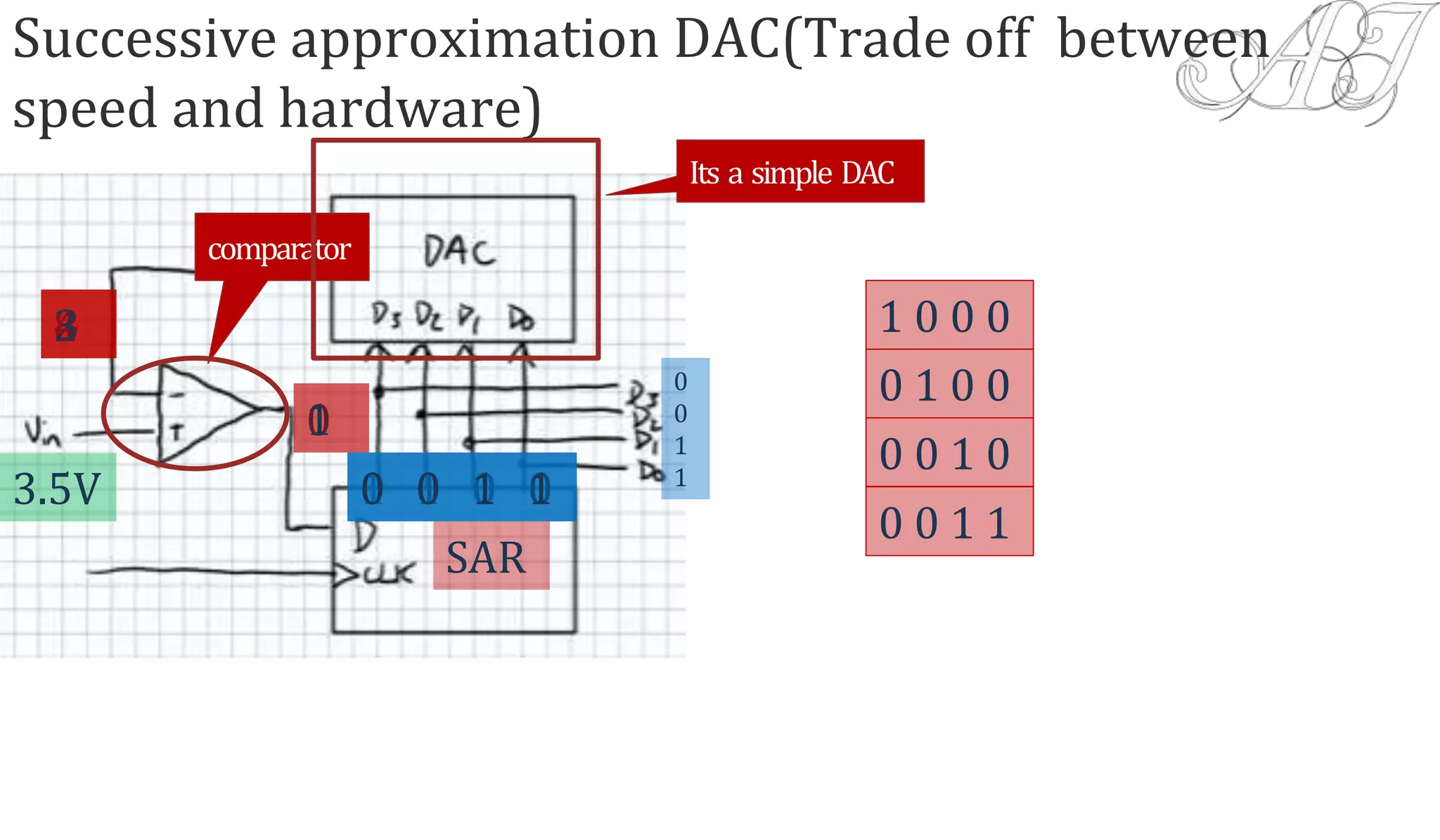


This document summarizes different types of digital to analog converters (DACs). It discusses the basic concept of converting digital data to analog signals by using a circuit that can produce analog outputs. It then describes several DAC specializations: 1) Binary weighted DAC which uses a reference voltage and weighted resistors to produce analog outputs corresponding to the digital input bits. 2) Flash type ADC which uses a voltage divider network and parallel comparators to directly convert an entire digital word to an analog voltage very quickly. 3) Successive approximation ADC which uses a comparator and feedback loop in a step-wise process to iteratively approximate the analog output voltage, providing a tradeoff between speed and circuit complexity.


