Analog Modulation
5.1
5.2
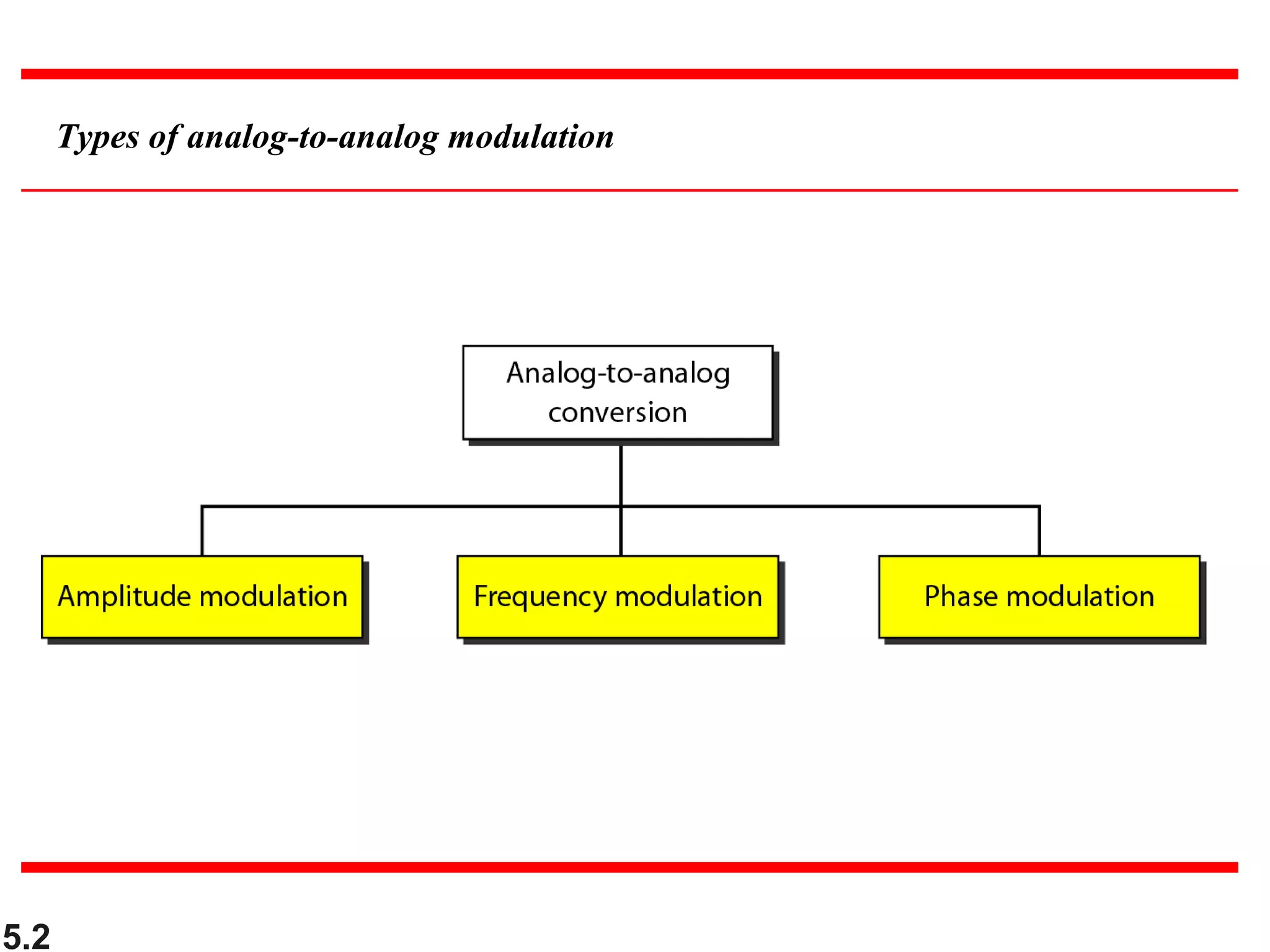
Types of analog-to-analog modulation
5.3
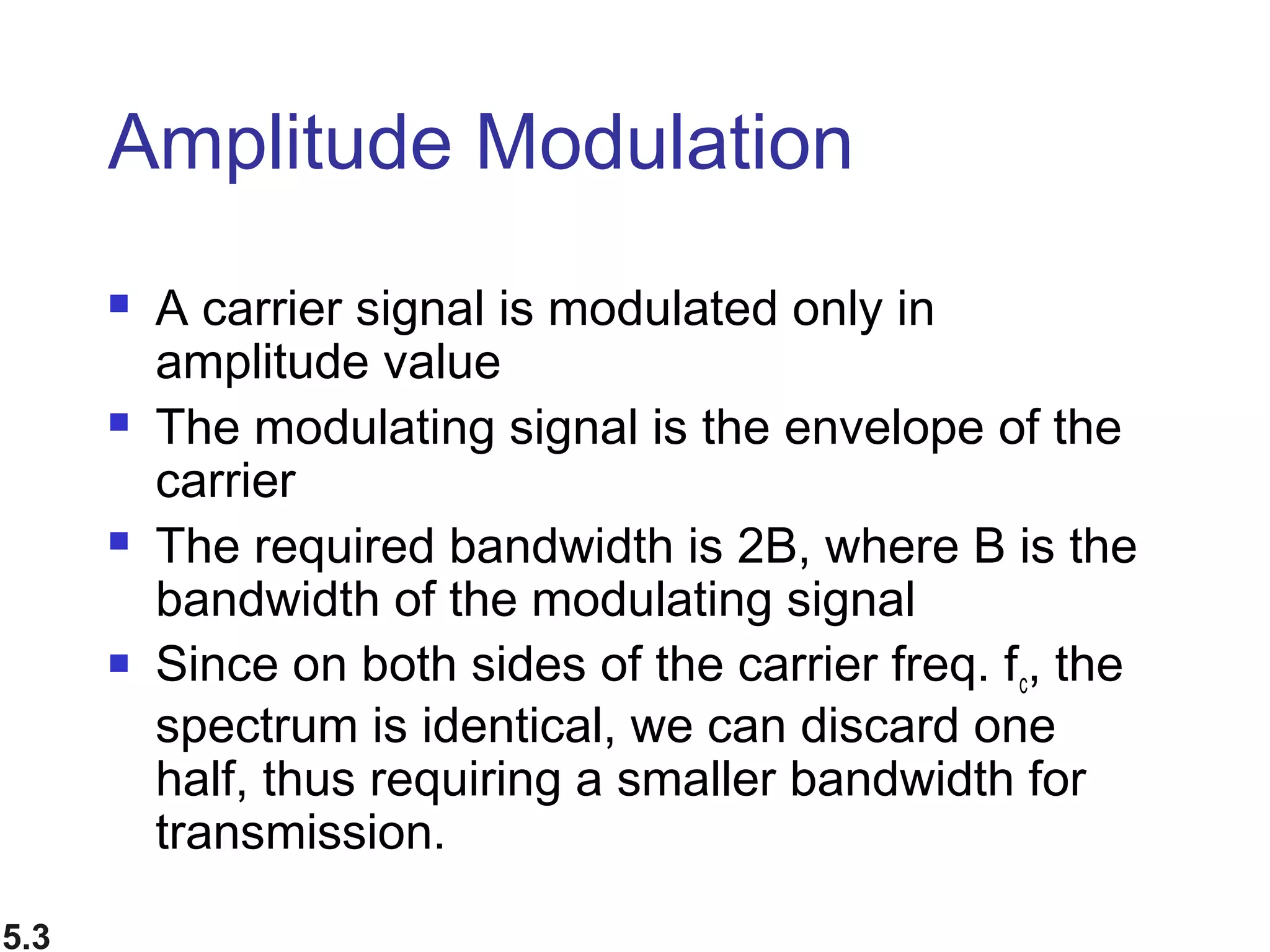
Amplitude Modulation
 A carrier signal is modulated only in
amplitude value
 The modulating signal is the envelope of the
carrier
 The required bandwidth is 2B, where B is the
bandwidth of the modulating signal
 Since on both sides of the carrier freq. fc, the
spectrum is identical, we can discard one
half, thus requiring a smaller bandwidth for
transmission.
5.4
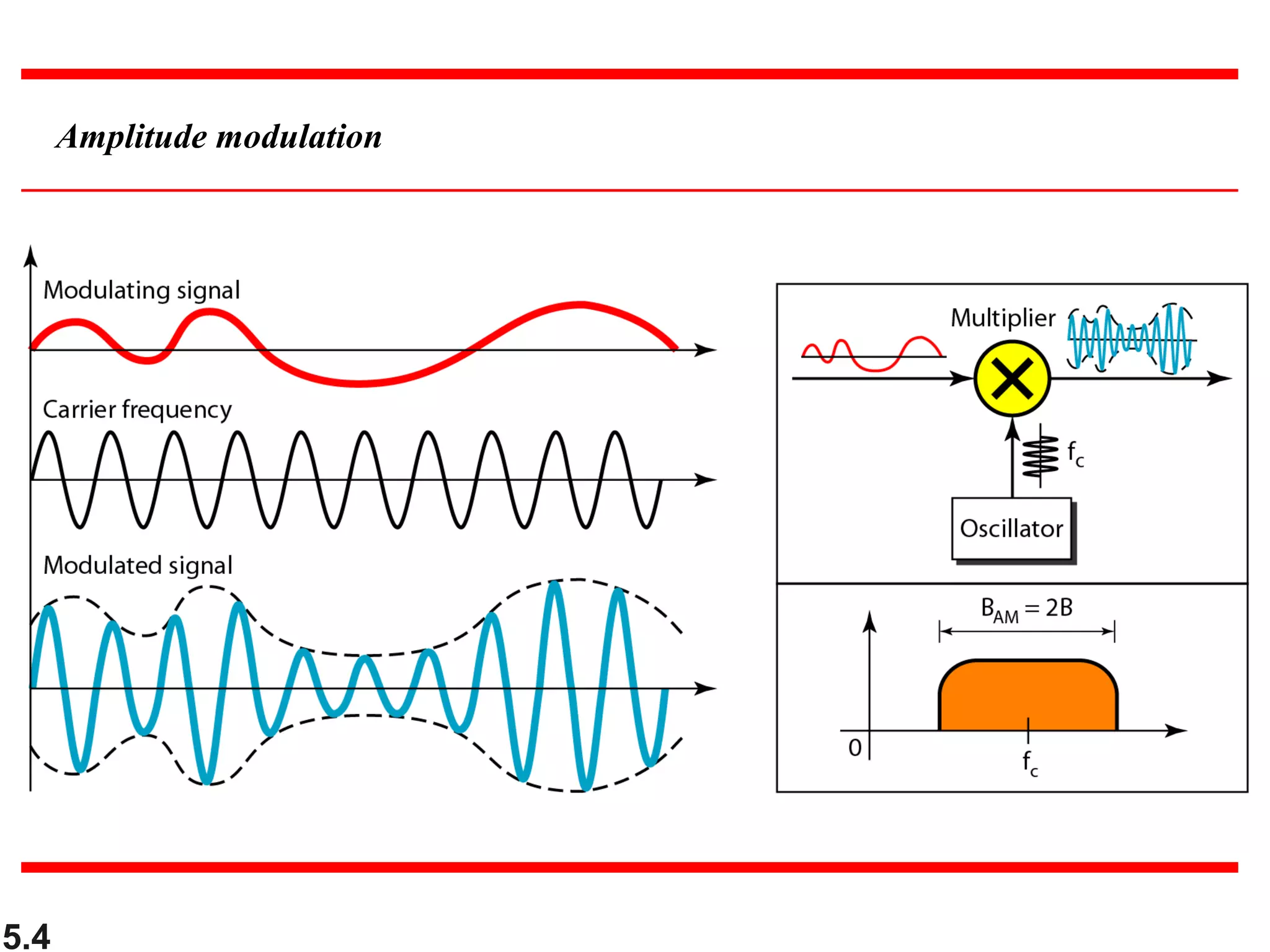
Amplitude modulation
5.5
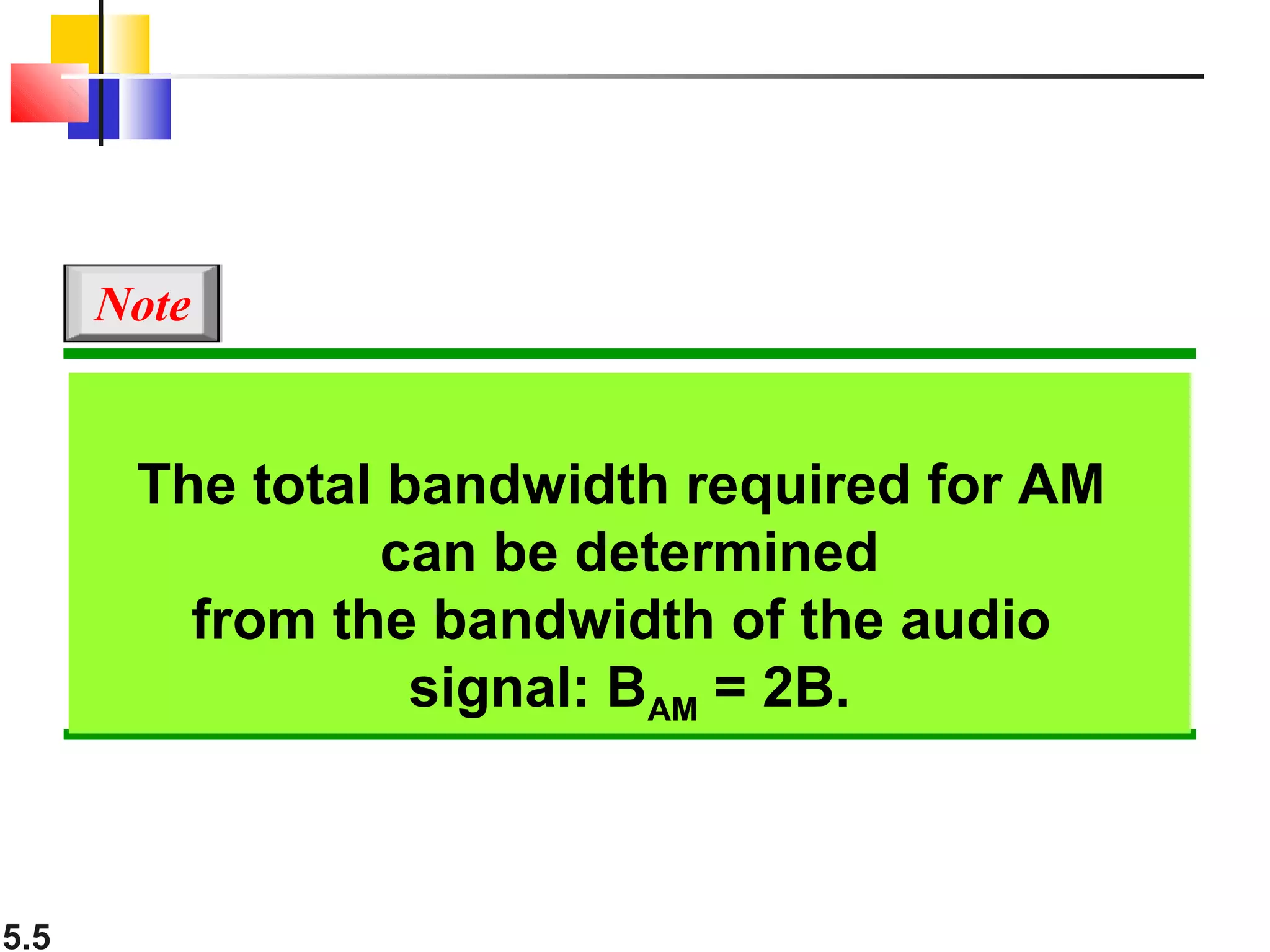
The total bandwidth required for AM
can be determined
from the bandwidth of the audio
signal: BAM = 2B.
Note
5.6
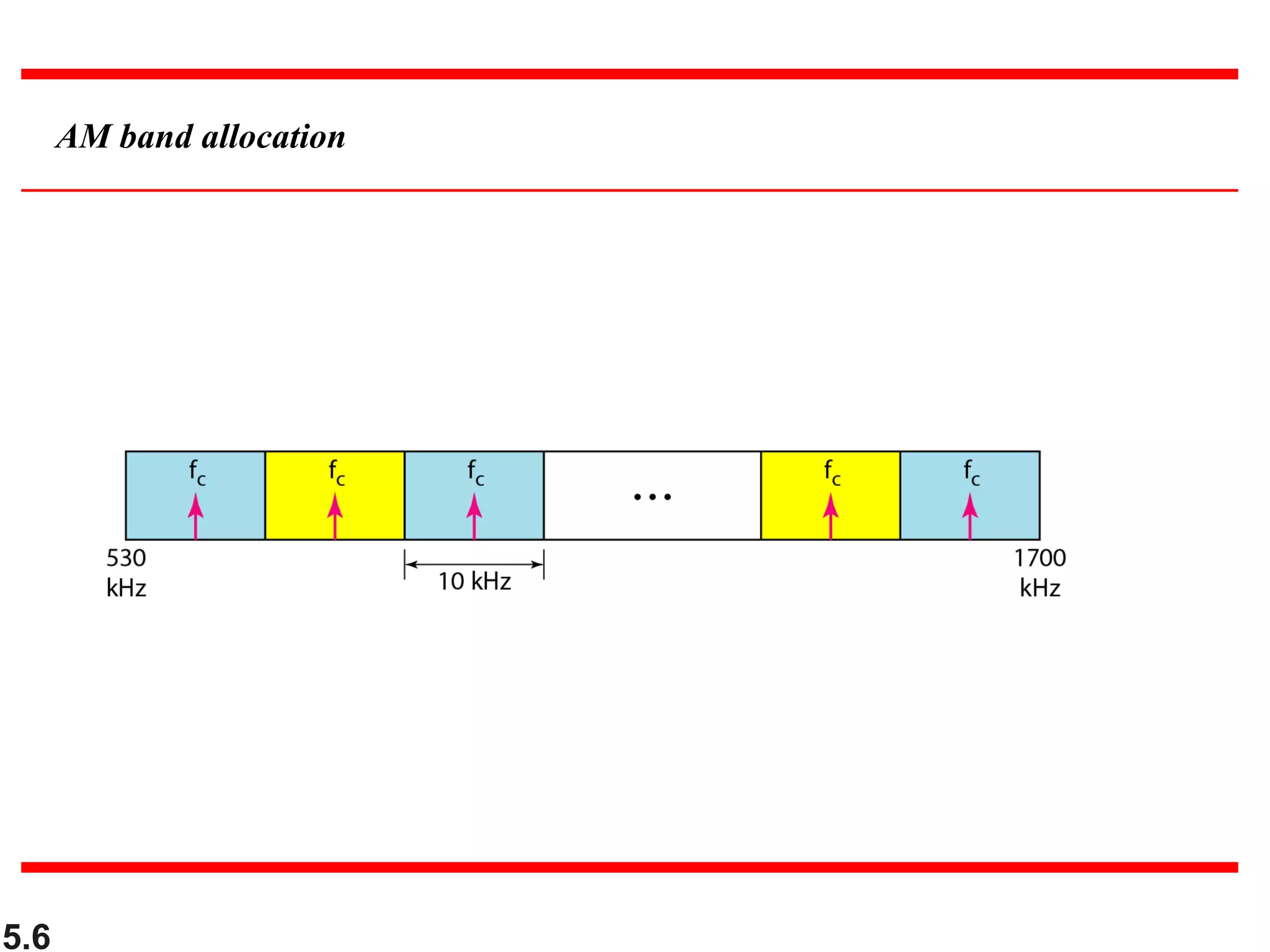
AM band allocation
5.7
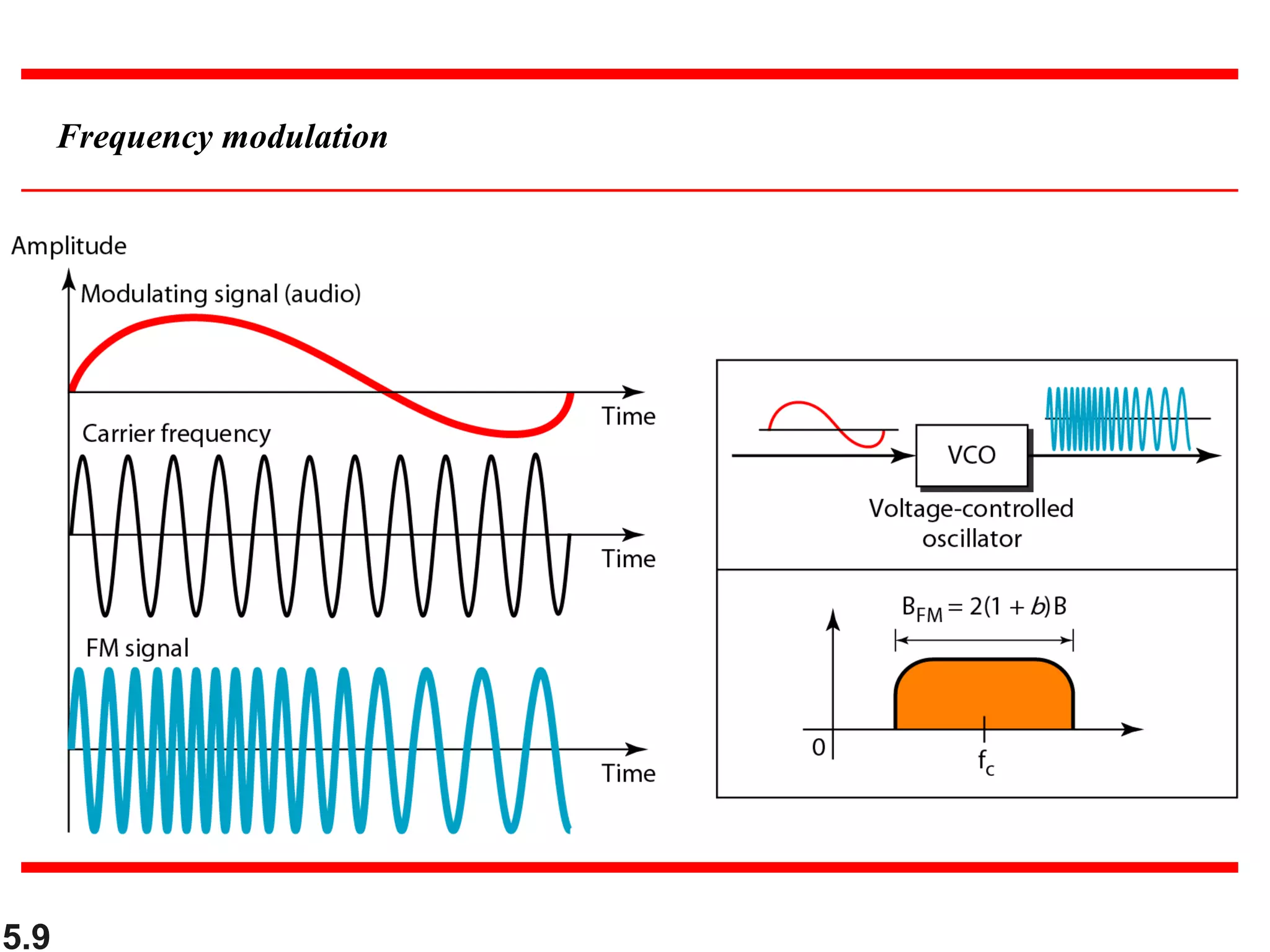
Frequency Modulation
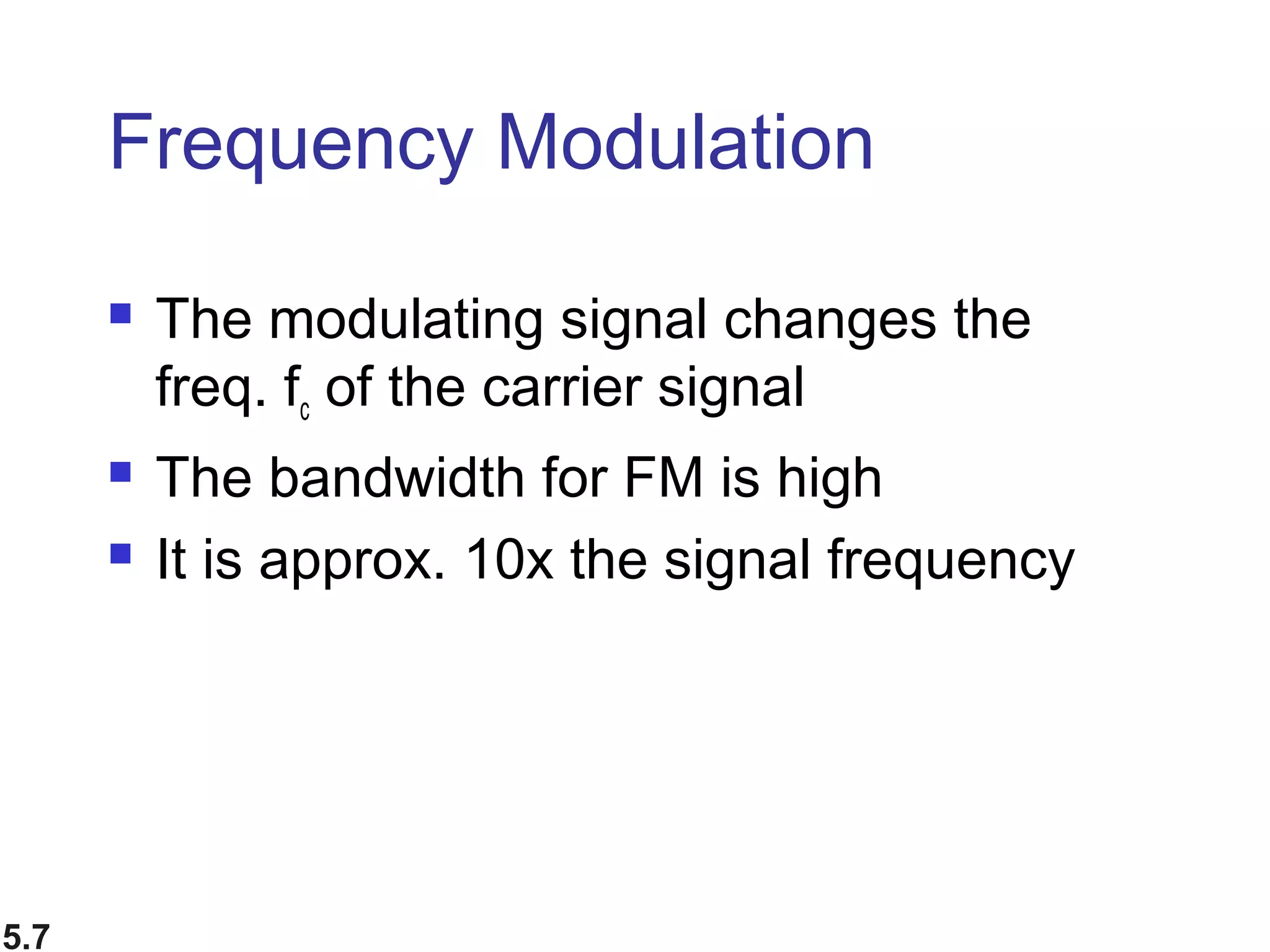
 The modulating signal changes the
freq. fc of the carrier signal
 The bandwidth for FM is high
 It is approx. 10x the signal frequency
5.8
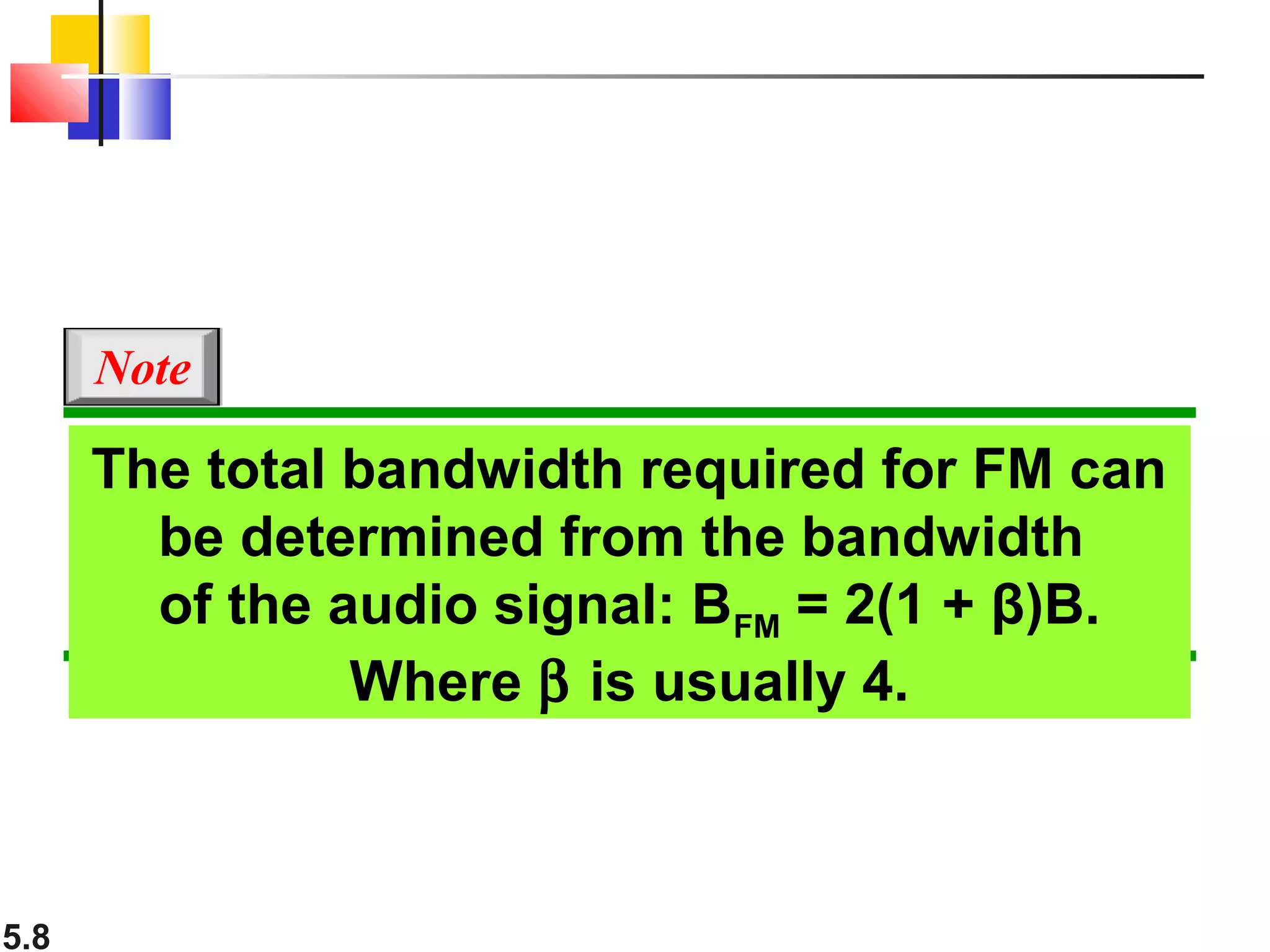
The total bandwidth required for FM can
be determined from the bandwidth
of the audio signal: BFM = 2(1 + β)B.
Where β is usually 4.
Note
5.9
Frequency modulation
5.10
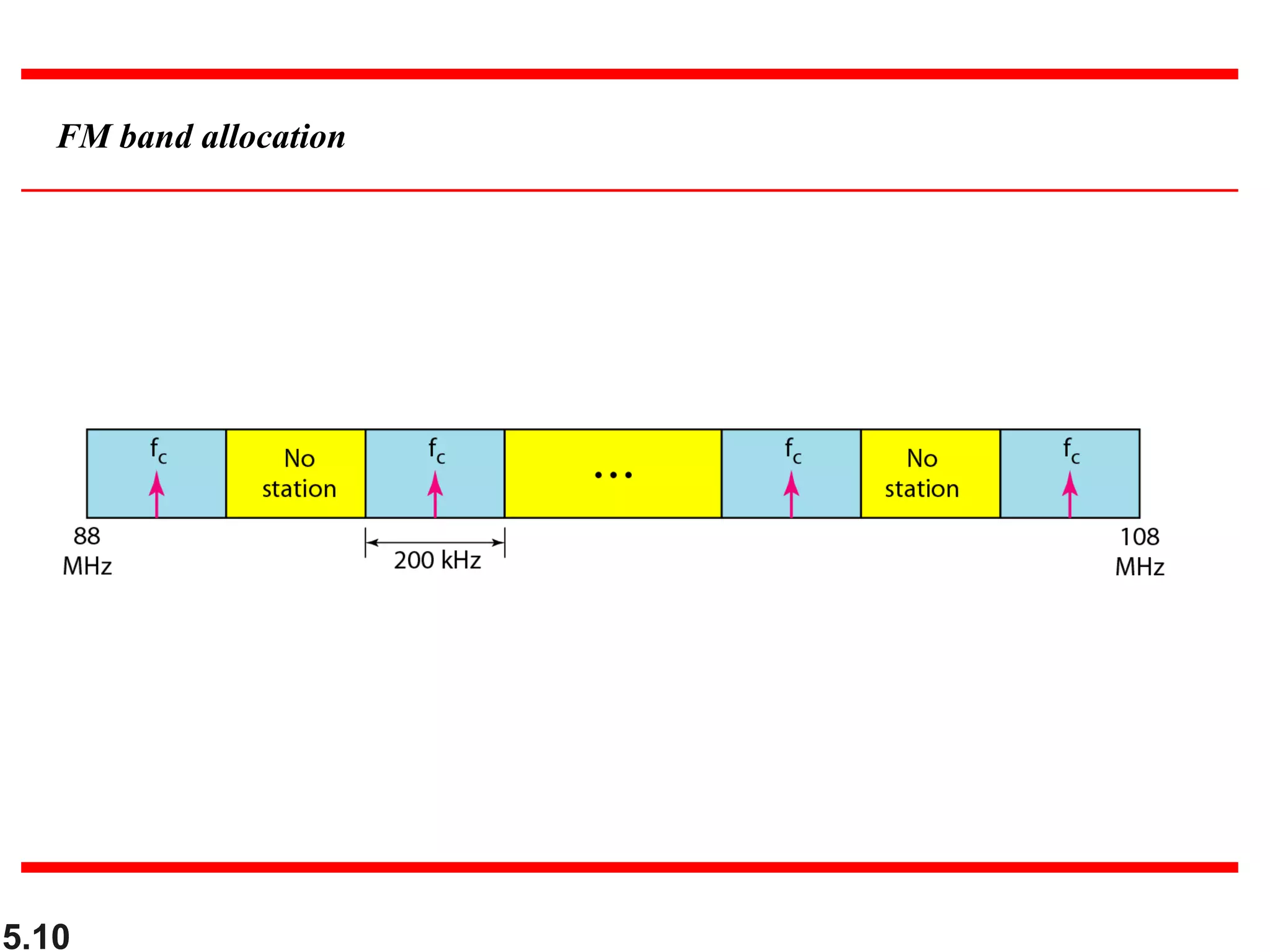
FM band allocation
5.11
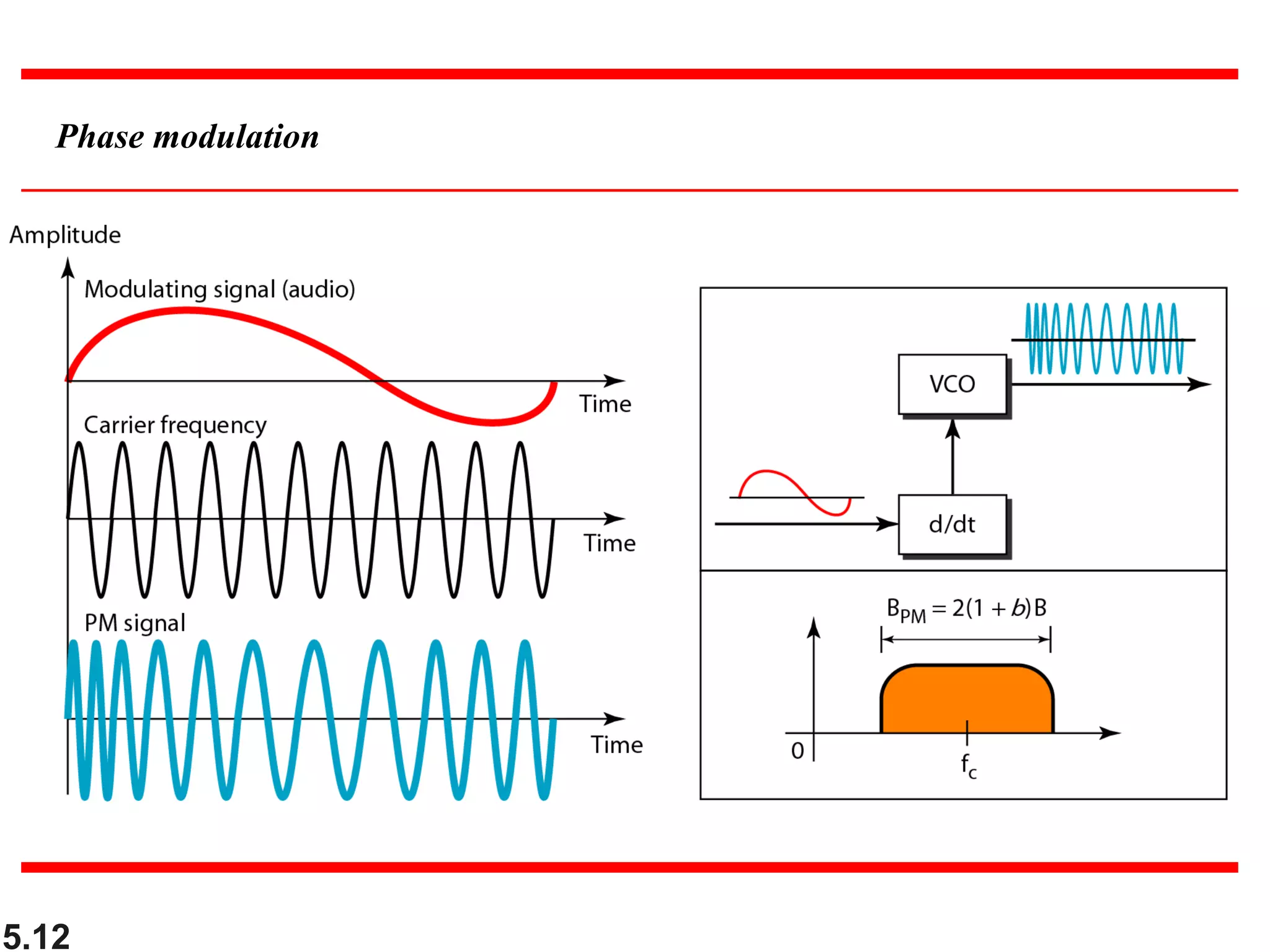
Phase Modulation (PM)
 The modulating signal only changes the
phase of the carrier signal.
 The phase change manifests itself as a
frequency change but the
instantaneous frequency change is
proportional to the derivative of the
amplitude.
 The bandwidth is higher than for AM.
5.12
Phase modulation
5.13
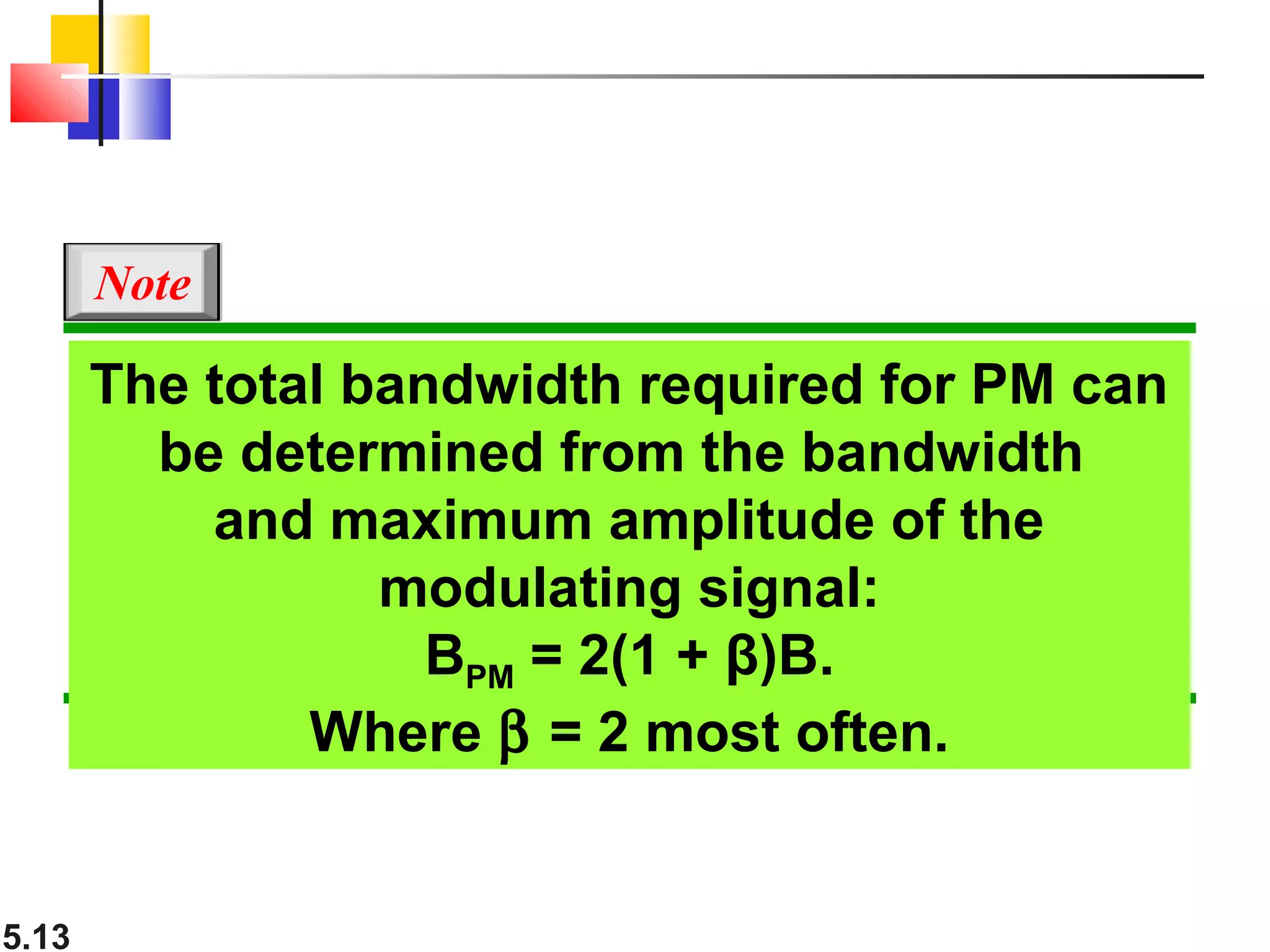
The total bandwidth required for PM can
be determined from the bandwidth
and maximum amplitude of the
modulating signal:
BPM = 2(1 + β)B.
Where β = 2 most often.
Note

Analog modulation