•   NURUL ASHIKIN BT. ABD RAHMAN
Learning Outcome
• State the use of a ph scale correctly
• Relate pH value with acidic or alkaline properties of a
  substance.
• Relate concentration of hydrogen ions with ph value and
  concentration of hydroxide ions with ph value.
• Relate strong or weak acid with degree of dissociation
• Relate strong or weak alkali with degree of dissociation
• Conceptualise qualitatively strong and weak acids
• Conceptualise qualitatively strong and weak alkalis.
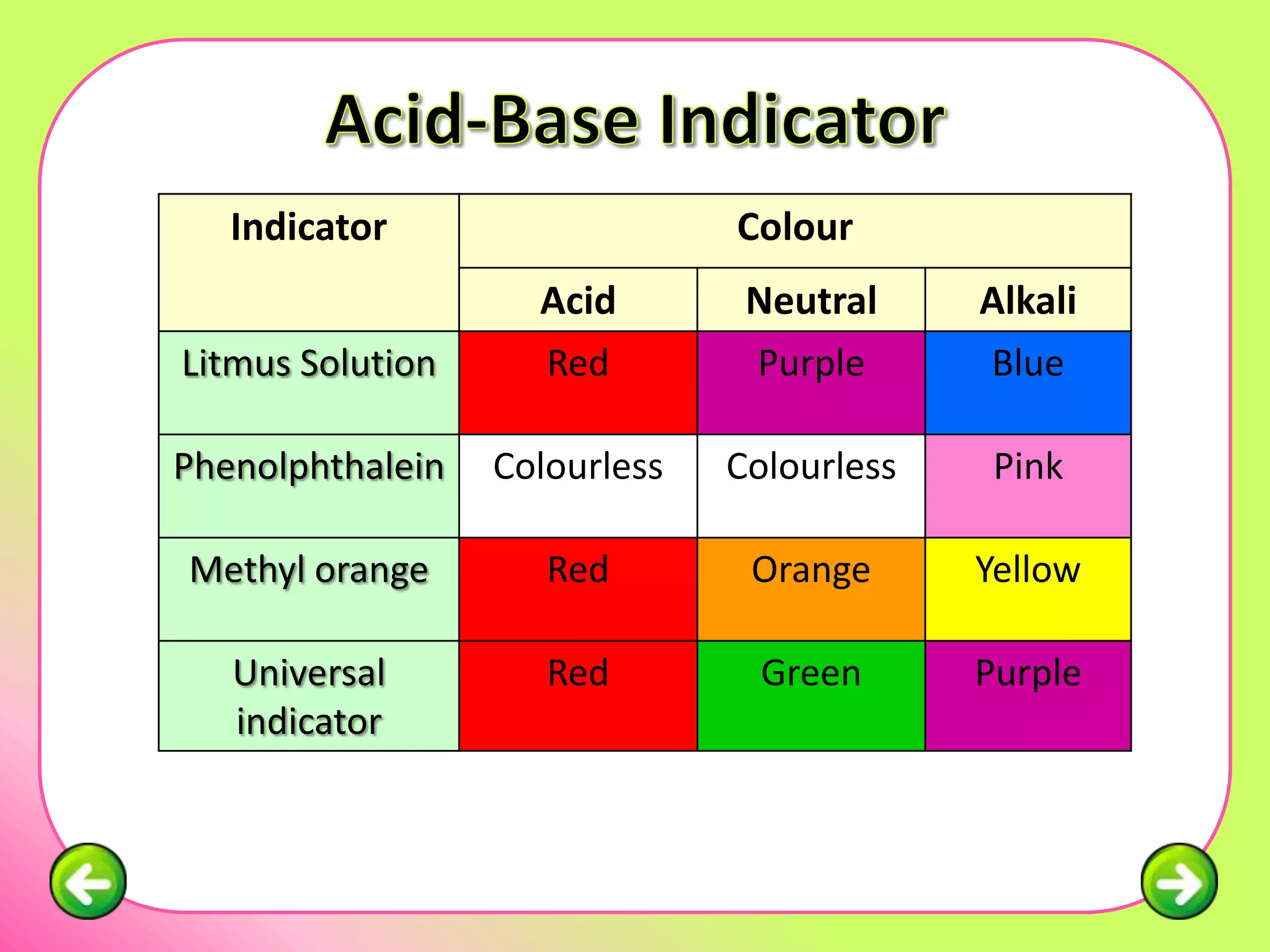
Indicator                   Colour
                    Acid        Neutral     Alkali
Litmus Solution     Red         Purple      Blue

Phenolphthalein   Colourless   Colourless    Pink

Methyl orange        Red        Orange      Yellow

   Universal         Red         Green      Purple
   indicator
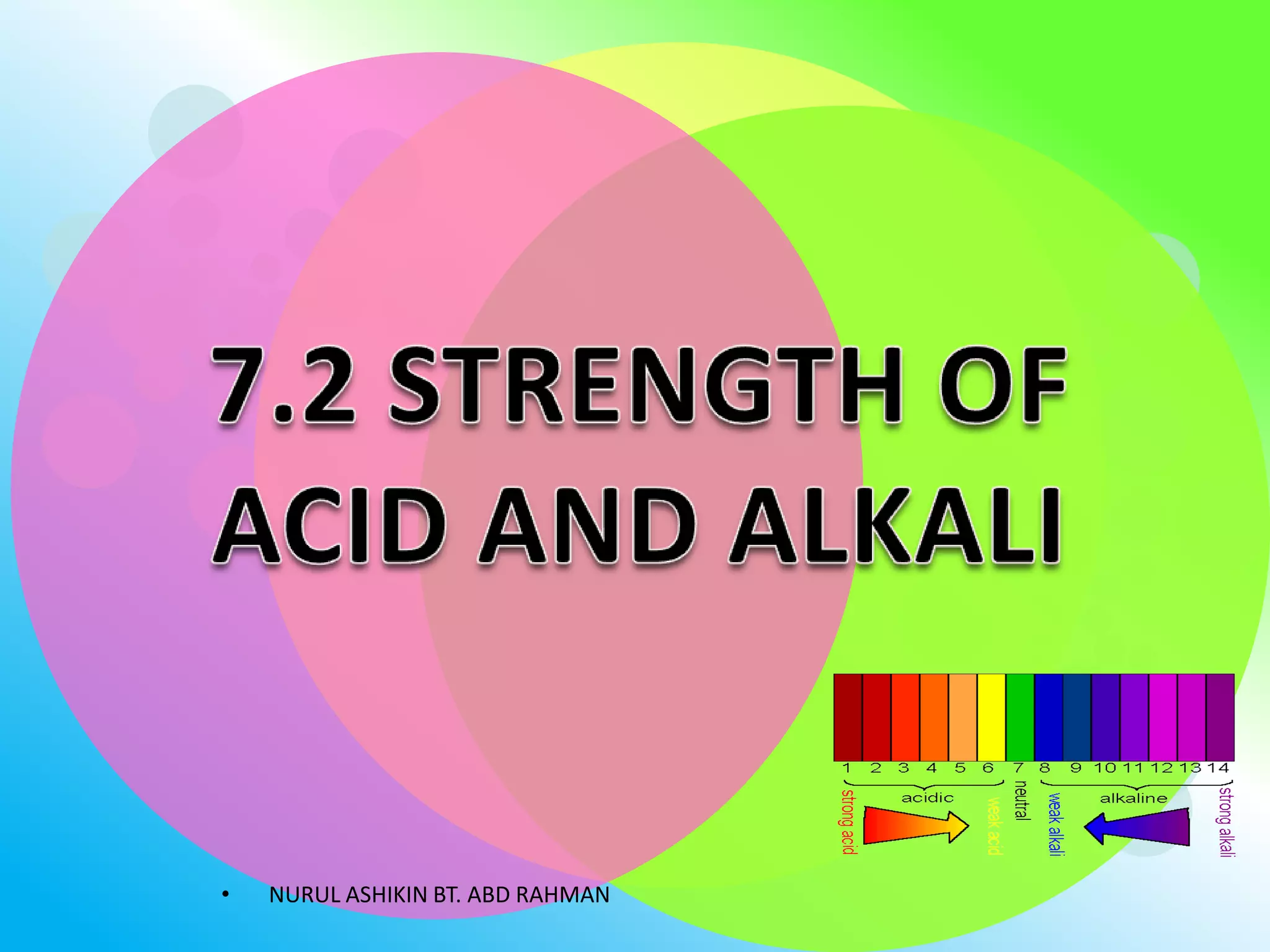
To indicate the degree of acidity or alkalinity of asolution

                 [H+] increases                             [OH-] increases
             Increasing acidity         neutral         Increasing alkalinity


pH scale 0   1      2   3    4    5     6   7     8     9    10 11 12 13 14

                                                       Weak Alkali      Strong Alkali
      Strong Acid         Weak Acid
                                                      Example: NH3        Example:
     Example: HCl,         Example:
                                                                         NaOH, KOH
     HNO3, H2SO4          CH3COOH,
                         H2SO3, H3PO4


                 pH               [H+]                  [OH-]
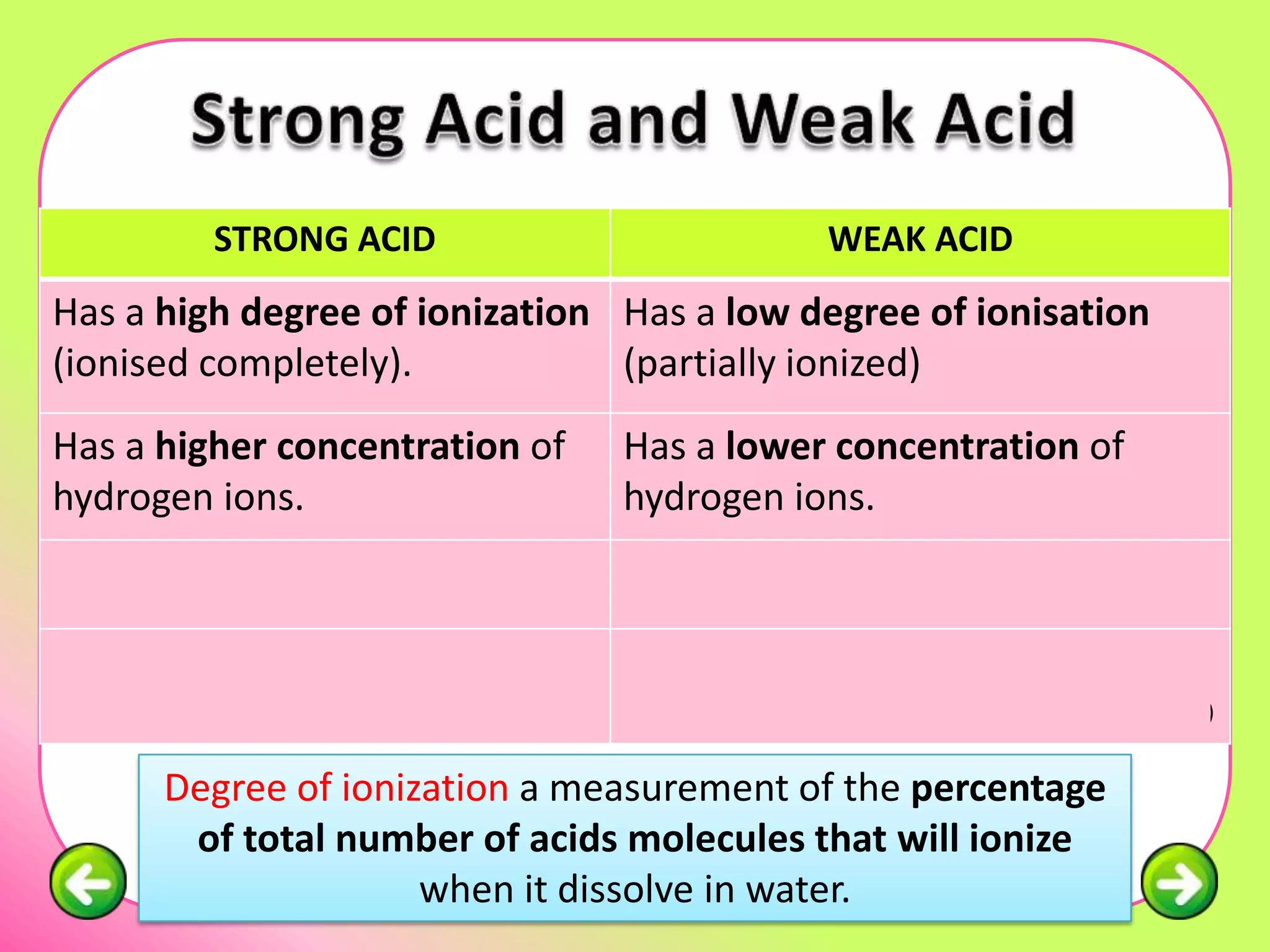
STRONG ACID                        WEAK ACID
Has a high degree of ionization Has a low degree of ionisation
(ionised completely).           (partially ionized)
Has a higher concentration of       Has a lower concentration of
hydrogen ions.                      hydrogen ions.
Has a lower pH value.               Has a higher pH value.

                                                       H2O
              H2O
Ex: HCl (l)         H+ (aq) + Cl-   Ex: CH3COOH (aq)         H+ (aq) + CH3COO- (aq)

         Degree of ionization a measurement of the percentage
          of total number of acids molecules that will ionize
                        when it dissolve in water.
STRONG ALKALI                               WEAK ALKALI

Has a high degree of ionization Has a low degree of ionisation
(ionised completely).           (partially ionized)

Has a higher [OH-].                      Has a lower [OH-]


Has a higher pH value.                   Has a lower pH value.

               H2O                                         H2O
Ex: NaOH (l)         Na+(aq) + OH- (aq) Ex: Mg(OH)2 (aq)         Mg2+ (aq) + OH- (aq)
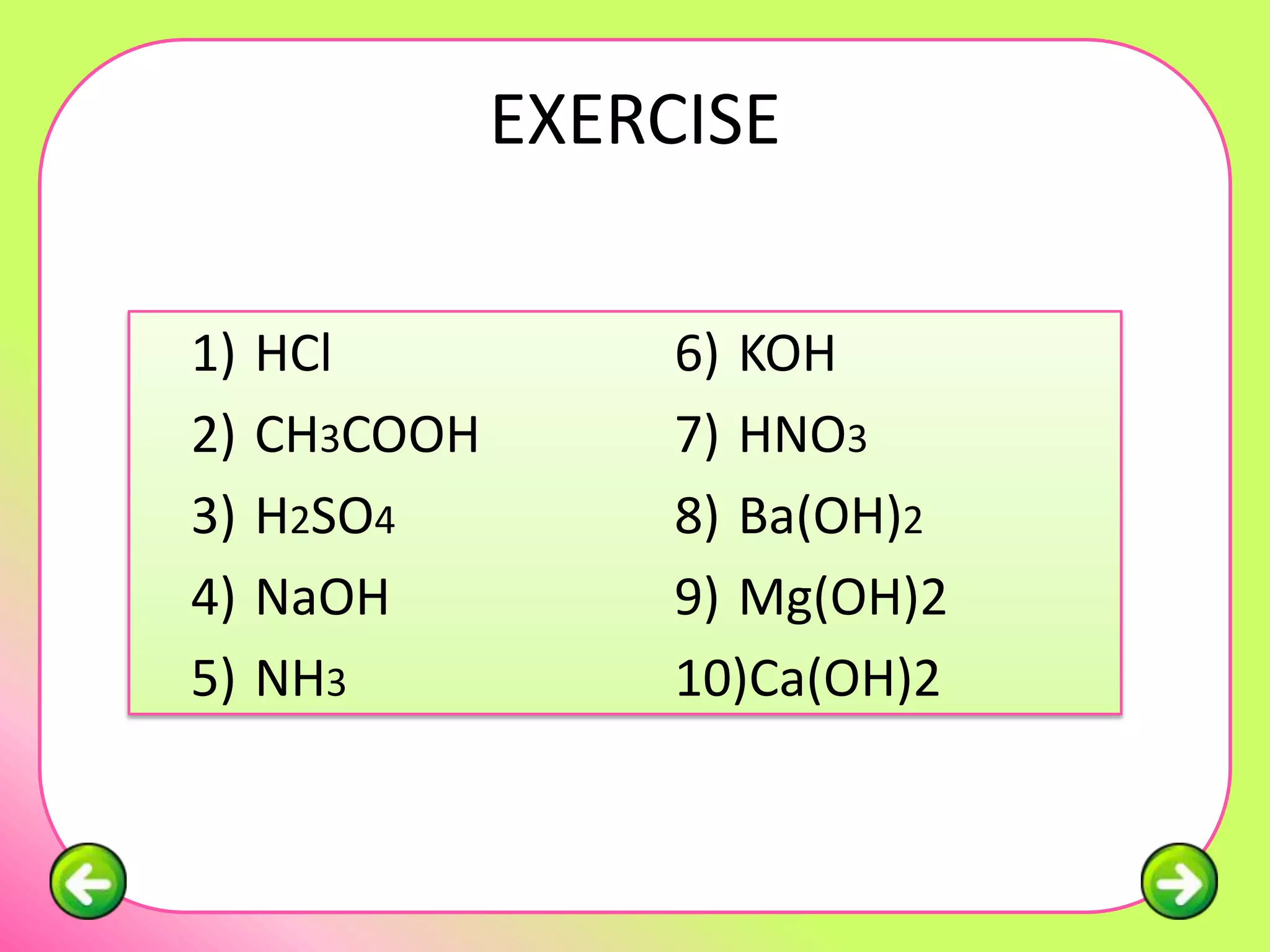
EXERCISE

1)   HCl            6) KOH
2)   CH3COOH        7) HNO3
3)   H2SO4          8) Ba(OH)2
4)   NaOH           9) Mg(OH)2
5)   NH3            10)Ca(OH)2
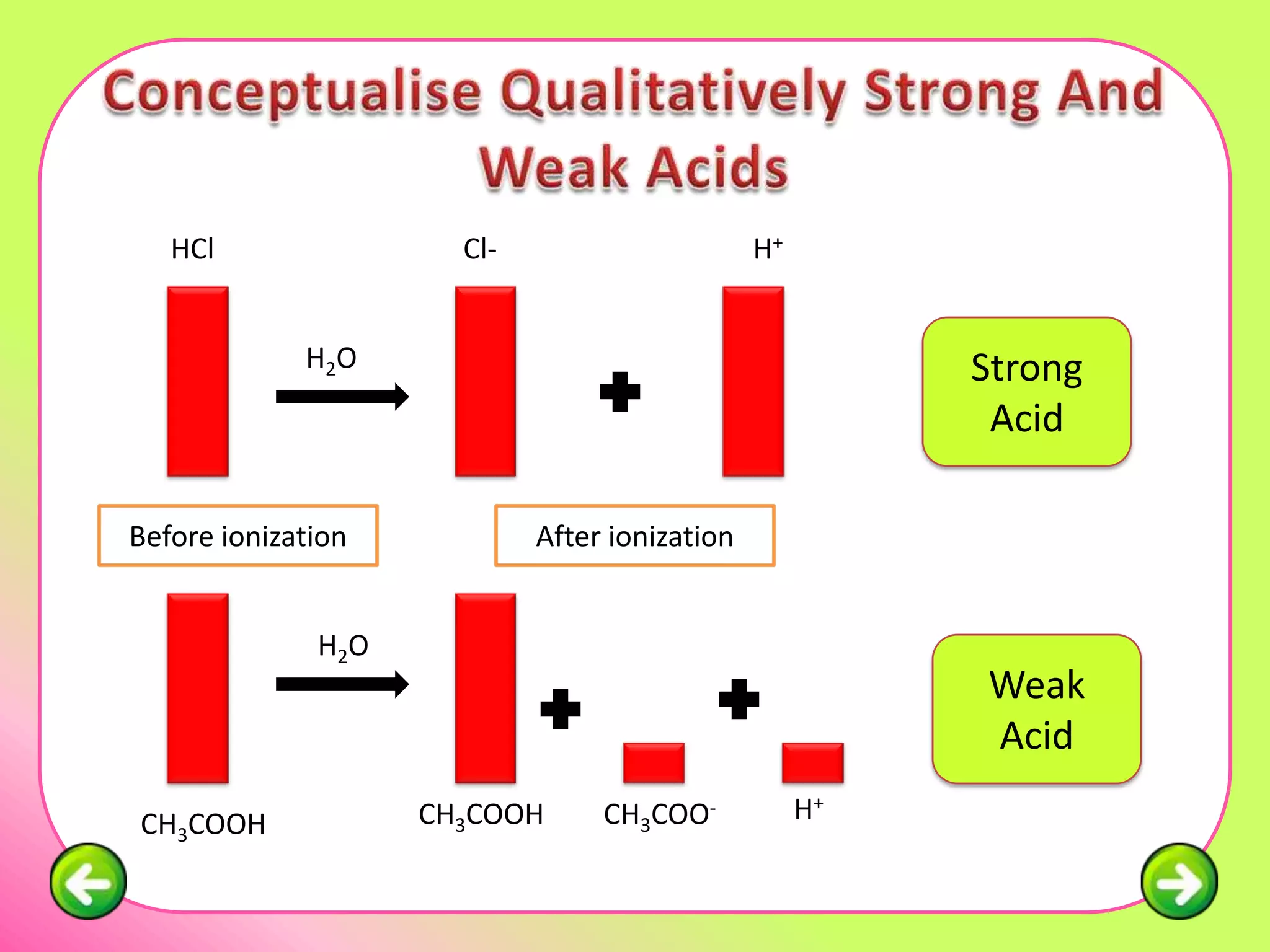
HCl                Cl-                      H+


             H2O                                         Strong
                                                          Acid

Before ionization           After ionization


              H2O
                                                         Weak
                                                         Acid

CH3COOH             CH3COOH      CH3COO-            H+
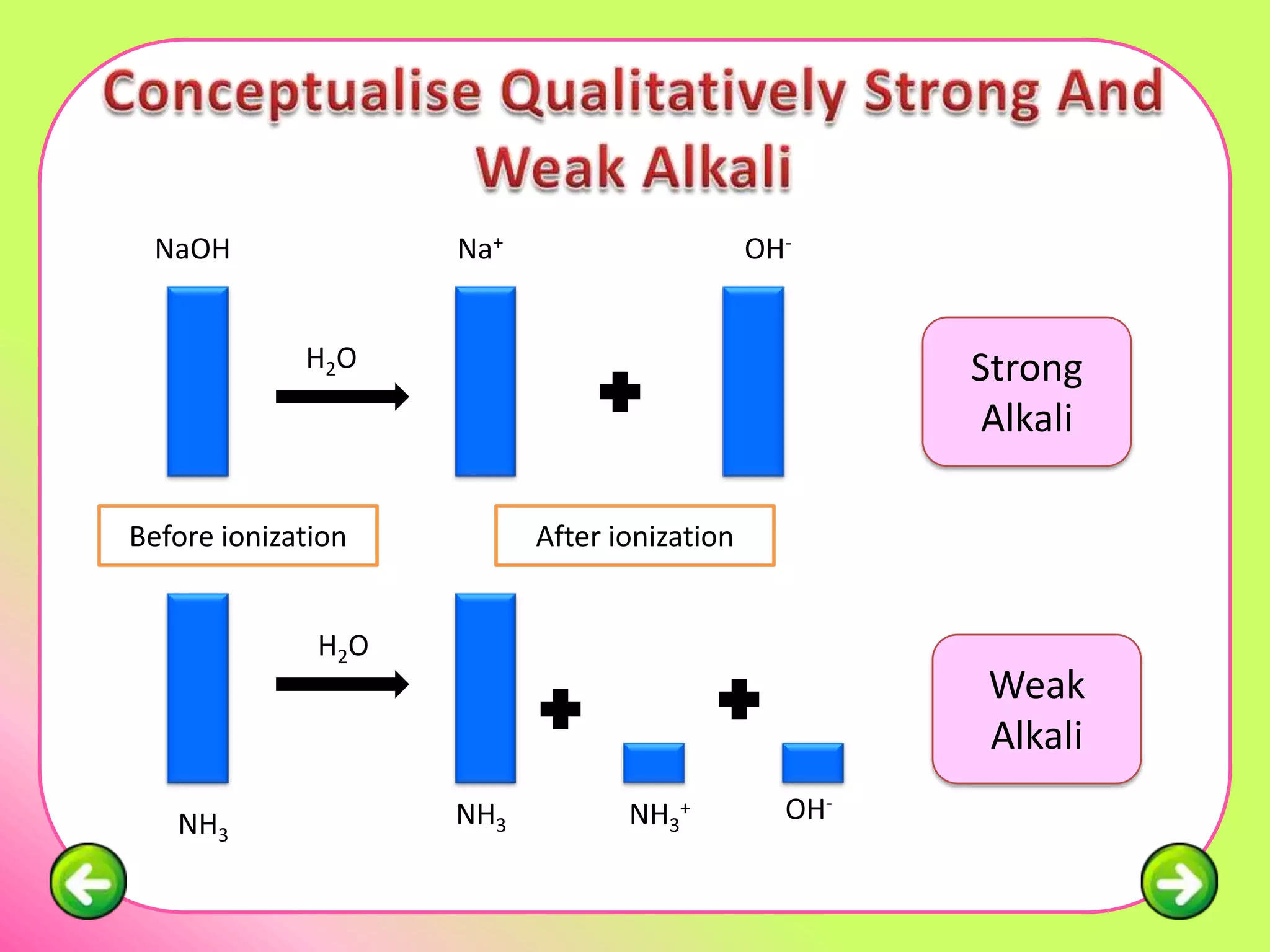
NaOH               Na+                      OH-


             H2O                                     Strong
                                                      Alkali

Before ionization         After ionization


              H2O
                                                      Weak
                                                      Alkali

   NH3              NH3          NH3+          OH-
Chapter 7 Acid & Bases part 2

Chapter 7 Acid & Bases part 2

  • 1.
    NURUL ASHIKIN BT. ABD RAHMAN
  • 2.
    Learning Outcome • Statethe use of a ph scale correctly • Relate pH value with acidic or alkaline properties of a substance. • Relate concentration of hydrogen ions with ph value and concentration of hydroxide ions with ph value. • Relate strong or weak acid with degree of dissociation • Relate strong or weak alkali with degree of dissociation • Conceptualise qualitatively strong and weak acids • Conceptualise qualitatively strong and weak alkalis.
  • 4.
    Indicator Colour Acid Neutral Alkali Litmus Solution Red Purple Blue Phenolphthalein Colourless Colourless Pink Methyl orange Red Orange Yellow Universal Red Green Purple indicator
  • 5.
    To indicate thedegree of acidity or alkalinity of asolution [H+] increases [OH-] increases Increasing acidity neutral Increasing alkalinity pH scale 0 1 2 3 4 5 6 7 8 9 10 11 12 13 14 Weak Alkali Strong Alkali Strong Acid Weak Acid Example: NH3 Example: Example: HCl, Example: NaOH, KOH HNO3, H2SO4 CH3COOH, H2SO3, H3PO4 pH [H+] [OH-]
  • 6.
    STRONG ACID WEAK ACID Has a high degree of ionization Has a low degree of ionisation (ionised completely). (partially ionized) Has a higher concentration of Has a lower concentration of hydrogen ions. hydrogen ions. Has a lower pH value. Has a higher pH value. H2O H2O Ex: HCl (l) H+ (aq) + Cl- Ex: CH3COOH (aq) H+ (aq) + CH3COO- (aq) Degree of ionization a measurement of the percentage of total number of acids molecules that will ionize when it dissolve in water.
  • 7.
    STRONG ALKALI WEAK ALKALI Has a high degree of ionization Has a low degree of ionisation (ionised completely). (partially ionized) Has a higher [OH-]. Has a lower [OH-] Has a higher pH value. Has a lower pH value. H2O H2O Ex: NaOH (l) Na+(aq) + OH- (aq) Ex: Mg(OH)2 (aq) Mg2+ (aq) + OH- (aq)
  • 8.
    EXERCISE 1) HCl 6) KOH 2) CH3COOH 7) HNO3 3) H2SO4 8) Ba(OH)2 4) NaOH 9) Mg(OH)2 5) NH3 10)Ca(OH)2
  • 9.
    HCl Cl- H+ H2O Strong Acid Before ionization After ionization H2O Weak Acid CH3COOH CH3COOH CH3COO- H+
  • 10.
    NaOH Na+ OH- H2O Strong Alkali Before ionization After ionization H2O Weak Alkali NH3 NH3 NH3+ OH-