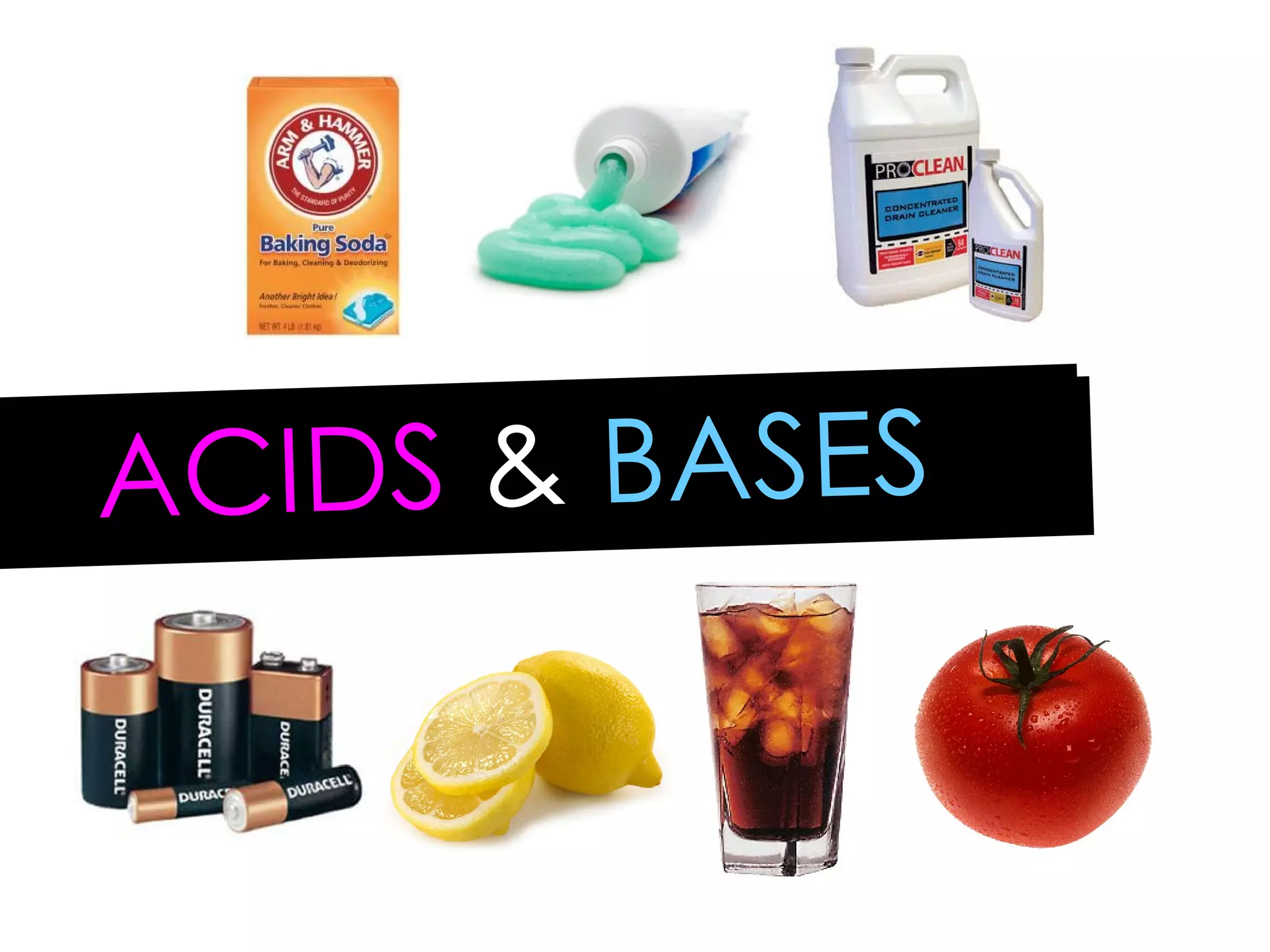
ACIDS  &  BASES
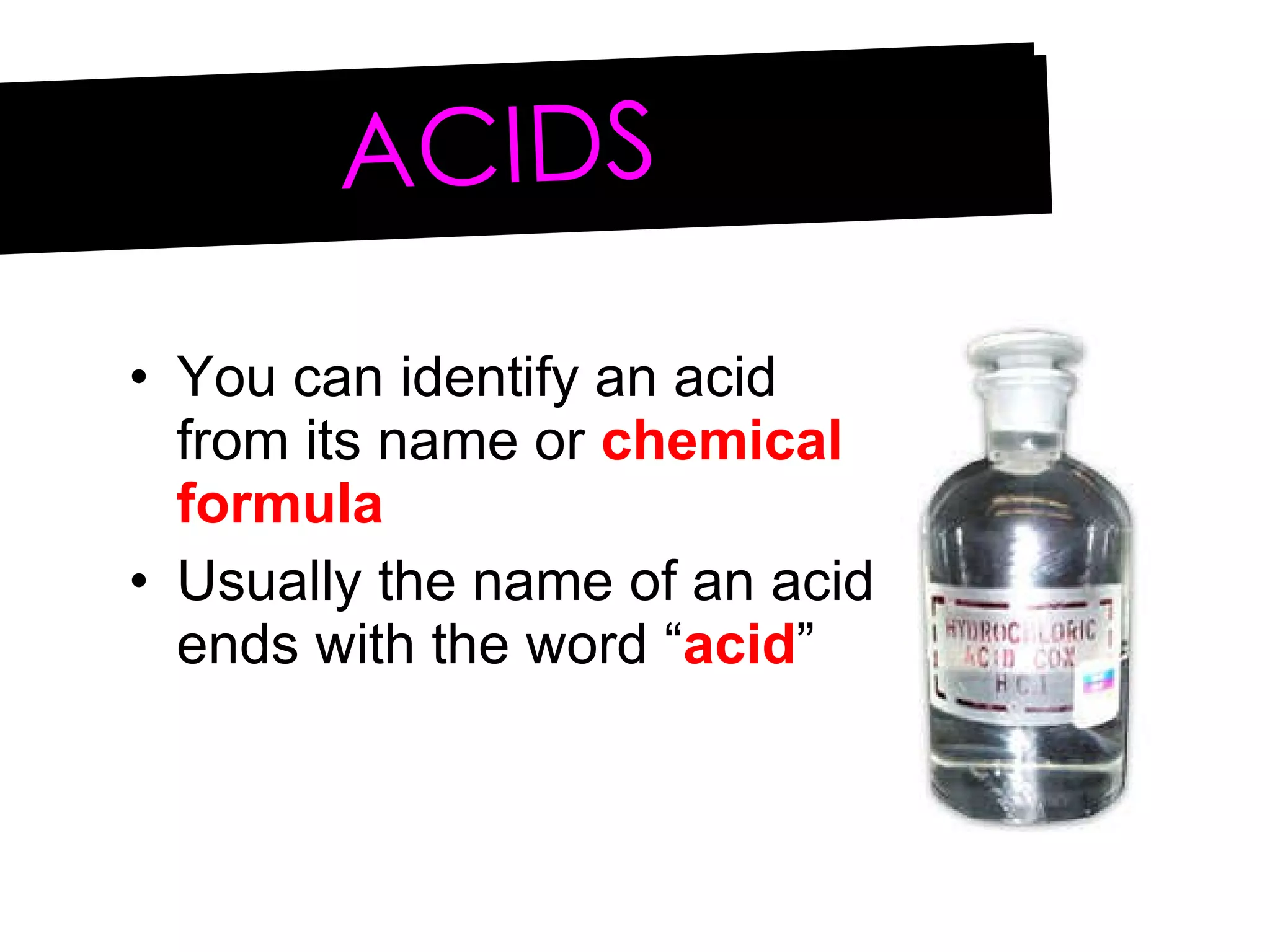
ACIDS You can identify an acid from its name or  chemical formula Usually the name of an acid ends with the word “ acid ”
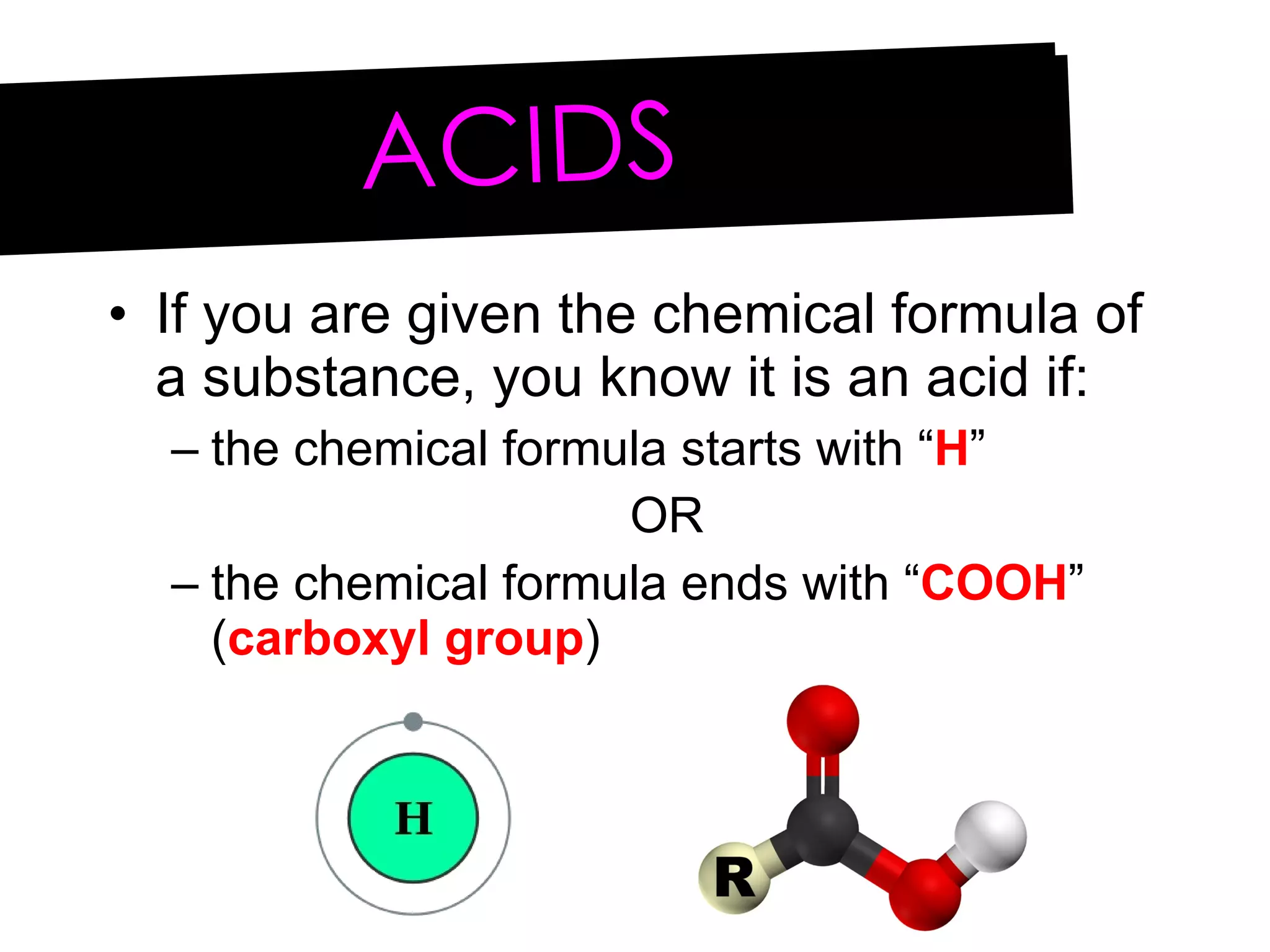
If you are given the chemical formula of a substance, you know it is an acid if: the chemical formula starts with “ H ” OR the chemical formula ends with “ COOH ” ( carboxyl group ) ACIDS
For example: HF (aq) is an acid because it starts with  H Hydrofluoric acid is used for etching glass CH 3 COOH (aq) is an acid because it ends with  COOH The name of this acid is “ acetic acid ” Diluted acetic acid is  vinegar ACIDS
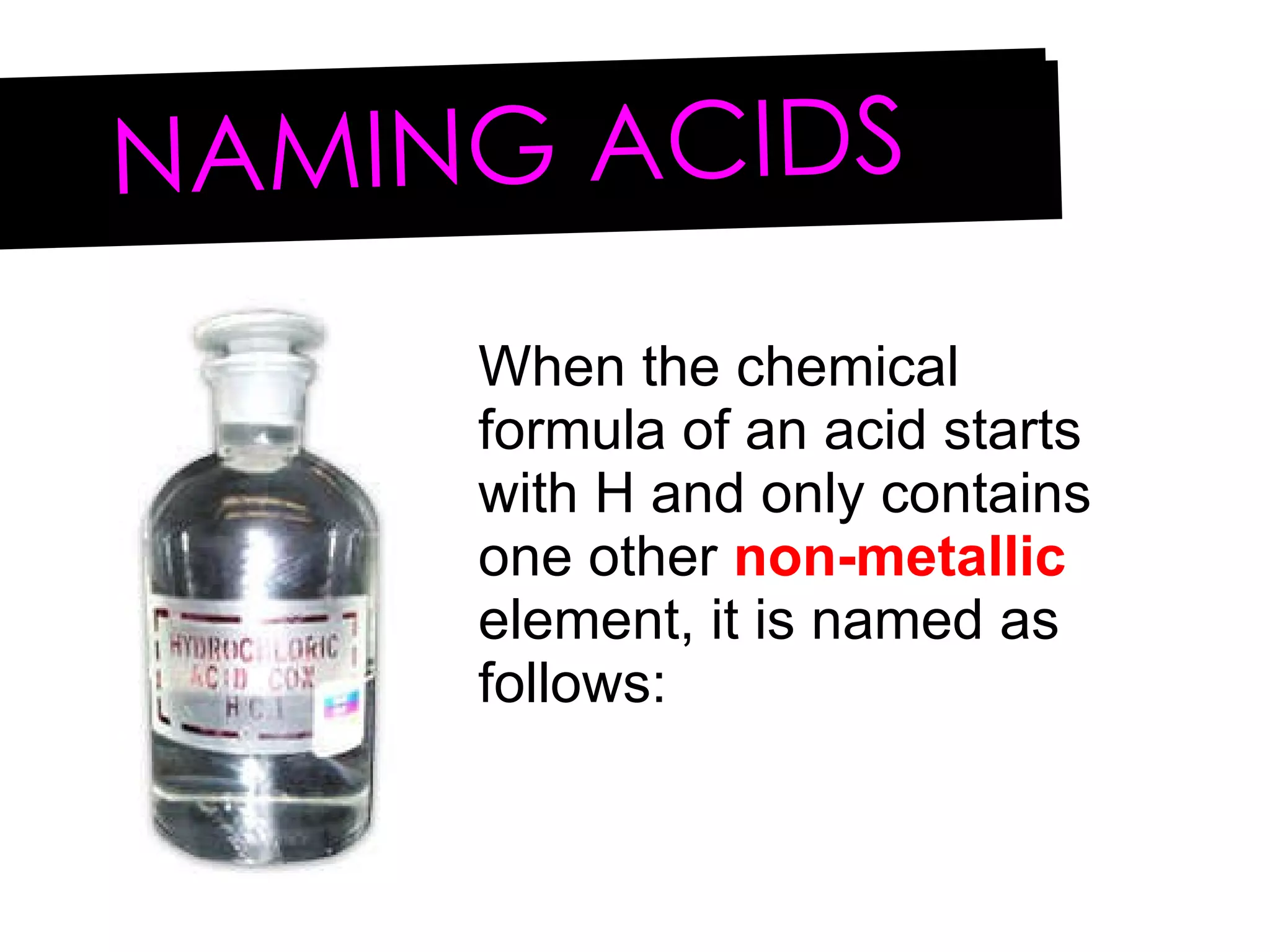
NAMING ACIDS When the chemical formula of an acid starts with H and only contains one other  non-metallic  element, it is named as follows:
Step 1: Start with the prefix “ hydro ” Step 2: take the first part of the non-metallic element and add the suffix “ ic ” and the word “ acid ” ex.)  HCl(aq) = “ hydrochloric acid ” HF(aq) = “ hydrofluoric acid ” NAMING ACIDS
Sometimes the chemical formula of an acid contains a  polyatomic ion For example, H 2 SO 4 (aq) contains the polyatomic ion sulphate ( SO 4 2- ) When naming an acid containing a polyatomic ion, do the following: NAMING ACIDS
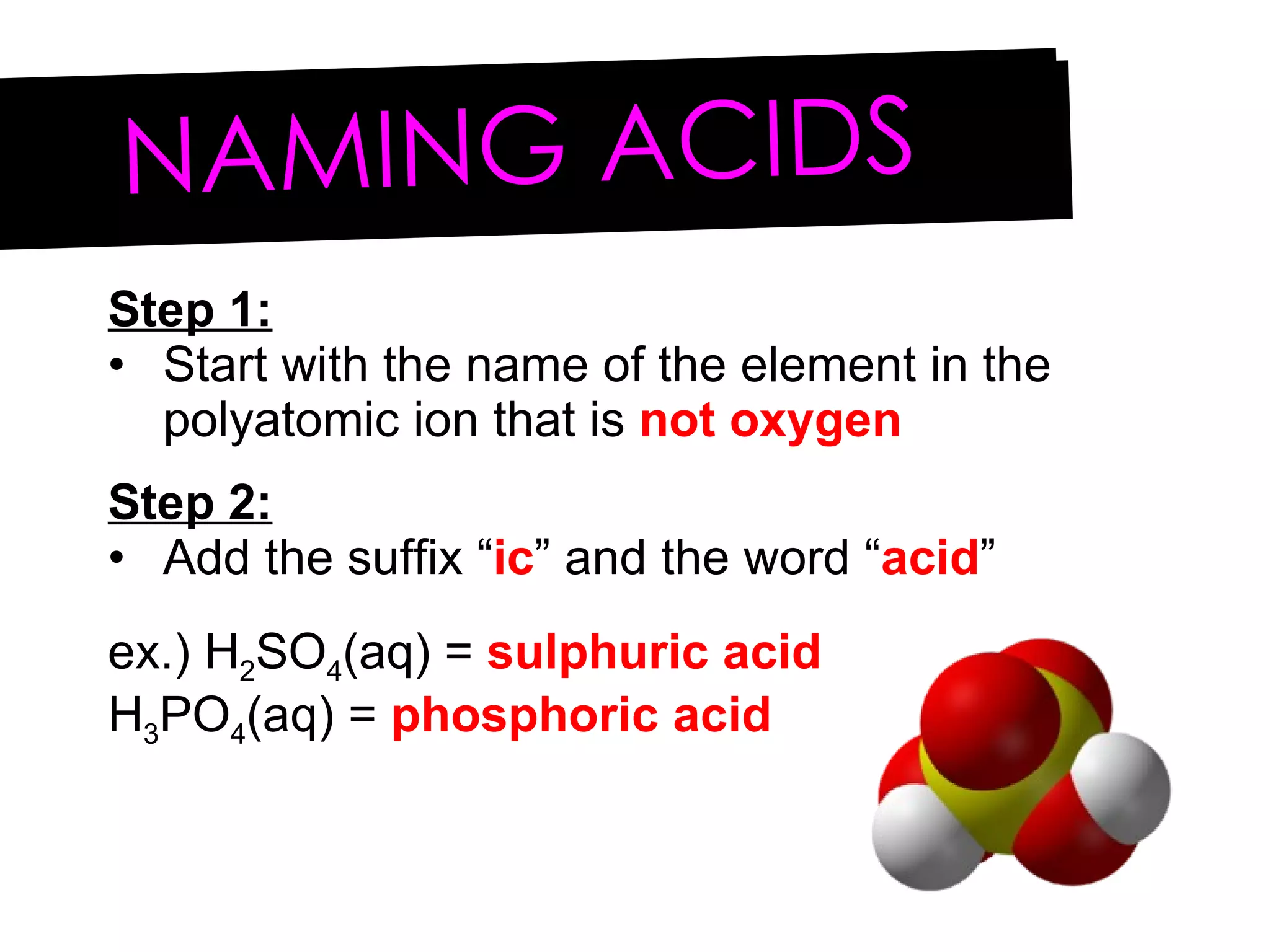
Step 1: Start with the name of the element in the polyatomic ion that is  not oxygen Step 2: Add the suffix “ ic ” and the word “ acid ” ex.) H 2 SO 4 (aq) =  sulphuric acid H 3 PO 4 (aq) =  phosphoric acid NAMING ACIDS
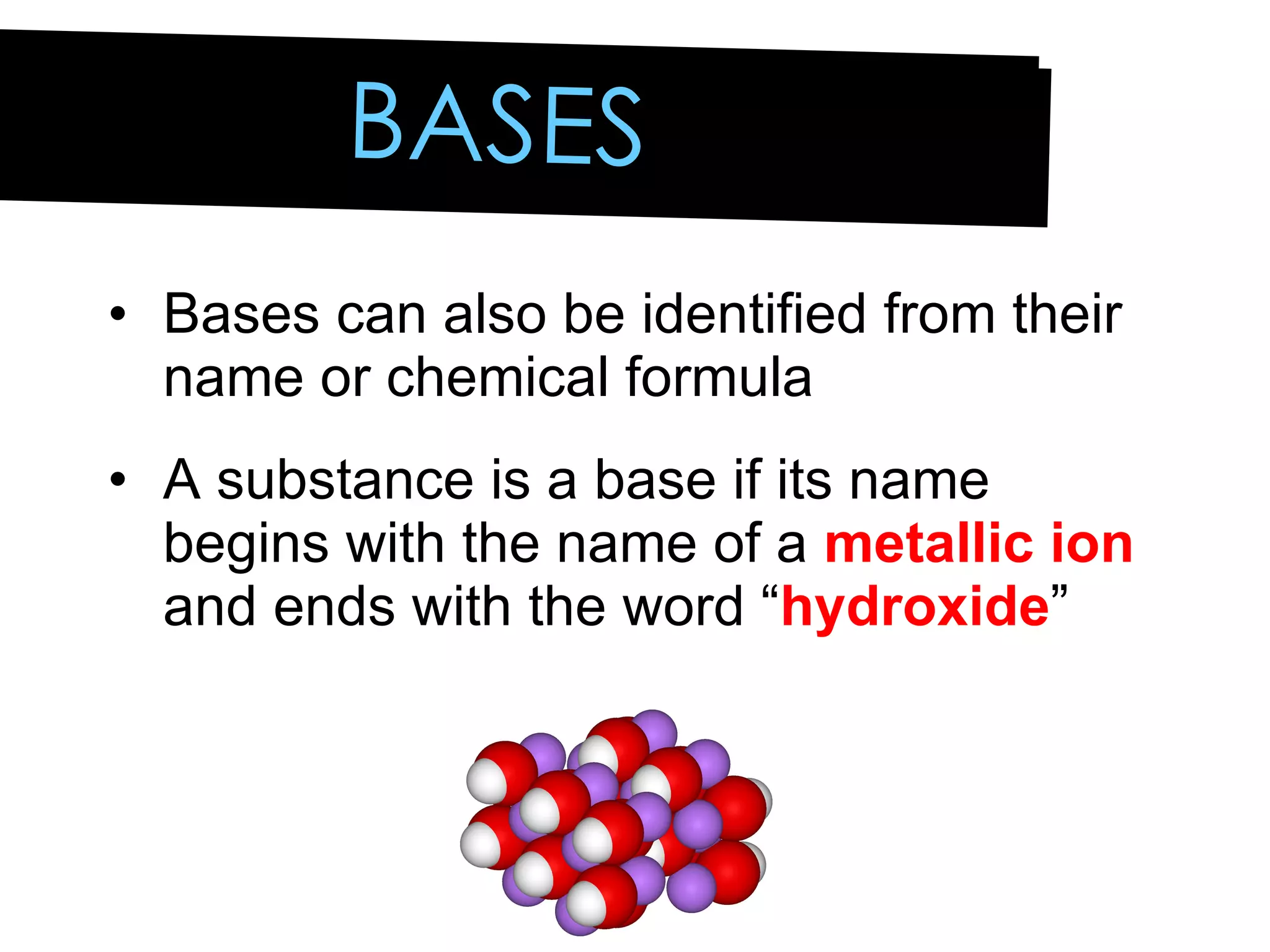
BASES Bases can also be identified from their name or chemical formula A substance is a base if its name begins with the name of a  metallic ion  and ends with the word “ hydroxide ”
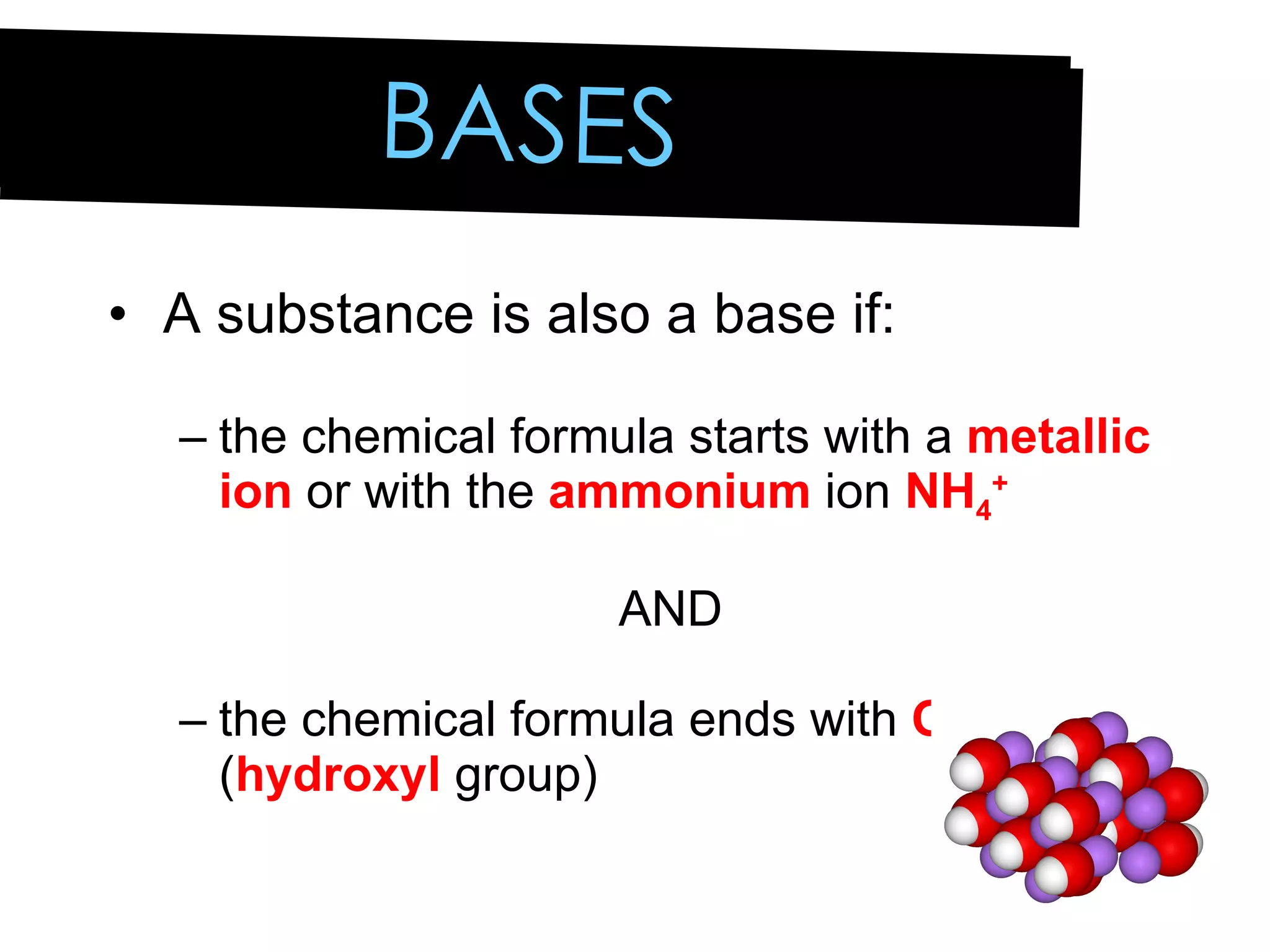
A substance is also a base if: the chemical formula starts with a  metallic ion  or with the  ammonium  ion  NH 4 +   AND the chemical formula ends with  OH  ( hydroxyl  group) BASES
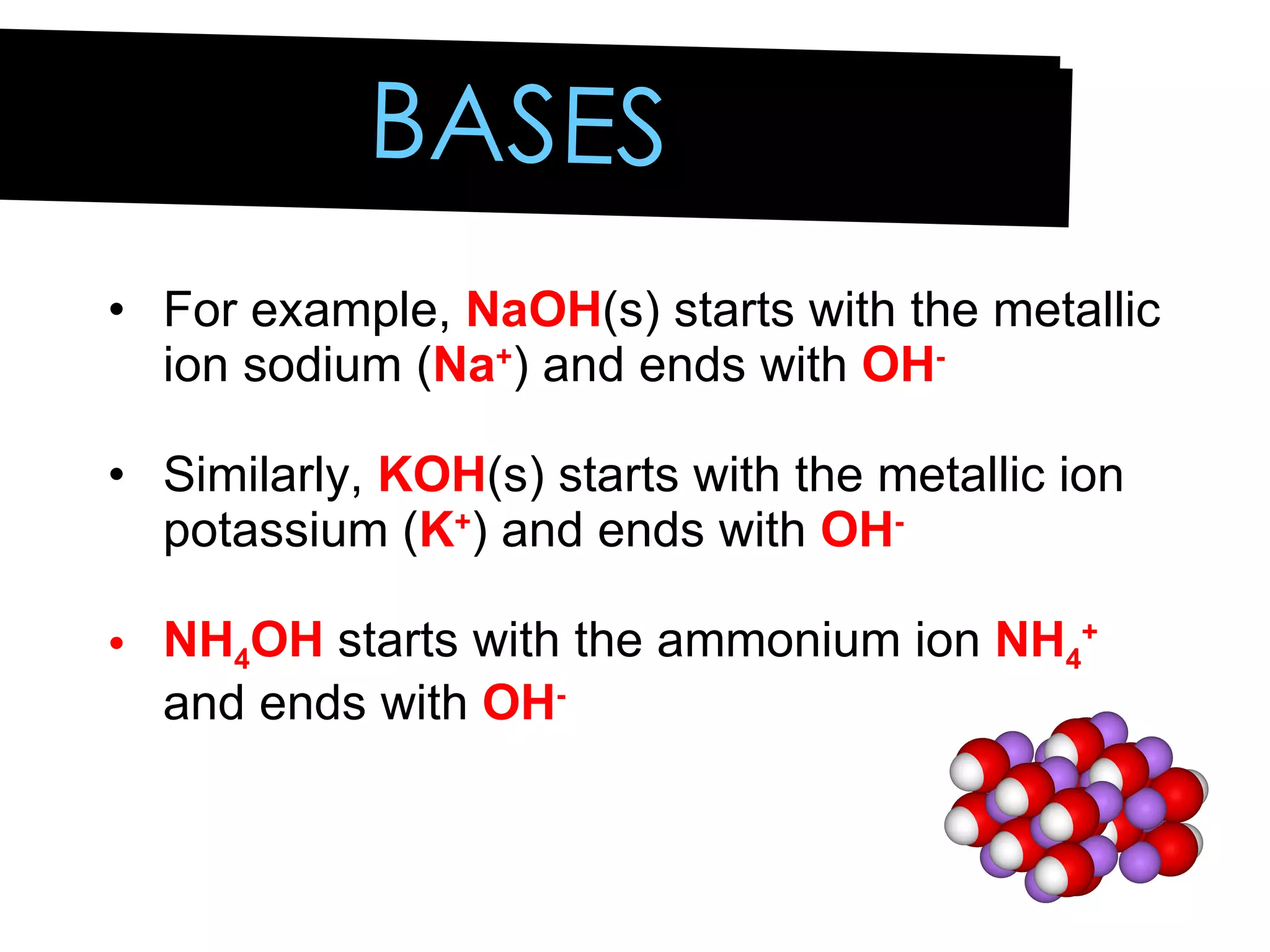
For example,  NaOH (s) starts with the metallic ion sodium ( Na + ) and ends with  OH - Similarly,  KOH (s) starts with the metallic ion potassium ( K + ) and ends with  OH - NH 4 OH  starts with the ammonium ion  NH 4 +  and ends with  OH - BASES
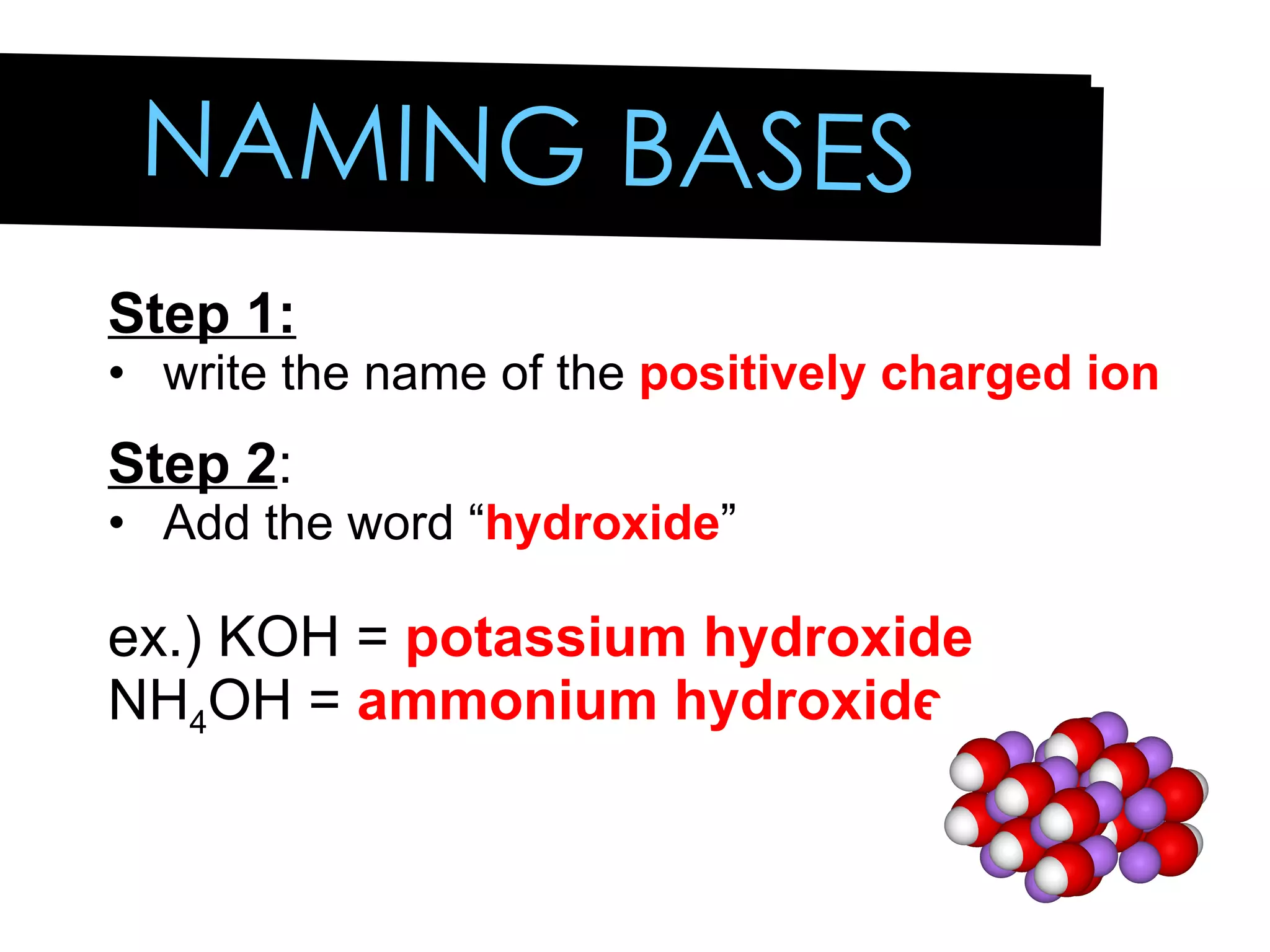
NAMING BASES Step 1: write the name of the  positively charged ion Step 2 : Add the word “ hydroxide ” ex.) KOH =  potassium hydroxide NH 4 OH =  ammonium hydroxide
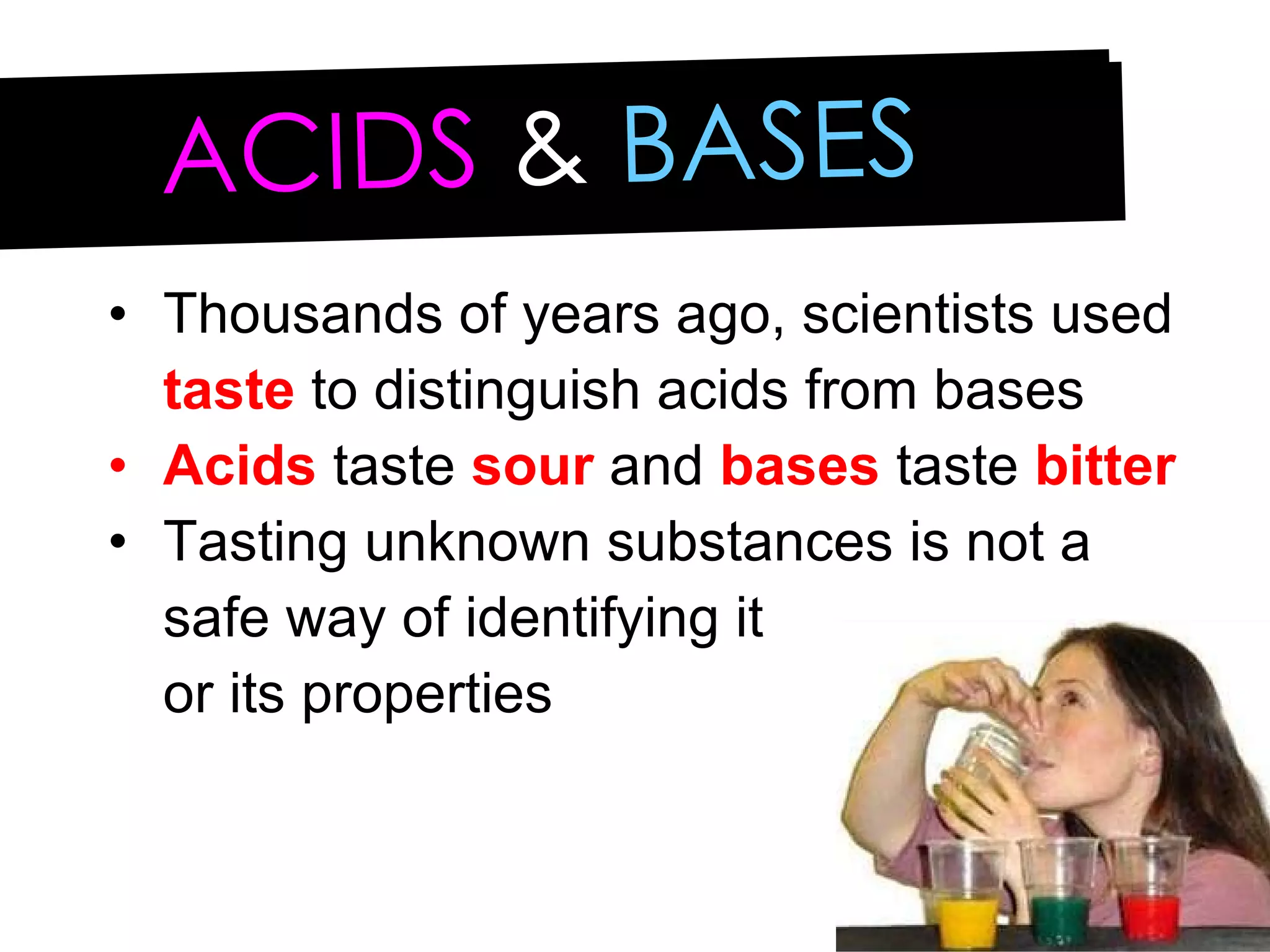
ACIDS   &  BASES Thousands of years ago, scientists used  taste  to distinguish acids from bases Acids  taste  sour  and  bases  taste  bitter Tasting unknown substances is not a safe way of identifying it  or its properties
pH Today you can determine if a substance is an acid or a base by measuring its  pH The pH measurement is related to the number of  hydrogen ions  ( H + ) that are in a solution The abbreviation “pH” stands for “ power of hydrogen ”
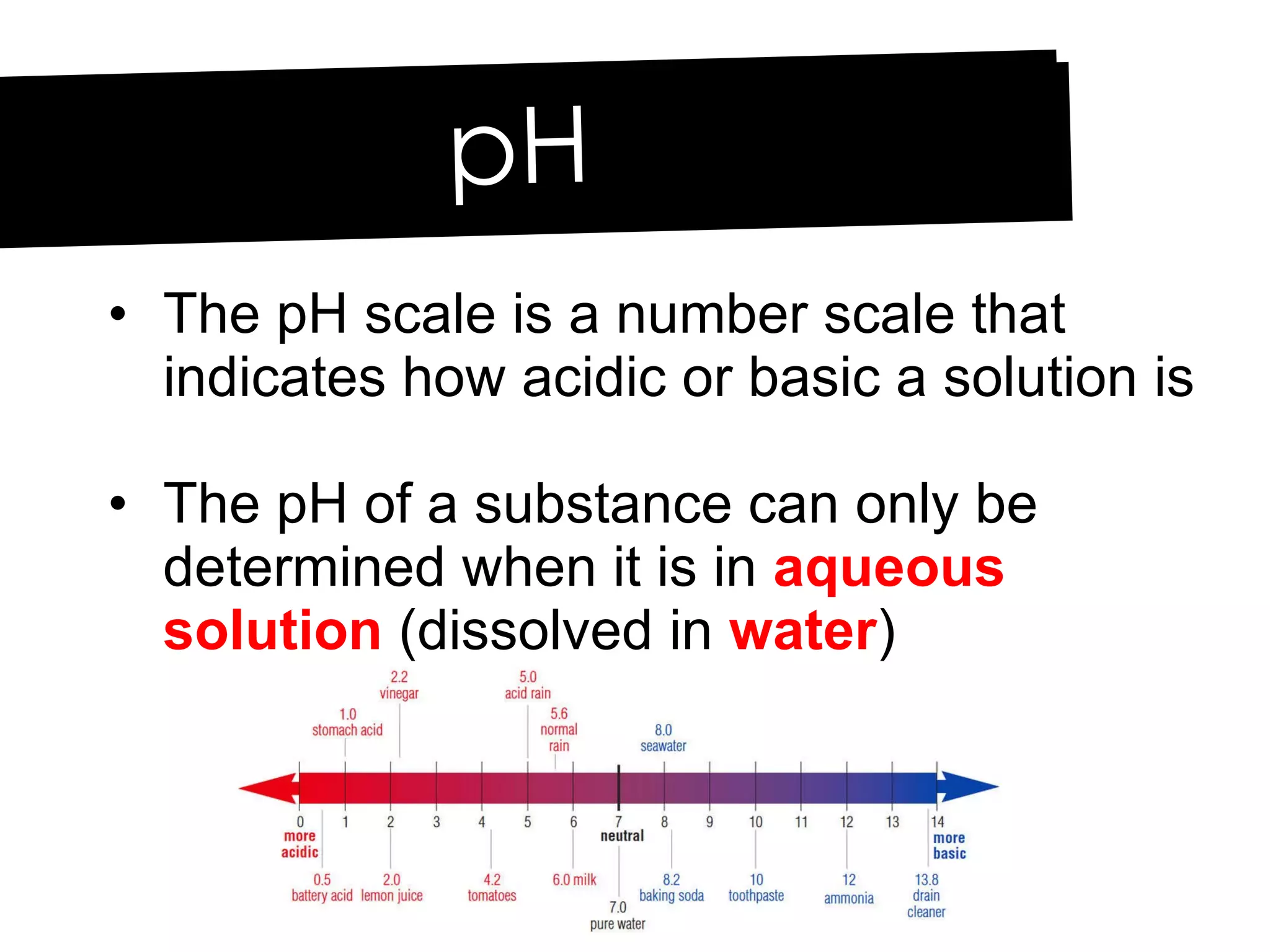
The pH scale is a number scale that indicates how acidic or basic a solution is The pH of a substance can only be determined when it is in  aqueous solution  (dissolved in  water ) pH
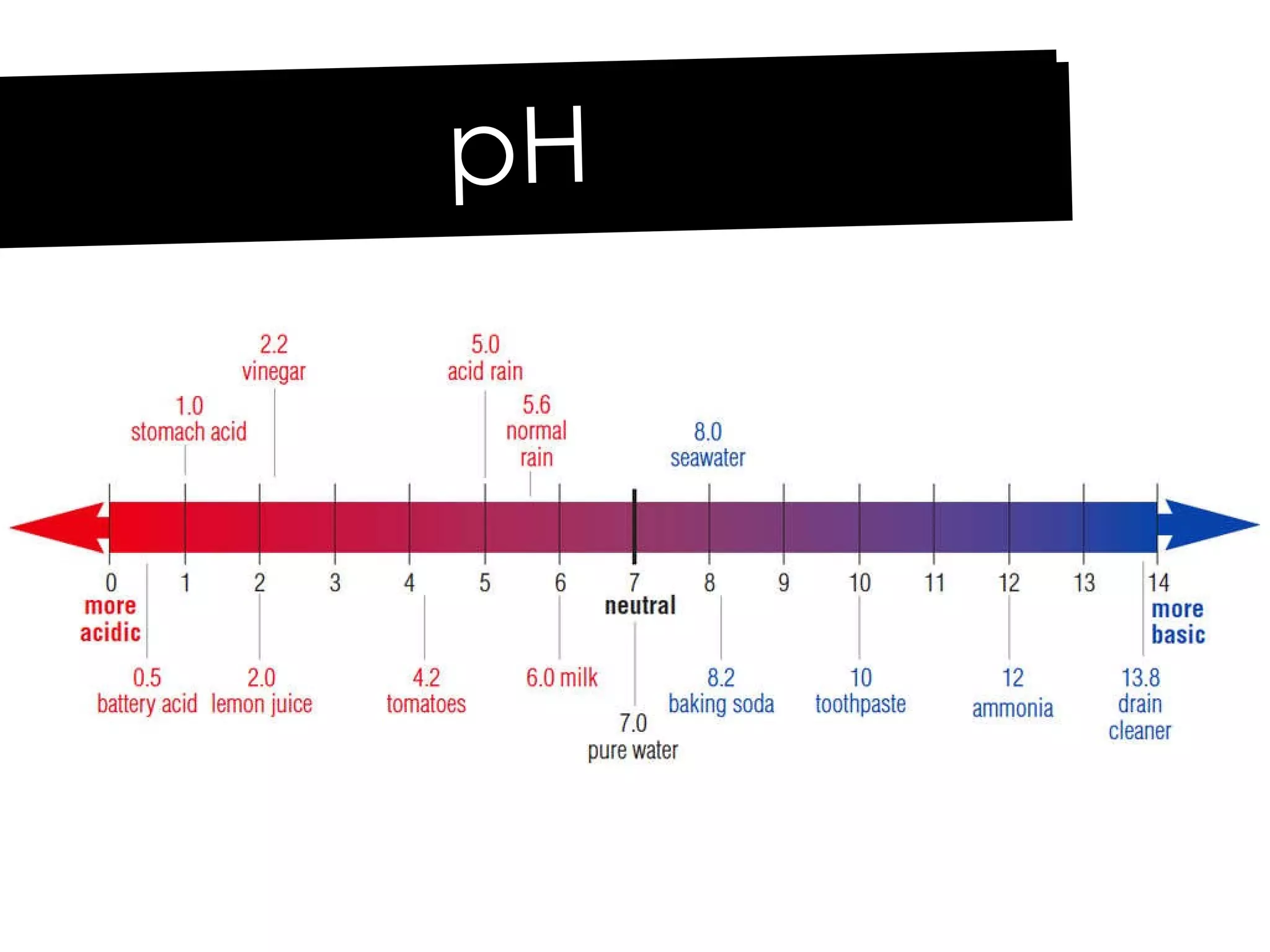
Pure water has a pH of  7 Any substance with a pH of 7 when it is in aqueous solution is  neutral A neutral substance is neither an acid nor a base pH
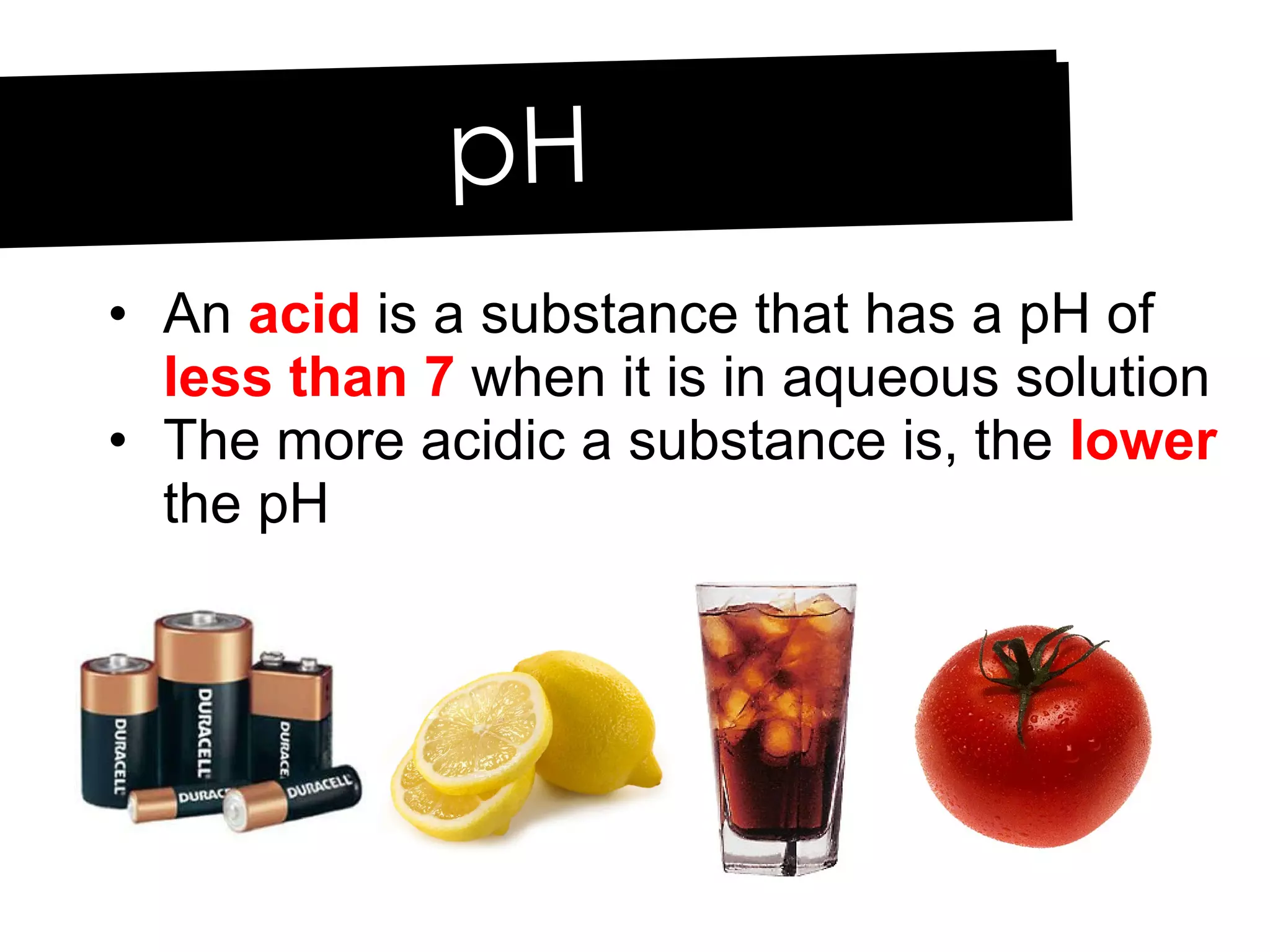
An  acid  is a substance that has a pH of  less than 7  when it is in aqueous solution The more acidic a substance is, the  lower  the pH pH
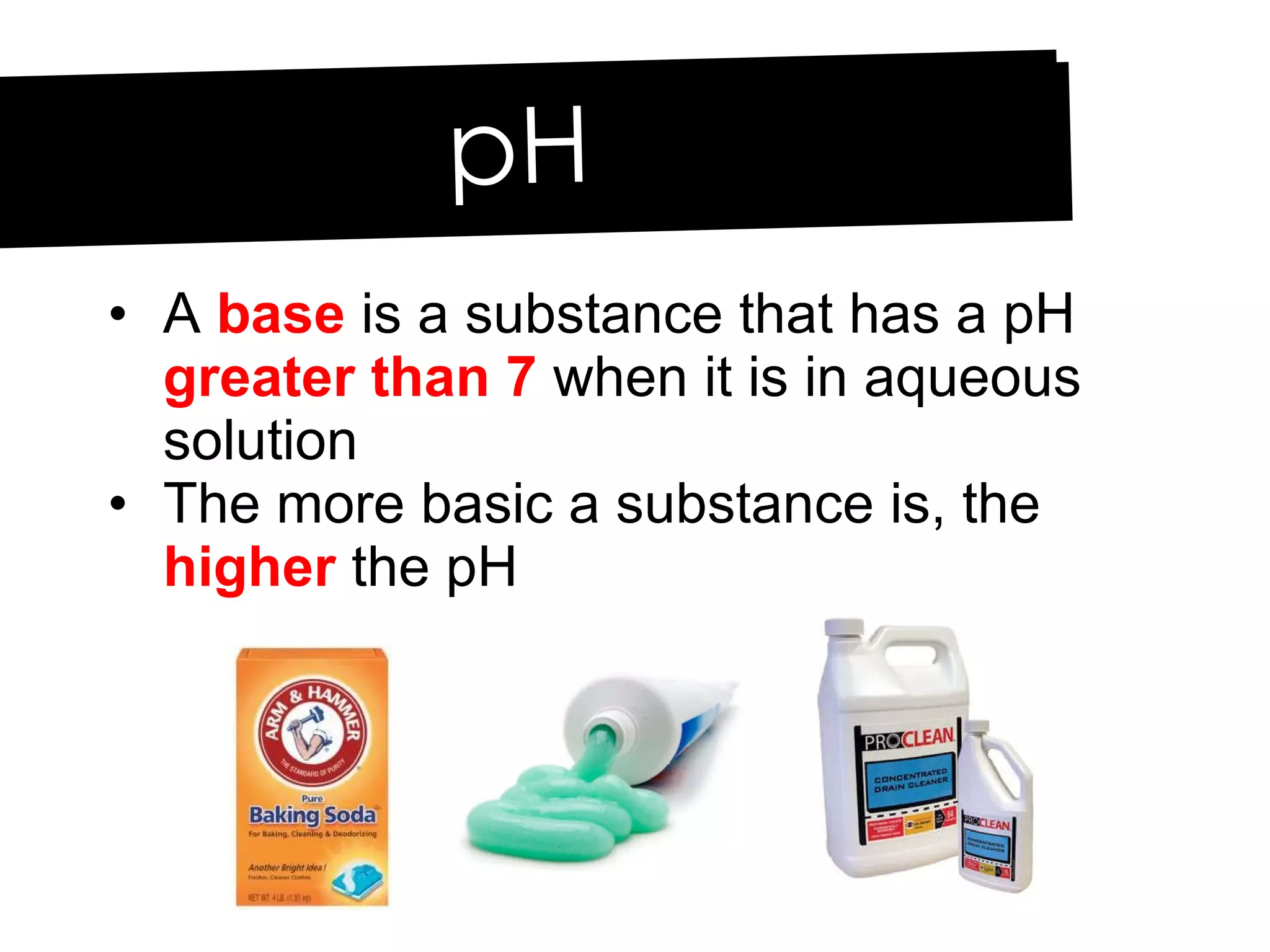
A  base  is a substance that has a pH  greater than 7  when it is in aqueous solution The more basic a substance is, the  higher  the pH pH
pH
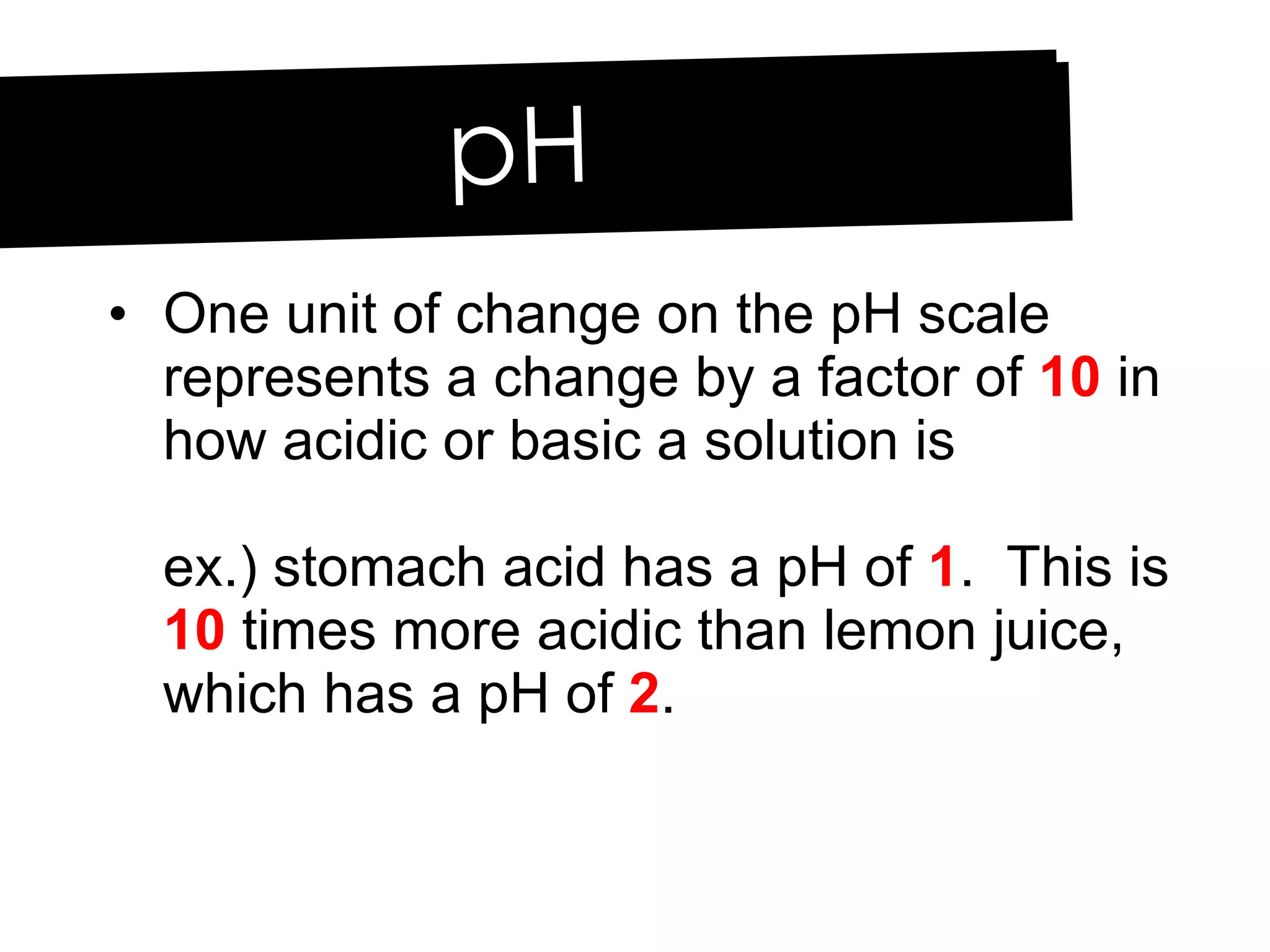
One unit of change on the pH scale represents a change by a factor of  10  in how acidic or basic a solution is ex.) stomach acid has a pH of  1 .  This is  10  times more acidic than lemon juice, which has a pH of  2 . pH
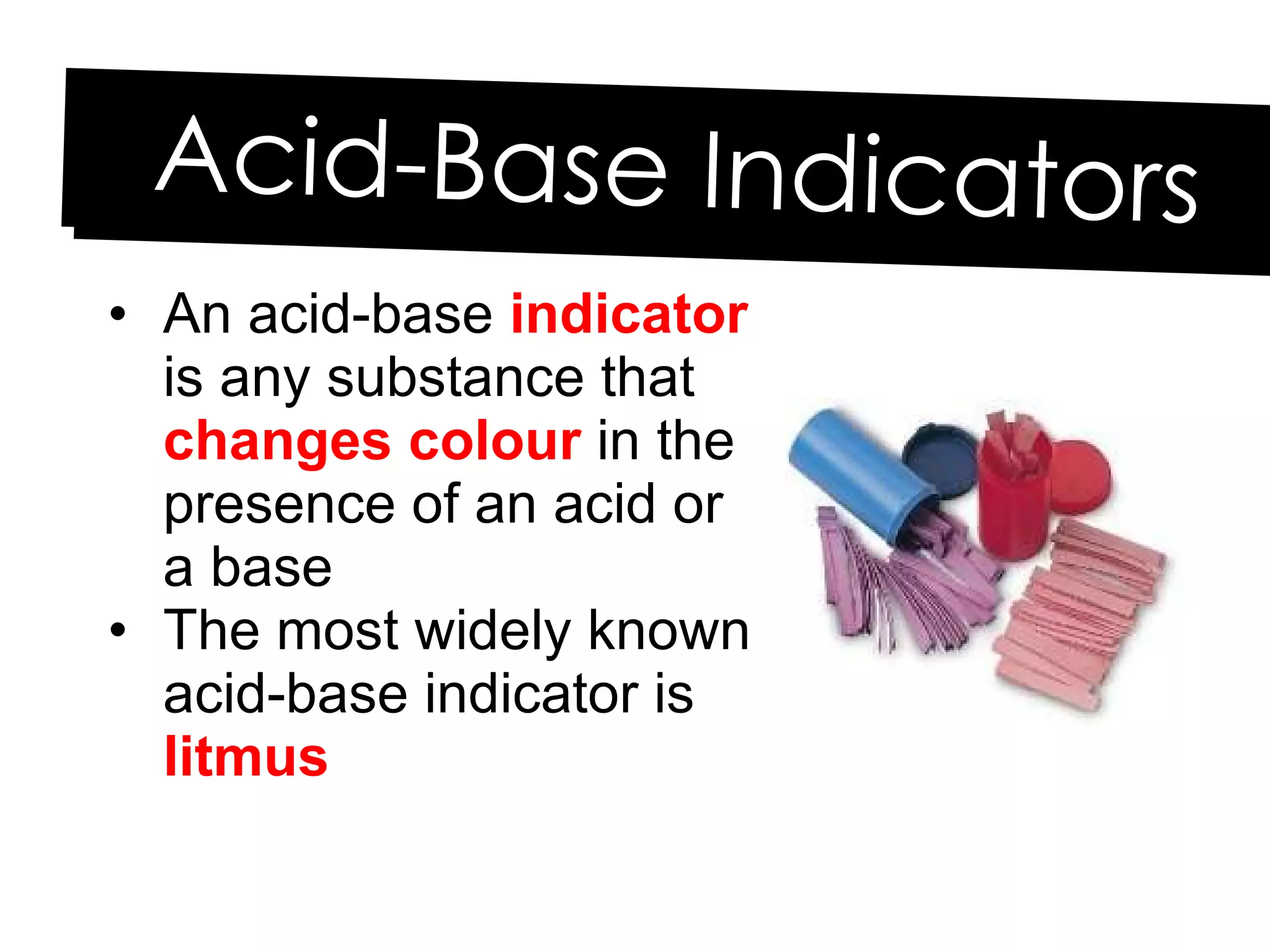
Acid-Base Indicators An acid-base  indicator  is any substance that  changes colour  in the presence of an acid or  a base The most widely known acid-base indicator is  litmus
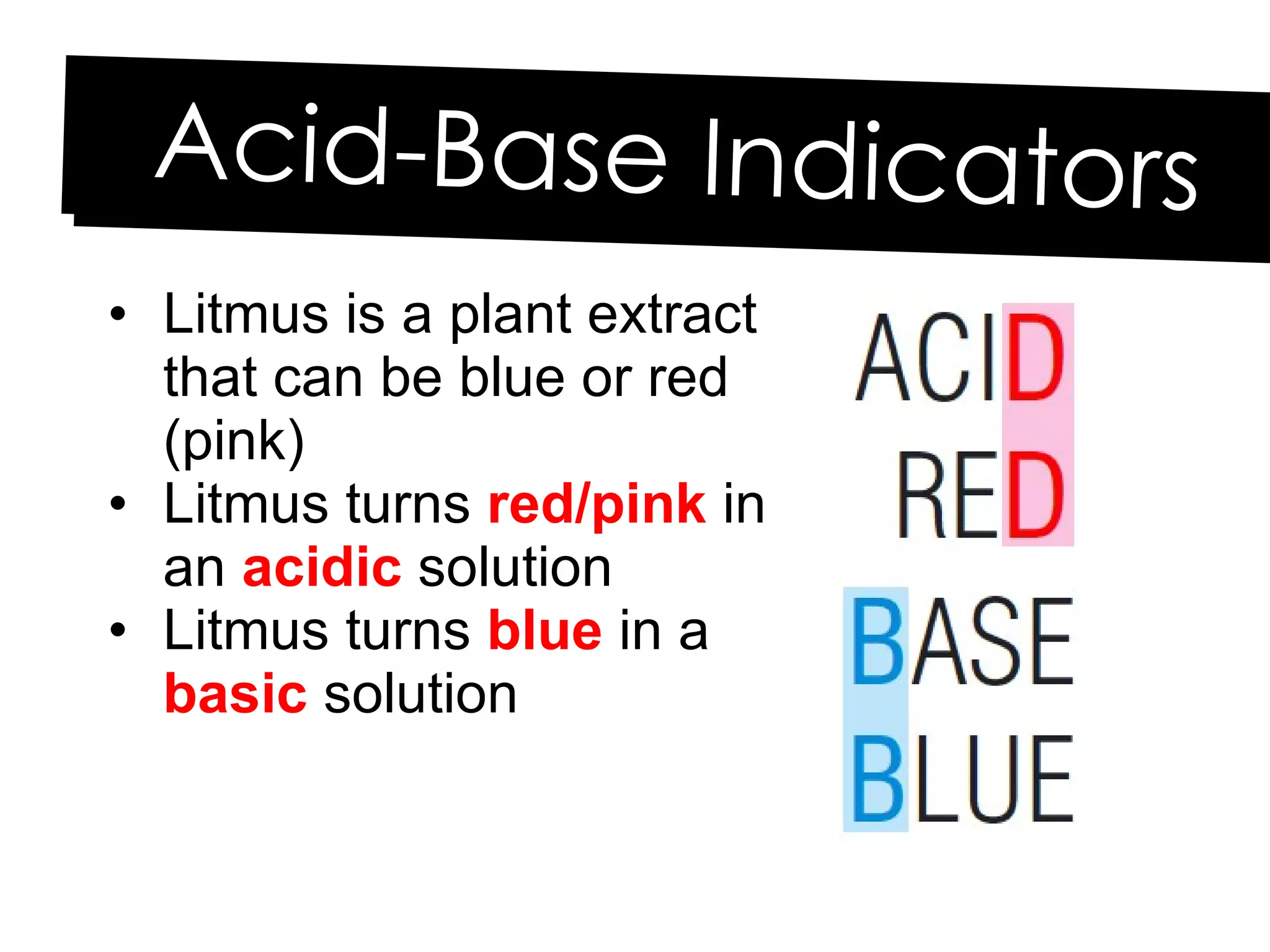
Litmus is a plant extract that can be blue or red (pink) Litmus turns  red/pink  in an  acidic  solution Litmus turns  blue  in a  basic  solution Acid-Base Indicators
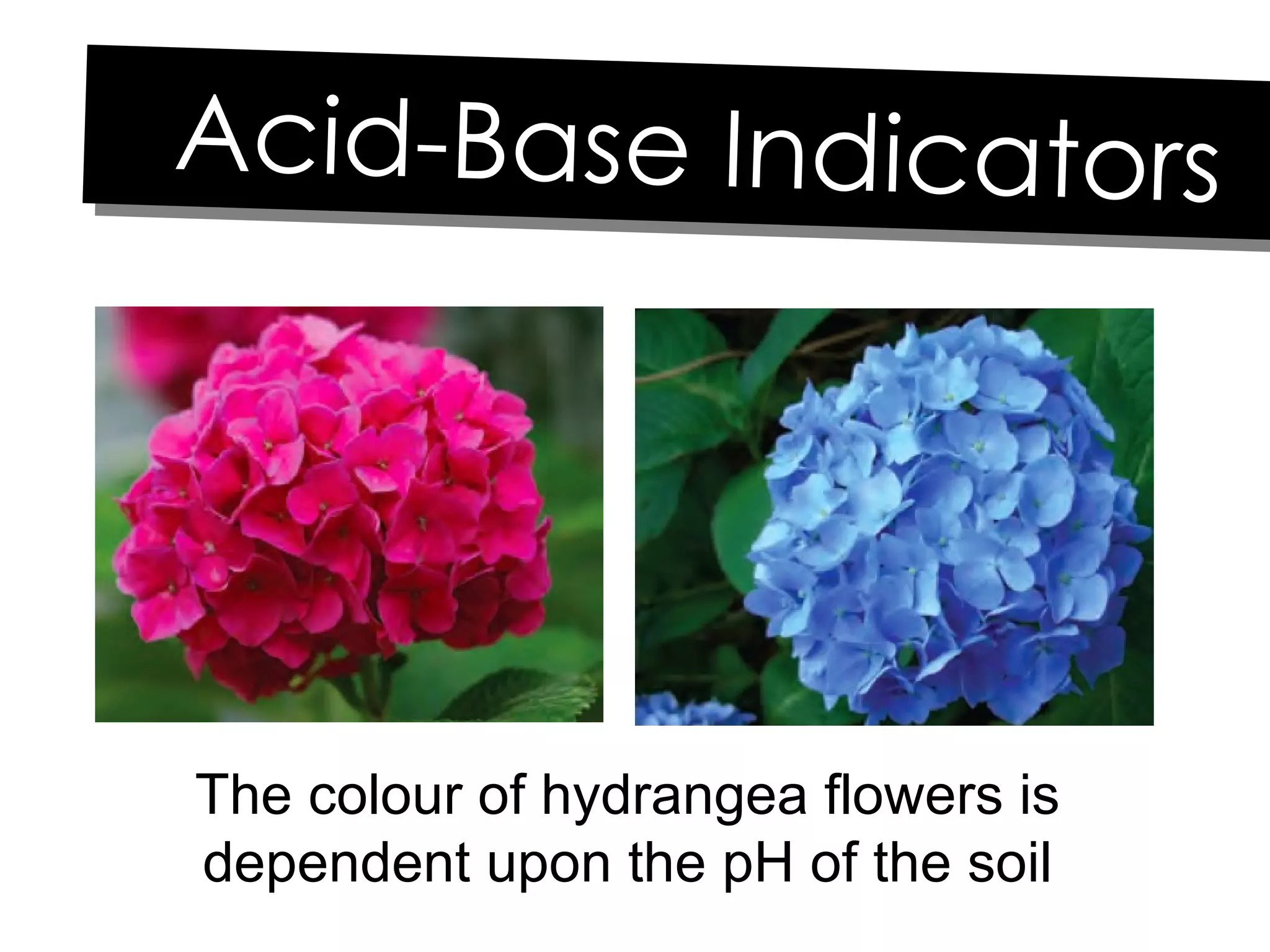
The colour of hydrangea flowers is dependent upon the pH of the soil Acid-Base Indicators
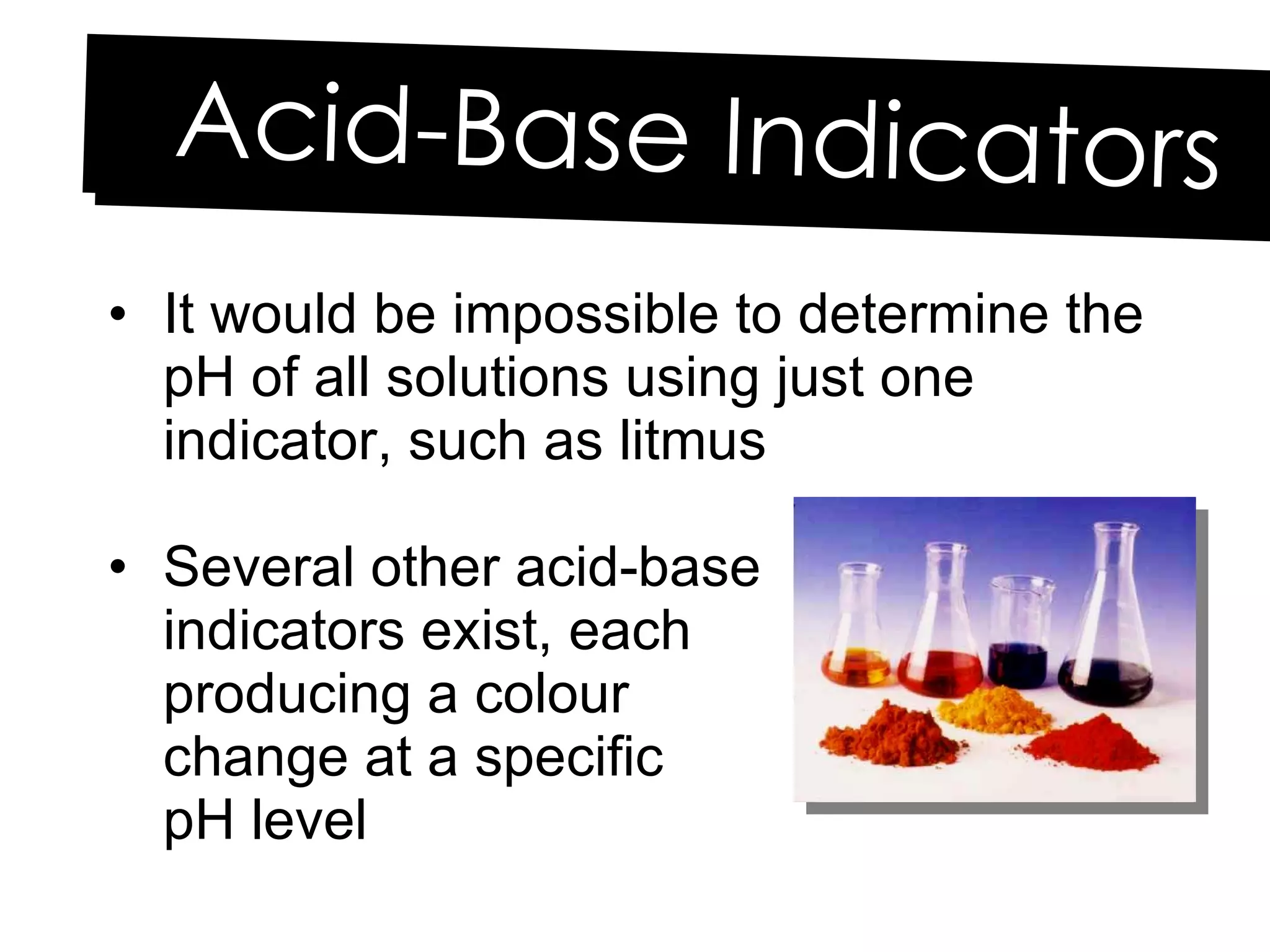
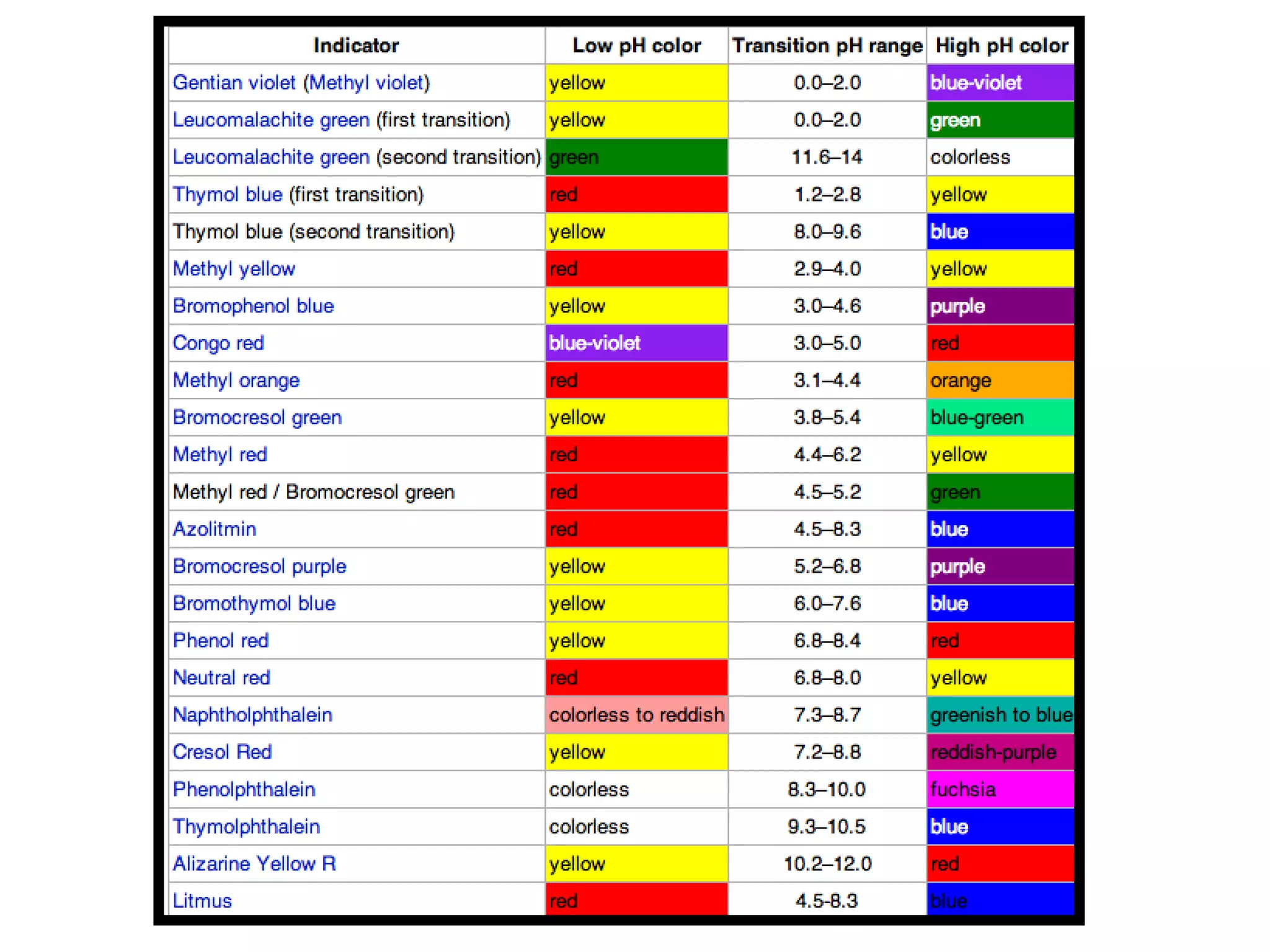
It would be impossible to determine the pH of all solutions using just one indicator, such as litmus Several other acid-base  indicators exist, each  producing a colour  change at a specific  pH level Acid-Base Indicators
 
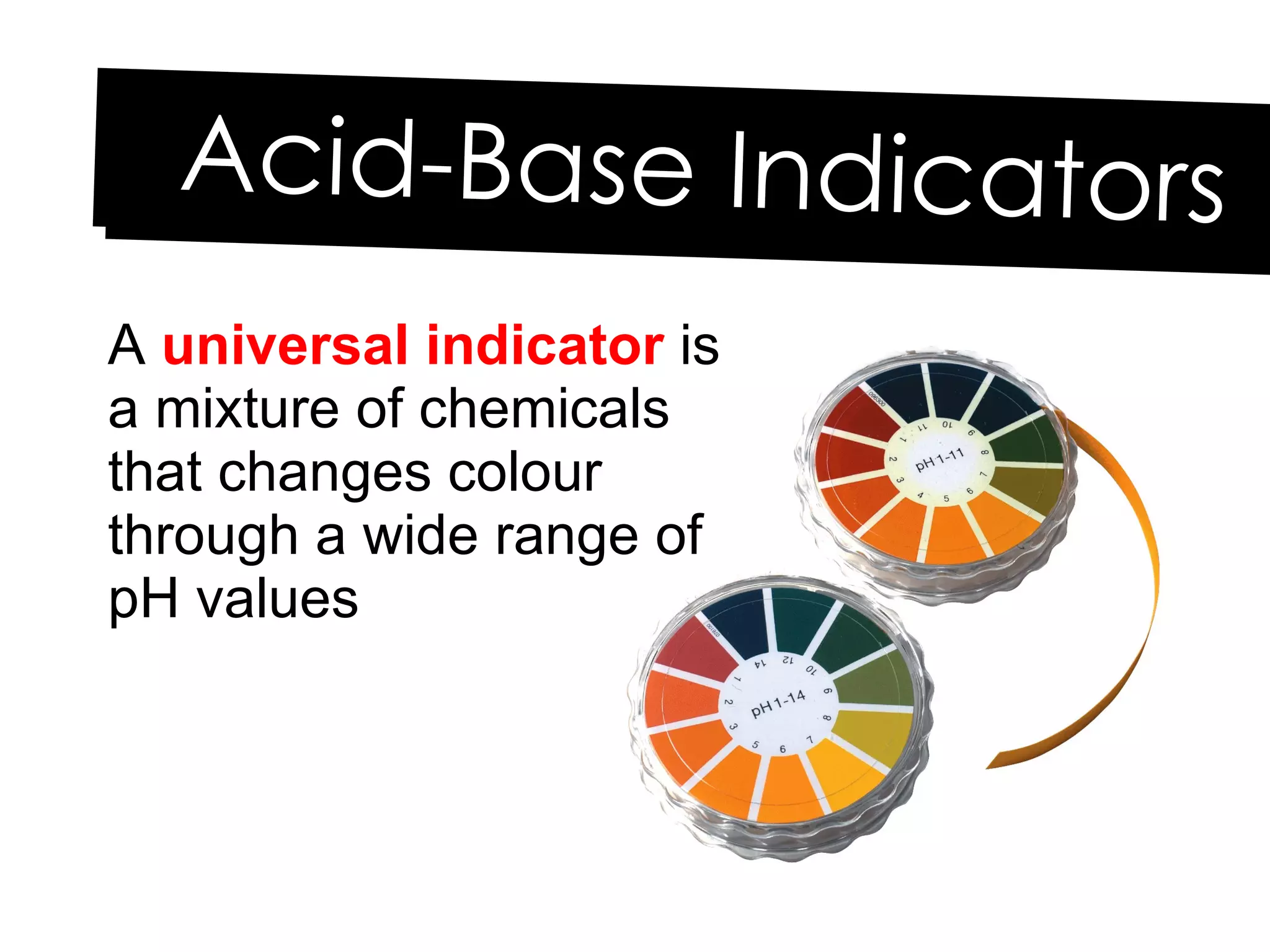
A  universal indicator  is a mixture of chemicals that changes colour through a wide range of pH values Acid-Base Indicators
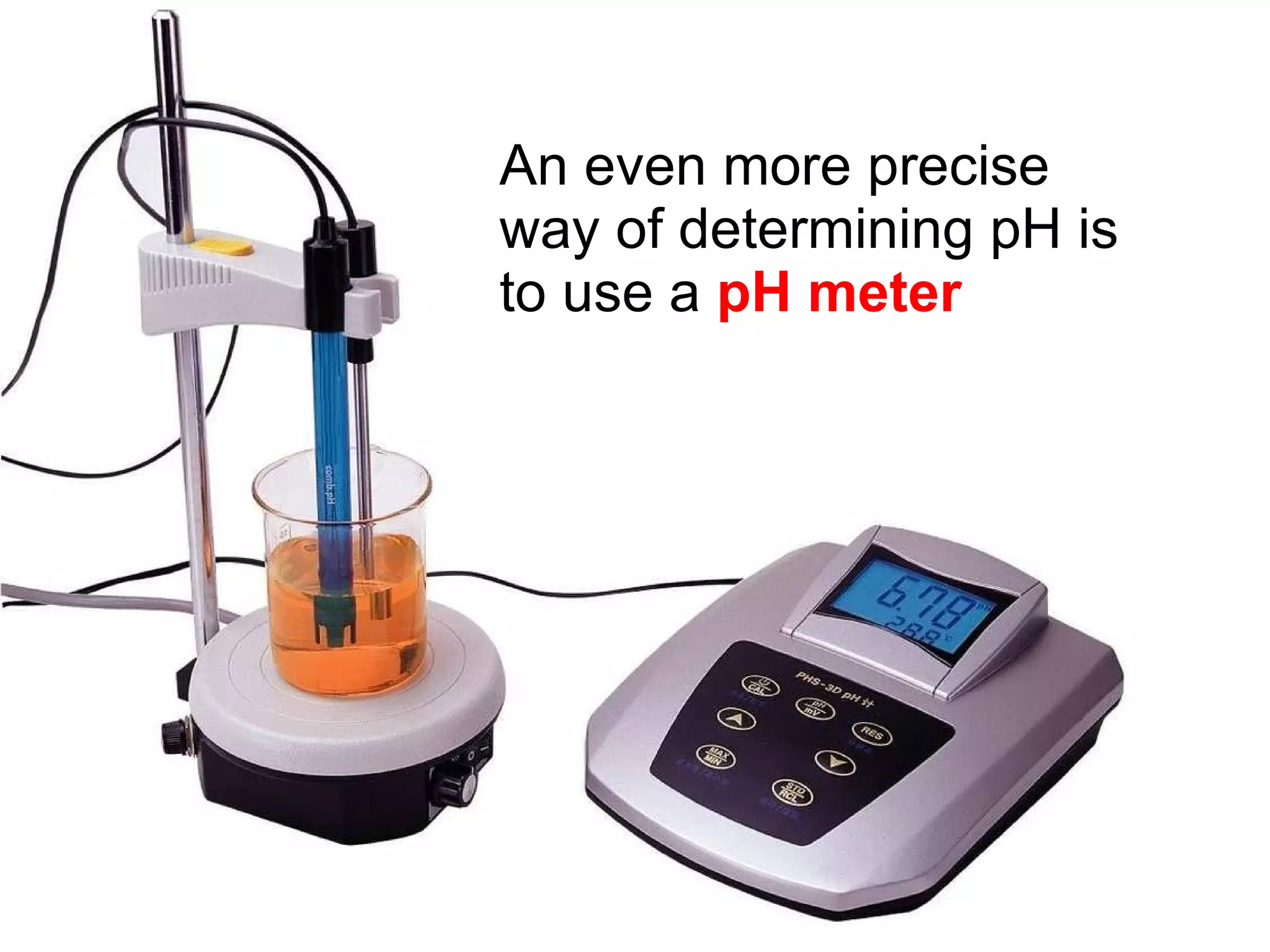
An even more precise way of determining pH is to use a  pH meter
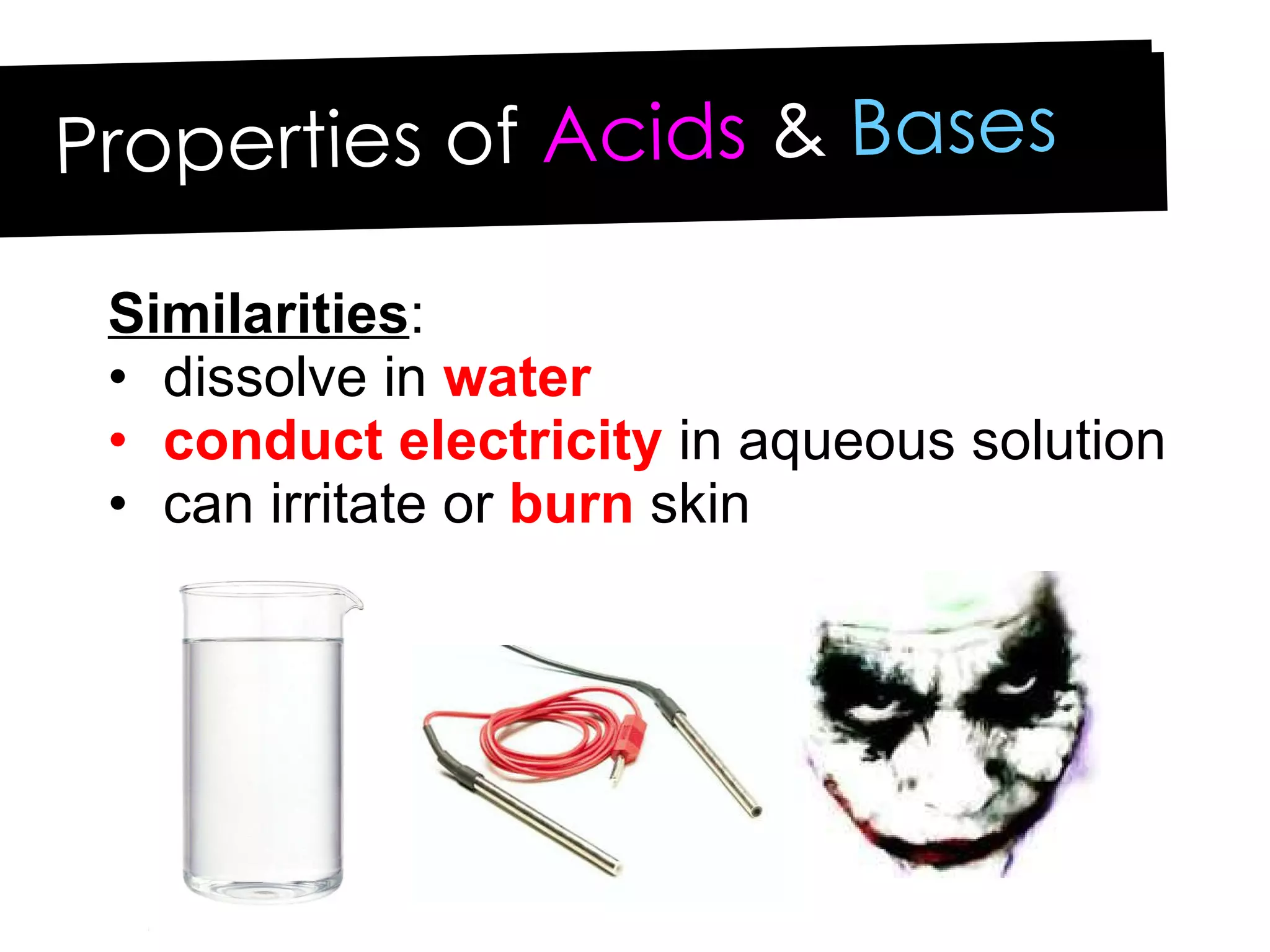
Properties of  Acids  &  Bases Similarities : dissolve in  water conduct electricity  in aqueous solution can irritate or  burn  skin
Differences : BASES ACIDS turn litmus  blue turn litmus  red/pink do not react with metals to produce a compound and hydrogen gas react  with metals to produce a compound and  hydrogen gas do not corrode metals corrode metals release hydroxide ( OH - ) ions in aqueous solution release hydrogen ( H + ) ions in aqueous solution pH > 7 pH < 7 feel  slippery do not feel slippery taste  bitter taste  sour
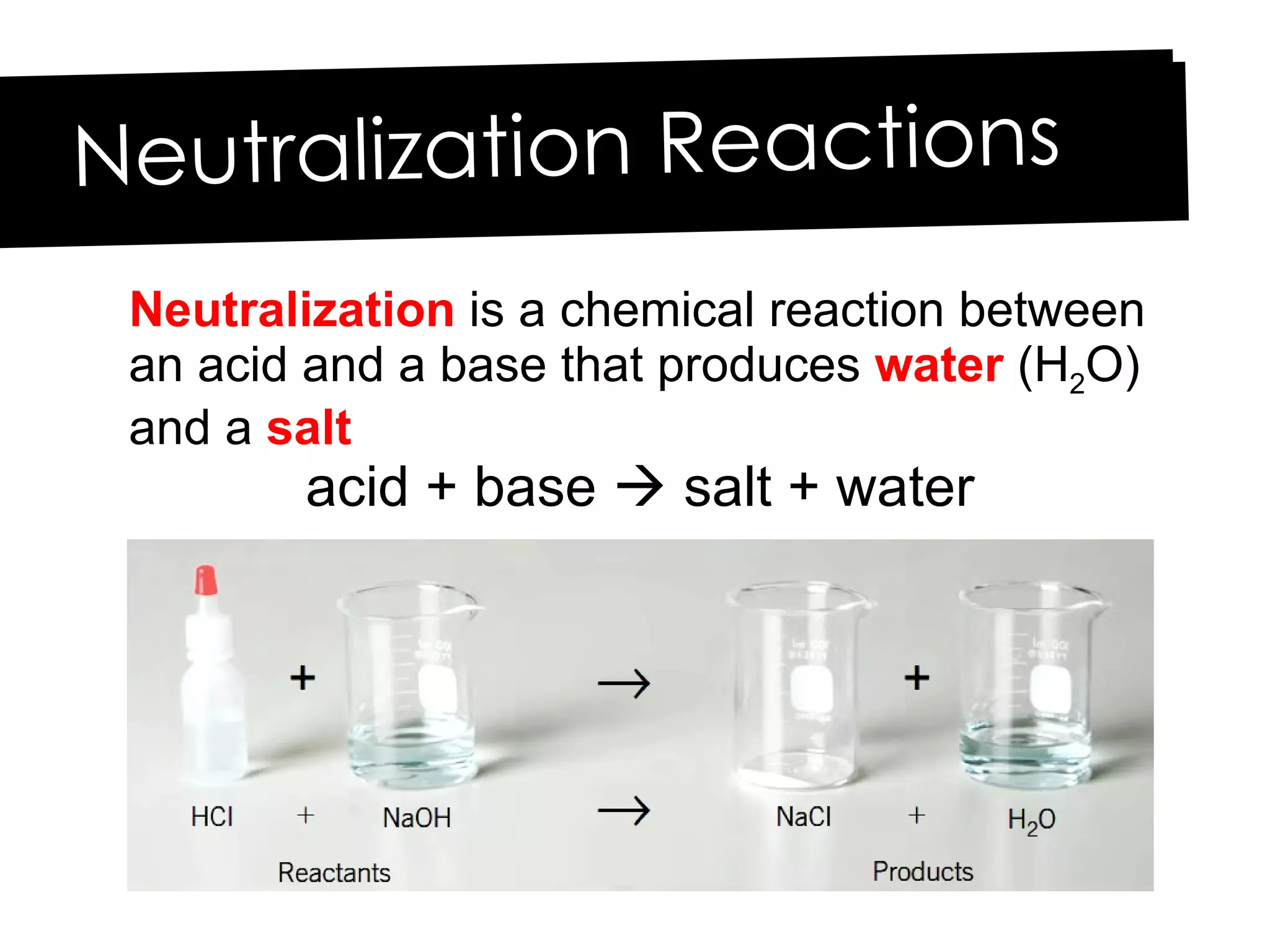
Neutralization Reactions Neutralization  is a chemical reaction between an acid and a base that produces  water  (H 2 O) and a  salt acid + base    salt + water
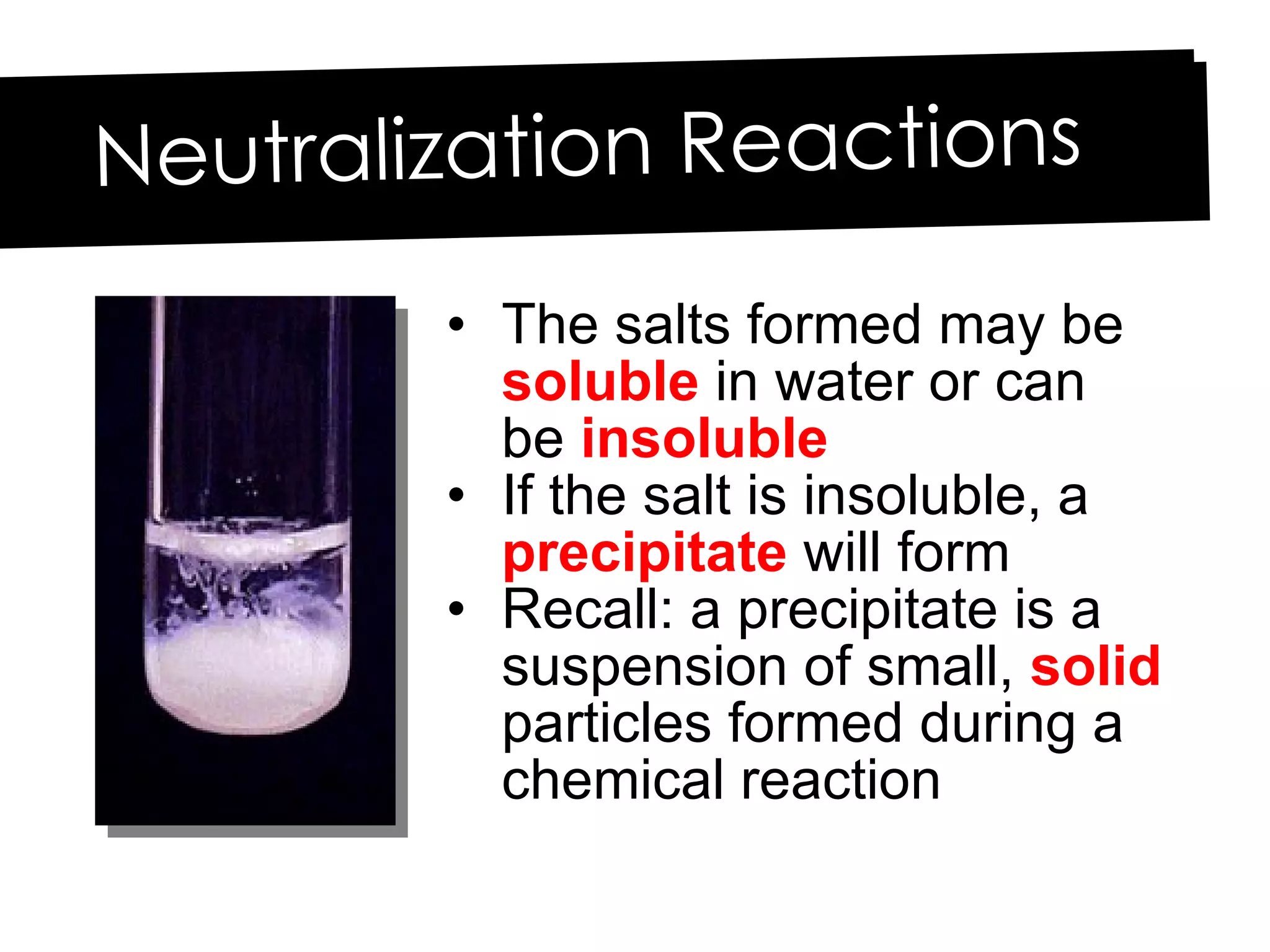
The salts formed may be  soluble  in water or can be  insoluble If the salt is insoluble, a  precipitate  will form Recall: a precipitate is a suspension of small,  solid  particles formed during a chemical reaction Neutralization Reactions
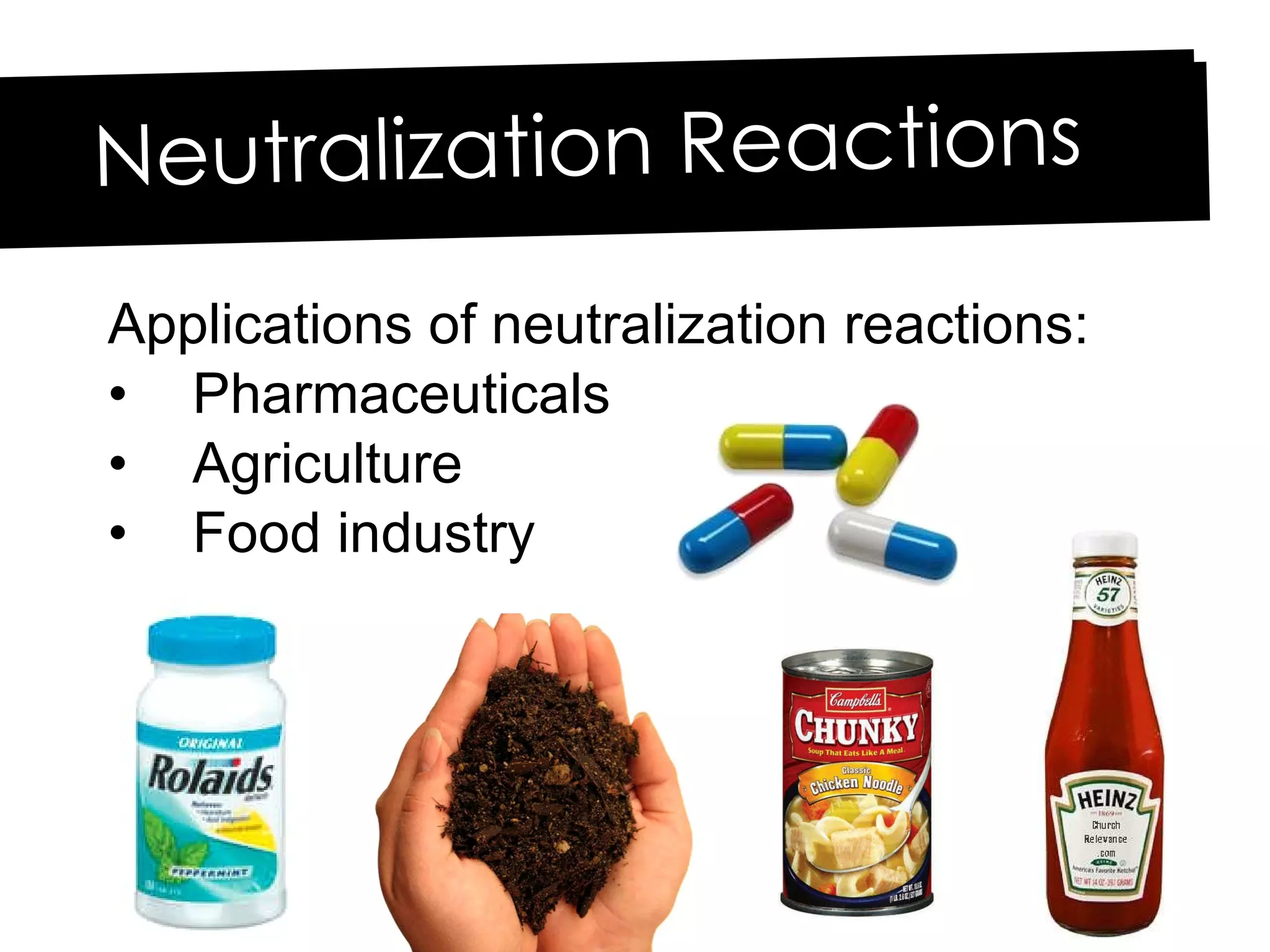
Applications of neutralization reactions: Pharmaceuticals Agriculture Food industry Neutralization Reactions

Acids & Bases

  • 1.
    ACIDS & BASES
  • 2.
    ACIDS You canidentify an acid from its name or chemical formula Usually the name of an acid ends with the word “ acid ”
  • 3.
    If you aregiven the chemical formula of a substance, you know it is an acid if: the chemical formula starts with “ H ” OR the chemical formula ends with “ COOH ” ( carboxyl group ) ACIDS
  • 4.
    For example: HF(aq) is an acid because it starts with H Hydrofluoric acid is used for etching glass CH 3 COOH (aq) is an acid because it ends with COOH The name of this acid is “ acetic acid ” Diluted acetic acid is vinegar ACIDS
  • 5.
    NAMING ACIDS Whenthe chemical formula of an acid starts with H and only contains one other non-metallic element, it is named as follows:
  • 6.
    Step 1: Startwith the prefix “ hydro ” Step 2: take the first part of the non-metallic element and add the suffix “ ic ” and the word “ acid ” ex.) HCl(aq) = “ hydrochloric acid ” HF(aq) = “ hydrofluoric acid ” NAMING ACIDS
  • 7.
    Sometimes the chemicalformula of an acid contains a polyatomic ion For example, H 2 SO 4 (aq) contains the polyatomic ion sulphate ( SO 4 2- ) When naming an acid containing a polyatomic ion, do the following: NAMING ACIDS
  • 8.
    Step 1: Startwith the name of the element in the polyatomic ion that is not oxygen Step 2: Add the suffix “ ic ” and the word “ acid ” ex.) H 2 SO 4 (aq) = sulphuric acid H 3 PO 4 (aq) = phosphoric acid NAMING ACIDS
  • 9.
    BASES Bases canalso be identified from their name or chemical formula A substance is a base if its name begins with the name of a metallic ion and ends with the word “ hydroxide ”
  • 10.
    A substance isalso a base if: the chemical formula starts with a metallic ion or with the ammonium ion NH 4 + AND the chemical formula ends with OH ( hydroxyl group) BASES
  • 11.
    For example, NaOH (s) starts with the metallic ion sodium ( Na + ) and ends with OH - Similarly, KOH (s) starts with the metallic ion potassium ( K + ) and ends with OH - NH 4 OH starts with the ammonium ion NH 4 + and ends with OH - BASES
  • 12.
    NAMING BASES Step1: write the name of the positively charged ion Step 2 : Add the word “ hydroxide ” ex.) KOH = potassium hydroxide NH 4 OH = ammonium hydroxide
  • 13.
    ACIDS & BASES Thousands of years ago, scientists used taste to distinguish acids from bases Acids taste sour and bases taste bitter Tasting unknown substances is not a safe way of identifying it or its properties
  • 14.
    pH Today youcan determine if a substance is an acid or a base by measuring its pH The pH measurement is related to the number of hydrogen ions ( H + ) that are in a solution The abbreviation “pH” stands for “ power of hydrogen ”
  • 15.
    The pH scaleis a number scale that indicates how acidic or basic a solution is The pH of a substance can only be determined when it is in aqueous solution (dissolved in water ) pH
  • 16.
    Pure water hasa pH of 7 Any substance with a pH of 7 when it is in aqueous solution is neutral A neutral substance is neither an acid nor a base pH
  • 17.
    An acid is a substance that has a pH of less than 7 when it is in aqueous solution The more acidic a substance is, the lower the pH pH
  • 18.
    A base is a substance that has a pH greater than 7 when it is in aqueous solution The more basic a substance is, the higher the pH pH
  • 19.
  • 20.
    One unit ofchange on the pH scale represents a change by a factor of 10 in how acidic or basic a solution is ex.) stomach acid has a pH of 1 . This is 10 times more acidic than lemon juice, which has a pH of 2 . pH
  • 21.
    Acid-Base Indicators Anacid-base indicator is any substance that changes colour in the presence of an acid or a base The most widely known acid-base indicator is litmus
  • 22.
    Litmus is aplant extract that can be blue or red (pink) Litmus turns red/pink in an acidic solution Litmus turns blue in a basic solution Acid-Base Indicators
  • 23.
    The colour ofhydrangea flowers is dependent upon the pH of the soil Acid-Base Indicators
  • 24.
    It would beimpossible to determine the pH of all solutions using just one indicator, such as litmus Several other acid-base indicators exist, each producing a colour change at a specific pH level Acid-Base Indicators
  • 25.
  • 26.
    A universalindicator is a mixture of chemicals that changes colour through a wide range of pH values Acid-Base Indicators
  • 27.
    An even moreprecise way of determining pH is to use a pH meter
  • 28.
    Properties of Acids & Bases Similarities : dissolve in water conduct electricity in aqueous solution can irritate or burn skin
  • 29.
    Differences : BASESACIDS turn litmus blue turn litmus red/pink do not react with metals to produce a compound and hydrogen gas react with metals to produce a compound and hydrogen gas do not corrode metals corrode metals release hydroxide ( OH - ) ions in aqueous solution release hydrogen ( H + ) ions in aqueous solution pH > 7 pH < 7 feel slippery do not feel slippery taste bitter taste sour
  • 30.
    Neutralization Reactions Neutralization is a chemical reaction between an acid and a base that produces water (H 2 O) and a salt acid + base  salt + water
  • 31.
    The salts formedmay be soluble in water or can be insoluble If the salt is insoluble, a precipitate will form Recall: a precipitate is a suspension of small, solid particles formed during a chemical reaction Neutralization Reactions
  • 32.
    Applications of neutralizationreactions: Pharmaceuticals Agriculture Food industry Neutralization Reactions