NURUL ASHIKIN BT. ABD RAHMAN   PART 2
Learning Outcome
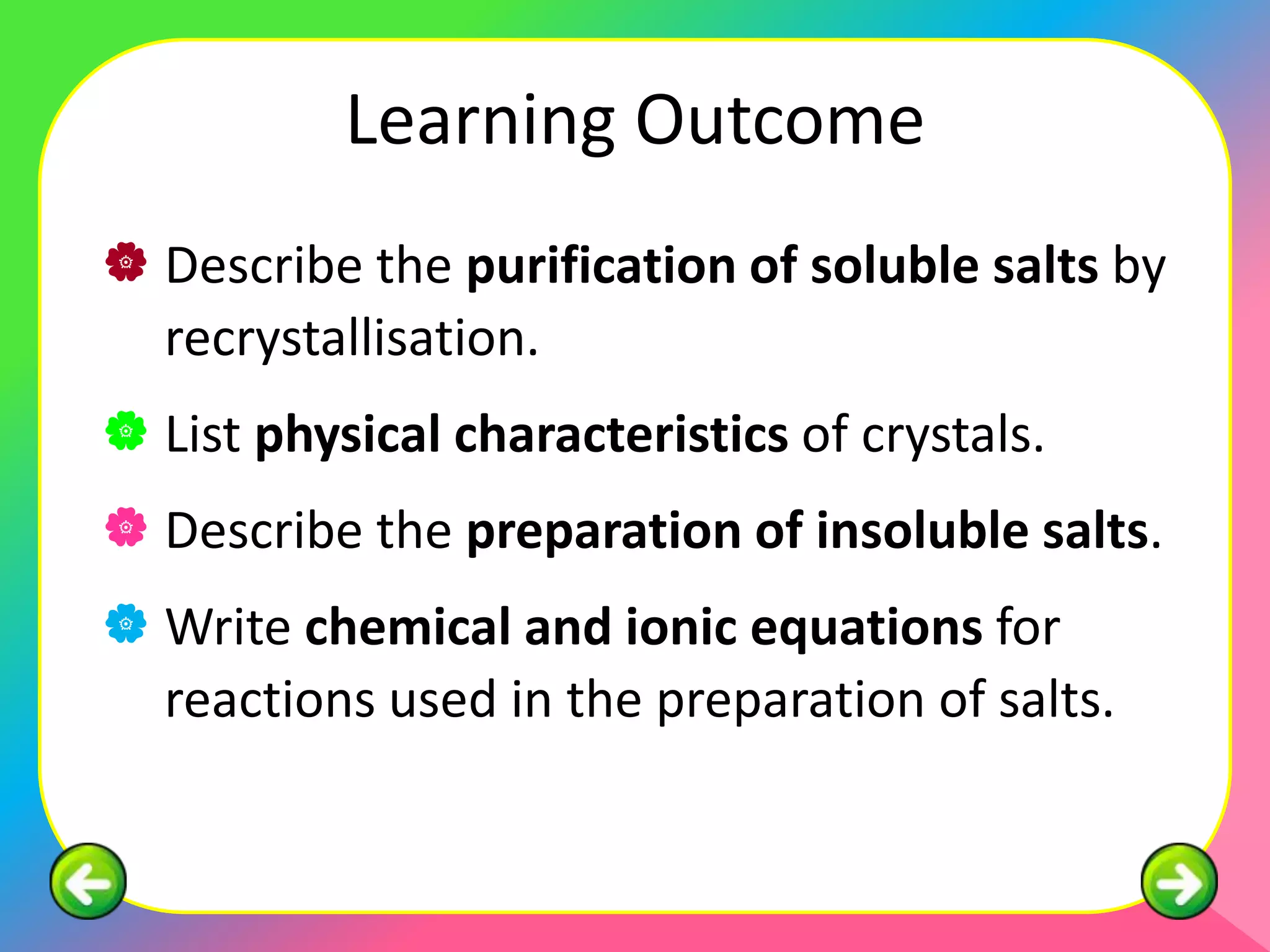
 Describe the purification of soluble salts by
  recrystallisation.
 List physical characteristics of crystals.
 Describe the preparation of insoluble salts.
 Write chemical and ionic equations for
  reactions used in the preparation of salts.
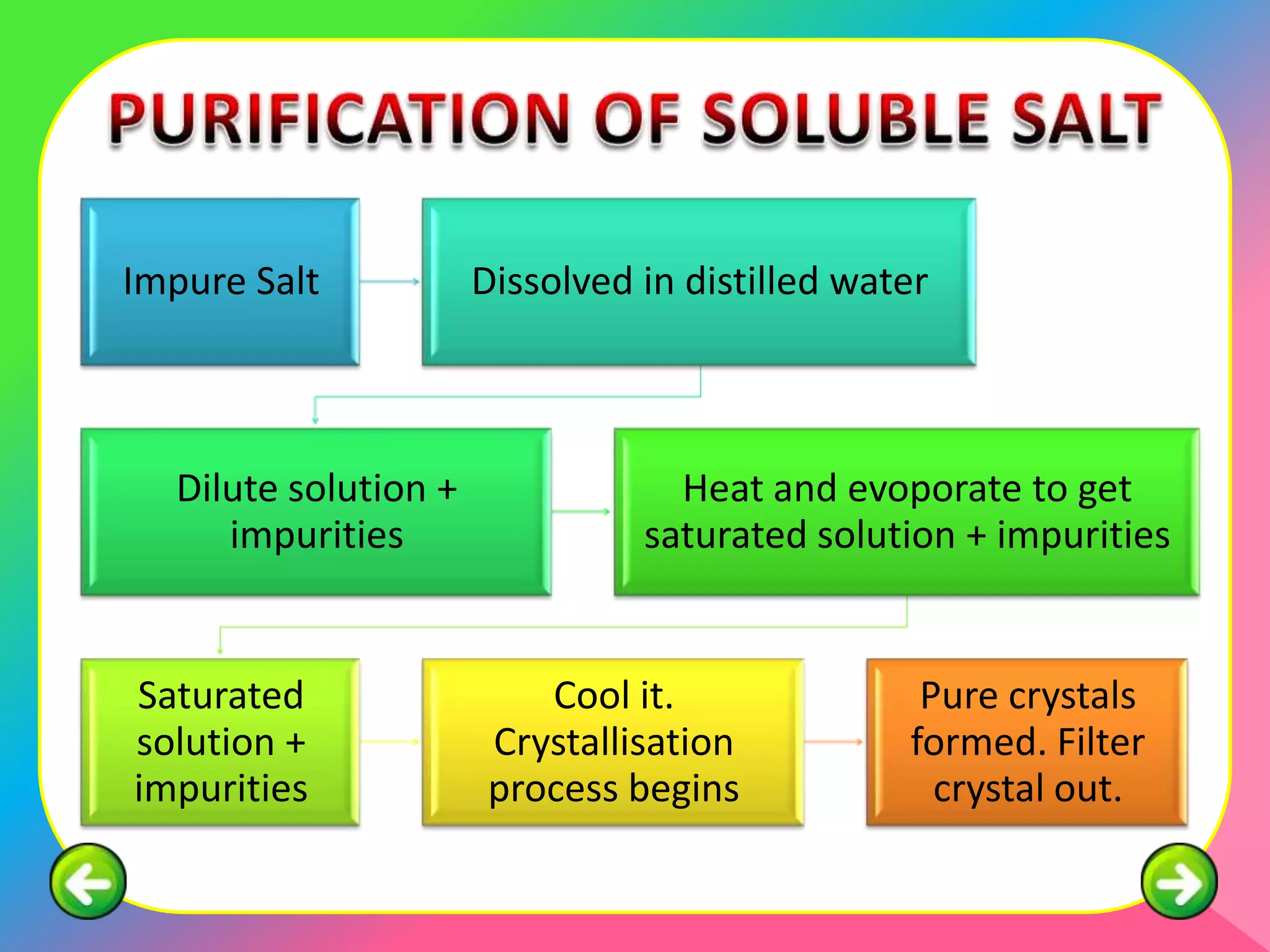
Impure Salt           Dissolved in distilled water


  Dilute solution +               Heat and evoporate to get
     impurities                 saturated solution + impurities


Saturated                 Cool it.               Pure crystals
solution +             Crystallisation          formed. Filter
impurities             process begins             crystal out.
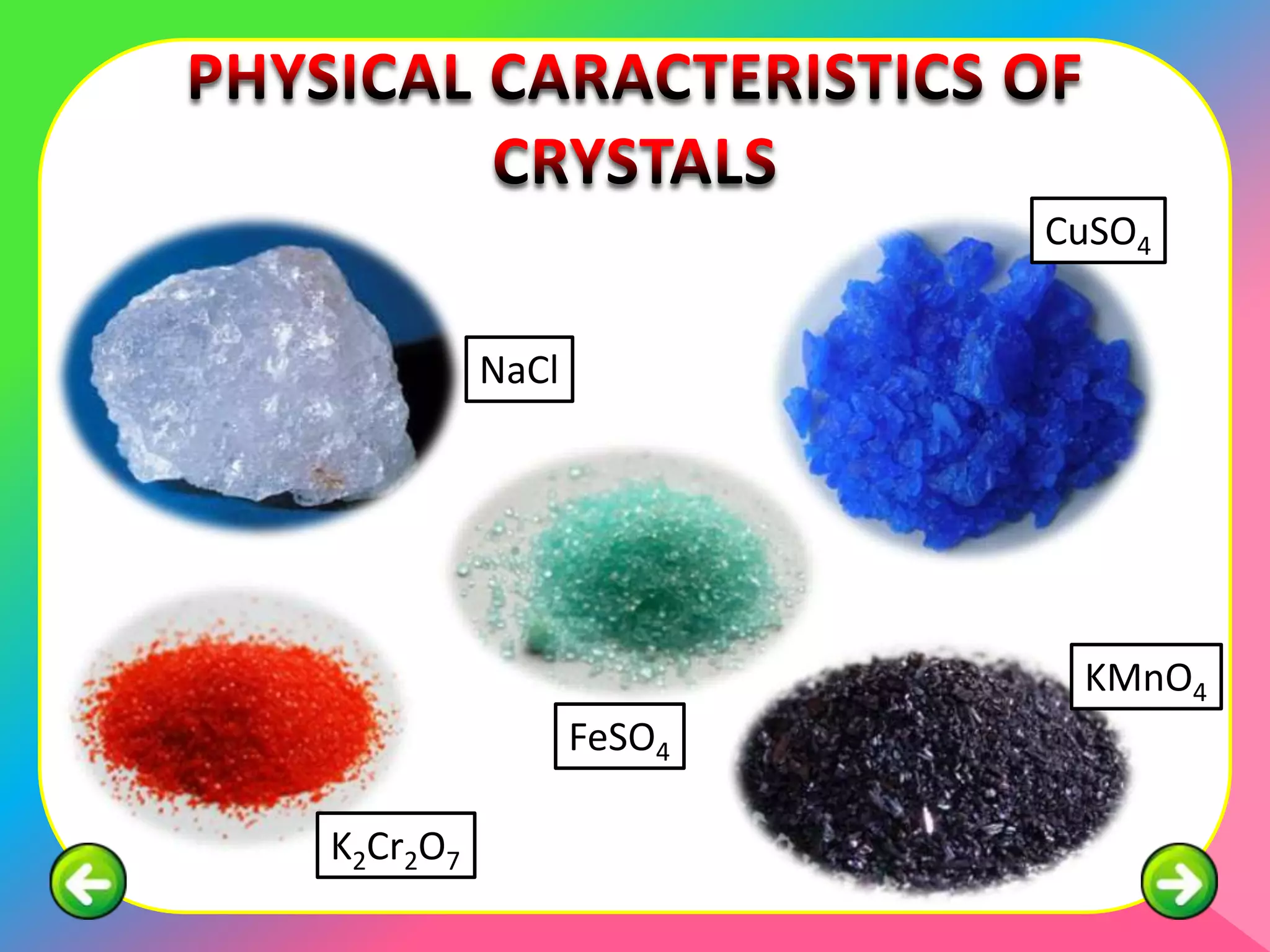
CuSO4


          NaCl


                          KMnO4
                 FeSO4

K2Cr2O7
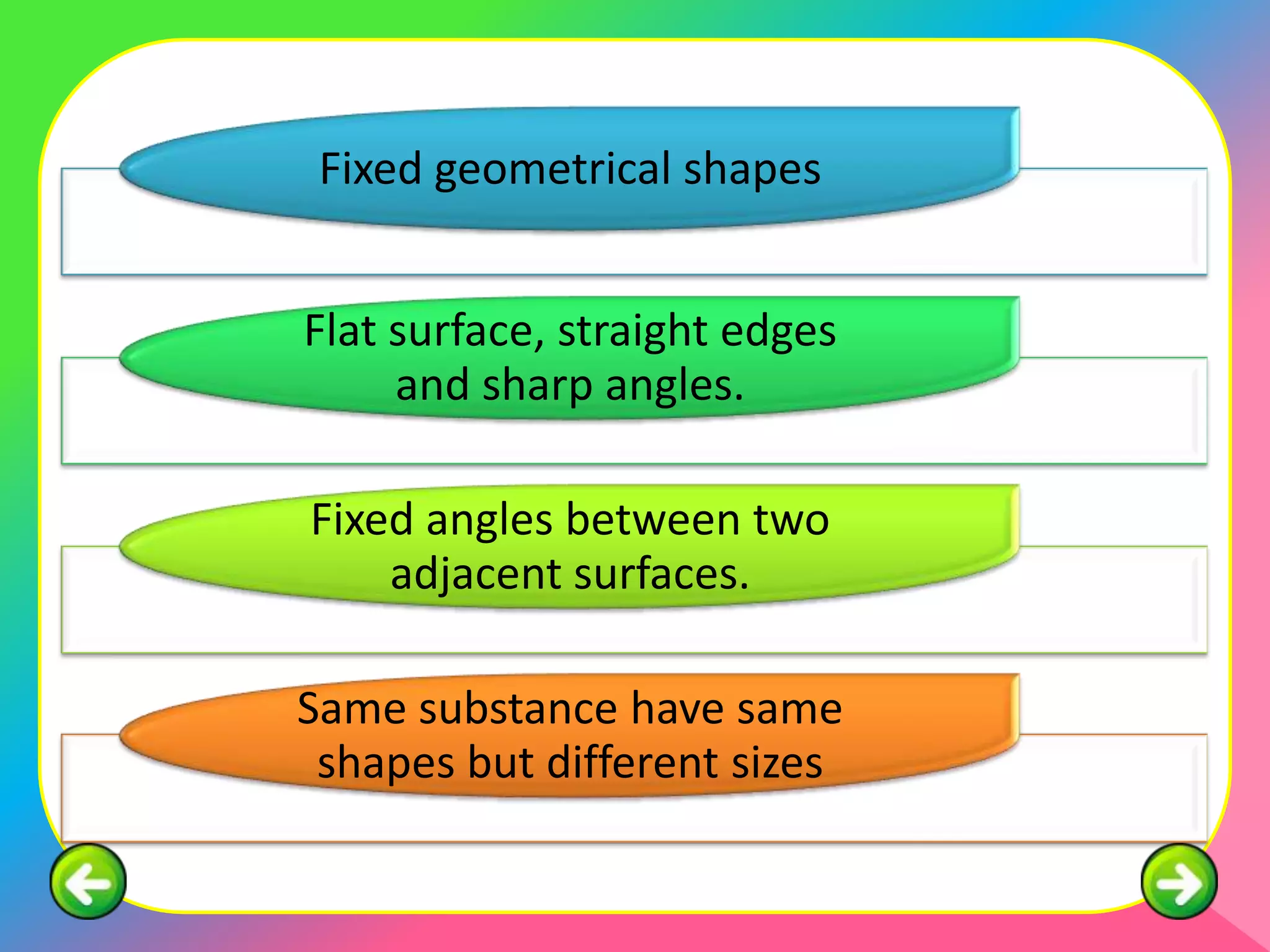
Fixed geometrical shapes


Flat surface, straight edges
     and sharp angles.

Fixed angles between two
    adjacent surfaces.

Same substance have same
 shapes but different sizes
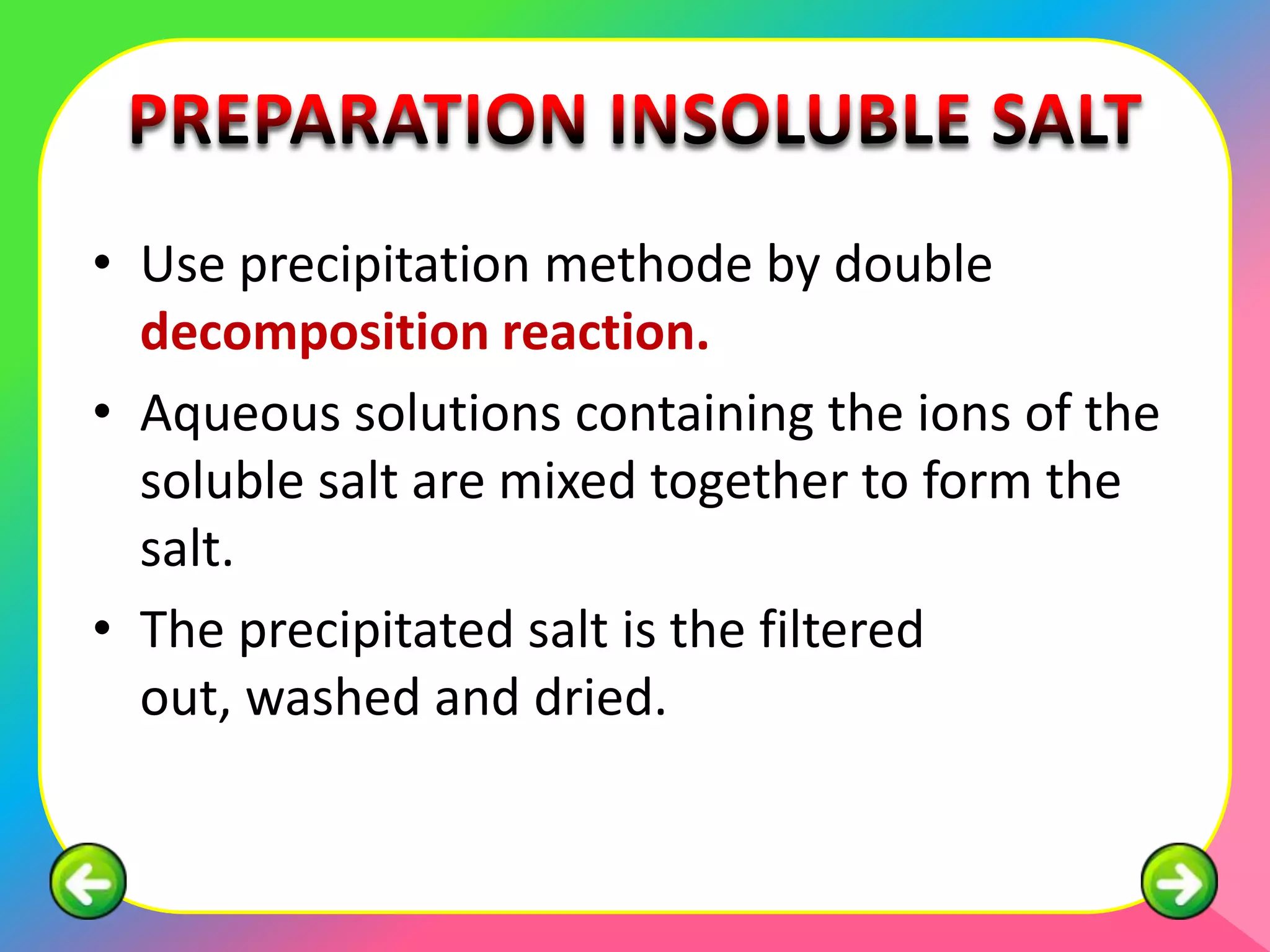
• Use precipitation methode by double
  decomposition reaction.
• Aqueous solutions containing the ions of the
  soluble salt are mixed together to form the
  salt.
• The precipitated salt is the filtered
  out, washed and dried.
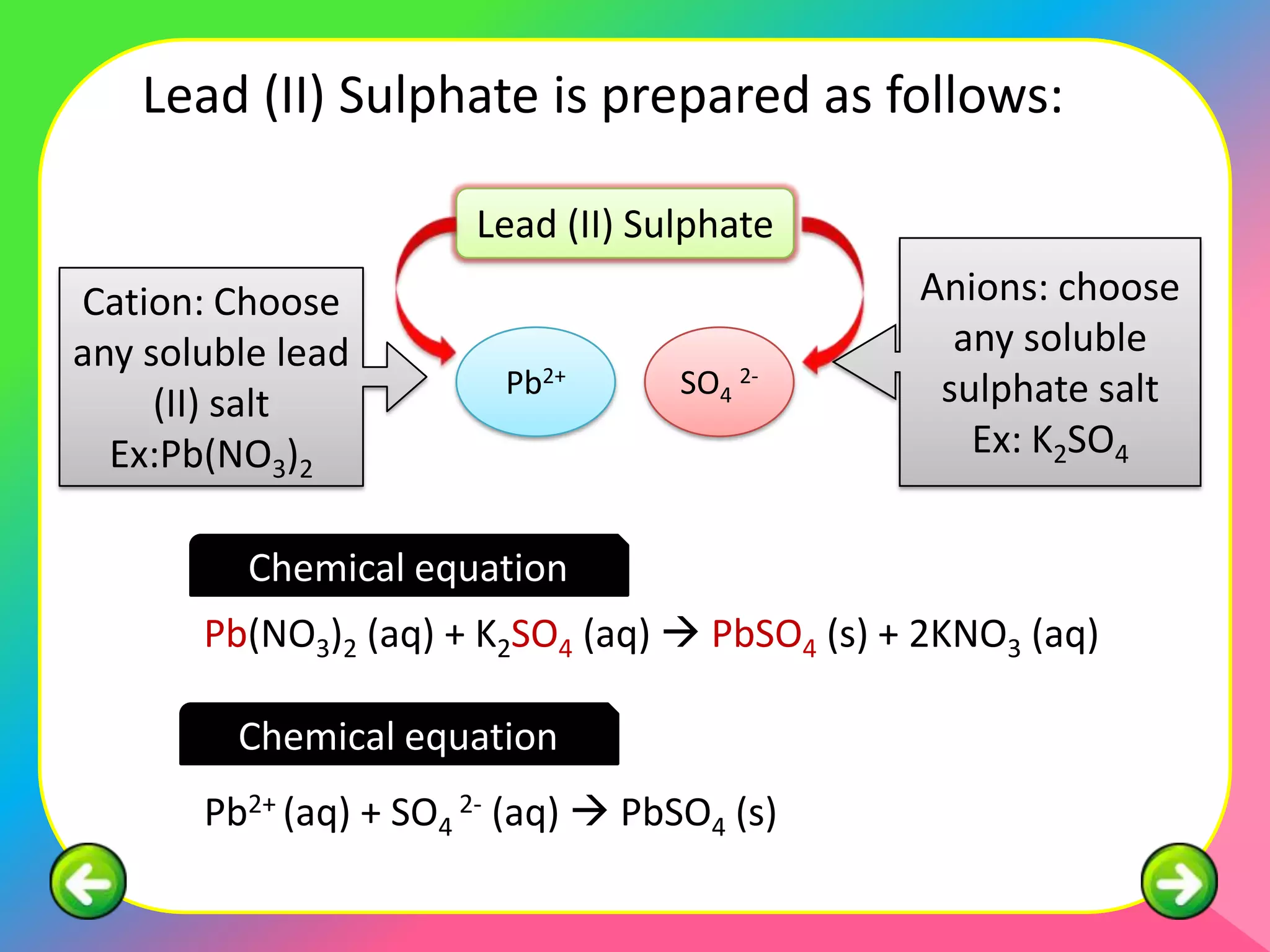
Lead (II) Sulphate is prepared as follows:

                       Lead (II) Sulphate
Cation: Choose                                 Anions: choose
any soluble lead                                 any soluble
                         Pb2+       SO4 2-      sulphate salt
     (II) salt
  Ex:Pb(NO3)2                                     Ex: K2SO4


          Chemical equation
       Pb(NO3)2 (aq) + K2SO4 (aq)  PbSO4 (s) + 2KNO3 (aq)

         Chemical equation
       Pb2+ (aq) + SO4 2- (aq)  PbSO4 (s)
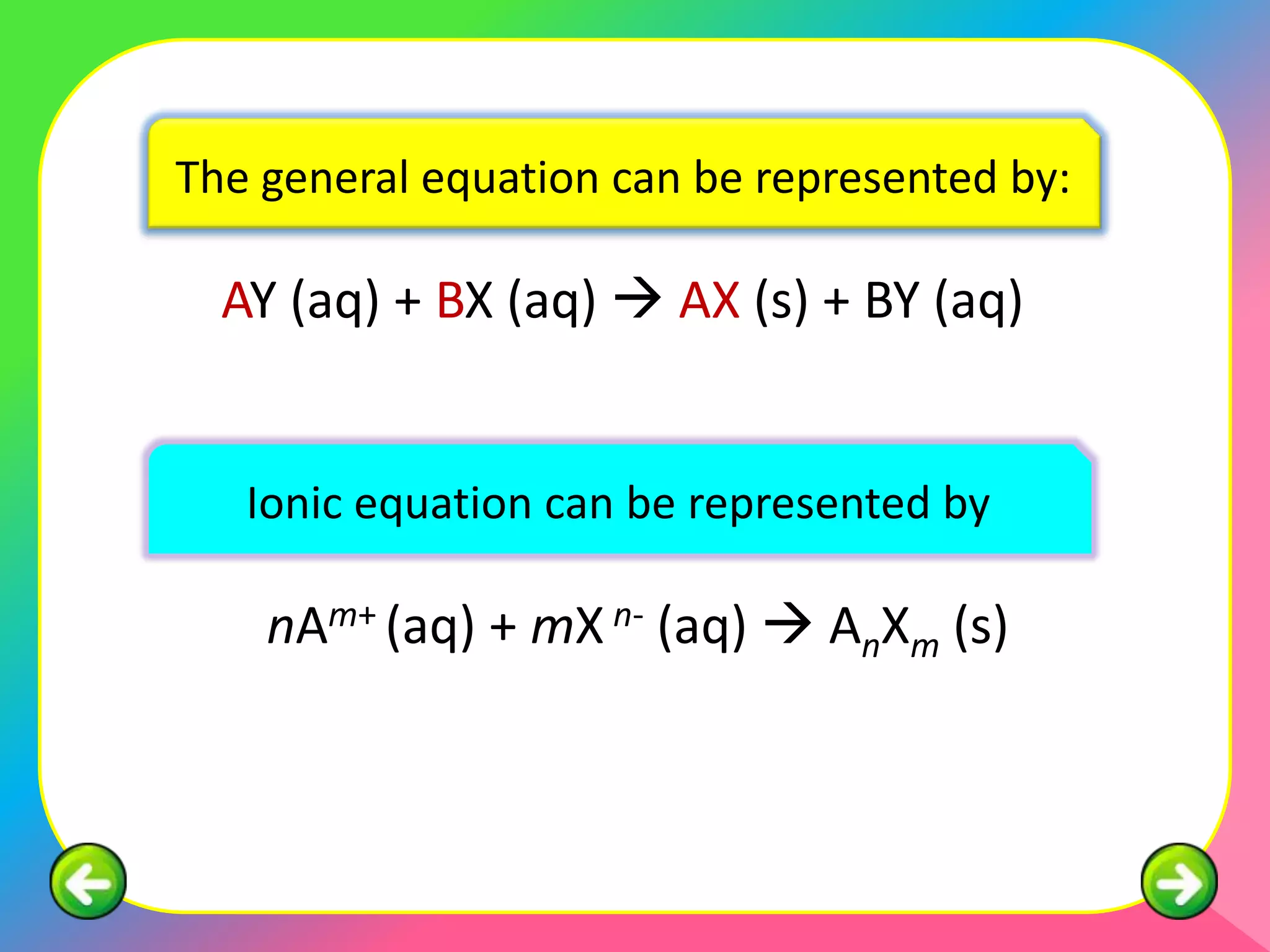
The general equation can be represented by:

  AY (aq) + BX (aq)  AX (s) + BY (aq)


   Ionic equation can be represented by

    nAm+ (aq) + mX n- (aq)  AnXm (s)
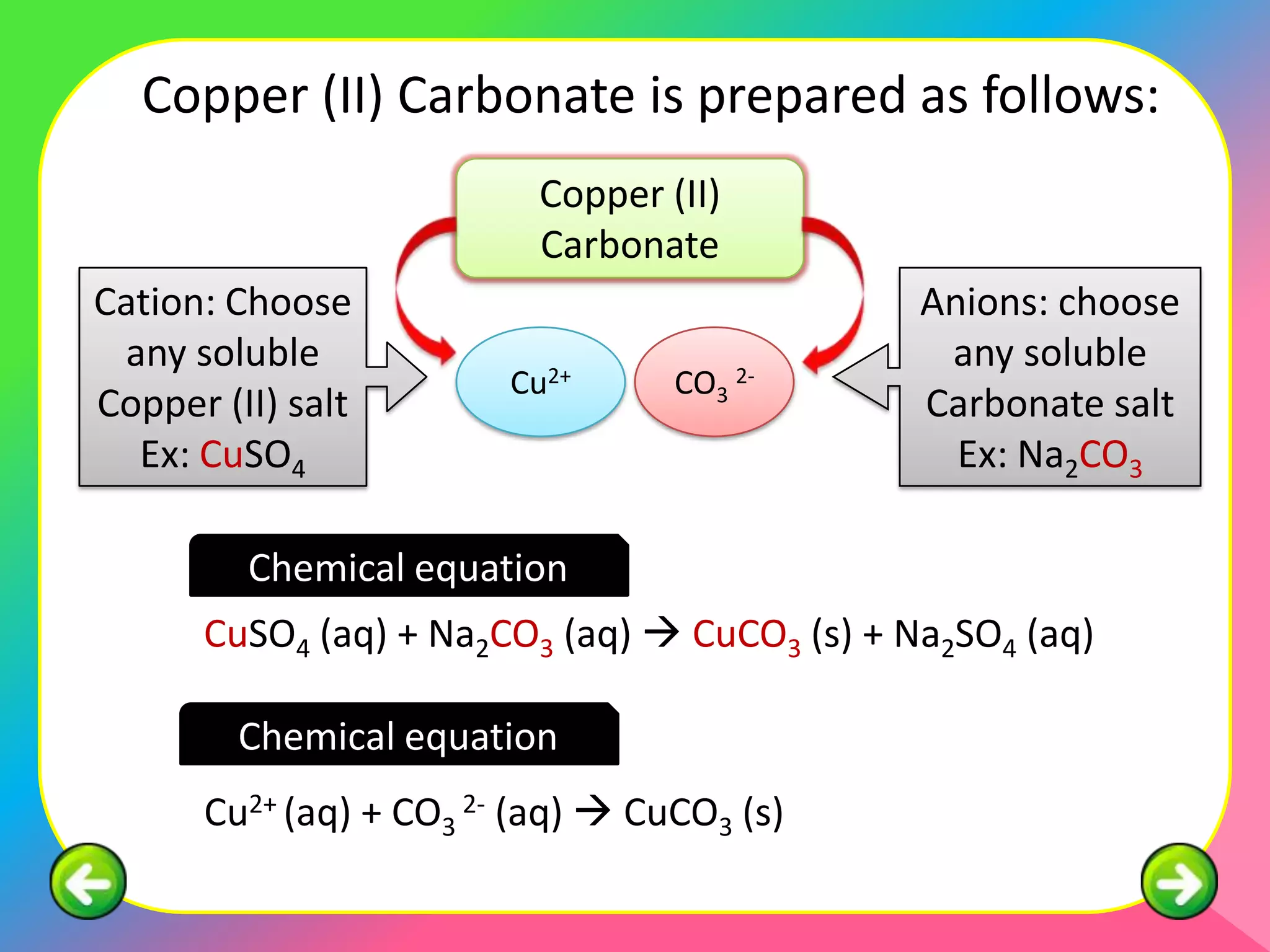
Copper (II) Carbonate is prepared as follows:
                          Copper (II)
                          Carbonate
Cation: Choose                                Anions: choose
 any soluble                                   any soluble
                        Cu2+      CO3 2-
Copper (II) salt                              Carbonate salt
  Ex: CuSO4                                     Ex: Na2CO3

         Chemical equation
      CuSO4 (aq) + Na2CO3 (aq)  CuCO3 (s) + Na2SO4 (aq)

        Chemical equation
      Cu2+ (aq) + CO3 2- (aq)  CuCO3 (s)
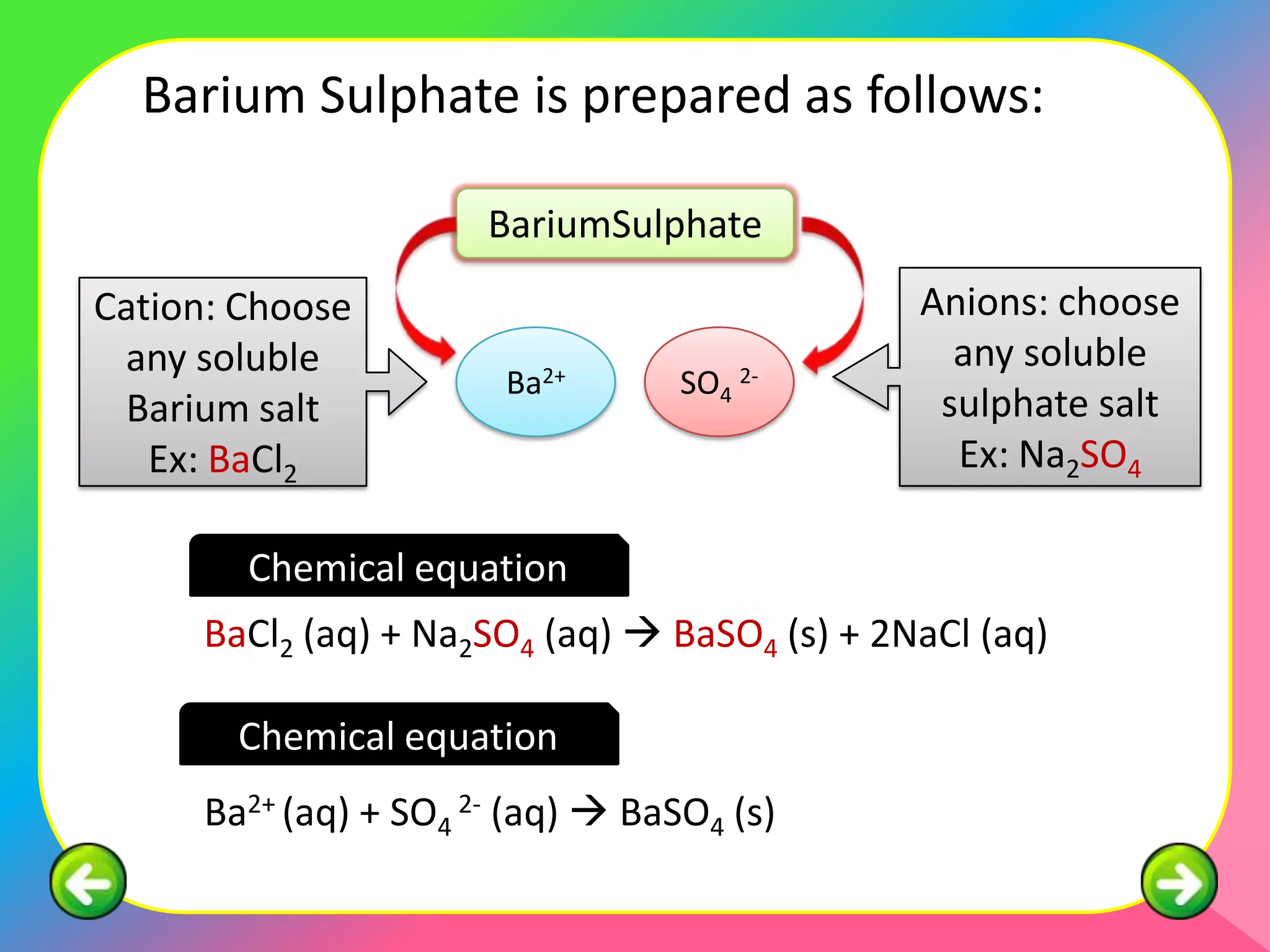
Barium Sulphate is prepared as follows:

                      BariumSulphate
Cation: Choose                                Anions: choose
 any soluble                                    any soluble
                       Ba2+       SO4 2-
 Barium salt                                   sulphate salt
   Ex: BaCl2                                    Ex: Na2SO4

        Chemical equation
     BaCl2 (aq) + Na2SO4 (aq)  BaSO4 (s) + 2NaCl (aq)

       Chemical equation
     Ba2+ (aq) + SO4 2- (aq)  BaSO4 (s)
Chapter 8 salt part 2

Chapter 8 salt part 2

  • 1.
    NURUL ASHIKIN BT.ABD RAHMAN PART 2
  • 2.
    Learning Outcome  Describethe purification of soluble salts by recrystallisation.  List physical characteristics of crystals.  Describe the preparation of insoluble salts.  Write chemical and ionic equations for reactions used in the preparation of salts.
  • 3.
    Impure Salt Dissolved in distilled water Dilute solution + Heat and evoporate to get impurities saturated solution + impurities Saturated Cool it. Pure crystals solution + Crystallisation formed. Filter impurities process begins crystal out.
  • 4.
    CuSO4 NaCl KMnO4 FeSO4 K2Cr2O7
  • 5.
    Fixed geometrical shapes Flatsurface, straight edges and sharp angles. Fixed angles between two adjacent surfaces. Same substance have same shapes but different sizes
  • 6.
    • Use precipitationmethode by double decomposition reaction. • Aqueous solutions containing the ions of the soluble salt are mixed together to form the salt. • The precipitated salt is the filtered out, washed and dried.
  • 7.
    Lead (II) Sulphateis prepared as follows: Lead (II) Sulphate Cation: Choose Anions: choose any soluble lead any soluble Pb2+ SO4 2- sulphate salt (II) salt Ex:Pb(NO3)2 Ex: K2SO4 Chemical equation Pb(NO3)2 (aq) + K2SO4 (aq)  PbSO4 (s) + 2KNO3 (aq) Chemical equation Pb2+ (aq) + SO4 2- (aq)  PbSO4 (s)
  • 8.
    The general equationcan be represented by: AY (aq) + BX (aq)  AX (s) + BY (aq) Ionic equation can be represented by nAm+ (aq) + mX n- (aq)  AnXm (s)
  • 9.
    Copper (II) Carbonateis prepared as follows: Copper (II) Carbonate Cation: Choose Anions: choose any soluble any soluble Cu2+ CO3 2- Copper (II) salt Carbonate salt Ex: CuSO4 Ex: Na2CO3 Chemical equation CuSO4 (aq) + Na2CO3 (aq)  CuCO3 (s) + Na2SO4 (aq) Chemical equation Cu2+ (aq) + CO3 2- (aq)  CuCO3 (s)
  • 10.
    Barium Sulphate isprepared as follows: BariumSulphate Cation: Choose Anions: choose any soluble any soluble Ba2+ SO4 2- Barium salt sulphate salt Ex: BaCl2 Ex: Na2SO4 Chemical equation BaCl2 (aq) + Na2SO4 (aq)  BaSO4 (s) + 2NaCl (aq) Chemical equation Ba2+ (aq) + SO4 2- (aq)  BaSO4 (s)