Learning Outcomes
At the end of the lessons, students should
be able to:

     a)   state examples of salts used in daily life
     b)   explain the meaning of salt
     c)   identify soluble and insoluble salts
     d)   describe the preparation of soluble
          salts.
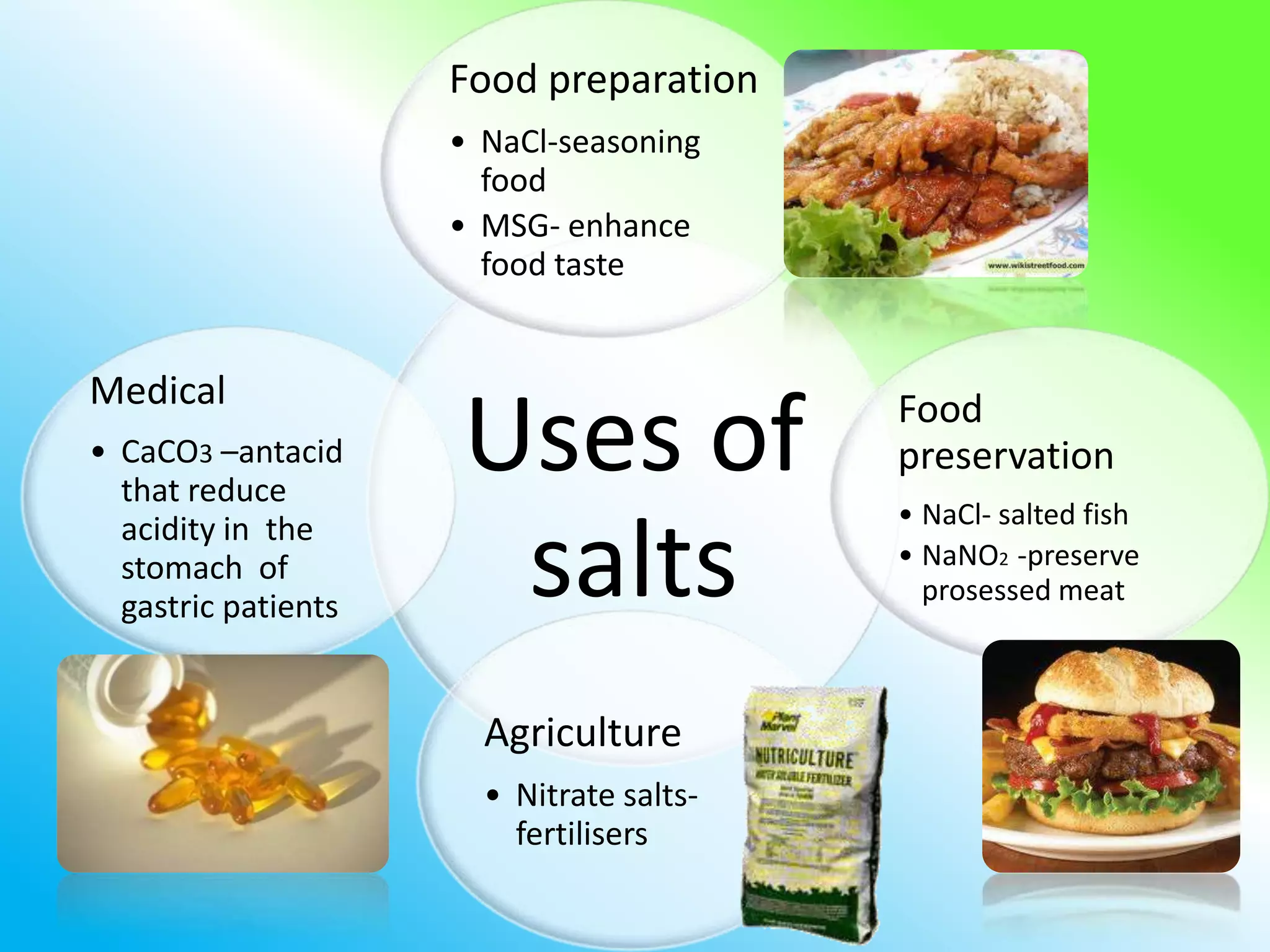
Food preparation
                     • NaCl-seasoning
                       food
                     • MSG- enhance
                       food taste


Medical
• CaCO3 –antacid
  that reduce
                     Uses of              Food
                                          preservation
                                          • NaCl- salted fish
  acidity in the
  stomach of
  gastric patients
                      salts               • NaNO2 -preserve
                                            prosessed meat


                       Agriculture
                       • Nitrate salts-
                         fertilisers
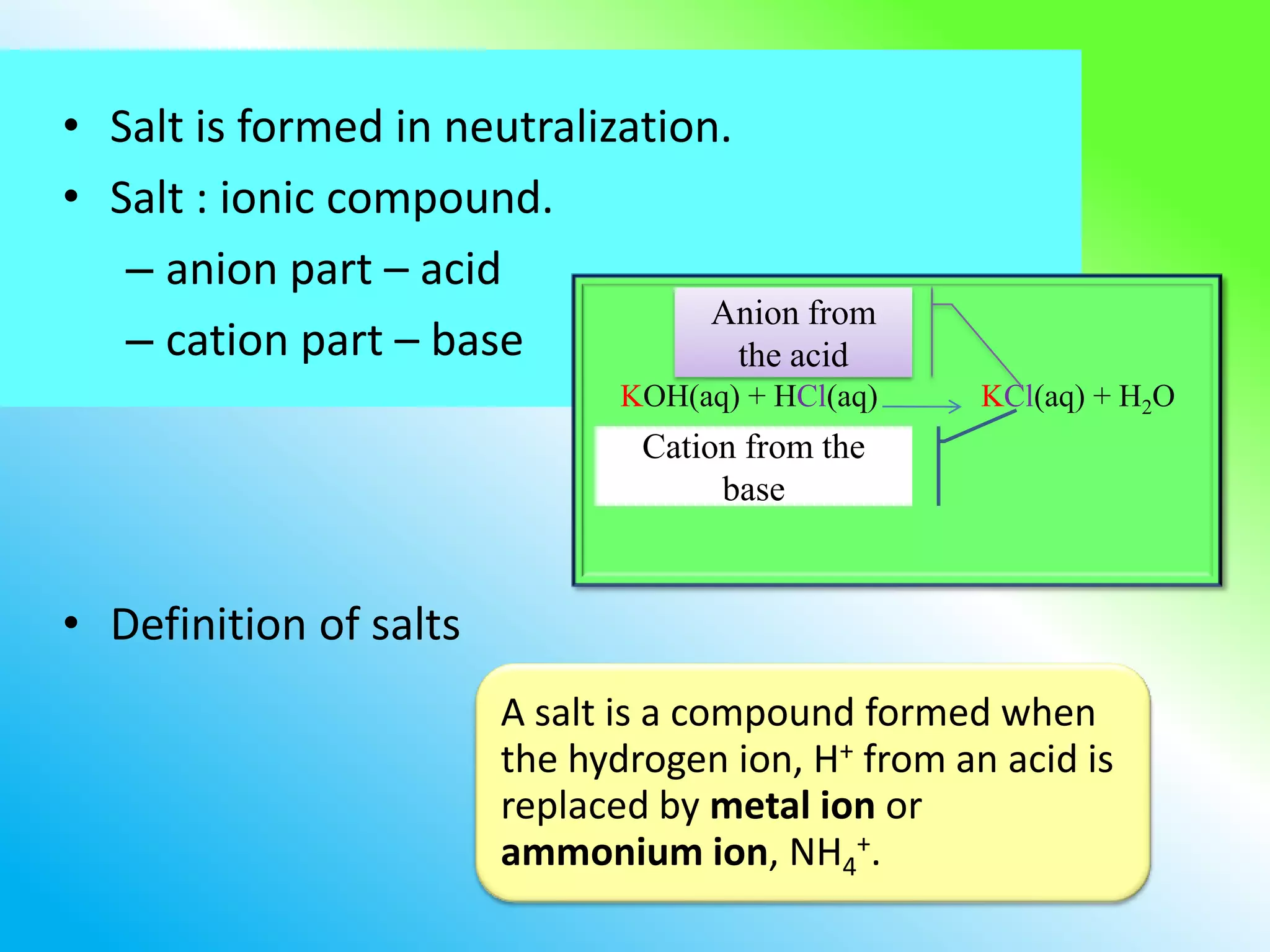
• Salt is formed in neutralization.
• Salt : ionic compound.
   – anion part – acid
                                  Anion from
   – cation part – base             the acid
                               KOH(aq) + HCl(aq)    KCl(aq) + H2O
                                Cation from the
                                     base


• Definition of salts
                        A salt is a compound formed when
                        the hydrogen ion, H+ from an acid is
                        replaced by metal ion or
                        ammonium ion, NH4+.
• SOLUBILITY

               An ability of a compound to dissolve
               in solvents
               Depends on the cation and anion
               present
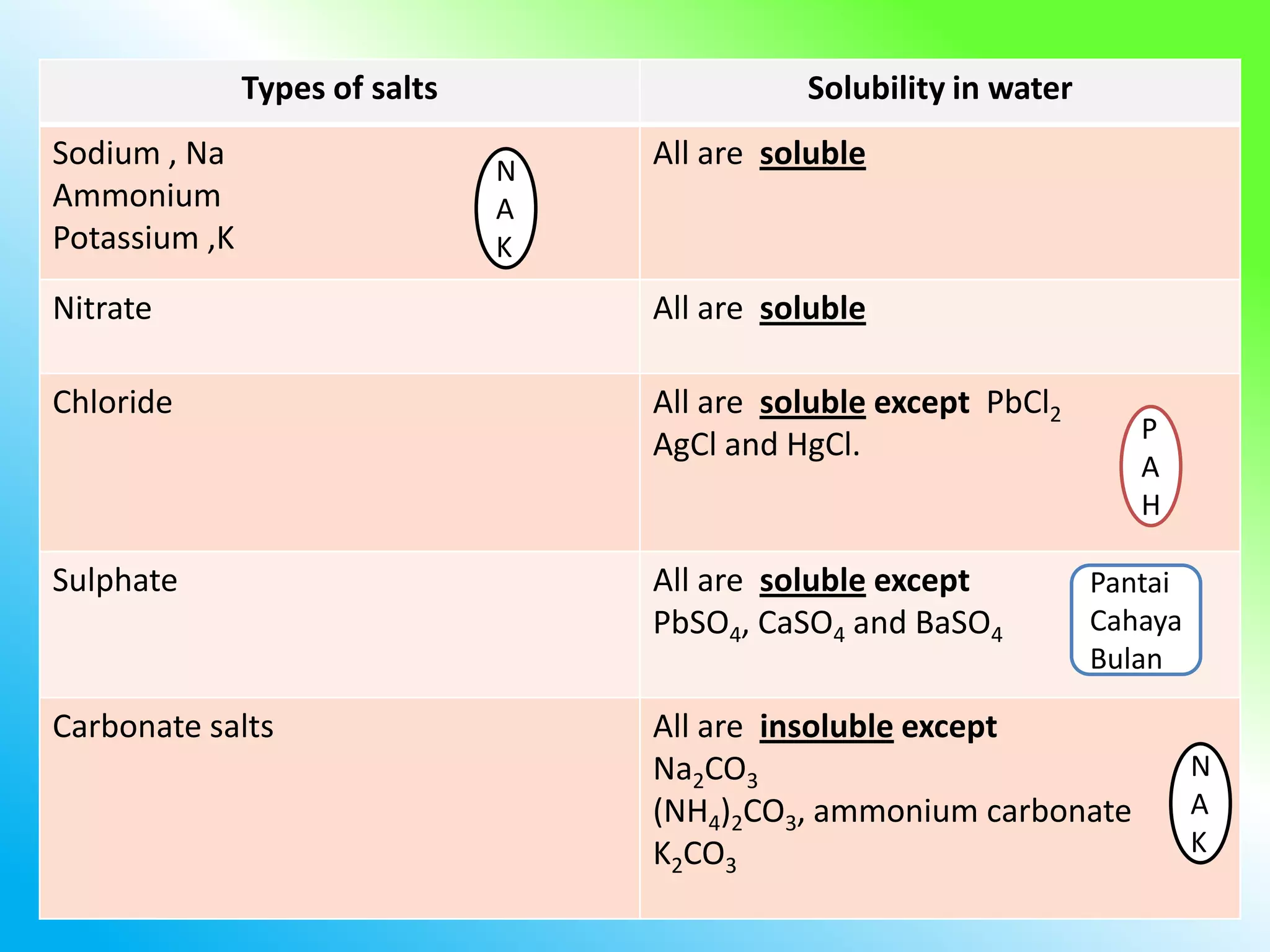
Types of salts                 Solubility in water
Sodium , Na                     N
                                    All are soluble
Ammonium                        A
Potassium ,K                    K
Nitrate                             All are soluble

Chloride                            All are soluble except PbCl2
                                                                       P
                                    AgCl and HgCl.
                                                                       A
                                                                       H

Sulphate                            All are soluble except          Pantai
                                    PbSO4, CaSO4 and BaSO4          Cahaya
                                                                    Bulan

Carbonate salts                     All are insoluble except
                                    Na2CO3                                   N
                                    (NH4)2CO3, ammonium carbonate            A
                                    K2CO3                                    K
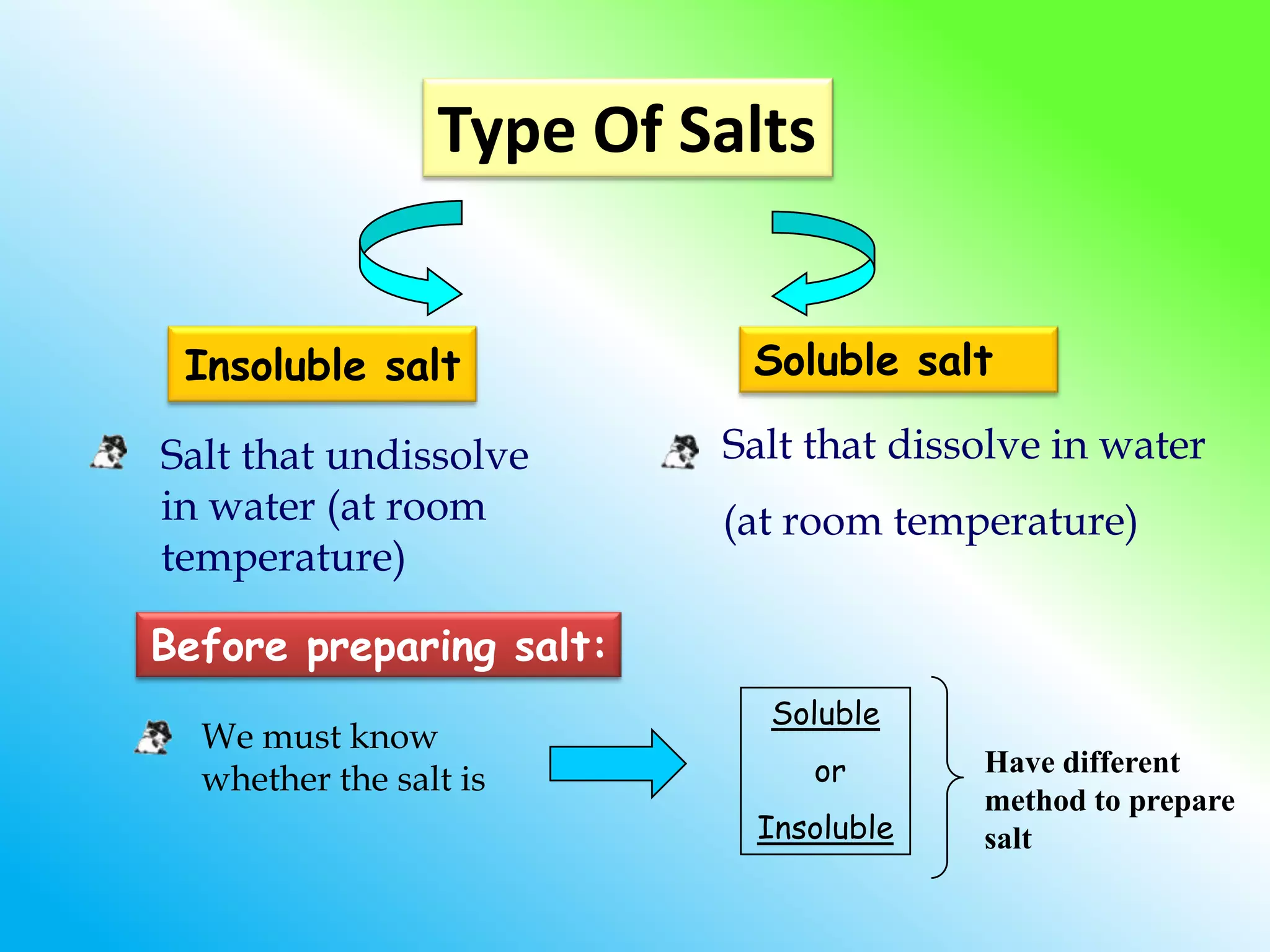
Type Of Salts


 Insoluble salt            Soluble salt

Salt that undissolve      Salt that dissolve in water
in water (at room         (at room temperature)
temperature)

Before preparing salt:
                            Soluble
  We must know
  whether the salt is          or       Have different
                                        method to prepare
                           Insoluble    salt
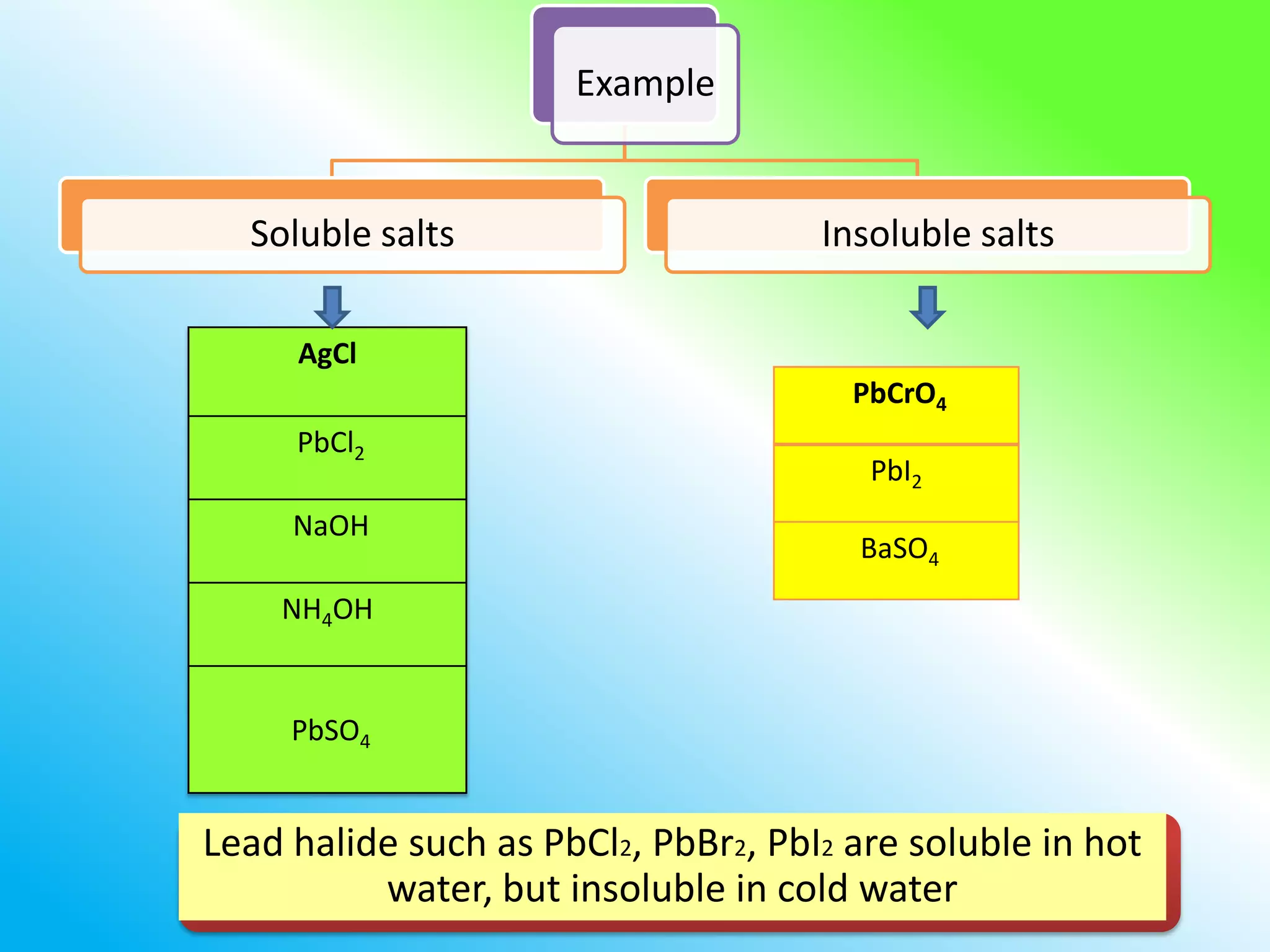
Example


  Soluble salts                      Insoluble salts

     AgCl
                                       PbCrO4
     PbCl2
                                        PbI2
     NaOH
                                       BaSO4
    NH4OH


     PbSO4


Lead halide such as PbCl2, PbBr2, PbI2 are soluble in hot
          water, but insoluble in cold water
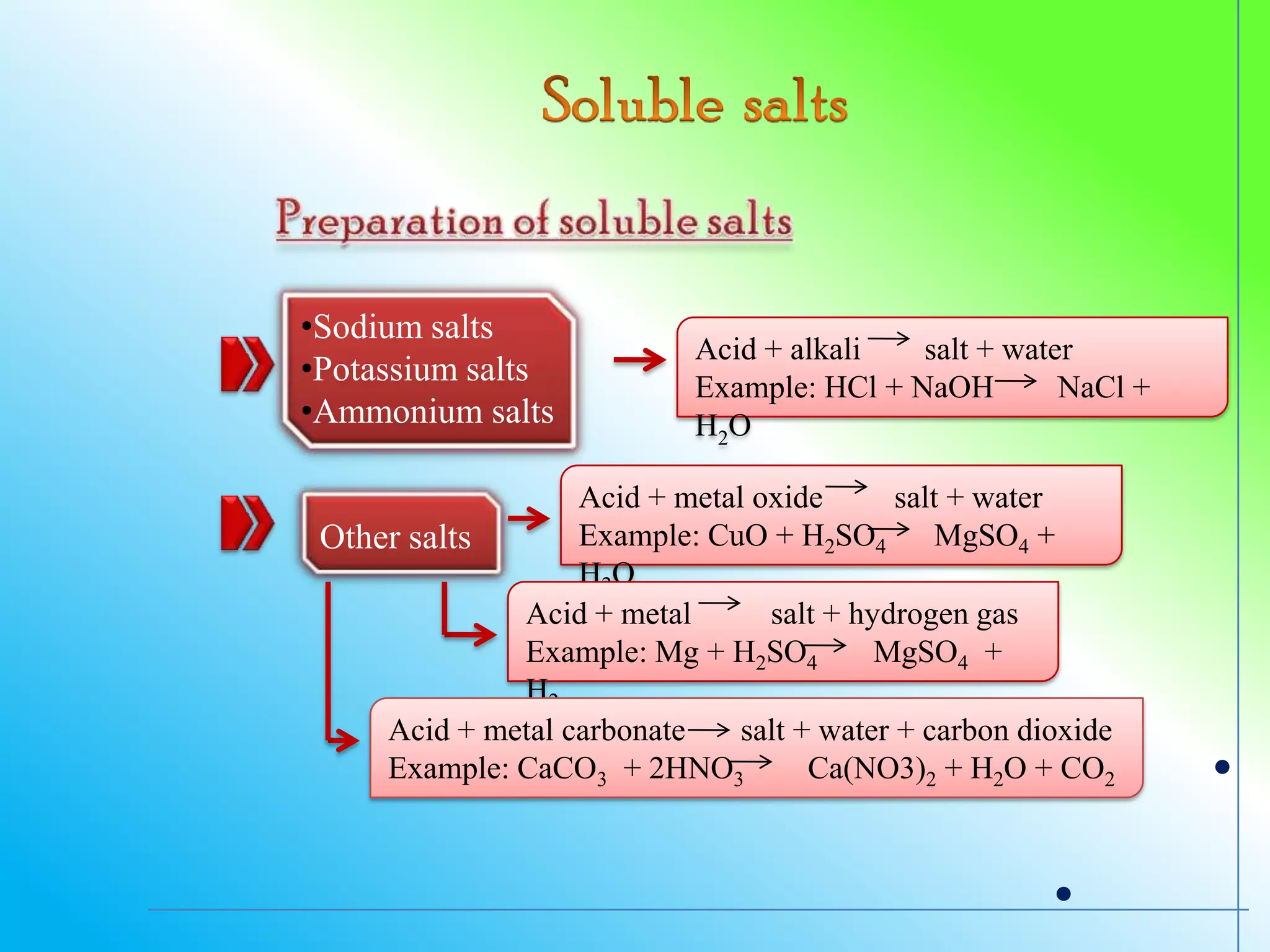
•Sodium salts
                            Acid + alkali   salt + water
•Potassium salts            Example: HCl + NaOH        NaCl +
•Ammonium salts             H2O

                   Acid + metal oxide       salt + water
 Other salts       Example: CuO + H2SO4         MgSO4 +
                   H2O
              Acid + metal       salt + hydrogen gas
              Example: Mg + H2SO4         MgSO4 +
              H2
     Acid + metal carbonate    salt + water + carbon dioxide
     Example: CaCO3 + 2HNO3          Ca(NO3)2 + H2O + CO2
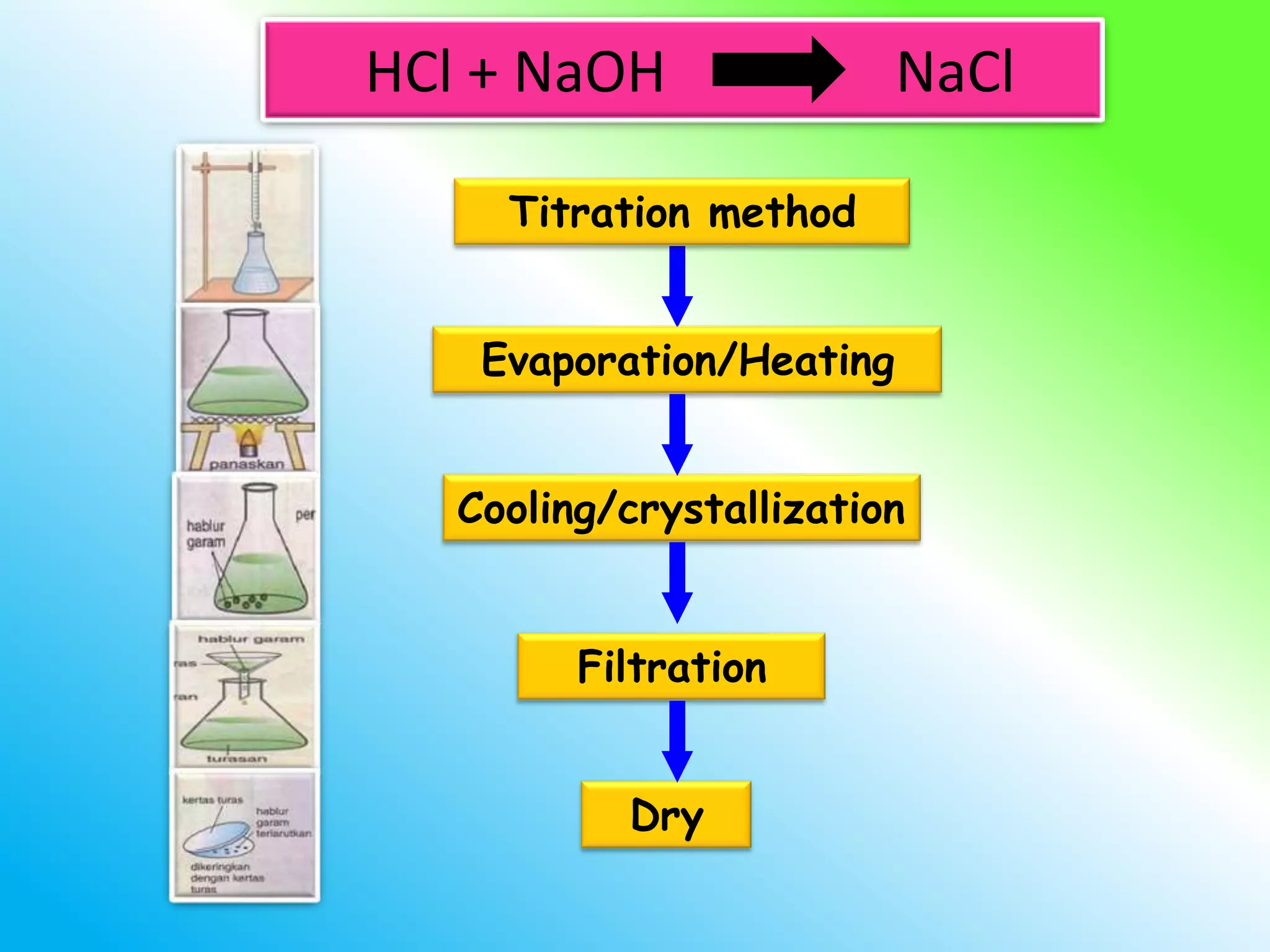
HCl + NaOH                NaCl

     Titration method


    Evaporation/Heating


   Cooling/crystallization


         Filtration


           Dry
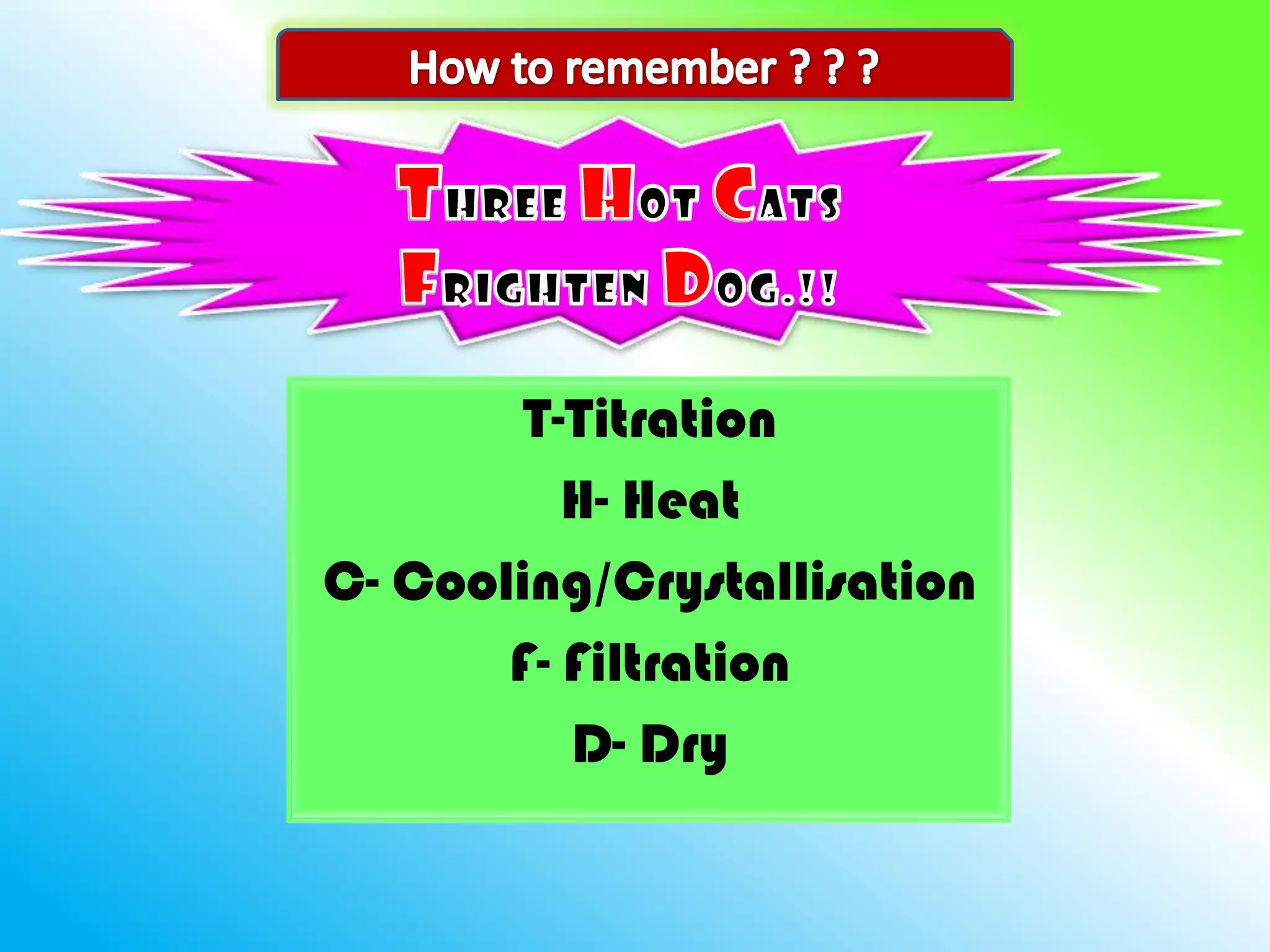
T-Titration
          H- Heat
C- Cooling/Crystallisation
       F- Filtration
          D- Dry
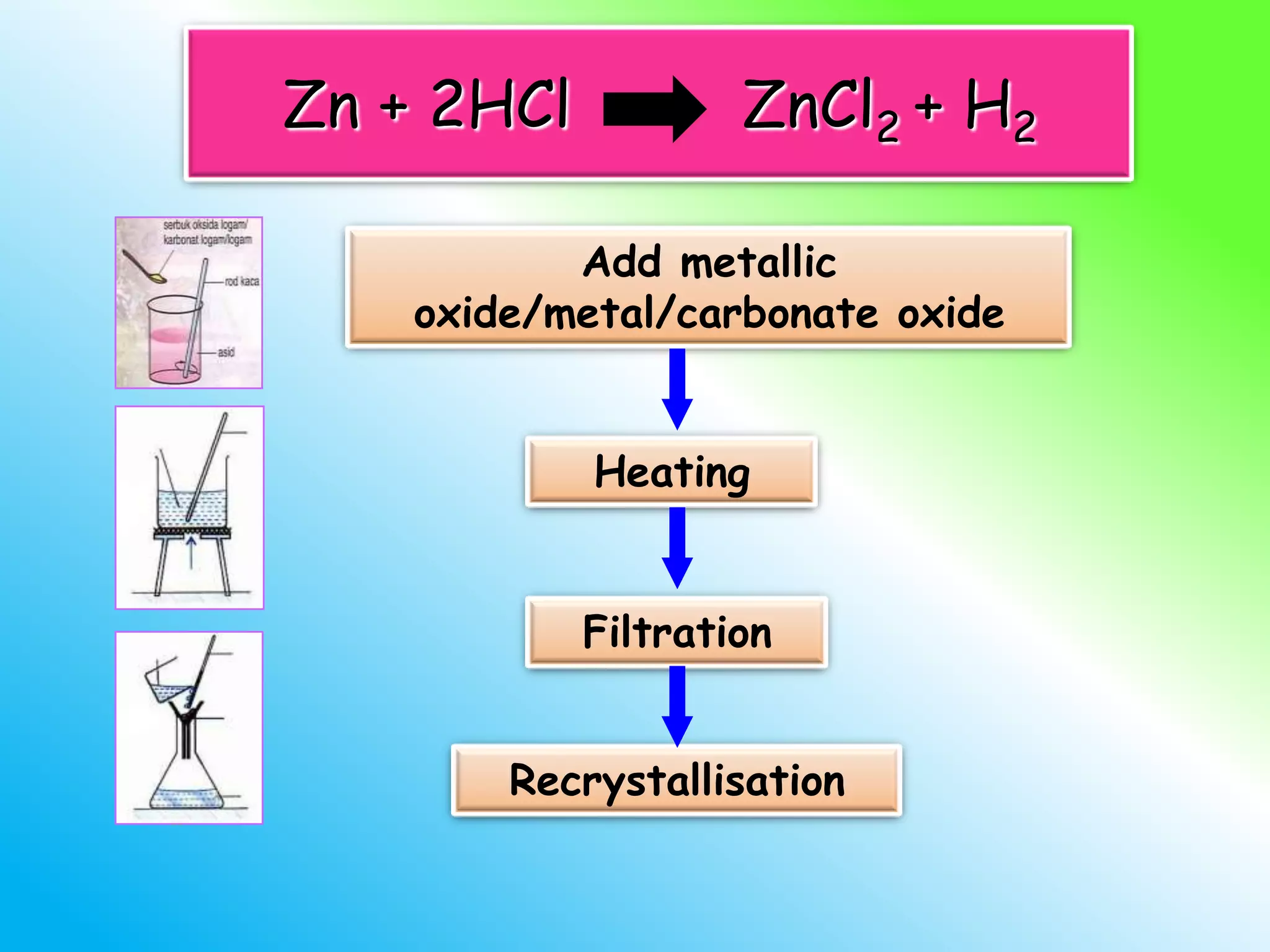
Zn + 2HCl           ZnCl2 + H2

           Add metallic
    oxide/metal/carbonate oxide


            Heating


            Filtration


        Recrystallisation
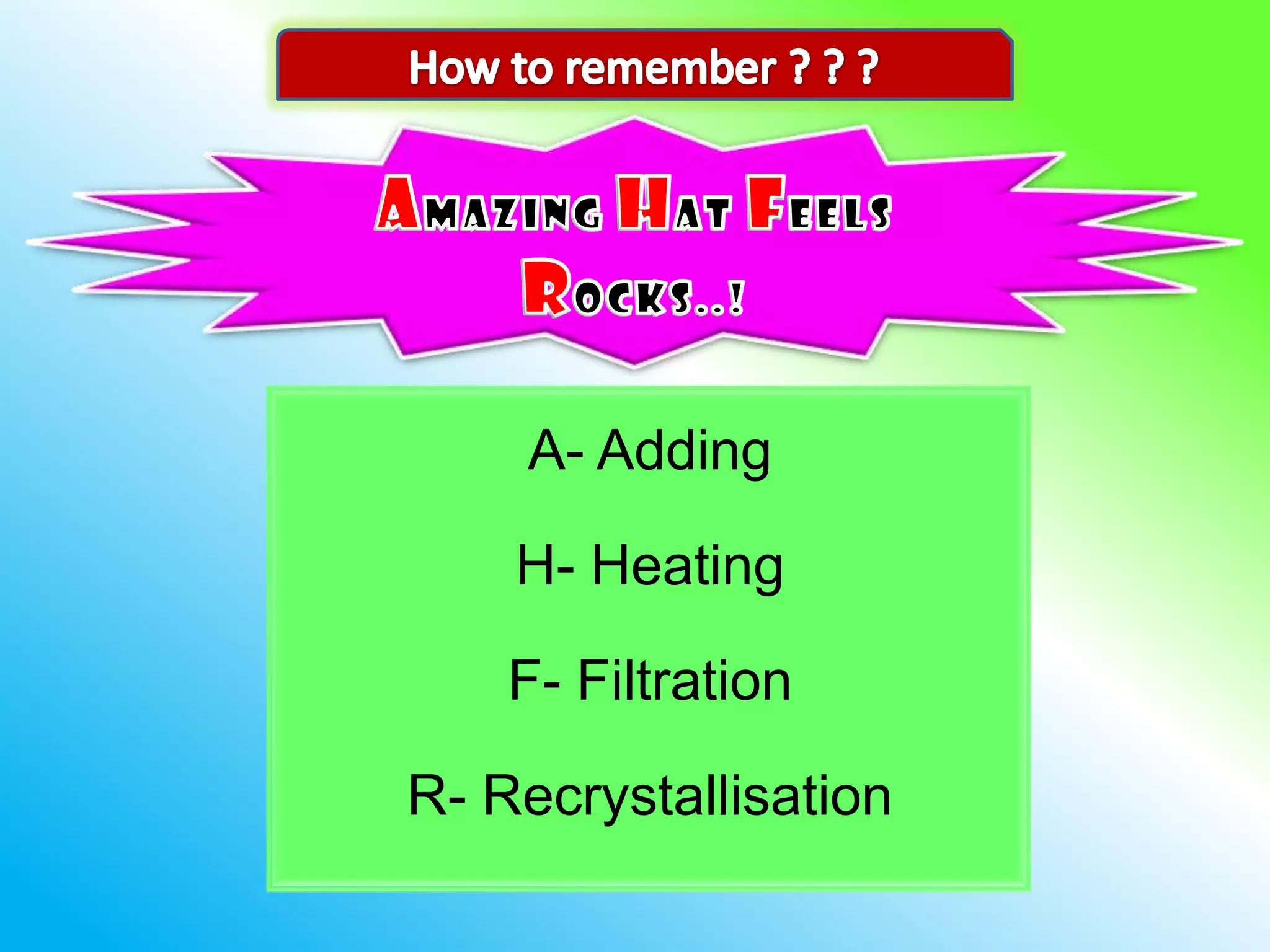
A- Adding

    H- Heating

    F- Filtration

R- Recrystallisation

Chapter 8 salt part 1

  • 2.
    Learning Outcomes At theend of the lessons, students should be able to: a) state examples of salts used in daily life b) explain the meaning of salt c) identify soluble and insoluble salts d) describe the preparation of soluble salts.
  • 3.
    Food preparation • NaCl-seasoning food • MSG- enhance food taste Medical • CaCO3 –antacid that reduce Uses of Food preservation • NaCl- salted fish acidity in the stomach of gastric patients salts • NaNO2 -preserve prosessed meat Agriculture • Nitrate salts- fertilisers
  • 4.
    • Salt isformed in neutralization. • Salt : ionic compound. – anion part – acid Anion from – cation part – base the acid KOH(aq) + HCl(aq) KCl(aq) + H2O Cation from the base • Definition of salts A salt is a compound formed when the hydrogen ion, H+ from an acid is replaced by metal ion or ammonium ion, NH4+.
  • 5.
    • SOLUBILITY An ability of a compound to dissolve in solvents Depends on the cation and anion present
  • 6.
    Types of salts Solubility in water Sodium , Na N All are soluble Ammonium A Potassium ,K K Nitrate All are soluble Chloride All are soluble except PbCl2 P AgCl and HgCl. A H Sulphate All are soluble except Pantai PbSO4, CaSO4 and BaSO4 Cahaya Bulan Carbonate salts All are insoluble except Na2CO3 N (NH4)2CO3, ammonium carbonate A K2CO3 K
  • 7.
    Type Of Salts Insoluble salt Soluble salt Salt that undissolve Salt that dissolve in water in water (at room (at room temperature) temperature) Before preparing salt: Soluble We must know whether the salt is or Have different method to prepare Insoluble salt
  • 8.
    Example Solublesalts Insoluble salts AgCl PbCrO4 PbCl2 PbI2 NaOH BaSO4 NH4OH PbSO4 Lead halide such as PbCl2, PbBr2, PbI2 are soluble in hot water, but insoluble in cold water
  • 9.
    •Sodium salts Acid + alkali salt + water •Potassium salts Example: HCl + NaOH NaCl + •Ammonium salts H2O Acid + metal oxide salt + water Other salts Example: CuO + H2SO4 MgSO4 + H2O Acid + metal salt + hydrogen gas Example: Mg + H2SO4 MgSO4 + H2 Acid + metal carbonate salt + water + carbon dioxide Example: CaCO3 + 2HNO3 Ca(NO3)2 + H2O + CO2
  • 10.
    HCl + NaOH NaCl Titration method Evaporation/Heating Cooling/crystallization Filtration Dry
  • 11.
    T-Titration H- Heat C- Cooling/Crystallisation F- Filtration D- Dry
  • 12.
    Zn + 2HCl ZnCl2 + H2 Add metallic oxide/metal/carbonate oxide Heating Filtration Recrystallisation
  • 13.
    A- Adding H- Heating F- Filtration R- Recrystallisation