The document discusses acids and bases, including their properties, examples of common acids and bases, and how strong vs. weak acids and bases are classified. Acids are sour, turn litmus red, and contain hydrogen ions. Bases are slippery, turn litmus blue, and contain hydroxide ions. Strong acids and bases have more hydrogen or hydroxide ions respectively and can be caustic.
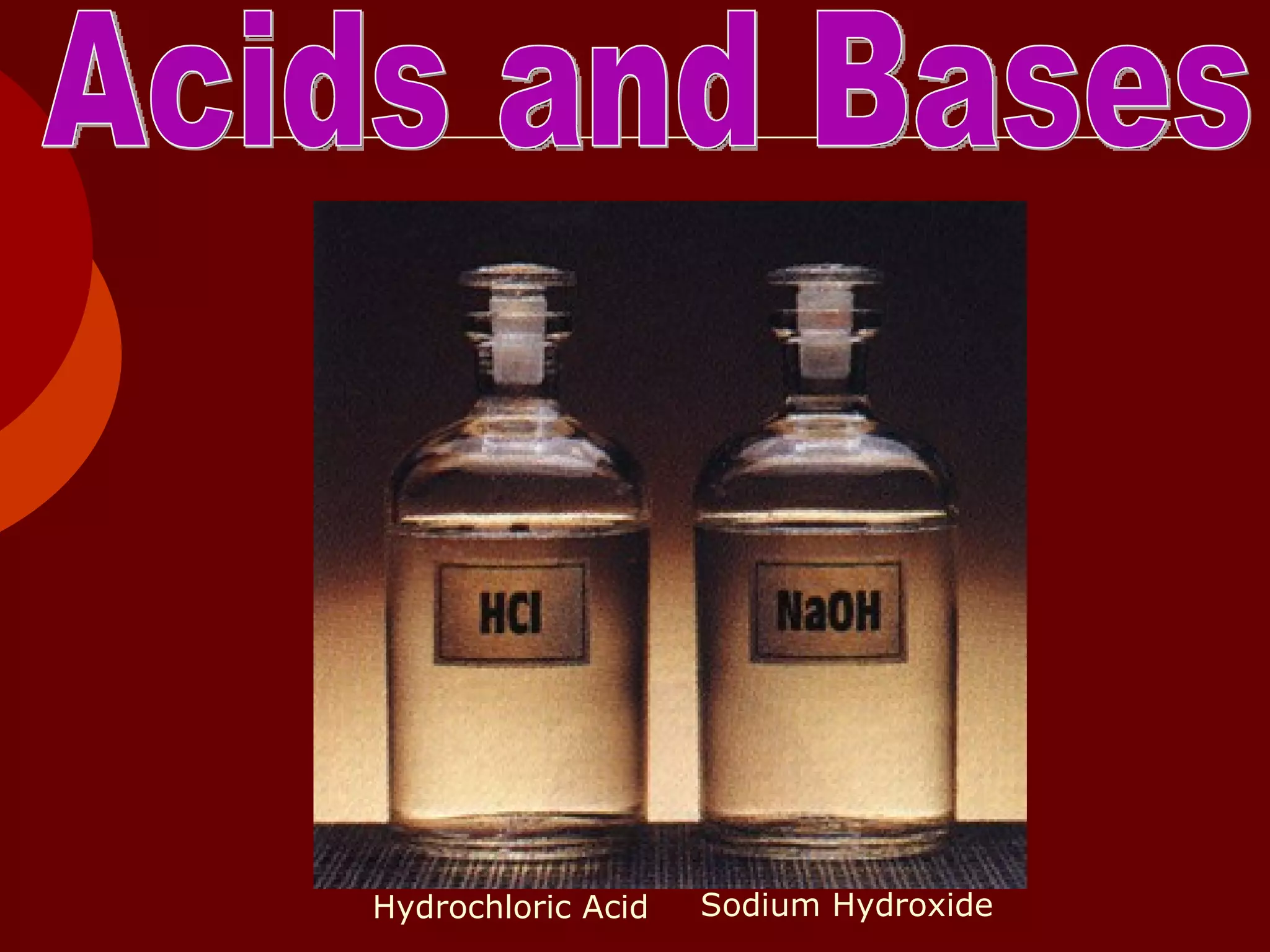
Overview of acids like hydrochloric acid and sodium hydroxide, their common effects, and occurrences in life.
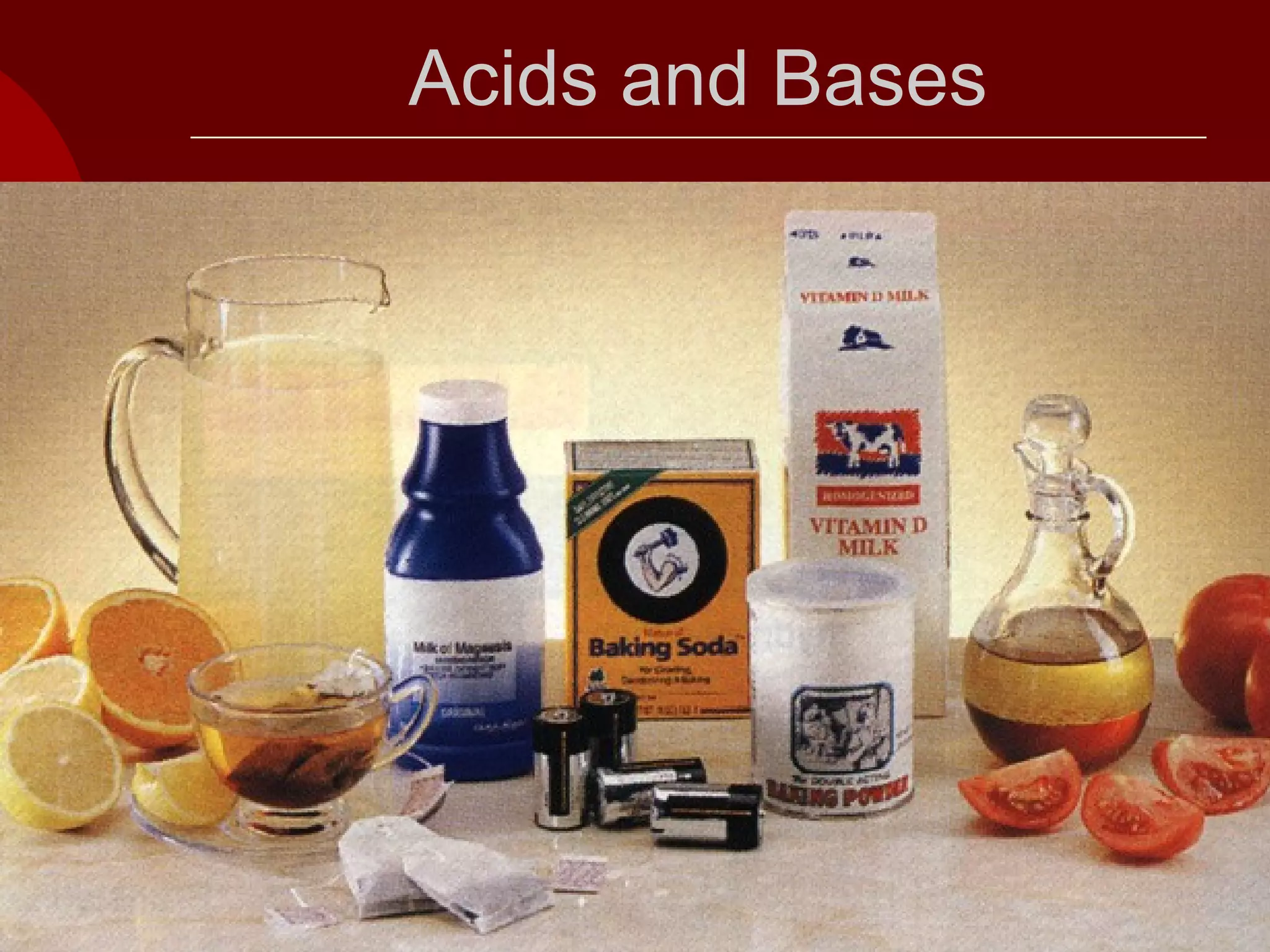
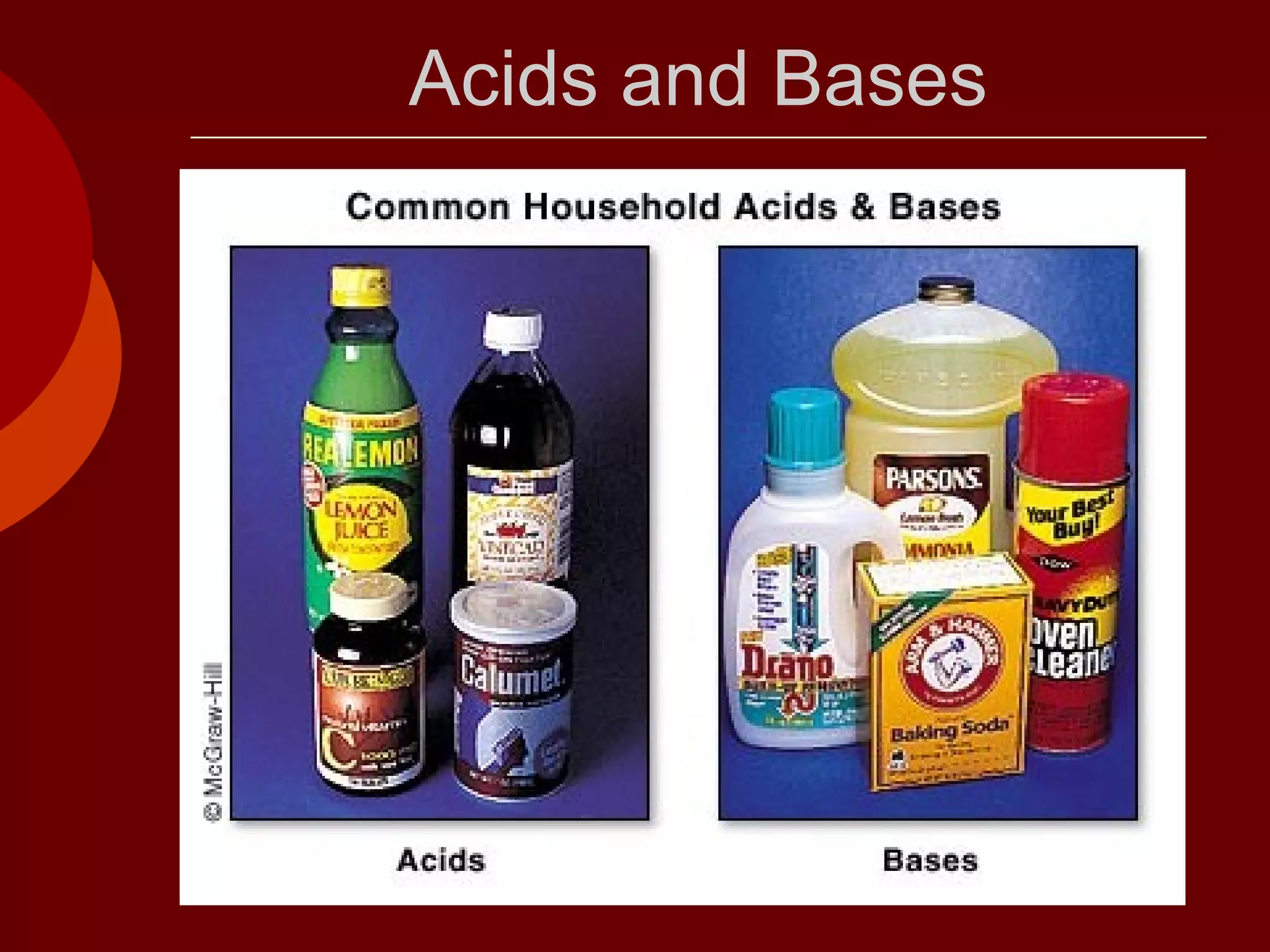
Comparison of properties: Acids taste sour, turn litmus red, and corrode metals; Bases taste bitter, feel slippery, and turn litmus blue.Characteristics of bases, differentiating strong and weak bases, with examples and their uses in everyday products.
A quiz to assess understanding of the properties of acids and bases, with questions about safety and types.
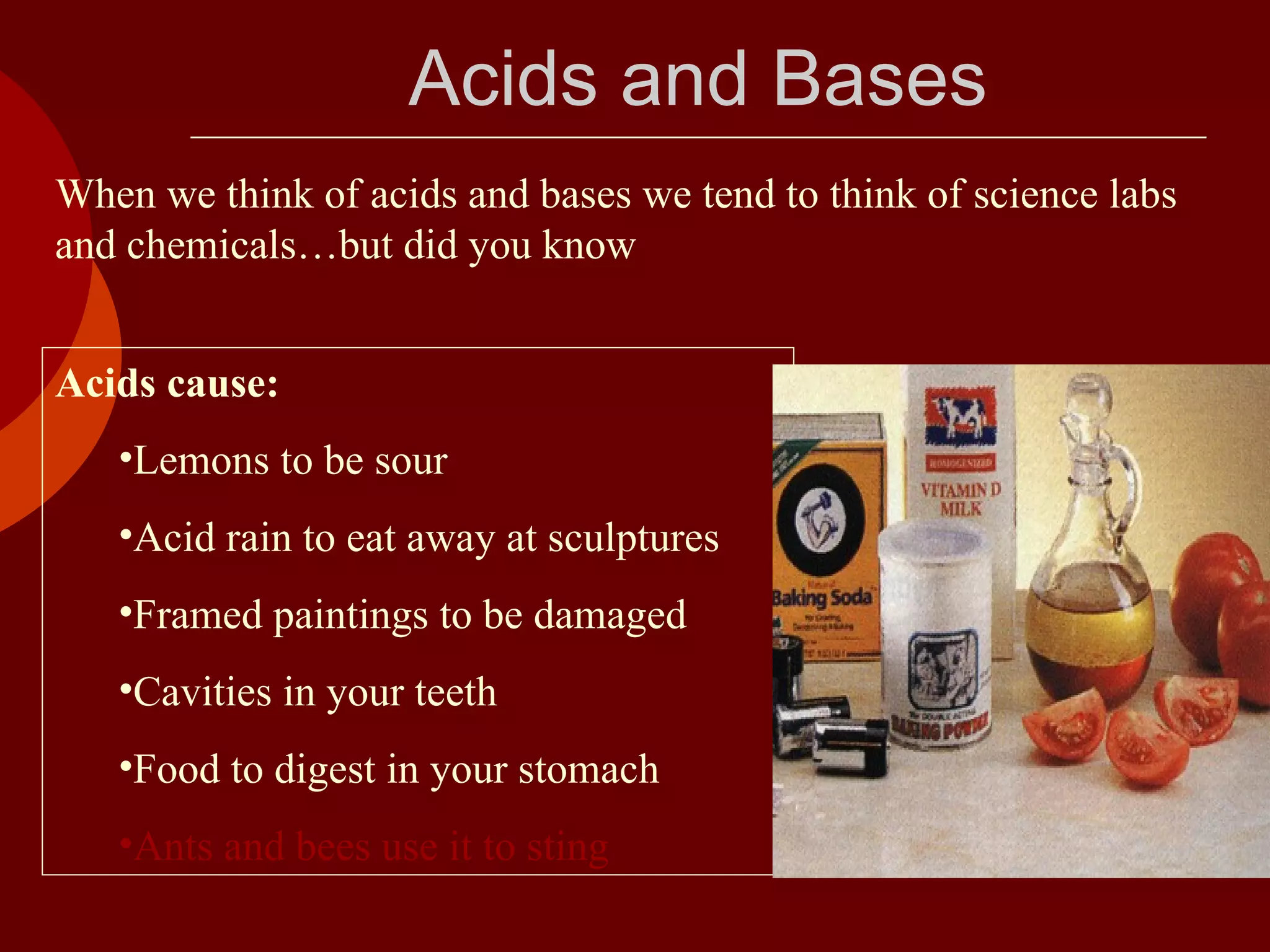
When we thinkof acids and bases we tend to think of science labs and chemicals…but did you know Acids cause: Lemons to be sour Acid rain to eat away at sculptures Framed paintings to be damaged Cavities in your teeth Food to digest in your stomach Ants and bees use it to sting Acids and Bases
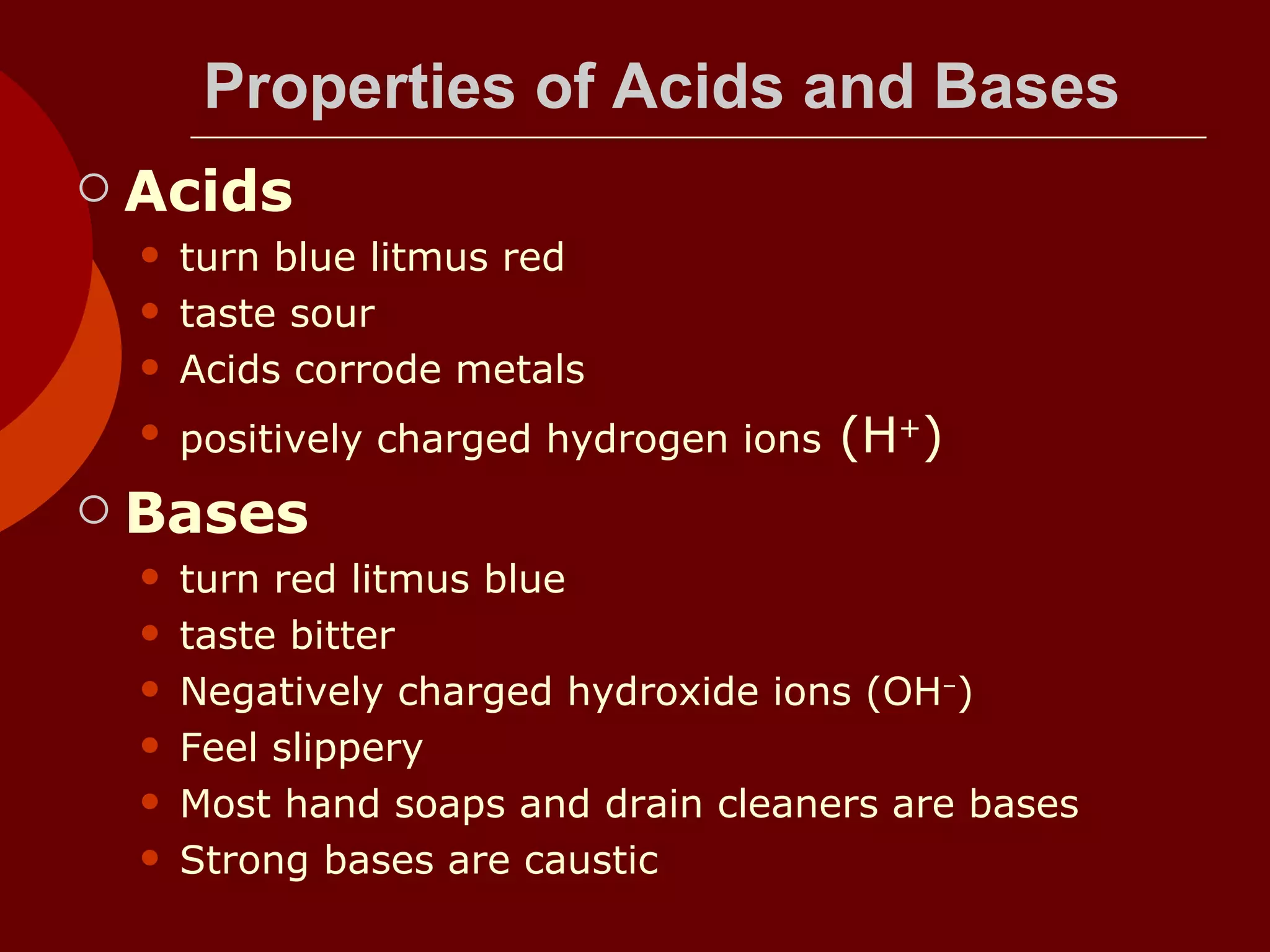
Properties of Acidsand Bases Acids turn blue litmus red taste sour Acids corrode metals positively charged hydrogen ions (H + ) Bases turn red litmus blue taste bitter Negatively charged hydroxide ions (OH – ) Feel slippery Most hand soaps and drain cleaners are bases Strong bases are caustic
6.
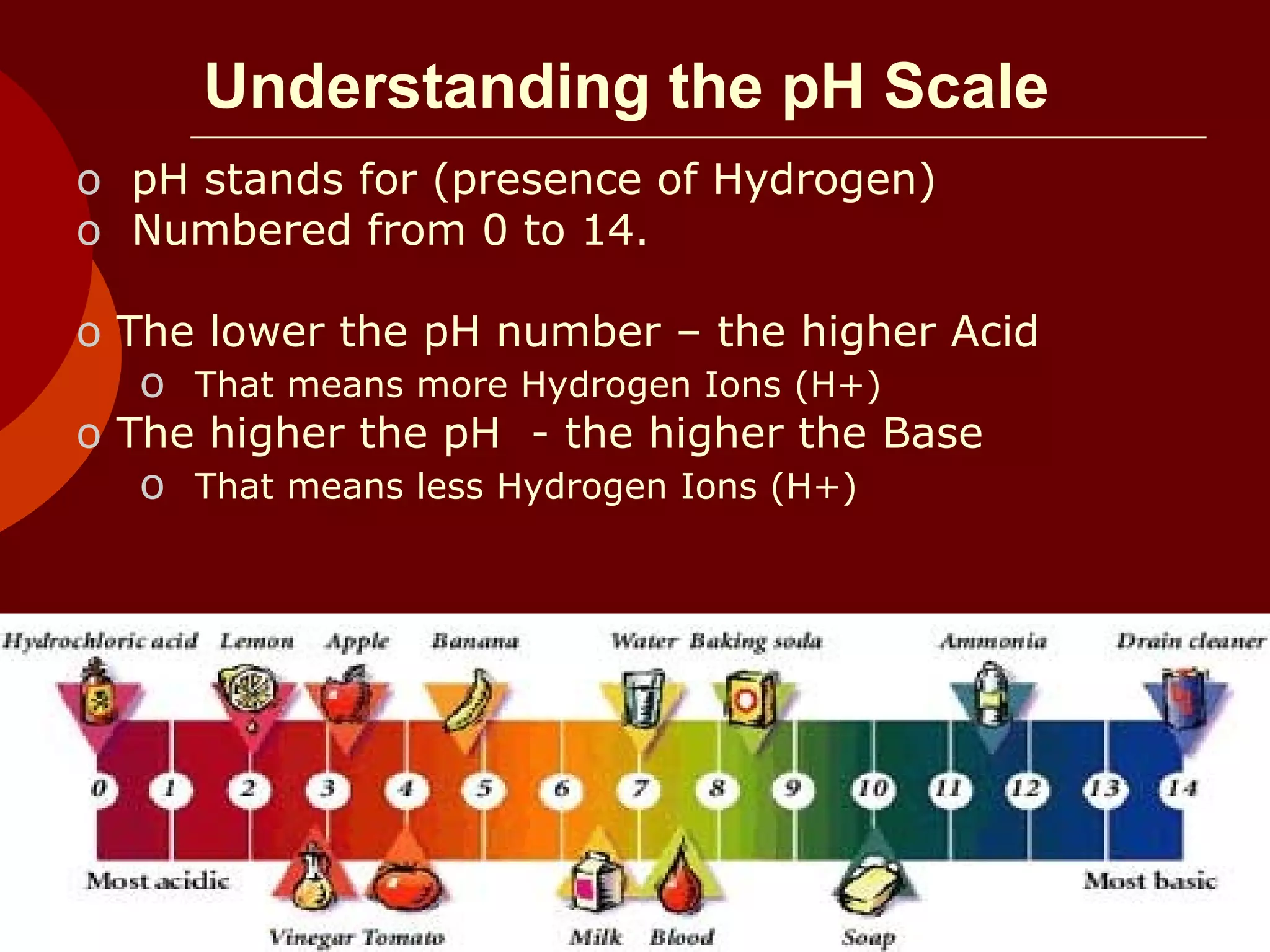
Understanding the pHScale pH stands for (presence of Hydrogen) Numbered from 0 to 14. The lower the pH number – the higher Acid That means more Hydrogen Ions (H+) The higher the pH - the higher the Base That means less Hydrogen Ions (H+)
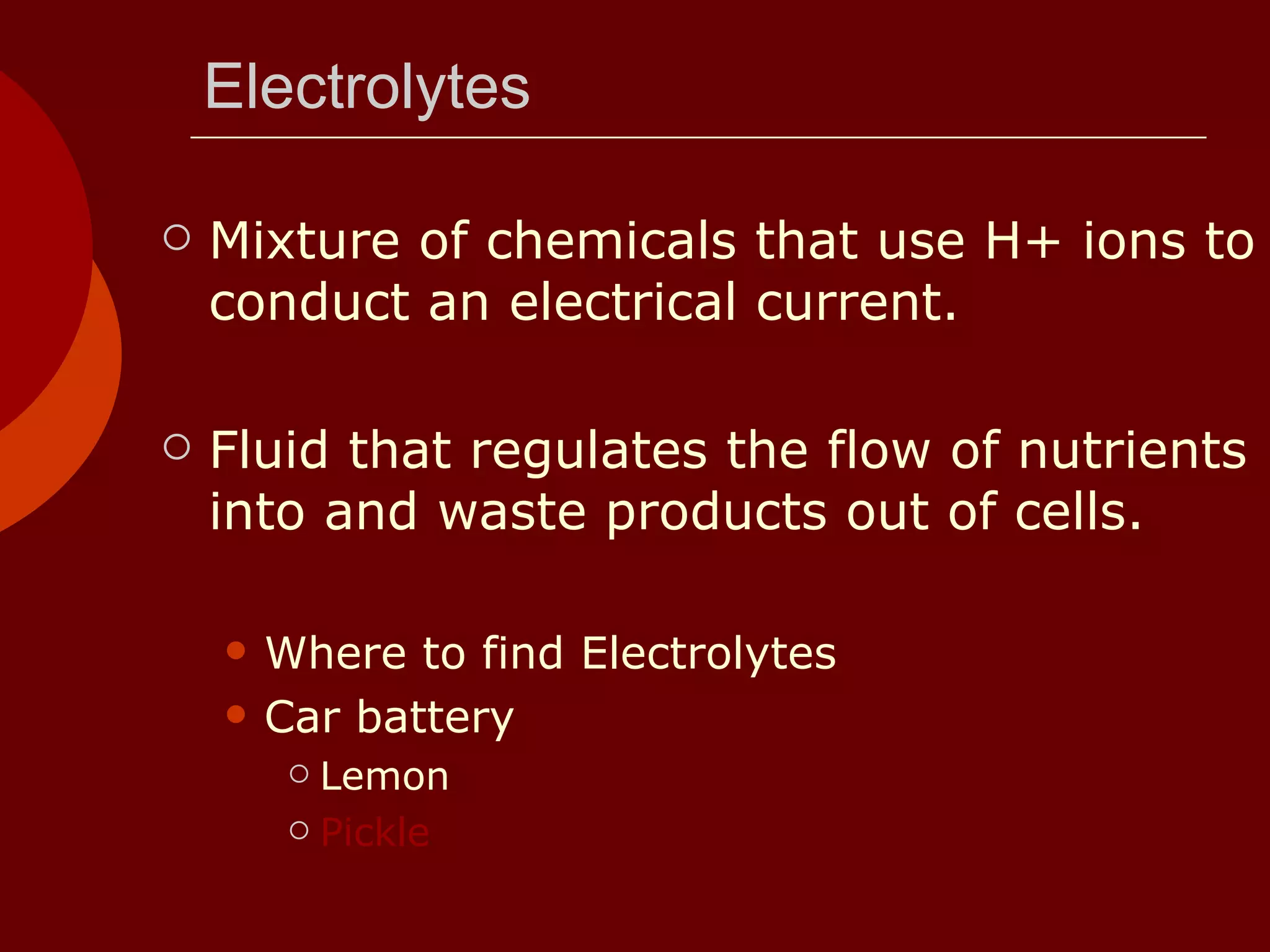
Electrolytes Mixture ofchemicals that use H+ ions to conduct an electrical current. Fluid that regulates the flow of nutrients into and waste products out of cells. Where to find Electrolytes Car battery Lemon Pickle
9.
Several Types ofAcids Hydrochloric Acid. Stomach acid - has the sour taste of acid. Acetic Acid An ingredient in vinegar. Citric Acid Citrus fruits such as lemons, grapefruit, oranges, and limes have citric acid in the juice. Lactic Acid Sour milk, sour cream, yogurt, and cottage cheese have lactic acid.
10.
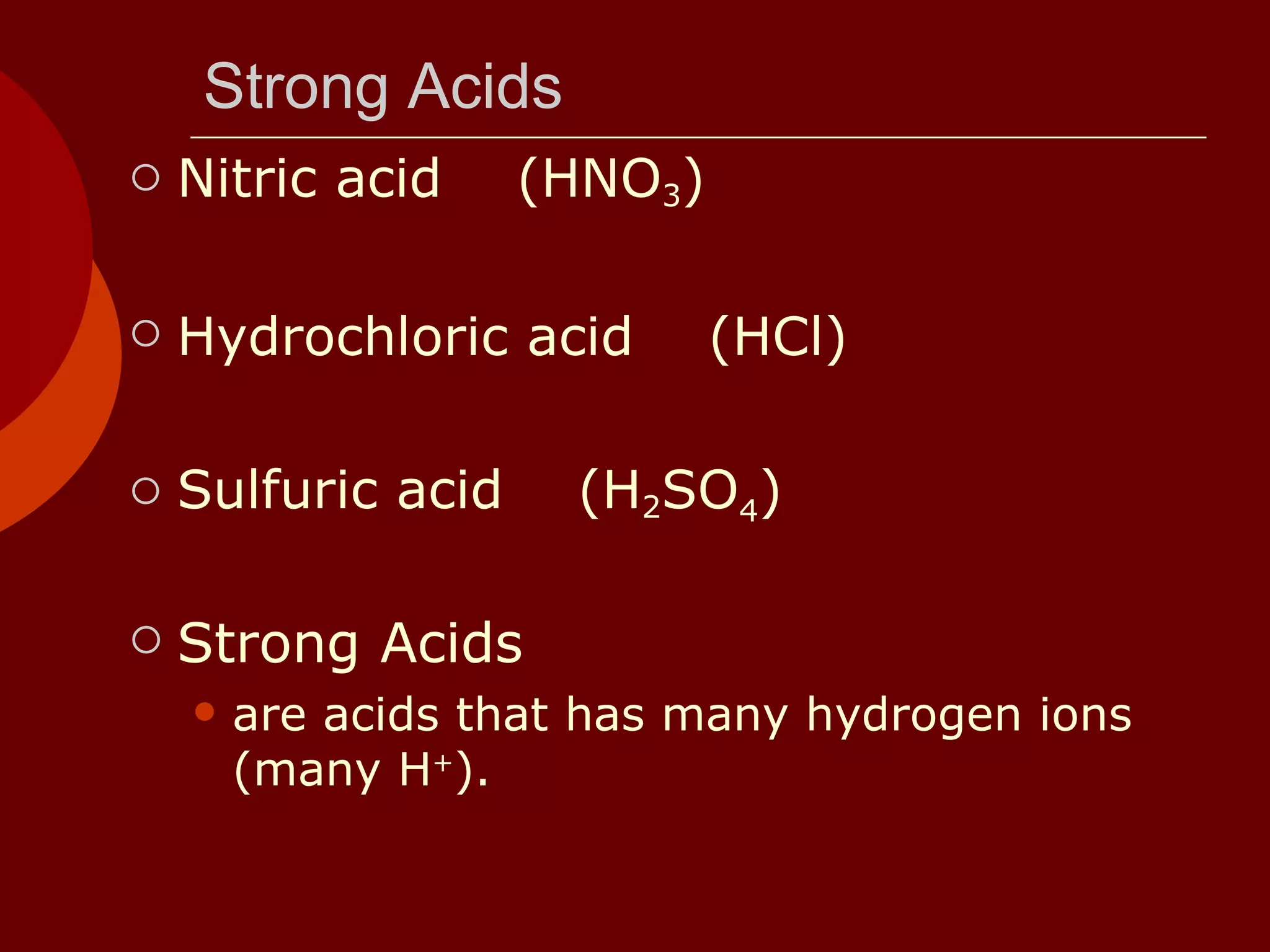
Strong Acids Nitricacid (HNO 3 ) Hydrochloric acid (HCl) Sulfuric acid (H 2 SO 4 ) Strong Acids are acids that has many hydrogen ions (many H + ).
11.
Weak Acids Weakacids Are acids that have fewer hydrogen ions (fewer H + ). Examples acetic acid boric acid sea-water, in plants and especially in fruits carbonic acid Found in our blood citric acid
12.
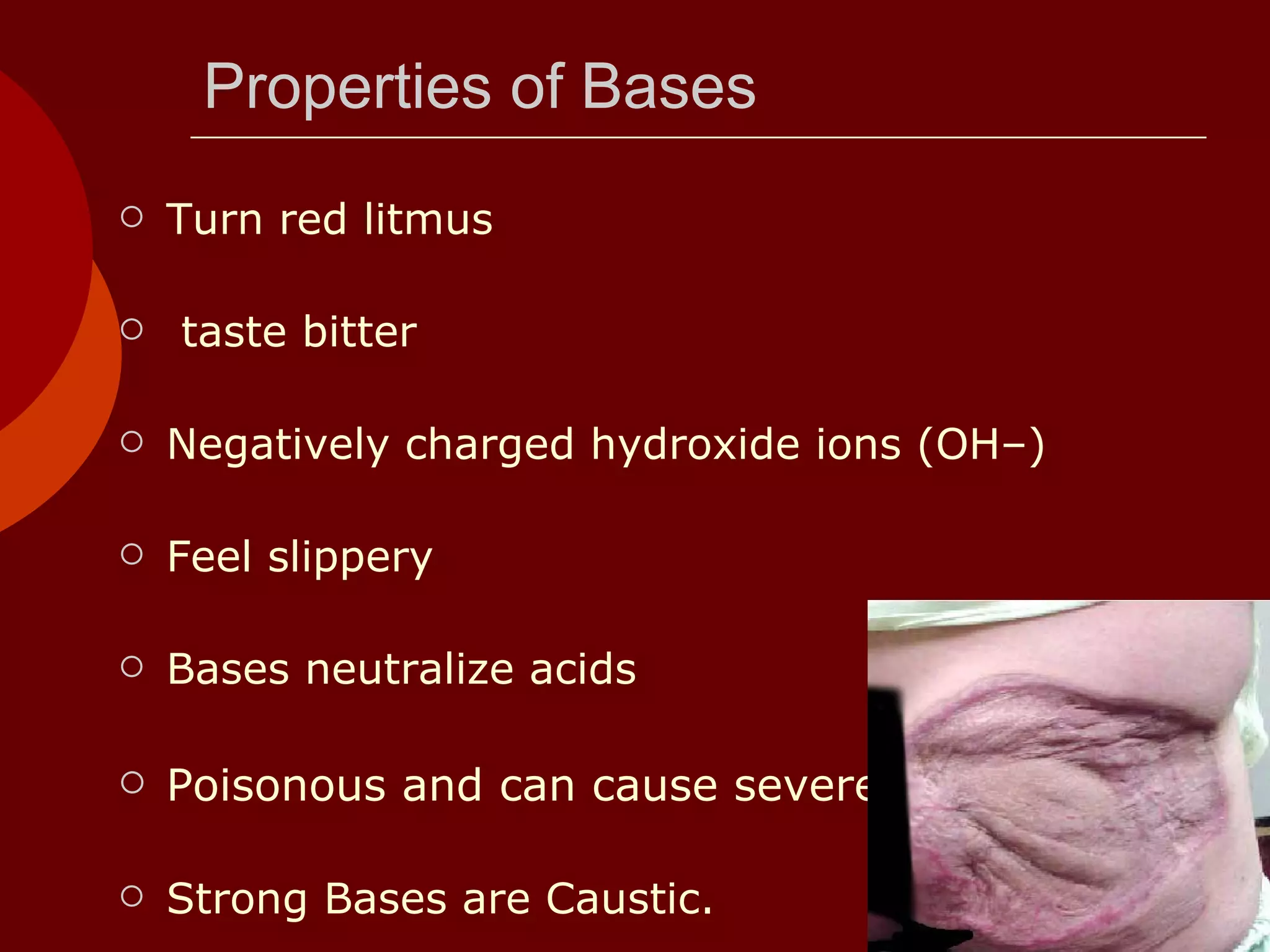
Properties of BasesTurn red litmus taste bitter Negatively charged hydroxide ions (OH–) Feel slippery Bases neutralize acids Poisonous and can cause severe burns Strong Bases are Caustic.
13.
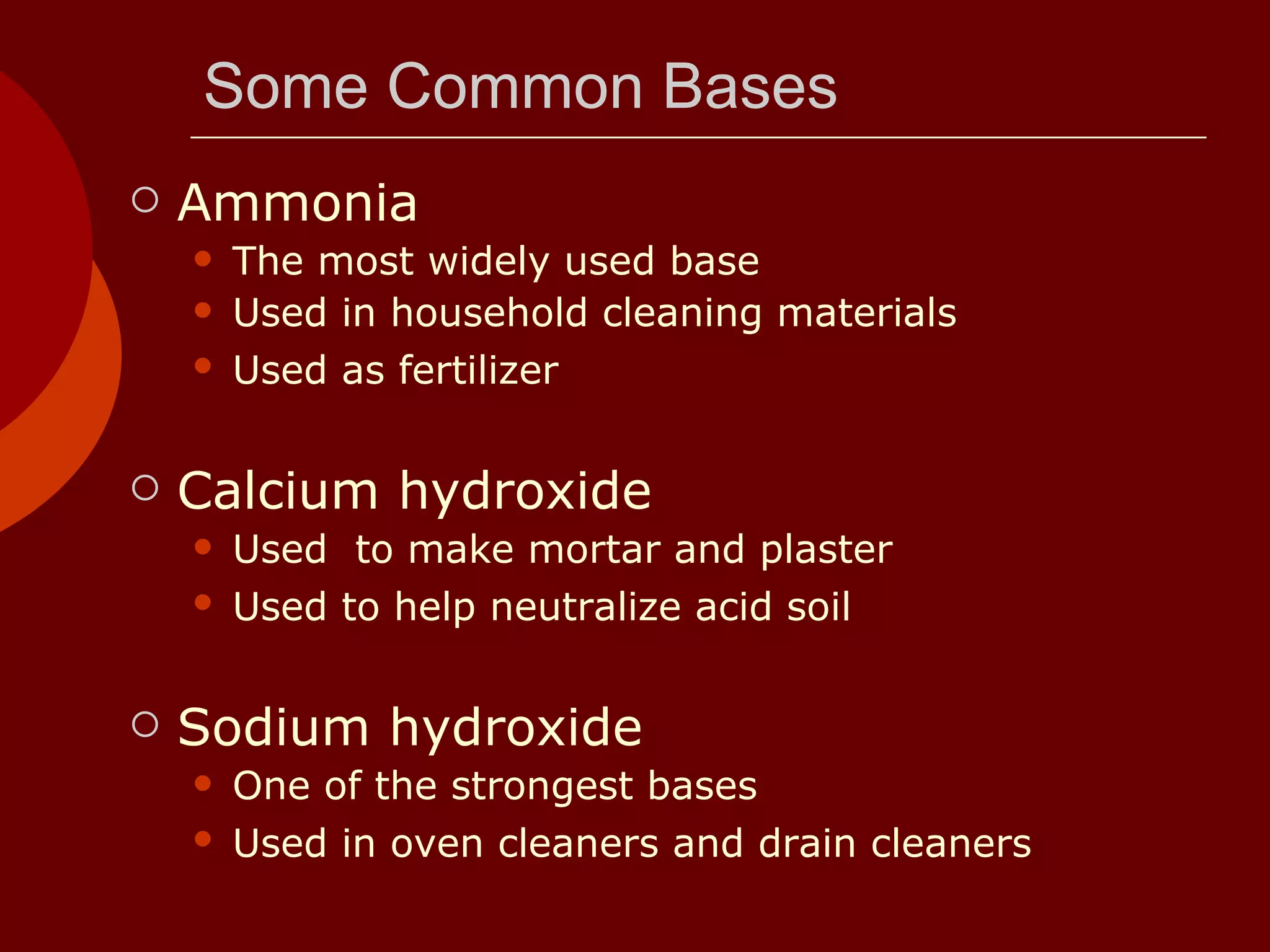
Some Common BasesAmmonia The most widely used base Used in household cleaning materials Used as fertilizer Calcium hydroxide Used to make mortar and plaster Used to help neutralize acid soil Sodium hydroxide One of the strongest bases Used in oven cleaners and drain cleaners
14.
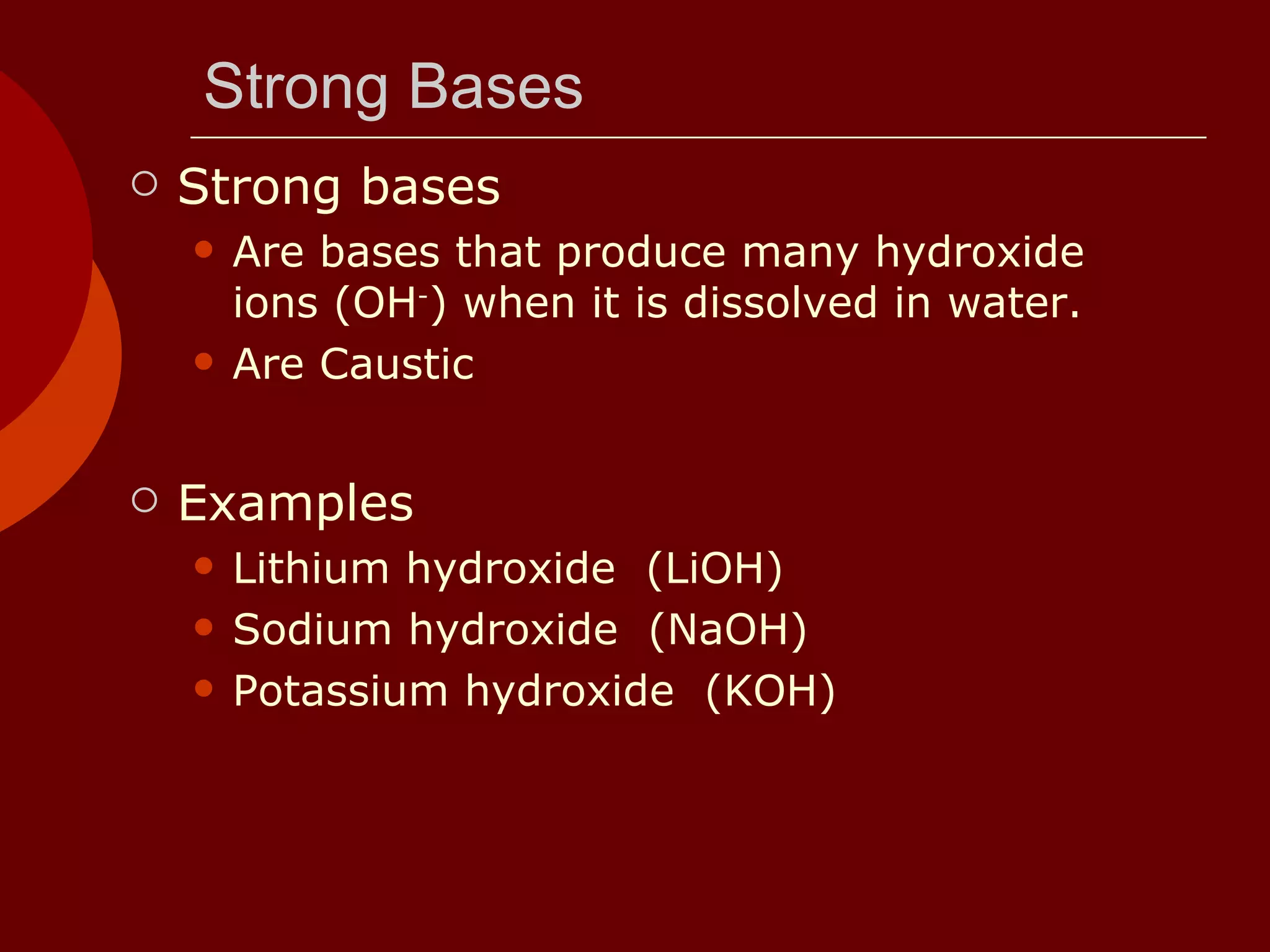
Strong Bases Strongbases Are bases that produce many hydroxide ions (OH - ) when it is dissolved in water. Are Caustic Examples Lithium hydroxide (LiOH) Sodium hydroxide (NaOH) Potassium hydroxide (KOH)
15.
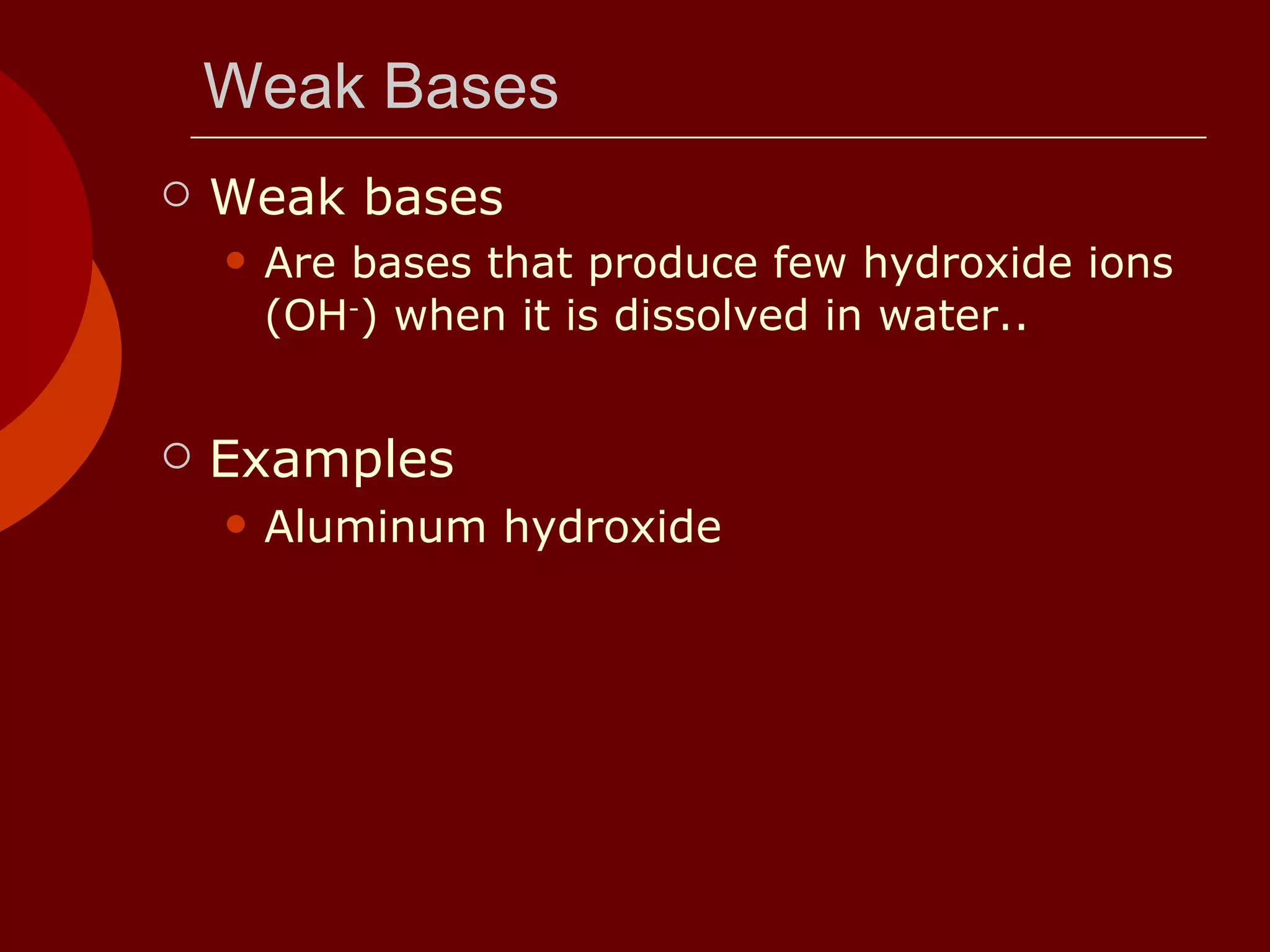
Weak Bases Weakbases Are bases that produce few hydroxide ions (OH - ) when it is dissolved in water. . Examples Aluminum hydroxide
16.
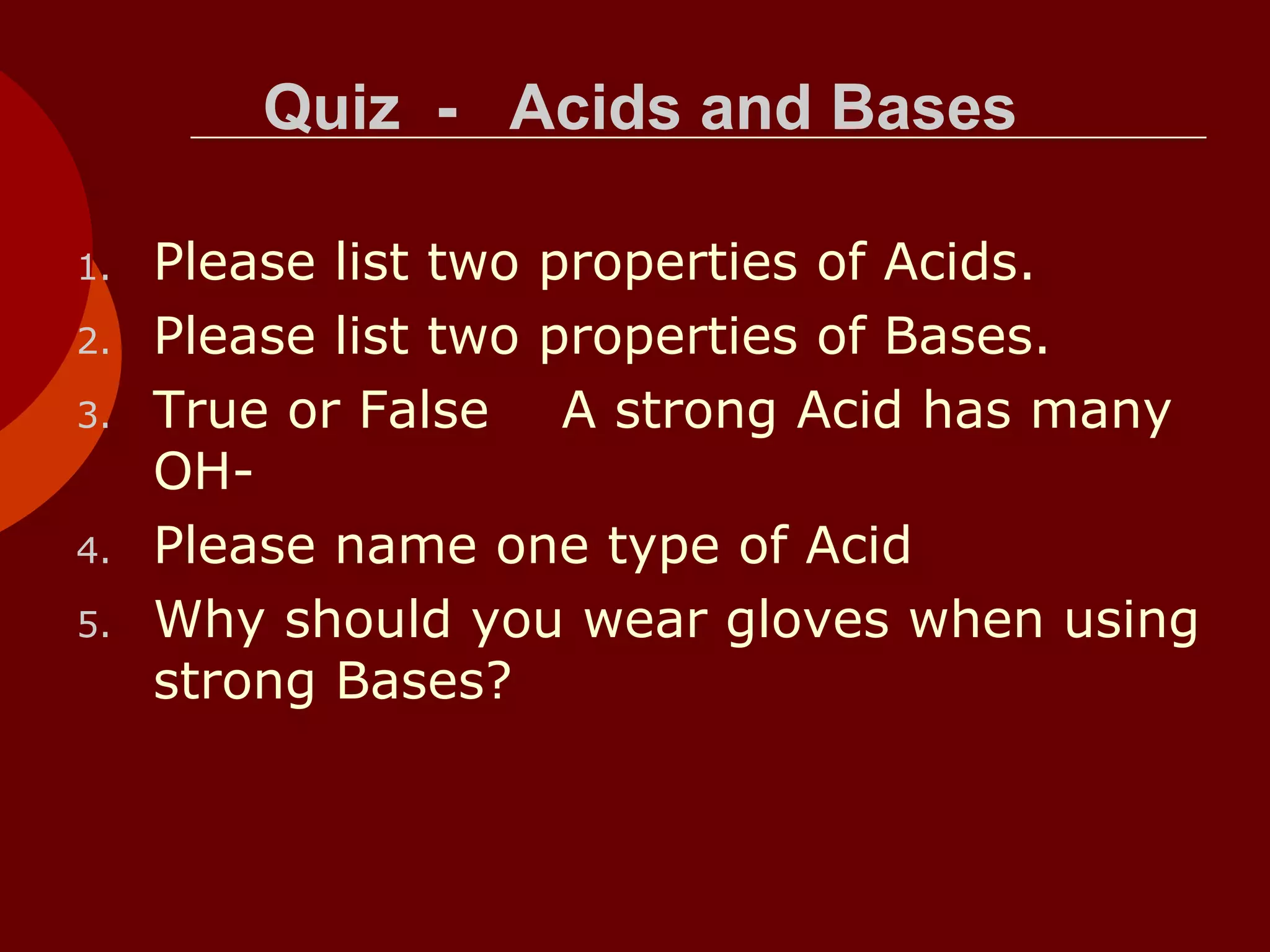
Quiz - Acids and Bases Please list two properties of Acids. Please list two properties of Bases. True or False A strong Acid has many OH- Please name one type of Acid Why should you wear gloves when using strong Bases?