NURUL ASHIKIN BT. ABD RAHMAN   PART 3
LEARNING OUTCOMES
 Design an activity to prepare a specified
  salt.
 Construct ionic equations through the
  continuous variation method.
 Solve problems involving calculation of
  quantities of reactants or products in
  stoichiometric reactions.
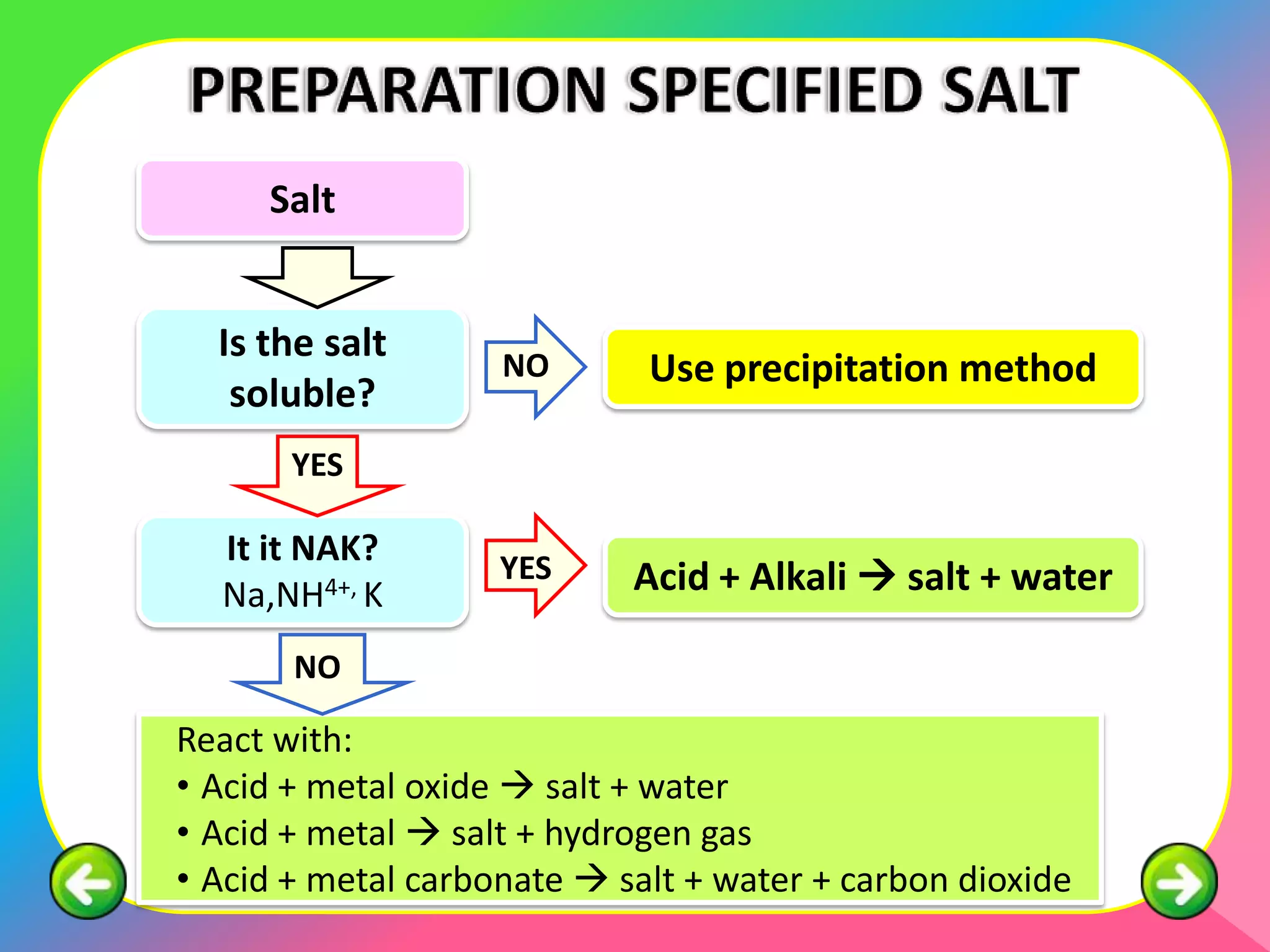
Salt


  Is the salt       NO       Use precipitation method
   soluble?
       YES

  It it NAK?
  Na,NH4+, K
                    YES     Acid + Alkali  salt + water

       NO

React with:
• Acid + metal oxide  salt + water
• Acid + metal  salt + hydrogen gas
• Acid + metal carbonate  salt + water + carbon dioxide
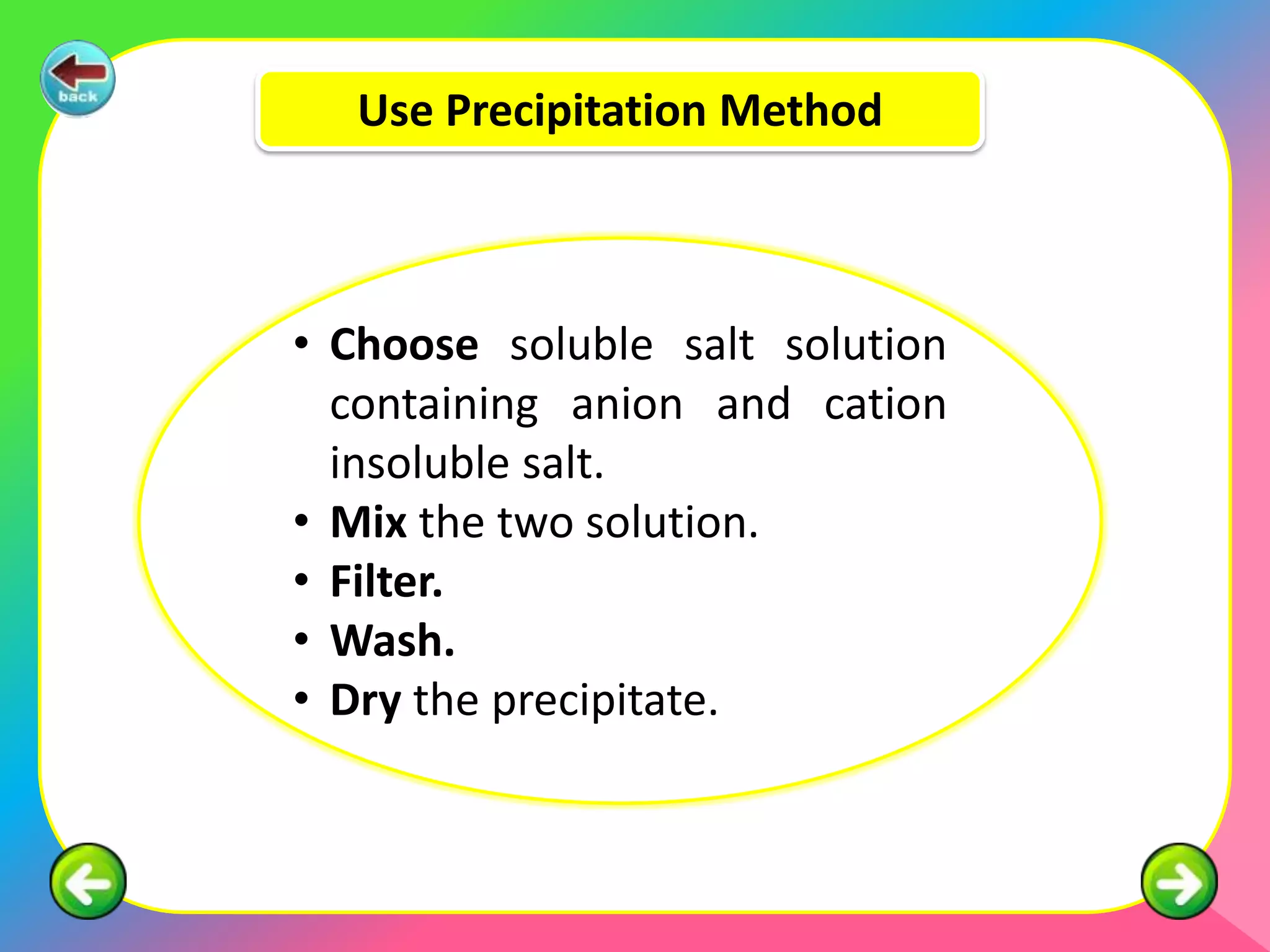
Use Precipitation Method


• Choose soluble salt solution
  containing anion and cation
  insoluble salt.
• Mix the two solution.
• Filter.
• Wash.
• Dry the precipitate.
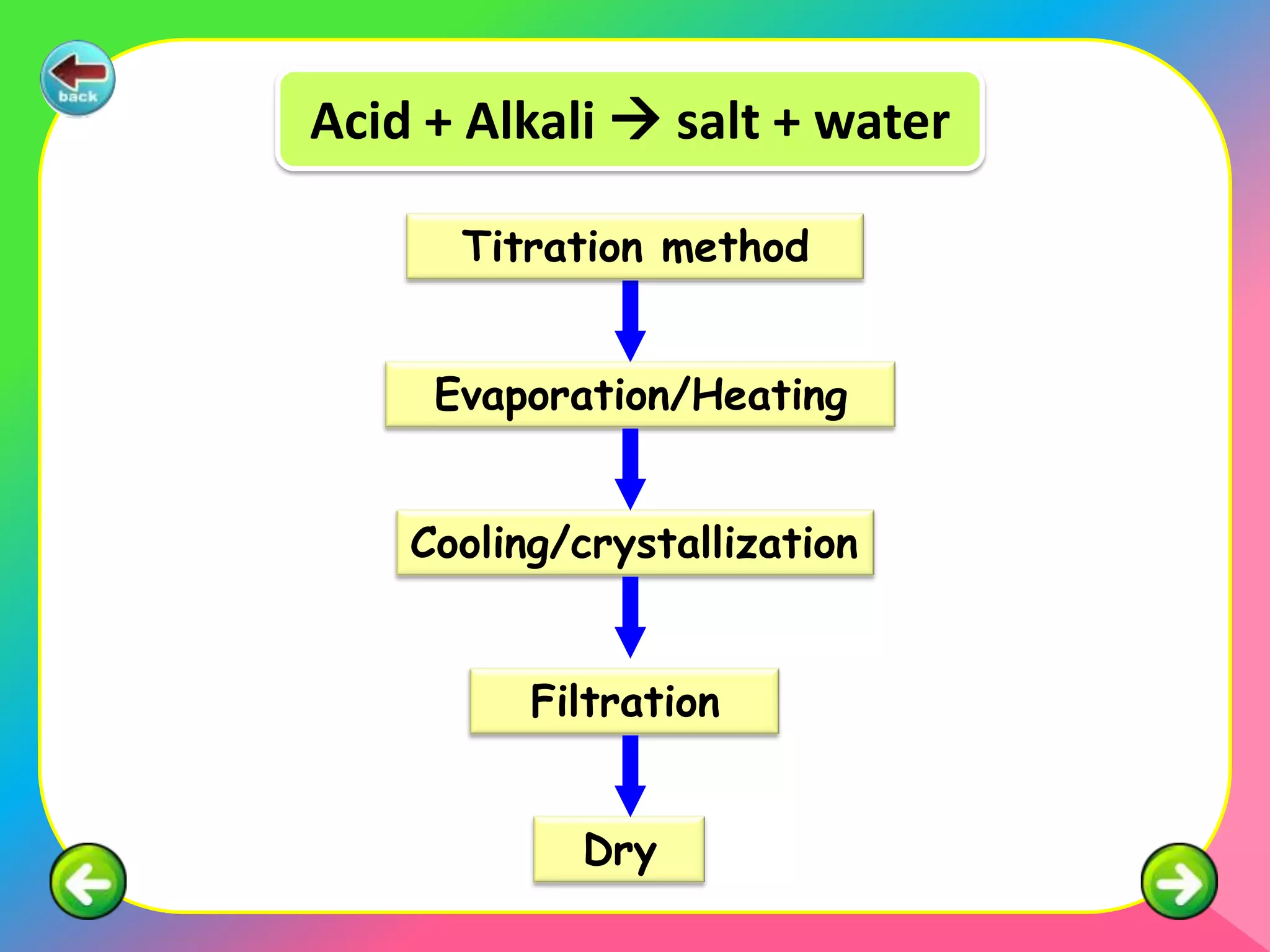
Acid + Alkali  salt + water

      Titration method


     Evaporation/Heating


    Cooling/crystallization


          Filtration


            Dry
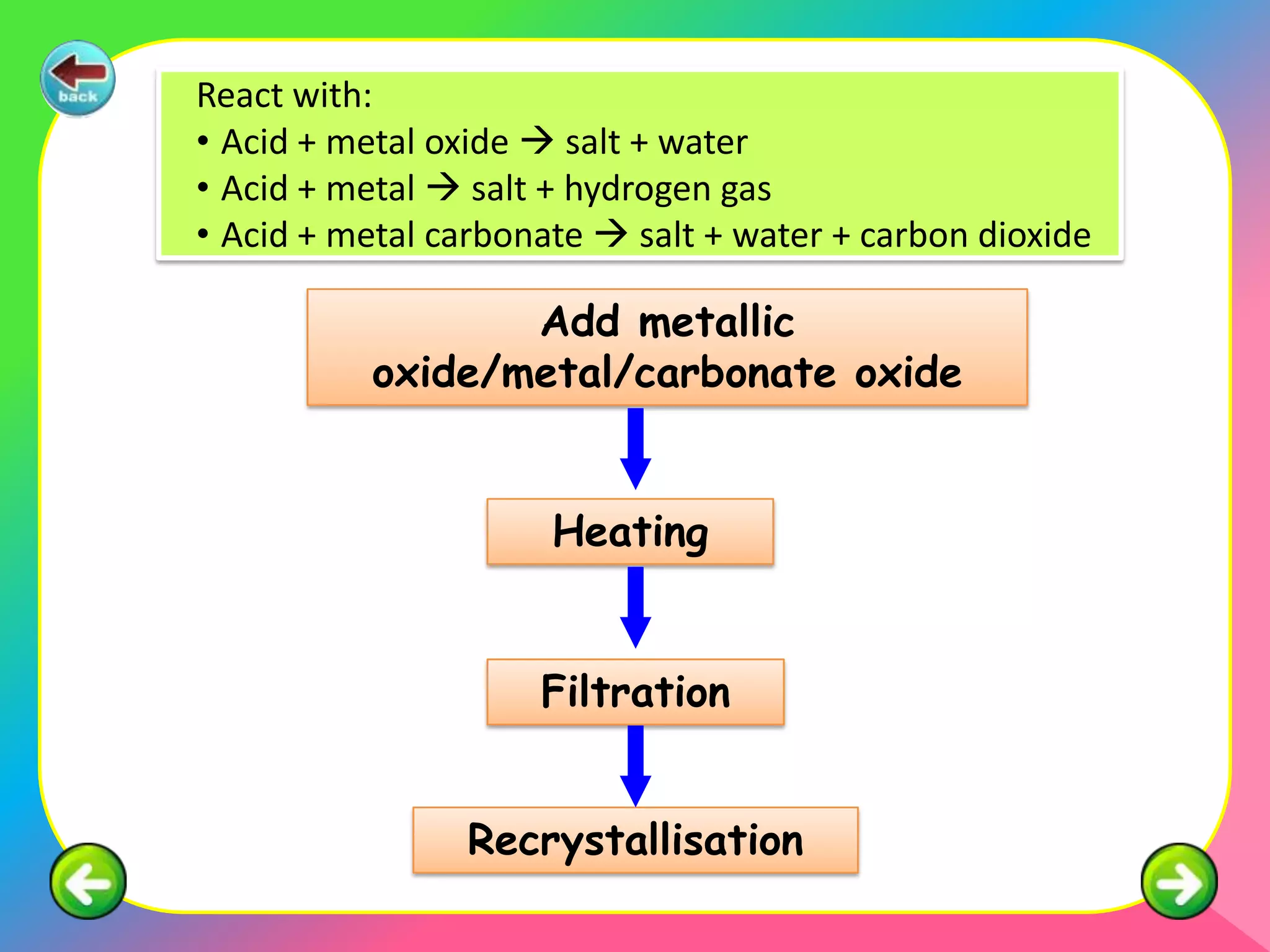
React with:
• Acid + metal oxide  salt + water
• Acid + metal  salt + hydrogen gas
• Acid + metal carbonate  salt + water + carbon dioxide

                  Add metallic
           oxide/metal/carbonate oxide


                      Heating


                     Filtration


                Recrystallisation
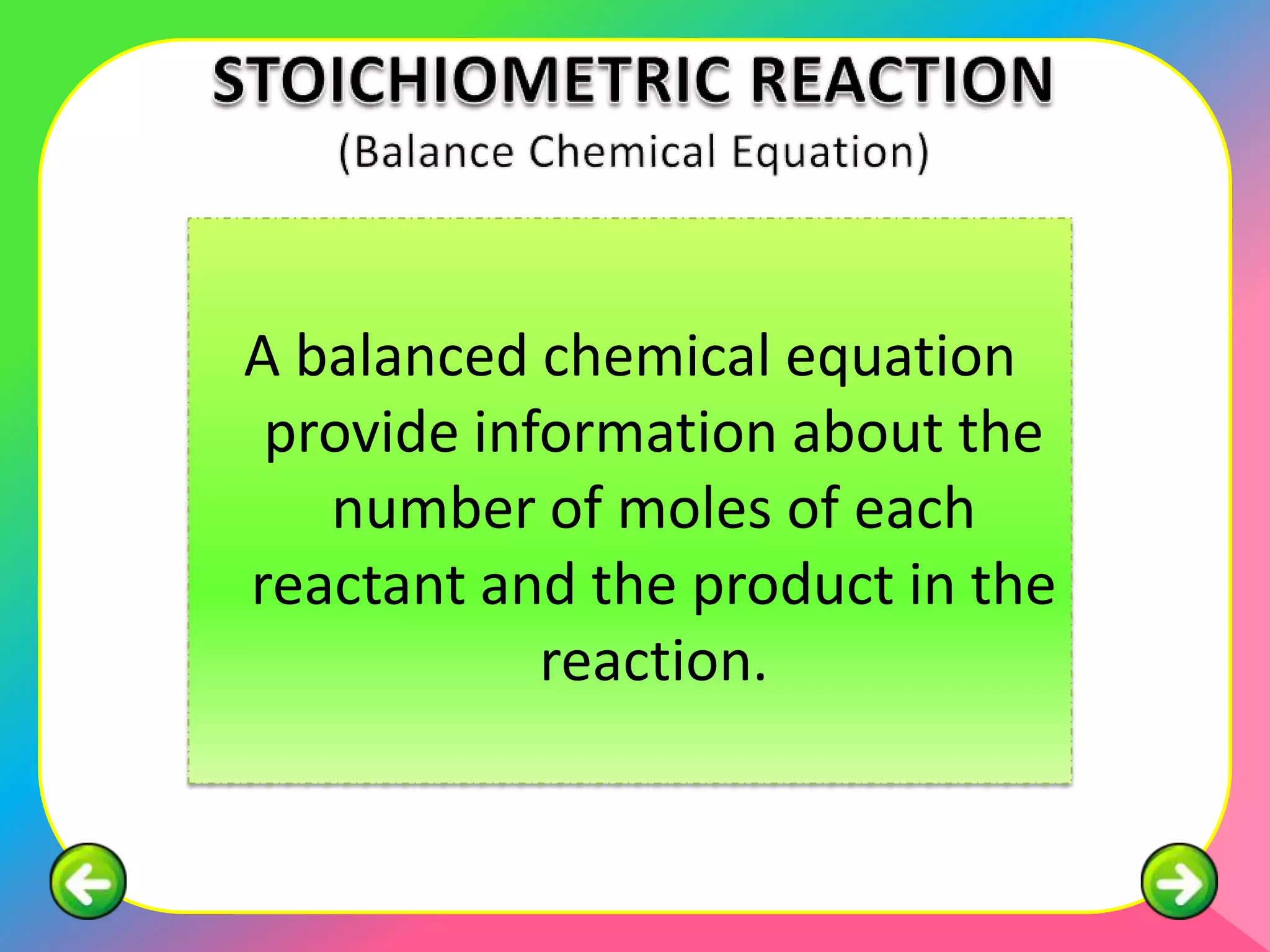
A balanced chemical equation
 provide information about the
   number of moles of each
reactant and the product in the
            reaction.
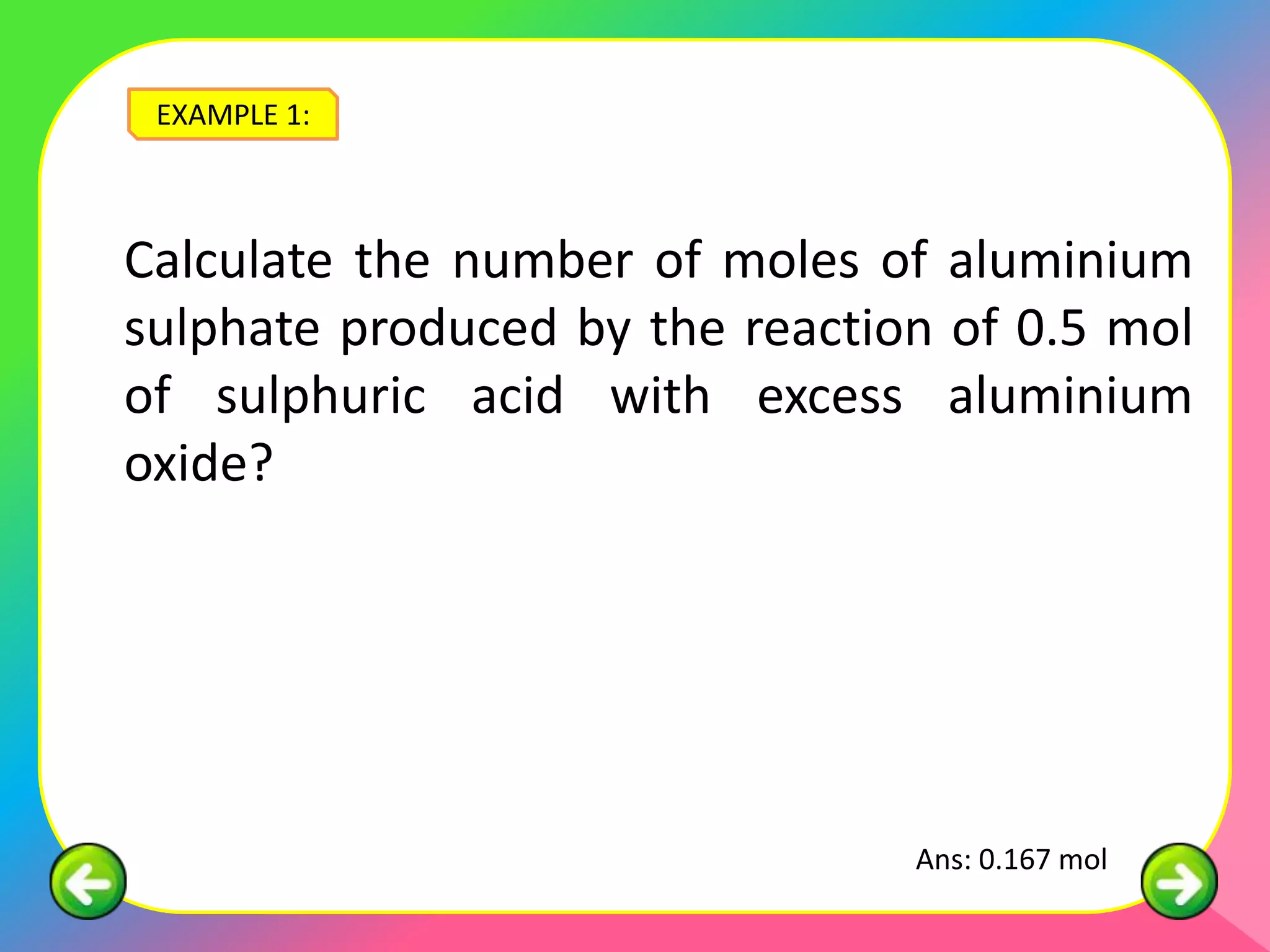
EXAMPLE 1:


Calculate the number of moles of aluminium
sulphate produced by the reaction of 0.5 mol
of sulphuric acid with excess aluminium
oxide?


                                Ans: 0.167 mol
EXAMPLE 2:


5.0 g of copper (II) carbonate powder is added
to 50cm3 of 21.9 g dm-3 hydrochloric acid.
Calculate the mass of unreacted copper (II)
carbonate.
[RAM: H, 1 ; C, 12; Cl, 35.5 ; Cu,64]


                               Ans: 3.14 g CuCO3
EXAMPLE 3:


4.05 g of aluminium oxide powder is mixed
with excess dilute nitric acid and the mixture
is heated. Calculate the mass of aluminium
nitrate produced.
[RAM: N,14; O,16; Al, 27]


                                  Ans: 17.04 g
EXAMPLE 4:


150 cm3 of 1.0 mol dm-3 ammonia solution is
completely neutralised with phosphoric acid
using a titration methode. Calculate the mass
of ammonium phosphate formed.
[RAM: H,1 ; N,14; O,16; P,31]


                                 Ans: 7.45 g
EXAMPLE 5:


What is the volume of 2.0 mol dm-3
hydrochloric acid required to dissolved 10 g of
marble ( calcium carbonate)?
[RAM: H,1 ; O,16; C,12; Ca,40]


                                  Ans: 100 cm3
Chapter 8 Salt part 3

Chapter 8 Salt part 3

  • 1.
    NURUL ASHIKIN BT.ABD RAHMAN PART 3
  • 2.
    LEARNING OUTCOMES  Designan activity to prepare a specified salt.  Construct ionic equations through the continuous variation method.  Solve problems involving calculation of quantities of reactants or products in stoichiometric reactions.
  • 3.
    Salt Isthe salt NO Use precipitation method soluble? YES It it NAK? Na,NH4+, K YES Acid + Alkali  salt + water NO React with: • Acid + metal oxide  salt + water • Acid + metal  salt + hydrogen gas • Acid + metal carbonate  salt + water + carbon dioxide
  • 4.
    Use Precipitation Method •Choose soluble salt solution containing anion and cation insoluble salt. • Mix the two solution. • Filter. • Wash. • Dry the precipitate.
  • 5.
    Acid + Alkali salt + water Titration method Evaporation/Heating Cooling/crystallization Filtration Dry
  • 6.
    React with: • Acid+ metal oxide  salt + water • Acid + metal  salt + hydrogen gas • Acid + metal carbonate  salt + water + carbon dioxide Add metallic oxide/metal/carbonate oxide Heating Filtration Recrystallisation
  • 7.
    A balanced chemicalequation provide information about the number of moles of each reactant and the product in the reaction.
  • 8.
    EXAMPLE 1: Calculate thenumber of moles of aluminium sulphate produced by the reaction of 0.5 mol of sulphuric acid with excess aluminium oxide? Ans: 0.167 mol
  • 9.
    EXAMPLE 2: 5.0 gof copper (II) carbonate powder is added to 50cm3 of 21.9 g dm-3 hydrochloric acid. Calculate the mass of unreacted copper (II) carbonate. [RAM: H, 1 ; C, 12; Cl, 35.5 ; Cu,64] Ans: 3.14 g CuCO3
  • 10.
    EXAMPLE 3: 4.05 gof aluminium oxide powder is mixed with excess dilute nitric acid and the mixture is heated. Calculate the mass of aluminium nitrate produced. [RAM: N,14; O,16; Al, 27] Ans: 17.04 g
  • 11.
    EXAMPLE 4: 150 cm3of 1.0 mol dm-3 ammonia solution is completely neutralised with phosphoric acid using a titration methode. Calculate the mass of ammonium phosphate formed. [RAM: H,1 ; N,14; O,16; P,31] Ans: 7.45 g
  • 12.
    EXAMPLE 5: What isthe volume of 2.0 mol dm-3 hydrochloric acid required to dissolved 10 g of marble ( calcium carbonate)? [RAM: H,1 ; O,16; C,12; Ca,40] Ans: 100 cm3