Ischemic Heart Disease and
Myocardial Infarction
Pathophysiology of Myocardial
Ischemia
Bio-Med 350
September 2004
Physiology and Pathophysiology of
Coronary Blood Flow / Ischemia
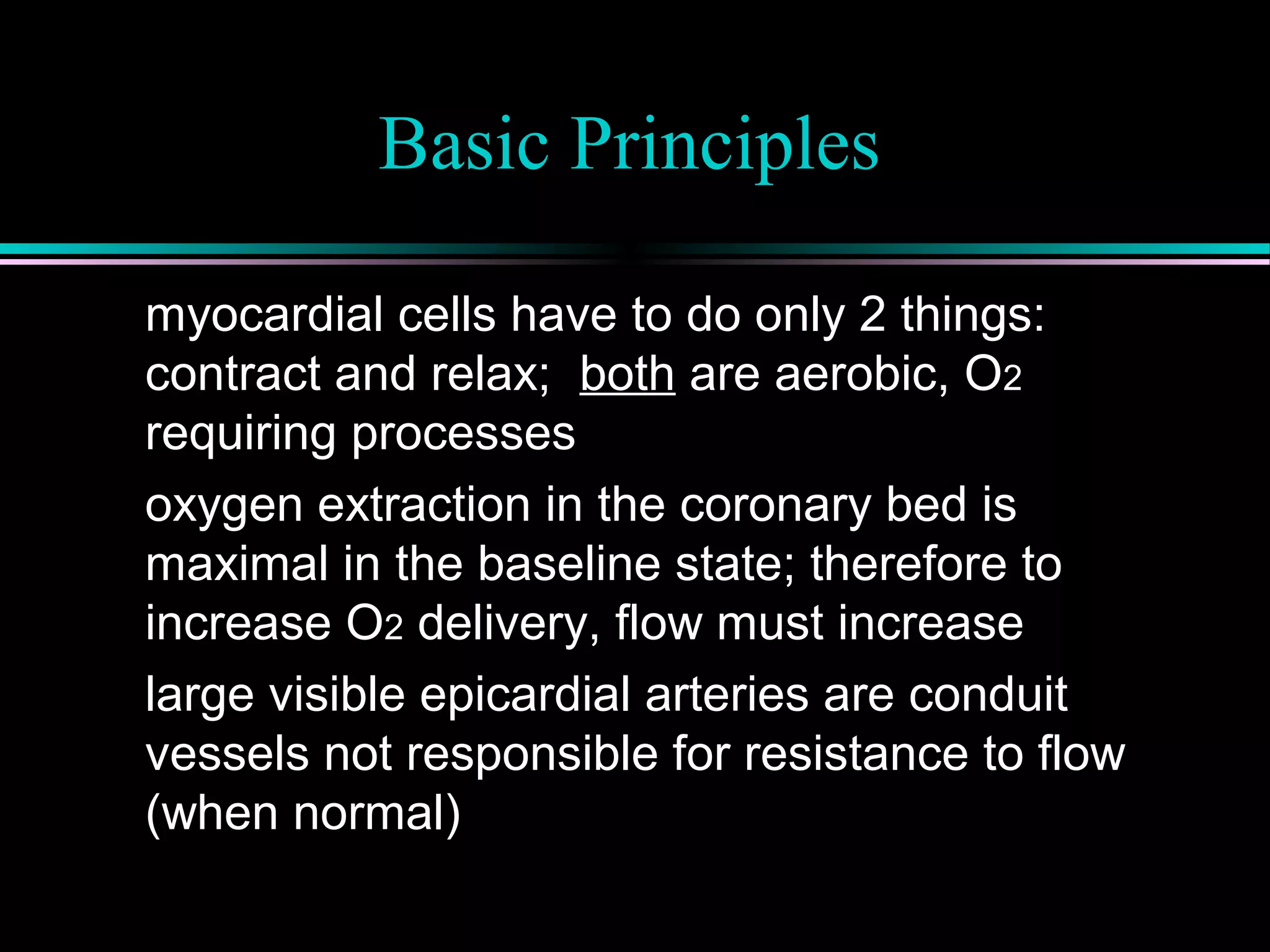
Basic Physiology / Determinants of MVO2
Autoregulatory Mechanisms / Coronary Flow
Reserve
Pathophysiology of Coronary Ischemia
and Atherosclerosis
Clinical Syndromes
Stable Angina
Acute Coronary Syndromes
– Unstable Angina
– Acute MI (UA, AMI)
Coronary Arteries
Normal Anatomy
Basic Principles
myocardial cells have to do only 2 things:
contract and relax; both are aerobic, O2
requiring processes
oxygen extraction in the coronary bed is
maximal in the baseline state; therefore to
increase O2 delivery, flow must increase
large visible epicardial arteries are conduit
vessels not responsible for resistance to flow
(when normal)
Basic Principles
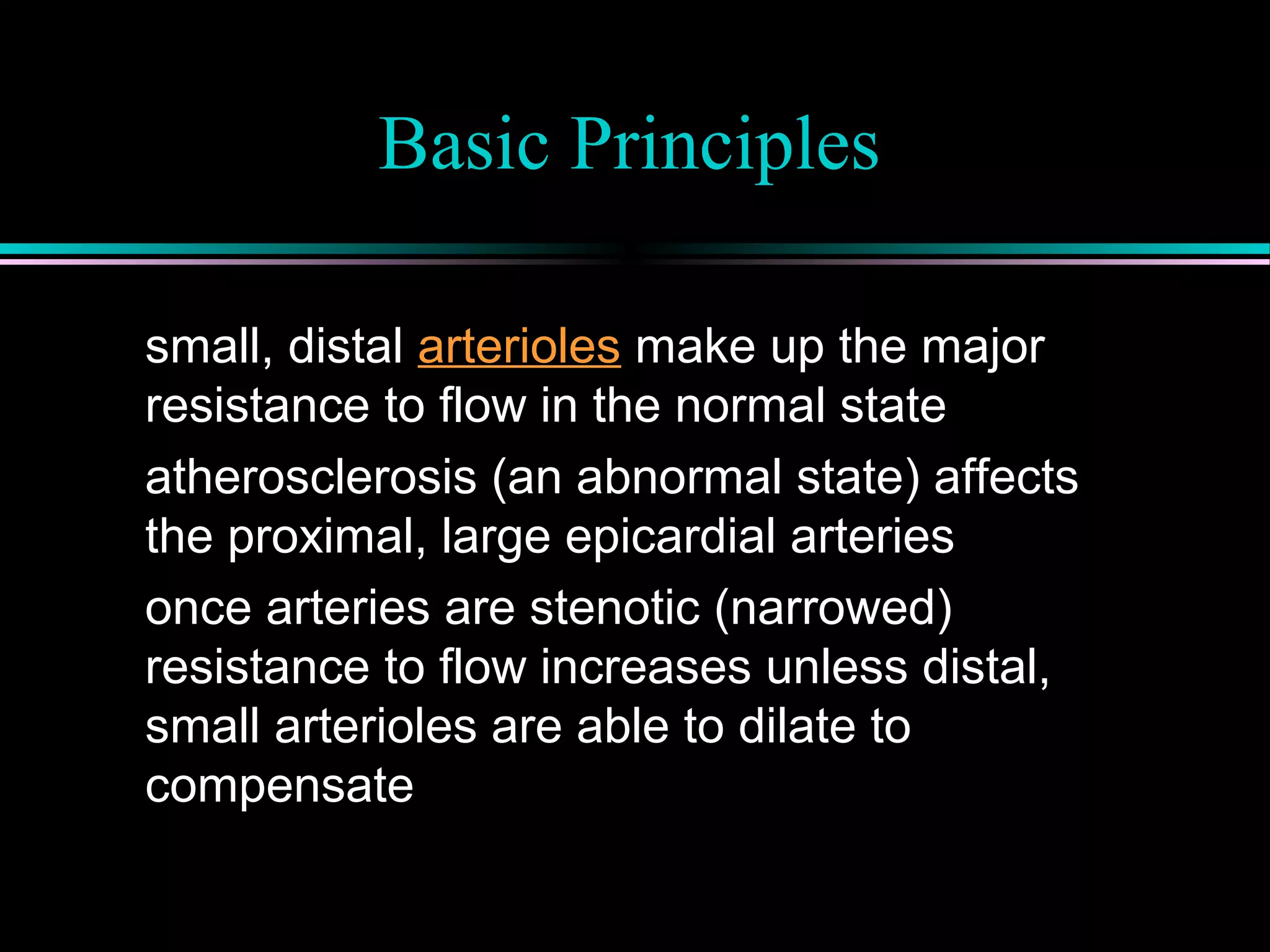
small, distal arterioles make up the major
resistance to flow in the normal state
atherosclerosis (an abnormal state) affects
the proximal, large epicardial arteries
once arteries are stenotic (narrowed)
resistance to flow increases unless distal,
small arterioles are able to dilate to
compensate
Myocardial Ischemia:
Occurs when myocardial oxygen demand exceeds
myocardial oxygen supply
Myocardial Ischemia:
Occurs when myocardial oxygen demand exceeds
myocardial oxygen supply
MVO2 = Myocardial Oxygen Demand
MVO2 determined by:
Heart Rate
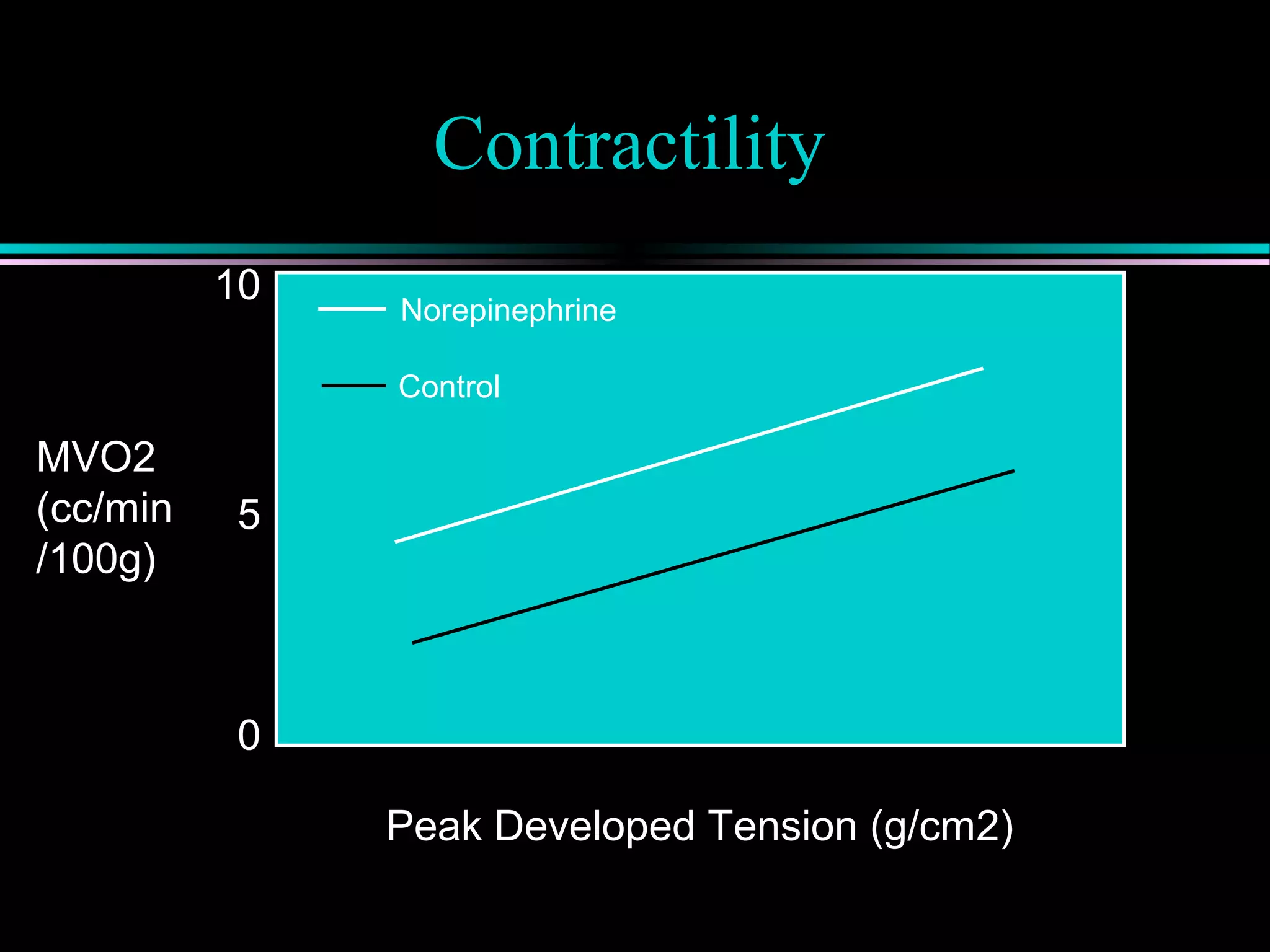
Contractility
Wall Tension
MVO2 (Myocardial Oxygen Demand)
Increases directly in proportion to heart
rate
Increases with increased contractility
Increases with increased Wall Tension:
i.e. increases with increasing preload
or afterload
Heart Rate
100 150 200
cc/min
/100g
MVO2
2
10
6
8
4
Heart Rate (BPM)
Contractility
Peak Developed Tension (g/cm2)
MVO2
(cc/min
/100g)
10
0
5
Norepinephrine
Control
Wall Tension
Is related to Pressure x Radius
Wall Thickness
Defined as: Force per unit area generated in the LV
throughout the cardiac cycle
Afterload - LV systolic pressure
Preload - LV end-diastolic pressure or volume
Myocardial Ischemia:
Occurs when myocardial oxygen demand exceeds
myocardial oxygen supply
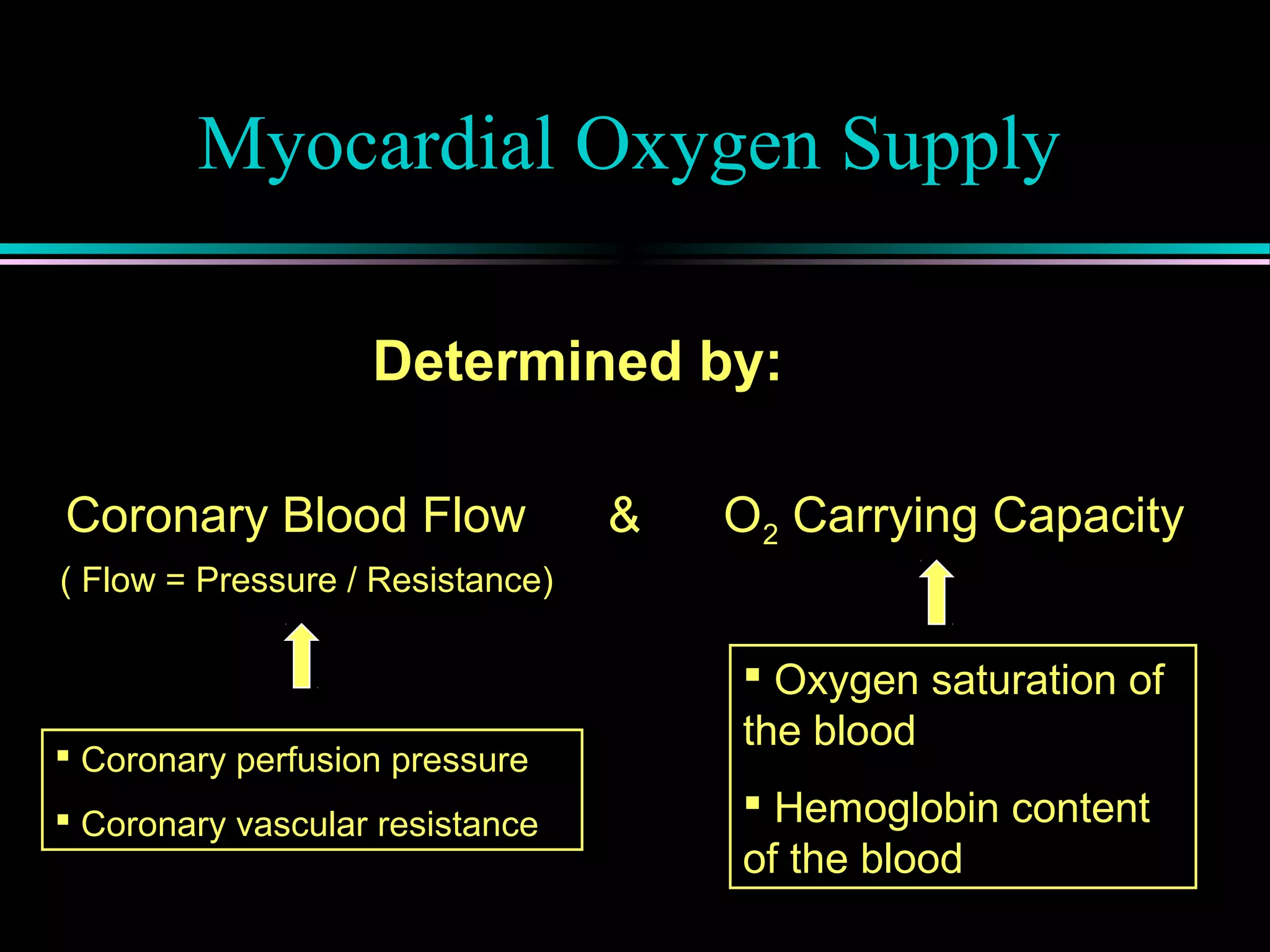
Myocardial Oxygen Supply
Determined by:
Coronary Blood Flow & O2 Carrying Capacity
 Oxygen saturation of
the blood
 Hemoglobin content
of the blood
( Flow = Pressure / Resistance)
 Coronary perfusion pressure
 Coronary vascular resistance
Coronary Blood Flow
Proportional to perfusion pressure / resistance
Coronary Perfusion
pressure
=
Diastolic blood
pressure, minus
LVEDP
Coronary Vascular
resistance
 external compression
 intrinsic regulation
 Local metabolites
 Endothelial factors
 Neural factors (esp.
sympathetic nervous
system)
Endocardium and CFR
Diastole
Systole
Endocardium vs Epicardium
Greater shortening / thickening, higher
wall tension: increased MVO2
Greater compressive resistance
? Decreased Perfusion Pressure
Less collateral circulation
Net Result is more compensatory
arteriolar vasodilatation at baseline and
therefore decreased CFR
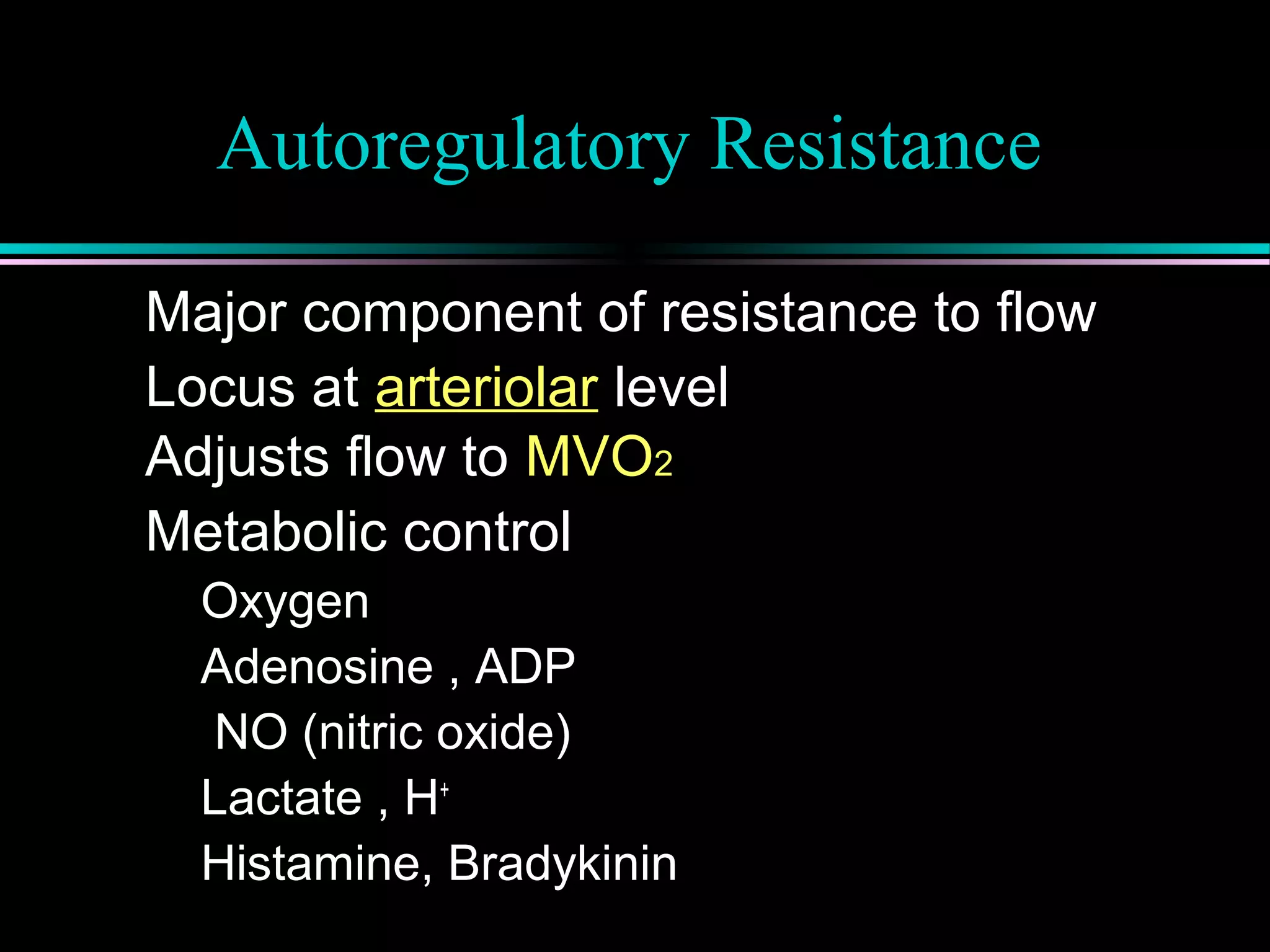
Autoregulatory Resistance
Major component of resistance to flow
Locus at arteriolar level
Adjusts flow to MVO2
Metabolic control
Oxygen
Adenosine , ADP
NO (nitric oxide)
Lactate , H+
Histamine, Bradykinin
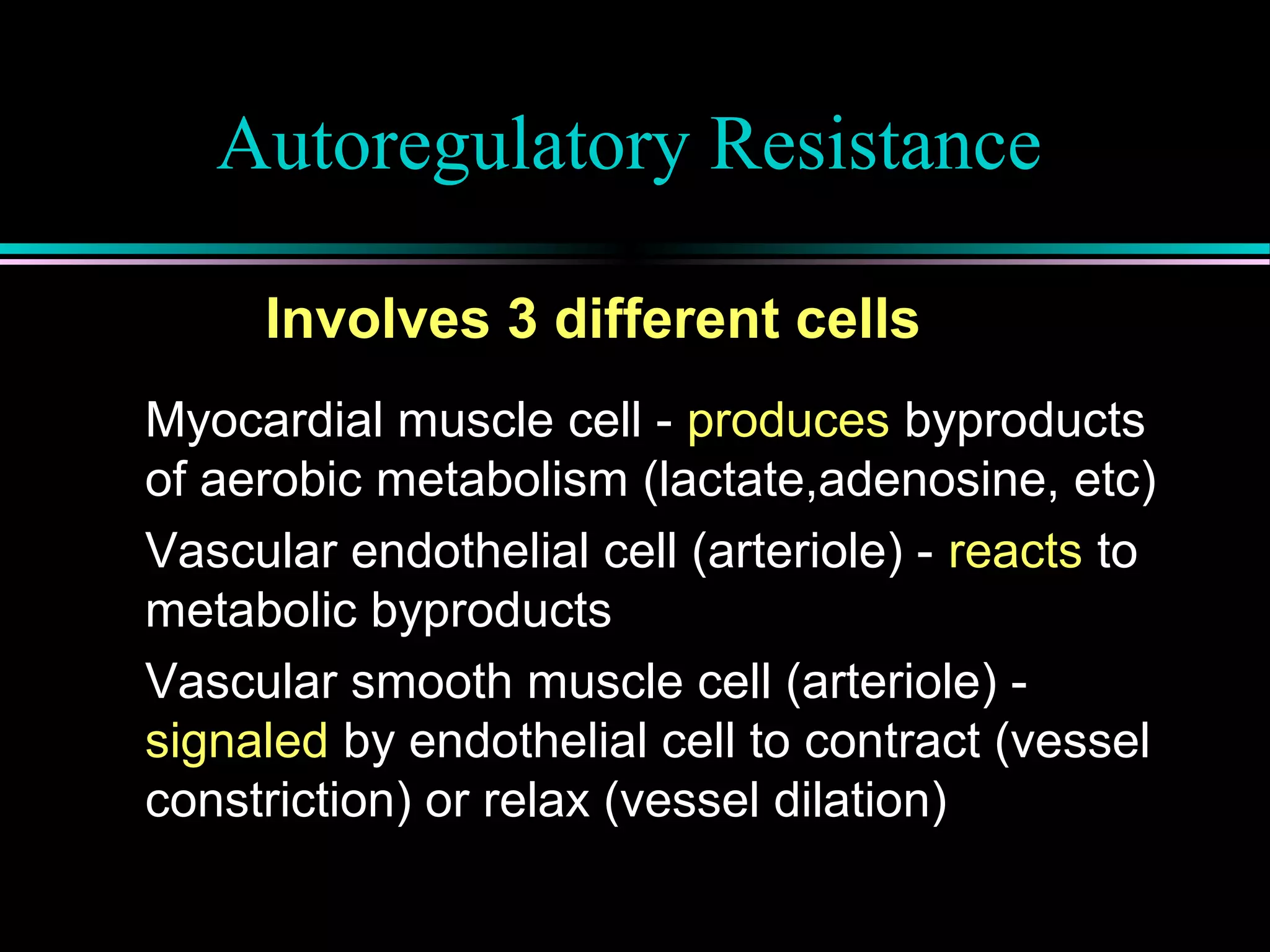
Autoregulatory Resistance
Myocardial muscle cell - produces byproducts
of aerobic metabolism (lactate,adenosine, etc)
Vascular endothelial cell (arteriole) - reacts to
metabolic byproducts
Vascular smooth muscle cell (arteriole) -
signaled by endothelial cell to contract (vessel
constriction) or relax (vessel dilation)
Involves 3 different cells
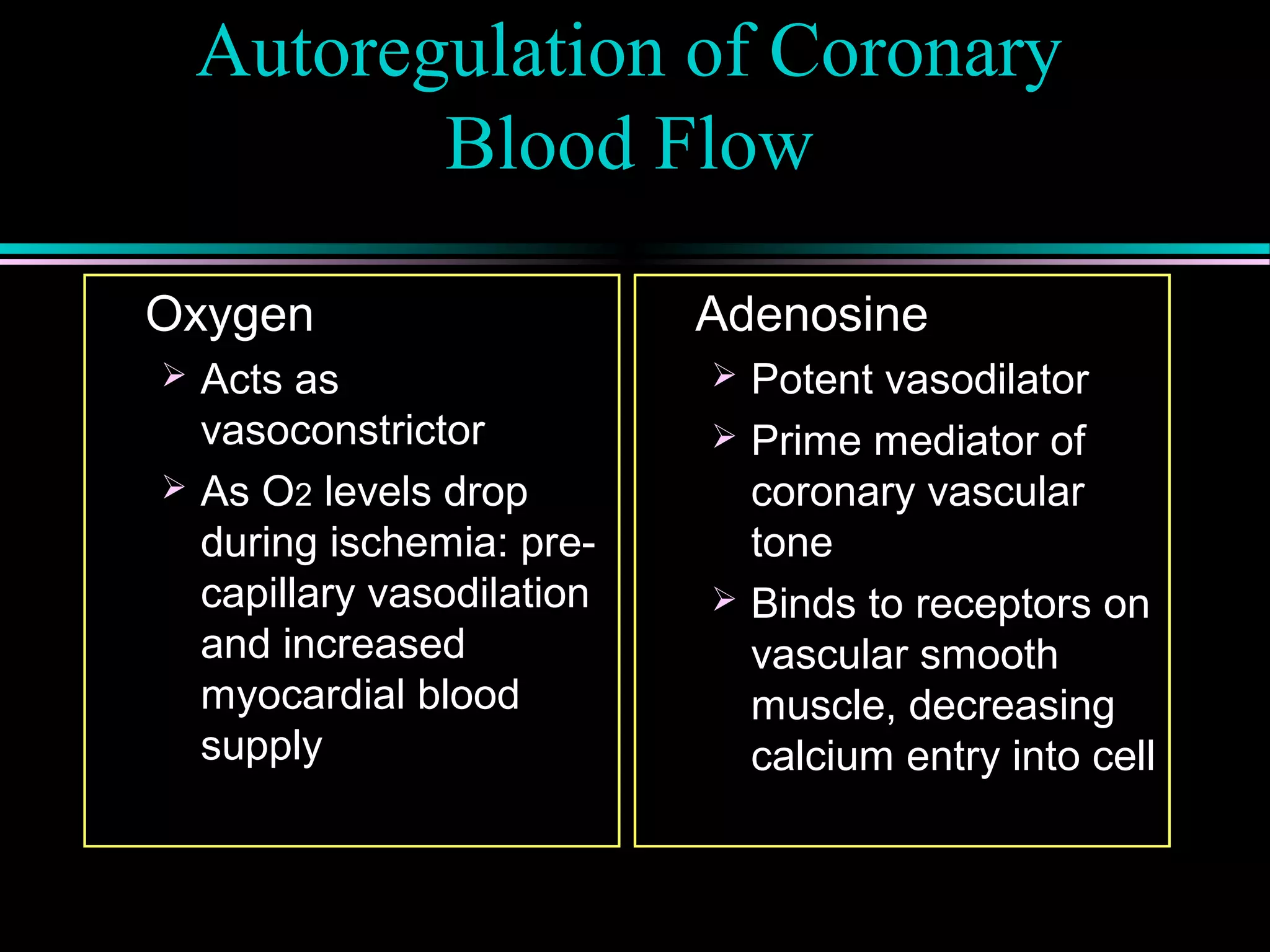
Autoregulation of Coronary
Blood Flow
Oxygen
 Acts as
vasoconstrictor
 As O2 levels drop
during ischemia: pre-
capillary vasodilation
and increased
myocardial blood
supply
Adenosine
 Potent vasodilator
 Prime mediator of
coronary vascular
tone
 Binds to receptors on
vascular smooth
muscle, decreasing
calcium entry into cell
Adenosine
During hypoxemia, aerobic metabolism
in mitochondria is inhibited
Accumulation of ADP and AMP
Production of adenosine
Adenosine vasodilates arterioles
Increased coronary blood flow
Autoregulatory Resistance
Coronary Perfusion Pressure (mmHg)
Flow
cc/100g
/min
60 130100 11580
Control
Adenosine
0
200
100
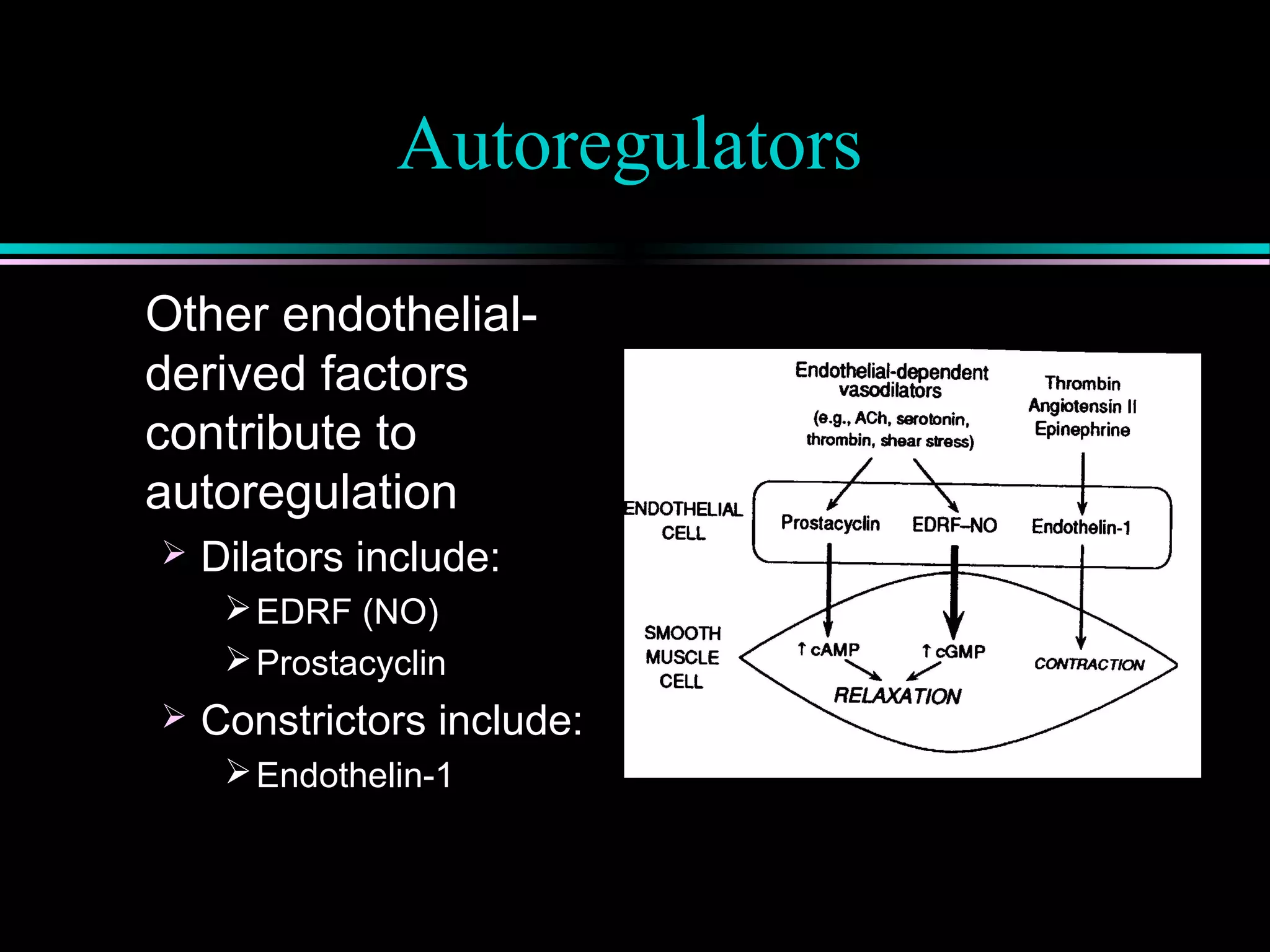
Autoregulators
Other endothelial-
derived factors
contribute to
autoregulation
 Dilators include:
EDRF (NO)
Prostacyclin
 Constrictors include:
Endothelin-1
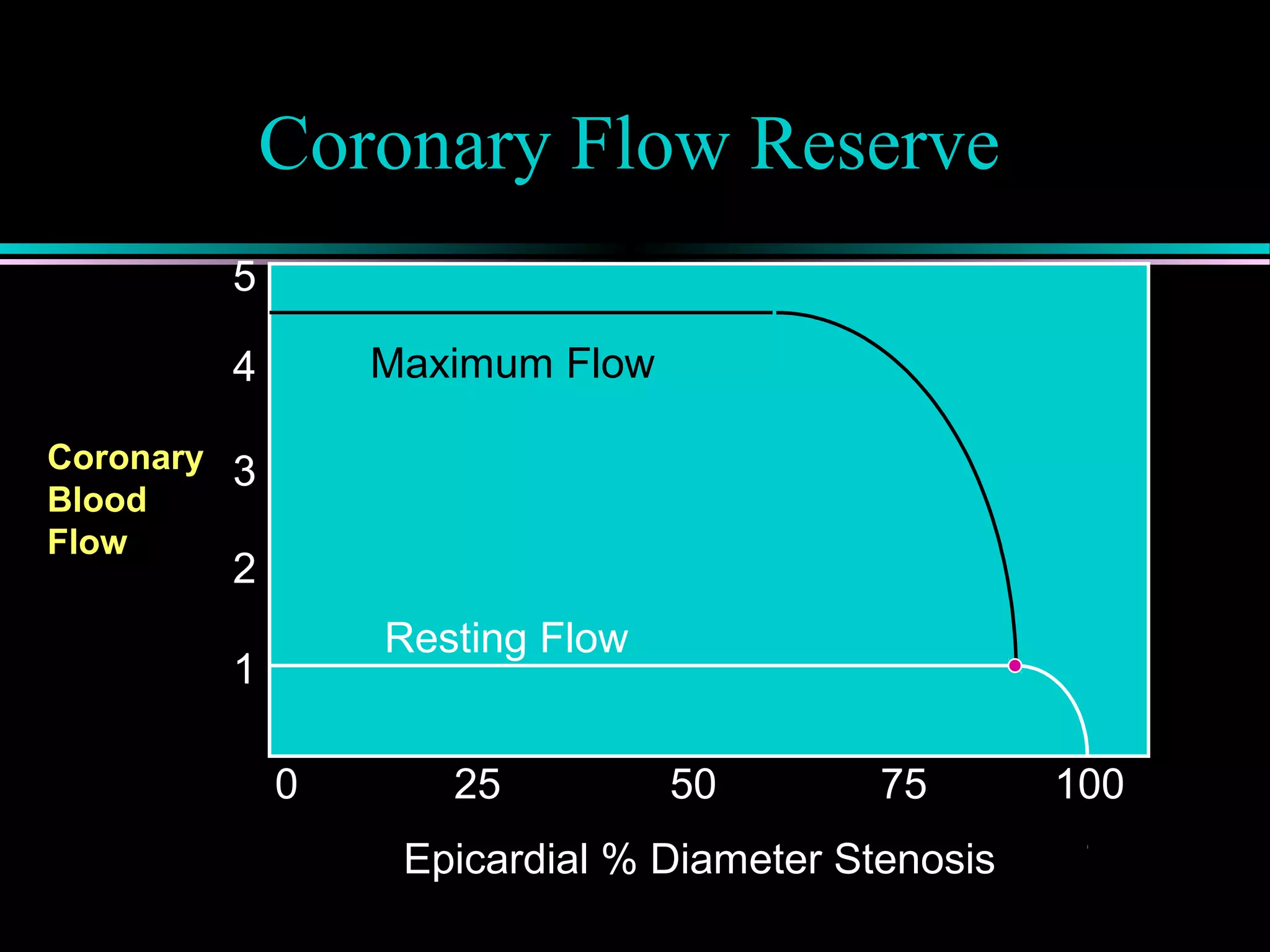
Coronary Flow Reserve
Arteriolar autoregulatory vasodilatory capacity in
response to increased MVO2 or pharmacologic
agents
Expressed as a ratio of Maximum flow / Baseline
flow
~ 4-5 / 1 (experimentally)
~ 2.25 - 2.5 (when measured clinically)
Coronary Flow Reserve
Stenosis in large epicardial (capacitance) vessel →
decreased perfusion pressure → arterioles
downstream dilate to maintain normal resting flow
As stenosis progresses, arteriolar dilation becomes
chronic, decreasing potential to augment flow and
thus decreasing CFR
Endocardial CFR < Epicardial CFR
As CFR approaches 1.0 (vasodilatory capacity
“maxxed out”), any further decrease in PP or increase
in MVO2 → ischemia
Coronary Flow Reserve
1
5
3
4
2
Epicardial % Diameter Stenosis
1000 50 7525
Maximum Flow
Resting Flow
Coronary
Blood
Flow
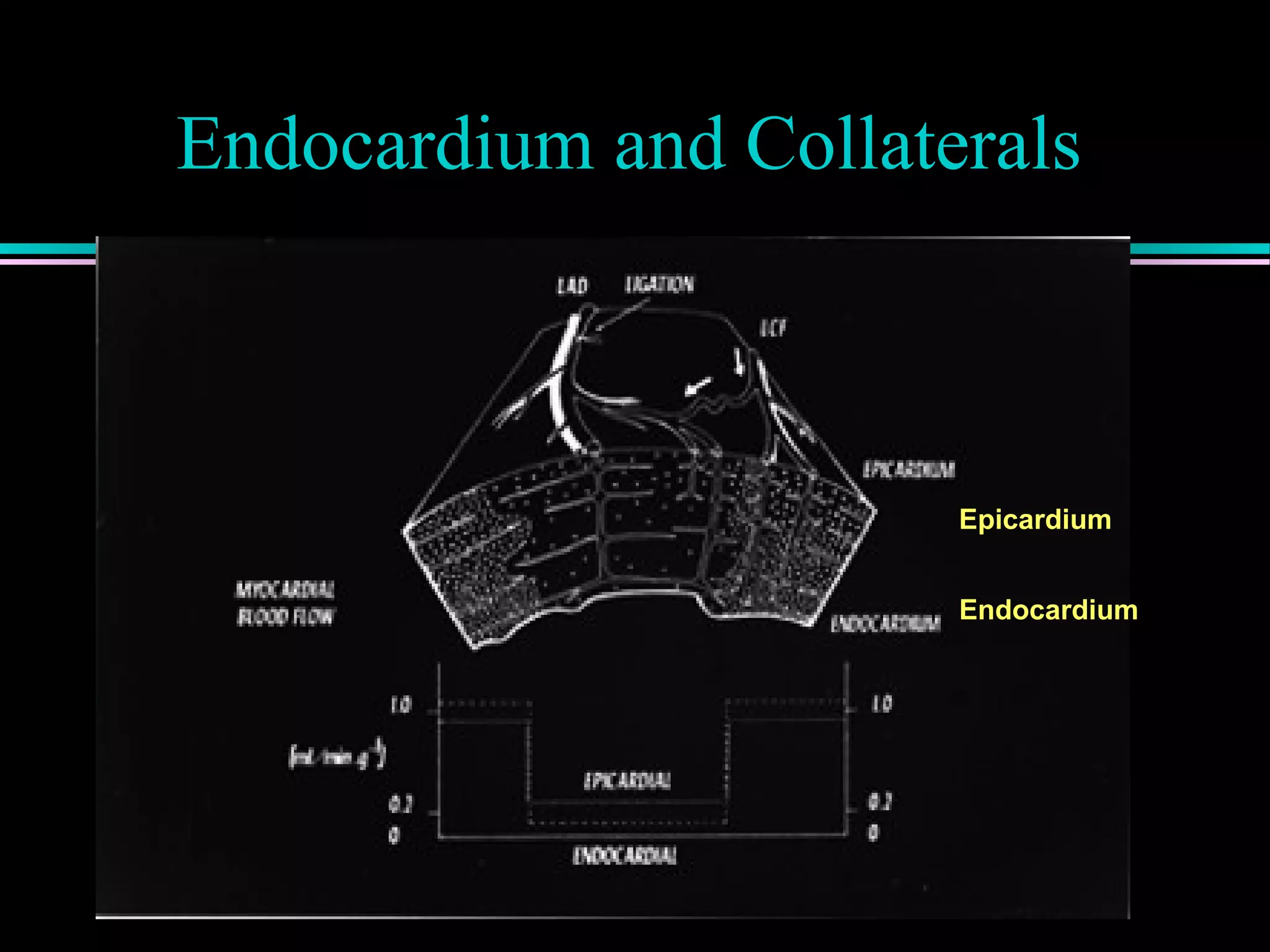
Endocardium and Collaterals
Epicardium
Endocardium
Coronary Steal
Vasodilator Rx (Ado)
R2 decreases
Flow increases to A
R3 - no reserve
Increased flow across
R1 GRT P1-2
No change in P1
P2
Flow to B is
dependant on P2 and
A
B
Sub-epicardium
Sub-endocardium
0
10
20
30
40
50
60
70
<25
25-40
>40
Age(years)
25%
50%
70%
% Donors
Clevelend Clinic Cardiac Transplant
Donor IVUS Data-Base
Prevalence of CAD in Modern
Society
Risk Factors
family History
cigarette smoking
diabetes mellitus
hypertension
hyperlipidemia
sedentary life-style
obesity
elevated homocysteine, LP-a ?
Coronary lesions in Men and Women,
Westernized and non-Westernized diets
Relationship between fat in diet and
serum cholesterol
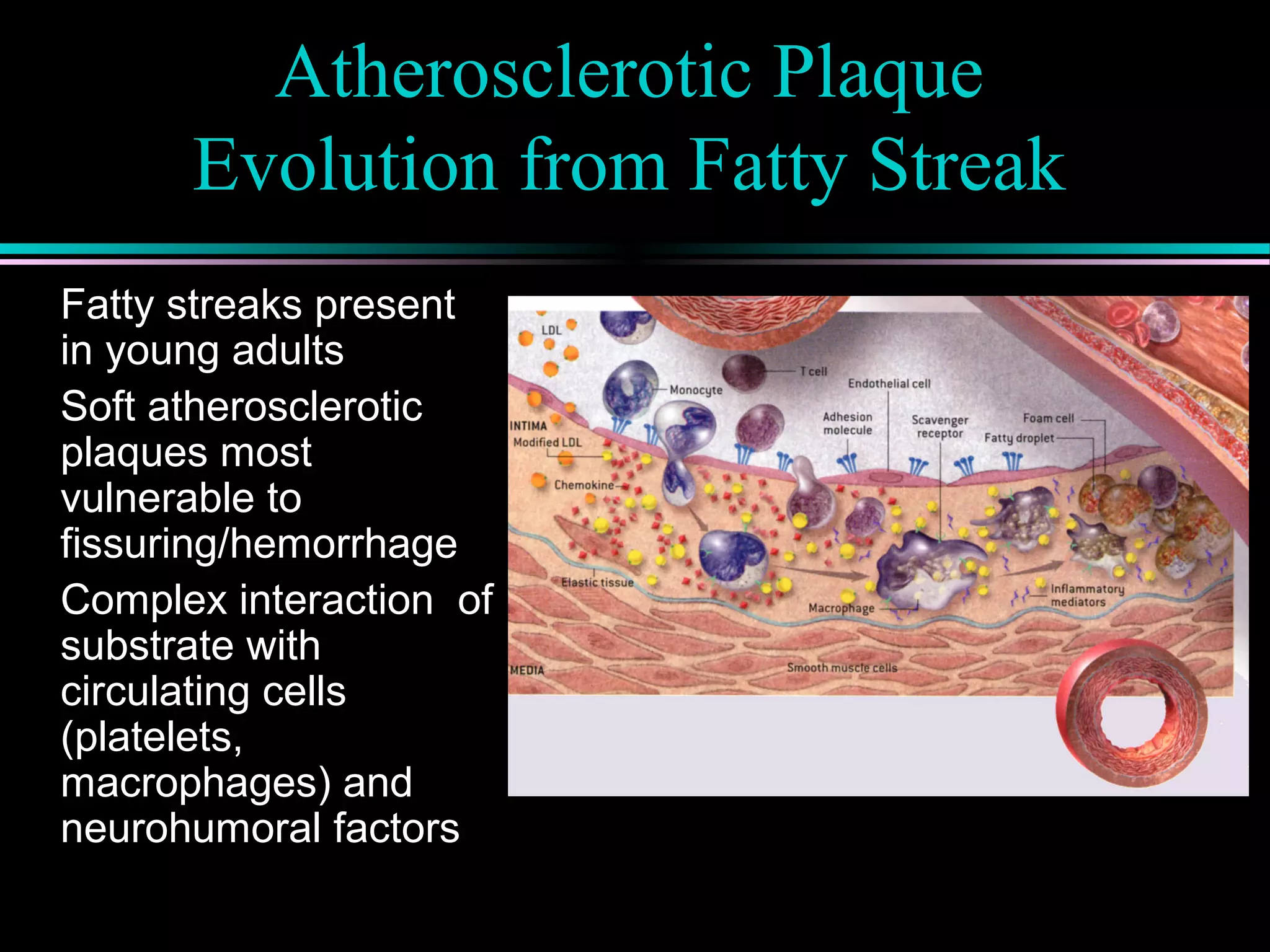
Atherosclerotic Plaque
Evolution from Fatty Streak
Fatty streaks present
in young adults
Soft atherosclerotic
plaques most
vulnerable to
fissuring/hemorrhage
Complex interaction of
substrate with
circulating cells
(platelets,
macrophages) and
neurohumoral factors
Plaque progression….
Fibrous cap
develops when
smooth muscle cells
migrate to intima,
producing a tough
fibrous matrix which
glues cells together
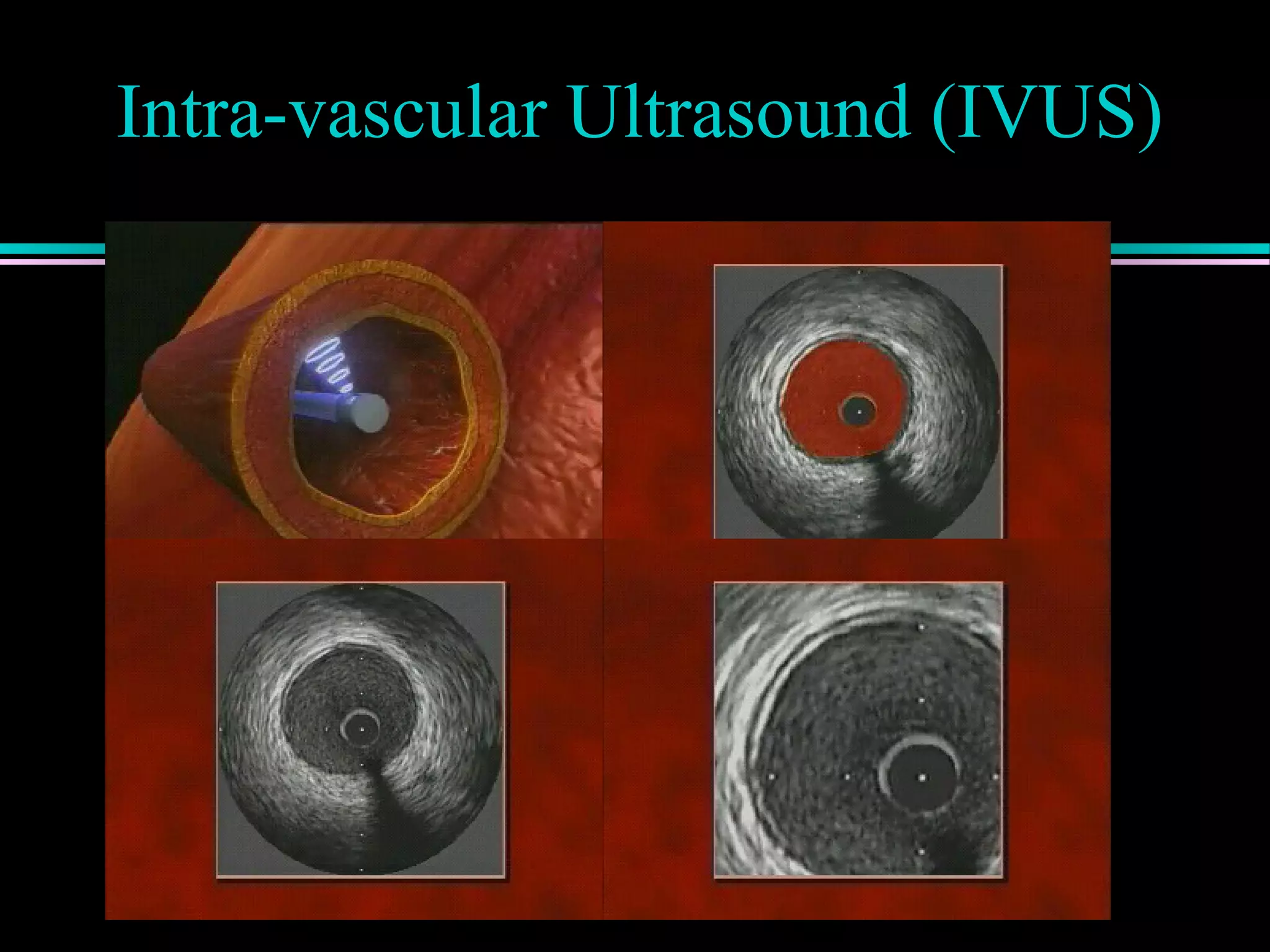
Intra-vascular Ultrasound (IVUS)
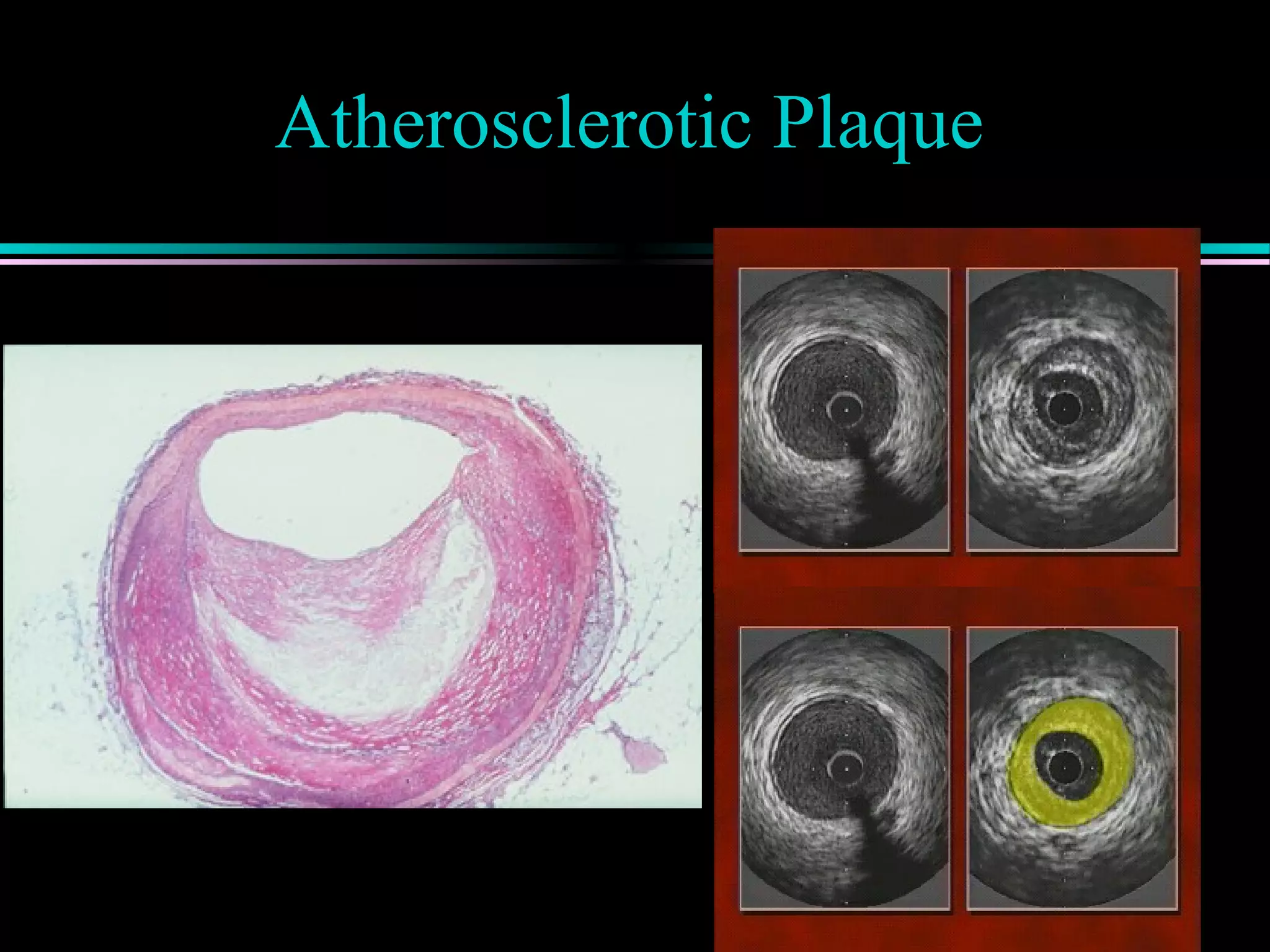
Atherosclerotic Plaque
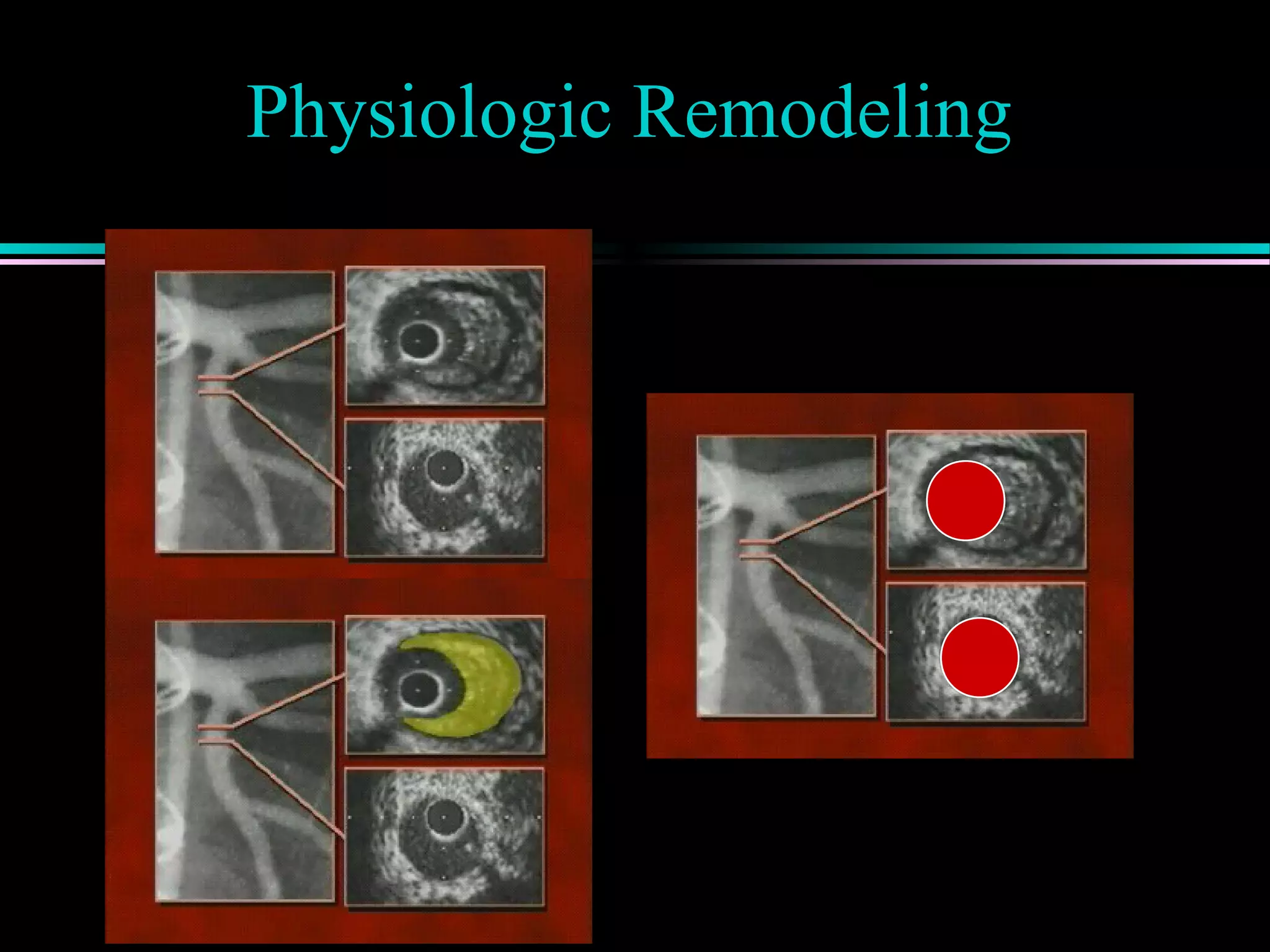
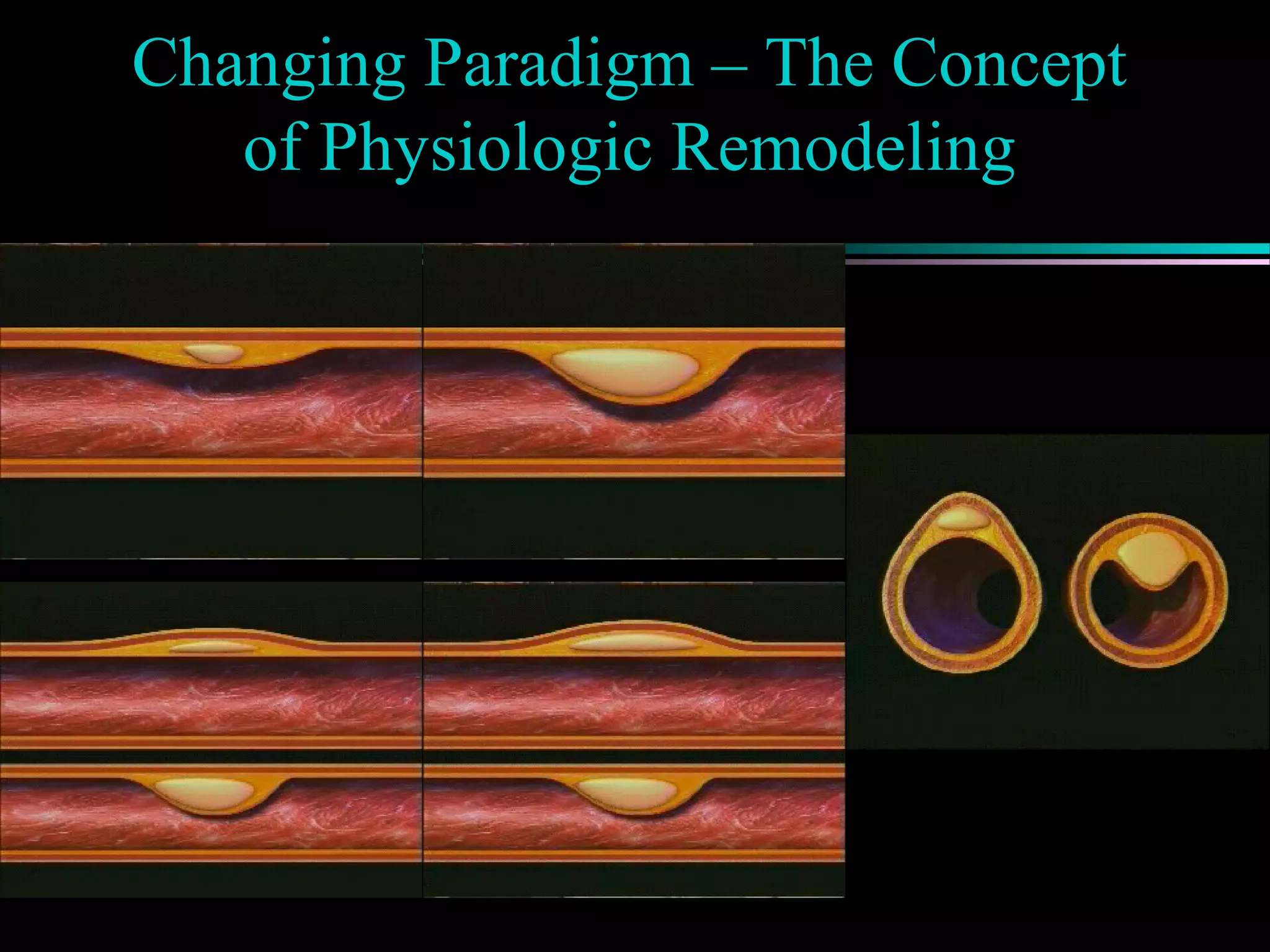
Physiologic Remodeling
Coronary atherosclerosis
Stable Angina - Symptoms
mid-substernal chest pain
squeezing, pressure-like in quality (closed fist =
Levine’s sign)
builds to a peak and lasts 2-20 minutes
radiation to left arm, neck, jaw or back
associated with shortness of breath, sweating, or
nausea
exacerbated by exertion, cold, meals or stress
relieved by rest, NTG
Symptoms and Signs:
Coronary Ischemia
Stable Angina - Diagnosis
Exercise Treadmill Test
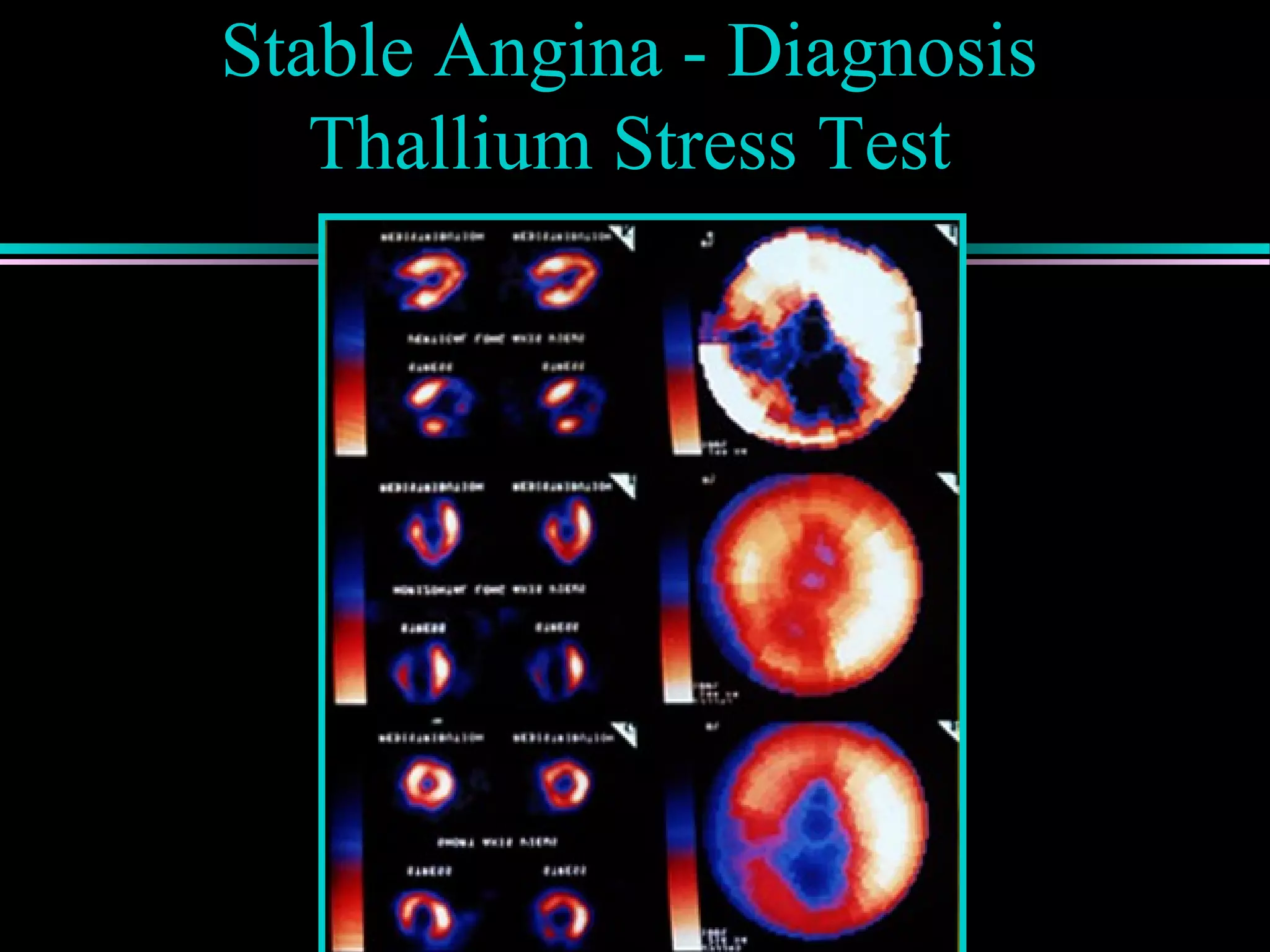
Stable Angina - Diagnosis
Thallium Stress Test
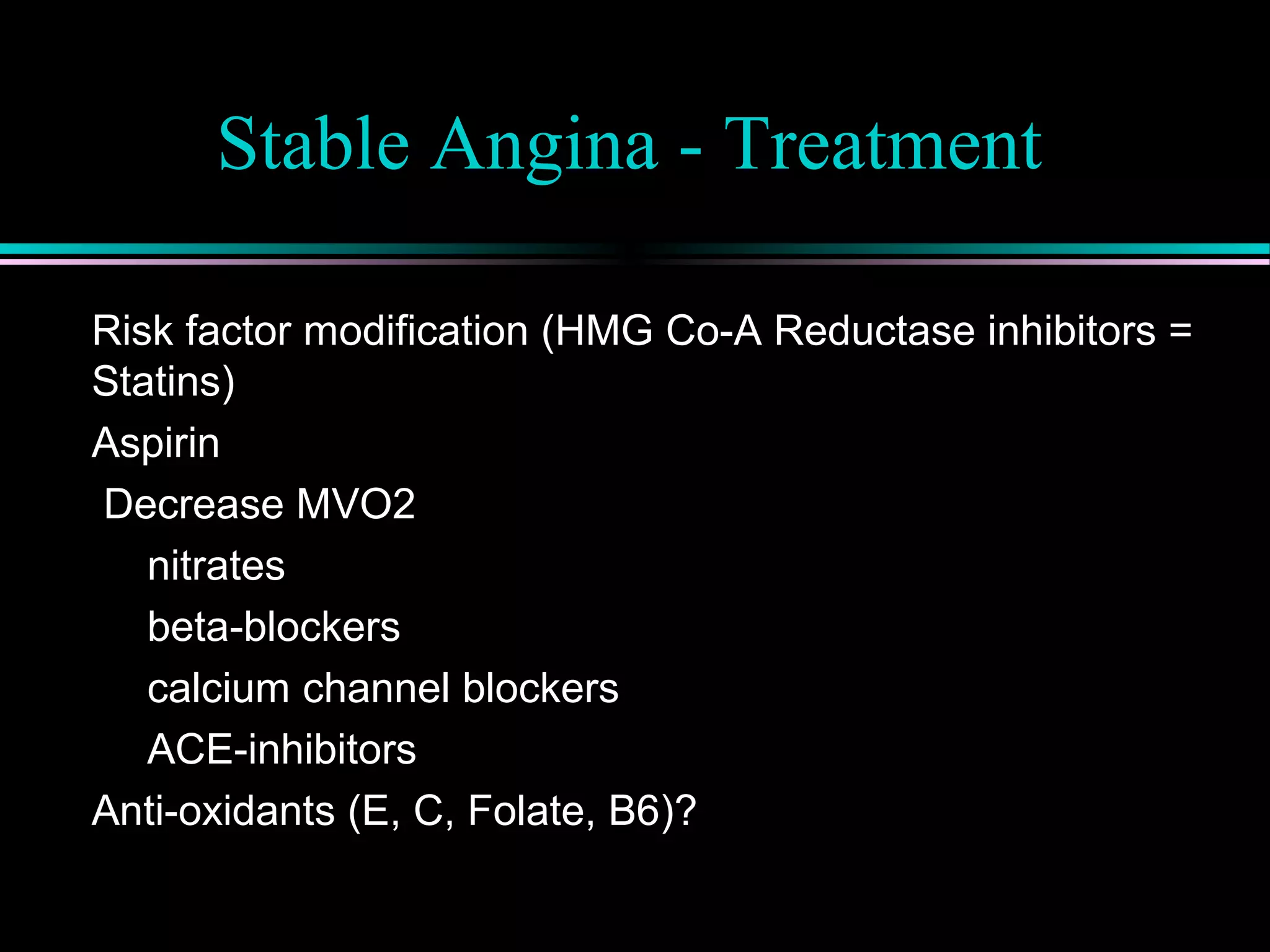
Stable Angina - Treatment
Risk factor modification (HMG Co-A Reductase inhibitors =
Statins)
Aspirin
Decrease MVO2
nitrates
beta-blockers
calcium channel blockers
ACE-inhibitors
Anti-oxidants (E, C, Folate, B6)?
Stable Angina - Treatment
Mechanical Dilation:
Angioplasty, Stent, etc.
Treatment of Stable Angina
-STENTS
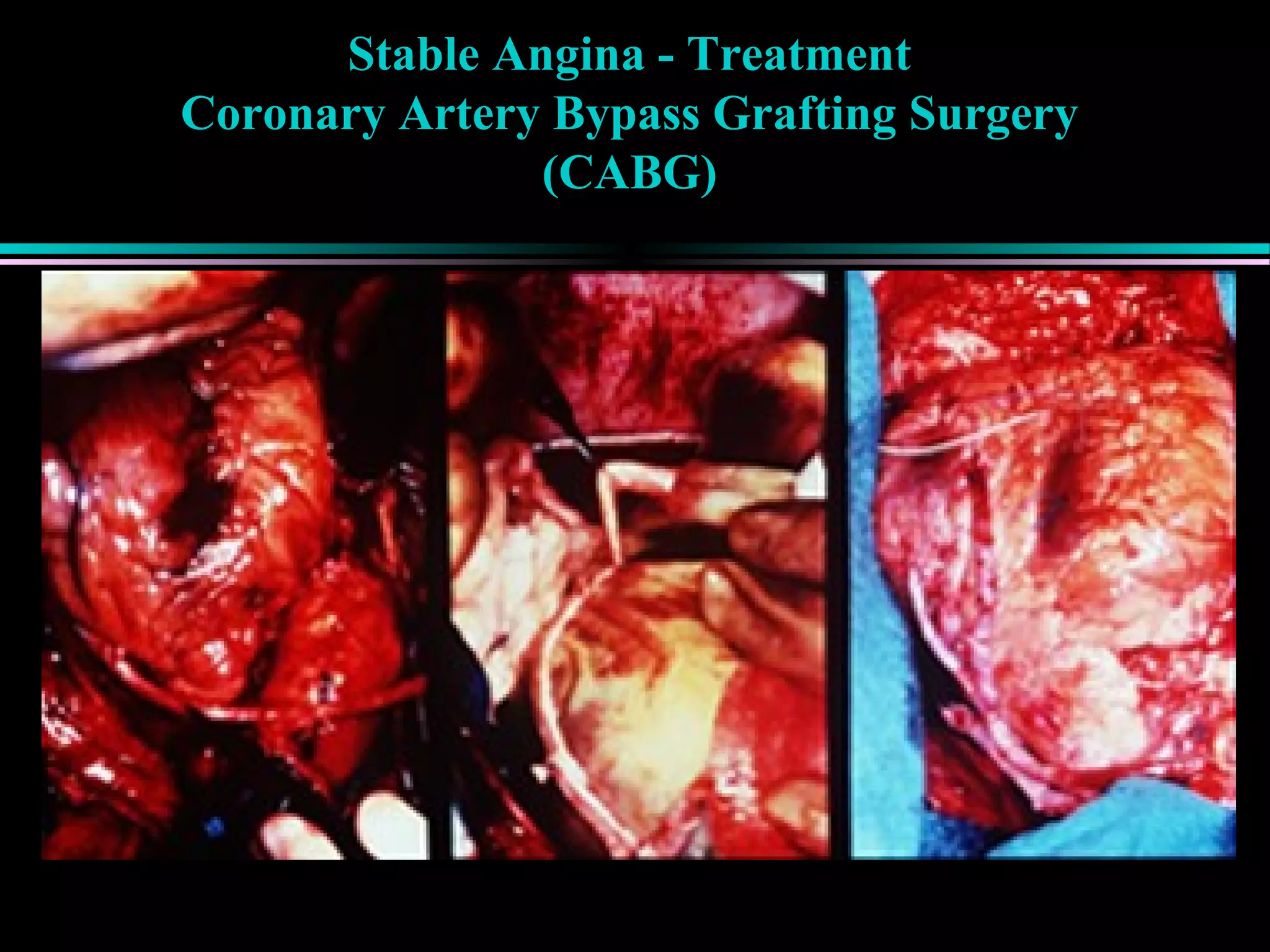
Stable Angina - Treatment
Coronary Artery Bypass Grafting Surgery
(CABG)
Schematic of an Unstable PlaqueSchematic of an Unstable Plaque
Unstable Plaque:
More Detail…….
Cross section of a
complicated plaque
Journey down a coronary…
Angiogram in unstable angina:
eccentric, ulcerated plaque
Angiogram in unstable angina:
after stent deployment
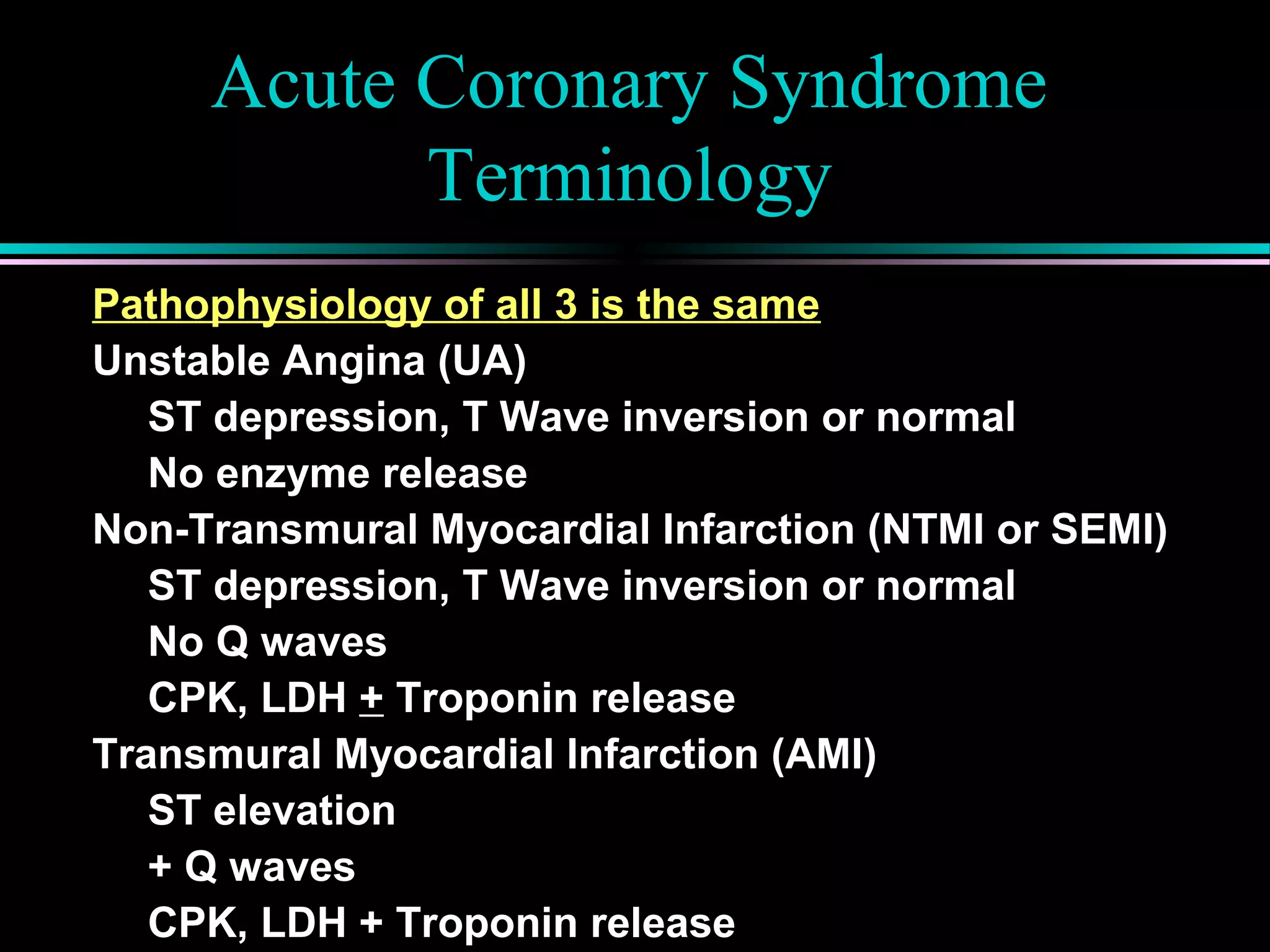
Acute Coronary Syndrome
Terminology
Pathophysiology of all 3 is the same
Unstable Angina (UA)
ST depression, T Wave inversion or normal
No enzyme release
Non-Transmural Myocardial Infarction (NTMI or SEMI)
ST depression, T Wave inversion or normal
No Q waves
CPK, LDH + Troponin release
Transmural Myocardial Infarction (AMI)
ST elevation
+ Q waves
CPK, LDH + Troponin release
Pathophysiology of the Acute
Coronary Syndrome (UA,MI)
Plaque vulnerability and extrinsic
triggers result in plaque rupture
Platelet adherence, aggregation and
activation of the coagulation cascade
with polymerization of fibrin
Thrombosis with sub-total (UA, NTMI) or
total coronary artery occlusion (AMI)
Pathophysiology of Acute
Coronary Syndromes
Pathophysiology of Acute
Coronary Syndromes
“Vulnerable Plaque”
>70
50-70
<50
% Stenosis
68%
18%
14%
Coronary Stenosis Severity Prior to
Myocardial Infarction
Falk et al, Circulation 1995; 92: 657-71
Acute Coronary Syndrome
Unstable Angina / Myocardial Infarction
Symptoms
new onset angina
increase in frequency, duration or
severity
decrease in exertion required to provoke
any prolonged episode (>10-15min)
failure to abate with >2-3 S.L. NTG
onset at rest or awakening from sleep
Unstable Angina -
High Risk Features
prolonged rest pain
dynamic EKG changes (ST depression)
age > 65
diabetes mellitus
left ventricular systolic dysfunction
angina associated with congestive heart
failure, new murmur, arrhythmias or
hypotension
elevated Troponin i or t
Unstable Angina / NTMI
Pharmacologic Therapy
ASA and Heparin beneficial for acute
coronary syndromes ( UA, NTMI, AMI)
Decrease MVO2 with Nitrates, Beta-
blockers, Ca channel blockers, and Ace
inhibitors
consider platelet glycoprotein 2b / 3a
inhibitor and / or low molecular weight
heparin
Anti-Platelet Therapy
Three principle pathways of platelet
activation with >100 agonists: ( TXA2,
ADP, Thrombin )
Final common pathway for platelet
activation / aggregation involves
membrane GP II b / III A receptor
Fibrinogen molecules cross-bridge
receptor on adjacent platelets to form a
scaffold for the hemostatic plug
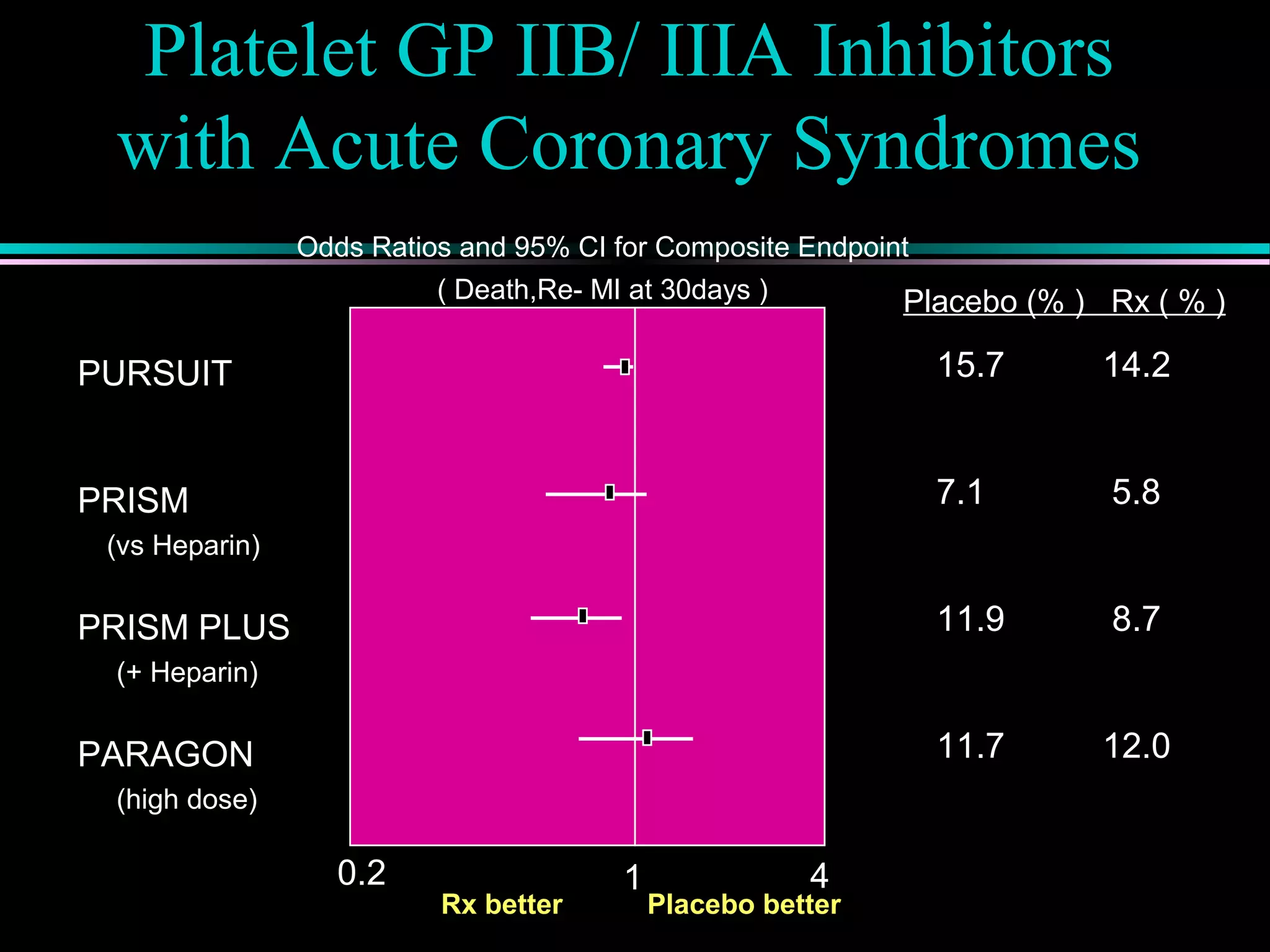
Platelet GP IIB/ IIIA Inhibitors
with Acute Coronary Syndromes
Odds Ratios and 95% CI for Composite Endpoint
( Death,Re- MI at 30days )
0.2 1 4
PURSUIT
PRISM
(vs Heparin)
PRISM PLUS
(+ Heparin)
PARAGON
(high dose)
15.7 14.2
7.1 5.8
11.9 8.7
11.7 12.0
Placebo (% ) Rx ( % )
Rx better Placebo better
Low Molecular Weight Heparin
in Acute Coronary Syndromes
Odds Ratios and 95% CI for Composite Endpoint
( Death, MI, Re-angina or Revasc at 6-14 days )
0.2 1 4
FRISC
FRIC
ESSENCE
TIMI 11b
10.3 5.4
7.6 9.3
19.8 16.6
16.6 14.2
UH / Placebo Rx
(%) (%)
LMWH Better UH Better
Acute Myocardial Infarction
total thrombotic occlusion of epicardial coronary
artery → onset of ischemic cascade
prolonged ischemia → altered myocardial cell
structure and eventual cell death (release of enzymes
- CPK, LDH, Troponin)
altered structure → altered function (relaxation and
contraction)
consequences of altered function often include
exacerbation of ischemia (ischemia begets ischemia)
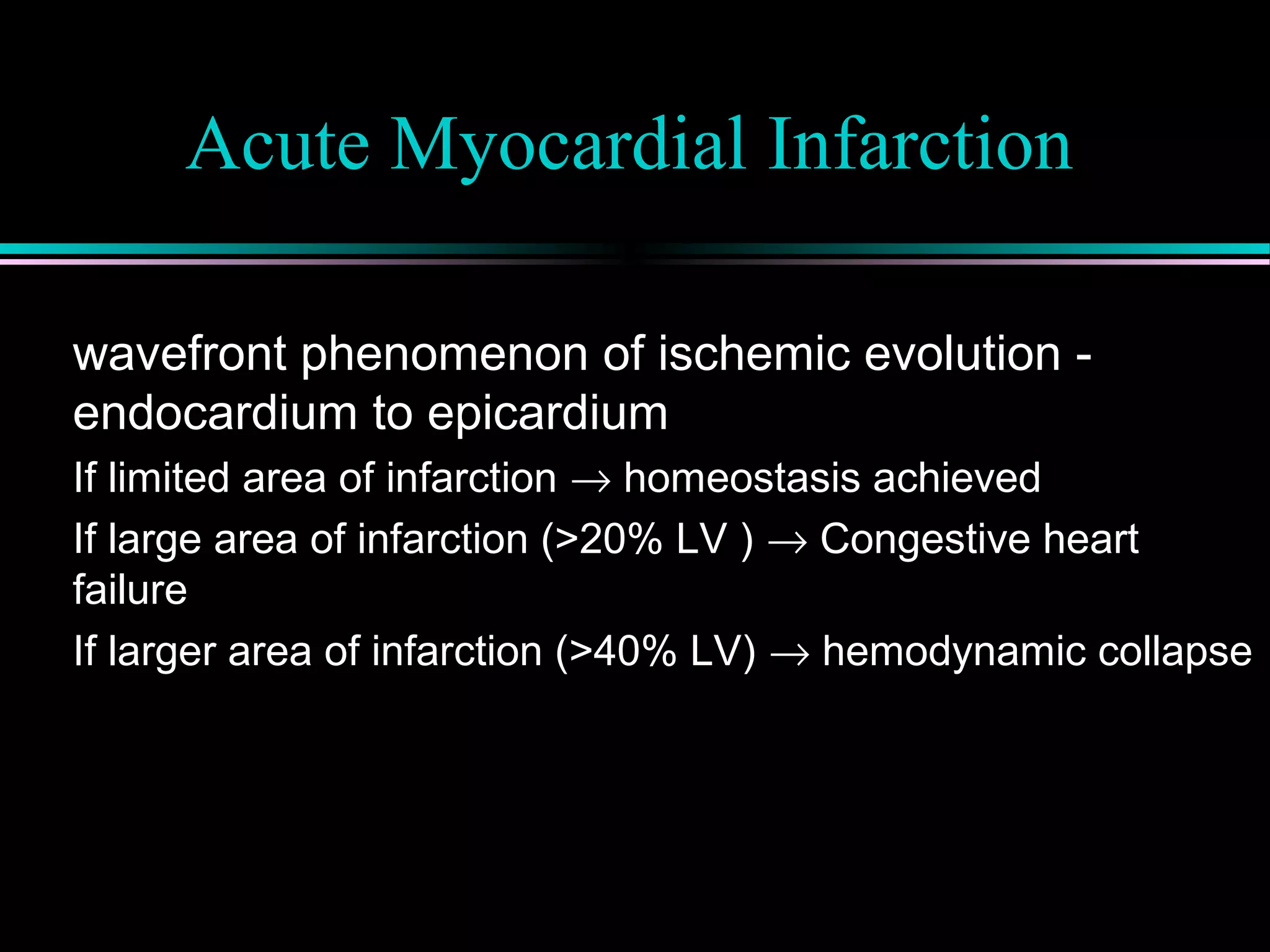
Acute Myocardial Infarction
wavefront phenomenon of ischemic evolution -
endocardium to epicardium
If limited area of infarction → homeostasis achieved
If large area of infarction (>20% LV ) → Congestive heart
failure
If larger area of infarction (>40% LV) → hemodynamic collapse
AMI - Wavefront Phenomenon
Acute Myocardial Infarction
Non-transmural /
sub-endocardial
Non-occlusive
thrombus or
spontaneous re-
perfusion
EKG – ST depression
Some enzymatic
release – troponin i
most sensitive
Transmural
total, prolonged
occlusion
EKG - ST elevation
Rx - Thrombolytic
Therapy or Cath
Lab / PTCA
Cardiac enzymes: overview
Legend: A. Early CPK-MB isoforms after acute MI
B. Cardiac troponin after acute MI
C. CPK-MB after acute MI
D. Cardiac troponin after unstable angina
Markers of MI: Troponin I
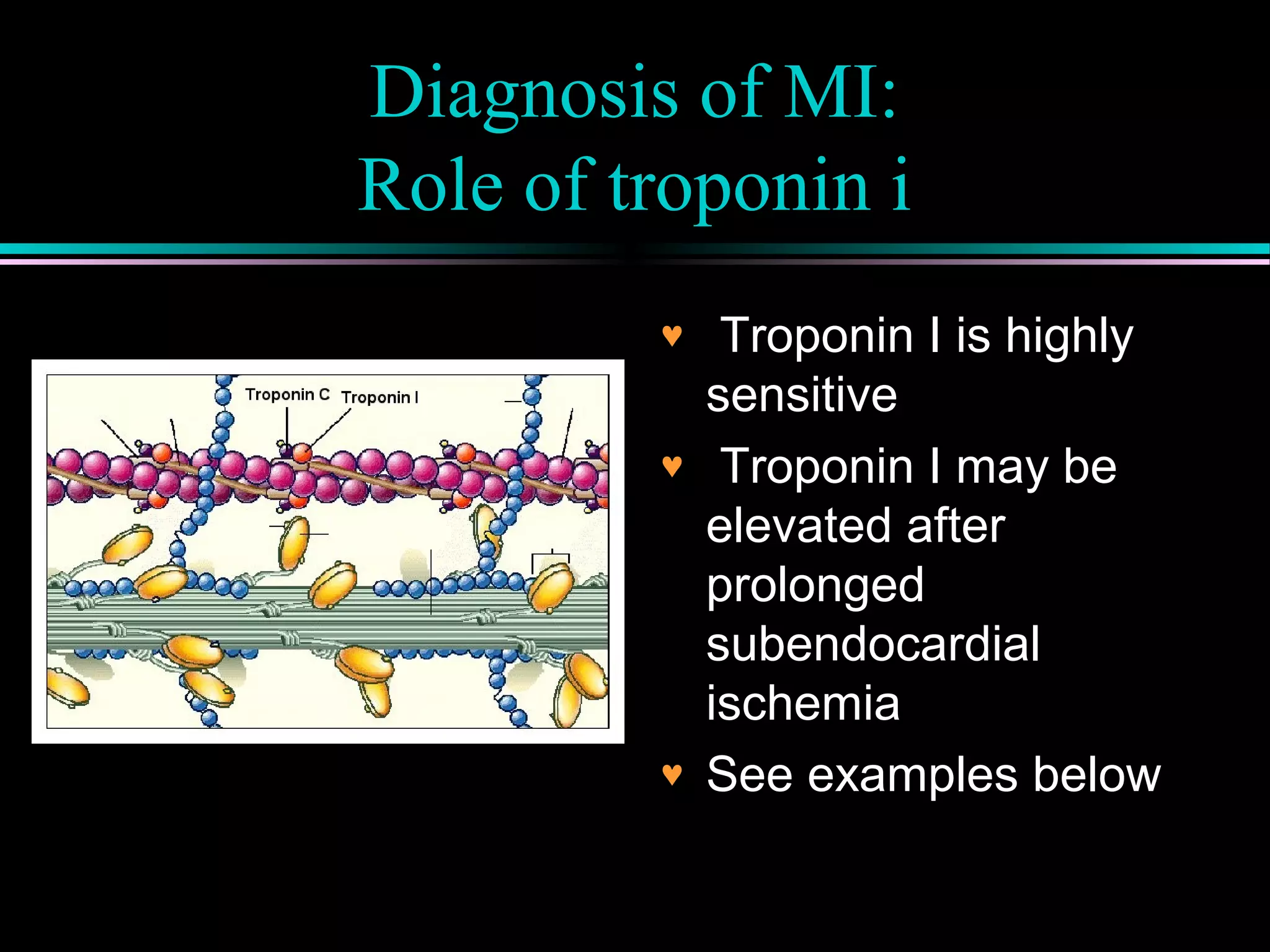
Diagnosis of MI:
Role of troponin i
♥ Troponin I is highly
sensitive
♥ Troponin I may be
elevated after
prolonged
subendocardial
ischemia
♥ See examples below
Causes of Troponin elevation
Any cause of prolonged (>15 – 20
minutes) subendocardial ischemia
Prolonged angina pectoris
Prolonged tachycardia in setting of CAD
Congestive heart failure (elevated LVEDP
causing decreased subendocardial
perfusion)
Hypoxia, coupled with CAD
“aborted” MI (lytic therapy or spontaneous
clot lysis)
EKG diagnosis of MI
ST segment
elevation
ST segment
depression
T wave inversion
Q wave formation
Consequences of Ischemia
(Ischemia begets Ischemia)
chest pain
systolic dysfunction (loss of contraction)
decrease cardiac output
decrease coronary perfusion pressure
diastolic dysfunction (loss of relaxation)
higher pressure (PCWP) for any given volume
dyspnea, decrease pO2, decrease O2 delivery
increased wall tension (increased MVO2)
All 3 give rise to stimulation of sympathetic nervous system with subsequent
catecholamine release- increased heart rate and blood pressure (increased MVO2)
Ischemic Cycle
Ischemia / infarction
chest pain
Diastolic Dysfunction Systolic Dysfunction
cardiac output
catecholamines
MVO2
wall tension
LV diastolic pressurepulmonary
congestion
pO2
(heart rate, BP)
Treatment of Acute Myocardial Infarction
aspirin, heparin, analgesia, oxygen
reperfusion therapy
thrombolytic therapy (t-PA, SK, n-PA, r- PA)
new combinations ( t-PA, r-PA + 2b / 3a inhib)
cath lab (PTCA, stent)
decrease MVO2
nitrates, beta blockers and ACE inhibitors
for high PCWP - diuretics
for low Cardiac Output - pressors (dopamine, levophed,
dobutamine; IABP; early catheterization
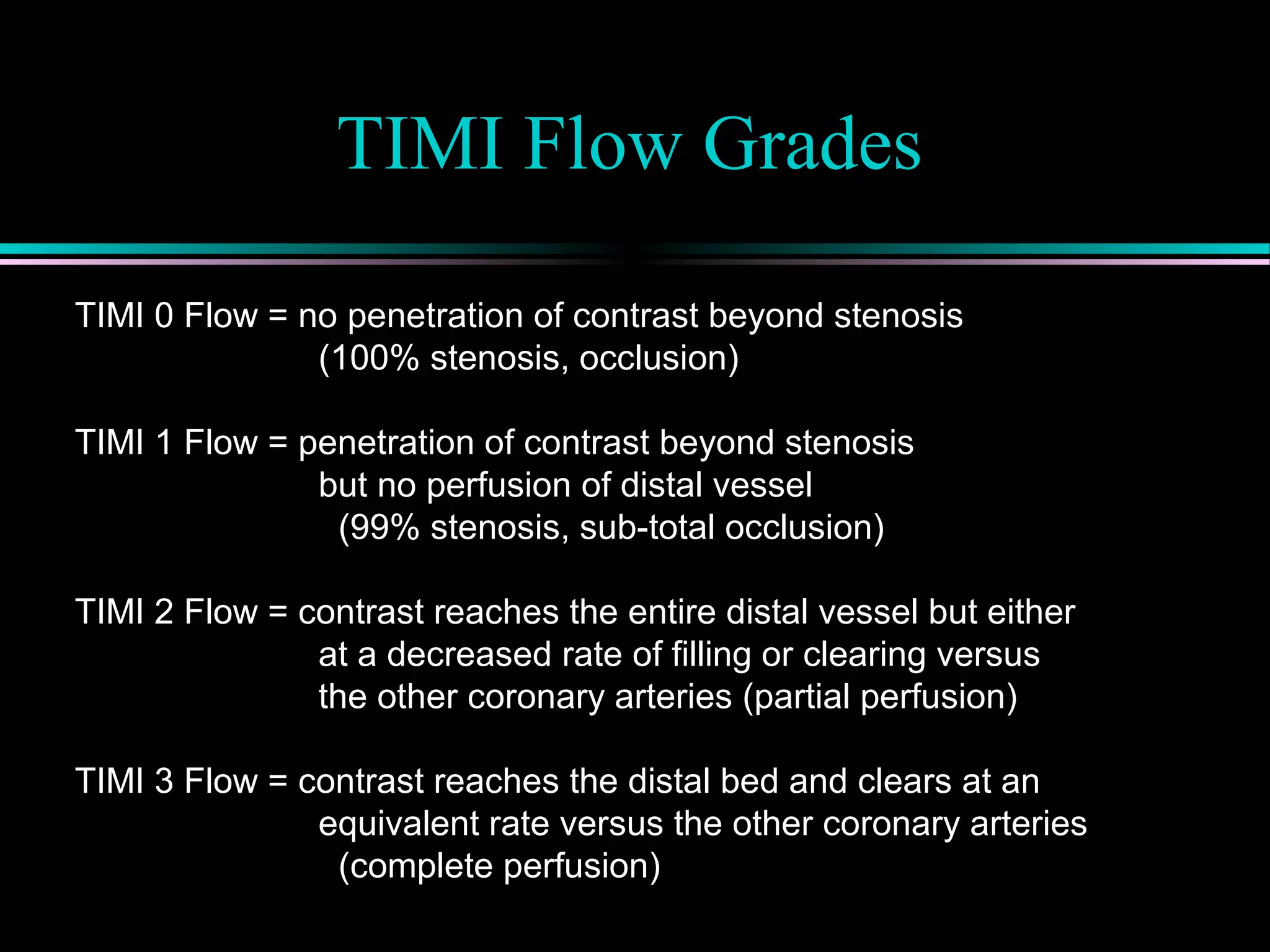
TIMI Flow Grades
TIMI 0 Flow = no penetration of contrast beyond stenosis
(100% stenosis, occlusion)
TIMI 1 Flow = penetration of contrast beyond stenosis
but no perfusion of distal vessel
(99% stenosis, sub-total occlusion)
TIMI 2 Flow = contrast reaches the entire distal vessel but either
at a decreased rate of filling or clearing versus
the other coronary arteries (partial perfusion)
TIMI 3 Flow = contrast reaches the distal bed and clears at an
equivalent rate versus the other coronary arteries
(complete perfusion)
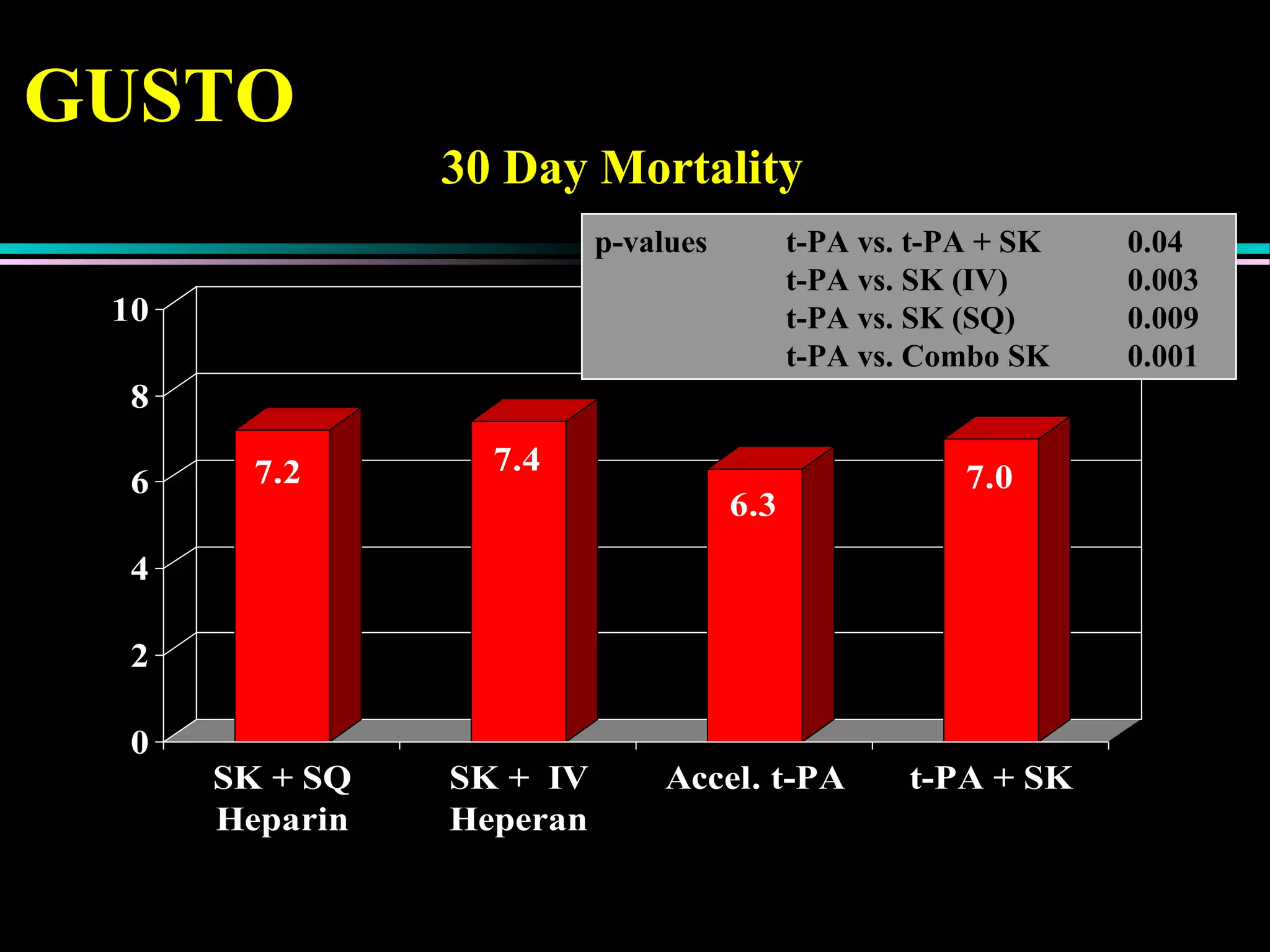
GUSTO
7.2 7.4
6.3
7.0
0
2
4
6
8
10
SK + SQ
Heparin
SK + IV
Heperan
Accel. t-PA t-PA + SK
N: 9,796 10,376 10,344 10,327
p-values t-PA vs. t-PA + SK 0.04
t-PA vs. SK (IV) 0.003
t-PA vs. SK (SQ) 0.009
t-PA vs. Combo SK 0.001
30 Day Mortality
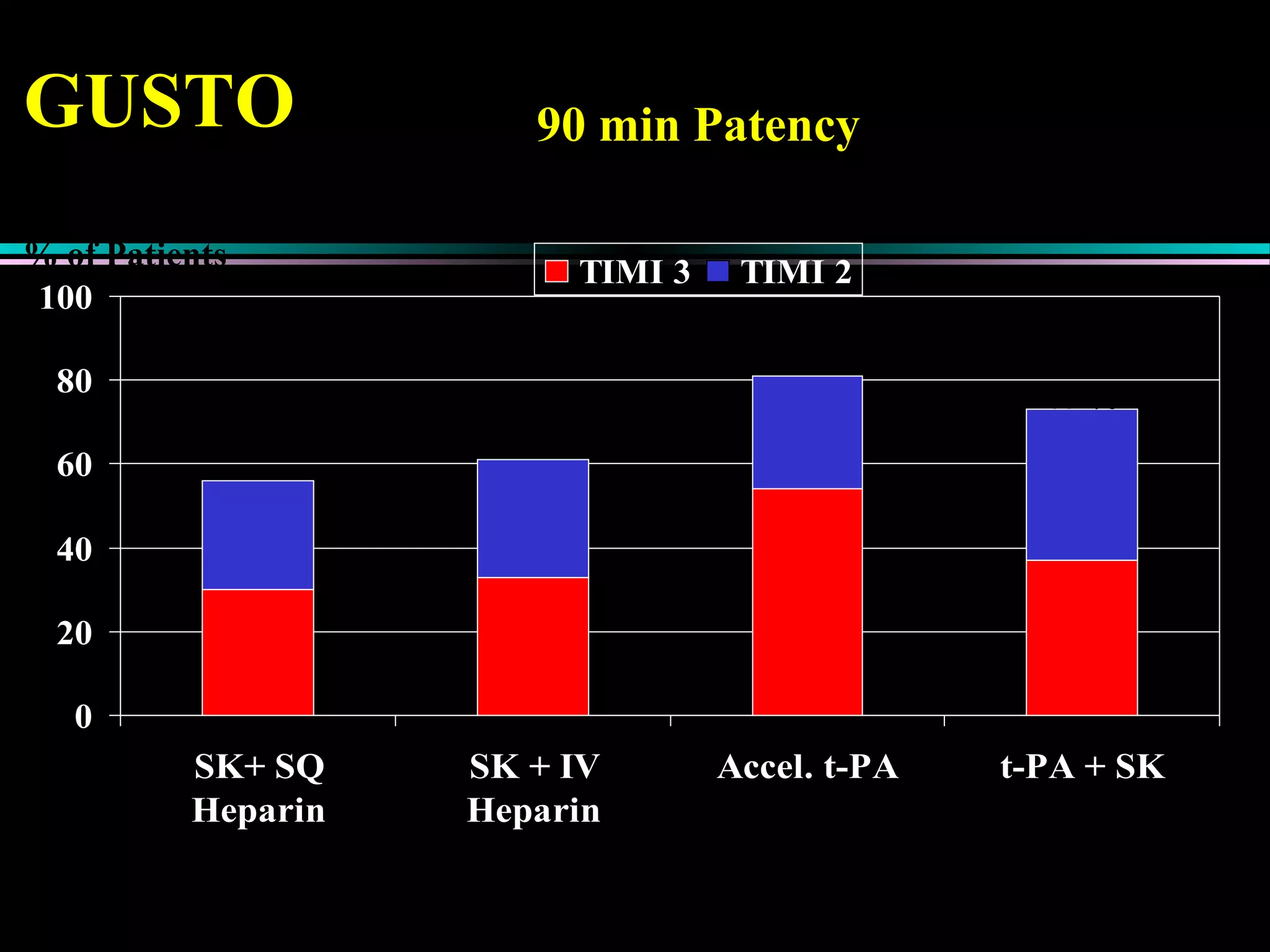
GUSTO
0
20
40
60
80
100
SK+ SQ
Heparin
SK + IV
Heparin
Accel. t-PA t-PA + SK
TIMI 3 TIMI 2
p < 0.001 p < 0.001
56 % 61 %
81 % *
73 %
% of Patients
N: 295 282 291 297
p = < 0.001 for Accelerated t-PA vs. all other arms
90 min Patency
TIMI Flow Grade Versus
Mortality (GUSTO)
0
12
6
3
9
% of
Patients
TIMI 0 TIMI 1 TIMI 2 TIMI 3
N 259 81 342 447
Mortality
4.3
7.9
9.99.7
p=0.01
p=0.05
Coronary Steal
Role of Collaterals
P1 P1P2 P2
Rest Adenosine
Assumptions
Collateral resistance
P1 drops with vasodil
P2 bed with no vaso
dilator reserve
Flow Flow
collateral collateral
Changing Paradigm – The Concept
of Physiologic Remodeling

Ischemia

  • 1.
    Ischemic Heart Diseaseand Myocardial Infarction Pathophysiology of Myocardial Ischemia Bio-Med 350 September 2004
  • 2.
    Physiology and Pathophysiologyof Coronary Blood Flow / Ischemia Basic Physiology / Determinants of MVO2 Autoregulatory Mechanisms / Coronary Flow Reserve Pathophysiology of Coronary Ischemia and Atherosclerosis Clinical Syndromes Stable Angina Acute Coronary Syndromes – Unstable Angina – Acute MI (UA, AMI)
  • 3.
  • 4.
    Basic Principles myocardial cellshave to do only 2 things: contract and relax; both are aerobic, O2 requiring processes oxygen extraction in the coronary bed is maximal in the baseline state; therefore to increase O2 delivery, flow must increase large visible epicardial arteries are conduit vessels not responsible for resistance to flow (when normal)
  • 5.
    Basic Principles small, distalarterioles make up the major resistance to flow in the normal state atherosclerosis (an abnormal state) affects the proximal, large epicardial arteries once arteries are stenotic (narrowed) resistance to flow increases unless distal, small arterioles are able to dilate to compensate
  • 6.
    Myocardial Ischemia: Occurs whenmyocardial oxygen demand exceeds myocardial oxygen supply
  • 7.
    Myocardial Ischemia: Occurs whenmyocardial oxygen demand exceeds myocardial oxygen supply MVO2 = Myocardial Oxygen Demand MVO2 determined by: Heart Rate Contractility Wall Tension
  • 8.
    MVO2 (Myocardial OxygenDemand) Increases directly in proportion to heart rate Increases with increased contractility Increases with increased Wall Tension: i.e. increases with increasing preload or afterload
  • 9.
    Heart Rate 100 150200 cc/min /100g MVO2 2 10 6 8 4 Heart Rate (BPM)
  • 10.
    Contractility Peak Developed Tension(g/cm2) MVO2 (cc/min /100g) 10 0 5 Norepinephrine Control
  • 11.
    Wall Tension Is relatedto Pressure x Radius Wall Thickness Defined as: Force per unit area generated in the LV throughout the cardiac cycle Afterload - LV systolic pressure Preload - LV end-diastolic pressure or volume
  • 12.
    Myocardial Ischemia: Occurs whenmyocardial oxygen demand exceeds myocardial oxygen supply
  • 13.
    Myocardial Oxygen Supply Determinedby: Coronary Blood Flow & O2 Carrying Capacity  Oxygen saturation of the blood  Hemoglobin content of the blood ( Flow = Pressure / Resistance)  Coronary perfusion pressure  Coronary vascular resistance
  • 14.
    Coronary Blood Flow Proportionalto perfusion pressure / resistance Coronary Perfusion pressure = Diastolic blood pressure, minus LVEDP Coronary Vascular resistance  external compression  intrinsic regulation  Local metabolites  Endothelial factors  Neural factors (esp. sympathetic nervous system)
  • 15.
  • 16.
    Endocardium vs Epicardium Greatershortening / thickening, higher wall tension: increased MVO2 Greater compressive resistance ? Decreased Perfusion Pressure Less collateral circulation Net Result is more compensatory arteriolar vasodilatation at baseline and therefore decreased CFR
  • 17.
    Autoregulatory Resistance Major componentof resistance to flow Locus at arteriolar level Adjusts flow to MVO2 Metabolic control Oxygen Adenosine , ADP NO (nitric oxide) Lactate , H+ Histamine, Bradykinin
  • 18.
    Autoregulatory Resistance Myocardial musclecell - produces byproducts of aerobic metabolism (lactate,adenosine, etc) Vascular endothelial cell (arteriole) - reacts to metabolic byproducts Vascular smooth muscle cell (arteriole) - signaled by endothelial cell to contract (vessel constriction) or relax (vessel dilation) Involves 3 different cells
  • 19.
    Autoregulation of Coronary BloodFlow Oxygen  Acts as vasoconstrictor  As O2 levels drop during ischemia: pre- capillary vasodilation and increased myocardial blood supply Adenosine  Potent vasodilator  Prime mediator of coronary vascular tone  Binds to receptors on vascular smooth muscle, decreasing calcium entry into cell
  • 20.
    Adenosine During hypoxemia, aerobicmetabolism in mitochondria is inhibited Accumulation of ADP and AMP Production of adenosine Adenosine vasodilates arterioles Increased coronary blood flow
  • 21.
    Autoregulatory Resistance Coronary PerfusionPressure (mmHg) Flow cc/100g /min 60 130100 11580 Control Adenosine 0 200 100
  • 22.
    Autoregulators Other endothelial- derived factors contributeto autoregulation  Dilators include: EDRF (NO) Prostacyclin  Constrictors include: Endothelin-1
  • 23.
    Coronary Flow Reserve Arteriolarautoregulatory vasodilatory capacity in response to increased MVO2 or pharmacologic agents Expressed as a ratio of Maximum flow / Baseline flow ~ 4-5 / 1 (experimentally) ~ 2.25 - 2.5 (when measured clinically)
  • 24.
    Coronary Flow Reserve Stenosisin large epicardial (capacitance) vessel → decreased perfusion pressure → arterioles downstream dilate to maintain normal resting flow As stenosis progresses, arteriolar dilation becomes chronic, decreasing potential to augment flow and thus decreasing CFR Endocardial CFR < Epicardial CFR As CFR approaches 1.0 (vasodilatory capacity “maxxed out”), any further decrease in PP or increase in MVO2 → ischemia
  • 25.
    Coronary Flow Reserve 1 5 3 4 2 Epicardial% Diameter Stenosis 1000 50 7525 Maximum Flow Resting Flow Coronary Blood Flow
  • 26.
  • 27.
    Coronary Steal Vasodilator Rx(Ado) R2 decreases Flow increases to A R3 - no reserve Increased flow across R1 GRT P1-2 No change in P1 P2 Flow to B is dependant on P2 and A B Sub-epicardium Sub-endocardium
  • 28.
    0 10 20 30 40 50 60 70 <25 25-40 >40 Age(years) 25% 50% 70% % Donors Clevelend ClinicCardiac Transplant Donor IVUS Data-Base Prevalence of CAD in Modern Society
  • 29.
    Risk Factors family History cigarettesmoking diabetes mellitus hypertension hyperlipidemia sedentary life-style obesity elevated homocysteine, LP-a ?
  • 30.
    Coronary lesions inMen and Women, Westernized and non-Westernized diets
  • 31.
    Relationship between fatin diet and serum cholesterol
  • 32.
    Atherosclerotic Plaque Evolution fromFatty Streak Fatty streaks present in young adults Soft atherosclerotic plaques most vulnerable to fissuring/hemorrhage Complex interaction of substrate with circulating cells (platelets, macrophages) and neurohumoral factors
  • 33.
    Plaque progression…. Fibrous cap developswhen smooth muscle cells migrate to intima, producing a tough fibrous matrix which glues cells together
  • 34.
  • 35.
  • 36.
  • 37.
  • 38.
    Stable Angina -Symptoms mid-substernal chest pain squeezing, pressure-like in quality (closed fist = Levine’s sign) builds to a peak and lasts 2-20 minutes radiation to left arm, neck, jaw or back associated with shortness of breath, sweating, or nausea exacerbated by exertion, cold, meals or stress relieved by rest, NTG
  • 39.
  • 40.
    Stable Angina -Diagnosis Exercise Treadmill Test
  • 41.
    Stable Angina -Diagnosis Thallium Stress Test
  • 42.
    Stable Angina -Treatment Risk factor modification (HMG Co-A Reductase inhibitors = Statins) Aspirin Decrease MVO2 nitrates beta-blockers calcium channel blockers ACE-inhibitors Anti-oxidants (E, C, Folate, B6)?
  • 43.
    Stable Angina -Treatment Mechanical Dilation: Angioplasty, Stent, etc.
  • 44.
    Treatment of StableAngina -STENTS
  • 45.
    Stable Angina -Treatment Coronary Artery Bypass Grafting Surgery (CABG)
  • 46.
    Schematic of anUnstable PlaqueSchematic of an Unstable Plaque
  • 47.
  • 48.
    Cross section ofa complicated plaque
  • 49.
    Journey down acoronary…
  • 50.
    Angiogram in unstableangina: eccentric, ulcerated plaque
  • 51.
    Angiogram in unstableangina: after stent deployment
  • 52.
    Acute Coronary Syndrome Terminology Pathophysiologyof all 3 is the same Unstable Angina (UA) ST depression, T Wave inversion or normal No enzyme release Non-Transmural Myocardial Infarction (NTMI or SEMI) ST depression, T Wave inversion or normal No Q waves CPK, LDH + Troponin release Transmural Myocardial Infarction (AMI) ST elevation + Q waves CPK, LDH + Troponin release
  • 53.
    Pathophysiology of theAcute Coronary Syndrome (UA,MI) Plaque vulnerability and extrinsic triggers result in plaque rupture Platelet adherence, aggregation and activation of the coagulation cascade with polymerization of fibrin Thrombosis with sub-total (UA, NTMI) or total coronary artery occlusion (AMI)
  • 54.
  • 55.
  • 56.
  • 57.
    >70 50-70 <50 % Stenosis 68% 18% 14% Coronary StenosisSeverity Prior to Myocardial Infarction Falk et al, Circulation 1995; 92: 657-71
  • 58.
    Acute Coronary Syndrome UnstableAngina / Myocardial Infarction Symptoms new onset angina increase in frequency, duration or severity decrease in exertion required to provoke any prolonged episode (>10-15min) failure to abate with >2-3 S.L. NTG onset at rest or awakening from sleep
  • 59.
    Unstable Angina - HighRisk Features prolonged rest pain dynamic EKG changes (ST depression) age > 65 diabetes mellitus left ventricular systolic dysfunction angina associated with congestive heart failure, new murmur, arrhythmias or hypotension elevated Troponin i or t
  • 60.
    Unstable Angina /NTMI Pharmacologic Therapy ASA and Heparin beneficial for acute coronary syndromes ( UA, NTMI, AMI) Decrease MVO2 with Nitrates, Beta- blockers, Ca channel blockers, and Ace inhibitors consider platelet glycoprotein 2b / 3a inhibitor and / or low molecular weight heparin
  • 61.
    Anti-Platelet Therapy Three principlepathways of platelet activation with >100 agonists: ( TXA2, ADP, Thrombin ) Final common pathway for platelet activation / aggregation involves membrane GP II b / III A receptor Fibrinogen molecules cross-bridge receptor on adjacent platelets to form a scaffold for the hemostatic plug
  • 62.
    Platelet GP IIB/IIIA Inhibitors with Acute Coronary Syndromes Odds Ratios and 95% CI for Composite Endpoint ( Death,Re- MI at 30days ) 0.2 1 4 PURSUIT PRISM (vs Heparin) PRISM PLUS (+ Heparin) PARAGON (high dose) 15.7 14.2 7.1 5.8 11.9 8.7 11.7 12.0 Placebo (% ) Rx ( % ) Rx better Placebo better
  • 63.
    Low Molecular WeightHeparin in Acute Coronary Syndromes Odds Ratios and 95% CI for Composite Endpoint ( Death, MI, Re-angina or Revasc at 6-14 days ) 0.2 1 4 FRISC FRIC ESSENCE TIMI 11b 10.3 5.4 7.6 9.3 19.8 16.6 16.6 14.2 UH / Placebo Rx (%) (%) LMWH Better UH Better
  • 64.
    Acute Myocardial Infarction totalthrombotic occlusion of epicardial coronary artery → onset of ischemic cascade prolonged ischemia → altered myocardial cell structure and eventual cell death (release of enzymes - CPK, LDH, Troponin) altered structure → altered function (relaxation and contraction) consequences of altered function often include exacerbation of ischemia (ischemia begets ischemia)
  • 65.
    Acute Myocardial Infarction wavefrontphenomenon of ischemic evolution - endocardium to epicardium If limited area of infarction → homeostasis achieved If large area of infarction (>20% LV ) → Congestive heart failure If larger area of infarction (>40% LV) → hemodynamic collapse
  • 66.
    AMI - WavefrontPhenomenon
  • 67.
    Acute Myocardial Infarction Non-transmural/ sub-endocardial Non-occlusive thrombus or spontaneous re- perfusion EKG – ST depression Some enzymatic release – troponin i most sensitive Transmural total, prolonged occlusion EKG - ST elevation Rx - Thrombolytic Therapy or Cath Lab / PTCA
  • 68.
    Cardiac enzymes: overview Legend:A. Early CPK-MB isoforms after acute MI B. Cardiac troponin after acute MI C. CPK-MB after acute MI D. Cardiac troponin after unstable angina
  • 69.
    Markers of MI:Troponin I
  • 70.
    Diagnosis of MI: Roleof troponin i ♥ Troponin I is highly sensitive ♥ Troponin I may be elevated after prolonged subendocardial ischemia ♥ See examples below
  • 71.
    Causes of Troponinelevation Any cause of prolonged (>15 – 20 minutes) subendocardial ischemia Prolonged angina pectoris Prolonged tachycardia in setting of CAD Congestive heart failure (elevated LVEDP causing decreased subendocardial perfusion) Hypoxia, coupled with CAD “aborted” MI (lytic therapy or spontaneous clot lysis)
  • 72.
    EKG diagnosis ofMI ST segment elevation ST segment depression T wave inversion Q wave formation
  • 73.
    Consequences of Ischemia (Ischemiabegets Ischemia) chest pain systolic dysfunction (loss of contraction) decrease cardiac output decrease coronary perfusion pressure diastolic dysfunction (loss of relaxation) higher pressure (PCWP) for any given volume dyspnea, decrease pO2, decrease O2 delivery increased wall tension (increased MVO2) All 3 give rise to stimulation of sympathetic nervous system with subsequent catecholamine release- increased heart rate and blood pressure (increased MVO2)
  • 74.
    Ischemic Cycle Ischemia /infarction chest pain Diastolic Dysfunction Systolic Dysfunction cardiac output catecholamines MVO2 wall tension LV diastolic pressurepulmonary congestion pO2 (heart rate, BP)
  • 75.
    Treatment of AcuteMyocardial Infarction aspirin, heparin, analgesia, oxygen reperfusion therapy thrombolytic therapy (t-PA, SK, n-PA, r- PA) new combinations ( t-PA, r-PA + 2b / 3a inhib) cath lab (PTCA, stent) decrease MVO2 nitrates, beta blockers and ACE inhibitors for high PCWP - diuretics for low Cardiac Output - pressors (dopamine, levophed, dobutamine; IABP; early catheterization
  • 76.
    TIMI Flow Grades TIMI0 Flow = no penetration of contrast beyond stenosis (100% stenosis, occlusion) TIMI 1 Flow = penetration of contrast beyond stenosis but no perfusion of distal vessel (99% stenosis, sub-total occlusion) TIMI 2 Flow = contrast reaches the entire distal vessel but either at a decreased rate of filling or clearing versus the other coronary arteries (partial perfusion) TIMI 3 Flow = contrast reaches the distal bed and clears at an equivalent rate versus the other coronary arteries (complete perfusion)
  • 77.
    GUSTO 7.2 7.4 6.3 7.0 0 2 4 6 8 10 SK +SQ Heparin SK + IV Heperan Accel. t-PA t-PA + SK N: 9,796 10,376 10,344 10,327 p-values t-PA vs. t-PA + SK 0.04 t-PA vs. SK (IV) 0.003 t-PA vs. SK (SQ) 0.009 t-PA vs. Combo SK 0.001 30 Day Mortality
  • 78.
    GUSTO 0 20 40 60 80 100 SK+ SQ Heparin SK +IV Heparin Accel. t-PA t-PA + SK TIMI 3 TIMI 2 p < 0.001 p < 0.001 56 % 61 % 81 % * 73 % % of Patients N: 295 282 291 297 p = < 0.001 for Accelerated t-PA vs. all other arms 90 min Patency
  • 79.
    TIMI Flow GradeVersus Mortality (GUSTO) 0 12 6 3 9 % of Patients TIMI 0 TIMI 1 TIMI 2 TIMI 3 N 259 81 342 447 Mortality 4.3 7.9 9.99.7 p=0.01 p=0.05
  • 80.
    Coronary Steal Role ofCollaterals P1 P1P2 P2 Rest Adenosine Assumptions Collateral resistance P1 drops with vasodil P2 bed with no vaso dilator reserve Flow Flow collateral collateral
  • 81.
    Changing Paradigm –The Concept of Physiologic Remodeling