Number One Killer Of Both Men And Women In The US Each YearMyocardial Infarction Grace Kirchgessner
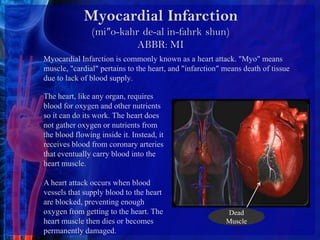
Myocardial Infarction(mi″o-kahr´de-al in-fahrk´shun)ABBR: MIMyocardial Infarction is commonly known as a heart attack. "Myo" means muscle, "cardial" pertains to the heart, and "infarction" means death of tissue due to lack of blood supply. The heart, like any organ, requires blood for oxygen and other nutrients so it can do its work. The heart does not gather oxygen or nutrients from the blood flowing inside it. Instead, it receives blood from coronary arteries that eventually carry blood into the heart muscle.A heart attack occurs when blood vessels that supply blood to the heart are blocked, preventing enough oxygen from getting to the heart. The heart muscle then dies or becomes permanently damaged. Dead Muscle
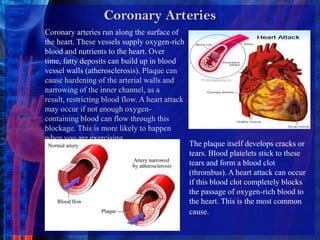
Coronary ArteriesCoronary arteries run along the surface of the heart. These vessels supply oxygen-rich blood and nutrients to the heart. Over time, fatty deposits can build up in blood vessel walls (atherosclerosis). Plaque can cause hardening of the arterial walls and narrowing of the inner channel, as a result, restricting blood flow. A heart attack may occur if not enough oxygen-containing blood can flow through this blockage. This is more likely to happen when you are exercising.The plaque itself develops cracks or tears. Blood platelets stick to these tears and form a blood clot (thrombus). A heart attack can occur if this blood clot completely blocks the passage of oxygen-rich blood to the heart. This is the most common cause.
A Look Inside Myocardial Infarction
How Is a Heart Attack Treated? Early treatment for a heart attack can prevent or limit damage to the heart muscle. Certain treatments usually are started right away if a heart attack is suspected, even before the diagnosis is confirmed. These include:Aspirin to thin your blood and prevent further blood clotting
Nitroglycerin to reduce your heart's workload and improveblood flow through the coronary arteries
Treatment for chest pain
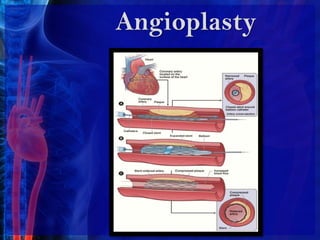
Oxygen TherapyThe two main treatments are "clot-busting" medicines and angioplasty, a procedure used to open blocked coronary arteries. In severe cases, coronary artery bypass surgerymay be necessary. Although, not your typical treatment Niacin (Vitamin B3) is highly effective at increasing your HDL (good cholesterol) and lowering your LDL (bad cholesterol). It has been used for years and clinical studies have shown great results. Niacin is a proven treatment for many things such as, the cardiovascular system, blood pressure, blood sugar, circulation, diabetes, nervous system, arthritis, depression, anxiety, the digestive system, and much more.
Angioplasty

Myocardial Infarction

  • 1.
    Number One KillerOf Both Men And Women In The US Each YearMyocardial Infarction Grace Kirchgessner
  • 2.
    Myocardial Infarction(mi″o-kahr´de-al in-fahrk´shun)ABBR:MIMyocardial Infarction is commonly known as a heart attack. "Myo" means muscle, "cardial" pertains to the heart, and "infarction" means death of tissue due to lack of blood supply. The heart, like any organ, requires blood for oxygen and other nutrients so it can do its work. The heart does not gather oxygen or nutrients from the blood flowing inside it. Instead, it receives blood from coronary arteries that eventually carry blood into the heart muscle.A heart attack occurs when blood vessels that supply blood to the heart are blocked, preventing enough oxygen from getting to the heart. The heart muscle then dies or becomes permanently damaged. Dead Muscle
  • 3.
    Coronary ArteriesCoronary arteriesrun along the surface of the heart. These vessels supply oxygen-rich blood and nutrients to the heart. Over time, fatty deposits can build up in blood vessel walls (atherosclerosis). Plaque can cause hardening of the arterial walls and narrowing of the inner channel, as a result, restricting blood flow. A heart attack may occur if not enough oxygen-containing blood can flow through this blockage. This is more likely to happen when you are exercising.The plaque itself develops cracks or tears. Blood platelets stick to these tears and form a blood clot (thrombus). A heart attack can occur if this blood clot completely blocks the passage of oxygen-rich blood to the heart. This is the most common cause.
  • 4.
    A Look InsideMyocardial Infarction
  • 5.
    How Is aHeart Attack Treated? Early treatment for a heart attack can prevent or limit damage to the heart muscle. Certain treatments usually are started right away if a heart attack is suspected, even before the diagnosis is confirmed. These include:Aspirin to thin your blood and prevent further blood clotting
  • 6.
    Nitroglycerin to reduceyour heart's workload and improveblood flow through the coronary arteries
  • 7.
  • 8.
    Oxygen TherapyThe twomain treatments are "clot-busting" medicines and angioplasty, a procedure used to open blocked coronary arteries. In severe cases, coronary artery bypass surgerymay be necessary. Although, not your typical treatment Niacin (Vitamin B3) is highly effective at increasing your HDL (good cholesterol) and lowering your LDL (bad cholesterol). It has been used for years and clinical studies have shown great results. Niacin is a proven treatment for many things such as, the cardiovascular system, blood pressure, blood sugar, circulation, diabetes, nervous system, arthritis, depression, anxiety, the digestive system, and much more.
  • 9.