
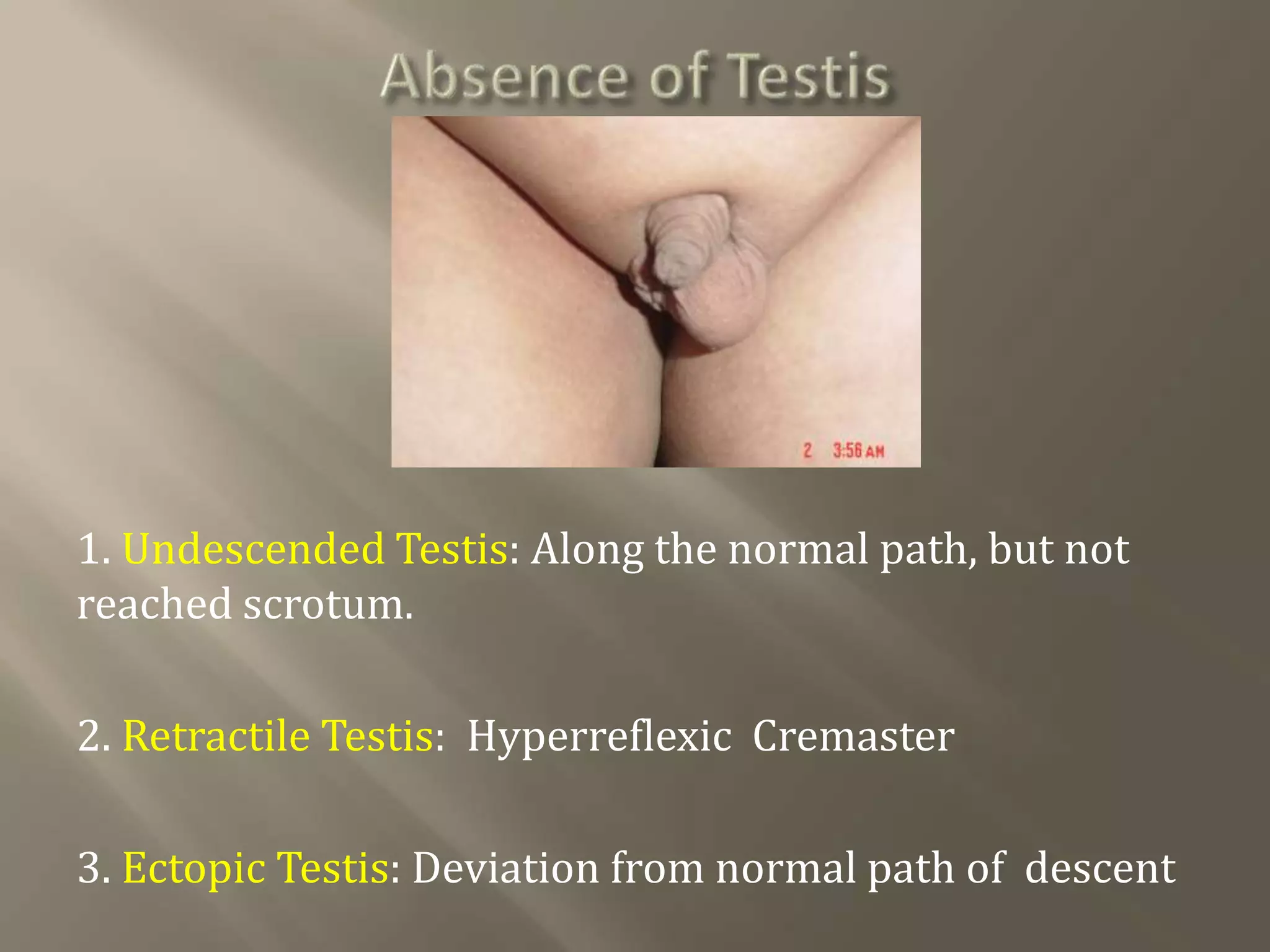
1. Undescended Testis: Along the normal path, but not
reached scrotum.
2. Retractile Testis: Hyperreflexic Cremaster
3. Ectopic Testis: Deviation from normal path of descent
 Genital ridge – intermediate plate mesoderm
 Germ cells derived from yolk sac.
 Leydig and Sertoli cells from mesenchyme
underlying genital ridge.
 Vas deferens formed by mesonephric duct
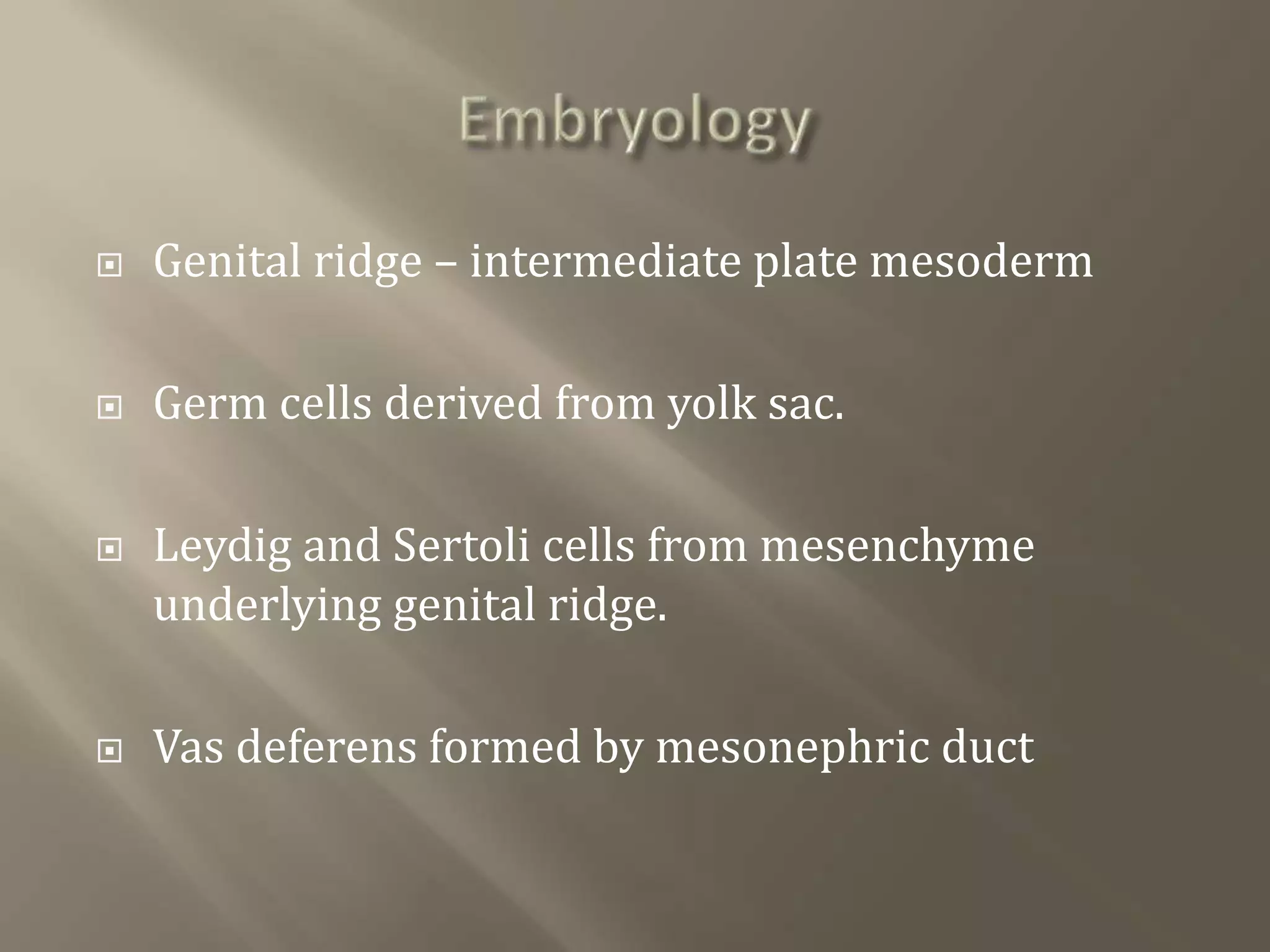
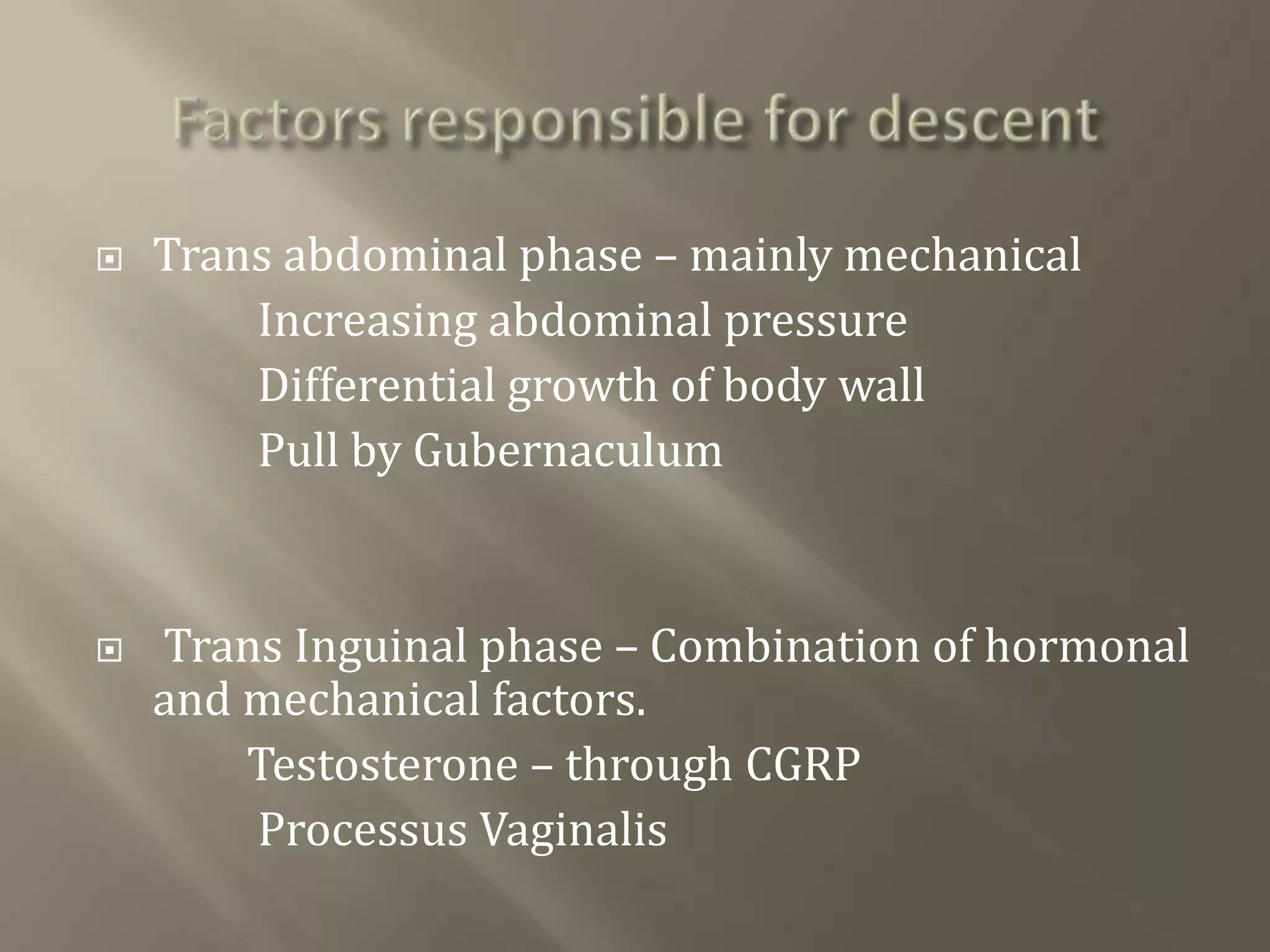
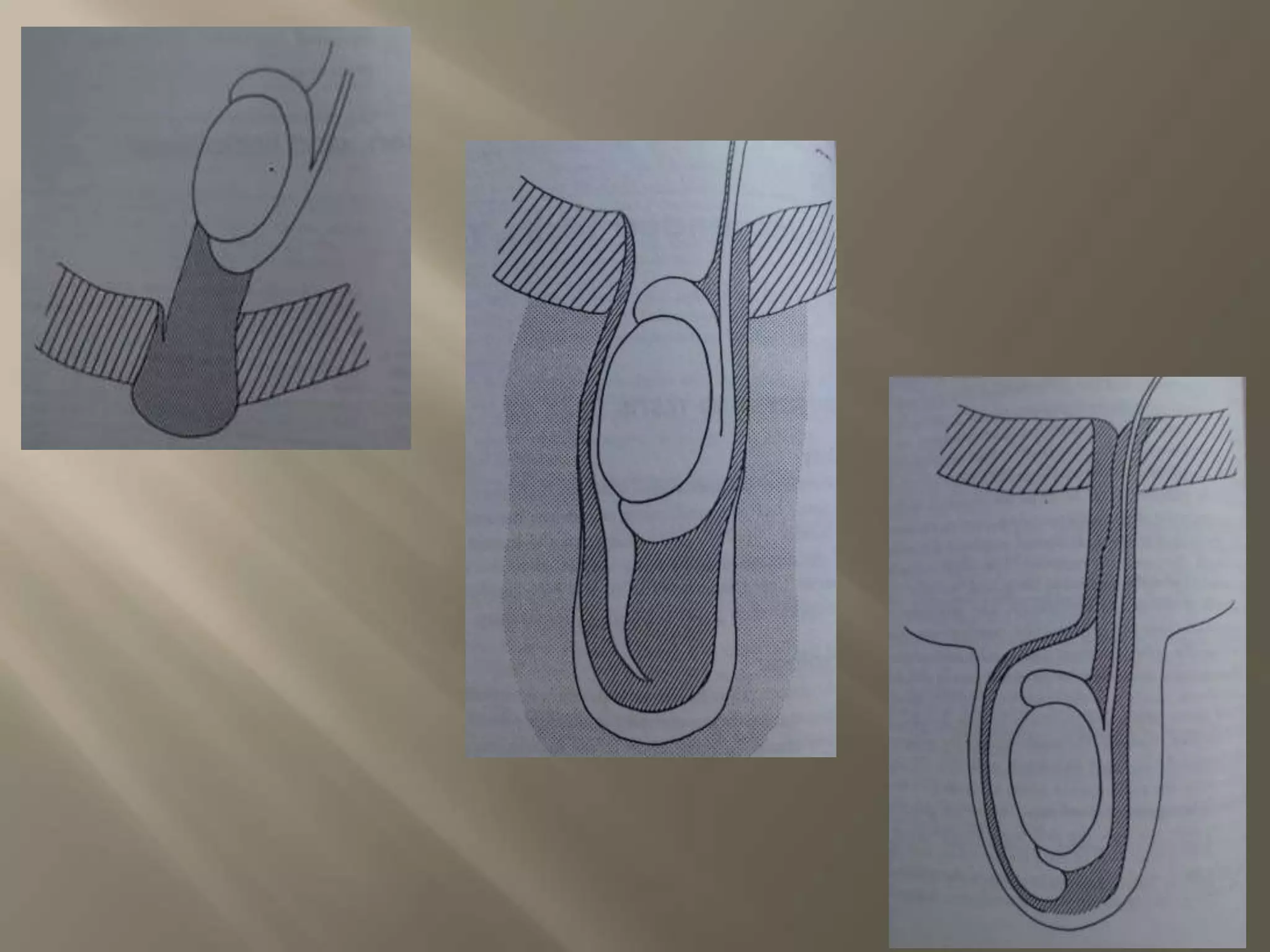
 Starts at 8th wk
 Reaches deep Inguinal ring by 3rd month
 Lies dormant upto 6th month
 Traverses Inguinal canal during 7th month
 Reaches Superficial ring by 8th month
 Reaches bottom of scrotum by 9th month
Why descend ?
 Trans abdominal phase – mainly mechanical
Increasing abdominal pressure
Differential growth of body wall
Pull by Gubernaculum
 Trans Inguinal phase – Combination of hormonal
and mechanical factors.
Testosterone – through CGRP
Processus Vaginalis
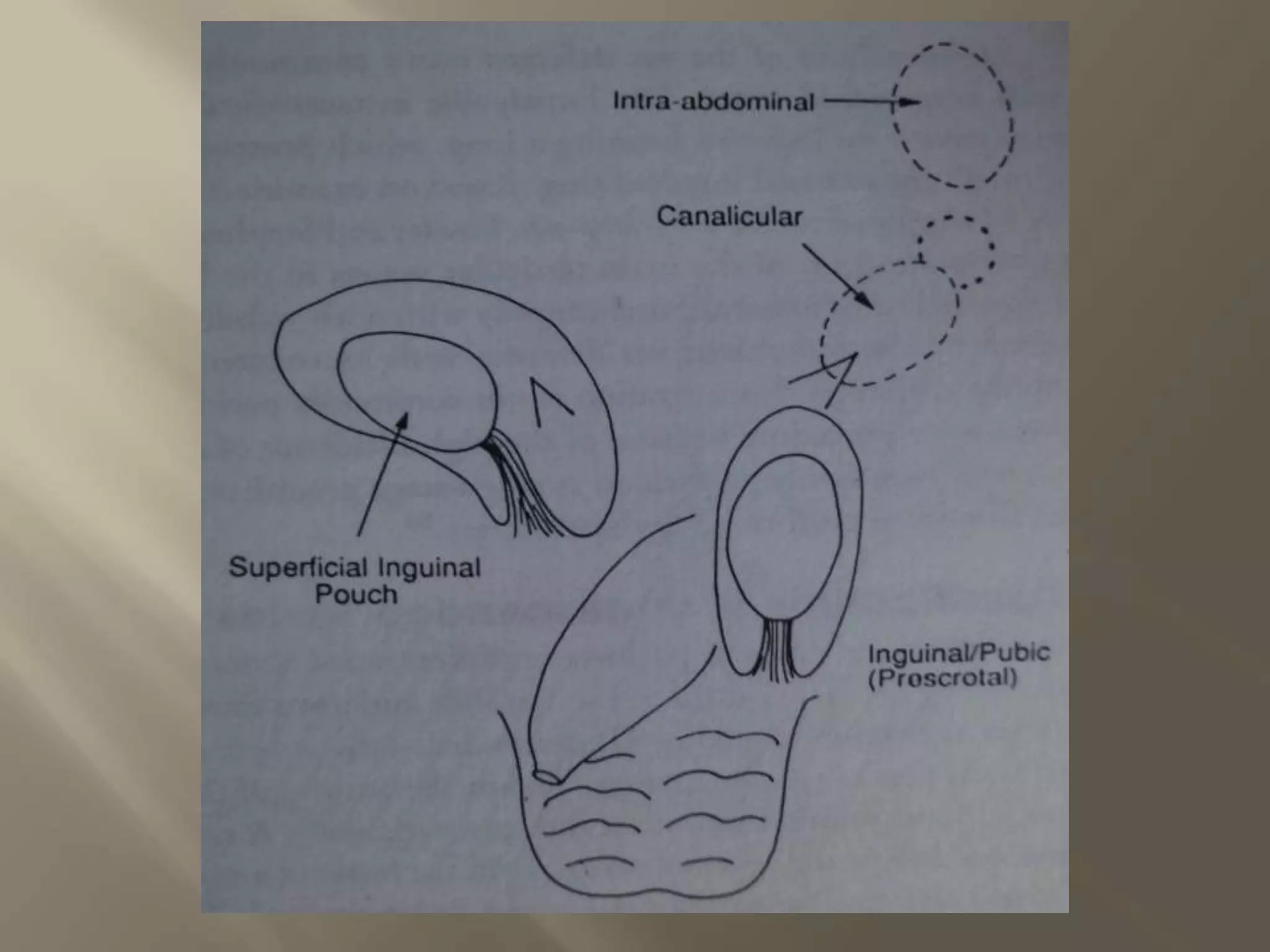
Absence of testis in scrotum since birth
Hemiscrotum empty, hypoplastic
Testis may or may not be palpable along the path of
descent.
70% of UDT are palpable, 30% non palpable.
Alteration of testicular structure
Leydigs cells
Germ cells
Infertility
Inguinal Hernia
Torsion testis
Malignancy
Trauma
Psychological
 If palpable- no investigations needed
 Unilateral impalpable- no investigations needed,
but USG is done by many
 Bilateral impalpable- rule out Intersex if genitalia
look abnormal.
 No surgical intervention till child is 1yr of age
unless there is associated complication like
hernia or torsion.
 Surgery if testis has not descended by 1 yr.
 Unilateral - Orchidopexy
 Bilateral – Orchidopexy in the same sitting.
 30% of all UDT
 45% are intra abdominal
 20% canalicular
 35% vanishing testis
 < 1% anorchia
 Blind ending vessels – terminate procedure
 Vessels exiting internal ring – Inguinal
exploration – orchidopexy / orchiectomy
 Intra abdominal testis – Fowler Stephen
procedure
 Look for testis / nubbin in the inguinal canal or
blind ending vas & vessels
 If canal is empty, open the deep ring and explore
retro peritoneum up to lower pole of kidney
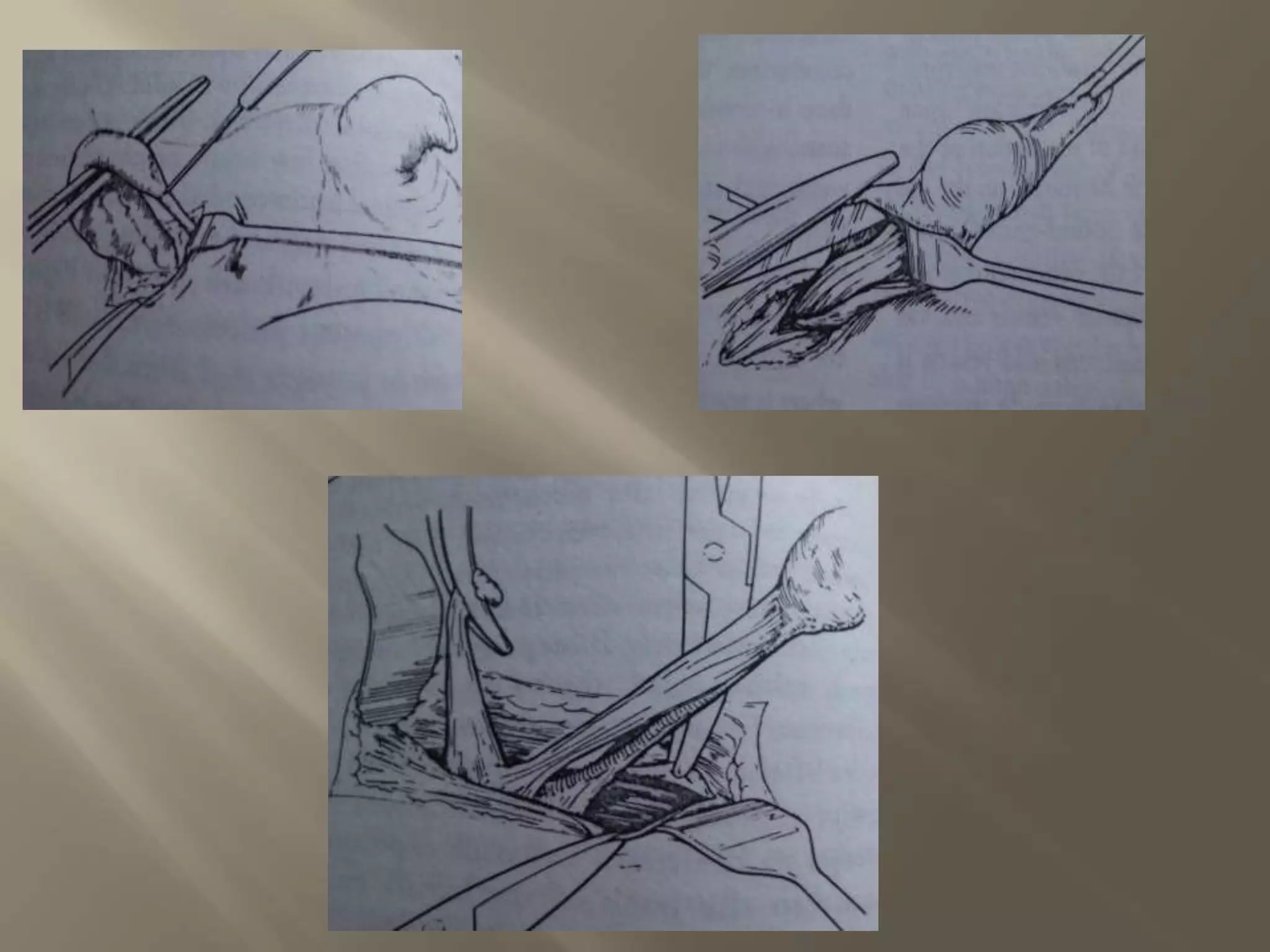
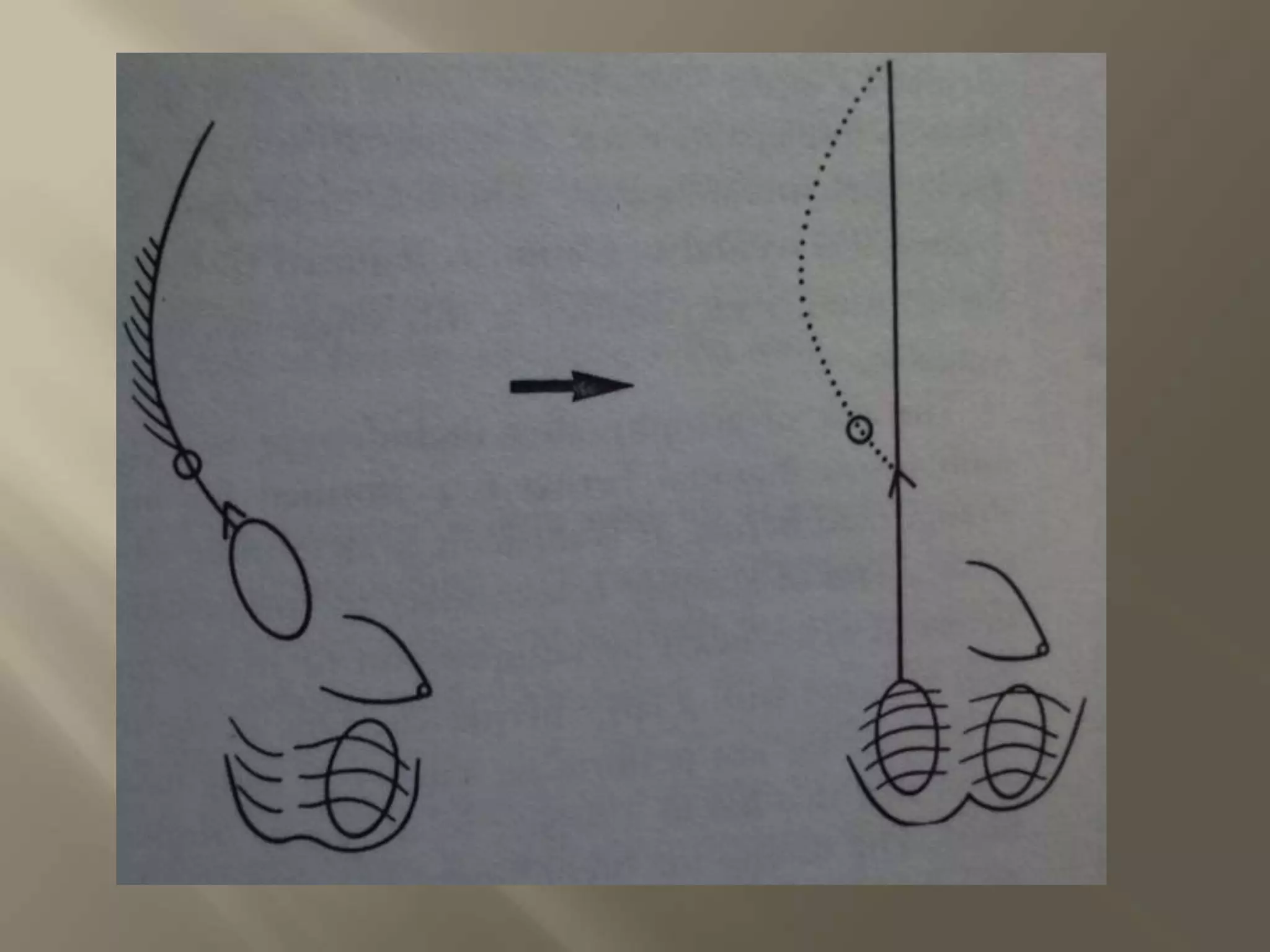
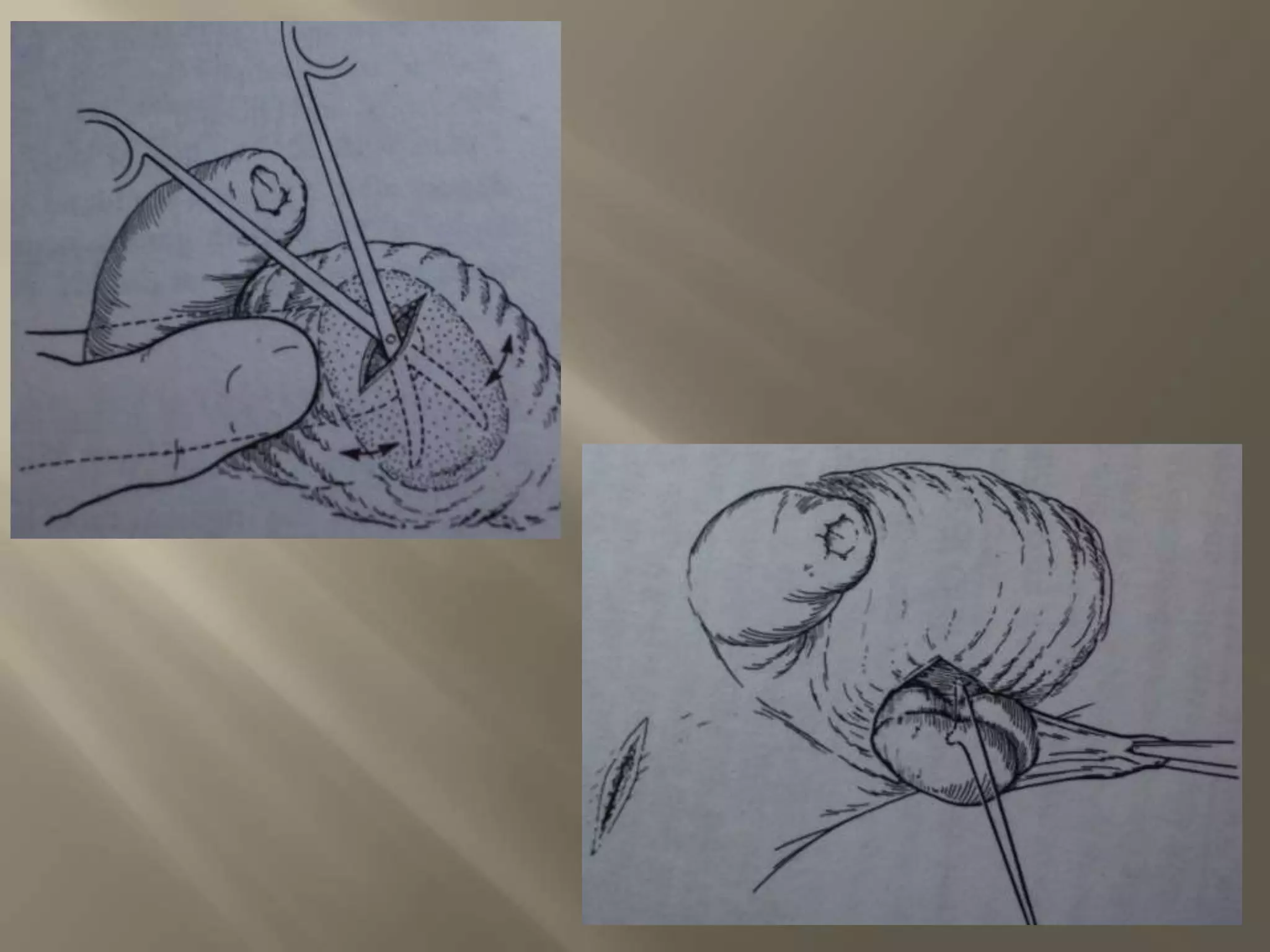
 Groin incision
 Divide gubernaculum
 Herniotomy
 Divide bands holding the vessels to lateral abd
wall
 Place the testis in extra dartos pouch
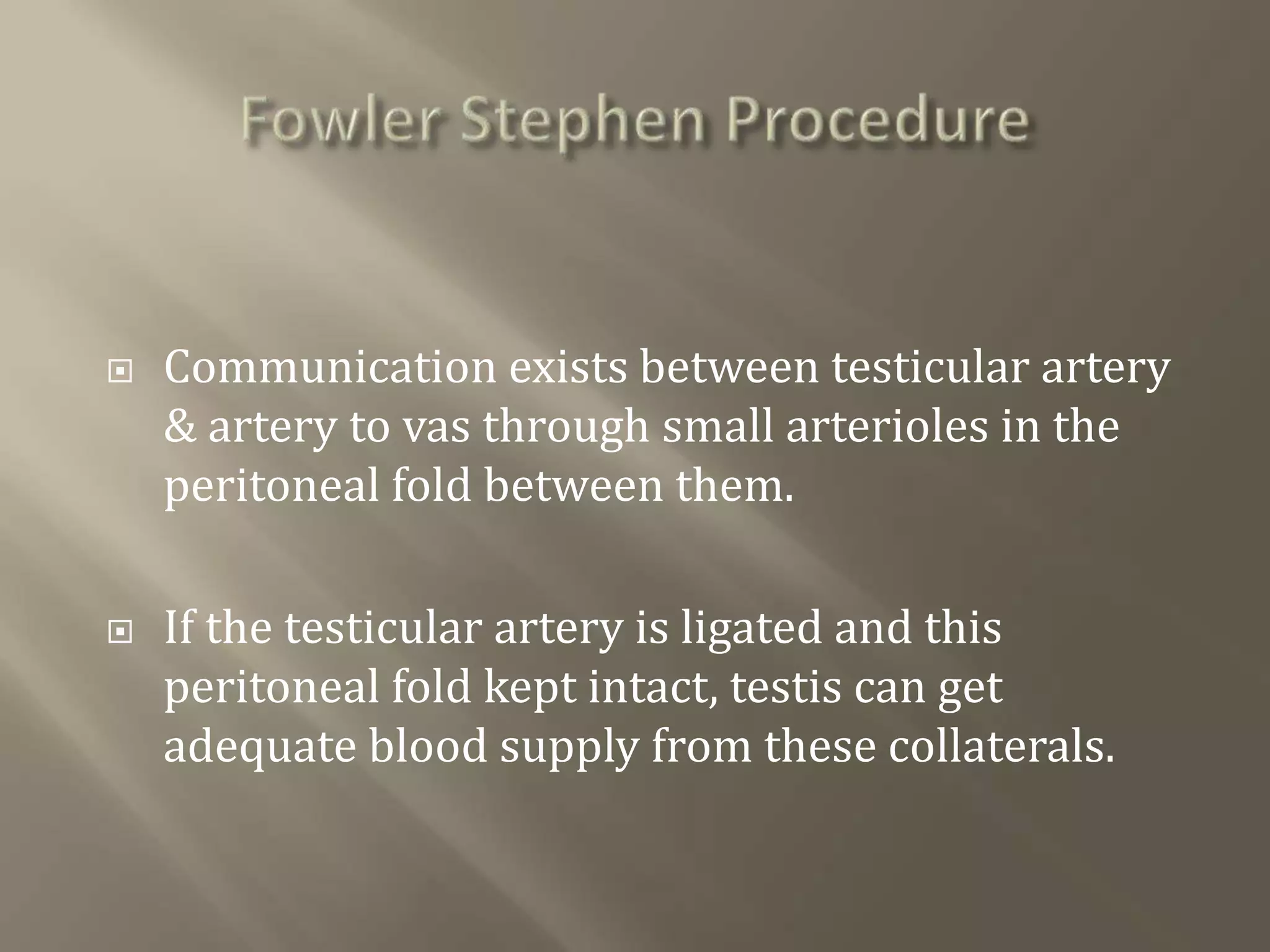
 Communication exists between testicular artery
& artery to vas through small arterioles in the
peritoneal fold between them.
 If the testicular artery is ligated and this
peritoneal fold kept intact, testis can get
adequate blood supply from these collaterals.

Udt

  • 2.
    1. Undescended Testis:Along the normal path, but not reached scrotum. 2. Retractile Testis: Hyperreflexic Cremaster 3. Ectopic Testis: Deviation from normal path of descent
  • 3.
     Genital ridge– intermediate plate mesoderm  Germ cells derived from yolk sac.  Leydig and Sertoli cells from mesenchyme underlying genital ridge.  Vas deferens formed by mesonephric duct
  • 4.
     Starts at8th wk  Reaches deep Inguinal ring by 3rd month  Lies dormant upto 6th month  Traverses Inguinal canal during 7th month  Reaches Superficial ring by 8th month  Reaches bottom of scrotum by 9th month Why descend ?
  • 5.
     Trans abdominalphase – mainly mechanical Increasing abdominal pressure Differential growth of body wall Pull by Gubernaculum  Trans Inguinal phase – Combination of hormonal and mechanical factors. Testosterone – through CGRP Processus Vaginalis
  • 7.
    Absence of testisin scrotum since birth Hemiscrotum empty, hypoplastic Testis may or may not be palpable along the path of descent. 70% of UDT are palpable, 30% non palpable.
  • 9.
    Alteration of testicularstructure Leydigs cells Germ cells Infertility Inguinal Hernia Torsion testis Malignancy Trauma Psychological
  • 10.
     If palpable-no investigations needed  Unilateral impalpable- no investigations needed, but USG is done by many  Bilateral impalpable- rule out Intersex if genitalia look abnormal.
  • 11.
     No surgicalintervention till child is 1yr of age unless there is associated complication like hernia or torsion.  Surgery if testis has not descended by 1 yr.
  • 12.
     Unilateral -Orchidopexy  Bilateral – Orchidopexy in the same sitting.
  • 13.
     30% ofall UDT  45% are intra abdominal  20% canalicular  35% vanishing testis  < 1% anorchia
  • 14.
     Blind endingvessels – terminate procedure  Vessels exiting internal ring – Inguinal exploration – orchidopexy / orchiectomy  Intra abdominal testis – Fowler Stephen procedure
  • 15.
     Look fortestis / nubbin in the inguinal canal or blind ending vas & vessels  If canal is empty, open the deep ring and explore retro peritoneum up to lower pole of kidney
  • 16.
     Groin incision Divide gubernaculum  Herniotomy  Divide bands holding the vessels to lateral abd wall  Place the testis in extra dartos pouch
  • 20.
     Communication existsbetween testicular artery & artery to vas through small arterioles in the peritoneal fold between them.  If the testicular artery is ligated and this peritoneal fold kept intact, testis can get adequate blood supply from these collaterals.