www.dentaltutor.in
 Adaptations are reversible changes in the size,
number, phenotype, metabolic activity, or
functions of cells in response to changes in
their environment
 Cells must constantly adapt, even under
normal conditions, to changes in their
environment.
 These physiological adaptations usually
represent responses of cells to normal
stimulation by hormones or endogenous
chemical substances.
◦ For example, as in the enlargement of the breast and
induction of lactation by pregnancy.
www.dentaltutor.in
 Pathologic adaptations may share the same
underlying mechanisms, but they provide the
cells with the ability to survive in their
environment and perhaps escape injury.
 Cellular adaptation is a state that lies
intermediate between the normal, unstressed
cell and the injured, overstressed cell.
www.dentaltutor.in
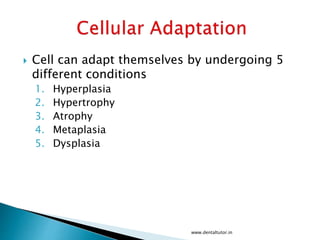
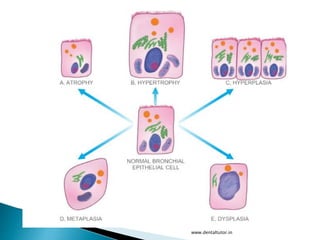
 Cell can adapt themselves by undergoing 5
different conditions
1. Hyperplasia
2. Hypertrophy
3. Atrophy
4. Metaplasia
5. Dysplasia
www.dentaltutor.in
www.dentaltutor.in
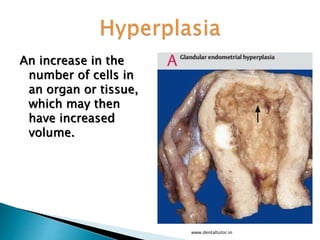
An increase in the
number of cells in
an organ or tissue,
which may then
have increased
volume.
www.dentaltutor.in
a. Hormonal : influence of hormonal stimulation
 hyperplasia of the female breast epithelium at
puberty or in pregnancy.
 pregnant uterus
 normal endometrium after a normal menstrual cycle.
 Prostatic hyperplasia in old age
b. Compensatory: hyperplasia occurring following
removal of part of an organ or a contralateral
organ in paired organ
 Regeneration of the liver following partial
hepatectomy
 Regeneration of epidermis after skin abrasion
 Following nephrectomy on one side, there is
hyperplasia of nephrons of the other kidney.
www.dentaltutor.in
 Excessive stimulation of hormones or growth
factors
◦ Endometrial hyperplasia
◦ wound healing - of granulation tissue due to
proliferation of fibroblasts and endothelial cells.
◦ skin warts from hyperplasia of epidermis due to
human papilloma virus.
◦ Pseudocarcinomatous hyperplasia of the skin
www.dentaltutor.in
Definition: An increase in the size of cells, and
with such change, an increase in the size of
the organ.
Types:
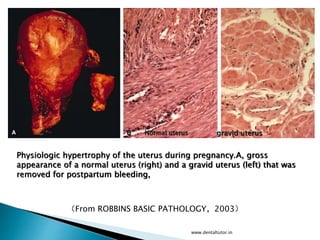
• Physiologic: physiologic growth of the uterus
during pregnancy involves both hypertrophy
and hyperplasia.
• Pathologic causes: increased workload,
hormonal stimulation and growth factors
stimulation.
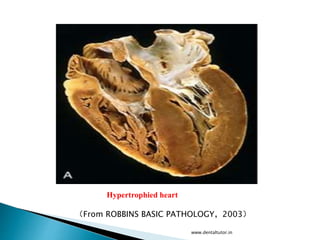
• hypertrophy of heart the most common stimulus is
chronic hemodynamic overload
www.dentaltutor.in
Hypertrophied heart
(From ROBBINS BASIC PATHOLOGY,2003)
www.dentaltutor.in
Physiologic hypertrophy of the uterus during pregnancy.A, gross
appearance of a normal uterus (right) and a gravid uterus (left) that was
removed for postpartum bleeding,
Normal uterus gravid uterus
(From ROBBINS BASIC PATHOLOGY,2003)
www.dentaltutor.in
Although hypertrophy and hyperplasia are
two distinct processes, frequently both
occur together, and they well be triggered
by the same mechanism.
www.dentaltutor.in
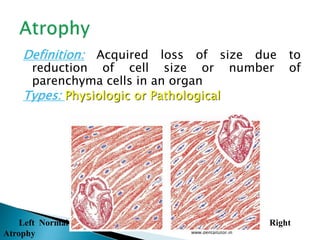
Definition: Acquired loss of size due to
reduction of cell size or number of
parenchyma cells in an organ
Types: Physiologic or Pathological
www.dentaltutor.in
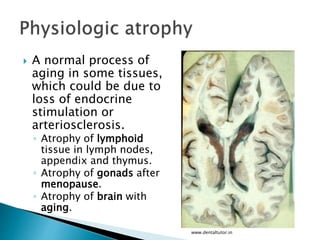
Left Normal Right
Atrophy
 A normal process of
aging in some tissues,
which could be due to
loss of endocrine
stimulation or
arteriosclerosis.
◦ Atrophy of lymphoid
tissue in lymph nodes,
appendix and thymus.
◦ Atrophy of gonads after
menopause.
◦ Atrophy of brain with
aging.
www.dentaltutor.in
 Starvation atrophy.
 Ischaemic atrophy
 Disuse atrophy.
 Neuropathic atrophy.
 Endocrine atrophy
 Pressure atrophy.
 Idiopathic atrophy
www.dentaltutor.in
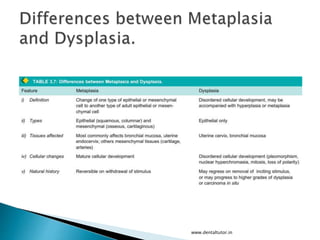
Definition: Metaplasia is a reversible change in
which one adult cell type is replaced by
another adult cell type.
Causes
 Changes in environment
 Irritation or inflammation
 Nutritional
www.dentaltutor.in
 There are basically 2 types of metaplasia
 EPITHELIAL METAPLASIA
◦ Squamous metaplasia: changes in bronchus, uterine
endocervix, gallbladder, prostate, renal pelvis and
urinary bladder
 vitamin A deficiency: squamous metaplasia in the nose,
bronchi, urinary tract, lacrimal and salivary glands
◦ Columnar metaplasia: Intestinal metaplasia in healed
chronic gastric ulcer and Barrett’s oesophagus
 MESENCHYMAL METAPLASIA
◦ Osseous metaplasia.
◦ Cartilaginous metaplasia.
www.dentaltutor.in
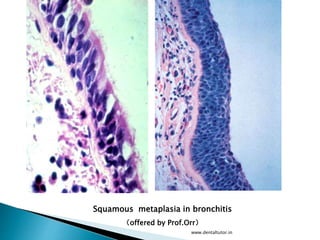
Squamous metaplasia in bronchitis
(offered by Prof.Orr)
www.dentaltutor.in
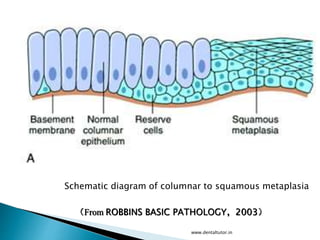
Schematic diagram of columnar to squamous metaplasia
(From ROBBINS BASIC PATHOLOGY,2003)
www.dentaltutor.in
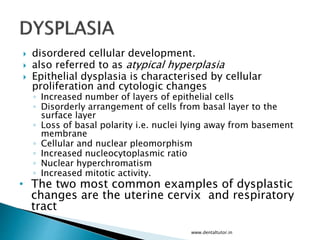
 disordered cellular development.
 also referred to as atypical hyperplasia
 Epithelial dysplasia is characterised by cellular
proliferation and cytologic changes
◦ Increased number of layers of epithelial cells
◦ Disorderly arrangement of cells from basal layer to the
surface layer
◦ Loss of basal polarity i.e. nuclei lying away from basement
membrane
◦ Cellular and nuclear pleomorphism
◦ Increased nucleocytoplasmic ratio
◦ Nuclear hyperchromatism
◦ Increased mitotic activity.
• The two most common examples of dysplastic
changes are the uterine cervix and respiratory
tract
www.dentaltutor.in
www.dentaltutor.in
 Robbinson's basic pathology 8 ed
 Harsh Mohan - Textbook of Pathology 6th Ed.
 Color atlas of pathology
www.dentaltutor.in
Like, share and comment on www.dentaltutor.in
www.dentaltutor.in

Cellular adaptation

  • 1.
  • 2.
     Adaptations arereversible changes in the size, number, phenotype, metabolic activity, or functions of cells in response to changes in their environment  Cells must constantly adapt, even under normal conditions, to changes in their environment.  These physiological adaptations usually represent responses of cells to normal stimulation by hormones or endogenous chemical substances. ◦ For example, as in the enlargement of the breast and induction of lactation by pregnancy. www.dentaltutor.in
  • 3.
     Pathologic adaptationsmay share the same underlying mechanisms, but they provide the cells with the ability to survive in their environment and perhaps escape injury.  Cellular adaptation is a state that lies intermediate between the normal, unstressed cell and the injured, overstressed cell. www.dentaltutor.in
  • 4.
     Cell canadapt themselves by undergoing 5 different conditions 1. Hyperplasia 2. Hypertrophy 3. Atrophy 4. Metaplasia 5. Dysplasia www.dentaltutor.in
  • 5.
  • 6.
    An increase inthe number of cells in an organ or tissue, which may then have increased volume. www.dentaltutor.in
  • 7.
    a. Hormonal :influence of hormonal stimulation  hyperplasia of the female breast epithelium at puberty or in pregnancy.  pregnant uterus  normal endometrium after a normal menstrual cycle.  Prostatic hyperplasia in old age b. Compensatory: hyperplasia occurring following removal of part of an organ or a contralateral organ in paired organ  Regeneration of the liver following partial hepatectomy  Regeneration of epidermis after skin abrasion  Following nephrectomy on one side, there is hyperplasia of nephrons of the other kidney. www.dentaltutor.in
  • 8.
     Excessive stimulationof hormones or growth factors ◦ Endometrial hyperplasia ◦ wound healing - of granulation tissue due to proliferation of fibroblasts and endothelial cells. ◦ skin warts from hyperplasia of epidermis due to human papilloma virus. ◦ Pseudocarcinomatous hyperplasia of the skin www.dentaltutor.in
  • 9.
    Definition: An increasein the size of cells, and with such change, an increase in the size of the organ. Types: • Physiologic: physiologic growth of the uterus during pregnancy involves both hypertrophy and hyperplasia. • Pathologic causes: increased workload, hormonal stimulation and growth factors stimulation. • hypertrophy of heart the most common stimulus is chronic hemodynamic overload www.dentaltutor.in
  • 10.
    Hypertrophied heart (From ROBBINSBASIC PATHOLOGY,2003) www.dentaltutor.in
  • 11.
    Physiologic hypertrophy ofthe uterus during pregnancy.A, gross appearance of a normal uterus (right) and a gravid uterus (left) that was removed for postpartum bleeding, Normal uterus gravid uterus (From ROBBINS BASIC PATHOLOGY,2003) www.dentaltutor.in
  • 12.
    Although hypertrophy andhyperplasia are two distinct processes, frequently both occur together, and they well be triggered by the same mechanism. www.dentaltutor.in
  • 13.
    Definition: Acquired lossof size due to reduction of cell size or number of parenchyma cells in an organ Types: Physiologic or Pathological www.dentaltutor.in Left Normal Right Atrophy
  • 14.
     A normalprocess of aging in some tissues, which could be due to loss of endocrine stimulation or arteriosclerosis. ◦ Atrophy of lymphoid tissue in lymph nodes, appendix and thymus. ◦ Atrophy of gonads after menopause. ◦ Atrophy of brain with aging. www.dentaltutor.in
  • 15.
     Starvation atrophy. Ischaemic atrophy  Disuse atrophy.  Neuropathic atrophy.  Endocrine atrophy  Pressure atrophy.  Idiopathic atrophy www.dentaltutor.in
  • 16.
    Definition: Metaplasia isa reversible change in which one adult cell type is replaced by another adult cell type. Causes  Changes in environment  Irritation or inflammation  Nutritional www.dentaltutor.in
  • 17.
     There arebasically 2 types of metaplasia  EPITHELIAL METAPLASIA ◦ Squamous metaplasia: changes in bronchus, uterine endocervix, gallbladder, prostate, renal pelvis and urinary bladder  vitamin A deficiency: squamous metaplasia in the nose, bronchi, urinary tract, lacrimal and salivary glands ◦ Columnar metaplasia: Intestinal metaplasia in healed chronic gastric ulcer and Barrett’s oesophagus  MESENCHYMAL METAPLASIA ◦ Osseous metaplasia. ◦ Cartilaginous metaplasia. www.dentaltutor.in
  • 18.
    Squamous metaplasia inbronchitis (offered by Prof.Orr) www.dentaltutor.in
  • 19.
    Schematic diagram ofcolumnar to squamous metaplasia (From ROBBINS BASIC PATHOLOGY,2003) www.dentaltutor.in
  • 20.
     disordered cellulardevelopment.  also referred to as atypical hyperplasia  Epithelial dysplasia is characterised by cellular proliferation and cytologic changes ◦ Increased number of layers of epithelial cells ◦ Disorderly arrangement of cells from basal layer to the surface layer ◦ Loss of basal polarity i.e. nuclei lying away from basement membrane ◦ Cellular and nuclear pleomorphism ◦ Increased nucleocytoplasmic ratio ◦ Nuclear hyperchromatism ◦ Increased mitotic activity. • The two most common examples of dysplastic changes are the uterine cervix and respiratory tract www.dentaltutor.in
  • 21.
  • 22.
     Robbinson's basicpathology 8 ed  Harsh Mohan - Textbook of Pathology 6th Ed.  Color atlas of pathology www.dentaltutor.in
  • 23.
    Like, share andcomment on www.dentaltutor.in www.dentaltutor.in