Cardiac Physiology
Presenter:
Dr.Tirtha Raj Bhandari
3rd year Resident
NAMS
Objectives
• To discuss cardiac cycle
• To discuss electrical activity of heart
• To discuss arterial waveform and jvp wave
• To discuss Cardiac output
• To discuss blood pressure regulation
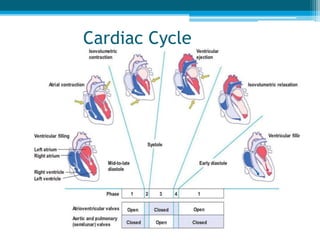
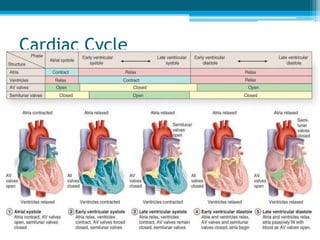
Cardiac Cycle
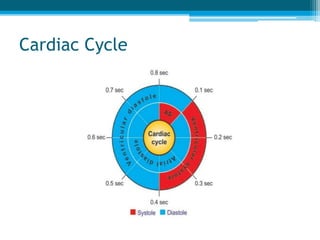
Cardiac Cycle
Cardiac Cycle
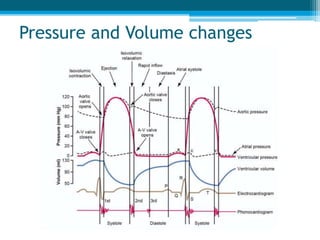
Pressure and Volume changes
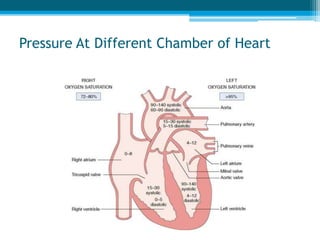
Pressure At Different Chamber of Heart
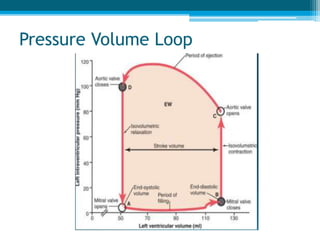
Pressure Volume Loop
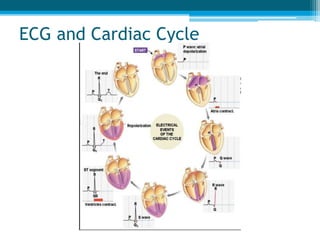
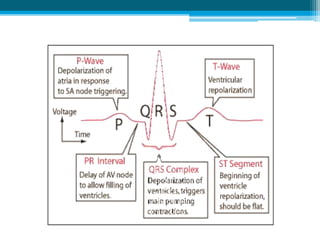
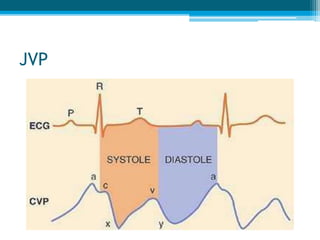
ECG and Cardiac Cycle
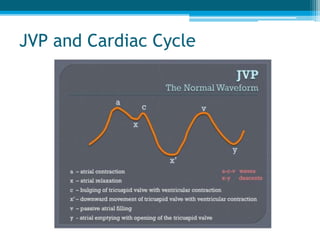
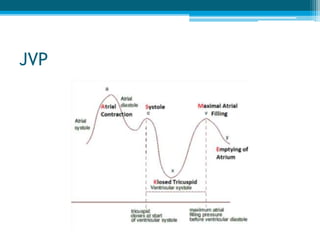
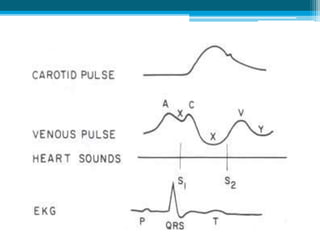
JVP and Cardiac Cycle
JVP
JVP
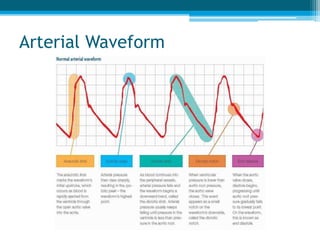
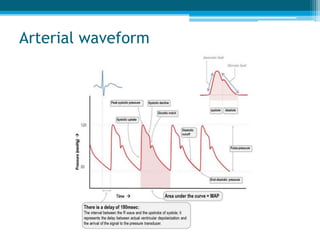
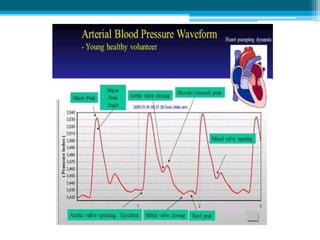
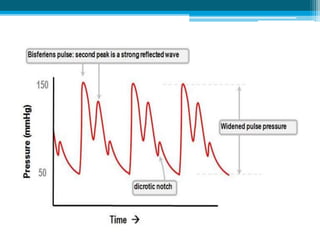
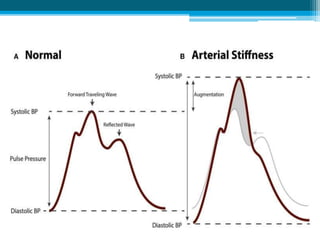
Arterial Waveform
Arterial waveform
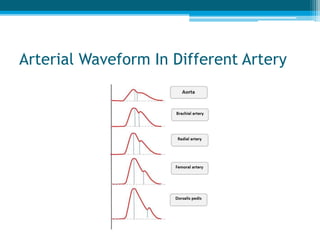
Arterial Waveform In Different Artery
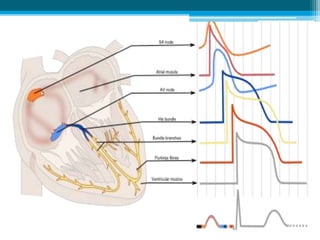
Automaticity Of The Heart
• It is the ability of the heart to initiate its beat
continuously and regularly without any external
stimulus.
• Purely Myogenic, not dependent on nerve
supply
• Due to specialized excitatory and conductive
tissue in heart
• It has ability to generate impulse because of
intrinsic ability of self excitation.
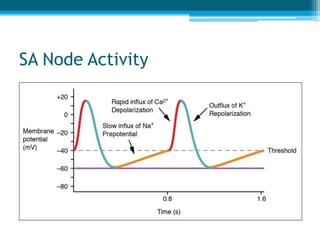
SA Node Activity
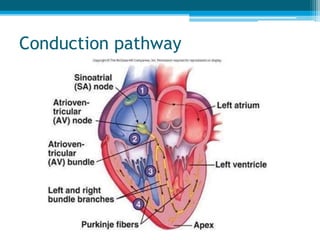
Conduction pathway
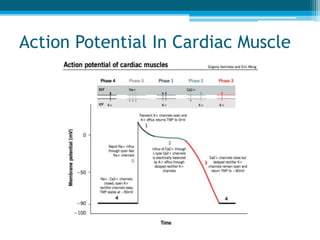
Action Potential In Cardiac Muscle
Physiology of coronary circulation
• Right coronary has greater flow in 50%
individuals, left has greater flow in 20% and
both has equal flow in 30%.
• Resting coronary blood flow: 225- 250ml/ min,
i.e. ~75 ml/100gm/ min
▫ 4- 5% of cardiac output
• Resting myocardial oxygen consumption: 8-
10ml/ 100gm/ min, i.e. ~ 10% of total body
oxygen consumption
The large coronary arteries lie predominantly on
epicardial surface of heart- offer little resistance to
flow
• Coronary arterioles- ramify throughout
myocardium- impose resistance to flow, regulate
blood distribution to myocardium
• Arthrosclerosis characterized as coronary artery
disease involves epicardial coronary arteries and
not the coronary arterioles.
• At rest heart extracts 70- 80% of the oxygen
from blood, resulting in coronary venous oxygen
saturation ~30%.
• So oxygen supply can be increased significantly
only increasing blood flow
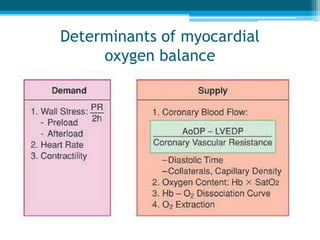
Determinants of myocardial
oxygen balance
Myocardial oxygen demand
• Determinants:
▫ Wall tension
▫ Contractility
• Laplace law: wall tension is directly proportional to
intra-cavitary pressure (P) and ventricular radius (R),
and inversely proportional to wall thickness (h), ie
Wall stress = P R/ 2h
Myocardial oxygen demand can be decreased by-
▫ Preventing or treating ventricular distension (preload)
▫ Decreasing intra-ventricular pressure (after-load)
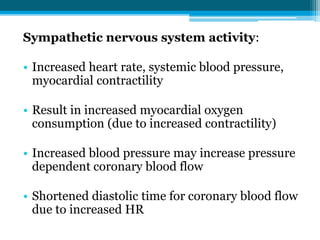
Sympathetic nervous system activity:
• Increased heart rate, systemic blood pressure,
myocardial contractility
• Result in increased myocardial oxygen
consumption (due to increased contractility)
• Increased blood pressure may increase pressure
dependent coronary blood flow
• Shortened diastolic time for coronary blood flow
due to increased HR
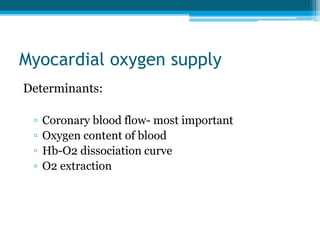
Myocardial oxygen supply
Determinants:
▫ Coronary blood flow- most important
▫ Oxygen content of blood
▫ Hb-O2 dissociation curve
▫ O2 extraction
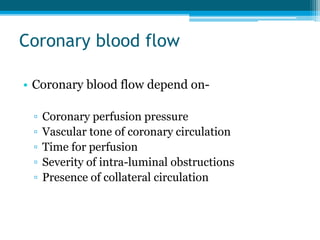
Coronary blood flow
• Coronary blood flow depend on-
▫ Coronary perfusion pressure
▫ Vascular tone of coronary circulation
▫ Time for perfusion
▫ Severity of intra-luminal obstructions
▫ Presence of collateral circulation
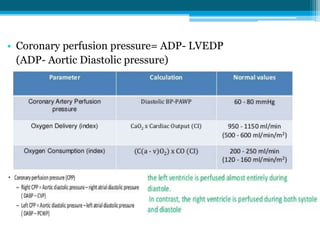
• Coronary perfusion pressure= ADP- LVEDP
(ADP- Aortic Diastolic pressure)
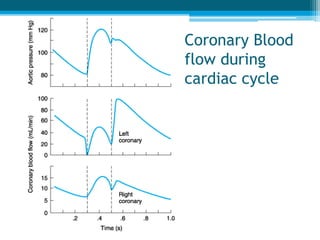
• Pressure difference between aorta and RV
greater during systole, so flow not appreciably
reduced during systole in RV
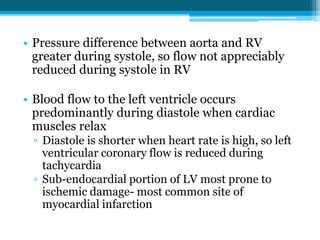
• Blood flow to the left ventricle occurs
predominantly during diastole when cardiac
muscles relax
▫ Diastole is shorter when heart rate is high, so left
ventricular coronary flow is reduced during
tachycardia
▫ Sub-endocardial portion of LV most prone to
ischemic damage- most common site of
myocardial infarction
Coronary Blood
flow during
cardiac cycle
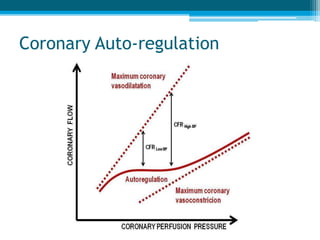
Coronary Auto-regulation
• Good auto-regulation between 60 and 200
mmHg perfusion pressure helps to maintain
normal coronary blood flow whenever coronary
perfusion pressure changes due to changes in
aortic pressure.
• Tone of the small intra-myocardial arterioles regulate
diastolic vascular resistance, allowing the matching of
oxygen supply with metabolic demand over a wide range
of perfusion pressures.
• The difference between auto-regulated, baseline flow,
and blood flow available under conditions of maximal
vasodilation is termed coronary vascular reserve,
▫ normally 3 to 5 times higher than basal flow.
• As epicardial stenosis becomes more pronounced,
progressive vasodilation of these resistance vessels
▫ allows preservation of basal flow, but at the cost of reduced
reserve.
Chemical factors
• Balance between local metabolic needs of
myocardium (esp O2) and magnitude of
coronary blood flow
▫ Present even in denervated heart
▫ Reflects local release of vasodilator substances
▫ Most potent- adenosine. Others- prostacycline,
NO
Neural factors
• Coronary arterioles contain
▫ α receptors: vasoconstriction, mainly in epicardial
arteries
▫ β receptors: vasodilation, mainly in intramuscular
arteries
(Activity in noradrenergic nerves cause vasodilation
secondary to metabolic changes, else it causes
vasoconstriction)
▫ H1 receptors: mediate vasoconstriction
▫ H2 receptors: mediate vaso-dilation
• Parasympathetic nerve fibres sparse, so little direct
effect on flow, which is vaso-dilatory
Collateralization
• Progressive ischemic coronary artery disease
results in the growth of new vessels (termed
angiogenesis) and collateralization within the
myocardium.
• Increases myocardial blood supply by increasing
the number of parallel vessels, thereby reducing
vascular resistance within the myocardium.
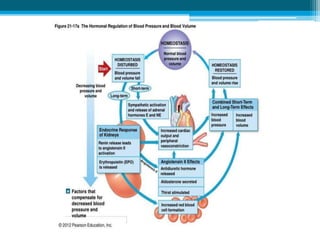
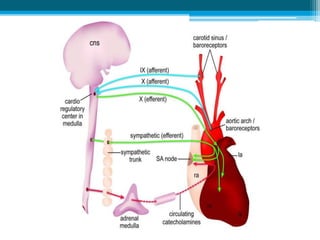
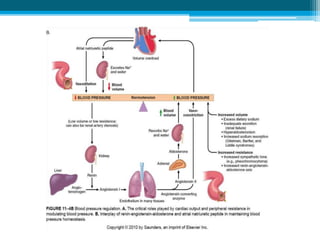
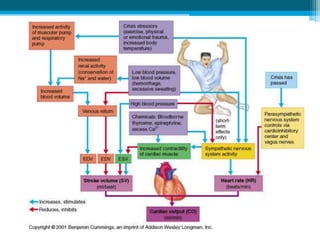
Blood Pressure
• Blood pressure is the product of cardiac output
and systemic vascular resistance
• Blood pressure is maintained in our body by
different mechanism
• Short term
• Intermediate term
• Long term
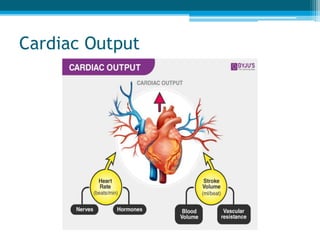
Cardiac Output
Contractility
• It is the intrinsic ability of the heart.
• Also called “Ionotropism”.
(Other character of heart muscle Dromotropism,
Chronotropism and Lusiotropism)
Related to intracellular calcium( actin, myosin,
tropomyosin, troponin c)
CONTD
• There are many types of indices of contractility
1) Isovolumetric contraction phase-
dp/dtContractilityintial length of cardiac muscle
2) Ejection Phase indice:
EF= EDV-ESV/ESV
3) Load dependent indice: time varying indice,
ration of change in pressure over volume which varies
in different phase of cycle.
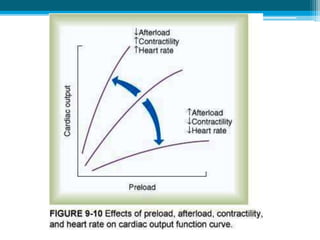
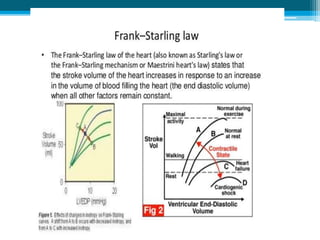
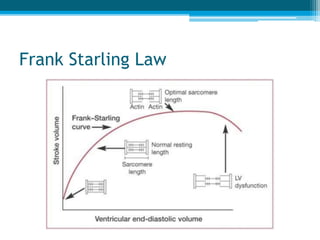
Frank Starling Law
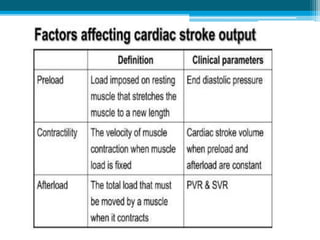
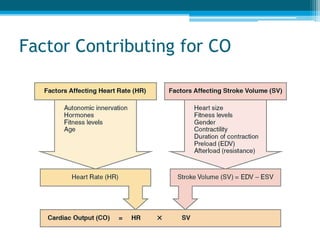
Factor Contributing for CO
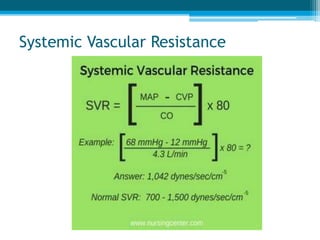
Systemic Vascular Resistance
ANY
QUESTIONS?
Cardiac physiology

Cardiac physiology

  • 1.
    Cardiac Physiology Presenter: Dr.Tirtha RajBhandari 3rd year Resident NAMS
  • 2.
    Objectives • To discusscardiac cycle • To discuss electrical activity of heart • To discuss arterial waveform and jvp wave • To discuss Cardiac output • To discuss blood pressure regulation
  • 3.
  • 4.
  • 5.
  • 6.
  • 7.
    Pressure At DifferentChamber of Heart
  • 8.
  • 9.
  • 11.
  • 12.
  • 13.
  • 15.
  • 16.
  • 18.
    Arterial Waveform InDifferent Artery
  • 21.
    Automaticity Of TheHeart • It is the ability of the heart to initiate its beat continuously and regularly without any external stimulus. • Purely Myogenic, not dependent on nerve supply • Due to specialized excitatory and conductive tissue in heart • It has ability to generate impulse because of intrinsic ability of self excitation.
  • 22.
  • 23.
  • 25.
    Action Potential InCardiac Muscle
  • 26.
    Physiology of coronarycirculation • Right coronary has greater flow in 50% individuals, left has greater flow in 20% and both has equal flow in 30%. • Resting coronary blood flow: 225- 250ml/ min, i.e. ~75 ml/100gm/ min ▫ 4- 5% of cardiac output
  • 27.
    • Resting myocardialoxygen consumption: 8- 10ml/ 100gm/ min, i.e. ~ 10% of total body oxygen consumption The large coronary arteries lie predominantly on epicardial surface of heart- offer little resistance to flow
  • 28.
    • Coronary arterioles-ramify throughout myocardium- impose resistance to flow, regulate blood distribution to myocardium • Arthrosclerosis characterized as coronary artery disease involves epicardial coronary arteries and not the coronary arterioles.
  • 29.
    • At restheart extracts 70- 80% of the oxygen from blood, resulting in coronary venous oxygen saturation ~30%. • So oxygen supply can be increased significantly only increasing blood flow
  • 30.
  • 31.
    Myocardial oxygen demand •Determinants: ▫ Wall tension ▫ Contractility • Laplace law: wall tension is directly proportional to intra-cavitary pressure (P) and ventricular radius (R), and inversely proportional to wall thickness (h), ie Wall stress = P R/ 2h Myocardial oxygen demand can be decreased by- ▫ Preventing or treating ventricular distension (preload) ▫ Decreasing intra-ventricular pressure (after-load)
  • 32.
    Sympathetic nervous systemactivity: • Increased heart rate, systemic blood pressure, myocardial contractility • Result in increased myocardial oxygen consumption (due to increased contractility) • Increased blood pressure may increase pressure dependent coronary blood flow • Shortened diastolic time for coronary blood flow due to increased HR
  • 33.
    Myocardial oxygen supply Determinants: ▫Coronary blood flow- most important ▫ Oxygen content of blood ▫ Hb-O2 dissociation curve ▫ O2 extraction
  • 34.
    Coronary blood flow •Coronary blood flow depend on- ▫ Coronary perfusion pressure ▫ Vascular tone of coronary circulation ▫ Time for perfusion ▫ Severity of intra-luminal obstructions ▫ Presence of collateral circulation
  • 35.
    • Coronary perfusionpressure= ADP- LVEDP (ADP- Aortic Diastolic pressure)
  • 36.
    • Pressure differencebetween aorta and RV greater during systole, so flow not appreciably reduced during systole in RV • Blood flow to the left ventricle occurs predominantly during diastole when cardiac muscles relax ▫ Diastole is shorter when heart rate is high, so left ventricular coronary flow is reduced during tachycardia ▫ Sub-endocardial portion of LV most prone to ischemic damage- most common site of myocardial infarction
  • 37.
  • 38.
  • 39.
    • Good auto-regulationbetween 60 and 200 mmHg perfusion pressure helps to maintain normal coronary blood flow whenever coronary perfusion pressure changes due to changes in aortic pressure.
  • 40.
    • Tone ofthe small intra-myocardial arterioles regulate diastolic vascular resistance, allowing the matching of oxygen supply with metabolic demand over a wide range of perfusion pressures. • The difference between auto-regulated, baseline flow, and blood flow available under conditions of maximal vasodilation is termed coronary vascular reserve, ▫ normally 3 to 5 times higher than basal flow. • As epicardial stenosis becomes more pronounced, progressive vasodilation of these resistance vessels ▫ allows preservation of basal flow, but at the cost of reduced reserve.
  • 41.
    Chemical factors • Balancebetween local metabolic needs of myocardium (esp O2) and magnitude of coronary blood flow ▫ Present even in denervated heart ▫ Reflects local release of vasodilator substances ▫ Most potent- adenosine. Others- prostacycline, NO
  • 42.
    Neural factors • Coronaryarterioles contain ▫ α receptors: vasoconstriction, mainly in epicardial arteries ▫ β receptors: vasodilation, mainly in intramuscular arteries (Activity in noradrenergic nerves cause vasodilation secondary to metabolic changes, else it causes vasoconstriction) ▫ H1 receptors: mediate vasoconstriction ▫ H2 receptors: mediate vaso-dilation • Parasympathetic nerve fibres sparse, so little direct effect on flow, which is vaso-dilatory
  • 43.
    Collateralization • Progressive ischemiccoronary artery disease results in the growth of new vessels (termed angiogenesis) and collateralization within the myocardium. • Increases myocardial blood supply by increasing the number of parallel vessels, thereby reducing vascular resistance within the myocardium.
  • 44.
    Blood Pressure • Bloodpressure is the product of cardiac output and systemic vascular resistance • Blood pressure is maintained in our body by different mechanism • Short term • Intermediate term • Long term
  • 48.
  • 52.
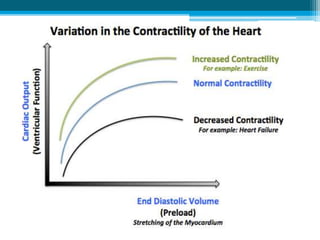
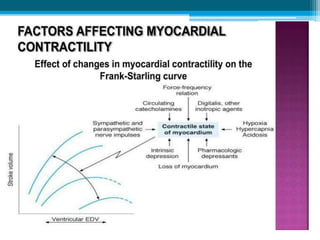
    Contractility • It isthe intrinsic ability of the heart. • Also called “Ionotropism”. (Other character of heart muscle Dromotropism, Chronotropism and Lusiotropism) Related to intracellular calcium( actin, myosin, tropomyosin, troponin c)
  • 53.
    CONTD • There aremany types of indices of contractility 1) Isovolumetric contraction phase- dp/dtContractilityintial length of cardiac muscle 2) Ejection Phase indice: EF= EDV-ESV/ESV 3) Load dependent indice: time varying indice, ration of change in pressure over volume which varies in different phase of cycle.
  • 55.
  • 58.
  • 60.
  • 61.

Editor's Notes

  • #40 ***The auto regulatory range is not usually used practically
  • #43 Activation of sympathetic nerves innervating the coronary vasculature causes only transient vasoconstriction mediated by α1-adrenoceptors.  This brief (and small) vasoconstrictor response is followed by vasodilation caused by enhanced production of vasodilator metabolites (active hyperemia) due to increased mechanical and metabolic activity of the heart resulting from β1-adrenoceptor activation of the myocardium.  Therefore, sympathetic activation to the heart results in coronary vasodilation and increased coronary flow due to increased metabolic activity (increased heart rate, contractility) despite direct vasoconstrictor effects of sympathetic activation on the coronaries. This is termed "functional sympatholysis."