Virology Review
Just the basics!
Diagnostic techniques used in
the Virology Laboratory
Laboratory diagnosis
 Direct antigen detection from lesions
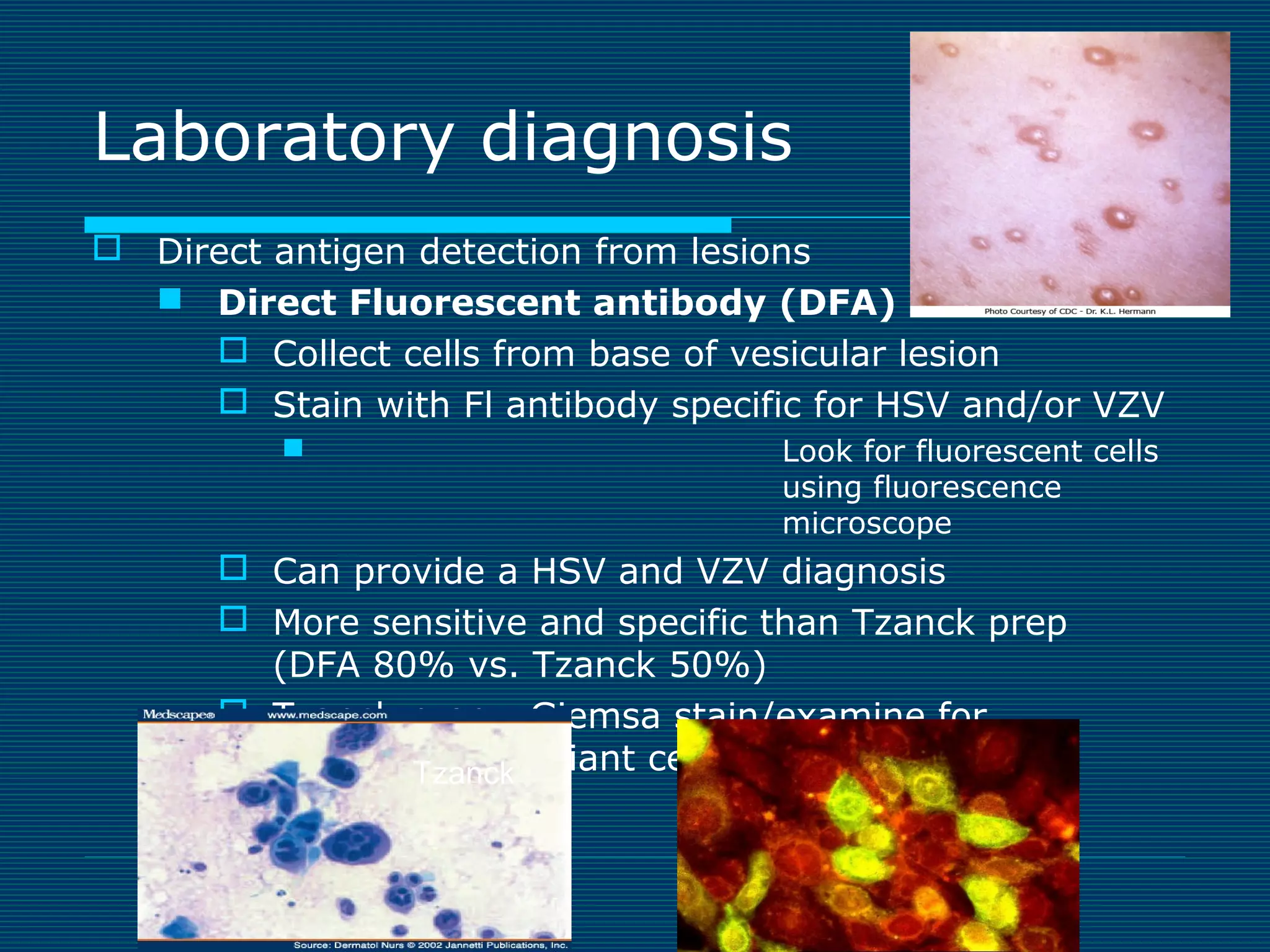
 Direct Fluorescent antibody (DFA) stain
 Collect cells from base of vesicular lesion
 Stain with Fl antibody specific for HSV and/or VZV


Look for fluorescent cells
using fluorescence
microscope

 Can provide a HSV and VZV diagnosis
 More sensitive and specific than Tzanck prep
(DFA 80% vs. Tzanck 50%)
 Tzanck prep= Giemsa stain/examine for
multinucleated giant cells of Herpes virus
Tzanck
Rapid detection of viral antigens
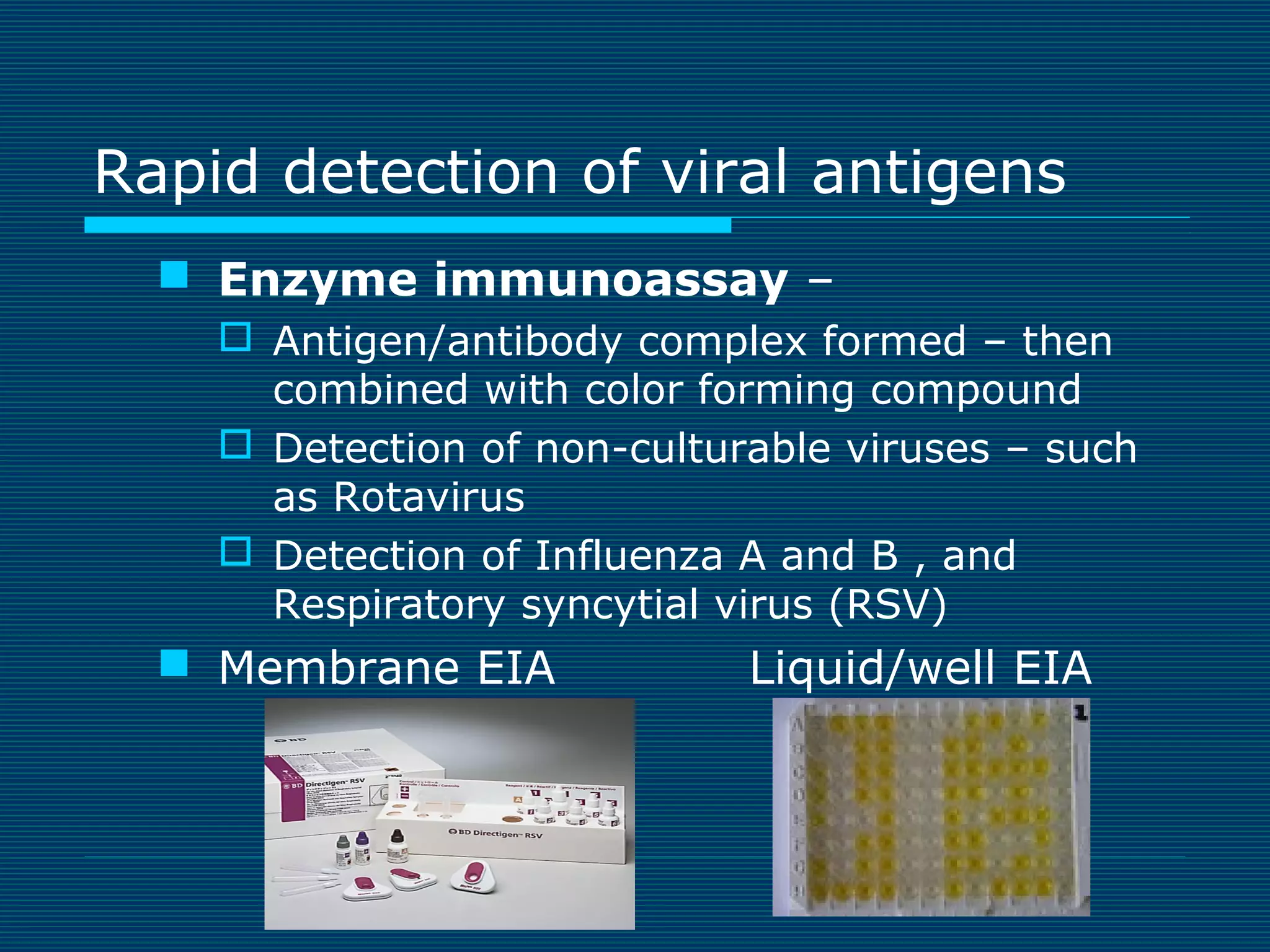
 Enzyme immunoassay –
 Antigen/antibody complex formed – then
combined with color forming compound
 Detection of non-culturable viruses – such
as Rotavirus
 Detection of Influenza A and B , and
Respiratory syncytial virus (RSV)

 Membrane EIA

Liquid/well EIA
Molecular Detection
 Amplification of DNA or RNA
 Rapid results
 Exceed sensitivity of culture
 Standard of practice for detecting respiratory viruses

 Standard of practice for HSV and Enterovirus
detection in CSF
 Culture <=20%

PCR >=90%

 CMV quantitative assays in transplantation
 Hepatitis B and C detection and viral load
 HIV viral load
 Test of diagnosis not cure – can retain DNA/RNA
for 7 – 30 days after initial diagnosis
Viral Cell Culture
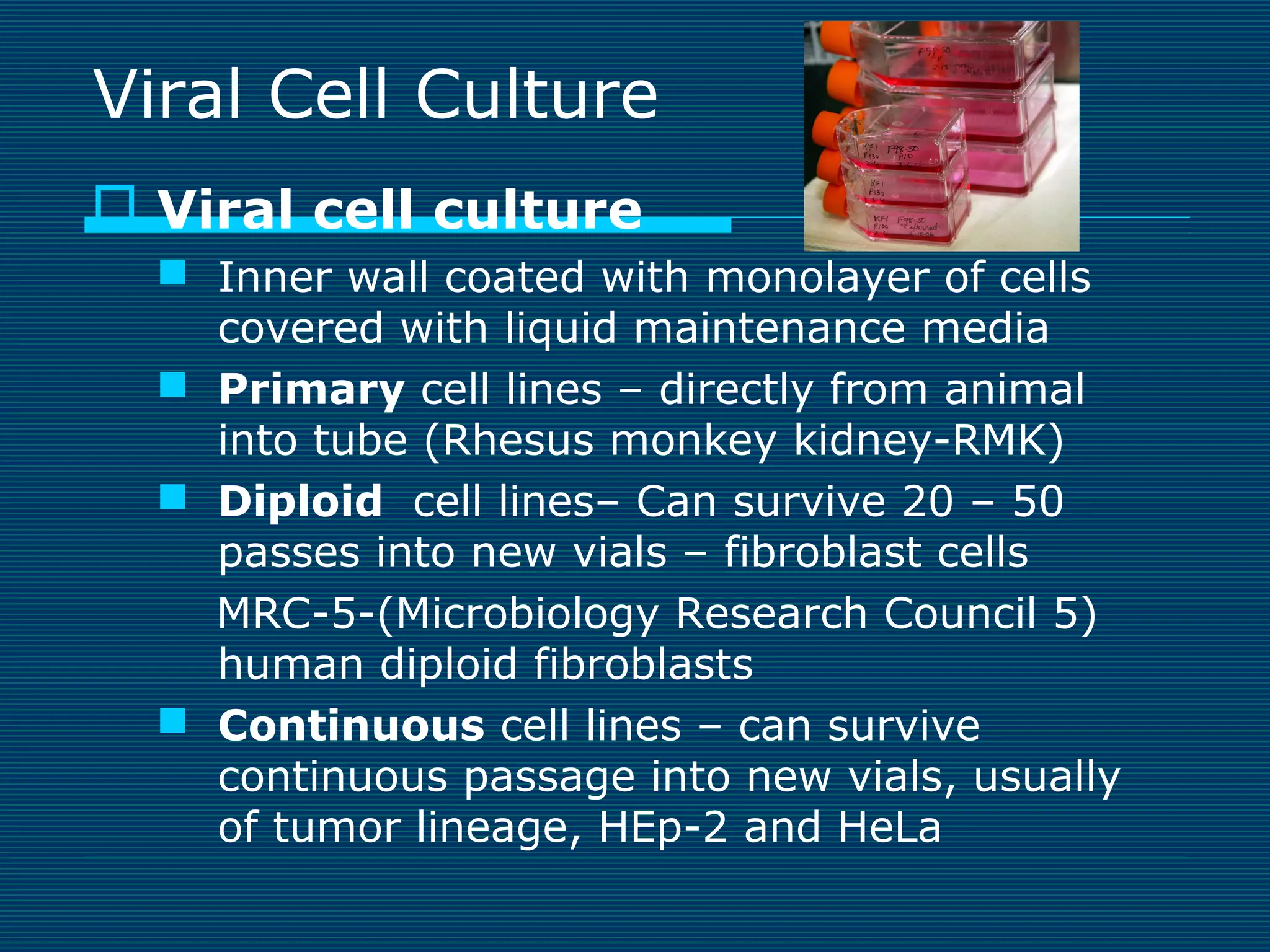
 Viral cell culture
 Inner wall coated with monolayer of cells
covered with liquid maintenance media
 Primary cell lines – directly from animal
into tube (Rhesus monkey kidney-RMK)
 Diploid cell lines– Can survive 20 – 50
passes into new vials – fibroblast cells
MRC-5-(Microbiology Research Council 5)
human diploid fibroblasts
 Continuous cell lines – can survive
continuous passage into new vials, usually
of tumor lineage, HEp-2 and HeLa
Viral Cell culture
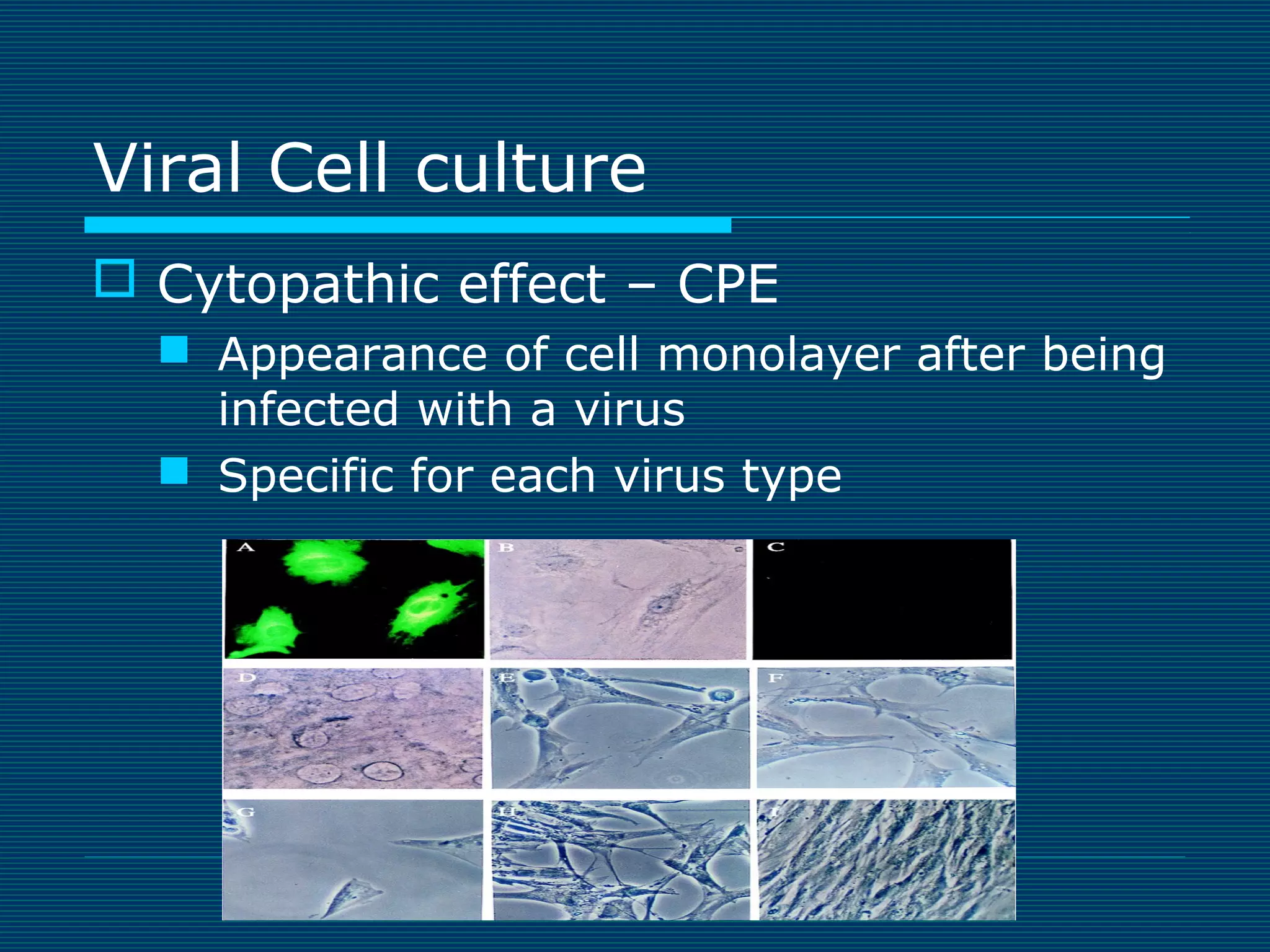
 Cytopathic effect – CPE
 Appearance of cell monolayer after being
infected with a virus
 Specific for each virus type
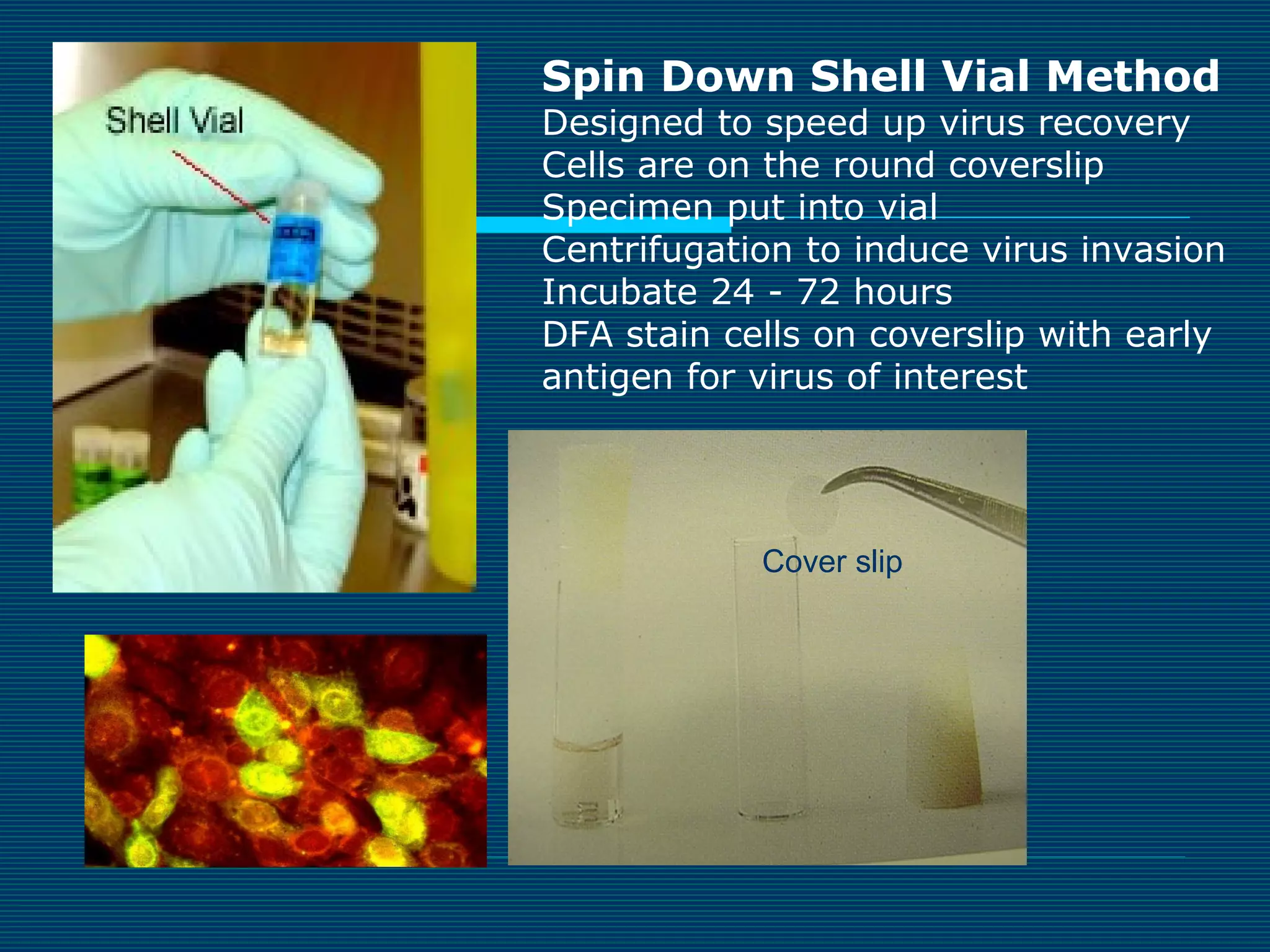
Spin Down Shell Vial Method

Designed to speed up virus recovery
Cells are on the round coverslip
Specimen put into vial
Centrifugation to induce virus invasion
Incubate 24 - 72 hours
DFA stain cells on coverslip with early
antigen for virus of interest

Cover slip
Specimen collection and
transport
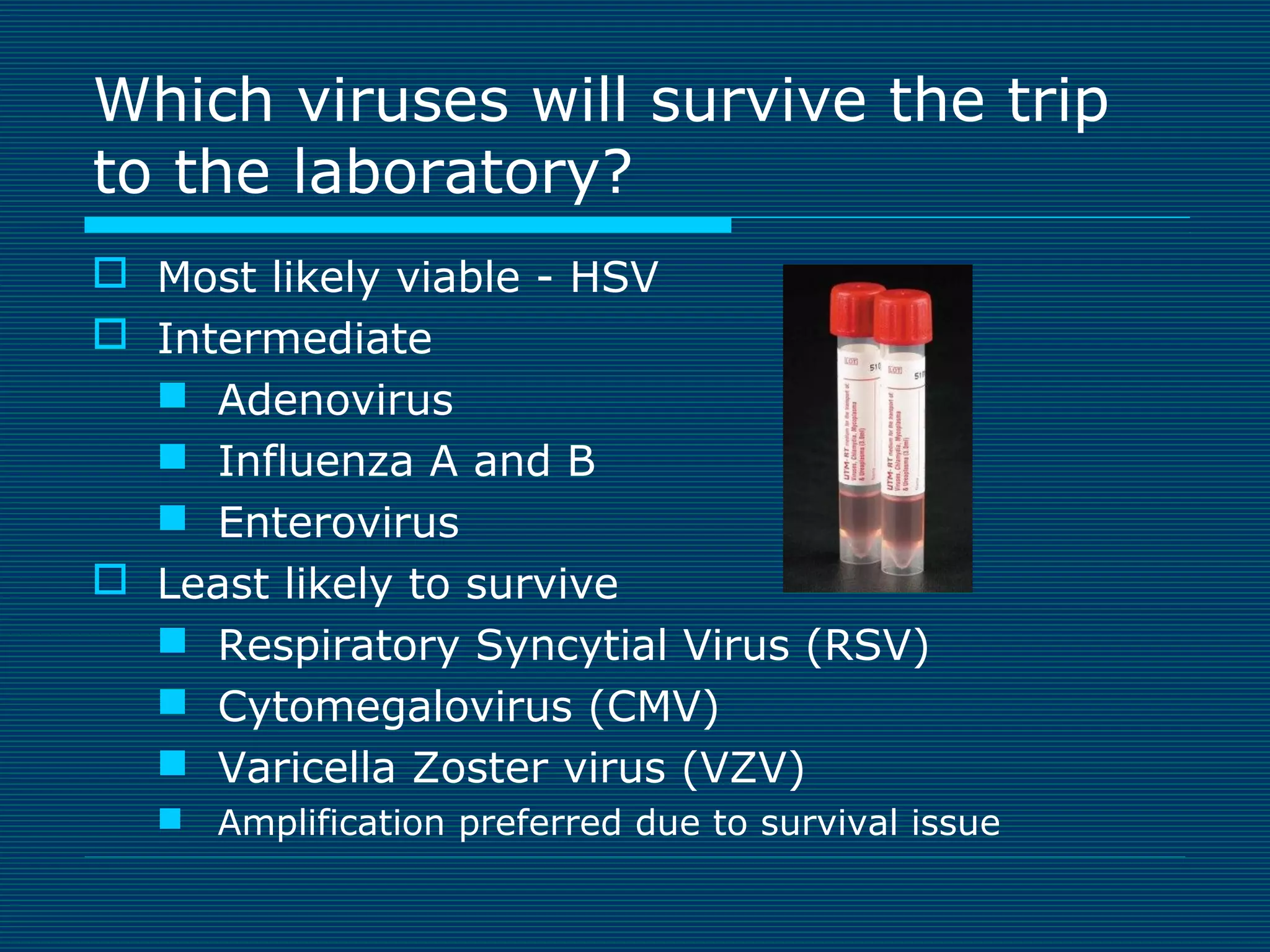
 Viral transport media- Hanks balanced salt
solution with antibiotics, needed for the
transport of lesions, mucous membranes and
throats to the laboratory
I
Which viruses will survive the trip
to the laboratory?
 Most likely viable - HSV
 Intermediate
 Adenovirus
 Influenza A and B
 Enterovirus
 Least likely to survive
 Respiratory Syncytial Virus (RSV)
 Cytomegalovirus (CMV)
 Varicella Zoster virus (VZV)
 Amplification preferred due to survival issue
Which viruses grow the fastest in
conventional cell culture?
 Fast (>=24 hours)
 HSV
 Intermediate (5 -7 days)
 Adenovirus
Enterovirus
 Influenzae
VZV
 Slow (10 - 14 days)
 RSV
 Slowest (14 - 21 days)
 CMV

 Molecular superior for slow growers
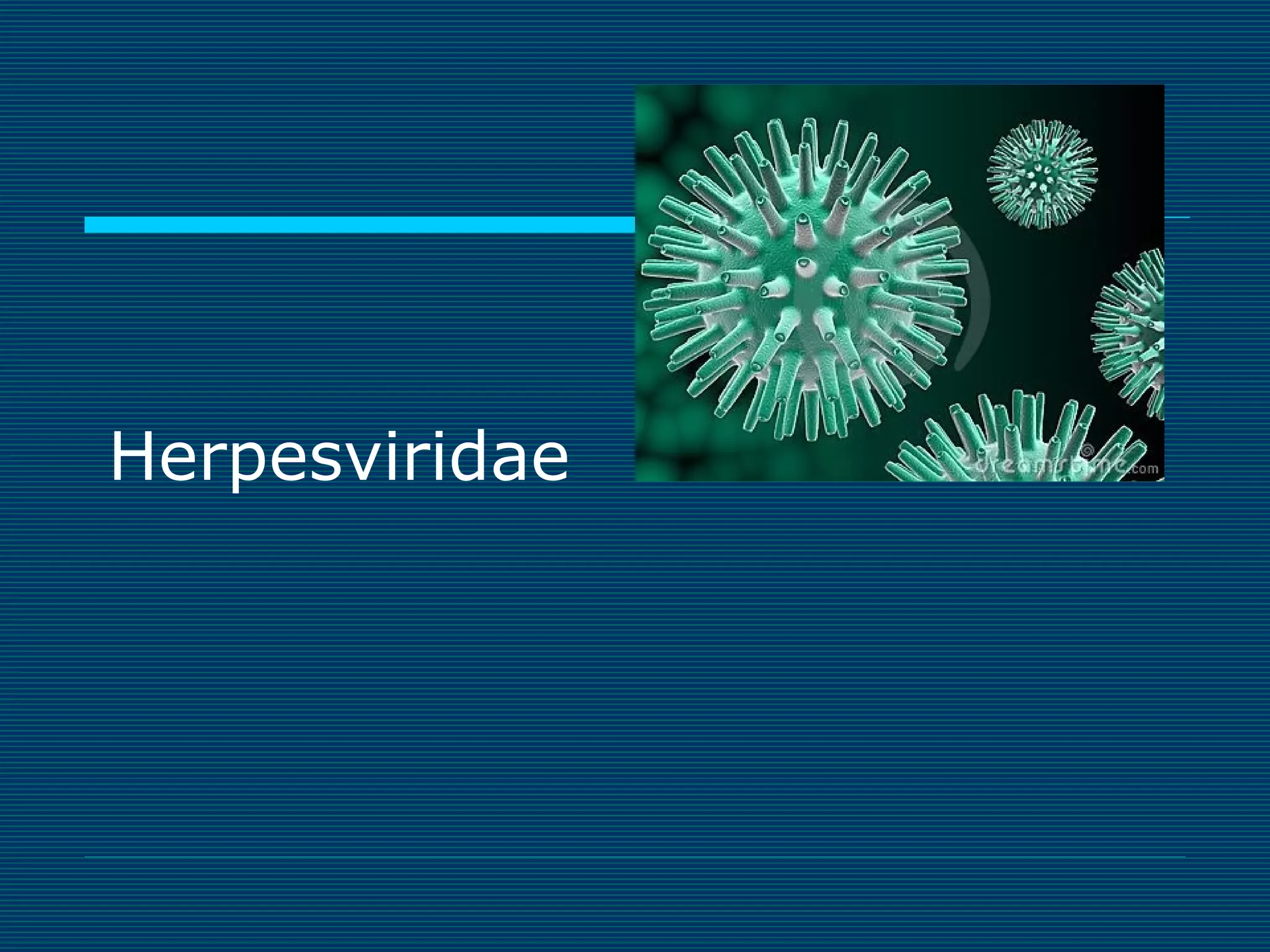
Herpesviridae
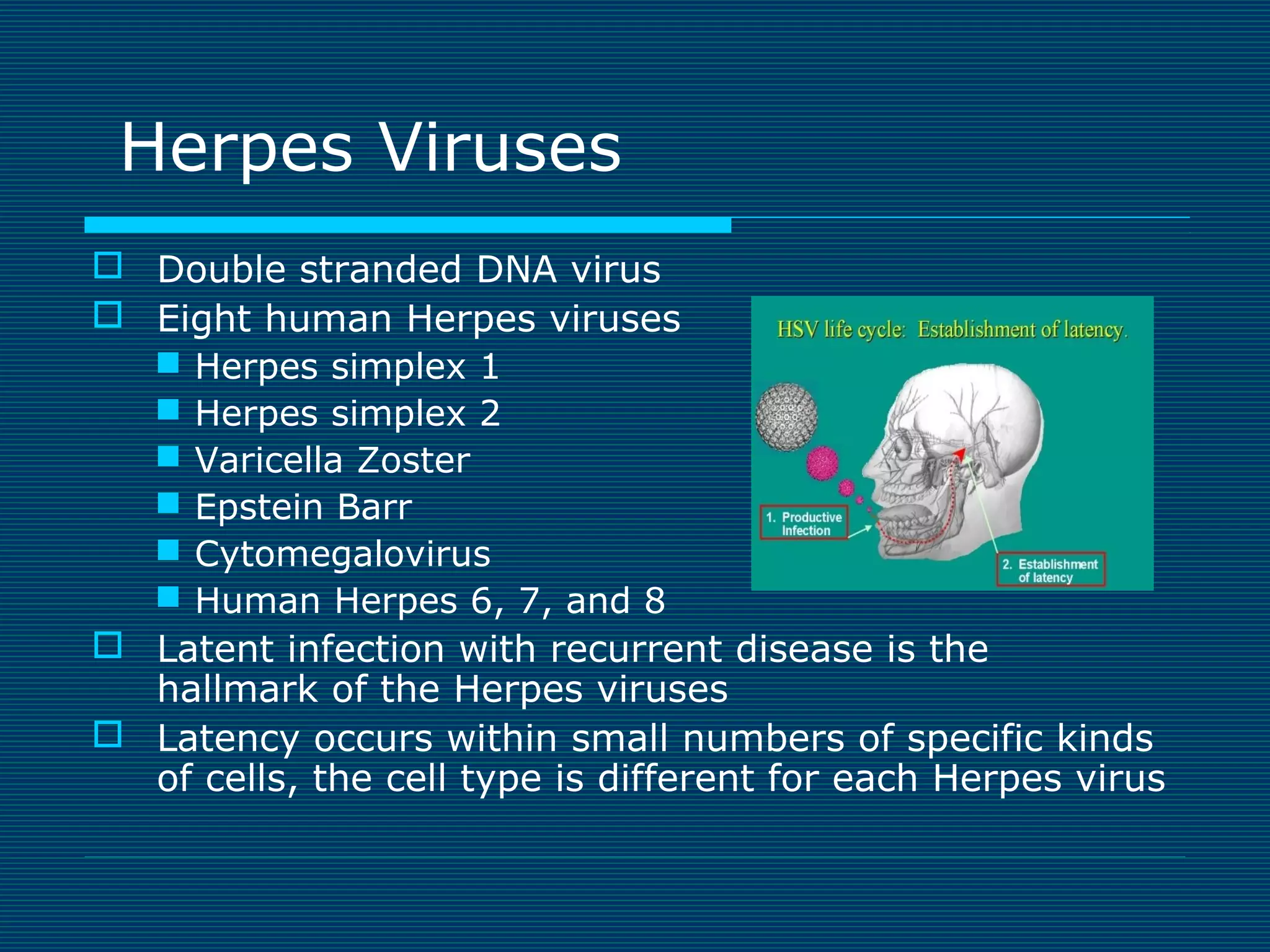
Herpes Viruses
 Double stranded DNA virus
 Eight human Herpes viruses
 Herpes simplex 1
 Herpes simplex 2
 Varicella Zoster
 Epstein Barr
 Cytomegalovirus
 Human Herpes 6, 7, and 8
 Latent infection with recurrent disease is the
hallmark of the Herpes viruses
 Latency occurs within small numbers of specific kinds
of cells, the cell type is different for each Herpes virus
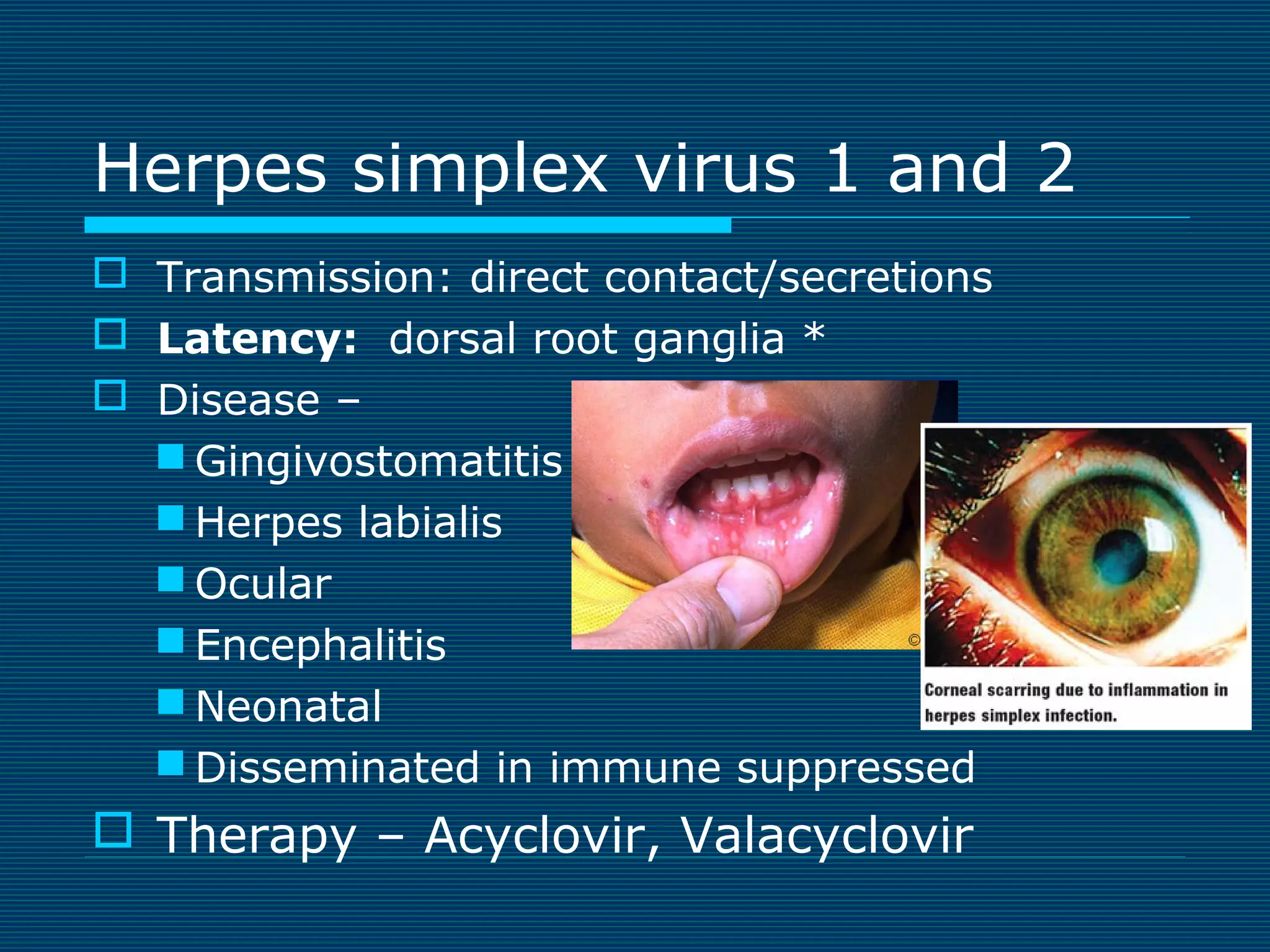
Herpes simplex virus 1 and 2
 Transmission: direct contact/secretions
 Latency: dorsal root ganglia *
 Disease –
 Gingivostomatitis
 Herpes labialis
 Ocular
 Encephalitis
 Neonatal
 Disseminated in immune suppressed

 Therapy – Acyclovir, Valacyclovir
Herpes virus diagnosis
Herpes 1 & 2 do well in culture
Grow within 24-48 hrs in Human diploid fibroblast cells
(MRC-5) / Observe for characteristic CPE

 Antigen detection by direct fluorescent staining
of cells obtained from vesicular lesions
 Amplification methods for diagnosis
 Cytology/Histology - intra nuclear inclusions,
multinucleated giant cells
 Serology – Most helpful to detect past infection
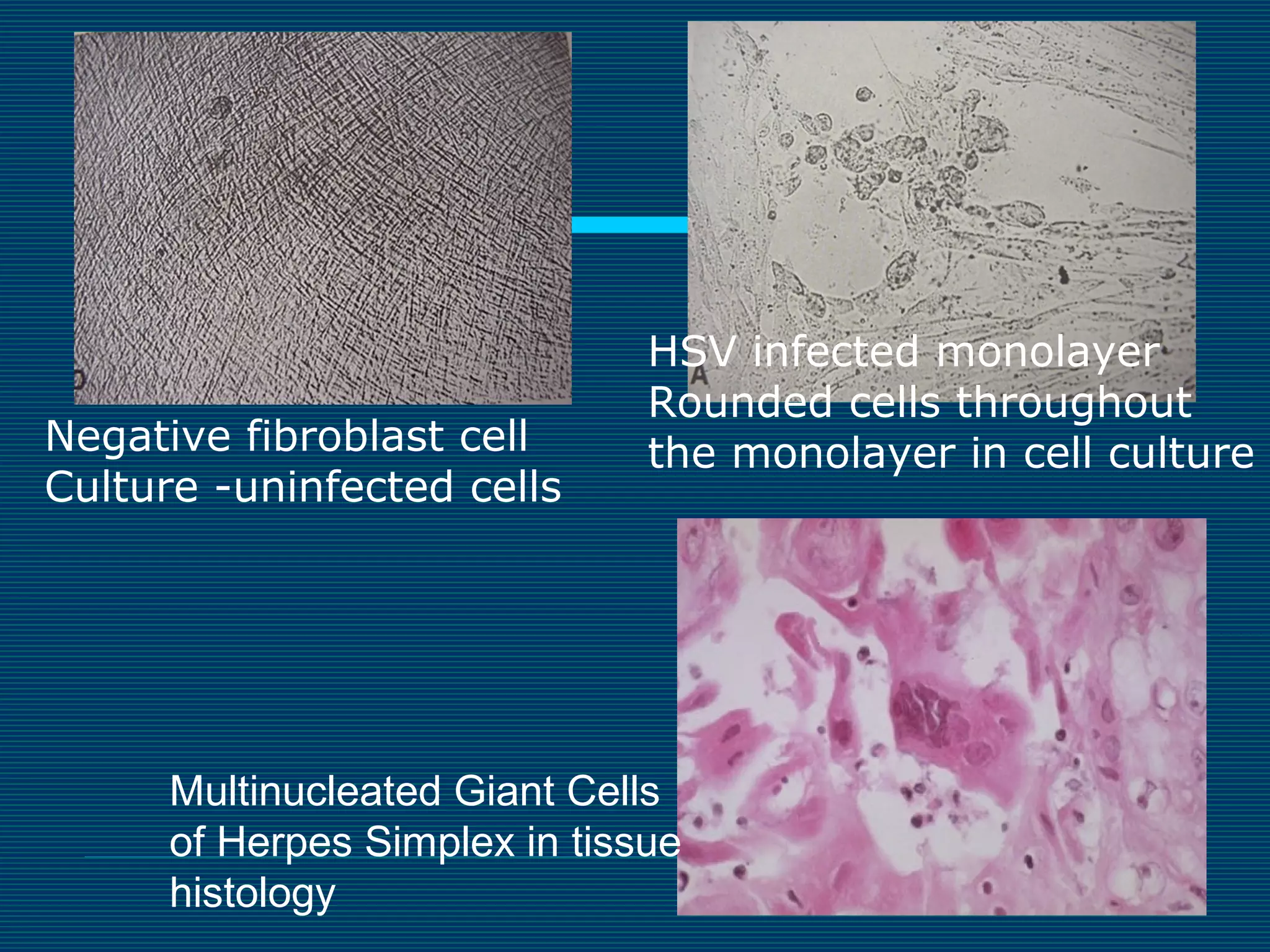
Negative fibroblast cell
Culture -uninfected cells

HSV infected monolayer
Rounded cells throughout
the monolayer in cell culture

Multinucleated Giant Cells
of Herpes Simplex in tissue
histology
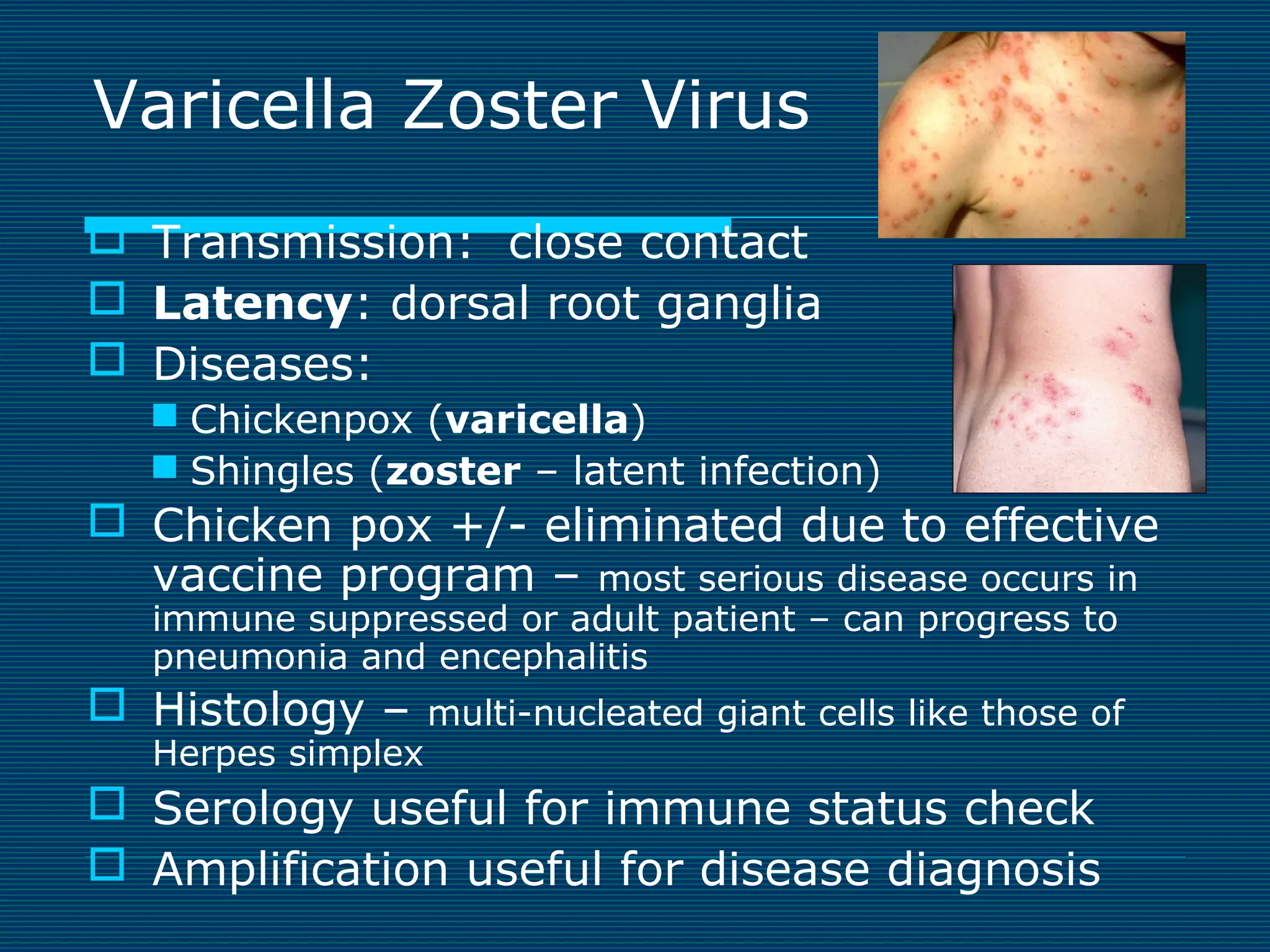
Varicella Zoster Virus
 Transmission: close contact
 Latency: dorsal root ganglia
 Diseases:
 Chickenpox (varicella)
 Shingles (zoster – latent infection)

 Chicken pox +/- eliminated due to effective
vaccine program – most serious disease occurs in
immune suppressed or adult patient – can progress to
pneumonia and encephalitis

 Histology –

Herpes simplex

multi-nucleated giant cells like those of

 Serology useful for immune status check
 Amplification useful for disease diagnosis
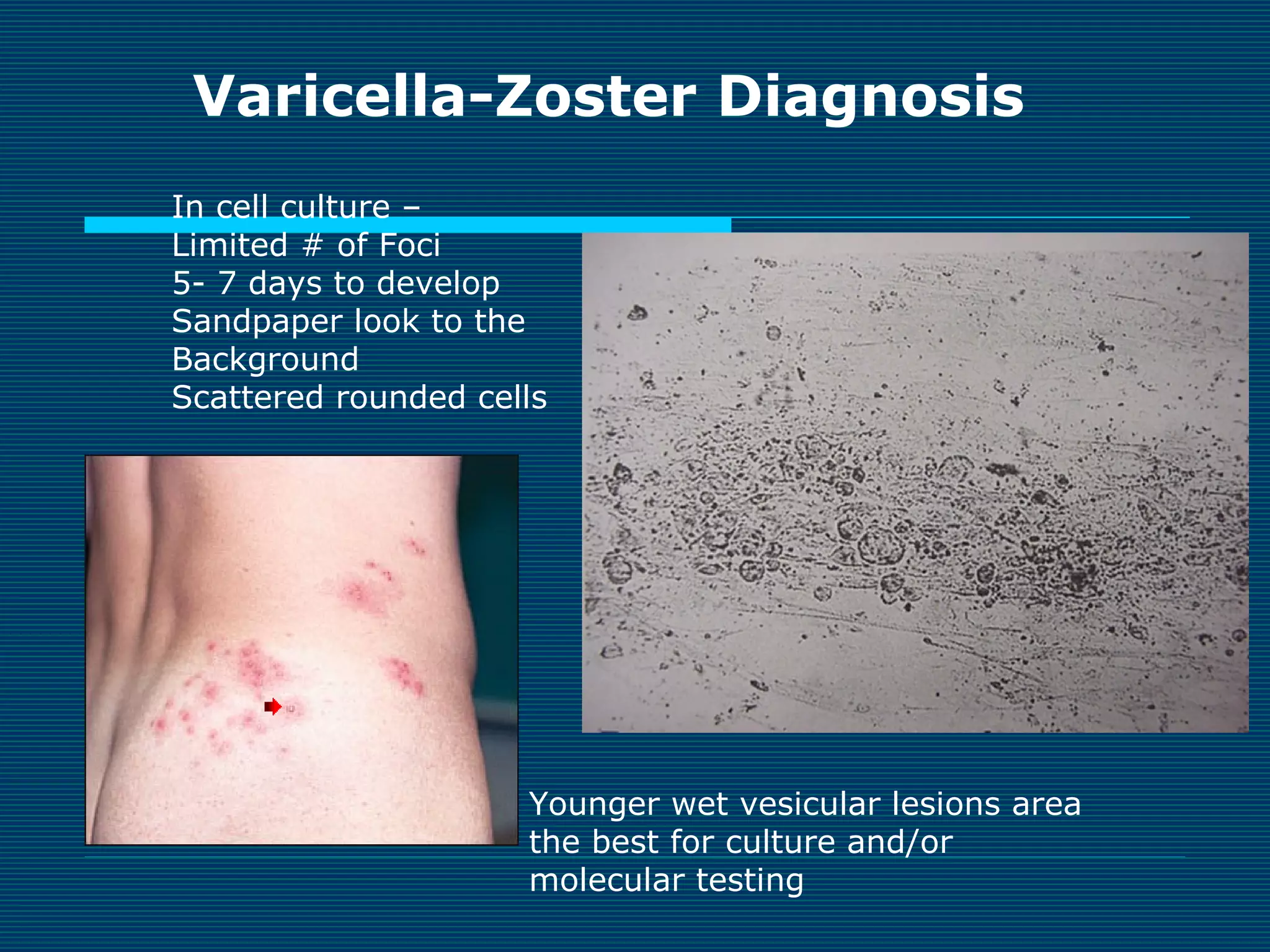
Varicella-Zoster Diagnosis
In cell culture –
Limited # of Foci
5- 7 days to develop
Sandpaper look to the
Background
Scattered rounded cells

Younger wet vesicular lesions area
the best for culture and/or
molecular testing
Cytomegalovirus (CMV)
 Transmitted by blood transfusion , vertical and
horizontal transmission to fetus, close contact
 Latency: Macrophages
 Disease: Asymptomatic in most individuals infected

 Congenital – most common cause
 Perinatal
 Immunocompromised – Primary disease most
serious

 Diagnosis: Cell culture CPE (Human diploid fibroblast ,
PCR and quantitative PCR
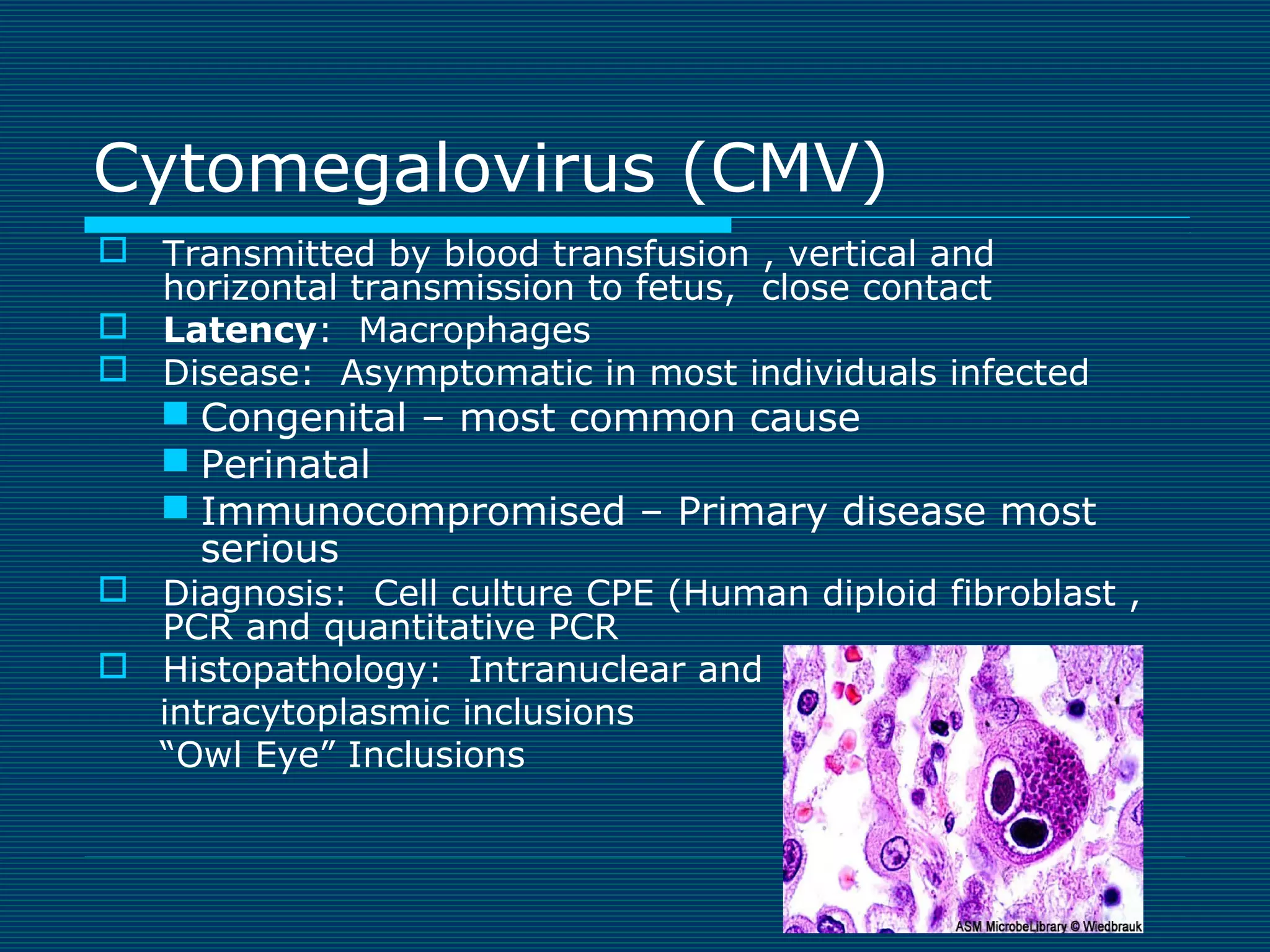
 Histopathology: Intranuclear and
intracytoplasmic inclusions
“Owl Eye” Inclusions
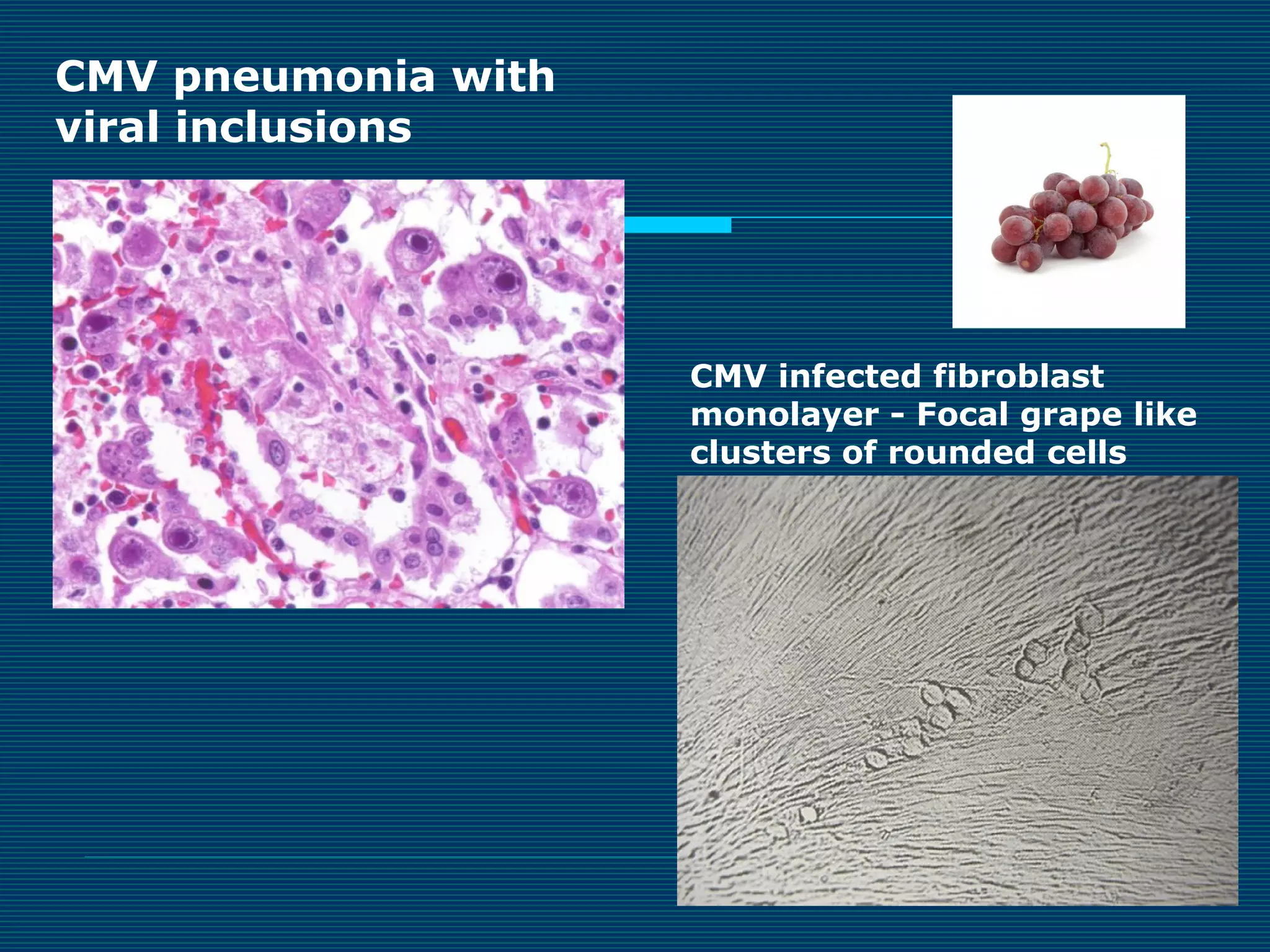
CMV pneumonia with
viral inclusions

CMV infected fibroblast
monolayer - Focal grape like
clusters of rounded cells
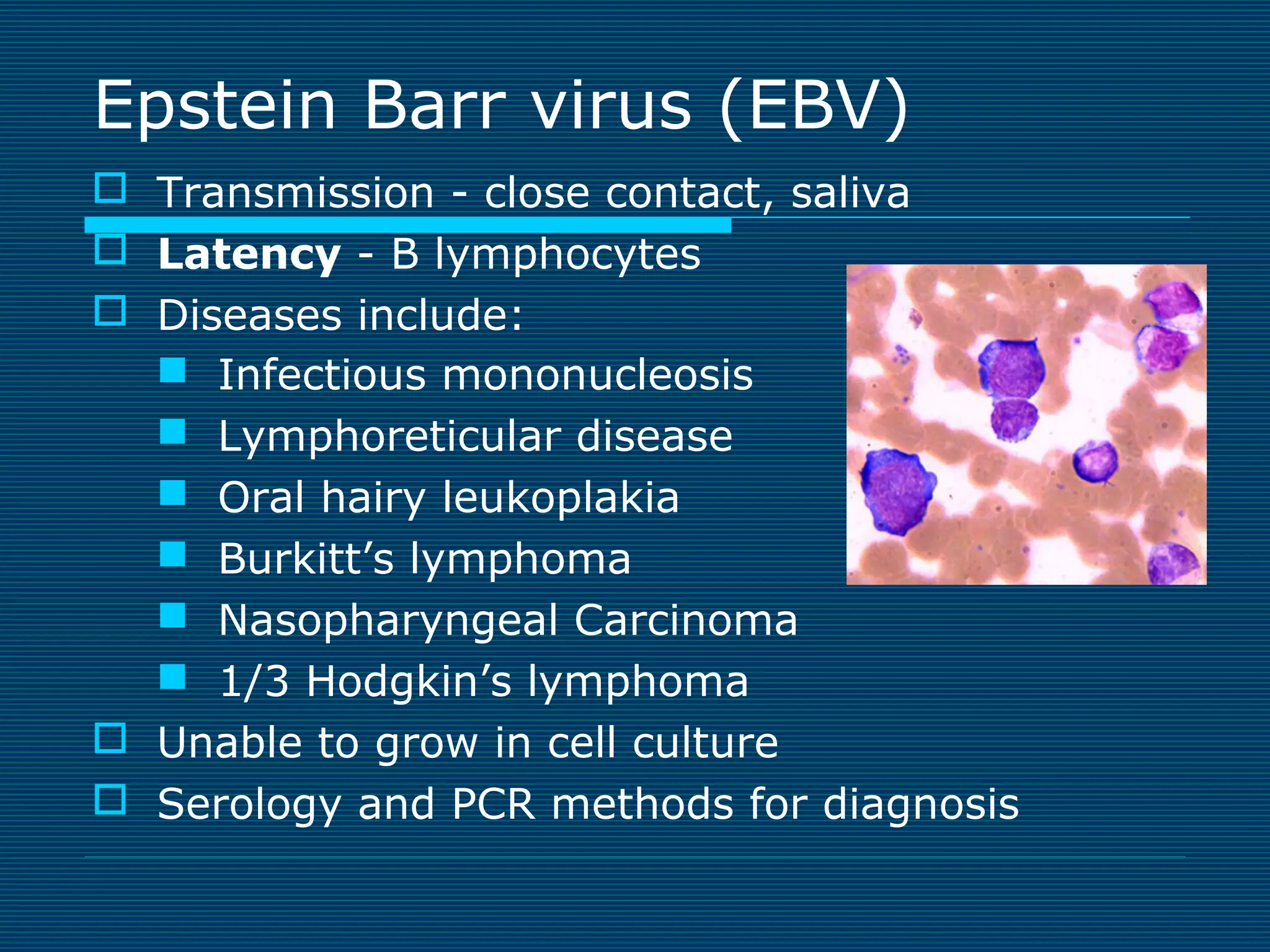
Epstein Barr virus (EBV)
 Transmission - close contact, saliva
 Latency - B lymphocytes
 Diseases include:
 Infectious mononucleosis
 Lymphoreticular disease
 Oral hairy leukoplakia
 Burkitt’s lymphoma
 Nasopharyngeal Carcinoma
 1/3 Hodgkin’s lymphoma
 Unable to grow in cell culture
 Serology and PCR methods for diagnosis
EBV Serodiagnosis using the
Heterophile Antibody
 Heterophile antibodies (HA) react with
antigens phylogenetically unrelated to the
antigenic determinants against which they
were raised
 HA secondary to EBV are detected by the
ability to react with horse or cattle rbcs
(theory of the Monospot test)
 HA rise in the first 2 - 3 weeks of EBV
infection, then rapidly fall at @ 4 weeks
 Cannot be used in children < 4 years of age
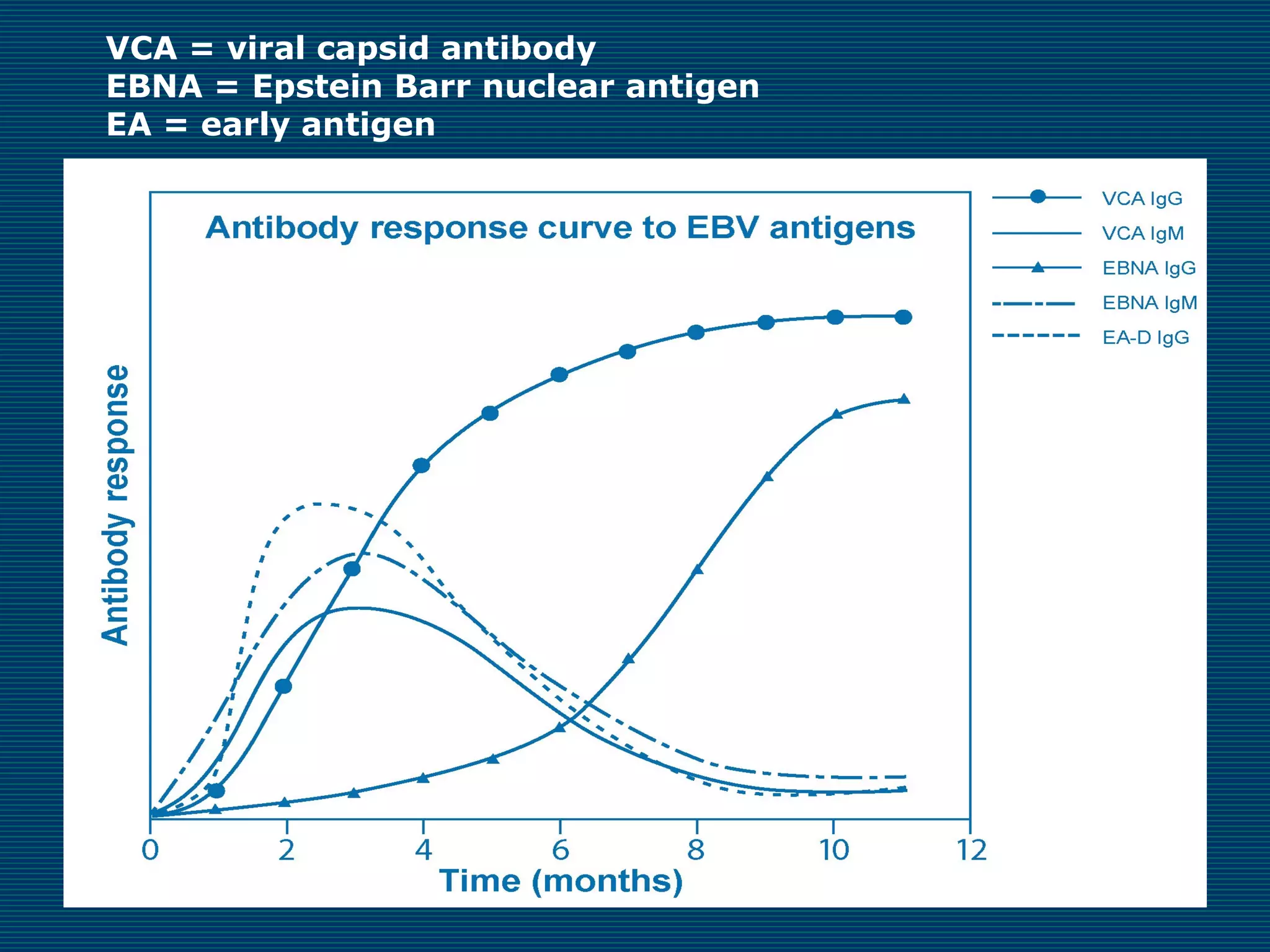
VCA = viral capsid antibody
EBNA = Epstein Barr nuclear antigen
EA = early antigen
Human Herpes virus
6, 7 & 8
 HH6
 Roseola [sixth disease]
 6m-2yr high fever & rash

 HH7
 CMV like Disease

 HH8
 Kaposi’s sarcoma
 Castleman’s disease

Onion skin of
Castleman disease
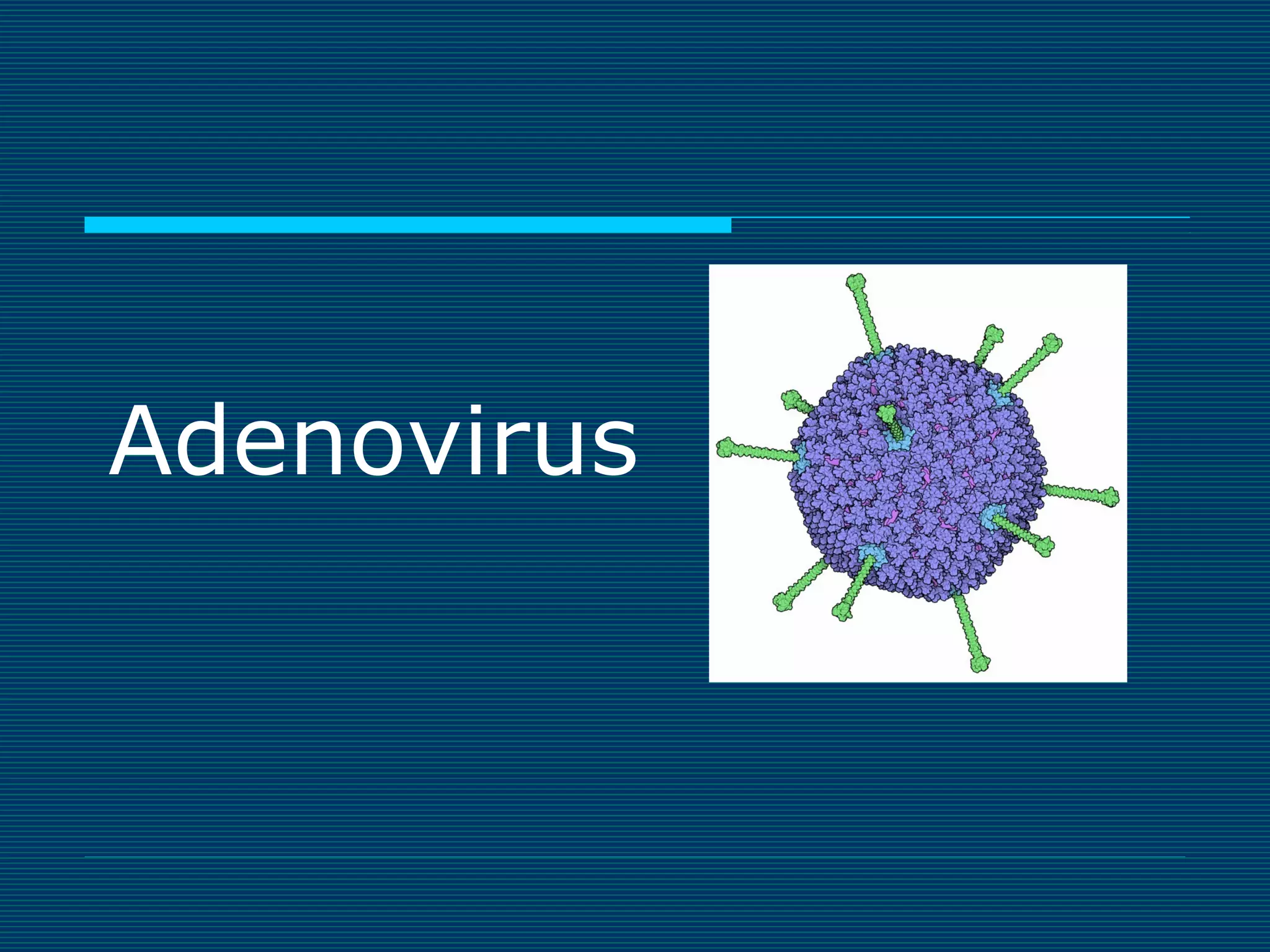
Adenovirus
Adenovirus





DNA - non enveloped/ icosahedral virus
Latent: lymphoid tissue
Transmission: Respiratory and fecal-oral route
Diseases:
 Adenovirus type 14 – new virulent
respiratory strain / pneumonia
 Pharyngitis (year round epidemics)
 Gastroenteritis in children
 Adenovirus types 40 & 41

 Keratoconjuctivitis
 Disseminated infection in transplant patients
 Hemorrhagic cystitis in immune suppressed
Adenovirus

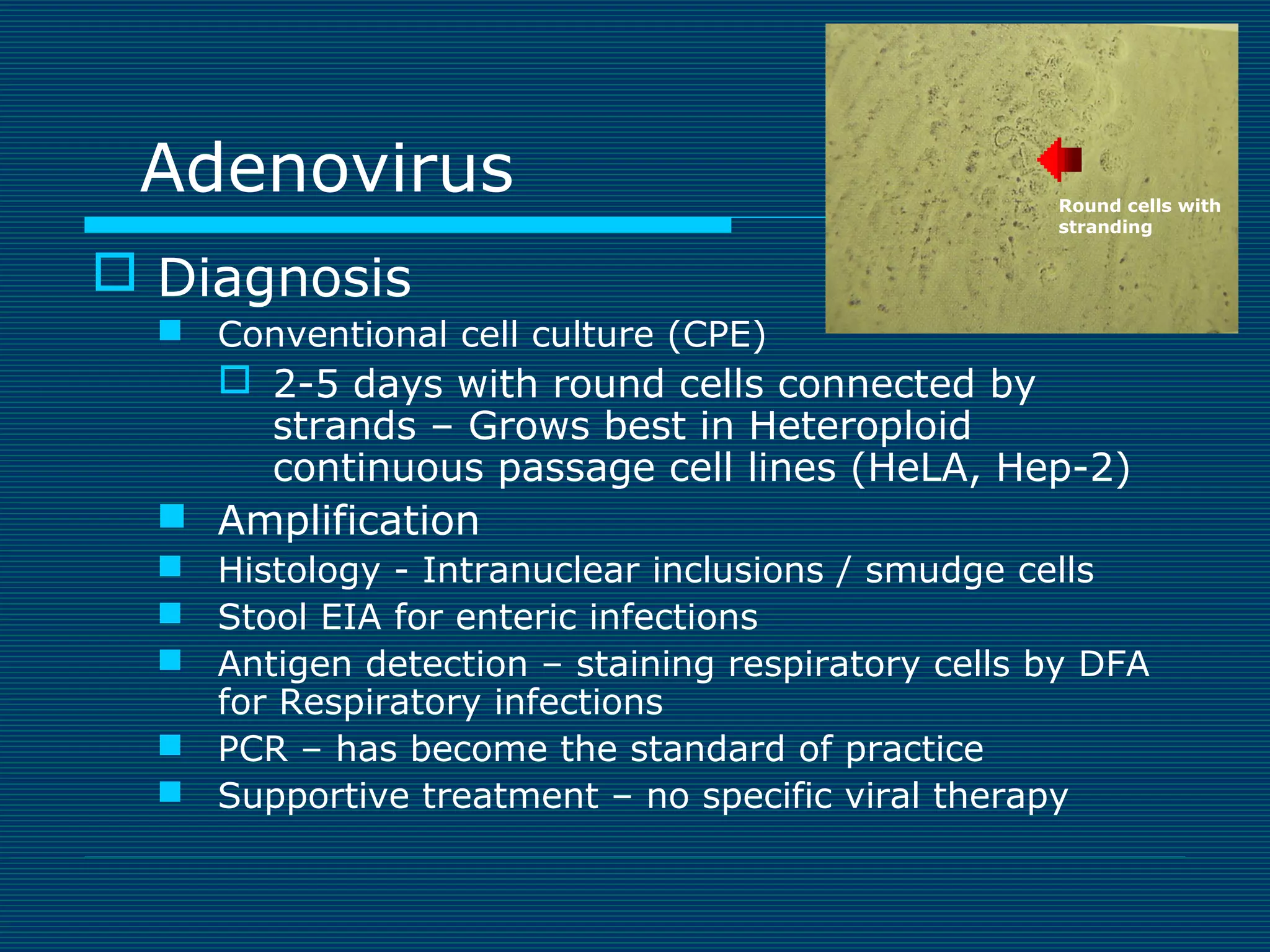
Round cells with
stranding

 Diagnosis
 Conventional cell culture (CPE)

 2-5 days with round cells connected by
strands – Grows best in Heteroploid
continuous passage cell lines (HeLA, Hep-2)
 Amplification
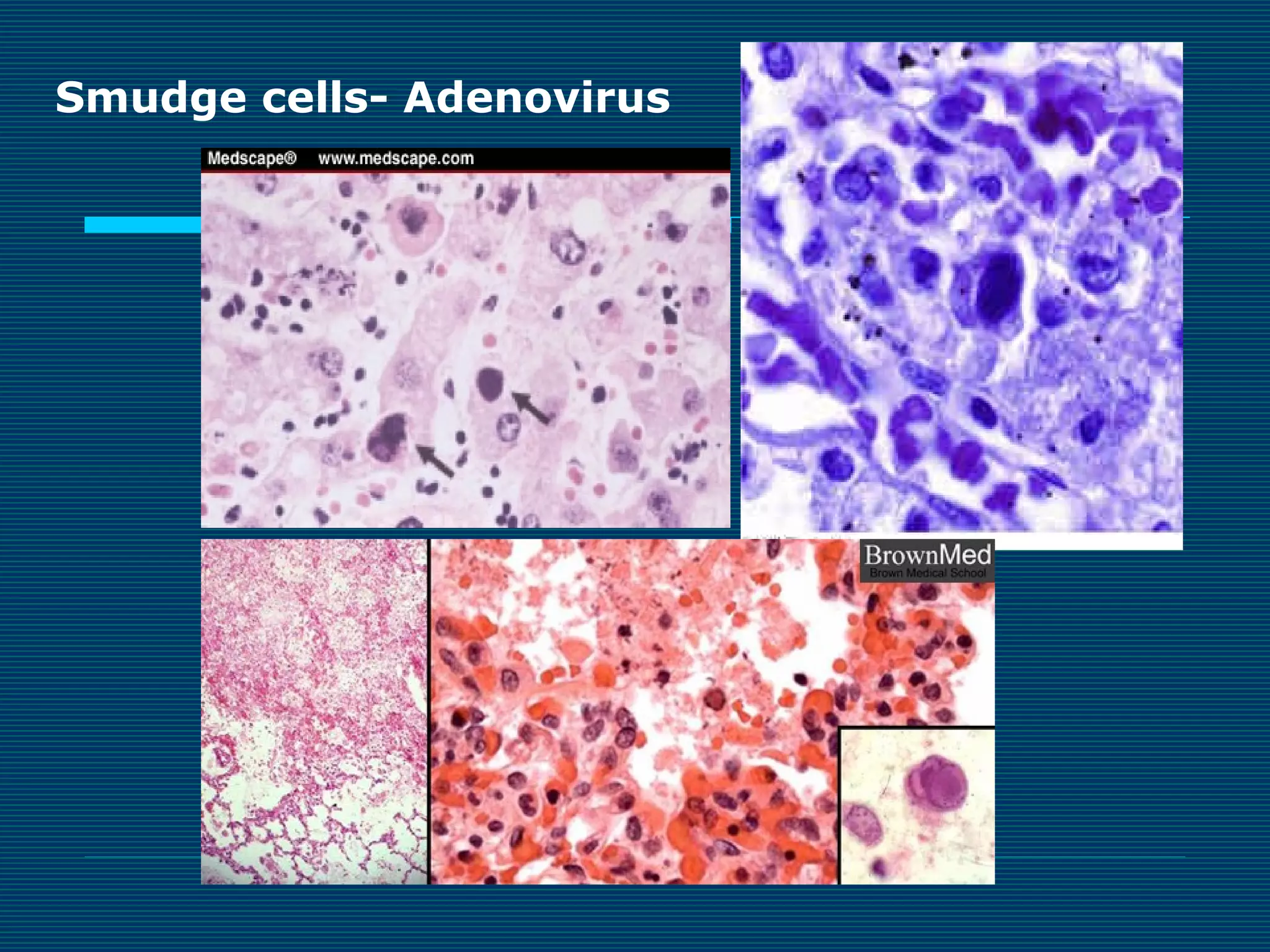
 Histology - Intranuclear inclusions / smudge cells
 Stool EIA for enteric infections
 Antigen detection – staining respiratory cells by DFA
for Respiratory infections
 PCR – has become the standard of practice
 Supportive treatment – no specific viral therapy
Smudge cells- Adenovirus
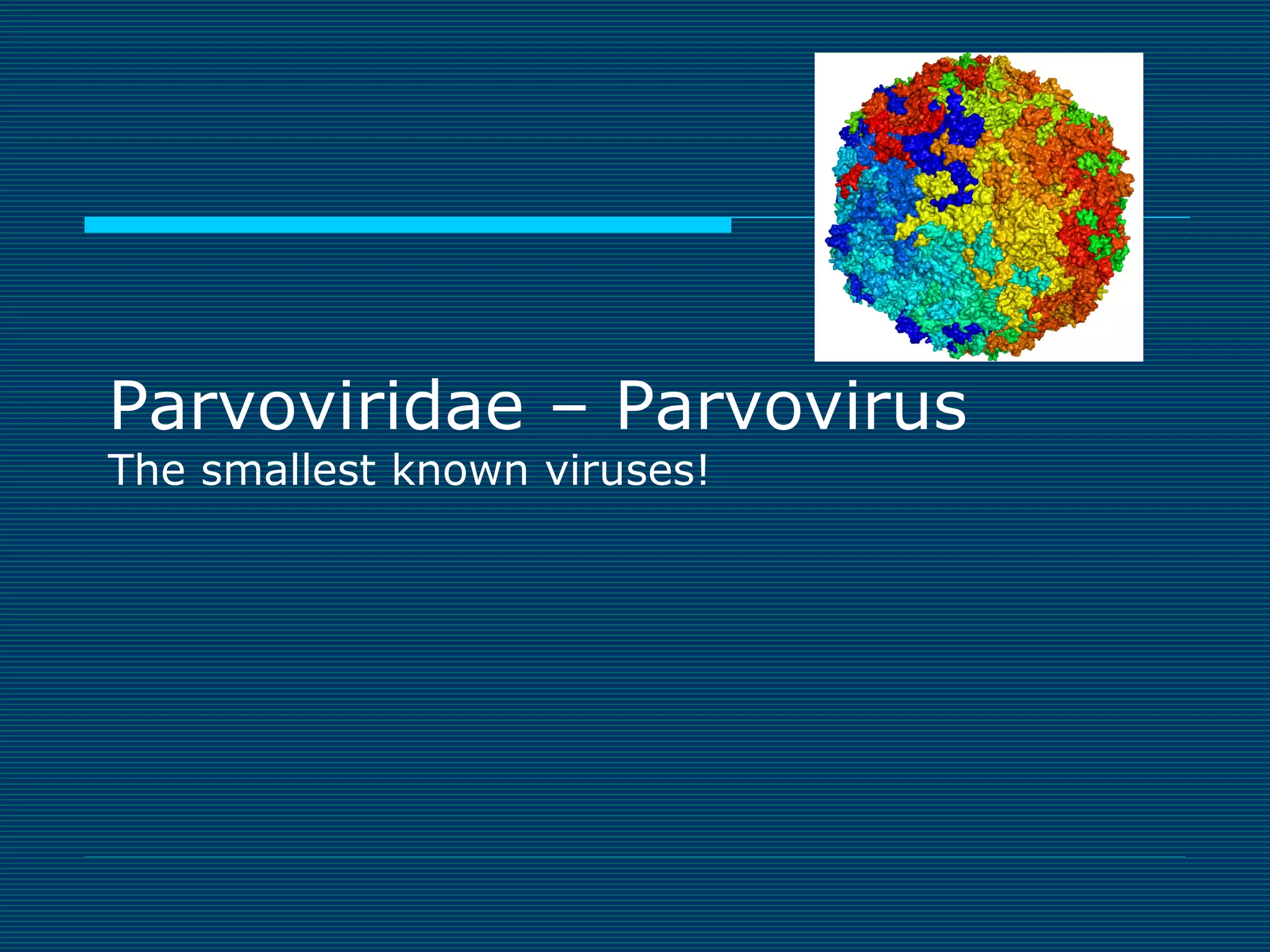
Parvoviridae – Parvovirus
The smallest known viruses!
Parvovirus
 DNA virus
 Parvovirus B19

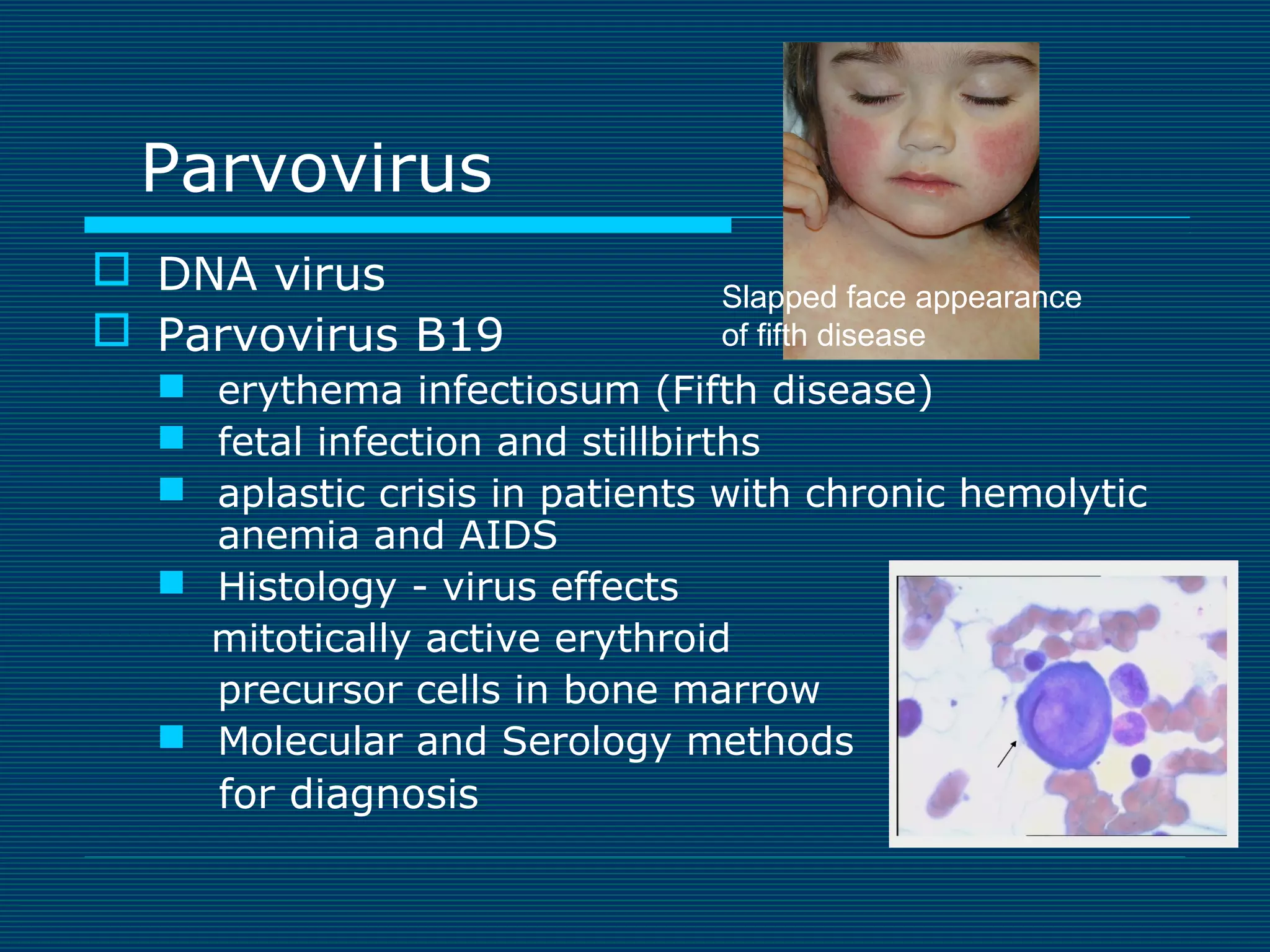
Slapped face appearance
of fifth disease

 erythema infectiosum (Fifth disease)
 fetal infection and stillbirths
 aplastic crisis in patients with chronic hemolytic
anemia and AIDS
 Histology - virus effects
mitotically active erythroid
precursor cells in bone marrow
 Molecular and Serology methods
for diagnosis
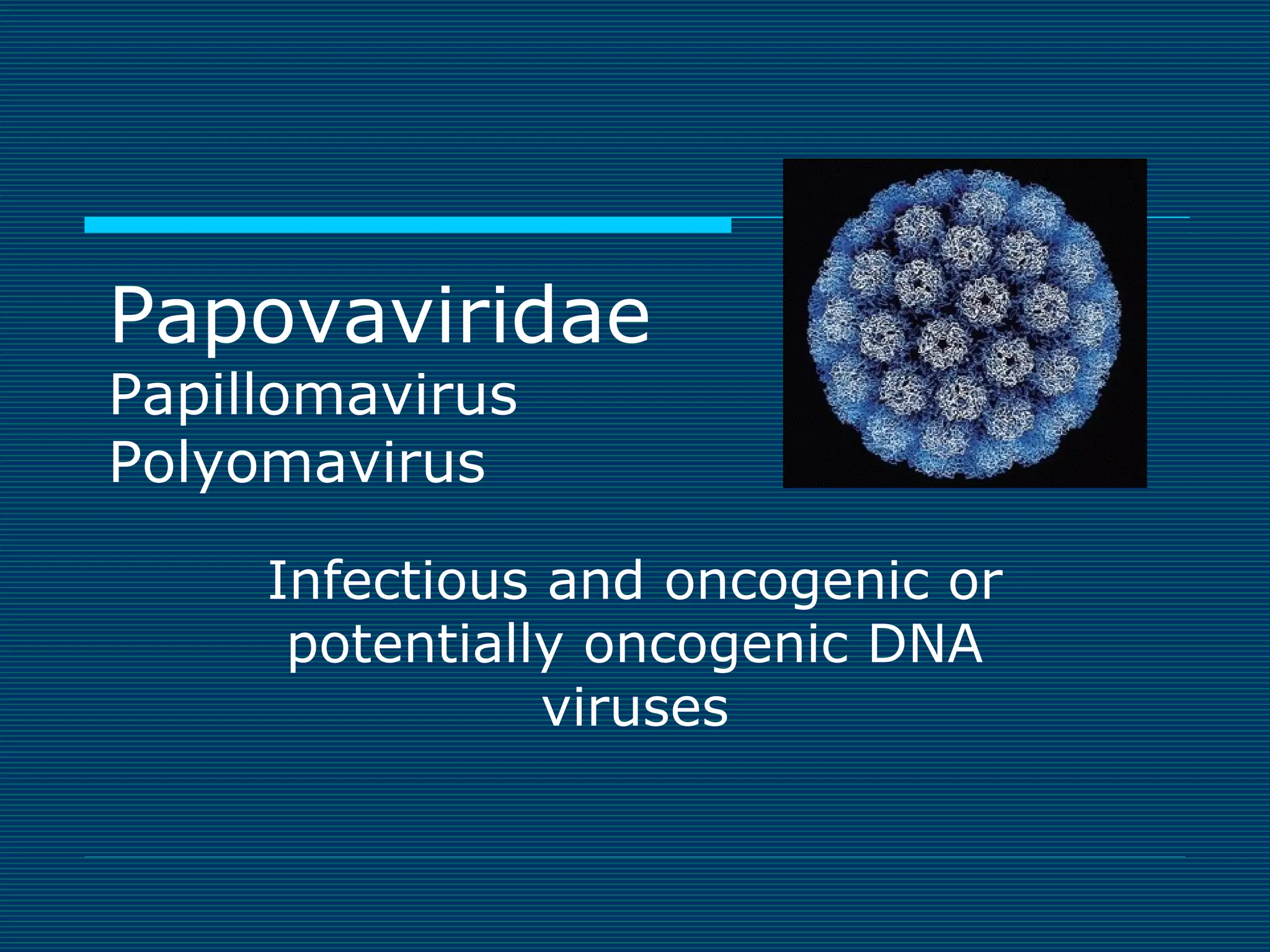
Papovaviridae
Papillomavirus
Polyomavirus

Infectious and oncogenic or
potentially oncogenic DNA
viruses
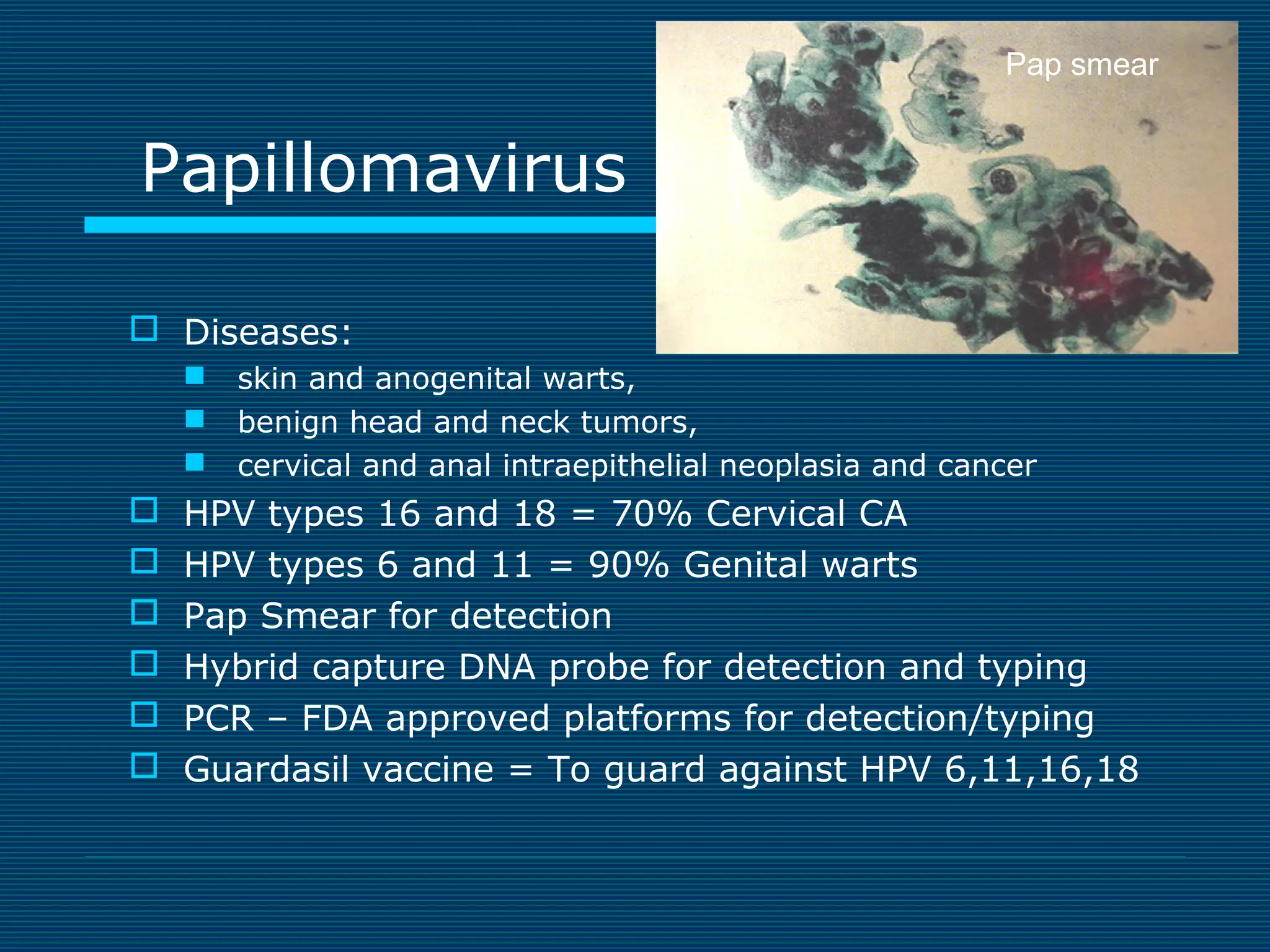
Pap smear

Papillomavirus
 Diseases:











skin and anogenital warts,
benign head and neck tumors,
cervical and anal intraepithelial neoplasia and cancer

HPV types 16 and 18 = 70% Cervical CA
HPV types 6 and 11 = 90% Genital warts
Pap Smear for detection
Hybrid capture DNA probe for detection and typing
PCR – FDA approved platforms for detection/typing
Guardasil vaccine = To guard against HPV 6,11,16,18
Polyomavirus

Giant Glial Cells of JCV

 JC virus [John Cunningham]
 Cause of Progressive multifocal
leukoencephalopathy 


Encephalitis of immune
suppressed
Destroys oligodendrocytes
in brain

 BK virus
 Causes latent virus infection in kidney
 Progression due to immune suppression
 Hemorrhagic cystitis
 Histology/PCR for diagnosis
Hepadnavirus

Hepatitis B
Hepatitis B virus





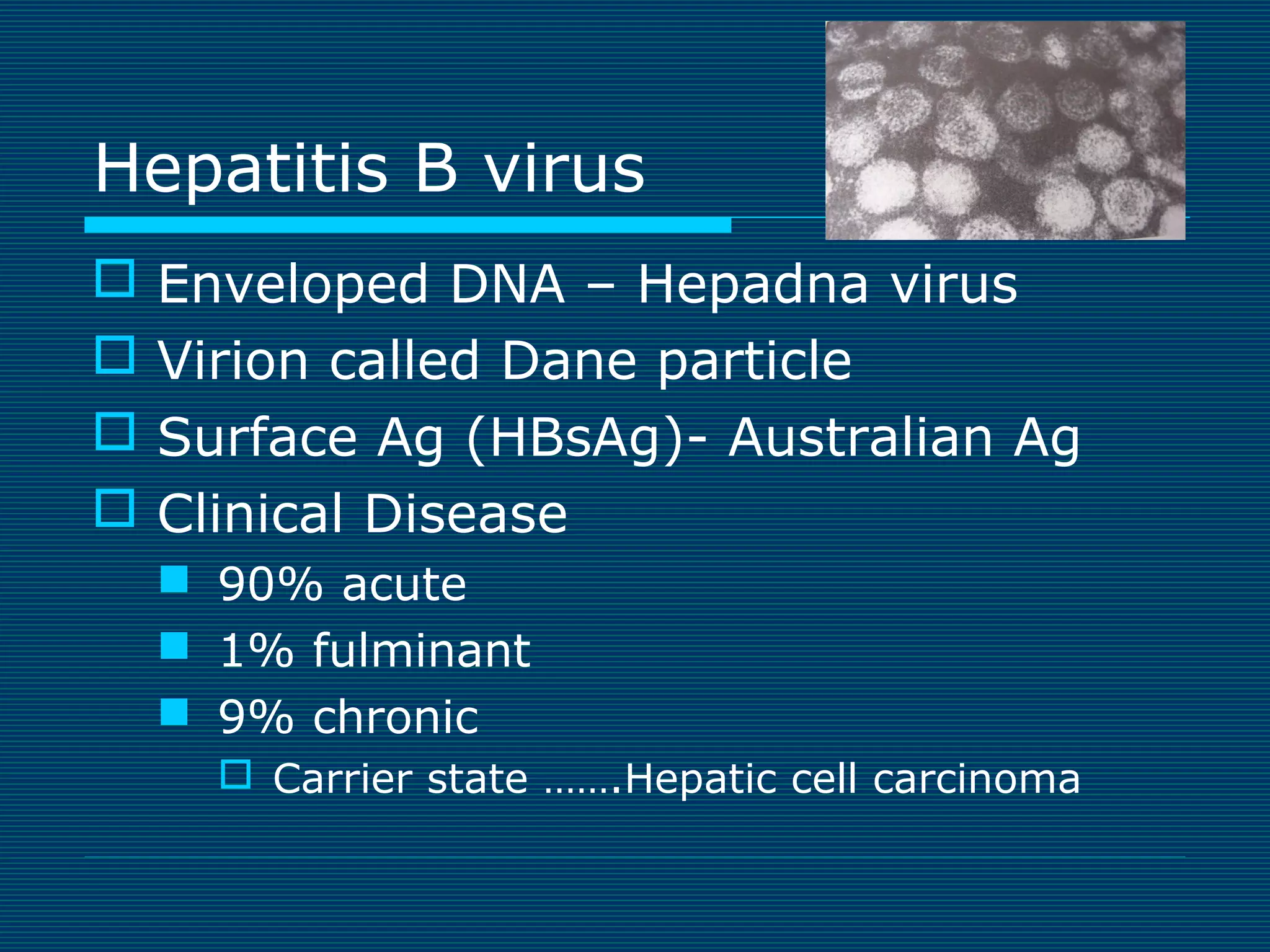
Enveloped DNA – Hepadna virus
Virion called Dane particle
Surface Ag (HBsAg)- Australian Ag
Clinical Disease
 90% acute
 1% fulminant
 9% chronic
 Carrier state …….Hepatic cell carcinoma
Hepatitis B Serology
 Surface Antigen Positive
 Active Hepatitis B or Chronic Carrier

 Do Hep B Quantitation
 Do Hep e antigen – Chronic and “bad”

 Core Antibody Positive
 Immune due to prior infection, acute infection or
chronic carrier

 Surface Antibody Positive
 Immune due to prior infection or vaccine
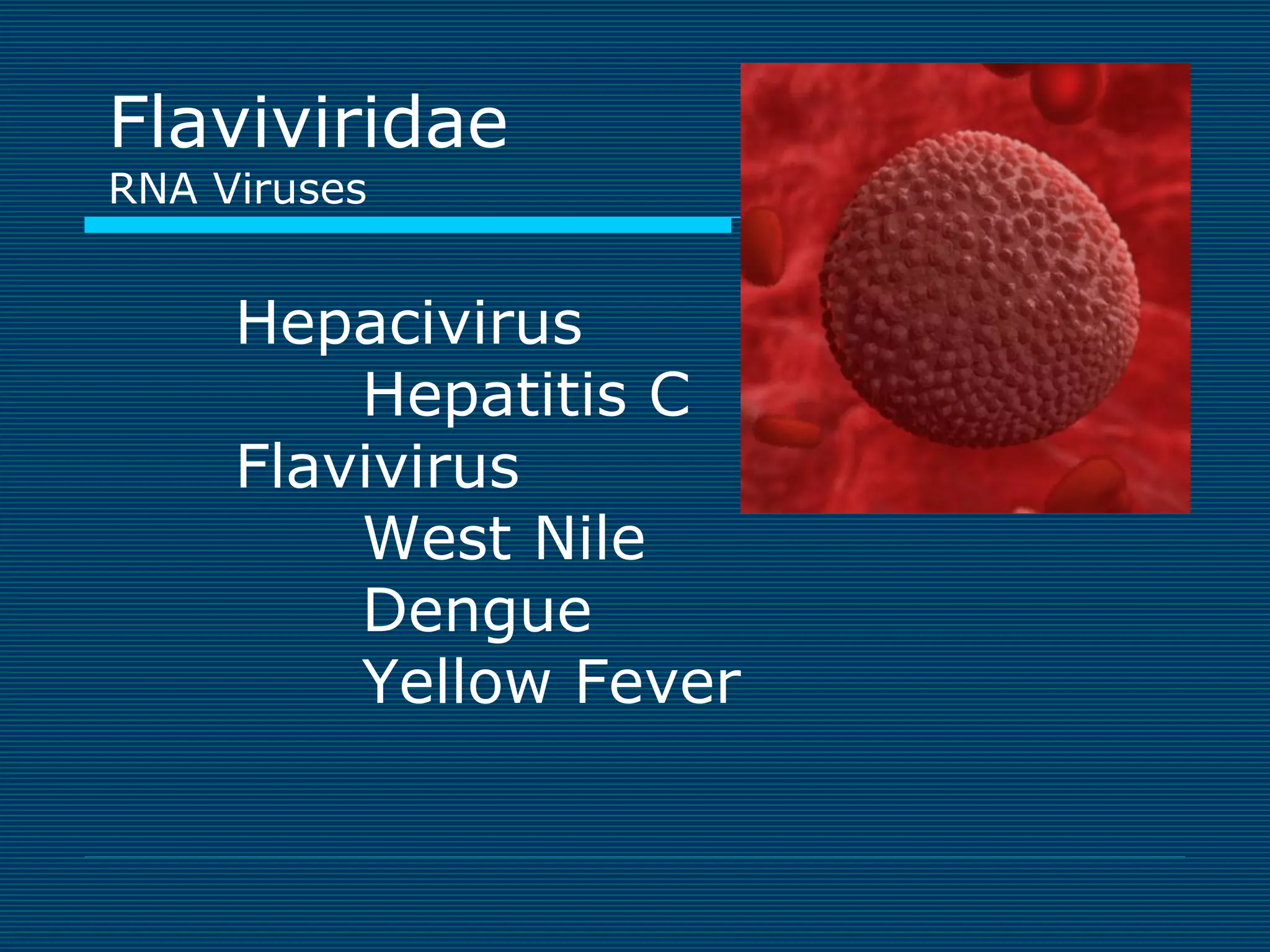
Flaviviridae
RNA Viruses

Hepacivirus
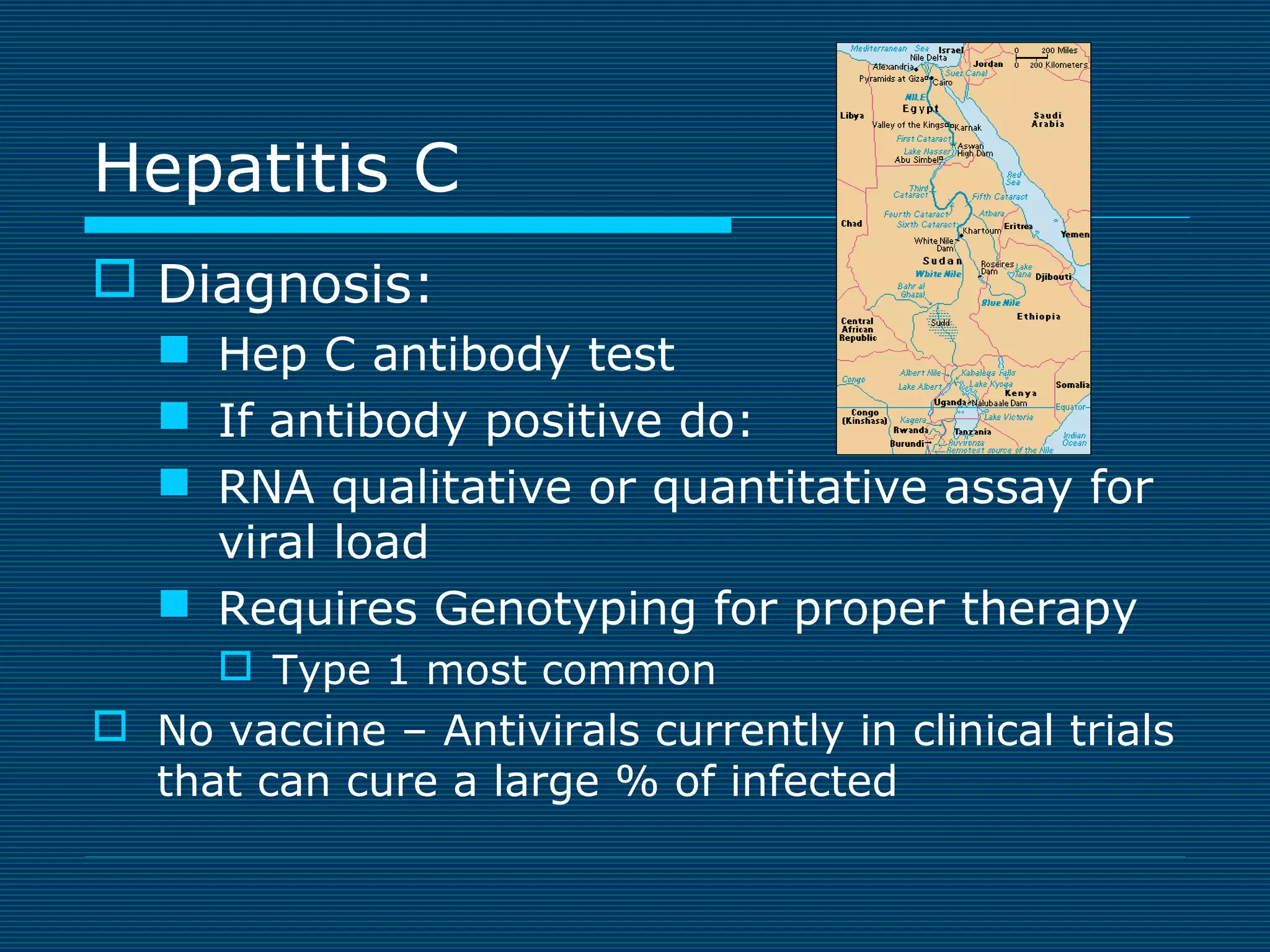
Hepatitis C
Flavivirus
West Nile
Dengue
Yellow Fever
Hepatitis C virus
 Spread parenterally - drug abuse, blood products,
poorly sterilized medical equipment, sexual
 Effects only humans and chimpanzees
 Seven major genotypes
 Acute self limited disease to start with progressive
disease that mainly affects the liver
 Infection persists in 80%
 20 - 30 % develop cirrhosis
 Associated with hepatocellular CA
 Require liver transplantation
Hepatitis C
 Diagnosis:
 Hep C antibody test
 If antibody positive do:
 RNA qualitative or quantitative assay for
viral load
 Requires Genotyping for proper therapy
 Type 1 most common

 No vaccine – Antivirals currently in clinical trials
that can cure a large % of infected
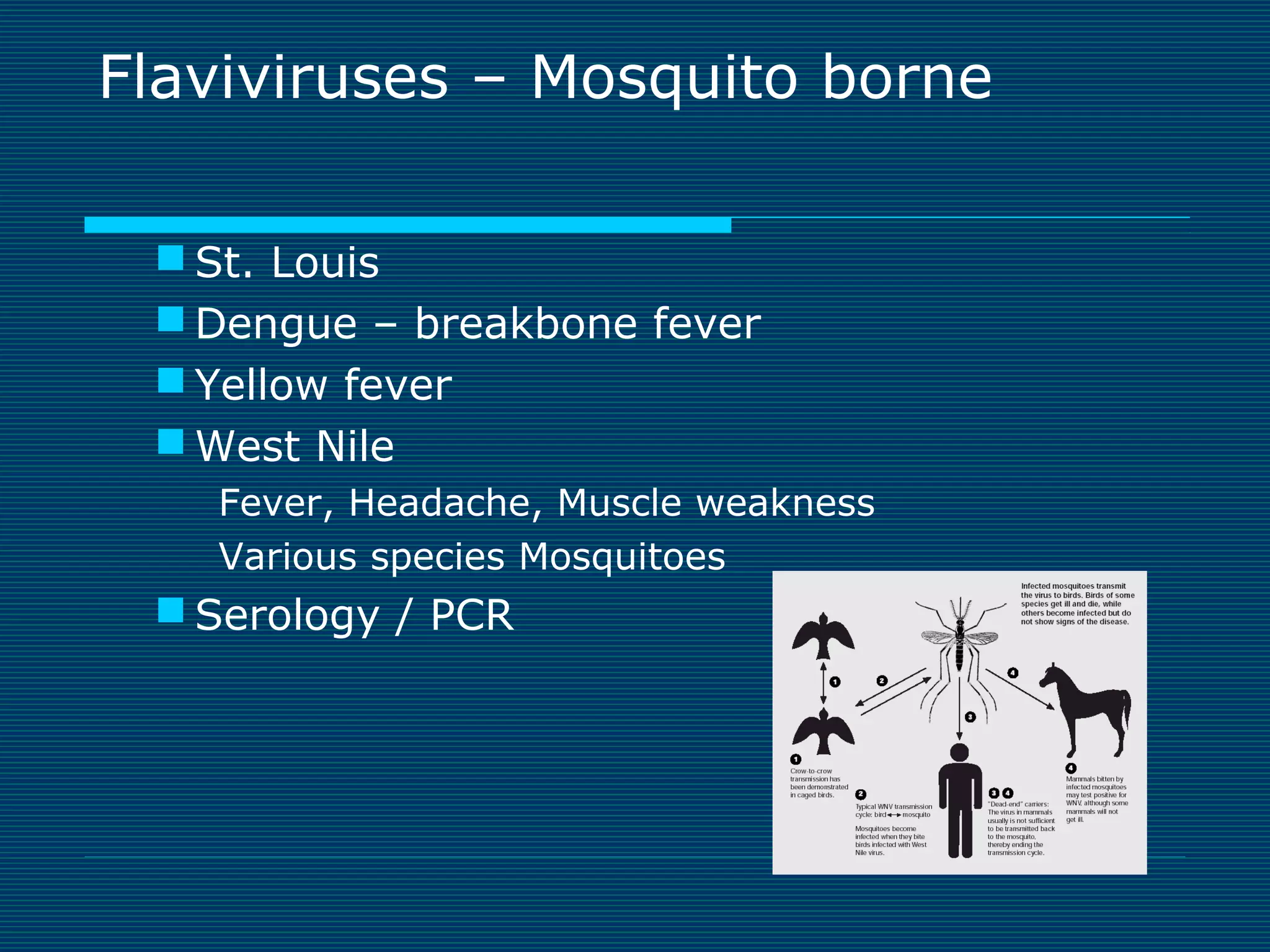
Flaviviruses – Mosquito borne
 St. Louis
 Dengue – breakbone fever
 Yellow fever
 West Nile
Fever, Headache, Muscle weakness
Various species Mosquitoes

 Serology / PCR
Picornaviridae

Enteroviruses
Hepatitis A
Enteroviruses
 Diverse group of > 60 viruses


infections occur most often in summer and fall

 Polio virus - paralysis








 Salk vaccine Inactive Polio Vaccine (IPV)**
 Sabine vaccine Live Attenuated Vaccine (OPV)
Coxsackie A – Herpangina
Coxsackie B – Pericarditis/Myocarditis
Enterovirus – Aseptic meningitis in children,
hemorrhagic conjunctivitis
Echovirus – various infections, intestine
Rhinoviruses – common cold
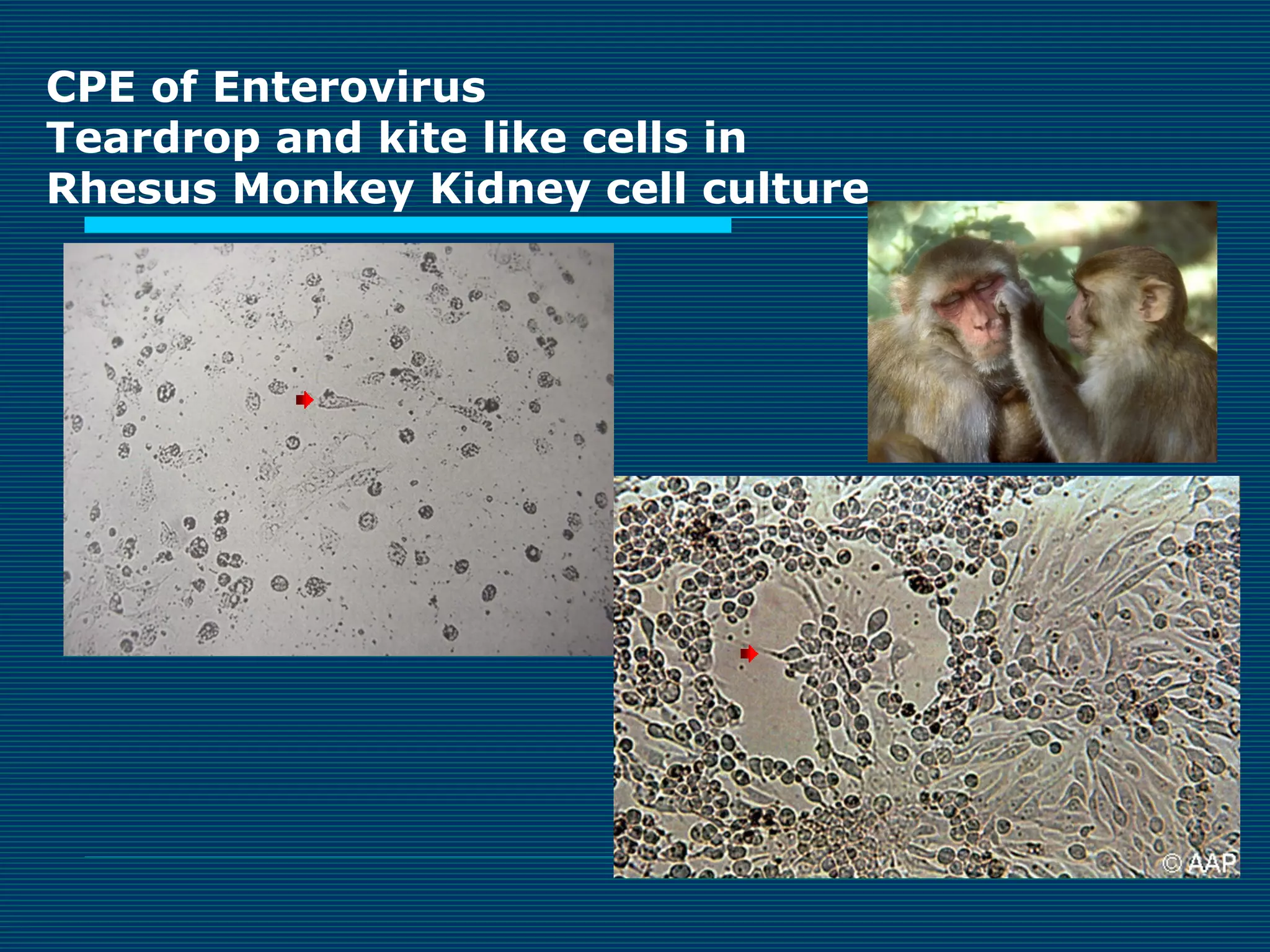
Grow in cell culture (Diploid mixed cell – Primary
Monkey Kidney)
PCR superior for diagnosis of meningitis (CSF)
CPE of Enterovirus
Teardrop and kite like cells in
Rhesus Monkey Kidney cell culture
Hepatitis A
 Fecal – oral transmission
 Can be cultured but not reliably
 Usually – short incubation, abrupt onset, low mortality,
no carrier state
 Travel
 Diagnosis – serology, IgM positive in early infection
 Vaccine available
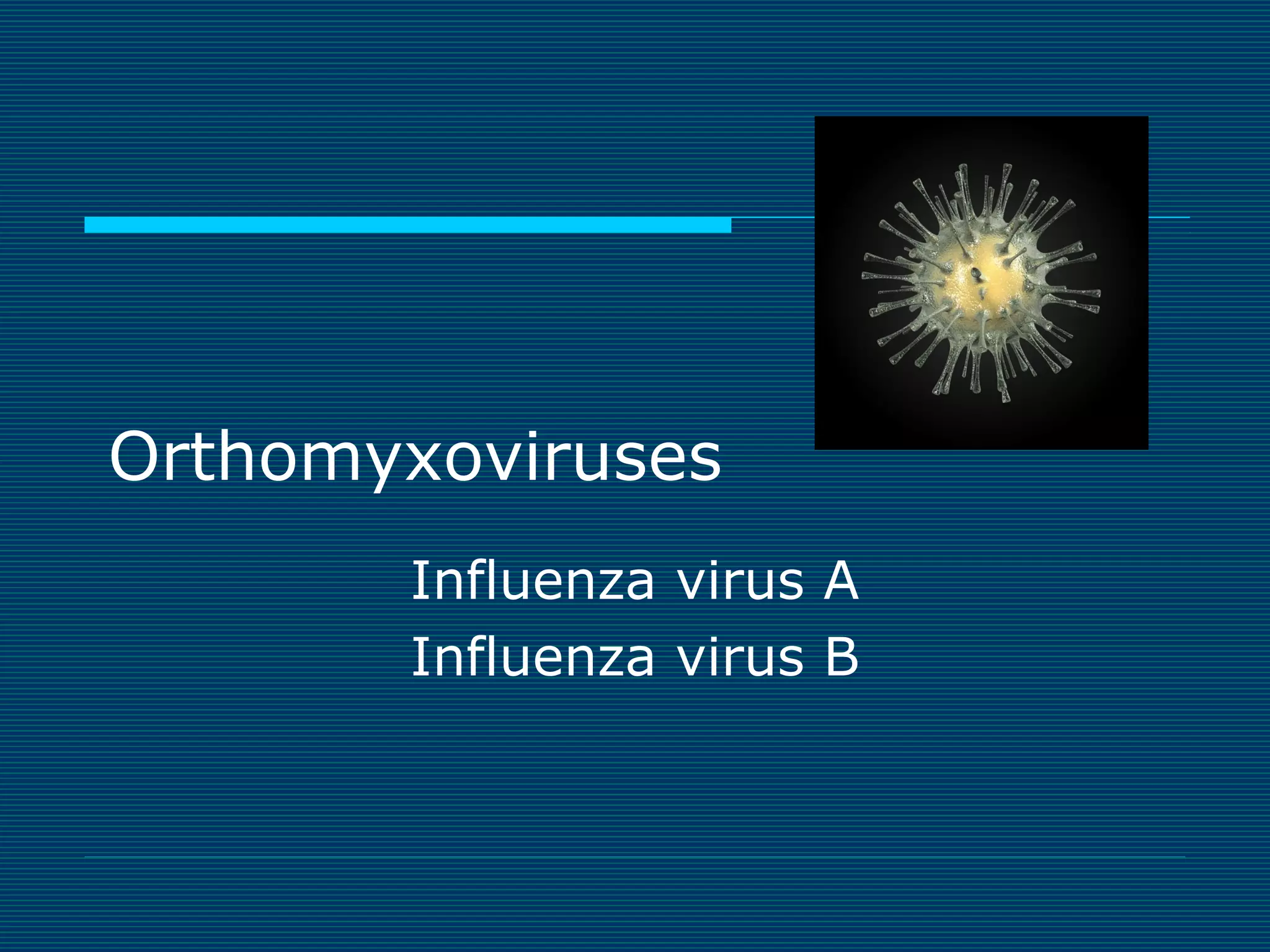
Orthomyxoviruses
Influenza virus A
Influenza virus B
Influenza A
 Segmented RNA genome
 Hemagglutinin and Neuraminidase glycoproteins spikes
on outside of viral capsid


Give Influenza A the H and N designations – such as H1N1
and H3N2

 Antigenic drift - minor change in the amino acids of
either the H or N glycoprotein
 Cross antibody protection will still exist so an
epidemic will not occur

 Antigenic shift - genome re assortment with a “new”
virus created/usually from a bird or animal/ this
could create a potential pandemic

 H5N1 = Avian Influenza
 H1N1 = 2009 Influenza A
Influenzae A
Disease: fever, malaise …. death
Diagnosis
 Cell culture obsolete [RMK]
 Enzyme immunoassay on paper membrane can be
used in outpatient setting – Rapid but low sensitivity
(60%) and can have specificity issues in off season.
 Amplification (PCR) gold standard for Influenza
Detection
 Treatment: Amantadine and Tamiflu
 Seasonal variation in susceptibility
 Vaccinate to prevent

 Influenza B



Milder form of Influenza like illness
Usually <=10% of cases /year
Paramyxoviruses – SS RNA
Measles
Parainfluenza 1,2,3,4
Mumps
Respiratory Syncytial Virus
Human Metapneumovirus
Measles
 Measles
 Fever, Rash, Dry Cough, Runny Nose,
Sore throat, inflamed eyes (photosensitive)
 Respiratory spread - very contagious
 Koplik’s spots – bluish discoloration inner
lining of the cheek
 Subacute sclerosing panencephalitis [SSPE]
 Rare chronic degenerative neurological disease
 Persistent infection with mutated measles virus
due to lack of immune response
 Diagnosis: Clinical symptoms and Serology
 Vaccinate – MMR (Measles, Mumps, Rubella) vaccine
 Treatment: Immune globulin, vitamin A
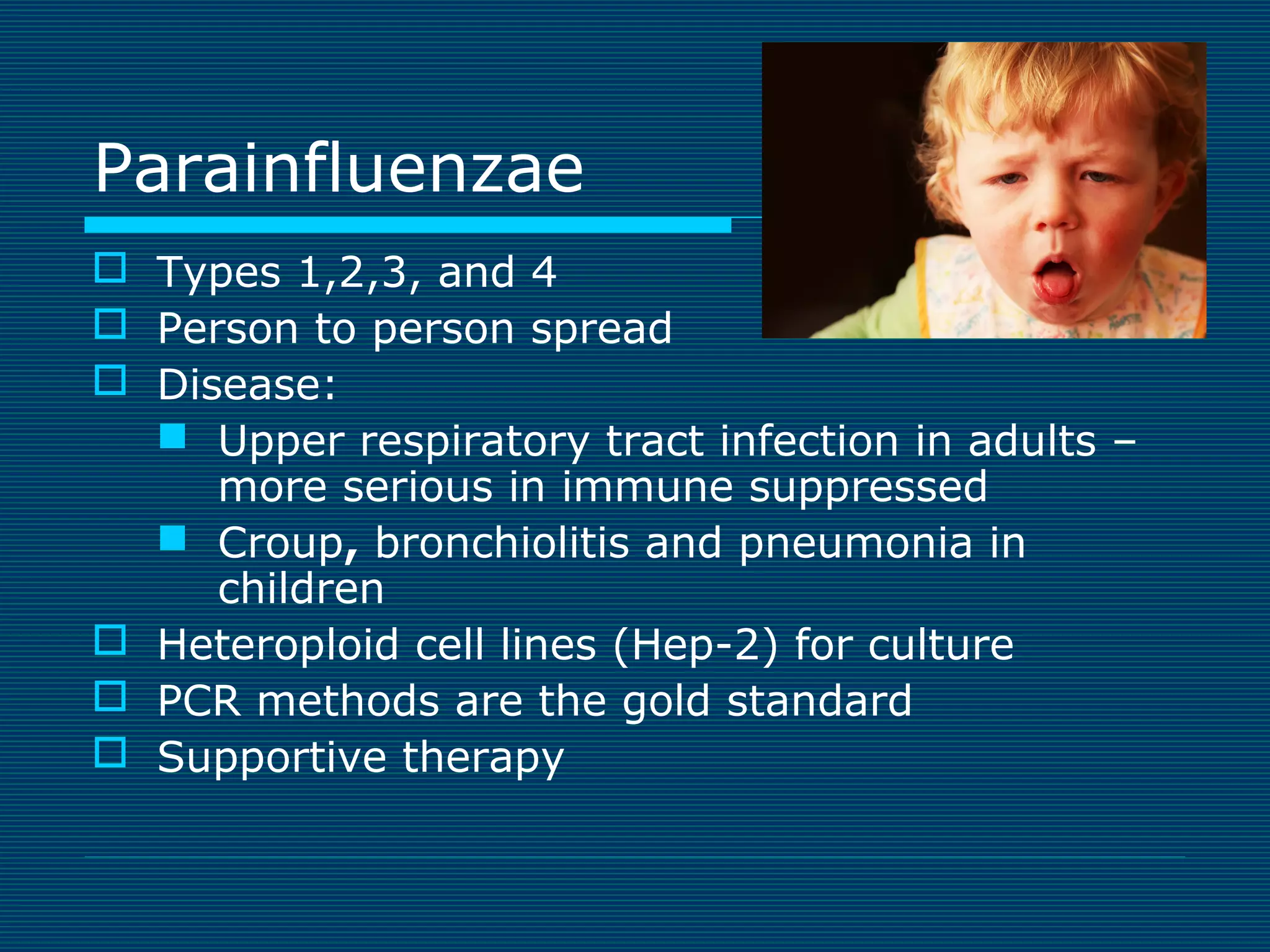
Parainfluenzae
 Types 1,2,3, and 4
 Person to person spread
 Disease:
 Upper respiratory tract infection in adults –
more serious in immune suppressed
 Croup, bronchiolitis and pneumonia in
children
 Heteroploid cell lines (Hep-2) for culture
 PCR methods are the gold standard
 Supportive therapy
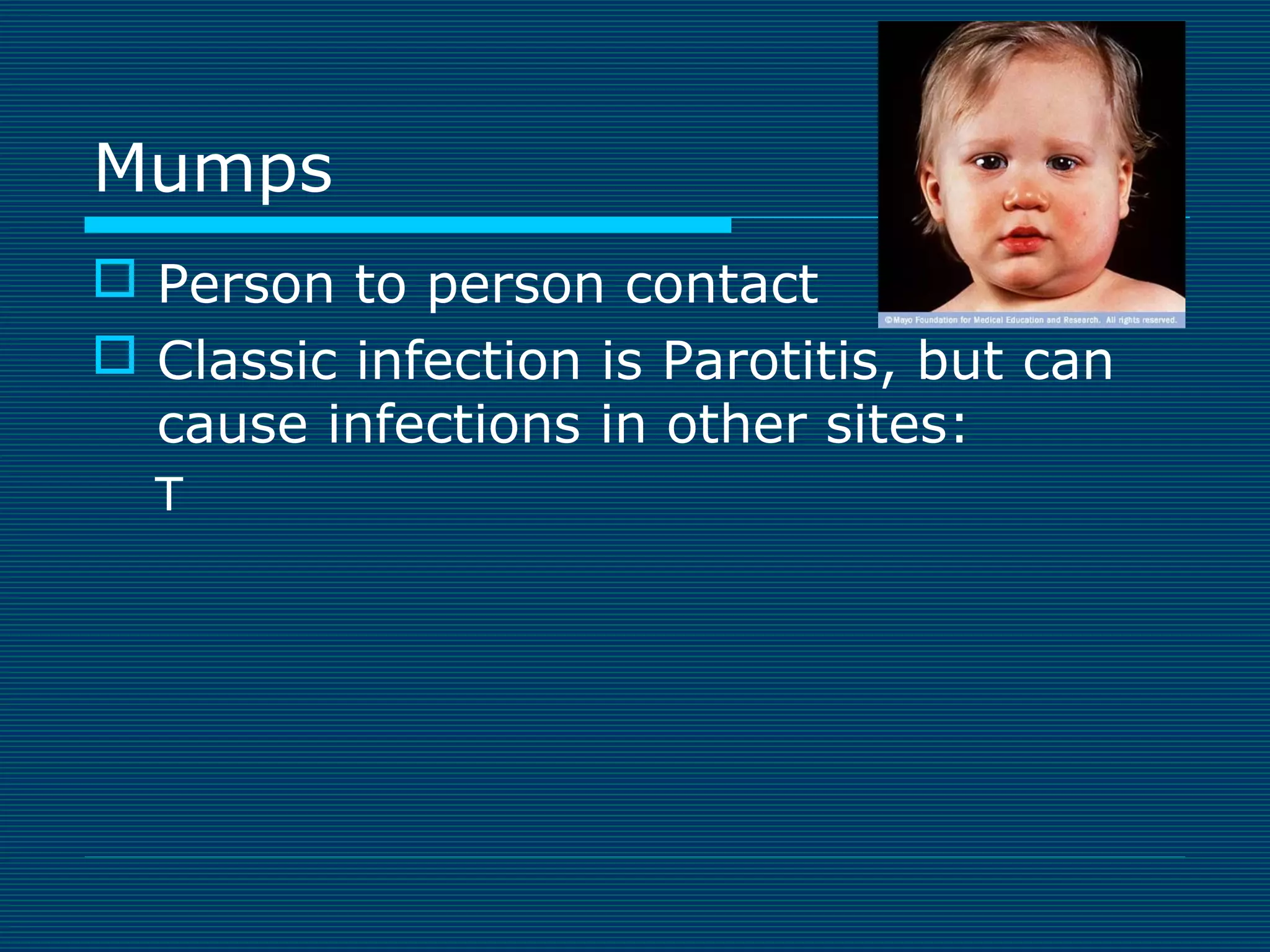
Mumps
 Person to person contact
 Classic infection is Parotitis, but can
cause infections in other sites:
T
Respiratory Syncytial Virus
 Transmission:
 Hand contact and respiratory droplets
 Respiratory disease - from common cold to
pneumonia, bronchiolitis to croup, serious
disease in immune suppressed
 Classic disease:
 Young infant with bronchiolitis
 Specimen: Naso-phayrngeal, nasal swab,
nasal lavage
 Diagnosis: EIA, cell culture (heteroploid cell
lines), PCR is standard practice
 Treatment: Supportive, ribavirin
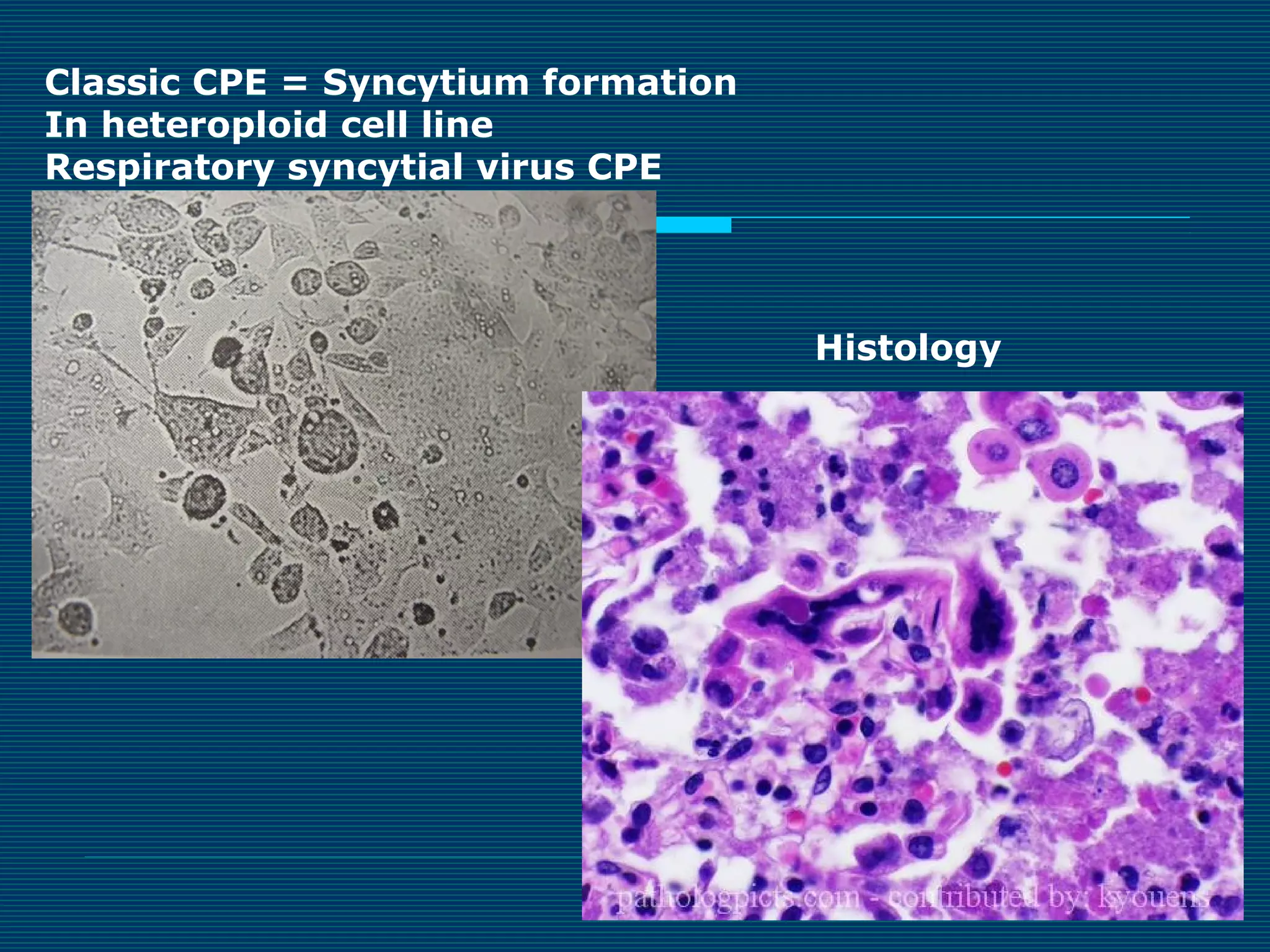
Classic CPE = Syncytium formation
In heteroploid cell line
Respiratory syncytial virus CPE

Histology
Human Metapneumovirus
 1st discovered in 2001 – community acquired
respiratory tract disease in the winter
 Common in young children – but can be seen in all
age groups
 @95% of cases in children <6 years of age
 Upper respiratory tract disease
 2nd only to RSV in the cause of bronchiolitis
 Will not grow in cell culture
 Amplification (PCR) for detection
 Specimen: Nasal swab or NP
 Treatment: Supportive
Reoviridae
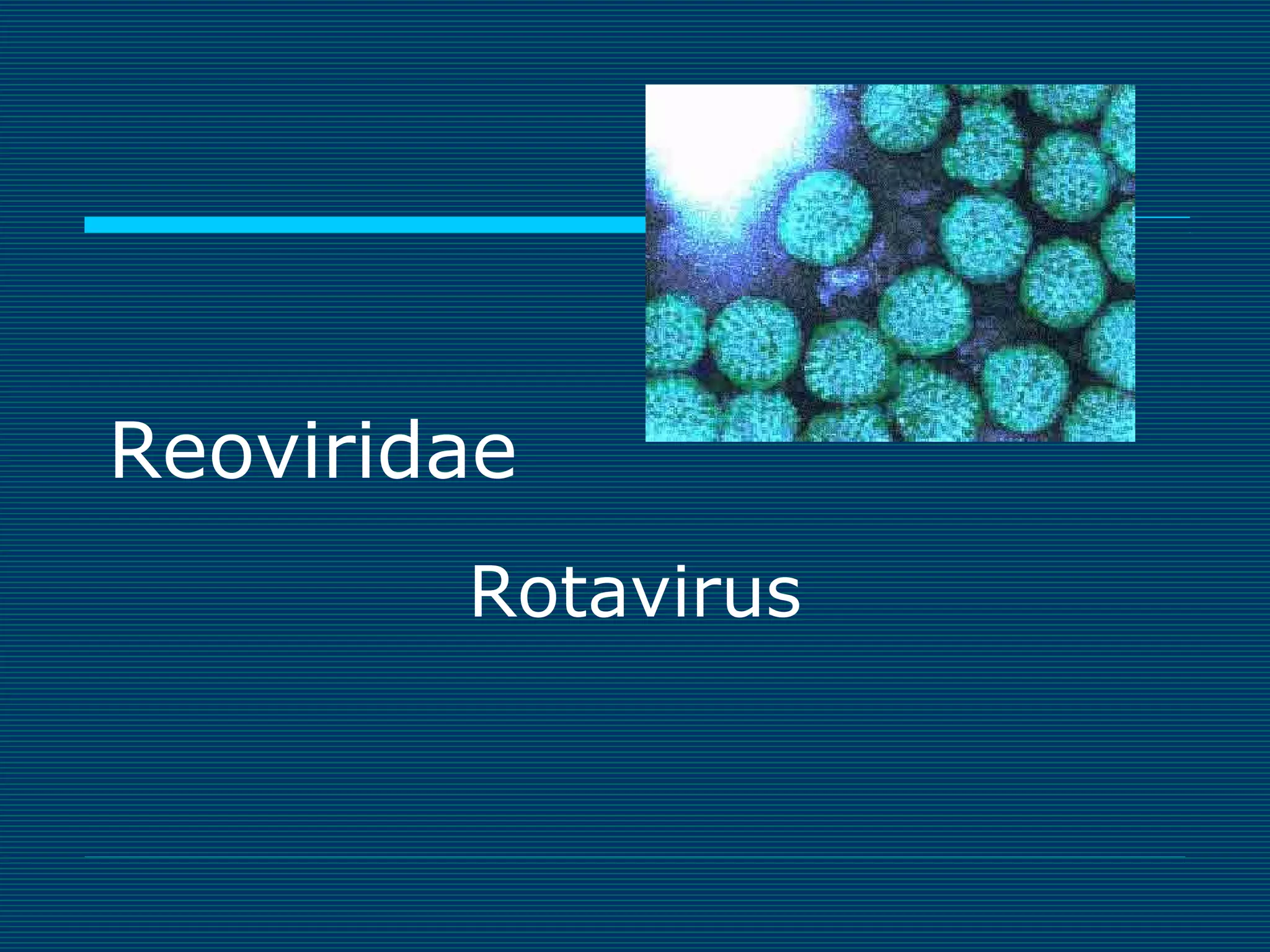
Rotavirus
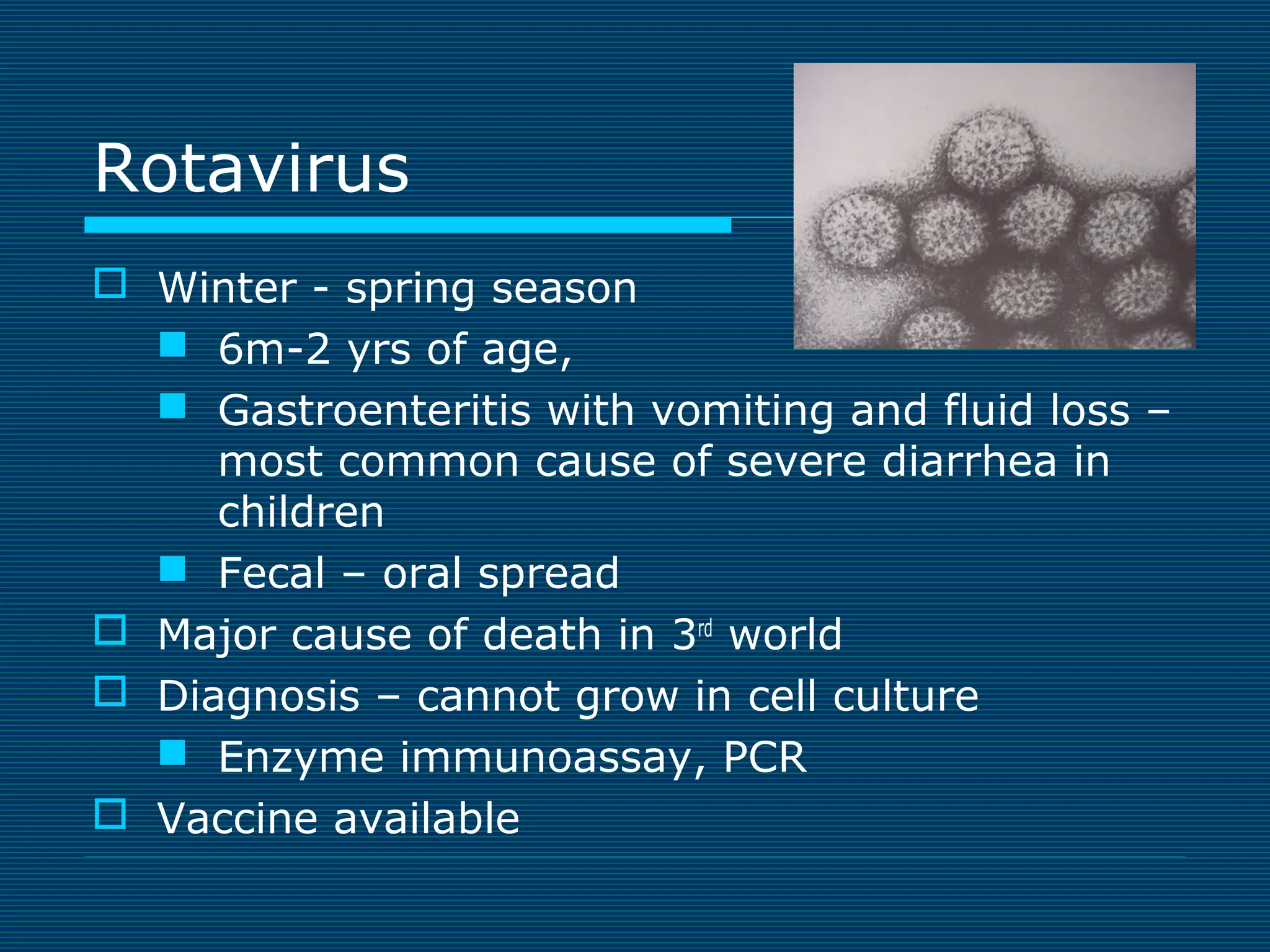
Rotavirus
 Winter - spring season
 6m-2 yrs of age,
 Gastroenteritis with vomiting and fluid loss –
most common cause of severe diarrhea in
children
 Fecal – oral spread
 Major cause of death in 3rd world
 Diagnosis – cannot grow in cell culture
 Enzyme immunoassay, PCR
 Vaccine available
Calciviruses
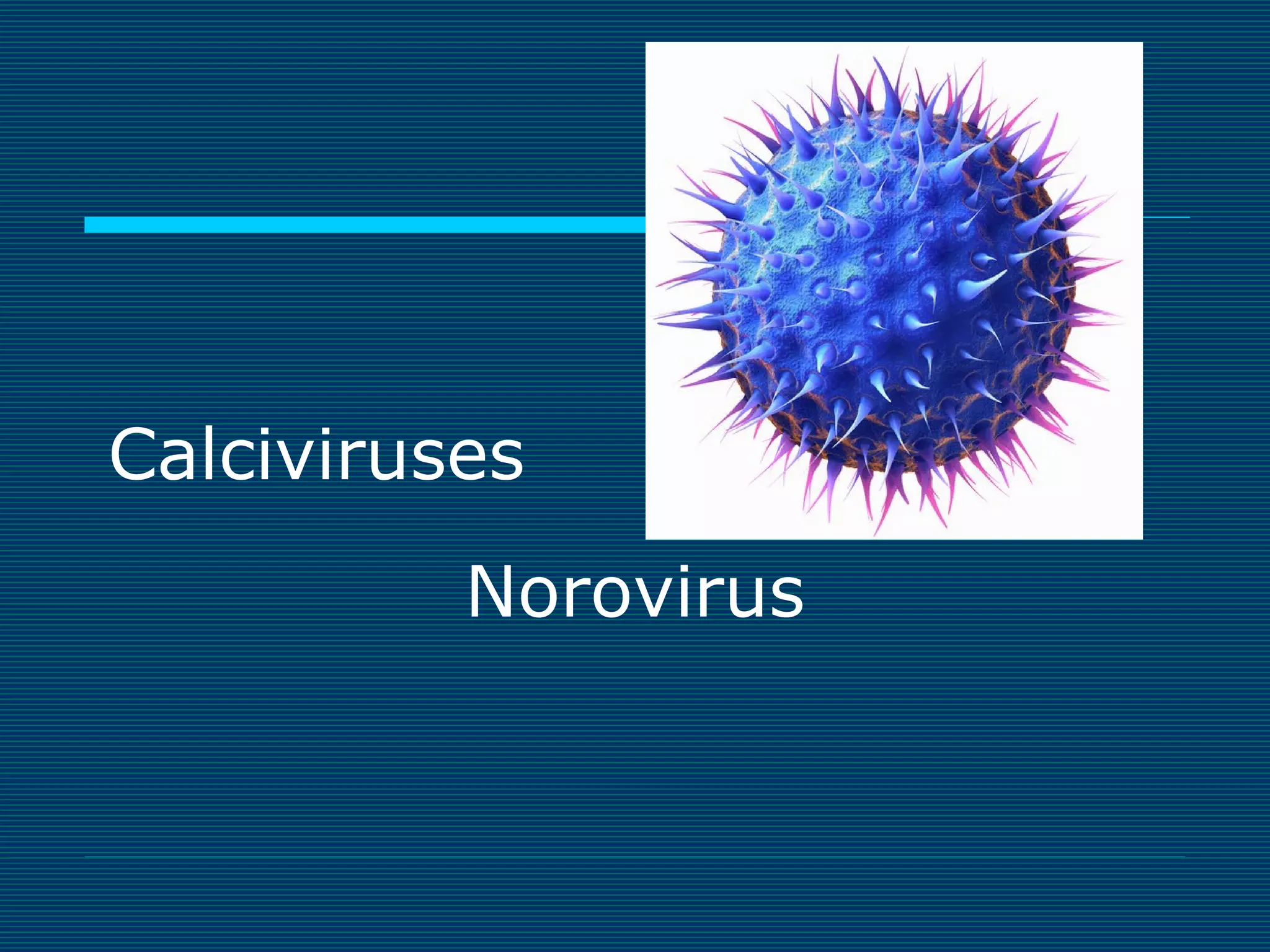
Norovirus
Norovirus
 Spread by contaminated food and water, feces
& vomitus – takes <=20 virus particles to
cause infection – so highly contagious
 Tagged the “Cruise line virus” – numerous
reported food borne epidemics on land and sea
 Leading cause of epidemic gastroenteritis –
more virulent GII.4 Sydney since spring 2012
 Fluid loss from vomiting
 Disease course usually limited, 24-48 hours
 PCR for diagnosis
 Cannot be grown in cell culture
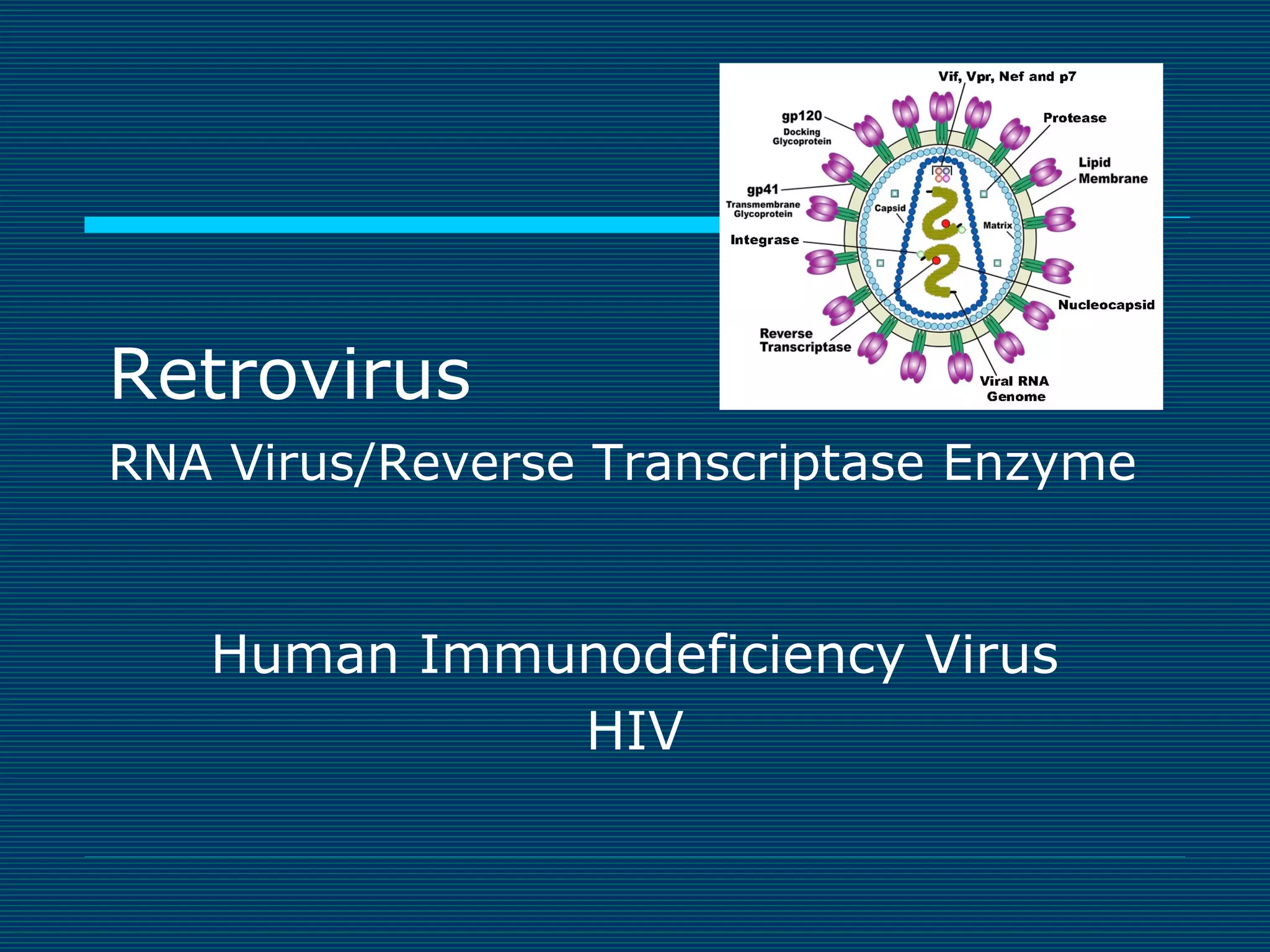
Retrovirus
RNA Virus/Reverse Transcriptase Enzyme

Human Immunodeficiency Virus
HIV
Human Immunodeficiency virus
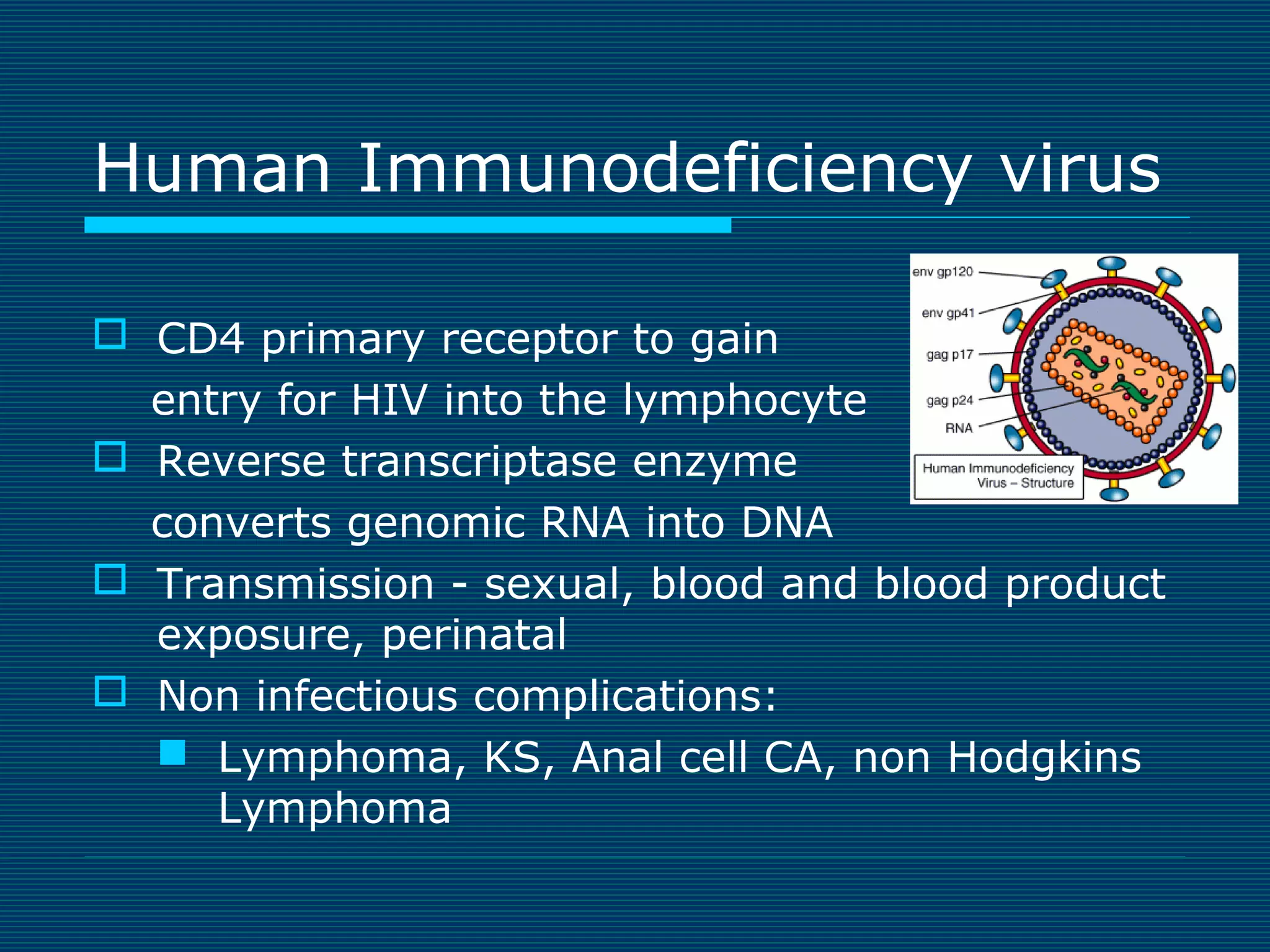
 CD4 primary receptor to gain
entry for HIV into the lymphocyte
 Reverse transcriptase enzyme
converts genomic RNA into DNA
 Transmission - sexual, blood and blood product
exposure, perinatal
 Non infectious complications:
 Lymphoma, KS, Anal cell CA, non Hodgkins
Lymphoma
HIV
 Diagnosis

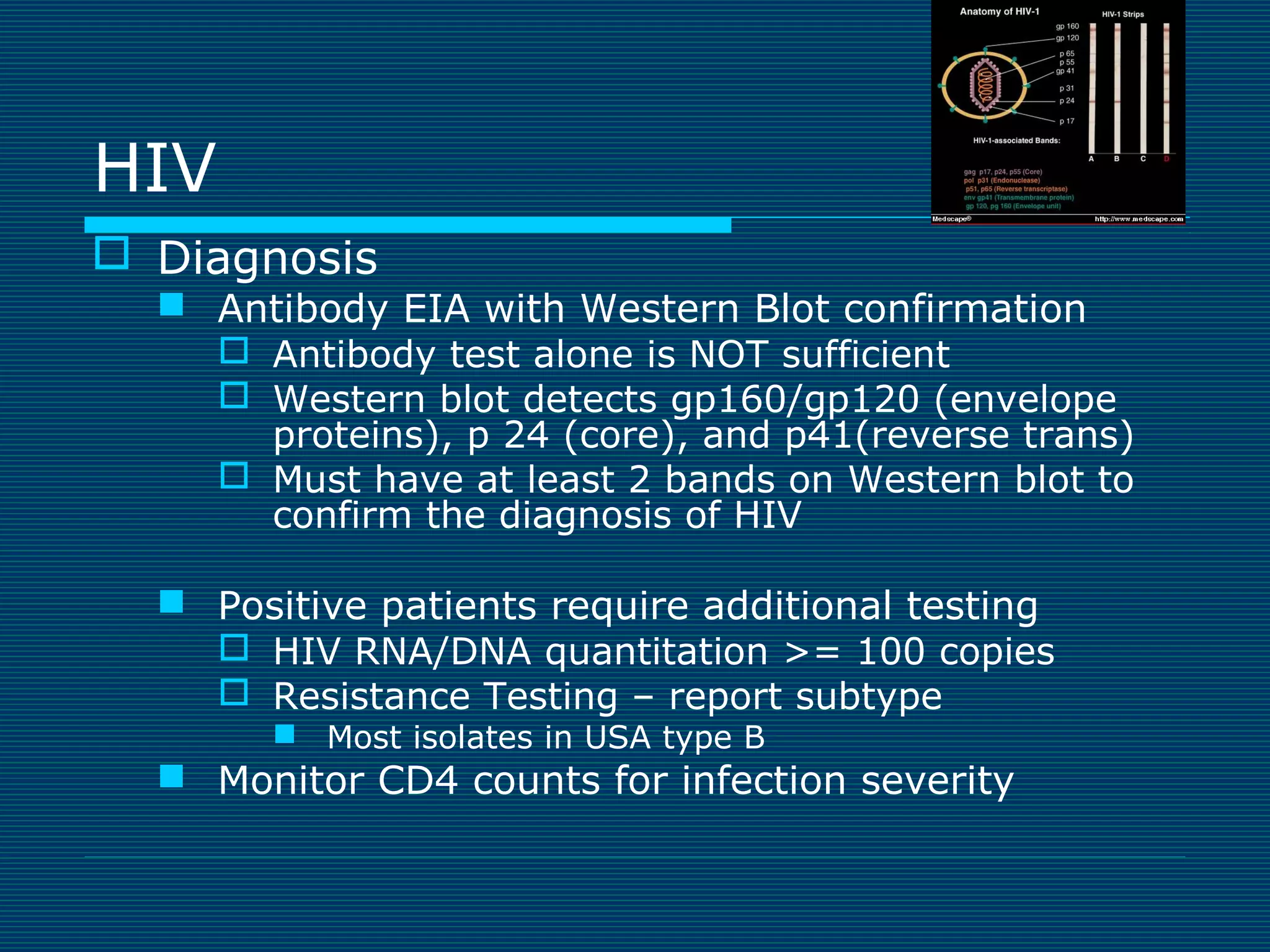
 Antibody EIA with Western Blot confirmation
 Antibody test alone is NOT sufficient
 Western blot detects gp160/gp120 (envelope
proteins), p 24 (core), and p41(reverse trans)
 Must have at least 2 bands on Western blot to
confirm the diagnosis of HIV
 Positive patients require additional testing
 HIV RNA/DNA quantitation >= 100 copies
 Resistance Testing – report subtype
 Most isolates in USA type B

 Monitor CD4 counts for infection severity
HIV infectious complications
 Non-compliant patients or newly diagnosed








Pneumocystis
C. neoformans and Histoplasma
TB/Mycobacterium avium complex
Microsporidia and Cryptosporidium
Hepatitis B
Hepatitis C
STD’s – Syphilis, GC, Chlamydia
 Syphilis rate high (mucosal contact)
Togaviridae
RNA Virus
Rubella
Rubella
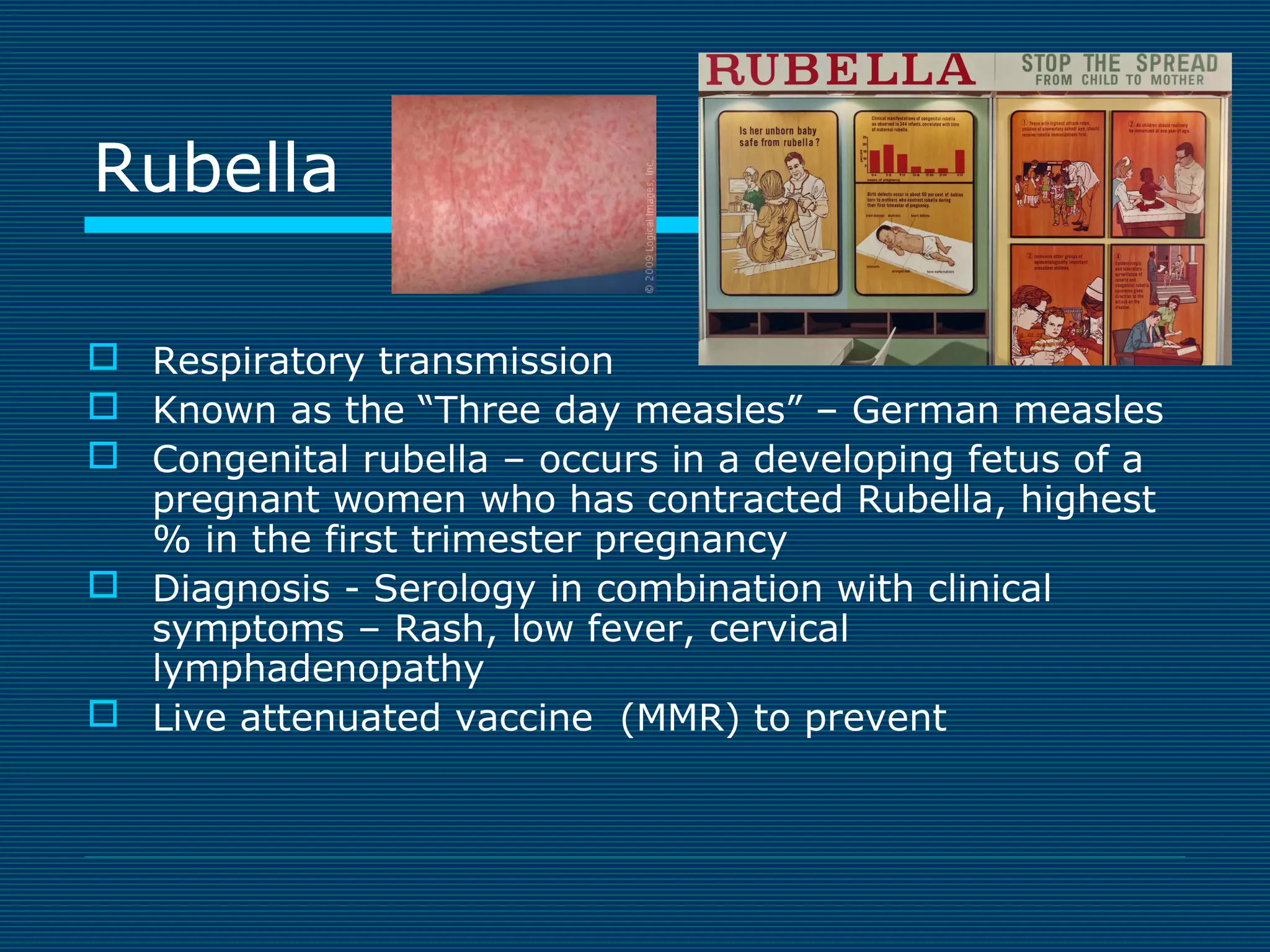
 Respiratory transmission
 Known as the “Three day measles” – German measles
 Congenital rubella – occurs in a developing fetus of a
pregnant women who has contracted Rubella, highest
% in the first trimester pregnancy
 Diagnosis - Serology in combination with clinical
symptoms – Rash, low fever, cervical
lymphadenopathy
 Live attenuated vaccine (MMR) to prevent
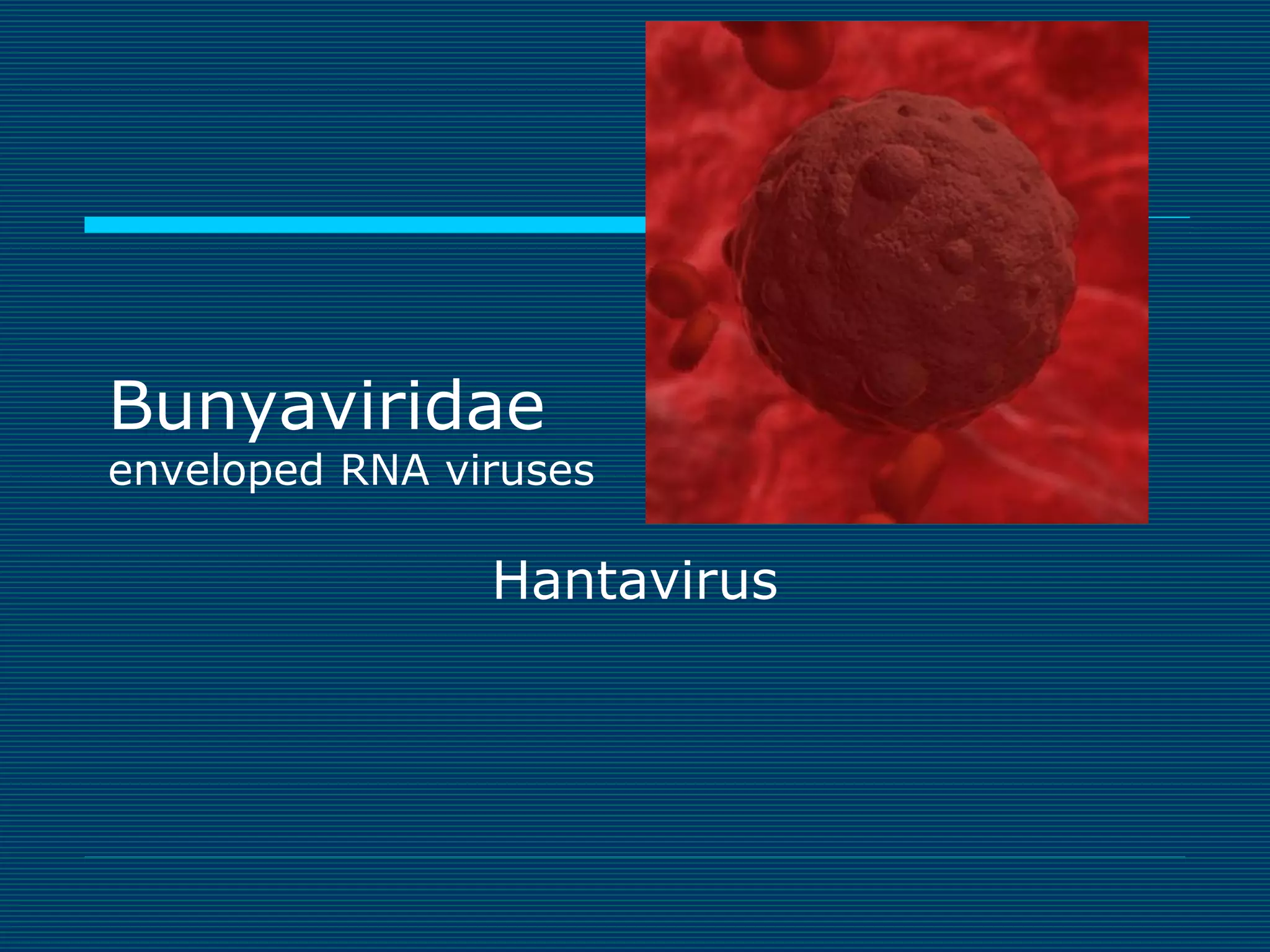
Bunyaviridae

enveloped RNA viruses

Hantavirus
Hantavirus
 USA outbreak in four corners (NM,AZ,CO,UT)
Indian reservation in 1993 brought attention to
this virus
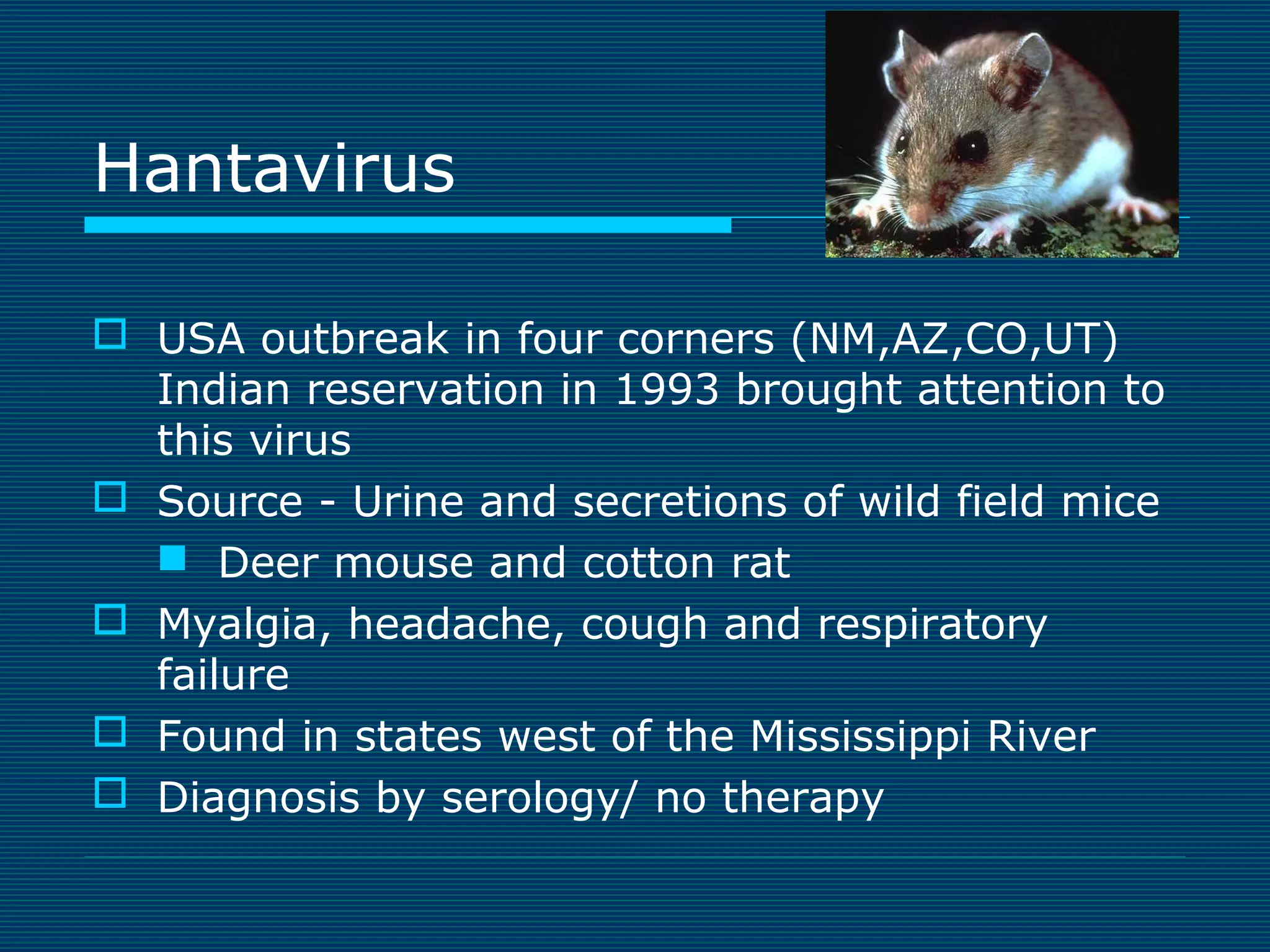
 Source - Urine and secretions of wild field mice
 Deer mouse and cotton rat
 Myalgia, headache, cough and respiratory
failure
 Found in states west of the Mississippi River
 Diagnosis by serology/ no therapy
Poxviruses
Smallpox virus (Variola virus)
Vaccinia virus
Smallpox
 Smallpox virus is also known as the Variola virus
 Vaccinia virus = vaccine strain used in Smallpox
vaccine, it is immunologically related to smallpox,
Vaccinia can cause disease in the immune
suppressed, which prevents vaccinated this population
 Last case of Smallpox - Somalia in 1977
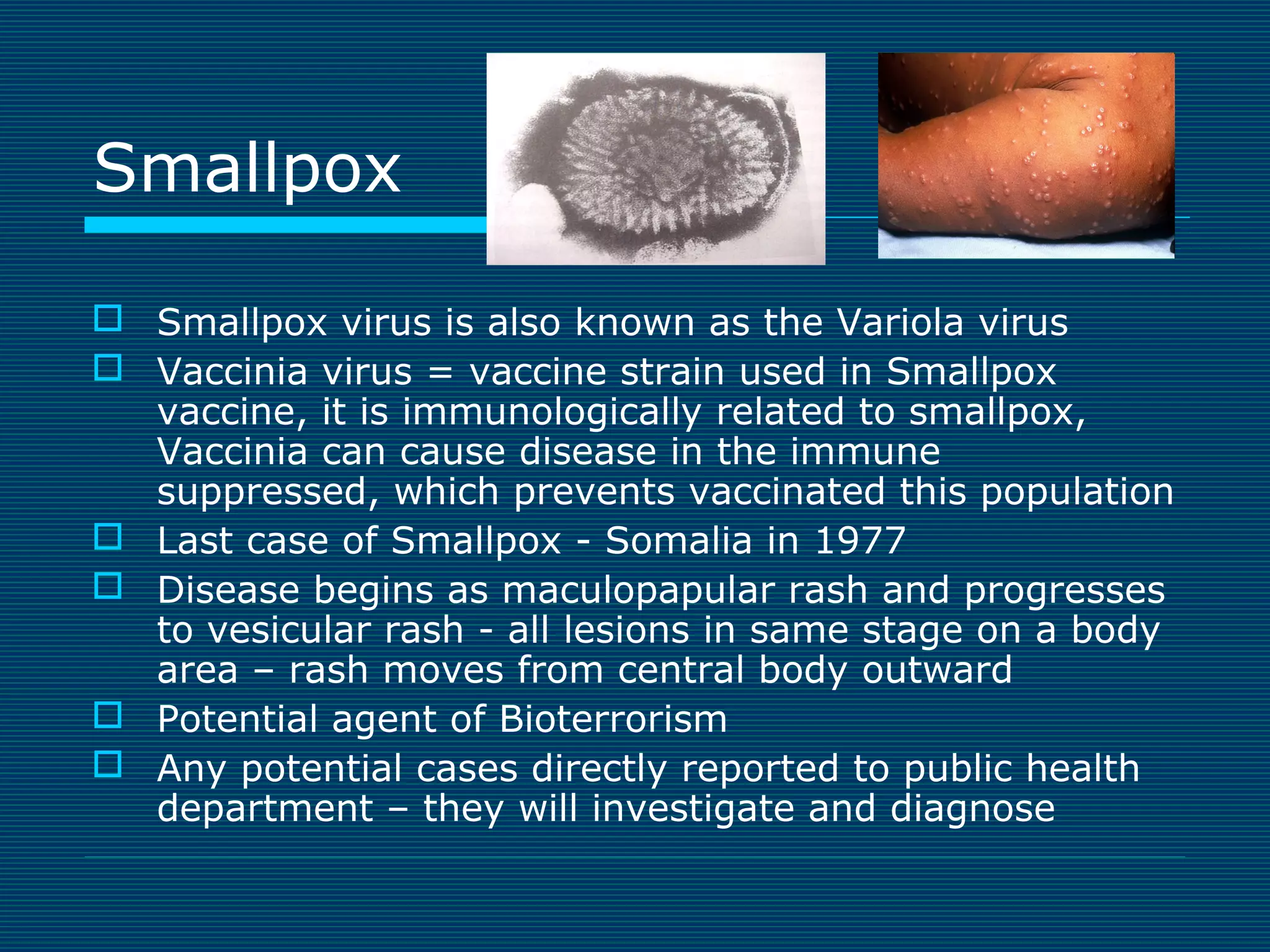
 Disease begins as maculopapular rash and progresses
to vesicular rash - all lesions in same stage on a body
area – rash moves from central body outward
 Potential agent of Bioterrorism
 Any potential cases directly reported to public health
department – they will investigate and diagnose
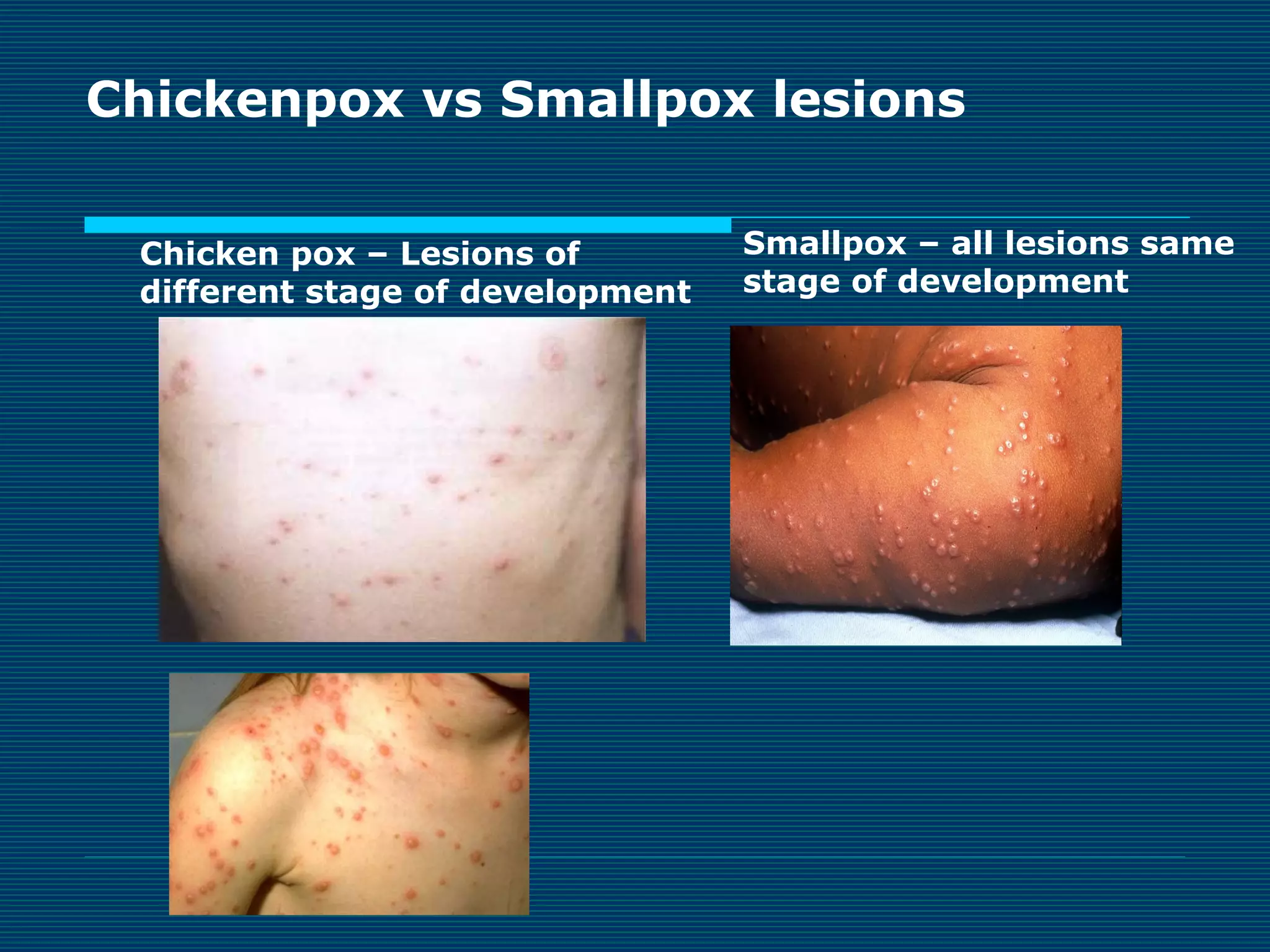
Chickenpox vs Smallpox lesions
Chicken pox – Lesions of
different stage of development

Smallpox – all lesions same
stage of development
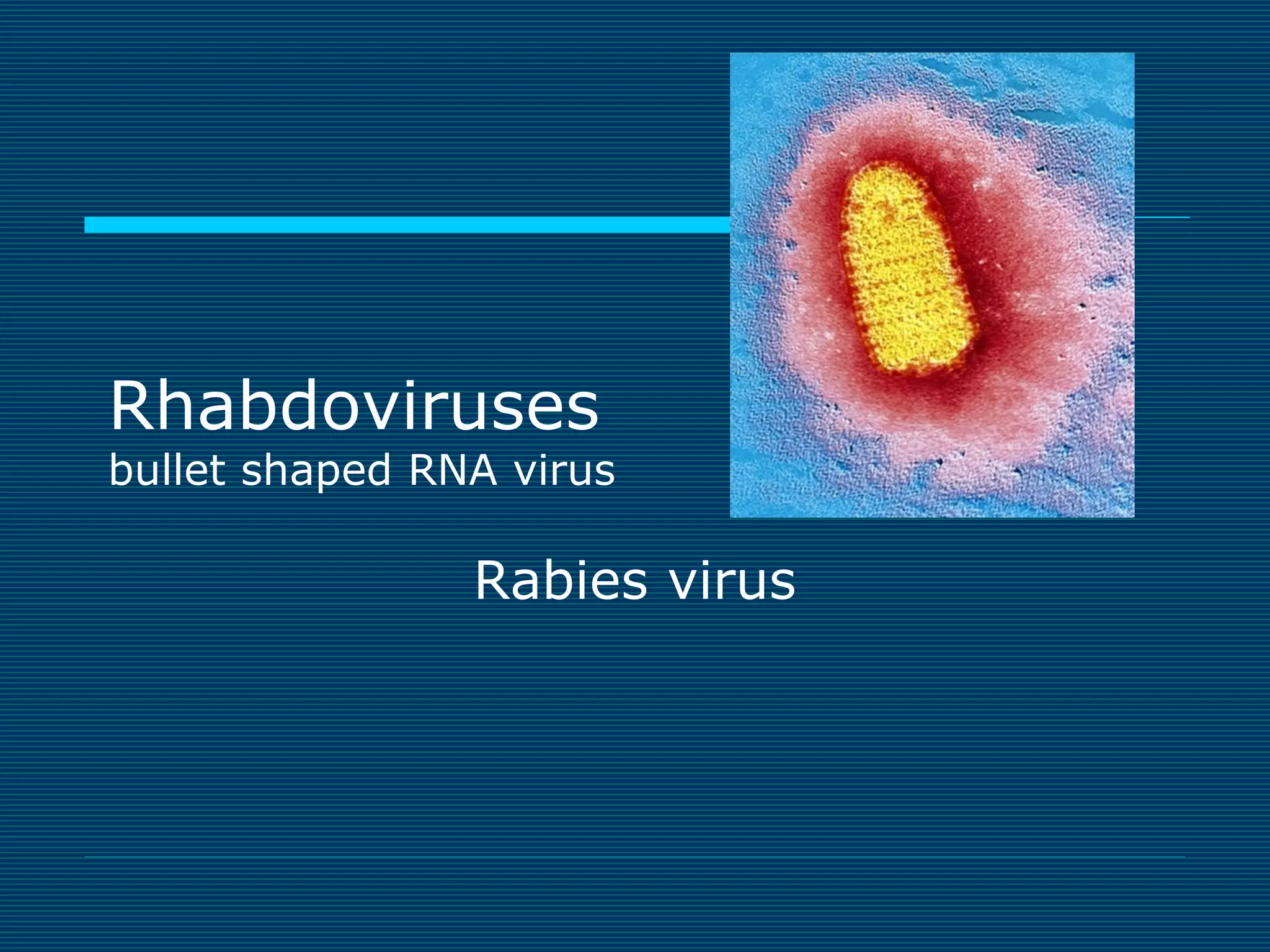
Rhabdoviruses

bullet shaped RNA virus

Rabies virus
Rabies
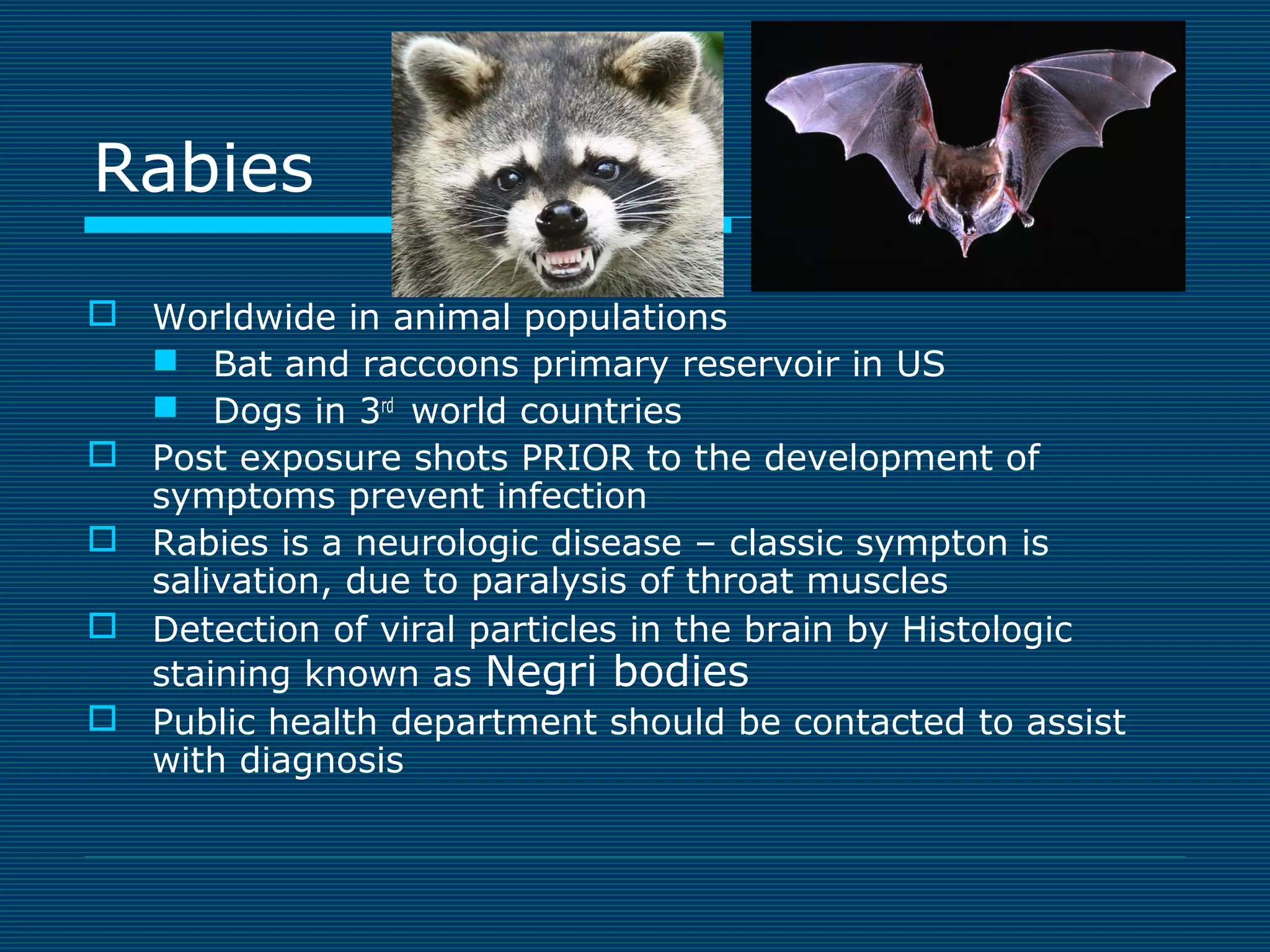
 Worldwide in animal populations
 Bat and raccoons primary reservoir in US
 Dogs in 3rd world countries
 Post exposure shots PRIOR to the development of
symptoms prevent infection
 Rabies is a neurologic disease – classic sympton is
salivation, due to paralysis of throat muscles
 Detection of viral particles in the brain by Histologic
staining known as Negri bodies
 Public health department should be contacted to assist
with diagnosis
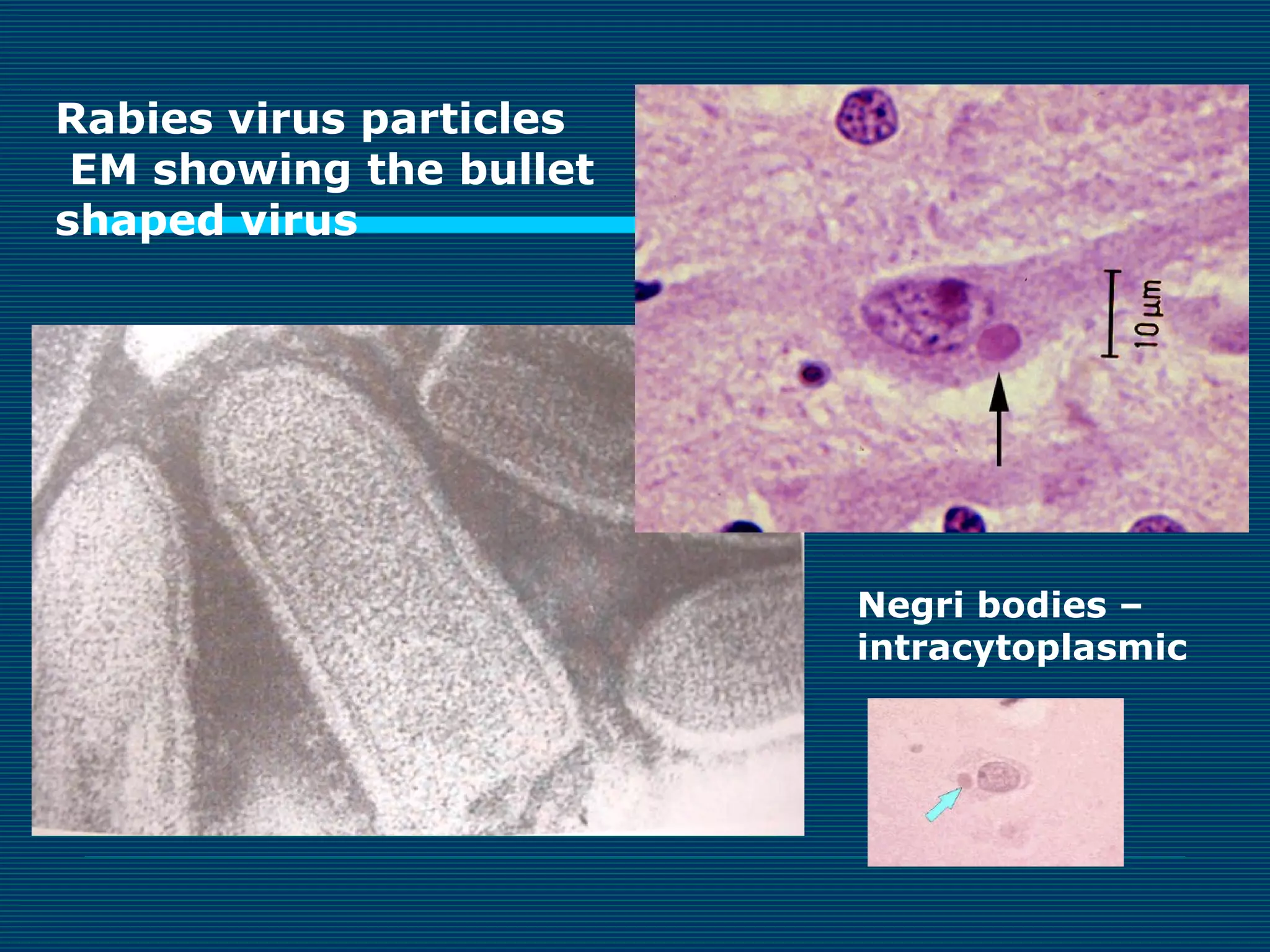
Rabies virus particles
EM showing the bullet
shaped virus

Negri bodies –
intracytoplasmic

Virology Review

  • 1.
  • 2.
    Diagnostic techniques usedin the Virology Laboratory
  • 3.
    Laboratory diagnosis  Directantigen detection from lesions  Direct Fluorescent antibody (DFA) stain  Collect cells from base of vesicular lesion  Stain with Fl antibody specific for HSV and/or VZV  Look for fluorescent cells using fluorescence microscope  Can provide a HSV and VZV diagnosis  More sensitive and specific than Tzanck prep (DFA 80% vs. Tzanck 50%)  Tzanck prep= Giemsa stain/examine for multinucleated giant cells of Herpes virus Tzanck
  • 4.
    Rapid detection ofviral antigens  Enzyme immunoassay –  Antigen/antibody complex formed – then combined with color forming compound  Detection of non-culturable viruses – such as Rotavirus  Detection of Influenza A and B , and Respiratory syncytial virus (RSV)  Membrane EIA Liquid/well EIA
  • 5.
    Molecular Detection  Amplificationof DNA or RNA  Rapid results  Exceed sensitivity of culture  Standard of practice for detecting respiratory viruses  Standard of practice for HSV and Enterovirus detection in CSF  Culture <=20% PCR >=90%  CMV quantitative assays in transplantation  Hepatitis B and C detection and viral load  HIV viral load  Test of diagnosis not cure – can retain DNA/RNA for 7 – 30 days after initial diagnosis
  • 6.
    Viral Cell Culture Viral cell culture  Inner wall coated with monolayer of cells covered with liquid maintenance media  Primary cell lines – directly from animal into tube (Rhesus monkey kidney-RMK)  Diploid cell lines– Can survive 20 – 50 passes into new vials – fibroblast cells MRC-5-(Microbiology Research Council 5) human diploid fibroblasts  Continuous cell lines – can survive continuous passage into new vials, usually of tumor lineage, HEp-2 and HeLa
  • 7.
    Viral Cell culture Cytopathic effect – CPE  Appearance of cell monolayer after being infected with a virus  Specific for each virus type
  • 8.
    Spin Down ShellVial Method Designed to speed up virus recovery Cells are on the round coverslip Specimen put into vial Centrifugation to induce virus invasion Incubate 24 - 72 hours DFA stain cells on coverslip with early antigen for virus of interest Cover slip
  • 9.
    Specimen collection and transport Viral transport media- Hanks balanced salt solution with antibiotics, needed for the transport of lesions, mucous membranes and throats to the laboratory I
  • 10.
    Which viruses willsurvive the trip to the laboratory?  Most likely viable - HSV  Intermediate  Adenovirus  Influenza A and B  Enterovirus  Least likely to survive  Respiratory Syncytial Virus (RSV)  Cytomegalovirus (CMV)  Varicella Zoster virus (VZV)  Amplification preferred due to survival issue
  • 11.
    Which viruses growthe fastest in conventional cell culture?  Fast (>=24 hours)  HSV  Intermediate (5 -7 days)  Adenovirus Enterovirus  Influenzae VZV  Slow (10 - 14 days)  RSV  Slowest (14 - 21 days)  CMV  Molecular superior for slow growers
  • 12.
  • 13.
    Herpes Viruses  Doublestranded DNA virus  Eight human Herpes viruses  Herpes simplex 1  Herpes simplex 2  Varicella Zoster  Epstein Barr  Cytomegalovirus  Human Herpes 6, 7, and 8  Latent infection with recurrent disease is the hallmark of the Herpes viruses  Latency occurs within small numbers of specific kinds of cells, the cell type is different for each Herpes virus
  • 14.
    Herpes simplex virus1 and 2  Transmission: direct contact/secretions  Latency: dorsal root ganglia *  Disease –  Gingivostomatitis  Herpes labialis  Ocular  Encephalitis  Neonatal  Disseminated in immune suppressed  Therapy – Acyclovir, Valacyclovir
  • 15.
    Herpes virus diagnosis Herpes1 & 2 do well in culture Grow within 24-48 hrs in Human diploid fibroblast cells (MRC-5) / Observe for characteristic CPE  Antigen detection by direct fluorescent staining of cells obtained from vesicular lesions  Amplification methods for diagnosis  Cytology/Histology - intra nuclear inclusions, multinucleated giant cells  Serology – Most helpful to detect past infection
  • 16.
    Negative fibroblast cell Culture-uninfected cells HSV infected monolayer Rounded cells throughout the monolayer in cell culture Multinucleated Giant Cells of Herpes Simplex in tissue histology
  • 17.
    Varicella Zoster Virus Transmission: close contact  Latency: dorsal root ganglia  Diseases:  Chickenpox (varicella)  Shingles (zoster – latent infection)  Chicken pox +/- eliminated due to effective vaccine program – most serious disease occurs in immune suppressed or adult patient – can progress to pneumonia and encephalitis  Histology – Herpes simplex multi-nucleated giant cells like those of  Serology useful for immune status check  Amplification useful for disease diagnosis
  • 18.
    Varicella-Zoster Diagnosis In cellculture – Limited # of Foci 5- 7 days to develop Sandpaper look to the Background Scattered rounded cells Younger wet vesicular lesions area the best for culture and/or molecular testing
  • 19.
    Cytomegalovirus (CMV)  Transmittedby blood transfusion , vertical and horizontal transmission to fetus, close contact  Latency: Macrophages  Disease: Asymptomatic in most individuals infected  Congenital – most common cause  Perinatal  Immunocompromised – Primary disease most serious  Diagnosis: Cell culture CPE (Human diploid fibroblast , PCR and quantitative PCR  Histopathology: Intranuclear and intracytoplasmic inclusions “Owl Eye” Inclusions
  • 20.
    CMV pneumonia with viralinclusions CMV infected fibroblast monolayer - Focal grape like clusters of rounded cells
  • 21.
    Epstein Barr virus(EBV)  Transmission - close contact, saliva  Latency - B lymphocytes  Diseases include:  Infectious mononucleosis  Lymphoreticular disease  Oral hairy leukoplakia  Burkitt’s lymphoma  Nasopharyngeal Carcinoma  1/3 Hodgkin’s lymphoma  Unable to grow in cell culture  Serology and PCR methods for diagnosis
  • 22.
    EBV Serodiagnosis usingthe Heterophile Antibody  Heterophile antibodies (HA) react with antigens phylogenetically unrelated to the antigenic determinants against which they were raised  HA secondary to EBV are detected by the ability to react with horse or cattle rbcs (theory of the Monospot test)  HA rise in the first 2 - 3 weeks of EBV infection, then rapidly fall at @ 4 weeks  Cannot be used in children < 4 years of age
  • 23.
    VCA = viralcapsid antibody EBNA = Epstein Barr nuclear antigen EA = early antigen
  • 24.
    Human Herpes virus 6,7 & 8  HH6  Roseola [sixth disease]  6m-2yr high fever & rash  HH7  CMV like Disease  HH8  Kaposi’s sarcoma  Castleman’s disease Onion skin of Castleman disease
  • 25.
  • 26.
    Adenovirus     DNA - nonenveloped/ icosahedral virus Latent: lymphoid tissue Transmission: Respiratory and fecal-oral route Diseases:  Adenovirus type 14 – new virulent respiratory strain / pneumonia  Pharyngitis (year round epidemics)  Gastroenteritis in children  Adenovirus types 40 & 41  Keratoconjuctivitis  Disseminated infection in transplant patients  Hemorrhagic cystitis in immune suppressed
  • 27.
    Adenovirus Round cells with stranding Diagnosis  Conventional cell culture (CPE)  2-5 days with round cells connected by strands – Grows best in Heteroploid continuous passage cell lines (HeLA, Hep-2)  Amplification  Histology - Intranuclear inclusions / smudge cells  Stool EIA for enteric infections  Antigen detection – staining respiratory cells by DFA for Respiratory infections  PCR – has become the standard of practice  Supportive treatment – no specific viral therapy
  • 28.
  • 29.
    Parvoviridae – Parvovirus Thesmallest known viruses!
  • 30.
    Parvovirus  DNA virus Parvovirus B19 Slapped face appearance of fifth disease  erythema infectiosum (Fifth disease)  fetal infection and stillbirths  aplastic crisis in patients with chronic hemolytic anemia and AIDS  Histology - virus effects mitotically active erythroid precursor cells in bone marrow  Molecular and Serology methods for diagnosis
  • 31.
  • 32.
    Pap smear Papillomavirus  Diseases:          skinand anogenital warts, benign head and neck tumors, cervical and anal intraepithelial neoplasia and cancer HPV types 16 and 18 = 70% Cervical CA HPV types 6 and 11 = 90% Genital warts Pap Smear for detection Hybrid capture DNA probe for detection and typing PCR – FDA approved platforms for detection/typing Guardasil vaccine = To guard against HPV 6,11,16,18
  • 33.
    Polyomavirus Giant Glial Cellsof JCV  JC virus [John Cunningham]  Cause of Progressive multifocal leukoencephalopathy   Encephalitis of immune suppressed Destroys oligodendrocytes in brain  BK virus  Causes latent virus infection in kidney  Progression due to immune suppression  Hemorrhagic cystitis  Histology/PCR for diagnosis
  • 34.
  • 35.
    Hepatitis B virus     EnvelopedDNA – Hepadna virus Virion called Dane particle Surface Ag (HBsAg)- Australian Ag Clinical Disease  90% acute  1% fulminant  9% chronic  Carrier state …….Hepatic cell carcinoma
  • 36.
    Hepatitis B Serology Surface Antigen Positive  Active Hepatitis B or Chronic Carrier  Do Hep B Quantitation  Do Hep e antigen – Chronic and “bad”  Core Antibody Positive  Immune due to prior infection, acute infection or chronic carrier  Surface Antibody Positive  Immune due to prior infection or vaccine
  • 37.
  • 38.
    Hepatitis C virus Spread parenterally - drug abuse, blood products, poorly sterilized medical equipment, sexual  Effects only humans and chimpanzees  Seven major genotypes  Acute self limited disease to start with progressive disease that mainly affects the liver  Infection persists in 80%  20 - 30 % develop cirrhosis  Associated with hepatocellular CA  Require liver transplantation
  • 39.
    Hepatitis C  Diagnosis: Hep C antibody test  If antibody positive do:  RNA qualitative or quantitative assay for viral load  Requires Genotyping for proper therapy  Type 1 most common  No vaccine – Antivirals currently in clinical trials that can cure a large % of infected
  • 40.
    Flaviviruses – Mosquitoborne  St. Louis  Dengue – breakbone fever  Yellow fever  West Nile Fever, Headache, Muscle weakness Various species Mosquitoes  Serology / PCR
  • 41.
  • 42.
    Enteroviruses  Diverse groupof > 60 viruses  infections occur most often in summer and fall  Polio virus - paralysis         Salk vaccine Inactive Polio Vaccine (IPV)**  Sabine vaccine Live Attenuated Vaccine (OPV) Coxsackie A – Herpangina Coxsackie B – Pericarditis/Myocarditis Enterovirus – Aseptic meningitis in children, hemorrhagic conjunctivitis Echovirus – various infections, intestine Rhinoviruses – common cold Grow in cell culture (Diploid mixed cell – Primary Monkey Kidney) PCR superior for diagnosis of meningitis (CSF)
  • 43.
    CPE of Enterovirus Teardropand kite like cells in Rhesus Monkey Kidney cell culture
  • 44.
    Hepatitis A  Fecal– oral transmission  Can be cultured but not reliably  Usually – short incubation, abrupt onset, low mortality, no carrier state  Travel  Diagnosis – serology, IgM positive in early infection  Vaccine available
  • 45.
  • 46.
    Influenza A  SegmentedRNA genome  Hemagglutinin and Neuraminidase glycoproteins spikes on outside of viral capsid  Give Influenza A the H and N designations – such as H1N1 and H3N2  Antigenic drift - minor change in the amino acids of either the H or N glycoprotein  Cross antibody protection will still exist so an epidemic will not occur  Antigenic shift - genome re assortment with a “new” virus created/usually from a bird or animal/ this could create a potential pandemic  H5N1 = Avian Influenza  H1N1 = 2009 Influenza A
  • 47.
    Influenzae A Disease: fever,malaise …. death Diagnosis  Cell culture obsolete [RMK]  Enzyme immunoassay on paper membrane can be used in outpatient setting – Rapid but low sensitivity (60%) and can have specificity issues in off season.  Amplification (PCR) gold standard for Influenza Detection  Treatment: Amantadine and Tamiflu  Seasonal variation in susceptibility  Vaccinate to prevent  Influenza B   Milder form of Influenza like illness Usually <=10% of cases /year
  • 48.
    Paramyxoviruses – SSRNA Measles Parainfluenza 1,2,3,4 Mumps Respiratory Syncytial Virus Human Metapneumovirus
  • 49.
    Measles  Measles  Fever,Rash, Dry Cough, Runny Nose, Sore throat, inflamed eyes (photosensitive)  Respiratory spread - very contagious  Koplik’s spots – bluish discoloration inner lining of the cheek  Subacute sclerosing panencephalitis [SSPE]  Rare chronic degenerative neurological disease  Persistent infection with mutated measles virus due to lack of immune response  Diagnosis: Clinical symptoms and Serology  Vaccinate – MMR (Measles, Mumps, Rubella) vaccine  Treatment: Immune globulin, vitamin A
  • 50.
    Parainfluenzae  Types 1,2,3,and 4  Person to person spread  Disease:  Upper respiratory tract infection in adults – more serious in immune suppressed  Croup, bronchiolitis and pneumonia in children  Heteroploid cell lines (Hep-2) for culture  PCR methods are the gold standard  Supportive therapy
  • 51.
    Mumps  Person toperson contact  Classic infection is Parotitis, but can cause infections in other sites: T
  • 52.
    Respiratory Syncytial Virus Transmission:  Hand contact and respiratory droplets  Respiratory disease - from common cold to pneumonia, bronchiolitis to croup, serious disease in immune suppressed  Classic disease:  Young infant with bronchiolitis  Specimen: Naso-phayrngeal, nasal swab, nasal lavage  Diagnosis: EIA, cell culture (heteroploid cell lines), PCR is standard practice  Treatment: Supportive, ribavirin
  • 53.
    Classic CPE =Syncytium formation In heteroploid cell line Respiratory syncytial virus CPE Histology
  • 54.
    Human Metapneumovirus  1stdiscovered in 2001 – community acquired respiratory tract disease in the winter  Common in young children – but can be seen in all age groups  @95% of cases in children <6 years of age  Upper respiratory tract disease  2nd only to RSV in the cause of bronchiolitis  Will not grow in cell culture  Amplification (PCR) for detection  Specimen: Nasal swab or NP  Treatment: Supportive
  • 55.
  • 56.
    Rotavirus  Winter -spring season  6m-2 yrs of age,  Gastroenteritis with vomiting and fluid loss – most common cause of severe diarrhea in children  Fecal – oral spread  Major cause of death in 3rd world  Diagnosis – cannot grow in cell culture  Enzyme immunoassay, PCR  Vaccine available
  • 57.
  • 58.
    Norovirus  Spread bycontaminated food and water, feces & vomitus – takes <=20 virus particles to cause infection – so highly contagious  Tagged the “Cruise line virus” – numerous reported food borne epidemics on land and sea  Leading cause of epidemic gastroenteritis – more virulent GII.4 Sydney since spring 2012  Fluid loss from vomiting  Disease course usually limited, 24-48 hours  PCR for diagnosis  Cannot be grown in cell culture
  • 59.
    Retrovirus RNA Virus/Reverse TranscriptaseEnzyme Human Immunodeficiency Virus HIV
  • 60.
    Human Immunodeficiency virus CD4 primary receptor to gain entry for HIV into the lymphocyte  Reverse transcriptase enzyme converts genomic RNA into DNA  Transmission - sexual, blood and blood product exposure, perinatal  Non infectious complications:  Lymphoma, KS, Anal cell CA, non Hodgkins Lymphoma
  • 61.
    HIV  Diagnosis  AntibodyEIA with Western Blot confirmation  Antibody test alone is NOT sufficient  Western blot detects gp160/gp120 (envelope proteins), p 24 (core), and p41(reverse trans)  Must have at least 2 bands on Western blot to confirm the diagnosis of HIV  Positive patients require additional testing  HIV RNA/DNA quantitation >= 100 copies  Resistance Testing – report subtype  Most isolates in USA type B  Monitor CD4 counts for infection severity
  • 62.
    HIV infectious complications Non-compliant patients or newly diagnosed        Pneumocystis C. neoformans and Histoplasma TB/Mycobacterium avium complex Microsporidia and Cryptosporidium Hepatitis B Hepatitis C STD’s – Syphilis, GC, Chlamydia  Syphilis rate high (mucosal contact)
  • 63.
  • 64.
    Rubella  Respiratory transmission Known as the “Three day measles” – German measles  Congenital rubella – occurs in a developing fetus of a pregnant women who has contracted Rubella, highest % in the first trimester pregnancy  Diagnosis - Serology in combination with clinical symptoms – Rash, low fever, cervical lymphadenopathy  Live attenuated vaccine (MMR) to prevent
  • 65.
  • 66.
    Hantavirus  USA outbreakin four corners (NM,AZ,CO,UT) Indian reservation in 1993 brought attention to this virus  Source - Urine and secretions of wild field mice  Deer mouse and cotton rat  Myalgia, headache, cough and respiratory failure  Found in states west of the Mississippi River  Diagnosis by serology/ no therapy
  • 67.
  • 68.
    Smallpox  Smallpox virusis also known as the Variola virus  Vaccinia virus = vaccine strain used in Smallpox vaccine, it is immunologically related to smallpox, Vaccinia can cause disease in the immune suppressed, which prevents vaccinated this population  Last case of Smallpox - Somalia in 1977  Disease begins as maculopapular rash and progresses to vesicular rash - all lesions in same stage on a body area – rash moves from central body outward  Potential agent of Bioterrorism  Any potential cases directly reported to public health department – they will investigate and diagnose
  • 69.
    Chickenpox vs Smallpoxlesions Chicken pox – Lesions of different stage of development Smallpox – all lesions same stage of development
  • 70.
  • 71.
    Rabies  Worldwide inanimal populations  Bat and raccoons primary reservoir in US  Dogs in 3rd world countries  Post exposure shots PRIOR to the development of symptoms prevent infection  Rabies is a neurologic disease – classic sympton is salivation, due to paralysis of throat muscles  Detection of viral particles in the brain by Histologic staining known as Negri bodies  Public health department should be contacted to assist with diagnosis
  • 72.
    Rabies virus particles EMshowing the bullet shaped virus Negri bodies – intracytoplasmic