
Mycobacteriology
Update 2023
Margie Morgan, PhD, D(ABMM)
Mycobacteria
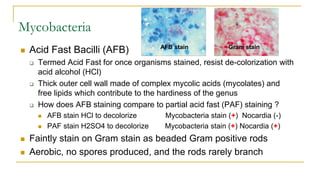
 Acid Fast Bacilli (AFB)
 Termed Acid Fast for once organisms stained, resist de-colorization with
acid alcohol (HCl)
 Thick outer cell wall made of complex mycolic acids (mycolates) and
free lipids which contribute to the hardiness of the genus
 How does AFB staining compare to partial acid fast (PAF) staining ?
 AFB stain HCl to decolorize Mycobacteria stain (+) Nocardia (-)
 PAF stain H2SO4 to decolorize Mycobacteria stain (+) Nocardia (+)
 Faintly stain on Gram stain as beaded Gram positive rods
 Aerobic, no spores produced, and the rods rarely branch
AFB stain Gram stain
Laboratory
Safety
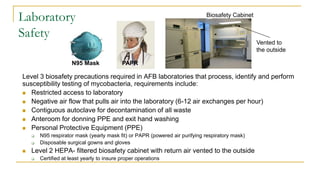
Level 3 biosafety precautions required in AFB laboratories that process, identify and perform
susceptibility testing of mycobacteria, requirements include:
 Restricted access to laboratory
 Negative air flow that pulls air into the laboratory (6-12 air exchanges per hour)
 Contiguous autoclave for decontamination of all waste
 Anteroom for donning PPE and exit hand washing
 Personal Protective Equipment (PPE)
 N95 respirator mask (yearly mask fit) or PAPR (powered air purifying respiratory mask)
 Disposable surgical gowns and gloves
 Level 2 HEPA- filtered biosafety cabinet with return air vented to the outside
 Certified at least yearly to insure proper operations
Biosafety Cabinet
PAPR
Vented to
the outside
N95 Mask
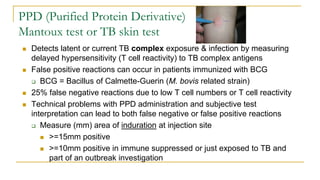
PPD (Purified Protein Derivative)
Mantoux test or TB skin test
 Detects latent or current TB complex exposure & infection by measuring
delayed hypersensitivity (T cell reactivity) to TB complex antigens
 False positive reactions can occur in patients immunized with BCG
 BCG = Bacillus of Calmette-Guerin (M. bovis related strain)
 25% false negative reactions due to low T cell numbers or T cell reactivity
 Technical problems with PPD administration and subjective test
interpretation can lead to both false negative or false positive reactions
 Measure (mm) area of induration at injection site
 >=15mm positive
 >=10mm positive in immune suppressed or just exposed to TB and
part of an outbreak investigation
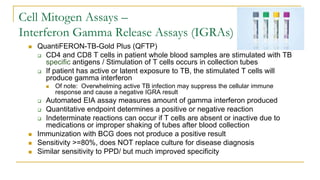
Cell Mitogen Assays –
Interferon Gamma Release Assays (IGRAs)
 QuantiFERON-TB-Gold Plus (QFTP)
 CD4 and CD8 T cells in patient whole blood samples are stimulated with TB
specific antigens / Stimulation of T cells occurs in collection tubes
 If patient has active or latent exposure to TB, the stimulated T cells will
produce gamma interferon
 Of note: Overwhelming active TB infection may suppress the cellular immune
response and cause a negative IGRA result
 Automated EIA assay measures amount of gamma interferon produced
 Quantitative endpoint determines a positive or negative reaction
 Indeterminate reactions can occur if T cells are absent or inactive due to
medications or improper shaking of tubes after blood collection
 Immunization with BCG does not produce a positive result
 Sensitivity >=80%, does NOT replace culture for disease diagnosis
 Similar sensitivity to PPD/ but much improved specificity
Mycobacteria Taxonomy (>150 species)
 Group 1 - TB complex organisms
 Mycobacterium tuberculosis
 M. bovis
 Includes the Bacillus Calmette-Guerin (BCG) strain
 Attenuated strain of M. bovis used for vaccination
 M. africanum
 Rare species of mycobacteria
 Mycobacterium microti
 Mycobacterium canetti
 Mycobacterium caprae
 Mycobacterium pinnipedii
 Mycobacterium suricattae
 Mycobacterium mungi
 Group 2 - Mycobacteria other than TB complex (“MOTT”)
also known as the Non-Tuberculous Mycobacteria
Non-tuberculous Mycobacteria that cause disease
(1) Slowly growing non tuberculosis mycobacteria
 M. avium-intracullare complex
 M. genavense
 M. haemophilum
 M. kansasii (3) Mycobacterium leprae
 M. malmoense
 M. marinum
 M. simiae
 M. szulgai
 M. ulcerans
 M. xenopi
 M. smegmatis
(2) Rapid growers (growth in <= 7 days)
 M. fortuitum group
 M. abscessus
 M. chelonae
 M. mucogenicum
Mycobacteria that rarely if ever cause disease!
If so, only in the immunocompromised!
Slowly growing non-tuberculous mycobacteria
 Mycobacterium gordonae
 M. gastri
 M. celatum
 M. scrofulaceum
 M. terrae complex
Taxonomy rearrangement of the Mycobacteria
 Used to be one genera: Mycobacterium, but what was one is now five!
 Mycobacterium genera remains, includes the major human pathogens
New Genera:
 Mycolicibacterium genera: type species M. fortuitum
 Mycolicibacter genera: type species M. terrae
 Mycolicibacillus genera: type species M. trivale
 Mycobacteroides genera: type species M. abscessus and M. chelonae
 With the division of mycobacterial species into these five distinct groups,
taxonomists can focus on unique genetic and molecular characteristics that
differentiate members of each group
 This shakes up the taxonomy and may add confusion before bringing clarity
Mycobacteria identification over the decades
 For decades, Runyon classification used to place mycobacteria into select
groups. Testing determined the ability of a mycobacteria species to form a
yellow carotenoid pigment when exposed to light or in the dark, followed
with select biochemical reactions and determining growth rate and
optimum temperature for growth. Obsolete
 With expanding taxonomy, biochemical reactions were unable to identify
newly recognized species, so High Performance Liquid Chromatography
(HPLC) became useful. Obsolete
 Current methods for identification:
 Select molecular genetic probes (DNA/RNA hybridization)
 MALDI-TOF (Matrix Assisted Laser Desorption/Ionization Time of Flight)
Mass Spectrometry analyzes cellular proteins and is currently the most
popular method, precise, easy to perform and inexpensive
 Sequencing 16S rRNA gene sequencing for difficult to identify
Identification of MOTT!
The older way…..
 Runyon Classification System
 Classification system for non-tuberculous mycobacteria
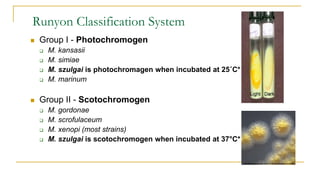
 (1) Establish if a yellow carotenoid pigment produced when AFB is
exposed to incandescent light bulb (The Light Test)
 (2) Is the growth rate of mycobacteria <=7 days
 Four Runyon groups
 Photochromogen Pigment produced only when exposed to light
 Scotochromogen Pigment produced in both light and dark
 Non-photochromogen No pigment produced in light or dark
 Rapid Grower Growth rate <= 7 days
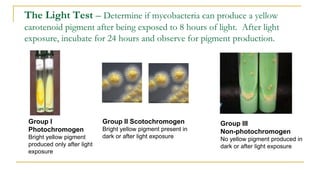
The Light Test – Determine if mycobacteria can produce a yellow
carotenoid pigment after being exposed to 8 hours of light. After light
exposure, incubate for 24 hours and observe for pigment production.
Group I
Photochromogen
Bright yellow pigment
produced only after light
exposure
Group III
Non-photochromogen
No yellow pigment produced in
dark or after light exposure
Group II Scotochromogen
Bright yellow pigment present in
dark or after light exposure
Runyon Classification System
 Group I - Photochromogen
 M. kansasii
 M. simiae
 M. szulgai is photochromagen when incubated at 25˚C*
 M. marinum
 Group II - Scotochromogen
 M. gordonae
 M. scrofulaceum
 M. xenopi (most strains)
 M. szulgai is scotochromogen when incubated at 37°C*
Runyon Classification continued
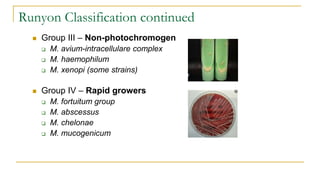
 Group III – Non-photochromogen
 M. avium-intracellulare complex
 M. haemophilum
 M. xenopi (some strains)
 Group IV – Rapid growers
 M. fortuitum group
 M. abscessus
 M. chelonae
 M. mucogenicum
Specimens for AFB Culture
 Respiratory specimens
 Expectorated Sputum – 3 early morning collections, or
1 early morning, plus 2 collected at least 8 hours apart (3-5 ml of specimen)
 Also Induced sputa, bronchial lavage or endotracheal aspirate
 Non-Respiratory specimens
 Tissues, lesions, stool
 Sterile body fluids including CSF
 Urine – 3 to 5 early morning collections
 Gastric – collected in children, due to difficulty in collecting sputum,
must neutralize with sodium bicarbonate to pH of 7.0 after collection
 Blood and bone marrow
 Automated systems for detection using culture bottles
manufactured specifically for AFB detection in these specimens
 Transport to reference laboratory: must package specimens in
Category B packaging, carefully sealed transport for diagnostic testing
for organisms that do not cause life-threatening problems
Processing for potentially contaminated specimens
 3 - 5 ml of specimen pipetted into conical Falcon tube
 (1) Decontaminate and liquify specimen for 15 minutes with:
 5 ml of 2% NaOH / this increases the specimen pH to 9, and kills
contaminating bacteria
 0.5% N-acetyl-L-Cysteine liquifies mucus in specimen
 (2) After 15 minutes of decontamination, neutralize specimen
by adding phosphate buffer to adjust pH to 7.0
 (3) Centrifuge for 30 minutes using safety cups with tight lids
 3000 X g to pellet the AFB
 (4) Pour off supernatant and use remaining pellet for culture
 Pellet used to prepare concentrated slide for AFB staining
 Dilute the pellet with small amount of sterile saline for culture
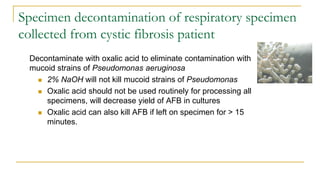
Decontaminate with oxalic acid to eliminate contamination with
mucoid strains of Pseudomonas aeruginosa
 2% NaOH will not kill mucoid strains of Pseudomonas
 Oxalic acid should not be used routinely for processing all
specimens, will decrease yield of AFB in cultures
 Oxalic acid can also kill AFB if left on specimen for > 15
minutes.
Specimen decontamination of respiratory specimen
collected from cystic fibrosis patient
Specimen centrifugation
 Centrifugation at 3000 X g (high speed) using tightly sealed
safety cups to protect from specimen leakage into the centrifuge
 Speed of centrifugation is important
 AFB cell wall contains high % lipid, float if not centrifuged at high speed
 Must firmly pellet AFB so they are not decanted with supernatant
 Sensitivity of the AFB stain and culture dependent upon pelleting of AFB
Culture media used for cultures
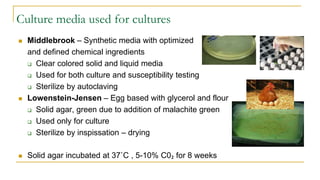
 Middlebrook – Synthetic media with optimized
and defined chemical ingredients
 Clear colored solid and liquid media
 Used for both culture and susceptibility testing
 Sterilize by autoclaving
 Lowenstein-Jensen – Egg based with glycerol and flour
 Solid agar, green due to addition of malachite green
 Used only for culture
 Sterilize by inspissation – drying
 Solid agar incubated at 37˚C , 5-10% C0₂ for 8 weeks
AFB automated detection
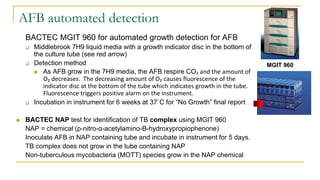
BACTEC MGIT 960 for automated growth detection for AFB
 Middlebrook 7H9 liquid media with a growth indicator disc in the bottom of
the culture tube (see red arrow)
 Detection method
 As AFB grow in the 7H9 media, the AFB respire CO₂ and the amount of
O₂ decreases. The decreasing amount of O₂ causes fluorescence of the
indicator disc at the bottom of the tube which indicates growth in the tube.
Fluorescence triggers positive alarm on the instrument.
 Incubation in instrument for 6 weeks at 37˚C for “No Growth” final report
 BACTEC NAP test for identification of TB complex using MGIT 960
NAP = chemical (p-nitro-α-acetylamino-B-hydroxypropiophenone)
Inoculate AFB in NAP containing tube and incubate in instrument for 5 days.
TB complex does not grow in the tube containing NAP
Non-tuberculous mycobacteria (MOTT) species grow in the NAP chemical
MGIT 960
Acid Fast Stains for Mycobacteria
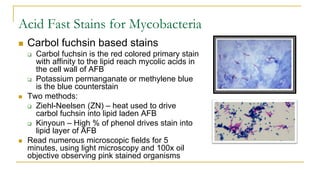
 Carbol fuchsin based stains
 Carbol fuchsin is the red colored primary stain
with affinity to the lipid reach mycolic acids in
the cell wall of AFB
 Potassium permanganate or methylene blue
is the blue counterstain
 Two methods:
 Ziehl-Neelsen (ZN) – heat used to drive
carbol fuchsin into lipid laden AFB
 Kinyoun – High % of phenol drives stain into
lipid layer of AFB
 Read numerous microscopic fields for 5
minutes, using light microscopy and 100x oil
objective observing pink stained organisms
Fluorochrome stain
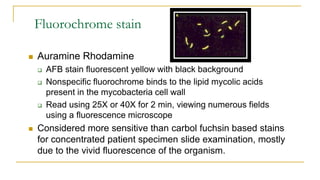
 Auramine Rhodamine
 AFB stain fluorescent yellow with black background
 Nonspecific fluorochrome binds to the lipid mycolic acids
present in the mycobacteria cell wall
 Read using 25X or 40X for 2 min, viewing numerous fields
using a fluorescence microscope
 Considered more sensitive than carbol fuchsin based stains
for concentrated patient specimen slide examination, mostly
due to the vivid fluorescence of the organism.
Acid Fast Mycobacteria morphology
M. avium complex
Short rods tend to randomly
clump.
M. tuberculosis - Organisms
are long, often beaded, and can
appear as if they are sticking
together [due to cord factor]
In broth
cultures -
ropes of AFB
can form due to
cord factor
M. kansasii – AFB are
large, beaded, and tend to
randomly clump, occasional
bent organisms known as
Shepherd’s crook
morphology.
Direct detection of TB complex from respiratory
specimens using molecular amplification (PCR)
 FDA cleared assays for rapid detection of TB complex in sputum.
 Detects TB complex gene sequence and Rifampin resistance gene (rpoB)
 Sensitivity of assay
 99% for AFB specimens with a positive concentrated AFB smear
 75% for AFB specimens with a negative concentrated AFB smear
 Test of diagnosis, not cure
 One positive TB PCR can support diagnosis of TB in highly suspicious patient
 Residual rRNA and DNA can be present for up to 6 months after initial diagnosis and
start of appropriate therapy, so this test cannot be used as evidence of cure
 Two negative TB PCR assays and 3 negative AFB smears exclude TB as a diagnosis
 AFB culture and sensitivity must always be performed to confirm the results
of the amplification assay and provide additional information
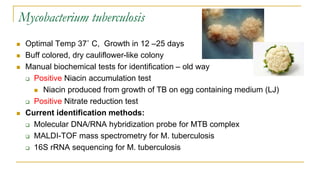
Mycobacterium tuberculosis
 Optimal Temp 37˚ C, Growth in 12 –25 days
 Buff colored, dry cauliflower-like colony
 Manual biochemical tests for identification – old way
 Positive Niacin accumulation test
 Niacin produced from growth of TB on egg containing medium (LJ)
 Positive Nitrate reduction test
 Current identification methods:
 Molecular DNA/RNA hybridization probe for MTB complex
 MALDI-TOF mass spectrometry for M. tuberculosis
 16S rRNA sequencing for M. tuberculosis
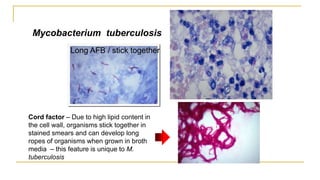
Mycobacterium tuberculosis
Cord factor – Due to high lipid content in
the cell wall, organisms stick together in
stained smears and can develop long
ropes of organisms when grown in broth
media – this feature is unique to M.
tuberculosis
Long AFB / stick together
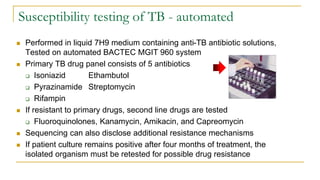
Susceptibility testing of TB - automated
 Performed in liquid 7H9 medium containing anti-TB antibiotic solutions,
Tested on automated BACTEC MGIT 960 system
 Primary TB drug panel consists of 5 antibiotics
 Isoniazid Ethambutol
 Pyrazinamide Streptomycin
 Rifampin
 If resistant to primary drugs, second line drugs are tested
 Fluoroquinolones, Kanamycin, Amikacin, and Capreomycin
 Sequencing can also disclose additional resistance mechanisms
 If patient culture remains positive after four months of treatment, the
isolated organism must be retested for possible drug resistance
Tuberculosis
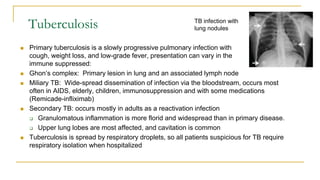
 Primary tuberculosis is a slowly progressive pulmonary infection with
cough, weight loss, and low-grade fever, presentation can vary in the
immune suppressed:
 Ghon’s complex: Primary lesion in lung and an associated lymph node
 Miliary TB: Wide-spread dissemination of infection via the bloodstream, occurs most
often in AIDS, elderly, children, immunosuppression and with some medications
(Remicade-infliximab)
 Secondary TB: occurs mostly in adults as a reactivation infection
 Granulomatous inflammation is more florid and widespread than in primary disease.
 Upper lung lobes are most affected, and cavitation is common
 Tuberculosis is spread by respiratory droplets, so all patients suspicious for TB require
respiratory isolation when hospitalized
TB infection with
lung nodules
Pathology of Mycobacterium tuberculosis
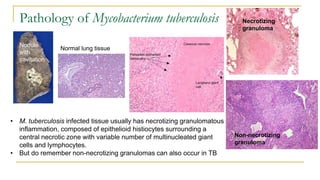
• M. tuberculosis infected tissue usually has necrotizing granulomatous
inflammation, composed of epithelioid histiocytes surrounding a
central necrotic zone with variable number of multinucleated giant
cells and lymphocytes.
• But do remember non-necrotizing granulomas can also occur in TB
Nodule
with
cavitation
Necrotizing
granuloma
Non-necrotizing
granuloma
Normal lung tissue
TB in HIV/AIDS patients
 TB is a common opportunistic infection in HIV/AIDS
 Trend toward being multi-drug resistance (at least INH and Rifampin)
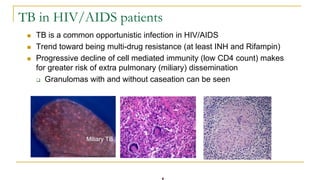
 Progressive decline of cell mediated immunity (low CD4 count) makes
for greater risk of extra pulmonary (miliary) dissemination
 Granulomas with and without caseation can be seen
Miliary TB
M. tuberculosis outside the lung
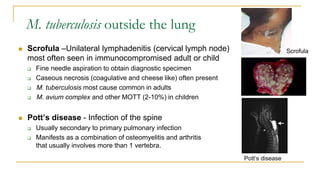
 Scrofula –Unilateral lymphadenitis (cervical lymph node)
most often seen in immunocompromised adult or child
 Fine needle aspiration to obtain diagnostic specimen
 Caseous necrosis (coagulative and cheese like) often present
 M. tuberculosis most cause common in adults
 M. avium complex and other MOTT (2-10%) in children
 Pott’s disease - Infection of the spine
 Usually secondary to primary pulmonary infection
 Manifests as a combination of osteomyelitis and arthritis
that usually involves more than 1 vertebra.
Pott’s disease
Scrofula
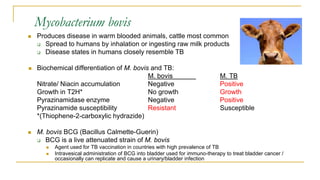
Mycobacterium bovis
 Produces disease in warm blooded animals, cattle most common
 Spread to humans by inhalation or ingesting raw milk products
 Disease states in humans closely resemble TB
 Biochemical differentiation of M. bovis and TB:
M. bovis M. TB
Nitrate/ Niacin accumulation Negative Positive
Growth in T2H* No growth Growth
Pyrazinamidase enzyme Negative Positive
Pyrazinamide susceptibility Resistant Susceptible
*(Thiophene-2-carboxylic hydrazide)
 M. bovis BCG (Bacillus Calmette-Guerin)
 BCG is a live attenuated strain of M. bovis
 Agent used for TB vaccination in countries with high prevalence of TB
 Intravesical administration of BCG into bladder used for immuno-therapy to treat bladder cancer /
occasionally can replicate and cause a urinary/bladder infection
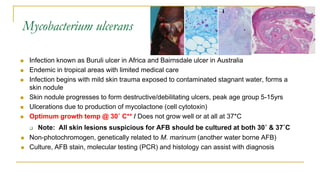
Mycobacterium ulcerans
 Infection known as Buruli ulcer in Africa and Bairnsdale ulcer in Australia
 Endemic in tropical areas with limited medical care
 Infection begins with mild skin trauma exposed to contaminated stagnant water, forms a
skin nodule
 Skin nodule progresses to form destructive/debilitating ulcers, peak age group 5-15yrs
 Ulcerations due to production of mycolactone (cell cytotoxin)
 Optimum growth temp @ 30˚ C** / Does not grow well or at all at 37*C
 Note: All skin lesions suspicious for AFB should be cultured at both 30˚ & 37˚C
 Non-photochromogen, genetically related to M. marinum (another water borne AFB)
 Culture, AFB stain, molecular testing (PCR) and histology can assist with diagnosis
Mycobacterium kansasii
 Clinical disease mimics pulmonary TB
 Disease usually acquired from contaminated tap water
 Predisposition for diseased lung (COPD, pneumoconiosis)
 More likely seen in immune suppressed, alcohol abuse, and HIV
 Produces granulomatous inflammation in lung and unlikely
to disseminate to bloodstream or other organs
 Culture 37* C, growth in10-20 days
 Photochromogen
 Niacin accumulation test negative
 Nitrate reduction positive
 Tween 80 positive / tests for presence of the lipase enzyme
 68*C catalase positive
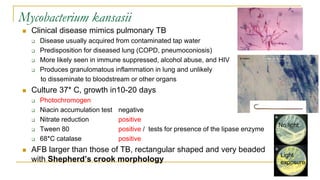
 AFB larger than those of TB, rectangular shaped and very beaded
with Shepherd’s crook morphology
No light
Light
exposure
Mycobacterium marinum
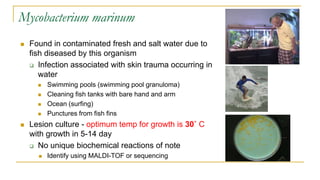
 Found in contaminated fresh and salt water due to
fish diseased by this organism
 Infection associated with skin trauma occurring in
water
 Swimming pools (swimming pool granuloma)
 Cleaning fish tanks with bare hand and arm
 Ocean (surfing)
 Punctures from fish fins
 Lesion culture - optimum temp for growth is 30˚ C
with growth in 5-14 day
 No unique biochemical reactions of note
 Identify using MALDI-TOF or sequencing
Mycobacterium marinum
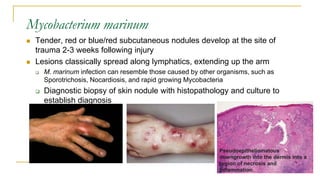
 Tender, red or blue/red subcutaneous nodules develop at the site of
trauma 2-3 weeks following injury
 Lesions classically spread along lymphatics, extending up the arm
 M. marinum infection can resemble those caused by other organisms, such as
Sporotrichosis, Nocardiosis, and rapid growing Mycobacteria
 Diagnostic biopsy of skin nodule with histopathology and culture to
establish diagnosis
Pseudoepitheliomatous
downgrowth into the dermis into a
region of necrosis and
inflammation.
Mycobacterium szulgai
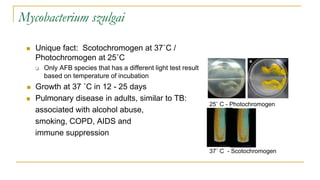
 Unique fact: Scotochromogen at 37˚C /
Photochromogen at 25˚C
 Only AFB species that has a different light test result
based on temperature of incubation
 Growth at 37 ˚C in 12 - 25 days
 Pulmonary disease in adults, similar to TB:
associated with alcohol abuse,
smoking, COPD, AIDS and
immune suppression
25˚ C - Photochromogen
37˚ C - Scotochromogen
Mycobacterium xenopi
 Thermophilic AFB, grows at 42˚C (unusual for AFB)
 Capable of growing in hot water systems, aerosolization of water is a
common sources of infection
 Can occur as colonization or cause of infection, need to investigate
patient factors to establish diagnosis
 Growth in 14 - 28 days
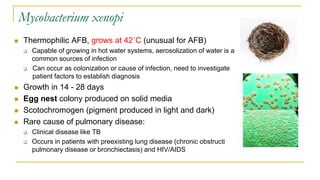
 Egg nest colony produced on solid media
 Scotochromogen (pigment produced in light and dark)
 Rare cause of pulmonary disease:
 Clinical disease like TB
 Occurs in patients with preexisting lung disease (chronic obstructive
pulmonary disease or bronchiectasis) and HIV/AIDS
Mycobacterium avium complex (MAC)
 Complex includes eight species of environmental and animal origin AFB
 M. avium, M. intracellulare, M indicus pranii, M chimaera, M arosiense, M vulneris, M
bouchedurhonense, M colombiense, M marseillense, M yongonense, and M
timonense (M. avium and M. intracellular most common species)
 Non-photochromogen
 All species biochemically and genetically very similar
 Mostly inert in biochemical reactions
 Growth at 37 ˚C in 7 – 21 days
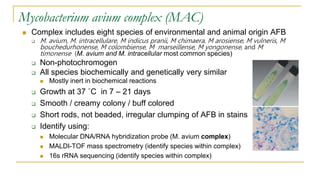
 Smooth / creamy colony / buff colored
 Short rods, not beaded, irregular clumping of AFB in stains
 Identify using:
 Molecular DNA/RNA hybridization probe (M. avium complex)
 MALDI-TOF mass spectrometry (identify species within complex)
 16s rRNA sequencing (identify species within complex)
M. avium complex clinical correlation
 Disease in the somewhat normal host:
 Adult: chronic pulmonary disease, fibro-cavitary or nodular
bronchiectasis presentation
 Produces chronic cough in elderly with prior lung damage (COPD)
 Children: Scrofula with chronic granulomatous inflammation and
lymph node involvement
 M. chimaera (emerging species within the M. avium complex)
 Environmental (airborne transmission) and nosocomial pathogen
 Established as a contaminate during the manufacturing of heater–
cooler units used during cardiac surgery. Aerosolized water sprayed
from the instrument contaminated the surgical field with M. chimera
leading to post surgical infections
M. avium complex disease in HIV/AIDS
 Common opportunistic infection, symptoms include:
 Nonspecific low-grade fever, weakness, weight loss,
picture of fever of unknown origin rather than pulmonary
infection
 Diagnosis: Isolation in culture from respiratory, blood or
bone marrow, AFB staining of bone marrow
 Abdominal pain and/or diarrhea with malabsorption
 Diagnosis: positive stool AFB smear and culture
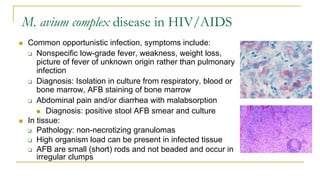
 In tissue:
 Pathology: non-necrotizing granulomas
 High organism load can be present in infected tissue
 AFB are small (short) rods and not beaded and occur in
irregular clumps
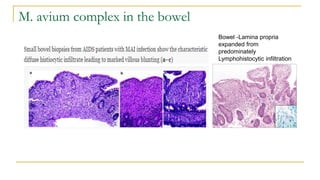
Bowel -Lamina propria
expanded from
predominately
Lymphohistocytic infiltration
M. avium complex in the bowel
 Growth in <=7 days at 35*/37*C
 Due to rapid growth, can grow in routine bacteriologic cultures
 20 species, environmental organisms found in soil and
water and can be transmitted from contaminated medical
supplies (nosocomial transmission)
 The 3 most common human pathogens:
 M. fortuitum skin and surgical wound infections
and catheter sites
 M. chelonae skin infections in immune suppressed
and catheter sites
 M. abscessus chronic lung infection (cystic fibrosis)
and skin infection in immune suppressed
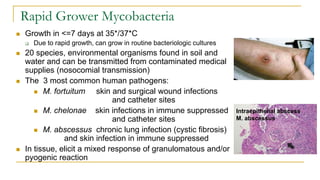
 In tissue, elicit a mixed response of granulomatous and/or
pyogenic reaction
Rapid Grower Mycobacteria
Intraepithelial abscess
M. abscessus
Rapid growers
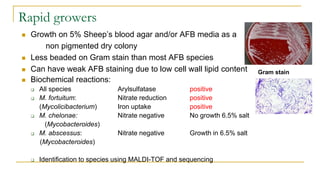
 Growth on 5% Sheep’s blood agar and/or AFB media as a
non pigmented dry colony
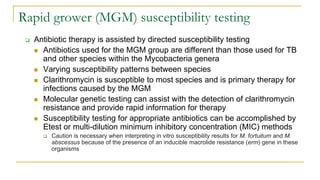
 Less beaded on Gram stain than most AFB species
 Can have weak AFB staining due to low cell wall lipid content
 Biochemical reactions:
 All species Arylsulfatase positive
 M. fortuitum: Nitrate reduction positive
(Mycolicibacterium) Iron uptake positive
 M. chelonae: Nitrate negative No growth 6.5% salt
(Mycobacteroides)
 M. abscessus: Nitrate negative Growth in 6.5% salt
(Mycobacteroides)
 Identification to species using MALDI-TOF and sequencing
Gram stain
Rapid grower (MGM) susceptibility testing
 Antibiotic therapy is assisted by directed susceptibility testing
 Antibiotics used for the MGM group are different than those used for TB
and other species within the Mycobacteria genera
 Varying susceptibility patterns between species
 Clarithromycin is susceptible to most species and is primary therapy for
infections caused by the MGM
 Molecular genetic testing can assist with the detection of clarithromycin
resistance and provide rapid information for therapy
 Susceptibility testing for appropriate antibiotics can be accomplished by
Etest or multi-dilution minimum inhibitory concentration (MIC) methods
 Caution is necessary when interpreting in vitro susceptibility results for M. fortuitum and M.
abscessus because of the presence of an inducible macrolide resistance (erm) gene in these
organisms
Miscellaneous species
 Mycobacterium gordonae
 Rarely if ever causes disease
 Commonly found in tap water and is the most common AFB
culture contaminant. Contamination can occur during specimen
collection or laboratory processing. Must use sterile distilled
water for processing to prevent culture contamination
 Scotochromogen
 Need to accurately identify so there is not confusion with a true
pathogen
 Identification using genetic probe, MALDI-TOF or sequencing
Mycobacterium haemophilum
 Fastidious slow growing AFB requiring the
addition of hemoglobin or hemin to culture media
for growth
 Will not grow on LJ media, Middlebrook, or in automated
system media (Middlebrook 12B media) without the
addition of hemin supplement
 Will grow on chocolate agar
 Grows best at 30*C, poor growth at 37*C
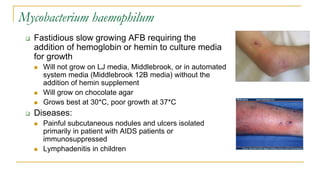
 Diseases:
 Painful subcutaneous nodules and ulcers isolated
primarily in patient with AIDS patients or
immunosuppressed
 Lymphadenitis in children
Mycobacterium leprae/M. lepromatosis
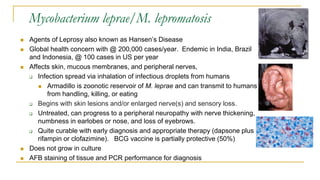
 Agents of Leprosy also known as Hansen’s Disease
 Global health concern with @ 200,000 cases/year. Endemic in India, Brazil
and Indonesia, @ 100 cases in US per year
 Affects skin, mucous membranes, and peripheral nerves,
 Infection spread via inhalation of infectious droplets from humans
 Armadillo is zoonotic reservoir of M. leprae and can transmit to humans
from handling, killing, or eating
 Begins with skin lesions and/or enlarged nerve(s) and sensory loss.
 Untreated, can progress to a peripheral neuropathy with nerve thickening,
numbness in earlobes or nose, and loss of eyebrows.
 Quite curable with early diagnosis and appropriate therapy (dapsone plus
rifampin or clofazimine). BCG vaccine is partially protective (50%)
 Does not grow in culture
 AFB staining of tissue and PCR performance for diagnosis
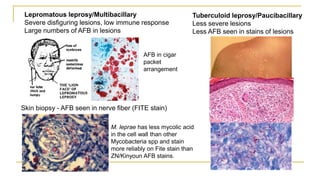
Tuberculoid leprosy/Paucibacillary
Less severe lesions
Less AFB seen in stains of lesions
Lepromatous leprosy/Multibacillary
Severe disfiguring lesions, low immune response
Large numbers of AFB in lesions
Skin biopsy - AFB seen in nerve fiber (FITE stain)
M. leprae has less mycolic acid
in the cell wall than other
Mycobacteria spp and stain
more reliably on Fite stain than
ZN/Kinyoun AFB stains.
AFB in cigar
packet
arrangement

Mycobacteriology Update 2023

  • 1.
  • 2.
    Mycobacteria  Acid FastBacilli (AFB)  Termed Acid Fast for once organisms stained, resist de-colorization with acid alcohol (HCl)  Thick outer cell wall made of complex mycolic acids (mycolates) and free lipids which contribute to the hardiness of the genus  How does AFB staining compare to partial acid fast (PAF) staining ?  AFB stain HCl to decolorize Mycobacteria stain (+) Nocardia (-)  PAF stain H2SO4 to decolorize Mycobacteria stain (+) Nocardia (+)  Faintly stain on Gram stain as beaded Gram positive rods  Aerobic, no spores produced, and the rods rarely branch AFB stain Gram stain
  • 3.
    Laboratory Safety Level 3 biosafetyprecautions required in AFB laboratories that process, identify and perform susceptibility testing of mycobacteria, requirements include:  Restricted access to laboratory  Negative air flow that pulls air into the laboratory (6-12 air exchanges per hour)  Contiguous autoclave for decontamination of all waste  Anteroom for donning PPE and exit hand washing  Personal Protective Equipment (PPE)  N95 respirator mask (yearly mask fit) or PAPR (powered air purifying respiratory mask)  Disposable surgical gowns and gloves  Level 2 HEPA- filtered biosafety cabinet with return air vented to the outside  Certified at least yearly to insure proper operations Biosafety Cabinet PAPR Vented to the outside N95 Mask
  • 4.
    PPD (Purified ProteinDerivative) Mantoux test or TB skin test  Detects latent or current TB complex exposure & infection by measuring delayed hypersensitivity (T cell reactivity) to TB complex antigens  False positive reactions can occur in patients immunized with BCG  BCG = Bacillus of Calmette-Guerin (M. bovis related strain)  25% false negative reactions due to low T cell numbers or T cell reactivity  Technical problems with PPD administration and subjective test interpretation can lead to both false negative or false positive reactions  Measure (mm) area of induration at injection site  >=15mm positive  >=10mm positive in immune suppressed or just exposed to TB and part of an outbreak investigation
  • 5.
    Cell Mitogen Assays– Interferon Gamma Release Assays (IGRAs)  QuantiFERON-TB-Gold Plus (QFTP)  CD4 and CD8 T cells in patient whole blood samples are stimulated with TB specific antigens / Stimulation of T cells occurs in collection tubes  If patient has active or latent exposure to TB, the stimulated T cells will produce gamma interferon  Of note: Overwhelming active TB infection may suppress the cellular immune response and cause a negative IGRA result  Automated EIA assay measures amount of gamma interferon produced  Quantitative endpoint determines a positive or negative reaction  Indeterminate reactions can occur if T cells are absent or inactive due to medications or improper shaking of tubes after blood collection  Immunization with BCG does not produce a positive result  Sensitivity >=80%, does NOT replace culture for disease diagnosis  Similar sensitivity to PPD/ but much improved specificity
  • 6.
    Mycobacteria Taxonomy (>150species)  Group 1 - TB complex organisms  Mycobacterium tuberculosis  M. bovis  Includes the Bacillus Calmette-Guerin (BCG) strain  Attenuated strain of M. bovis used for vaccination  M. africanum  Rare species of mycobacteria  Mycobacterium microti  Mycobacterium canetti  Mycobacterium caprae  Mycobacterium pinnipedii  Mycobacterium suricattae  Mycobacterium mungi  Group 2 - Mycobacteria other than TB complex (“MOTT”) also known as the Non-Tuberculous Mycobacteria
  • 7.
    Non-tuberculous Mycobacteria thatcause disease (1) Slowly growing non tuberculosis mycobacteria  M. avium-intracullare complex  M. genavense  M. haemophilum  M. kansasii (3) Mycobacterium leprae  M. malmoense  M. marinum  M. simiae  M. szulgai  M. ulcerans  M. xenopi  M. smegmatis (2) Rapid growers (growth in <= 7 days)  M. fortuitum group  M. abscessus  M. chelonae  M. mucogenicum
  • 8.
    Mycobacteria that rarelyif ever cause disease! If so, only in the immunocompromised! Slowly growing non-tuberculous mycobacteria  Mycobacterium gordonae  M. gastri  M. celatum  M. scrofulaceum  M. terrae complex
  • 9.
    Taxonomy rearrangement ofthe Mycobacteria  Used to be one genera: Mycobacterium, but what was one is now five!  Mycobacterium genera remains, includes the major human pathogens New Genera:  Mycolicibacterium genera: type species M. fortuitum  Mycolicibacter genera: type species M. terrae  Mycolicibacillus genera: type species M. trivale  Mycobacteroides genera: type species M. abscessus and M. chelonae  With the division of mycobacterial species into these five distinct groups, taxonomists can focus on unique genetic and molecular characteristics that differentiate members of each group  This shakes up the taxonomy and may add confusion before bringing clarity
  • 10.
    Mycobacteria identification overthe decades  For decades, Runyon classification used to place mycobacteria into select groups. Testing determined the ability of a mycobacteria species to form a yellow carotenoid pigment when exposed to light or in the dark, followed with select biochemical reactions and determining growth rate and optimum temperature for growth. Obsolete  With expanding taxonomy, biochemical reactions were unable to identify newly recognized species, so High Performance Liquid Chromatography (HPLC) became useful. Obsolete  Current methods for identification:  Select molecular genetic probes (DNA/RNA hybridization)  MALDI-TOF (Matrix Assisted Laser Desorption/Ionization Time of Flight) Mass Spectrometry analyzes cellular proteins and is currently the most popular method, precise, easy to perform and inexpensive  Sequencing 16S rRNA gene sequencing for difficult to identify
  • 11.
    Identification of MOTT! Theolder way…..  Runyon Classification System  Classification system for non-tuberculous mycobacteria  (1) Establish if a yellow carotenoid pigment produced when AFB is exposed to incandescent light bulb (The Light Test)  (2) Is the growth rate of mycobacteria <=7 days  Four Runyon groups  Photochromogen Pigment produced only when exposed to light  Scotochromogen Pigment produced in both light and dark  Non-photochromogen No pigment produced in light or dark  Rapid Grower Growth rate <= 7 days
  • 12.
    The Light Test– Determine if mycobacteria can produce a yellow carotenoid pigment after being exposed to 8 hours of light. After light exposure, incubate for 24 hours and observe for pigment production. Group I Photochromogen Bright yellow pigment produced only after light exposure Group III Non-photochromogen No yellow pigment produced in dark or after light exposure Group II Scotochromogen Bright yellow pigment present in dark or after light exposure
  • 13.
    Runyon Classification System Group I - Photochromogen  M. kansasii  M. simiae  M. szulgai is photochromagen when incubated at 25˚C*  M. marinum  Group II - Scotochromogen  M. gordonae  M. scrofulaceum  M. xenopi (most strains)  M. szulgai is scotochromogen when incubated at 37°C*
  • 14.
    Runyon Classification continued Group III – Non-photochromogen  M. avium-intracellulare complex  M. haemophilum  M. xenopi (some strains)  Group IV – Rapid growers  M. fortuitum group  M. abscessus  M. chelonae  M. mucogenicum
  • 15.
    Specimens for AFBCulture  Respiratory specimens  Expectorated Sputum – 3 early morning collections, or 1 early morning, plus 2 collected at least 8 hours apart (3-5 ml of specimen)  Also Induced sputa, bronchial lavage or endotracheal aspirate  Non-Respiratory specimens  Tissues, lesions, stool  Sterile body fluids including CSF  Urine – 3 to 5 early morning collections  Gastric – collected in children, due to difficulty in collecting sputum, must neutralize with sodium bicarbonate to pH of 7.0 after collection  Blood and bone marrow  Automated systems for detection using culture bottles manufactured specifically for AFB detection in these specimens  Transport to reference laboratory: must package specimens in Category B packaging, carefully sealed transport for diagnostic testing for organisms that do not cause life-threatening problems
  • 16.
    Processing for potentiallycontaminated specimens  3 - 5 ml of specimen pipetted into conical Falcon tube  (1) Decontaminate and liquify specimen for 15 minutes with:  5 ml of 2% NaOH / this increases the specimen pH to 9, and kills contaminating bacteria  0.5% N-acetyl-L-Cysteine liquifies mucus in specimen  (2) After 15 minutes of decontamination, neutralize specimen by adding phosphate buffer to adjust pH to 7.0  (3) Centrifuge for 30 minutes using safety cups with tight lids  3000 X g to pellet the AFB  (4) Pour off supernatant and use remaining pellet for culture  Pellet used to prepare concentrated slide for AFB staining  Dilute the pellet with small amount of sterile saline for culture
  • 17.
    Decontaminate with oxalicacid to eliminate contamination with mucoid strains of Pseudomonas aeruginosa  2% NaOH will not kill mucoid strains of Pseudomonas  Oxalic acid should not be used routinely for processing all specimens, will decrease yield of AFB in cultures  Oxalic acid can also kill AFB if left on specimen for > 15 minutes. Specimen decontamination of respiratory specimen collected from cystic fibrosis patient
  • 18.
    Specimen centrifugation  Centrifugationat 3000 X g (high speed) using tightly sealed safety cups to protect from specimen leakage into the centrifuge  Speed of centrifugation is important  AFB cell wall contains high % lipid, float if not centrifuged at high speed  Must firmly pellet AFB so they are not decanted with supernatant  Sensitivity of the AFB stain and culture dependent upon pelleting of AFB
  • 19.
    Culture media usedfor cultures  Middlebrook – Synthetic media with optimized and defined chemical ingredients  Clear colored solid and liquid media  Used for both culture and susceptibility testing  Sterilize by autoclaving  Lowenstein-Jensen – Egg based with glycerol and flour  Solid agar, green due to addition of malachite green  Used only for culture  Sterilize by inspissation – drying  Solid agar incubated at 37˚C , 5-10% C0₂ for 8 weeks
  • 20.
    AFB automated detection BACTECMGIT 960 for automated growth detection for AFB  Middlebrook 7H9 liquid media with a growth indicator disc in the bottom of the culture tube (see red arrow)  Detection method  As AFB grow in the 7H9 media, the AFB respire CO₂ and the amount of O₂ decreases. The decreasing amount of O₂ causes fluorescence of the indicator disc at the bottom of the tube which indicates growth in the tube. Fluorescence triggers positive alarm on the instrument.  Incubation in instrument for 6 weeks at 37˚C for “No Growth” final report  BACTEC NAP test for identification of TB complex using MGIT 960 NAP = chemical (p-nitro-α-acetylamino-B-hydroxypropiophenone) Inoculate AFB in NAP containing tube and incubate in instrument for 5 days. TB complex does not grow in the tube containing NAP Non-tuberculous mycobacteria (MOTT) species grow in the NAP chemical MGIT 960
  • 21.
    Acid Fast Stainsfor Mycobacteria  Carbol fuchsin based stains  Carbol fuchsin is the red colored primary stain with affinity to the lipid reach mycolic acids in the cell wall of AFB  Potassium permanganate or methylene blue is the blue counterstain  Two methods:  Ziehl-Neelsen (ZN) – heat used to drive carbol fuchsin into lipid laden AFB  Kinyoun – High % of phenol drives stain into lipid layer of AFB  Read numerous microscopic fields for 5 minutes, using light microscopy and 100x oil objective observing pink stained organisms
  • 22.
    Fluorochrome stain  AuramineRhodamine  AFB stain fluorescent yellow with black background  Nonspecific fluorochrome binds to the lipid mycolic acids present in the mycobacteria cell wall  Read using 25X or 40X for 2 min, viewing numerous fields using a fluorescence microscope  Considered more sensitive than carbol fuchsin based stains for concentrated patient specimen slide examination, mostly due to the vivid fluorescence of the organism.
  • 23.
    Acid Fast Mycobacteriamorphology M. avium complex Short rods tend to randomly clump. M. tuberculosis - Organisms are long, often beaded, and can appear as if they are sticking together [due to cord factor] In broth cultures - ropes of AFB can form due to cord factor M. kansasii – AFB are large, beaded, and tend to randomly clump, occasional bent organisms known as Shepherd’s crook morphology.
  • 24.
    Direct detection ofTB complex from respiratory specimens using molecular amplification (PCR)  FDA cleared assays for rapid detection of TB complex in sputum.  Detects TB complex gene sequence and Rifampin resistance gene (rpoB)  Sensitivity of assay  99% for AFB specimens with a positive concentrated AFB smear  75% for AFB specimens with a negative concentrated AFB smear  Test of diagnosis, not cure  One positive TB PCR can support diagnosis of TB in highly suspicious patient  Residual rRNA and DNA can be present for up to 6 months after initial diagnosis and start of appropriate therapy, so this test cannot be used as evidence of cure  Two negative TB PCR assays and 3 negative AFB smears exclude TB as a diagnosis  AFB culture and sensitivity must always be performed to confirm the results of the amplification assay and provide additional information
  • 25.
    Mycobacterium tuberculosis  OptimalTemp 37˚ C, Growth in 12 –25 days  Buff colored, dry cauliflower-like colony  Manual biochemical tests for identification – old way  Positive Niacin accumulation test  Niacin produced from growth of TB on egg containing medium (LJ)  Positive Nitrate reduction test  Current identification methods:  Molecular DNA/RNA hybridization probe for MTB complex  MALDI-TOF mass spectrometry for M. tuberculosis  16S rRNA sequencing for M. tuberculosis
  • 26.
    Mycobacterium tuberculosis Cord factor– Due to high lipid content in the cell wall, organisms stick together in stained smears and can develop long ropes of organisms when grown in broth media – this feature is unique to M. tuberculosis Long AFB / stick together
  • 27.
    Susceptibility testing ofTB - automated  Performed in liquid 7H9 medium containing anti-TB antibiotic solutions, Tested on automated BACTEC MGIT 960 system  Primary TB drug panel consists of 5 antibiotics  Isoniazid Ethambutol  Pyrazinamide Streptomycin  Rifampin  If resistant to primary drugs, second line drugs are tested  Fluoroquinolones, Kanamycin, Amikacin, and Capreomycin  Sequencing can also disclose additional resistance mechanisms  If patient culture remains positive after four months of treatment, the isolated organism must be retested for possible drug resistance
  • 28.
    Tuberculosis  Primary tuberculosisis a slowly progressive pulmonary infection with cough, weight loss, and low-grade fever, presentation can vary in the immune suppressed:  Ghon’s complex: Primary lesion in lung and an associated lymph node  Miliary TB: Wide-spread dissemination of infection via the bloodstream, occurs most often in AIDS, elderly, children, immunosuppression and with some medications (Remicade-infliximab)  Secondary TB: occurs mostly in adults as a reactivation infection  Granulomatous inflammation is more florid and widespread than in primary disease.  Upper lung lobes are most affected, and cavitation is common  Tuberculosis is spread by respiratory droplets, so all patients suspicious for TB require respiratory isolation when hospitalized TB infection with lung nodules
  • 29.
    Pathology of Mycobacteriumtuberculosis • M. tuberculosis infected tissue usually has necrotizing granulomatous inflammation, composed of epithelioid histiocytes surrounding a central necrotic zone with variable number of multinucleated giant cells and lymphocytes. • But do remember non-necrotizing granulomas can also occur in TB Nodule with cavitation Necrotizing granuloma Non-necrotizing granuloma Normal lung tissue
  • 30.
    TB in HIV/AIDSpatients  TB is a common opportunistic infection in HIV/AIDS  Trend toward being multi-drug resistance (at least INH and Rifampin)  Progressive decline of cell mediated immunity (low CD4 count) makes for greater risk of extra pulmonary (miliary) dissemination  Granulomas with and without caseation can be seen Miliary TB
  • 31.
    M. tuberculosis outsidethe lung  Scrofula –Unilateral lymphadenitis (cervical lymph node) most often seen in immunocompromised adult or child  Fine needle aspiration to obtain diagnostic specimen  Caseous necrosis (coagulative and cheese like) often present  M. tuberculosis most cause common in adults  M. avium complex and other MOTT (2-10%) in children  Pott’s disease - Infection of the spine  Usually secondary to primary pulmonary infection  Manifests as a combination of osteomyelitis and arthritis that usually involves more than 1 vertebra. Pott’s disease Scrofula
  • 32.
    Mycobacterium bovis  Producesdisease in warm blooded animals, cattle most common  Spread to humans by inhalation or ingesting raw milk products  Disease states in humans closely resemble TB  Biochemical differentiation of M. bovis and TB: M. bovis M. TB Nitrate/ Niacin accumulation Negative Positive Growth in T2H* No growth Growth Pyrazinamidase enzyme Negative Positive Pyrazinamide susceptibility Resistant Susceptible *(Thiophene-2-carboxylic hydrazide)  M. bovis BCG (Bacillus Calmette-Guerin)  BCG is a live attenuated strain of M. bovis  Agent used for TB vaccination in countries with high prevalence of TB  Intravesical administration of BCG into bladder used for immuno-therapy to treat bladder cancer / occasionally can replicate and cause a urinary/bladder infection
  • 33.
    Mycobacterium ulcerans  Infectionknown as Buruli ulcer in Africa and Bairnsdale ulcer in Australia  Endemic in tropical areas with limited medical care  Infection begins with mild skin trauma exposed to contaminated stagnant water, forms a skin nodule  Skin nodule progresses to form destructive/debilitating ulcers, peak age group 5-15yrs  Ulcerations due to production of mycolactone (cell cytotoxin)  Optimum growth temp @ 30˚ C** / Does not grow well or at all at 37*C  Note: All skin lesions suspicious for AFB should be cultured at both 30˚ & 37˚C  Non-photochromogen, genetically related to M. marinum (another water borne AFB)  Culture, AFB stain, molecular testing (PCR) and histology can assist with diagnosis
  • 34.
    Mycobacterium kansasii  Clinicaldisease mimics pulmonary TB  Disease usually acquired from contaminated tap water  Predisposition for diseased lung (COPD, pneumoconiosis)  More likely seen in immune suppressed, alcohol abuse, and HIV  Produces granulomatous inflammation in lung and unlikely to disseminate to bloodstream or other organs  Culture 37* C, growth in10-20 days  Photochromogen  Niacin accumulation test negative  Nitrate reduction positive  Tween 80 positive / tests for presence of the lipase enzyme  68*C catalase positive  AFB larger than those of TB, rectangular shaped and very beaded with Shepherd’s crook morphology No light Light exposure
  • 35.
    Mycobacterium marinum  Foundin contaminated fresh and salt water due to fish diseased by this organism  Infection associated with skin trauma occurring in water  Swimming pools (swimming pool granuloma)  Cleaning fish tanks with bare hand and arm  Ocean (surfing)  Punctures from fish fins  Lesion culture - optimum temp for growth is 30˚ C with growth in 5-14 day  No unique biochemical reactions of note  Identify using MALDI-TOF or sequencing
  • 36.
    Mycobacterium marinum  Tender,red or blue/red subcutaneous nodules develop at the site of trauma 2-3 weeks following injury  Lesions classically spread along lymphatics, extending up the arm  M. marinum infection can resemble those caused by other organisms, such as Sporotrichosis, Nocardiosis, and rapid growing Mycobacteria  Diagnostic biopsy of skin nodule with histopathology and culture to establish diagnosis Pseudoepitheliomatous downgrowth into the dermis into a region of necrosis and inflammation.
  • 37.
    Mycobacterium szulgai  Uniquefact: Scotochromogen at 37˚C / Photochromogen at 25˚C  Only AFB species that has a different light test result based on temperature of incubation  Growth at 37 ˚C in 12 - 25 days  Pulmonary disease in adults, similar to TB: associated with alcohol abuse, smoking, COPD, AIDS and immune suppression 25˚ C - Photochromogen 37˚ C - Scotochromogen
  • 38.
    Mycobacterium xenopi  ThermophilicAFB, grows at 42˚C (unusual for AFB)  Capable of growing in hot water systems, aerosolization of water is a common sources of infection  Can occur as colonization or cause of infection, need to investigate patient factors to establish diagnosis  Growth in 14 - 28 days  Egg nest colony produced on solid media  Scotochromogen (pigment produced in light and dark)  Rare cause of pulmonary disease:  Clinical disease like TB  Occurs in patients with preexisting lung disease (chronic obstructive pulmonary disease or bronchiectasis) and HIV/AIDS
  • 39.
    Mycobacterium avium complex(MAC)  Complex includes eight species of environmental and animal origin AFB  M. avium, M. intracellulare, M indicus pranii, M chimaera, M arosiense, M vulneris, M bouchedurhonense, M colombiense, M marseillense, M yongonense, and M timonense (M. avium and M. intracellular most common species)  Non-photochromogen  All species biochemically and genetically very similar  Mostly inert in biochemical reactions  Growth at 37 ˚C in 7 – 21 days  Smooth / creamy colony / buff colored  Short rods, not beaded, irregular clumping of AFB in stains  Identify using:  Molecular DNA/RNA hybridization probe (M. avium complex)  MALDI-TOF mass spectrometry (identify species within complex)  16s rRNA sequencing (identify species within complex)
  • 40.
    M. avium complexclinical correlation  Disease in the somewhat normal host:  Adult: chronic pulmonary disease, fibro-cavitary or nodular bronchiectasis presentation  Produces chronic cough in elderly with prior lung damage (COPD)  Children: Scrofula with chronic granulomatous inflammation and lymph node involvement  M. chimaera (emerging species within the M. avium complex)  Environmental (airborne transmission) and nosocomial pathogen  Established as a contaminate during the manufacturing of heater– cooler units used during cardiac surgery. Aerosolized water sprayed from the instrument contaminated the surgical field with M. chimera leading to post surgical infections
  • 41.
    M. avium complexdisease in HIV/AIDS  Common opportunistic infection, symptoms include:  Nonspecific low-grade fever, weakness, weight loss, picture of fever of unknown origin rather than pulmonary infection  Diagnosis: Isolation in culture from respiratory, blood or bone marrow, AFB staining of bone marrow  Abdominal pain and/or diarrhea with malabsorption  Diagnosis: positive stool AFB smear and culture  In tissue:  Pathology: non-necrotizing granulomas  High organism load can be present in infected tissue  AFB are small (short) rods and not beaded and occur in irregular clumps
  • 42.
    Bowel -Lamina propria expandedfrom predominately Lymphohistocytic infiltration M. avium complex in the bowel
  • 43.
     Growth in<=7 days at 35*/37*C  Due to rapid growth, can grow in routine bacteriologic cultures  20 species, environmental organisms found in soil and water and can be transmitted from contaminated medical supplies (nosocomial transmission)  The 3 most common human pathogens:  M. fortuitum skin and surgical wound infections and catheter sites  M. chelonae skin infections in immune suppressed and catheter sites  M. abscessus chronic lung infection (cystic fibrosis) and skin infection in immune suppressed  In tissue, elicit a mixed response of granulomatous and/or pyogenic reaction Rapid Grower Mycobacteria Intraepithelial abscess M. abscessus
  • 44.
    Rapid growers  Growthon 5% Sheep’s blood agar and/or AFB media as a non pigmented dry colony  Less beaded on Gram stain than most AFB species  Can have weak AFB staining due to low cell wall lipid content  Biochemical reactions:  All species Arylsulfatase positive  M. fortuitum: Nitrate reduction positive (Mycolicibacterium) Iron uptake positive  M. chelonae: Nitrate negative No growth 6.5% salt (Mycobacteroides)  M. abscessus: Nitrate negative Growth in 6.5% salt (Mycobacteroides)  Identification to species using MALDI-TOF and sequencing Gram stain
  • 45.
    Rapid grower (MGM)susceptibility testing  Antibiotic therapy is assisted by directed susceptibility testing  Antibiotics used for the MGM group are different than those used for TB and other species within the Mycobacteria genera  Varying susceptibility patterns between species  Clarithromycin is susceptible to most species and is primary therapy for infections caused by the MGM  Molecular genetic testing can assist with the detection of clarithromycin resistance and provide rapid information for therapy  Susceptibility testing for appropriate antibiotics can be accomplished by Etest or multi-dilution minimum inhibitory concentration (MIC) methods  Caution is necessary when interpreting in vitro susceptibility results for M. fortuitum and M. abscessus because of the presence of an inducible macrolide resistance (erm) gene in these organisms
  • 46.
    Miscellaneous species  Mycobacteriumgordonae  Rarely if ever causes disease  Commonly found in tap water and is the most common AFB culture contaminant. Contamination can occur during specimen collection or laboratory processing. Must use sterile distilled water for processing to prevent culture contamination  Scotochromogen  Need to accurately identify so there is not confusion with a true pathogen  Identification using genetic probe, MALDI-TOF or sequencing
  • 47.
    Mycobacterium haemophilum  Fastidiousslow growing AFB requiring the addition of hemoglobin or hemin to culture media for growth  Will not grow on LJ media, Middlebrook, or in automated system media (Middlebrook 12B media) without the addition of hemin supplement  Will grow on chocolate agar  Grows best at 30*C, poor growth at 37*C  Diseases:  Painful subcutaneous nodules and ulcers isolated primarily in patient with AIDS patients or immunosuppressed  Lymphadenitis in children
  • 48.
    Mycobacterium leprae/M. lepromatosis Agents of Leprosy also known as Hansen’s Disease  Global health concern with @ 200,000 cases/year. Endemic in India, Brazil and Indonesia, @ 100 cases in US per year  Affects skin, mucous membranes, and peripheral nerves,  Infection spread via inhalation of infectious droplets from humans  Armadillo is zoonotic reservoir of M. leprae and can transmit to humans from handling, killing, or eating  Begins with skin lesions and/or enlarged nerve(s) and sensory loss.  Untreated, can progress to a peripheral neuropathy with nerve thickening, numbness in earlobes or nose, and loss of eyebrows.  Quite curable with early diagnosis and appropriate therapy (dapsone plus rifampin or clofazimine). BCG vaccine is partially protective (50%)  Does not grow in culture  AFB staining of tissue and PCR performance for diagnosis
  • 49.
    Tuberculoid leprosy/Paucibacillary Less severelesions Less AFB seen in stains of lesions Lepromatous leprosy/Multibacillary Severe disfiguring lesions, low immune response Large numbers of AFB in lesions Skin biopsy - AFB seen in nerve fiber (FITE stain) M. leprae has less mycolic acid in the cell wall than other Mycobacteria spp and stain more reliably on Fite stain than ZN/Kinyoun AFB stains. AFB in cigar packet arrangement