Adenovirus
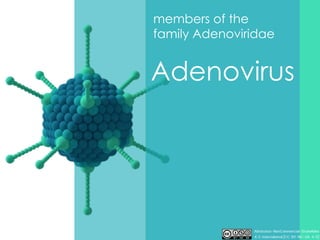
members of the
family Adenoviridae
Structure
Structure
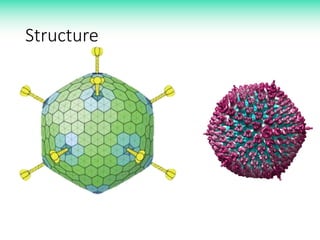
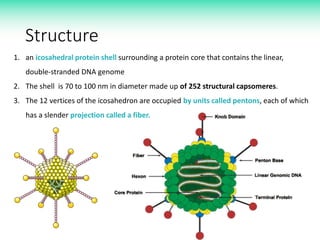
1. an icosahedral protein shell surrounding a protein core that contains the linear,
double-stranded DNA genome
2. The shell is 70 to 100 nm in diameter made up of 252 structural capsomeres.
3. The 12 vertices of the icosahedron are occupied by units called pentons, each of which
has a slender projection called a fiber.
Structure
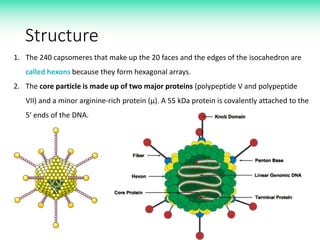
1. The 240 capsomeres that make up the 20 faces and the edges of the isocahedron are
called hexons because they form hexagonal arrays.
2. The core particle is made up of two major proteins (polypeptide V and polypeptide
VII) and a minor arginine-rich protein (μ). A 55 kDa protein is covalently attached to the
5′ ends of the DNA.
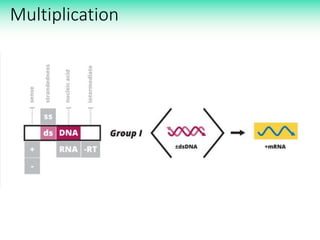
Multiplication
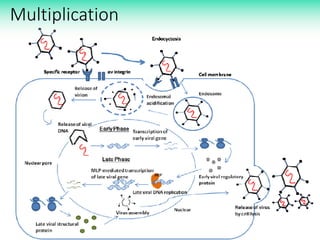
Multiplication
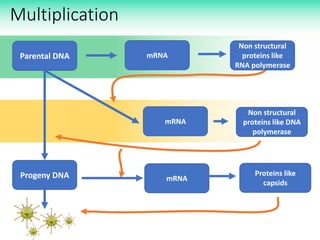
Multiplication
Parental DNA
Non structural
proteins like
RNA polymerase
Progeny DNA
mRNA
Non structural
proteins like DNA
polymerase
mRNA
mRNA
Proteins like
capsids
Symptoms
Adenoviruses can cause a wide range of illnesses such as
• Common cold
• Sore throat
• Bronchitis (a condition that occurs when the airways in the lungs become filled with
mucus and may spasm, which causes a person to cough and have shortness of breath)
• Pneumonia (infection of the lungs)
• Diarrhea
• Pink eye (conjunctivitis)
• Fever
• Bladder inflammation or infection
• Inflammation of stomach and intestines (gastroenteritis)
• Neurologic disease (conditions that affect the brain and spinal cord)
Infections
Adenoviruses are the most common cause of acute viral infections of the
conjunctiva, occurring epidemically or sporadically throughout all seasons.
Clinically, 4 syndromes of adenoviral ocular infection have been recognized, as
follows:
• epidemic keratoconjunctivitis
• pharyngoconjunctival fever (PCF)
• nonspecific sporadic follicular conjunctivitis
• chronic papillary conjunctivitis.
Pharyngoconjunctival fever (PCF)
an acute and highly infectious illness
• Fever
• Pharyngitis
• Acute follicular conjunctivitis
• Regional lymphoid hyperplasia with tender (Swelling of lymph nodes)
• Enlarged preauricular adenopathy.
Epidemic Keratoconjunctivitis
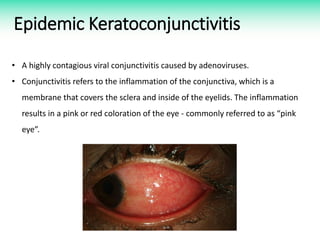
• A highly contagious viral conjunctivitis caused by adenoviruses.
• Conjunctivitis refers to the inflammation of the conjunctiva, which is a
membrane that covers the sclera and inside of the eyelids. The inflammation
results in a pink or red coloration of the eye - commonly referred to as “pink
eye”.
Epidemic Keratoconjunctivitis
• erythema (redness) of bulbar
conjunctiva
• erythema of palpebral conjunctiva
• Ocular itchiness and irritation
• conjunctival edema
• Photophobia
• Epiphora (excessive tearing)
• Foreign body sensation
• Blurred vision/loss of visual acuity
• Eyelid swelling
• Follicular reaction
• Clear or yellow discharge from the
eye(s)
• Epithelial keratitis
Systemic signs/symptoms:
• Lymphadenopathy (swollen nymph
nodes, specifically the preauricular
lymph nodes)
• Fever
• Headache
• Fatigue
Epidemic Keratoconjunctivitis
Diagnosis
• diagnosed based on history and a
physical examination using a slit
• The type of discharge : Viral
conjunctivitis tends to have a watery
discharge, while bacterial
conjunctivitis will tend to have
discharge with pus
• cell culture and immune assays.
• Polymerase chain reaction (PCR)
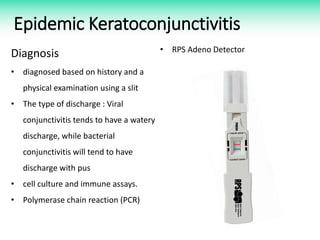
• RPS Adeno Detector
Viral and bacterial conjunctivitis :
How to differentiate?
These were a history of prior conjunctivitis and
itchiness, which both predicted viral conjunctivitis
"gluing" of the eyelids in the morning, which predicted
bacterial conjunctivitis.
Purulence of secretions was not significant.
EKC/Treatment
• usually resolves on its own and there is no effective treatment.
• Topical corticosteroids are often prescribed in severe cases and
while they do assist in reducing symptoms related to inflammation
• These include cold compresses, artificial tears can be used
EKC/ Prevention
• The virus can be spread by contact with infected surfaces or objects.
• A patient can spread the disease by touching or rubbing their eyes and
then touching another object.
• Objects that come into contact with the eyes (such as cosmetics) should
not be shared or allowed into contact with others.
• A person can be contagious for two weeks or more after first showing
symptoms and this should be taken into consideration when deciding
whether or not to return to work or school.
• cleaning agents such as hydrogen peroxide and isopropyl alcohol has
ability to eliminate adenovirus.

Adenovirus

  • 1.
  • 2.
  • 3.
    Structure 1. an icosahedralprotein shell surrounding a protein core that contains the linear, double-stranded DNA genome 2. The shell is 70 to 100 nm in diameter made up of 252 structural capsomeres. 3. The 12 vertices of the icosahedron are occupied by units called pentons, each of which has a slender projection called a fiber.
  • 4.
    Structure 1. The 240capsomeres that make up the 20 faces and the edges of the isocahedron are called hexons because they form hexagonal arrays. 2. The core particle is made up of two major proteins (polypeptide V and polypeptide VII) and a minor arginine-rich protein (μ). A 55 kDa protein is covalently attached to the 5′ ends of the DNA.
  • 5.
  • 6.
  • 7.
    Multiplication Parental DNA Non structural proteinslike RNA polymerase Progeny DNA mRNA Non structural proteins like DNA polymerase mRNA mRNA Proteins like capsids
  • 8.
    Symptoms Adenoviruses can causea wide range of illnesses such as • Common cold • Sore throat • Bronchitis (a condition that occurs when the airways in the lungs become filled with mucus and may spasm, which causes a person to cough and have shortness of breath) • Pneumonia (infection of the lungs) • Diarrhea • Pink eye (conjunctivitis) • Fever • Bladder inflammation or infection • Inflammation of stomach and intestines (gastroenteritis) • Neurologic disease (conditions that affect the brain and spinal cord)
  • 9.
    Infections Adenoviruses are themost common cause of acute viral infections of the conjunctiva, occurring epidemically or sporadically throughout all seasons. Clinically, 4 syndromes of adenoviral ocular infection have been recognized, as follows: • epidemic keratoconjunctivitis • pharyngoconjunctival fever (PCF) • nonspecific sporadic follicular conjunctivitis • chronic papillary conjunctivitis.
  • 10.
    Pharyngoconjunctival fever (PCF) anacute and highly infectious illness • Fever • Pharyngitis • Acute follicular conjunctivitis • Regional lymphoid hyperplasia with tender (Swelling of lymph nodes) • Enlarged preauricular adenopathy.
  • 11.
    Epidemic Keratoconjunctivitis • Ahighly contagious viral conjunctivitis caused by adenoviruses. • Conjunctivitis refers to the inflammation of the conjunctiva, which is a membrane that covers the sclera and inside of the eyelids. The inflammation results in a pink or red coloration of the eye - commonly referred to as “pink eye”.
  • 12.
    Epidemic Keratoconjunctivitis • erythema(redness) of bulbar conjunctiva • erythema of palpebral conjunctiva • Ocular itchiness and irritation • conjunctival edema • Photophobia • Epiphora (excessive tearing) • Foreign body sensation • Blurred vision/loss of visual acuity • Eyelid swelling • Follicular reaction • Clear or yellow discharge from the eye(s) • Epithelial keratitis Systemic signs/symptoms: • Lymphadenopathy (swollen nymph nodes, specifically the preauricular lymph nodes) • Fever • Headache • Fatigue
  • 13.
    Epidemic Keratoconjunctivitis Diagnosis • diagnosedbased on history and a physical examination using a slit • The type of discharge : Viral conjunctivitis tends to have a watery discharge, while bacterial conjunctivitis will tend to have discharge with pus • cell culture and immune assays. • Polymerase chain reaction (PCR) • RPS Adeno Detector
  • 14.
    Viral and bacterialconjunctivitis : How to differentiate? These were a history of prior conjunctivitis and itchiness, which both predicted viral conjunctivitis "gluing" of the eyelids in the morning, which predicted bacterial conjunctivitis. Purulence of secretions was not significant.
  • 15.
    EKC/Treatment • usually resolveson its own and there is no effective treatment. • Topical corticosteroids are often prescribed in severe cases and while they do assist in reducing symptoms related to inflammation • These include cold compresses, artificial tears can be used
  • 16.
    EKC/ Prevention • Thevirus can be spread by contact with infected surfaces or objects. • A patient can spread the disease by touching or rubbing their eyes and then touching another object. • Objects that come into contact with the eyes (such as cosmetics) should not be shared or allowed into contact with others. • A person can be contagious for two weeks or more after first showing symptoms and this should be taken into consideration when deciding whether or not to return to work or school. • cleaning agents such as hydrogen peroxide and isopropyl alcohol has ability to eliminate adenovirus.