Values

    Values represent basic convictions that-
A specific mode of conduct or end-state of existence is
personally or socially preferable to an opposite or converse
mode of conduct or end-state of existence.


Value is a judgmental element of what is right, good, or
desirable.
Value Attributes

• Values have both content and
  intensity attributes.
  – The content attribute says that a mode
    of conduct is important.
  – The intensity attribute specifies how
    important it is.
Value System

• Values are considered subjective and vary
  across people and cultures.
• Value System can be defined as a
  hierarchy based on a ranking of an
  individual’s values in terms of their
  intensity.
Importance of Values

       1                     2                    3
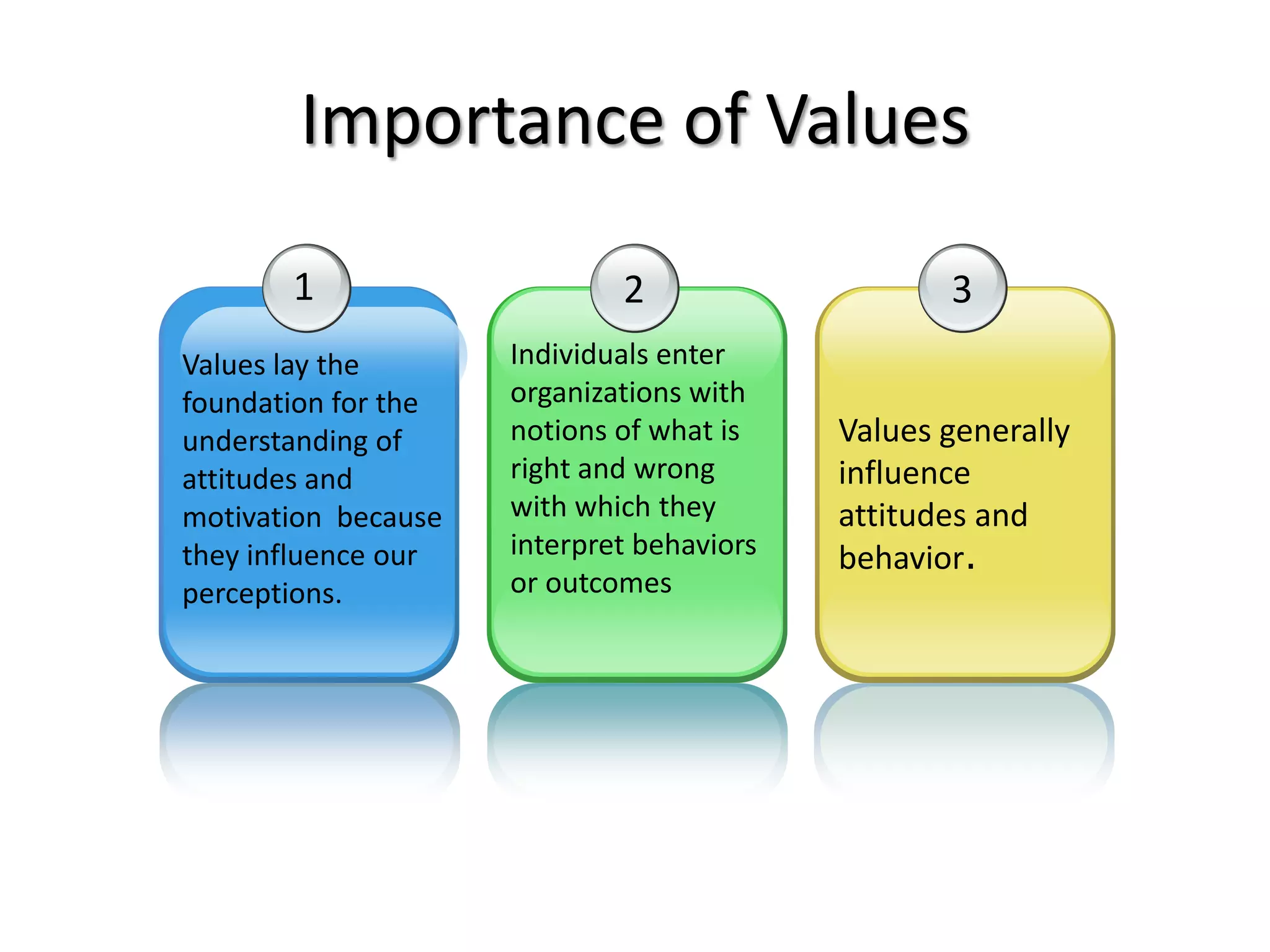
Values lay the       Individuals enter
foundation for the   organizations with
understanding of     notions of what is    Values generally
attitudes and        right and wrong       influence
motivation because   with which they       attitudes and
they influence our   interpret behaviors   behavior.
perceptions.         or outcomes
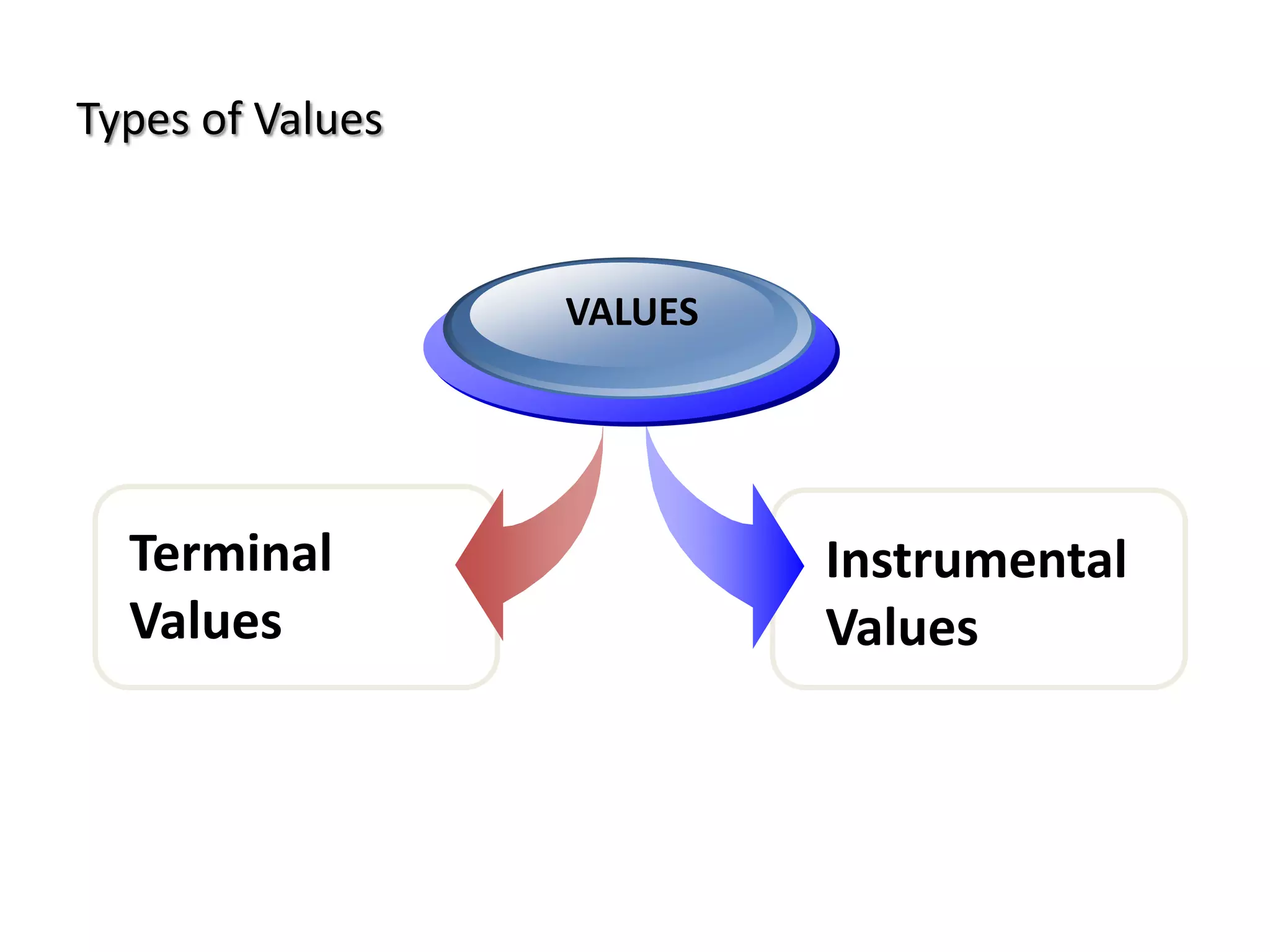
Types of Values


                  VALUES


  Terminal                 Instrumental
  Values                   Values
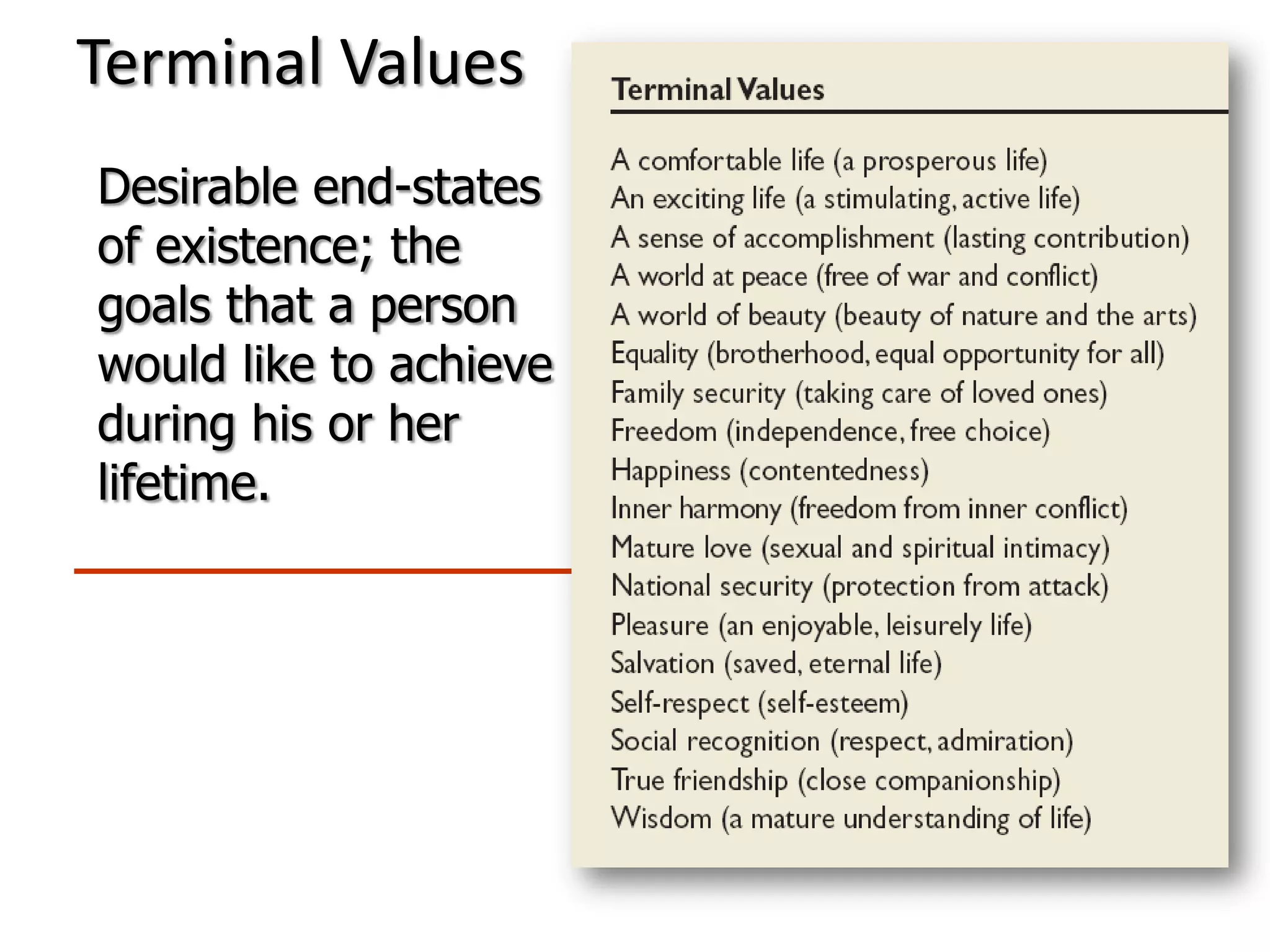
Terminal Values
Desirable end-states
of existence; the
goals that a person
would like to achieve
during his or her
lifetime.
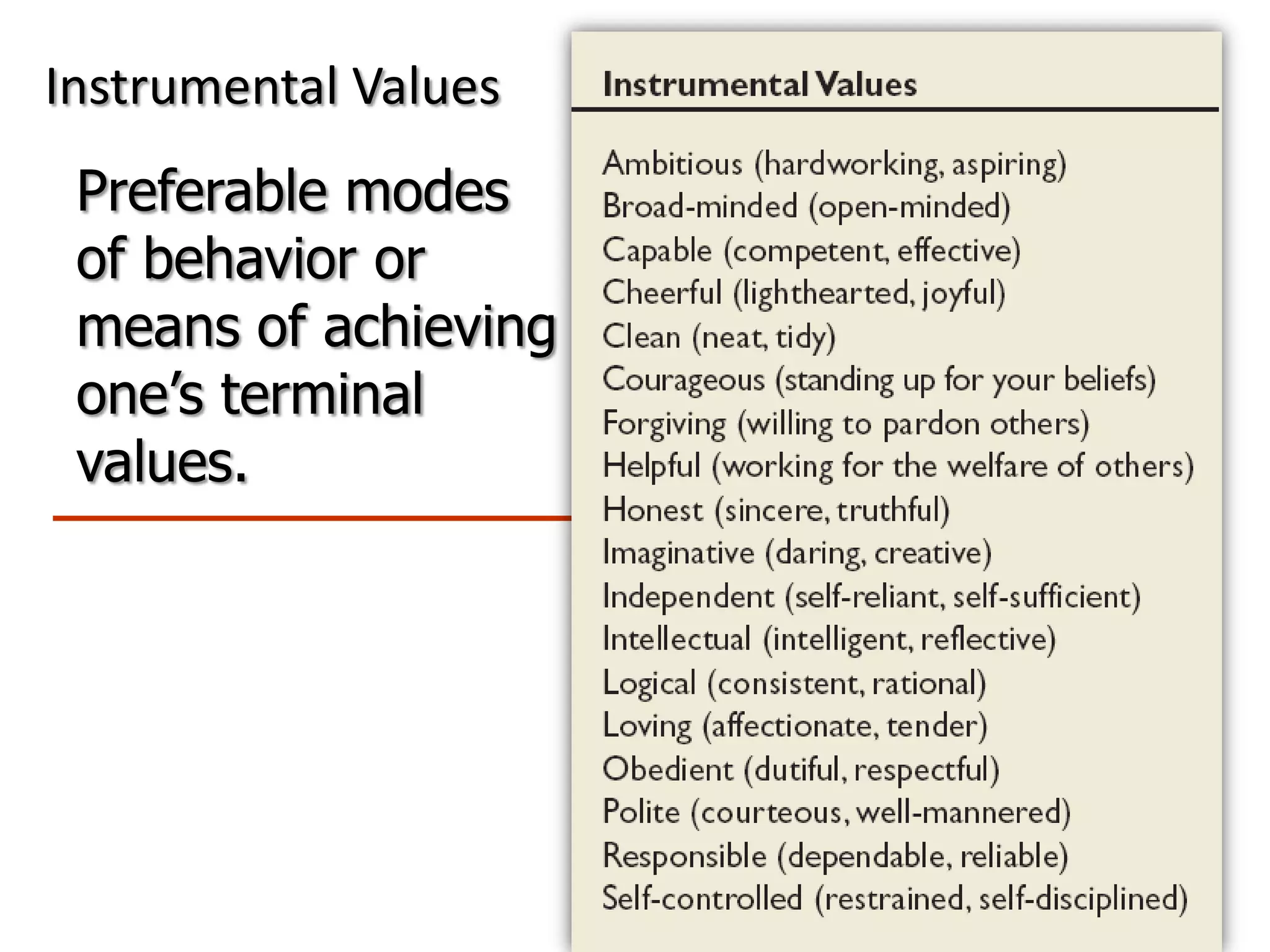
Instrumental Values
 Preferable modes
 of behavior or
 means of achieving
 one’s terminal
 values.
Values Across Culture
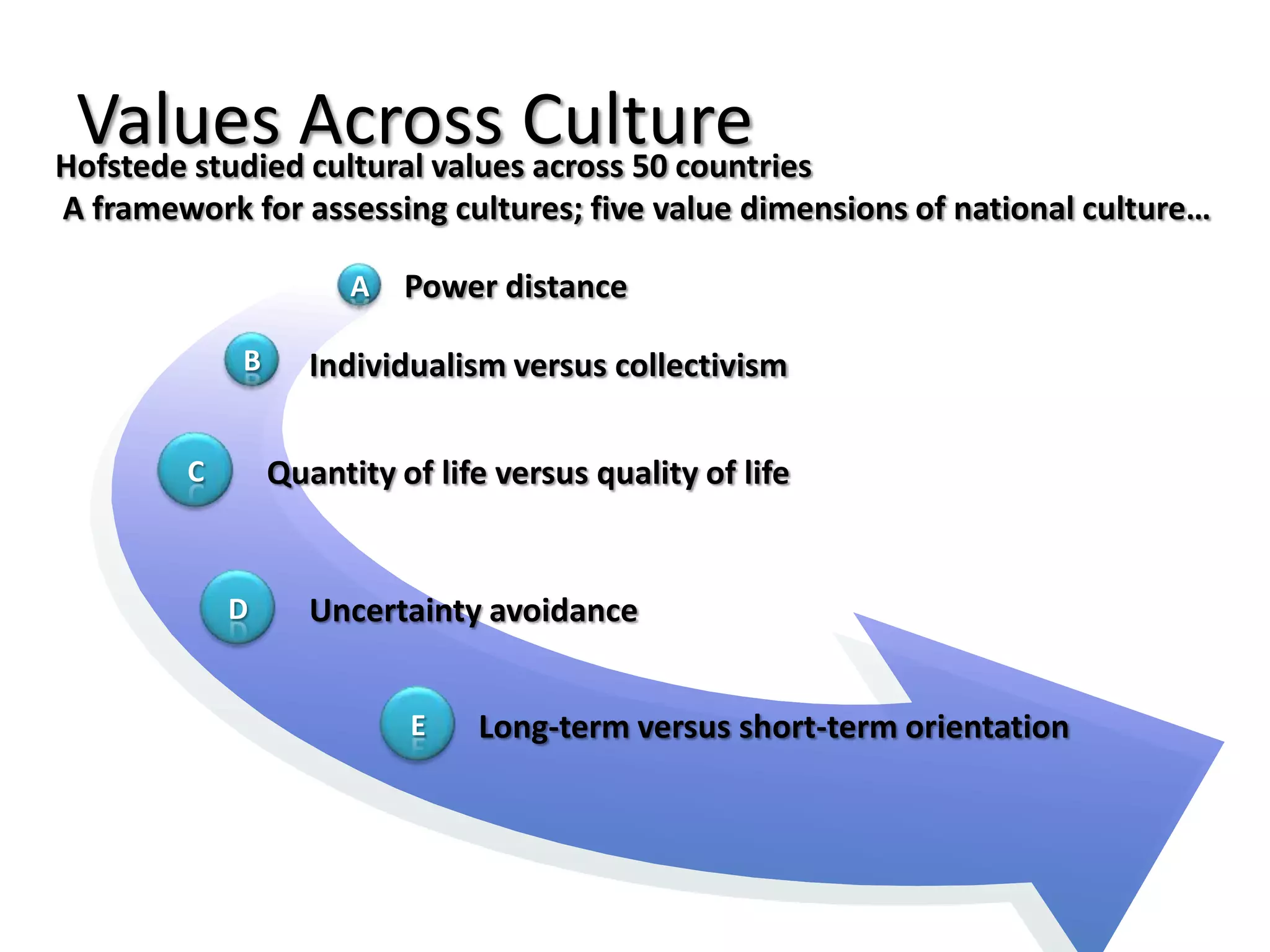
Hofstede studied cultural values across 50 countries
A framework for assessing cultures; five value dimensions of national culture…

                       A   Power distance

             B      Individualism versus collectivism

         C       Quantity of life versus quality of life


             D      Uncertainty avoidance


                           E    Long-term versus short-term orientation
Hofstede’s Framework for Assessing
              Cultures
Hofstede’s Framework (cont’d)
Indian society values
• Hofstede found different patterns in different
  societies.
• Indian society can be characterized as being
  oriented towards
  – centralized decision making,
  – high tolerance for ambiguity,
  – collectivism rather than individualism,
  – strong tendency to show off
  – give importance to material things.
Loyalty in workplace
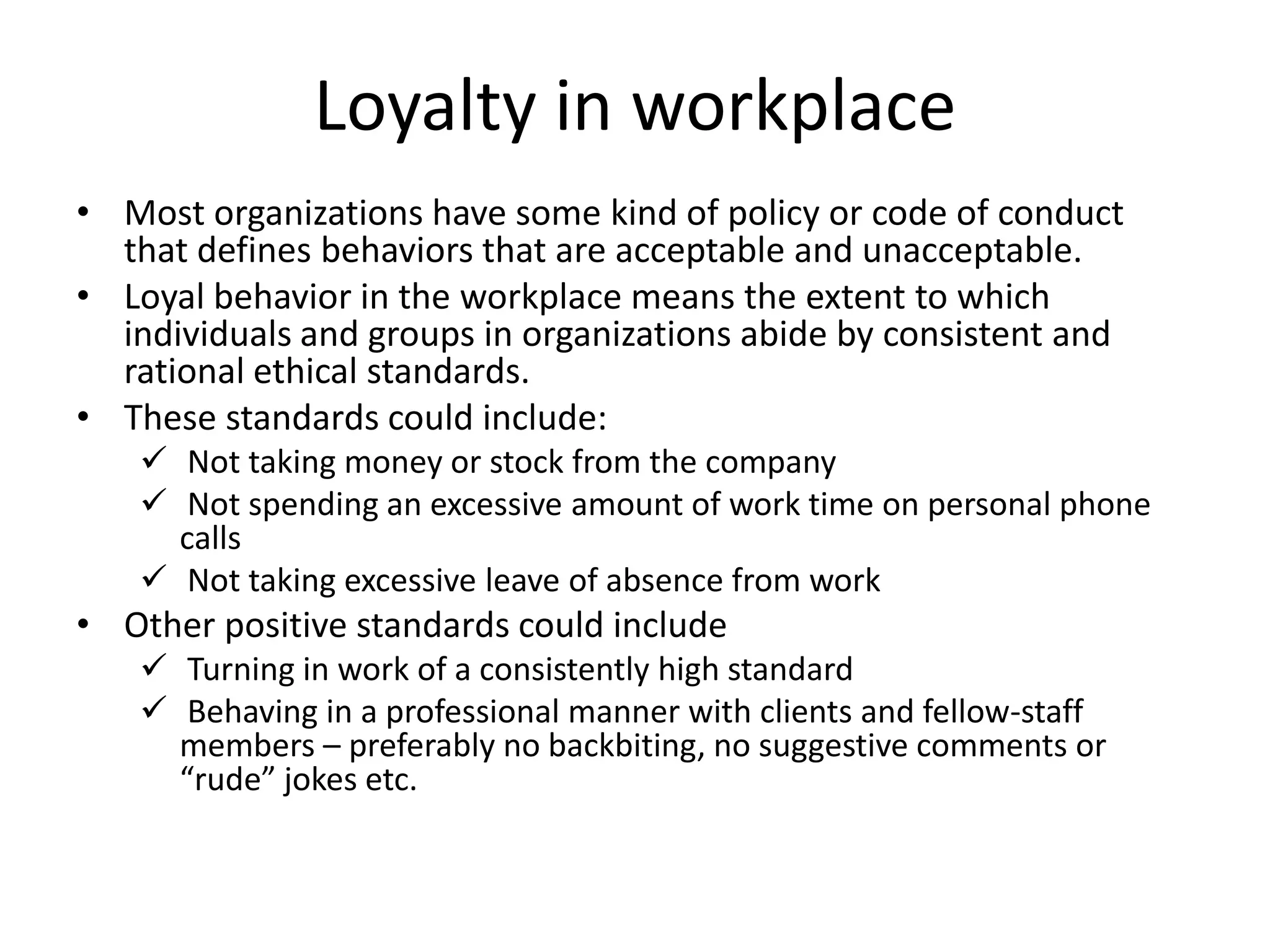
• Most organizations have some kind of policy or code of conduct
  that defines behaviors that are acceptable and unacceptable.
• Loyal behavior in the workplace means the extent to which
  individuals and groups in organizations abide by consistent and
  rational ethical standards.
• These standards could include:
    Not taking money or stock from the company
    Not spending an excessive amount of work time on personal phone
     calls
    Not taking excessive leave of absence from work
• Other positive standards could include
    Turning in work of a consistently high standard
    Behaving in a professional manner with clients and fellow-staff
     members – preferably no backbiting, no suggestive comments or
     “rude” jokes etc.
Ethical behavior
• Ethics refers to well-founded standards
  of right and wrong that prescribe what
  humans ought to do, usually in terms of rights, obligations,
  benefits to society, fairness, or specific virtues.
• Ethical behavior is characterized by honesty, fairness and
  equity in interpersonal, professional and academic
  relationships and in research and scholarly activities.
• Ethical behavior respects the dignity, diversity and rights of
  individuals and groups of people.
Ethical behavior
• Ethical behavior is the standards that you hold for
  yourself of the attributes of honesty, responsibility, and
  how you treat others in all facets of your life.
• The same standards are applicable to whatever
  position you hold in commerce, in your
  community, and even behind your own doors where
  only you know what you do.
• Ethical behavior is applying these standards even when
  it is inconvenient to do so.
Values

Values

  • 2.
    Values Values represent basic convictions that- A specific mode of conduct or end-state of existence is personally or socially preferable to an opposite or converse mode of conduct or end-state of existence. Value is a judgmental element of what is right, good, or desirable.
  • 3.
    Value Attributes • Valueshave both content and intensity attributes. – The content attribute says that a mode of conduct is important. – The intensity attribute specifies how important it is.
  • 4.
    Value System • Valuesare considered subjective and vary across people and cultures. • Value System can be defined as a hierarchy based on a ranking of an individual’s values in terms of their intensity.
  • 5.
    Importance of Values 1 2 3 Values lay the Individuals enter foundation for the organizations with understanding of notions of what is Values generally attitudes and right and wrong influence motivation because with which they attitudes and they influence our interpret behaviors behavior. perceptions. or outcomes
  • 7.
    Types of Values VALUES Terminal Instrumental Values Values
  • 8.
    Terminal Values Desirable end-states ofexistence; the goals that a person would like to achieve during his or her lifetime.
  • 9.
    Instrumental Values Preferablemodes of behavior or means of achieving one’s terminal values.
  • 10.
    Values Across Culture Hofstedestudied cultural values across 50 countries A framework for assessing cultures; five value dimensions of national culture… A Power distance B Individualism versus collectivism C Quantity of life versus quality of life D Uncertainty avoidance E Long-term versus short-term orientation
  • 11.
    Hofstede’s Framework forAssessing Cultures
  • 12.
  • 13.
  • 14.
  • 15.
  • 16.
    Indian society values •Hofstede found different patterns in different societies. • Indian society can be characterized as being oriented towards – centralized decision making, – high tolerance for ambiguity, – collectivism rather than individualism, – strong tendency to show off – give importance to material things.
  • 17.
    Loyalty in workplace •Most organizations have some kind of policy or code of conduct that defines behaviors that are acceptable and unacceptable. • Loyal behavior in the workplace means the extent to which individuals and groups in organizations abide by consistent and rational ethical standards. • These standards could include:  Not taking money or stock from the company  Not spending an excessive amount of work time on personal phone calls  Not taking excessive leave of absence from work • Other positive standards could include  Turning in work of a consistently high standard  Behaving in a professional manner with clients and fellow-staff members – preferably no backbiting, no suggestive comments or “rude” jokes etc.
  • 18.
    Ethical behavior • Ethicsrefers to well-founded standards of right and wrong that prescribe what humans ought to do, usually in terms of rights, obligations, benefits to society, fairness, or specific virtues. • Ethical behavior is characterized by honesty, fairness and equity in interpersonal, professional and academic relationships and in research and scholarly activities. • Ethical behavior respects the dignity, diversity and rights of individuals and groups of people.
  • 19.
    Ethical behavior • Ethicalbehavior is the standards that you hold for yourself of the attributes of honesty, responsibility, and how you treat others in all facets of your life. • The same standards are applicable to whatever position you hold in commerce, in your community, and even behind your own doors where only you know what you do. • Ethical behavior is applying these standards even when it is inconvenient to do so.