Group 1
Ethical Leadership
Content
1. Introduction
2. Qualities of an ethical leader
3. Factors that enhance ethical leadership
4. Factors that diminish ethical leadership
5. Outcomes of ethical leadership
6. Future direction
7. Conclusion
What is Ethical Leadership?
Ethical leadership is directed by respect for
ethical beliefs and values and for the dignity
and rights of others.
Social Learning theory and Ethical
Leadership
Social learning theory shows how the followers
of a leader identify the characteristics of leader
as ethical characteristics of leader and also the
situational influences.
Qualities of an
Ethical Leader
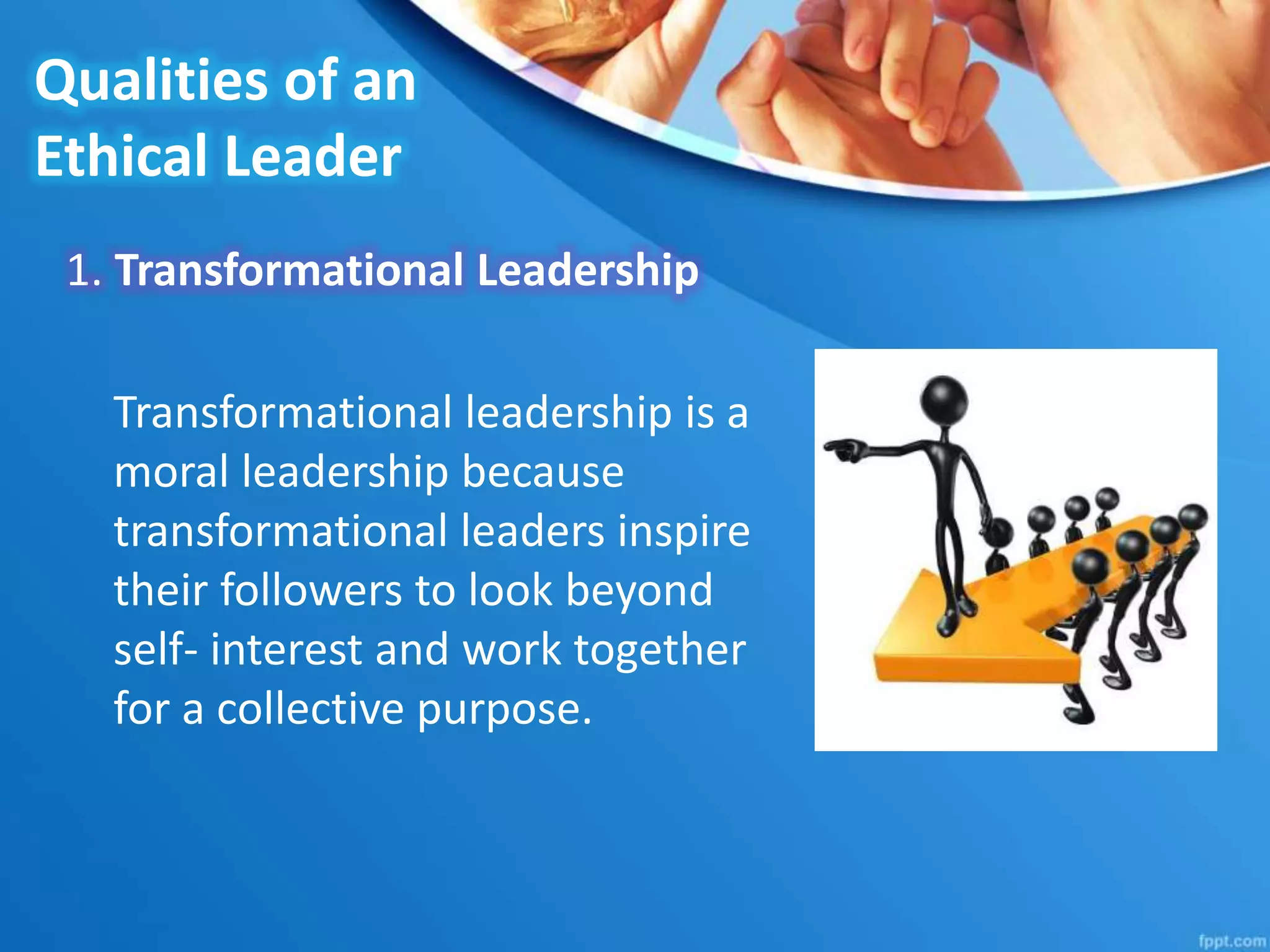
1. Transformational Leadership
Transformational leadership is a
moral leadership because
transformational leaders inspire
their followers to look beyond
self- interest and work together
for a collective purpose.
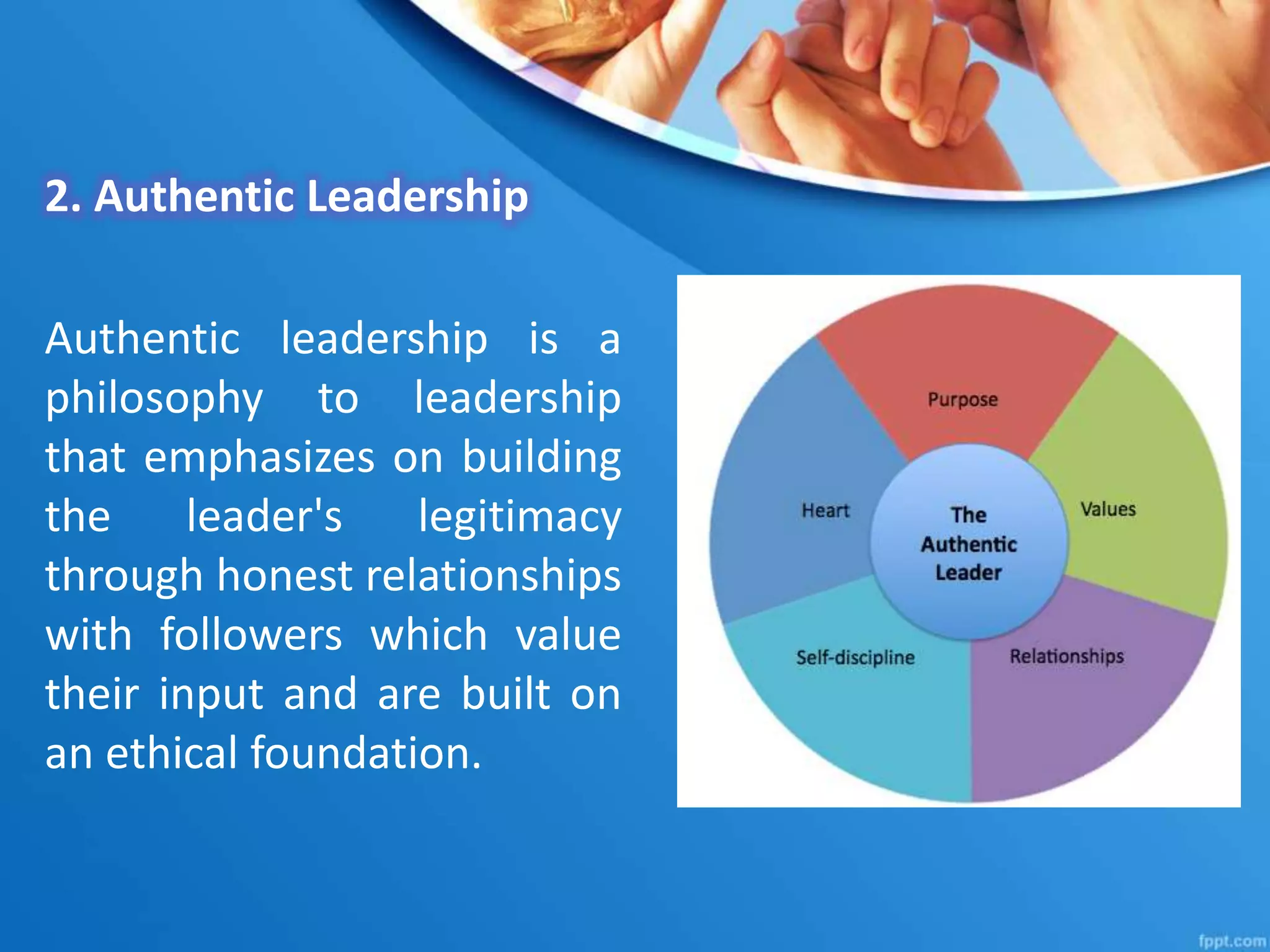
2. Authentic Leadership
Authentic leadership is a
philosophy to leadership
that emphasizes on building
the leader's legitimacy
through honest relationships
with followers which value
their input and are built on
an ethical foundation.
3. Spiritual Leadership.
Spiritual leadership is
developed within an intrinsic
motivation model that
incorporates vision, faith, and
altruistic love.
Outcomes of
Ethical Leadership
• Ethical decisions of followers
• Prosocial behavior of employee
• Counterproductive behavior of
employees
• Positive follower attitudes
Factors that Enhance
Ethical Leadership
• . Ethical role modeling - Leaders also learn from a role
model such as career mentors and top management.
• Ethical context - Ethical climate or the culture in an
organization that supports ethics-related attitudes
and behaviours.
• Individual characteristics
– Agreeableness - Ability to get along with others,
work with harmony and cooperation and willing to
comprise their interests with others.
– Conscientiousness - Ability to get along with
others, work with harmony and cooperation and
willing to comprise their interests with others.
• Levels of management and ethical leadership
 Content of the leader’s job
Executive and managerial work are different, with roles
and challenges that are unique to each level. Certain
aspects of ethical leadership are likely to vary depending
on the level of management.
 Distance between leaders and followers
This expressed; physical distance, social distance, or
frequency of task interaction has an important impact on
how leaders are perceived as well the outcomes with
which they are associated.
Future Direction
• Proactive and consistent practice of ethic
• Inclusion of ethics as a part of recruitment
and training
• Ethical leadership Vs levels of management
• Rating leaders
• Global ethical leadership
Conclusion
• Research has identified differences and similarities
between ethical leadership and other leaderships.
• Research explored outcomes and relationship of
outcomes with the ethical leadership.
• Organizations must want to know how to train and
develop the leaders in to ethical leaders as per their
organizations.
• Ethical leadership should invent in an organization to
develop the organization and make followers loyal to the
organization by role modeling.
References
• Bandura, A. (1977). Social learning theory. Englewood
CliVs, NJ: Prentice–Hall.
• Brown, M. E., & Treviño, L. K. (2006a). Charismatic
leadership and workplace deviance. Journal of Applied
Psychology.
• Deluga, R. J. (2001). American presidential
Machiavellianism: Implications for charismatic leadership
and rated performance. The Leadership Quarterly.
• Kirkpatrick, S. A., & Locke, E. A. (1991). Leadership: Do
traits matter? Academy of Management Executive.
Thank You!

Ethical leadership

  • 1.
  • 2.
    Content 1. Introduction 2. Qualitiesof an ethical leader 3. Factors that enhance ethical leadership 4. Factors that diminish ethical leadership 5. Outcomes of ethical leadership 6. Future direction 7. Conclusion
  • 3.
    What is EthicalLeadership? Ethical leadership is directed by respect for ethical beliefs and values and for the dignity and rights of others.
  • 4.
    Social Learning theoryand Ethical Leadership Social learning theory shows how the followers of a leader identify the characteristics of leader as ethical characteristics of leader and also the situational influences.
  • 5.
    Qualities of an EthicalLeader 1. Transformational Leadership Transformational leadership is a moral leadership because transformational leaders inspire their followers to look beyond self- interest and work together for a collective purpose.
  • 6.
    2. Authentic Leadership Authenticleadership is a philosophy to leadership that emphasizes on building the leader's legitimacy through honest relationships with followers which value their input and are built on an ethical foundation.
  • 7.
    3. Spiritual Leadership. Spiritualleadership is developed within an intrinsic motivation model that incorporates vision, faith, and altruistic love.
  • 8.
    Outcomes of Ethical Leadership •Ethical decisions of followers • Prosocial behavior of employee • Counterproductive behavior of employees • Positive follower attitudes
  • 9.
    Factors that Enhance EthicalLeadership • . Ethical role modeling - Leaders also learn from a role model such as career mentors and top management. • Ethical context - Ethical climate or the culture in an organization that supports ethics-related attitudes and behaviours.
  • 10.
    • Individual characteristics –Agreeableness - Ability to get along with others, work with harmony and cooperation and willing to comprise their interests with others. – Conscientiousness - Ability to get along with others, work with harmony and cooperation and willing to comprise their interests with others.
  • 11.
    • Levels ofmanagement and ethical leadership  Content of the leader’s job Executive and managerial work are different, with roles and challenges that are unique to each level. Certain aspects of ethical leadership are likely to vary depending on the level of management.  Distance between leaders and followers This expressed; physical distance, social distance, or frequency of task interaction has an important impact on how leaders are perceived as well the outcomes with which they are associated.
  • 12.
    Future Direction • Proactiveand consistent practice of ethic • Inclusion of ethics as a part of recruitment and training • Ethical leadership Vs levels of management • Rating leaders • Global ethical leadership
  • 13.
    Conclusion • Research hasidentified differences and similarities between ethical leadership and other leaderships. • Research explored outcomes and relationship of outcomes with the ethical leadership. • Organizations must want to know how to train and develop the leaders in to ethical leaders as per their organizations. • Ethical leadership should invent in an organization to develop the organization and make followers loyal to the organization by role modeling.
  • 14.
    References • Bandura, A.(1977). Social learning theory. Englewood CliVs, NJ: Prentice–Hall. • Brown, M. E., & Treviño, L. K. (2006a). Charismatic leadership and workplace deviance. Journal of Applied Psychology. • Deluga, R. J. (2001). American presidential Machiavellianism: Implications for charismatic leadership and rated performance. The Leadership Quarterly. • Kirkpatrick, S. A., & Locke, E. A. (1991). Leadership: Do traits matter? Academy of Management Executive.
  • 15.