DIFFERENT TYPES OF
VALUES
GROUP MEMBER’S.........
VISHWAJEET KUMAR
KRITIKA KARN
SANDEEP KUMAR
PRATIK KUMAR
AREB
 Values(such as freedom,honesty,self-
respect,equity…etc)are perception about
what is good or bad, right or wrong.
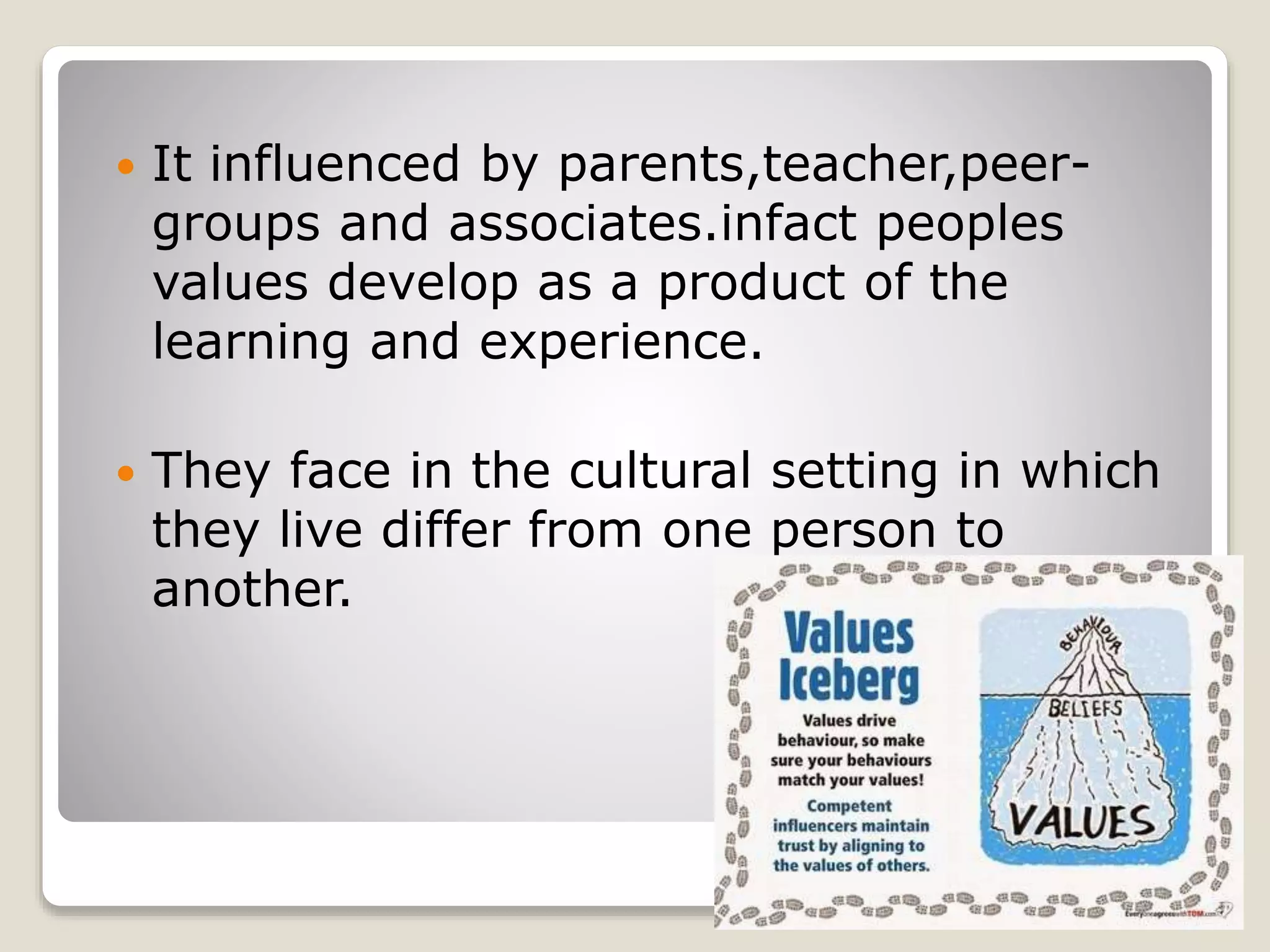
 It influenced by parents,teacher,peer-
groups and associates.infact peoples
values develop as a product of the
learning and experience.
 They face in the cultural setting in which
they live differ from one person to
another.
 Theoretical
 Economic
 Aesthetic
 Social
 political
 Values don’t just reflect what we want
they specify what we “ought” to do.
 Values contain a judgmental element.
 Values are emotionally charged priorities
and passionately defended.
 They are moralistic in nature.
 They are relatively permanent and
resistant to change.
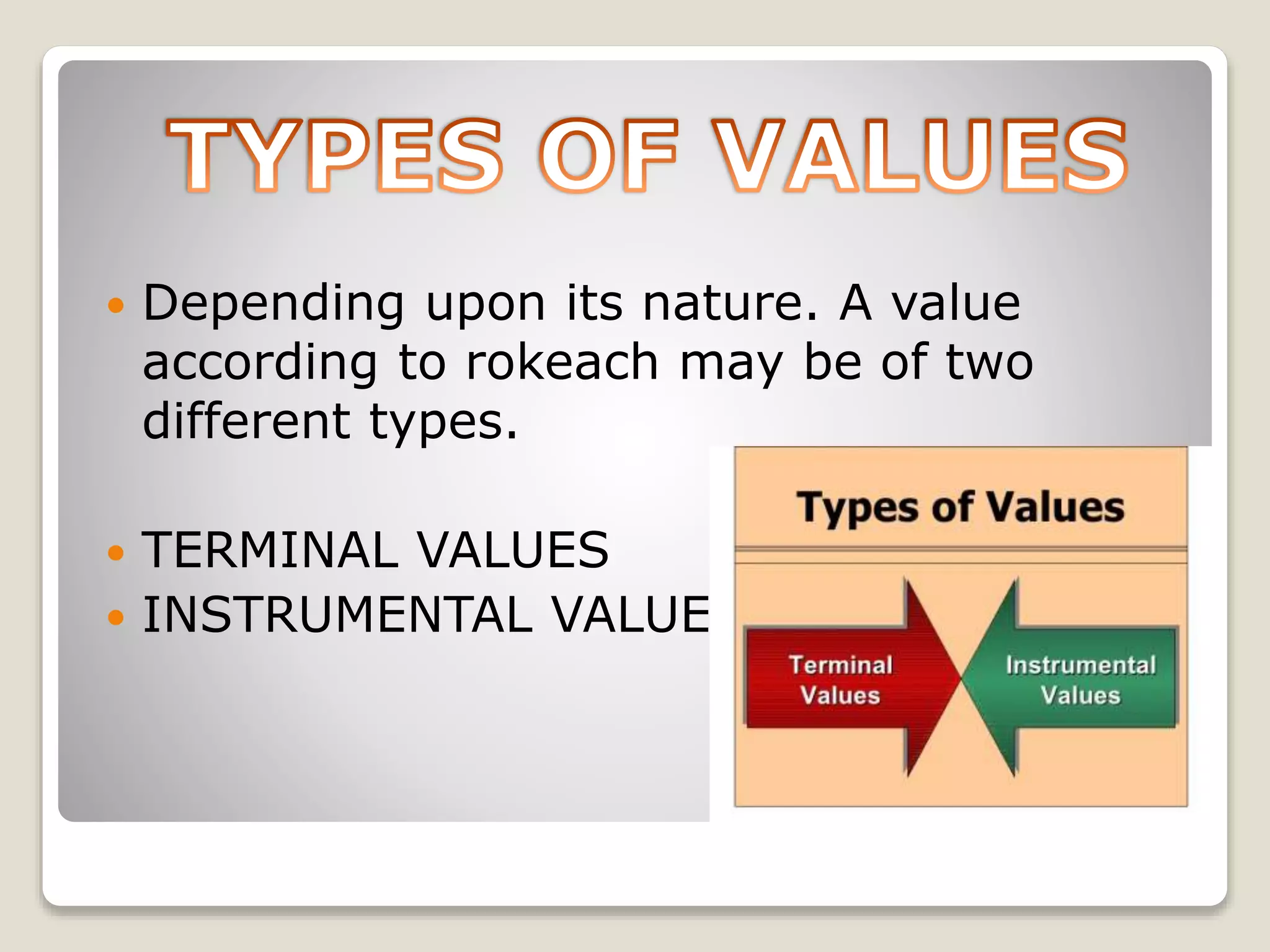
 Depending upon its nature. A value
according to rokeach may be of two
different types.
 TERMINAL VALUES
 INSTRUMENTAL VALUES
TERMINAL VALUES
 The reflect a person’s preferences
regarding the “ends” to be achieved.
For e.g – prosperity,achivement,world-
peace,freedom,equality,wisdom etc.
 They are the goals individuals would like
to achieve during their life time.
INSTRUMENTAL VALUES
 They represent the “means” foe achieving
desired ends.
For e.g – ambition & hard work,open-
mindness,competence,cheertulness,coura
ge,honesty,resopnsibility etc.
 They indicate how you might go about
achieving your important end-states
depending on the relative importance
your attached to the instrumental values.
 Peoples need some sort of a moral guide
through life. many may think that they
can get by without one but chances are
that they are egoists and do have a
principle which is guiding them. if it
make me feel good, if it make me
happy, if I like it and can live with it
then it is all right for me to do it.
Different types of values

Different types of values

  • 1.
    DIFFERENT TYPES OF VALUES GROUPMEMBER’S......... VISHWAJEET KUMAR KRITIKA KARN SANDEEP KUMAR PRATIK KUMAR AREB
  • 2.
     Values(such asfreedom,honesty,self- respect,equity…etc)are perception about what is good or bad, right or wrong.
  • 3.
     It influencedby parents,teacher,peer- groups and associates.infact peoples values develop as a product of the learning and experience.  They face in the cultural setting in which they live differ from one person to another.
  • 4.
     Theoretical  Economic Aesthetic  Social  political
  • 5.
     Values don’tjust reflect what we want they specify what we “ought” to do.  Values contain a judgmental element.  Values are emotionally charged priorities and passionately defended.  They are moralistic in nature.  They are relatively permanent and resistant to change.
  • 6.
     Depending uponits nature. A value according to rokeach may be of two different types.  TERMINAL VALUES  INSTRUMENTAL VALUES
  • 7.
    TERMINAL VALUES  Thereflect a person’s preferences regarding the “ends” to be achieved. For e.g – prosperity,achivement,world- peace,freedom,equality,wisdom etc.
  • 8.
     They arethe goals individuals would like to achieve during their life time.
  • 9.
    INSTRUMENTAL VALUES  Theyrepresent the “means” foe achieving desired ends. For e.g – ambition & hard work,open- mindness,competence,cheertulness,coura ge,honesty,resopnsibility etc.
  • 10.
     They indicatehow you might go about achieving your important end-states depending on the relative importance your attached to the instrumental values.
  • 11.
     Peoples needsome sort of a moral guide through life. many may think that they can get by without one but chances are that they are egoists and do have a principle which is guiding them. if it make me feel good, if it make me happy, if I like it and can live with it then it is all right for me to do it.