Downloaded 2,319 times
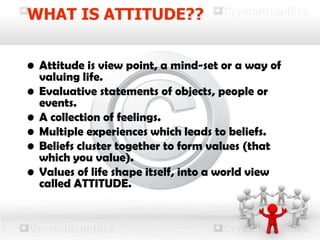
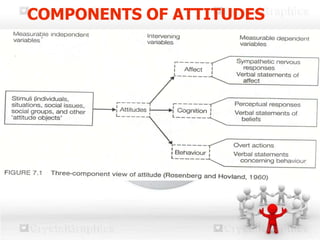

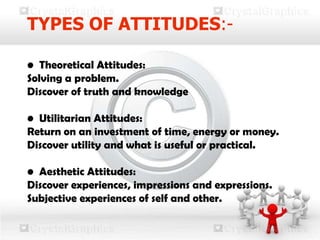

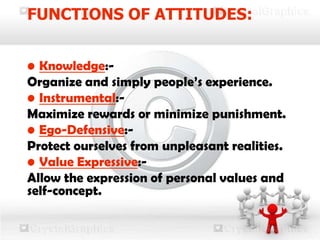
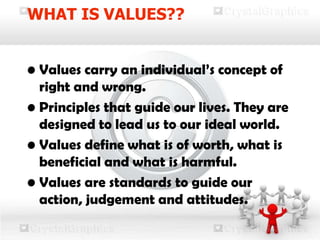
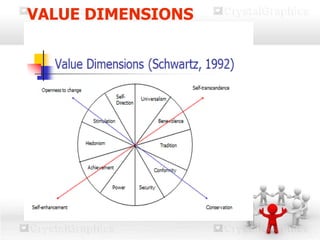
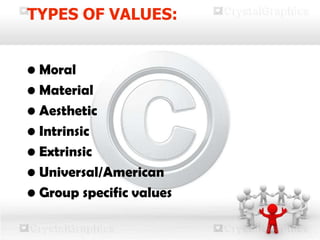

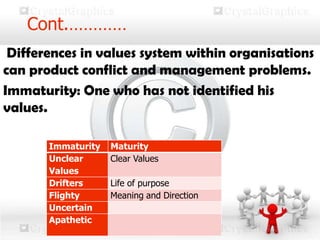
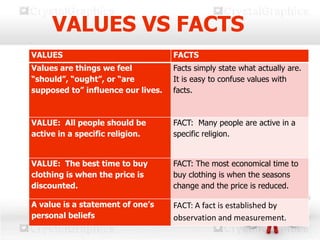


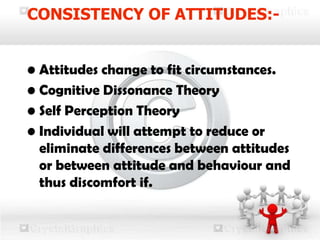
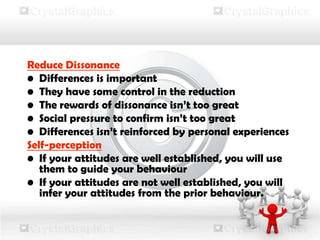



This document discusses attitudes and values. It defines attitudes as viewpoints or mindsets shaped by beliefs and experiences. Attitudes have three components - cognitive, affective, and behavioral. Values are principles that guide our lives and define what is worthwhile. There are different types of attitudes including theoretical, utilitarian, aesthetic, social, and traditional. Attitudes function to organize knowledge, maximize rewards, protect ego, and express values. Values are more stable than attitudes, which can change to reduce cognitive dissonance between attitudes and behaviors. The document outlines various work-related attitudes and emphasizes the importance of matching individuals to appropriate careers.


