 Concept of Values
 Values & Ethics
 Values & Attitudes
 Types of Values
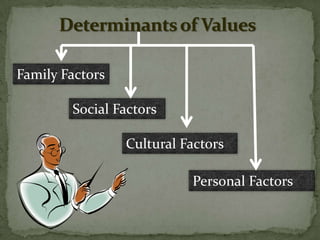
 Determinants of Values
 Importance of Values in OB
 Values are the basic convictions that give us a sense of
  right and wrong, good and bad.
 Thus values form the basis of ethical behaviour.
 A value system is a set of consistent ethic values and
  measures used for the purpose of ethical or ideological
  integrity.
 A hierarchy based on a ranking of an individual’s
  values in terms of their intensity forms his/her value
  system.
 Values are beliefs that affect an individual’s
    judgemental ideas about what is good or bad.
   Ethics is the way the values are acted out.
   Ethical behaviour is acting in ways consistent with
    one’s personal values and the commonly held
    values of the organization and society.
   Ethics is a set of moral principles or values which is
    concerned with the righteousness or wrongness of
    human behavior and which guides your conduct in
    relation to others.
   Ethics involves learning what is right or wrong, and
    then doing the right thing
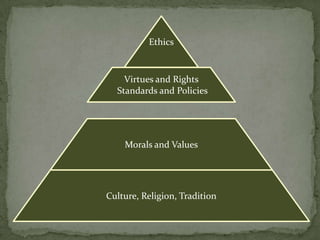
Ethics


    Virtues and Rights
  Standards and Policies


    Morals and Values


Culture, Religion, Tradition
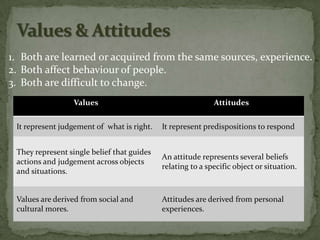
1. Both are learned or acquired from the same sources, experience.
2. Both affect behaviour of people.
3. Both are difficult to change.
                  Values                                    Attitudes

 It represent judgement of what is right.   It represent predispositions to respond


 They represent single belief that guides
                                            An attitude represents several beliefs
 actions and judgement across objects
                                            relating to a specific object or situation.
 and situations.


 Values are derived from social and         Attitudes are derived from personal
 cultural mores.                            experiences.
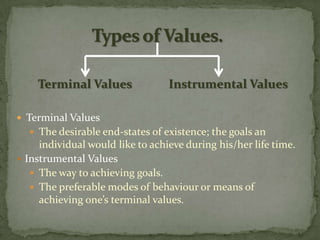
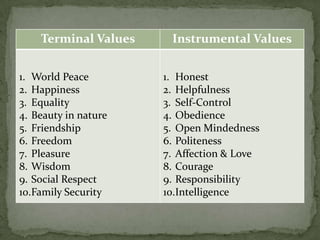
Terminal Values               Instrumental Values

 Terminal Values
   The desirable end-states of existence; the goals an
     individual would like to achieve during his/her life time.
 Instrumental Values
    The way to achieving goals.
    The preferable modes of behaviour or means of
     achieving one’s terminal values.
Terminal Values    Instrumental Values


1. World Peace        1. Honest
2. Happiness          2. Helpfulness
3. Equality           3. Self-Control
4. Beauty in nature   4. Obedience
5. Friendship         5. Open Mindedness
6. Freedom            6. Politeness
7. Pleasure           7. Affection & Love
8. Wisdom             8. Courage
9. Social Respect     9. Responsibility
10.Family Security    10.Intelligence
Family Factors

        Social Factors

                 Cultural Factors

                           Personal Factors
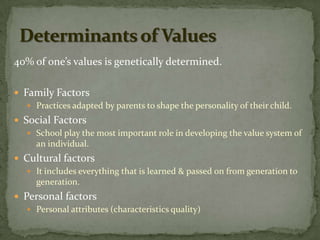
40% of one’s values is genetically determined.

 Family Factors
    Practices adapted by parents to shape the personality of their child.
 Social Factors
    School play the most important role in developing the value system of
     an individual.
 Cultural factors
   It includes everything that is learned & passed on from generation to
    generation.
 Personal factors
    Personal attributes (characteristics quality)
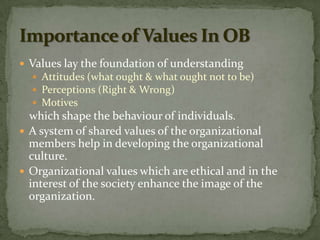
 Values lay the foundation of understanding
   Attitudes (what ought & what ought not to be)
   Perceptions (Right & Wrong)
   Motives
  which shape the behaviour of individuals.
 A system of shared values of the organizational
  members help in developing the organizational
  culture.
 Organizational values which are ethical and in the
  interest of the society enhance the image of the
  organization.
Value system & ethics

Value system & ethics

  • 2.
     Concept ofValues  Values & Ethics  Values & Attitudes  Types of Values  Determinants of Values  Importance of Values in OB
  • 3.
     Values arethe basic convictions that give us a sense of right and wrong, good and bad.  Thus values form the basis of ethical behaviour.  A value system is a set of consistent ethic values and measures used for the purpose of ethical or ideological integrity.  A hierarchy based on a ranking of an individual’s values in terms of their intensity forms his/her value system.
  • 4.
     Values arebeliefs that affect an individual’s judgemental ideas about what is good or bad.  Ethics is the way the values are acted out.  Ethical behaviour is acting in ways consistent with one’s personal values and the commonly held values of the organization and society.  Ethics is a set of moral principles or values which is concerned with the righteousness or wrongness of human behavior and which guides your conduct in relation to others.  Ethics involves learning what is right or wrong, and then doing the right thing
  • 5.
    Ethics Virtues and Rights Standards and Policies Morals and Values Culture, Religion, Tradition
  • 6.
    1. Both arelearned or acquired from the same sources, experience. 2. Both affect behaviour of people. 3. Both are difficult to change. Values Attitudes It represent judgement of what is right. It represent predispositions to respond They represent single belief that guides An attitude represents several beliefs actions and judgement across objects relating to a specific object or situation. and situations. Values are derived from social and Attitudes are derived from personal cultural mores. experiences.
  • 7.
    Terminal Values Instrumental Values  Terminal Values  The desirable end-states of existence; the goals an individual would like to achieve during his/her life time.  Instrumental Values  The way to achieving goals.  The preferable modes of behaviour or means of achieving one’s terminal values.
  • 8.
    Terminal Values Instrumental Values 1. World Peace 1. Honest 2. Happiness 2. Helpfulness 3. Equality 3. Self-Control 4. Beauty in nature 4. Obedience 5. Friendship 5. Open Mindedness 6. Freedom 6. Politeness 7. Pleasure 7. Affection & Love 8. Wisdom 8. Courage 9. Social Respect 9. Responsibility 10.Family Security 10.Intelligence
  • 9.
    Family Factors Social Factors Cultural Factors Personal Factors
  • 10.
    40% of one’svalues is genetically determined.  Family Factors  Practices adapted by parents to shape the personality of their child.  Social Factors  School play the most important role in developing the value system of an individual.  Cultural factors  It includes everything that is learned & passed on from generation to generation.  Personal factors  Personal attributes (characteristics quality)
  • 11.
     Values laythe foundation of understanding  Attitudes (what ought & what ought not to be)  Perceptions (Right & Wrong)  Motives which shape the behaviour of individuals.  A system of shared values of the organizational members help in developing the organizational culture.  Organizational values which are ethical and in the interest of the society enhance the image of the organization.