VACCINATION
IMMUNIZATION 
• Immunization is defined as the procedure 
by which the body is prepared to fight 
against a specific disease. It is used to 
induce the immune resistance of the body 
to a specific disease. Immunization is of 
two types: 
• 1. Passive immunization 
• 2. Active immunization.
„ PASSIVE IMMUNIZATION 
• Passive immunization or immunity is produced without challenging 
the immune system of the body. It is done by administration of serum 
or gamma globulins from a person who is already immunized 
(affected by the disease) to a non-immune person. Passive 
immunization is acquired either naturally or 
• artificially. 
• Passive Natural Immunization 
• Passive natural immunization is acquired from the mother before and 
after birth. Before birth, immunity is transferred from mother to the 
fetus in the form of maternal antibodies (mainly IgG) through 
placenta. After birth, the antibodies (IgA) are transferred through 
breast milk.
Passive artificial immunization 
• It is developed by injecting previously prepared 
antibodies using serum from humans or 
animals.This type of immunity is useful for 
providing immediate protection against acute 
infections like tetanus,measles, etc. 
• 2. ACTIVE IMMUNIZATION 
• Active immunization or immunity is acquired by 
activating immune system of the body. Body 
develops resistance against disease by producing 
antibodies following the exposure to antigens. 
Active immunity is acquired either 
• naturally or artificially.
• Active Natural Immunization 
• Naturally acquired active immunity involves 
activation of immune system in the body to 
produce antibodies. It is achieved in both 
clinical and subclinical infections 
• Active Artificial Immunization 
• Active artificial immunization is a type of 
immunization that is achieved by the 
administration of vaccines or toxoids.
Vaccine 
Vaccine is a substance that is introduced into the body to 
prevent the disease produced by certain pathogens.Vaccine 
consists of dead pathogens or live but attenuated (artificially 
weakened) organisms. The vaccine induces immunity against 
the pathogen, either by production of antibodies or by activation 
of T lymphocytes. 
Edward Jenner produced first live vaccine. He produced the 
vaccine for smallpox from cowpox virus.Nowadays, vaccines 
are used to prevent many diseases like measles, mumps, 
poliomyelitis, tuberculosis,smallpox, rubella, yellow fever, rabies, 
typhoid, influenza,hepatitis B, etc. 
Vaccination: 
The process of distributing and administriting vaccines is 
reffered to as Vaccination. 
6
Types of vaccine 
1. Live-attenuated (weakened) vaccines 
These vaccines contain modifed strains of a pathogen 
(bacteria or viruses) that have been weakened but are able to 
multiply within the body and remain antigenic enough to induce 
a strong immune response. The varicella-zoster vaccine, oral 
poliovirus (OPV) vaccine, or yellow fever virus vaccine are 
some examples of this type of vaccine. 
2.Heterologous vaccines 
 Heterologous vaccines are a sub-group of live attenuated 
vaccines produced from strains that are pathogenic in 
animals but not in humans. It is a vaccine that confers 
protective immunity against a pathogen that shares cross-reacting 
antigens with the microorganisms in the vaccine. 
example cowpox virus that protects against smallpox in 
7 
humans.
3. Killed-inactivated vaccines 
 To produce this type of vaccines, bacteria or viruses 
are killed or inactivated by a chemical treatment or 
heat. This group includes for example the inactivated 
poliovirus (IPV) vaccine, pertussis vaccine, rabies 
vaccine, or hepatitis A virus vaccine. 
 4. Sub-unit vaccines 
 Instead of the entire microbe, subunit vaccines include only the 
antigens that best stimulate the immune system.In some cases, 
these vaccines use epitopes—the very specific parts of the 
antigen that antibodies or T cells recognize and bind 
to.Because subunit vaccines contain only the essential antigens 
and not all the other molecules that make up the microbe, the 
chances of adverse reactions to the vaccine are lower. 
8
5.DNA Vaccine 
when the genes for a microbe’s antigens are introduced 
into the body, some cells will take up that DNA. The 
DNA then instructs those cells to make the antigen 
molecules. The cells secrete the antigens and display 
them on their surfaces. In other words, the body’s own 
cells become vaccine-making factories, creating the anti 
gens necessary to stimulate the immune system. 
 6.RECOMBINANT VECTOR VACCINES 
Recombinant vector vaccines are experimental vaccines 
similar to DNA vaccines, but they use an attenuated 
virus or bacterium to introduce microbial DNA to cells of 
the body. “Vector” refers to the virus or bacterium used 
as the carrier. 
9
7.TOXOID VACCINES 
These vaccines are used when a bacterial toxin is the main cause 
of illness.When the immune system receives a vaccine containing 
a harmless toxoid, it learns how to fight off the natural toxin. The 
immune system produces antibodies that block the toxin. E.g 
Vaccines against diphtheria and tetanus. 
8.Gene deleted vaccines; 
These are genetically engineered vaccines which involve the 
removal or mutation of virulence gene of the pathogen 
9.Peptide vaccine: 
These are the subunit vaccine prepared by chemical synthesis of 
short immunogenic peptides. 
10
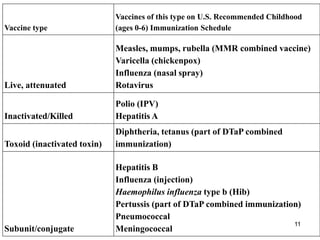
Vaccine type 
Vaccines of this type on U.S. Recommended Childhood 
(ages 0-6) Immunization Schedule 
Live, attenuated 
Measles, mumps, rubella (MMR combined vaccine) 
Varicella (chickenpox) 
Influenza (nasal spray) 
Rotavirus 
Inactivated/Killed 
Polio (IPV) 
Hepatitis A 
Toxoid (inactivated toxin) 
Diphtheria, tetanus (part of DTaP combined 
immunization) 
Subunit/conjugate 
Hepatitis B 
Influenza (injection) 
Haemophilus influenza type b (Hib) 
Pertussis (part of DTaP combined immunization) 
Pneumococcal 
11 
Meningococcal
Routes of Administration 
 Deep subcutaneous or intramuscular route 
(most vaccines) 
 Oral route (oral BCG vaccine) 
 Intradermal route (BCG vaccine) 
 Scarification (small pox vaccine) 
 Intranasal route (live attenuated influenza 
vaccine) 
12
Scheme of immunization 
 Primary vaccination 
 One dose vaccines (BCG, measles, 
mumps, rubella, yellow fever) 
 Multiple dose vaccines (polio, DPT, 
hepatitis B) 
 Booster vaccination 
 To maintain immunity level after it declines 
after some time has elapsed (DT, MMR 
13
Periods of maintained immunity 
due to vaccines 
 Short period (months): cholera vaccine 
 Two years: TAB vaccine (typhoid-paratyphoid 
A and B vaccine) 
 Three to five years: DPT vaccine 
(diphtheria, pertussis (whooping cough), 
and tetanus) 
 Five or more years: BCG vaccine(Bacillus 
Calmette–Guérin is a vaccine against 
tuberculosis) 
 Ten years: yellow fever vaccine 
14
Toxoids 
 Toxoid is a substance which is normally 
toxic and has been processed to destroy 
its toxicity but retains its capacity to induce 
antibody production by immune system. 
Toxoid consists of weakened components 
or toxins secreted by the pathogens. 
Toxoids are used to develop immunity 
against diseases like diphtheria,tetanus, 
cholera, etc. 
15

Vaccination ppt

  • 1.
  • 2.
    IMMUNIZATION • Immunizationis defined as the procedure by which the body is prepared to fight against a specific disease. It is used to induce the immune resistance of the body to a specific disease. Immunization is of two types: • 1. Passive immunization • 2. Active immunization.
  • 3.
    „ PASSIVE IMMUNIZATION • Passive immunization or immunity is produced without challenging the immune system of the body. It is done by administration of serum or gamma globulins from a person who is already immunized (affected by the disease) to a non-immune person. Passive immunization is acquired either naturally or • artificially. • Passive Natural Immunization • Passive natural immunization is acquired from the mother before and after birth. Before birth, immunity is transferred from mother to the fetus in the form of maternal antibodies (mainly IgG) through placenta. After birth, the antibodies (IgA) are transferred through breast milk.
  • 4.
    Passive artificial immunization • It is developed by injecting previously prepared antibodies using serum from humans or animals.This type of immunity is useful for providing immediate protection against acute infections like tetanus,measles, etc. • 2. ACTIVE IMMUNIZATION • Active immunization or immunity is acquired by activating immune system of the body. Body develops resistance against disease by producing antibodies following the exposure to antigens. Active immunity is acquired either • naturally or artificially.
  • 5.
    • Active NaturalImmunization • Naturally acquired active immunity involves activation of immune system in the body to produce antibodies. It is achieved in both clinical and subclinical infections • Active Artificial Immunization • Active artificial immunization is a type of immunization that is achieved by the administration of vaccines or toxoids.
  • 6.
    Vaccine Vaccine isa substance that is introduced into the body to prevent the disease produced by certain pathogens.Vaccine consists of dead pathogens or live but attenuated (artificially weakened) organisms. The vaccine induces immunity against the pathogen, either by production of antibodies or by activation of T lymphocytes. Edward Jenner produced first live vaccine. He produced the vaccine for smallpox from cowpox virus.Nowadays, vaccines are used to prevent many diseases like measles, mumps, poliomyelitis, tuberculosis,smallpox, rubella, yellow fever, rabies, typhoid, influenza,hepatitis B, etc. Vaccination: The process of distributing and administriting vaccines is reffered to as Vaccination. 6
  • 7.
    Types of vaccine 1. Live-attenuated (weakened) vaccines These vaccines contain modifed strains of a pathogen (bacteria or viruses) that have been weakened but are able to multiply within the body and remain antigenic enough to induce a strong immune response. The varicella-zoster vaccine, oral poliovirus (OPV) vaccine, or yellow fever virus vaccine are some examples of this type of vaccine. 2.Heterologous vaccines  Heterologous vaccines are a sub-group of live attenuated vaccines produced from strains that are pathogenic in animals but not in humans. It is a vaccine that confers protective immunity against a pathogen that shares cross-reacting antigens with the microorganisms in the vaccine. example cowpox virus that protects against smallpox in 7 humans.
  • 8.
    3. Killed-inactivated vaccines  To produce this type of vaccines, bacteria or viruses are killed or inactivated by a chemical treatment or heat. This group includes for example the inactivated poliovirus (IPV) vaccine, pertussis vaccine, rabies vaccine, or hepatitis A virus vaccine.  4. Sub-unit vaccines  Instead of the entire microbe, subunit vaccines include only the antigens that best stimulate the immune system.In some cases, these vaccines use epitopes—the very specific parts of the antigen that antibodies or T cells recognize and bind to.Because subunit vaccines contain only the essential antigens and not all the other molecules that make up the microbe, the chances of adverse reactions to the vaccine are lower. 8
  • 9.
    5.DNA Vaccine whenthe genes for a microbe’s antigens are introduced into the body, some cells will take up that DNA. The DNA then instructs those cells to make the antigen molecules. The cells secrete the antigens and display them on their surfaces. In other words, the body’s own cells become vaccine-making factories, creating the anti gens necessary to stimulate the immune system.  6.RECOMBINANT VECTOR VACCINES Recombinant vector vaccines are experimental vaccines similar to DNA vaccines, but they use an attenuated virus or bacterium to introduce microbial DNA to cells of the body. “Vector” refers to the virus or bacterium used as the carrier. 9
  • 10.
    7.TOXOID VACCINES Thesevaccines are used when a bacterial toxin is the main cause of illness.When the immune system receives a vaccine containing a harmless toxoid, it learns how to fight off the natural toxin. The immune system produces antibodies that block the toxin. E.g Vaccines against diphtheria and tetanus. 8.Gene deleted vaccines; These are genetically engineered vaccines which involve the removal or mutation of virulence gene of the pathogen 9.Peptide vaccine: These are the subunit vaccine prepared by chemical synthesis of short immunogenic peptides. 10
  • 11.
    Vaccine type Vaccinesof this type on U.S. Recommended Childhood (ages 0-6) Immunization Schedule Live, attenuated Measles, mumps, rubella (MMR combined vaccine) Varicella (chickenpox) Influenza (nasal spray) Rotavirus Inactivated/Killed Polio (IPV) Hepatitis A Toxoid (inactivated toxin) Diphtheria, tetanus (part of DTaP combined immunization) Subunit/conjugate Hepatitis B Influenza (injection) Haemophilus influenza type b (Hib) Pertussis (part of DTaP combined immunization) Pneumococcal 11 Meningococcal
  • 12.
    Routes of Administration  Deep subcutaneous or intramuscular route (most vaccines)  Oral route (oral BCG vaccine)  Intradermal route (BCG vaccine)  Scarification (small pox vaccine)  Intranasal route (live attenuated influenza vaccine) 12
  • 13.
    Scheme of immunization  Primary vaccination  One dose vaccines (BCG, measles, mumps, rubella, yellow fever)  Multiple dose vaccines (polio, DPT, hepatitis B)  Booster vaccination  To maintain immunity level after it declines after some time has elapsed (DT, MMR 13
  • 14.
    Periods of maintainedimmunity due to vaccines  Short period (months): cholera vaccine  Two years: TAB vaccine (typhoid-paratyphoid A and B vaccine)  Three to five years: DPT vaccine (diphtheria, pertussis (whooping cough), and tetanus)  Five or more years: BCG vaccine(Bacillus Calmette–Guérin is a vaccine against tuberculosis)  Ten years: yellow fever vaccine 14
  • 15.
    Toxoids  Toxoidis a substance which is normally toxic and has been processed to destroy its toxicity but retains its capacity to induce antibody production by immune system. Toxoid consists of weakened components or toxins secreted by the pathogens. Toxoids are used to develop immunity against diseases like diphtheria,tetanus, cholera, etc. 15