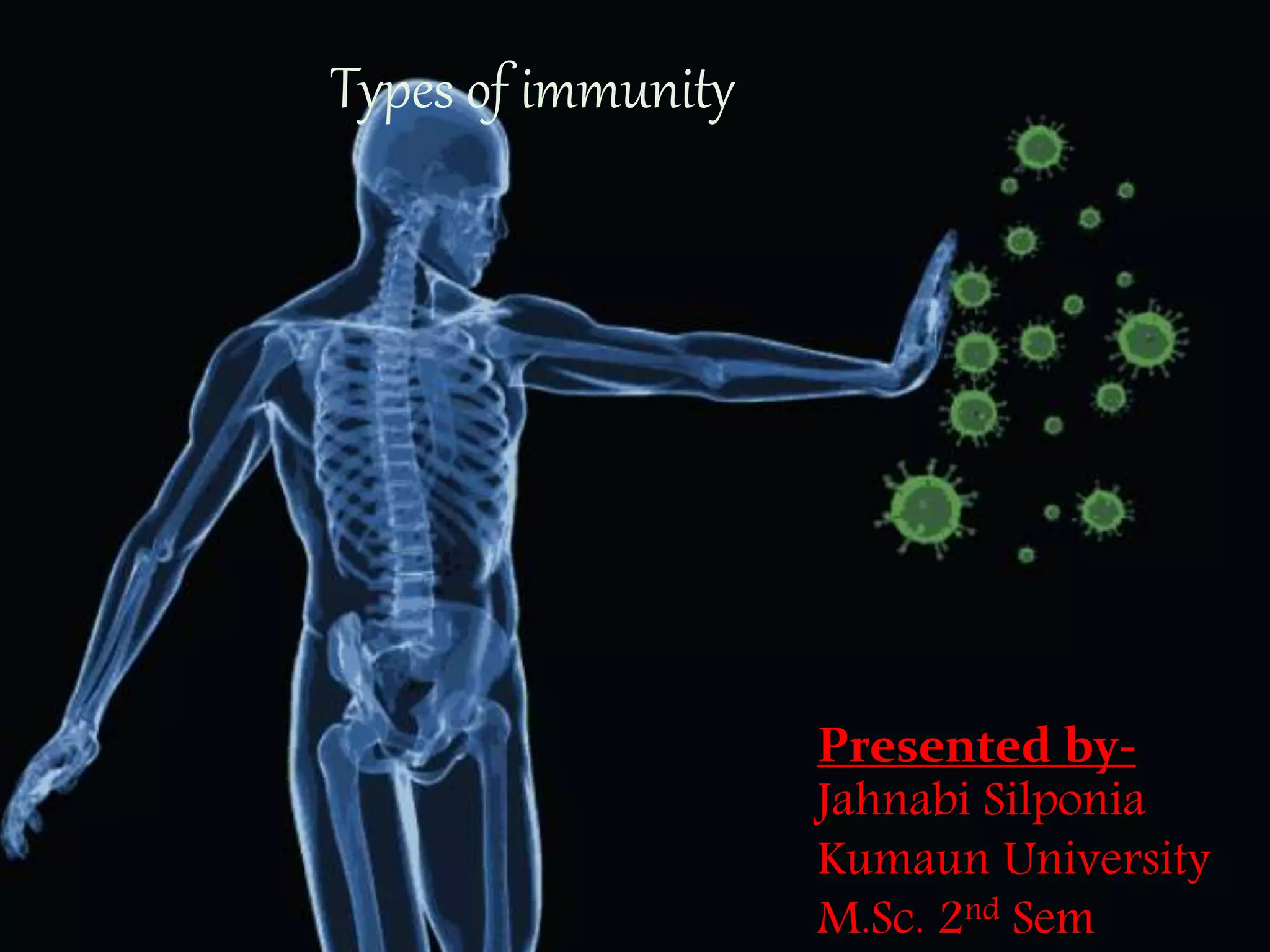
Presented by-
Jahnabi Silponia
Kumaun University
M.Sc. 2nd Sem
Types of immunity
Contents
Introduction
Types of immunity
Natural or innate immunity
 Types of innate immunity
 Acquired or adaptive immunity
 Types of Acquired immunity
 Mechanism of active immunity
 References
Introduction
 Immunity is the ability of the body to protect
against all types of foreign bodies like bacteria,
virus, toxic substances etc. which enter the body.
 As it protects us from disease it is also called
disease resistance.
 Lack of immunity is known as susceptibility.
 Immunity is done by immune system which is a
complex network of lymphoid organs such as bone
marrow, thymus, spleen etc.
Types of immunity
Immunity
Innate immunity Acquired immunity
Anatomic
al barriers
Phagocytic
barriers
Blood
proteins
Cytokines Passive
immunity
Active
immunity
Naturally
acquired
Artificially
acquired
Naturally
acquired
Artificially
acquired
Innate Immunity
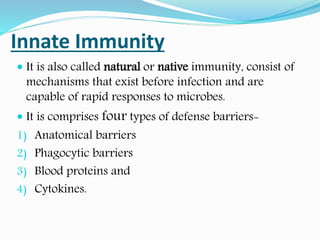
 It is also called natural or native immunity, consist of
mechanisms that exist before infection and are
capable of rapid responses to microbes.
 It is comprises four types of defense barriers-
1) Anatomical barriers
2) Phagocytic barriers
3) Blood proteins and
4) Cytokines.
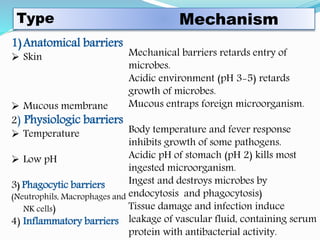
Type Mechanism
1)Anatomical barriers
 Skin
 Mucous membrane
2) Physiologic barriers
 Temperature
 Low pH
3) Phagocytic barriers
(Neutrophils, Macrophages and
NK cells)
4) Inflammatory barriers
Mechanical barriers retards entry of
microbes.
Acidic environment (pH 3-5) retards
growth of microbes.
Mucous entraps foreign microorganism.
Body temperature and fever response
inhibits growth of some pathogens.
Acidic pH of stomach (pH 2) kills most
ingested microorganism.
Ingest and destroys microbes by
endocytosis and phagocytosis)
Tissue damage and infection induce
leakage of vascular fluid, containing serum
protein with antibacterial activity.
Types of innate immunity
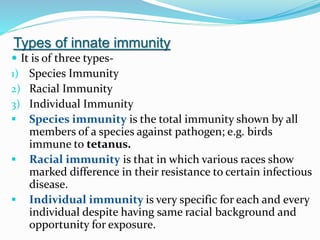
 It is of three types-
1) Species Immunity
2) Racial Immunity
3) Individual Immunity
 Species immunity is the total immunity shown by all
members of a species against pathogen; e.g. birds
immune to tetanus.
 Racial immunity is that in which various races show
marked difference in their resistance to certain infectious
disease.
 Individual immunity is very specific for each and every
individual despite having same racial background and
opportunity for exposure.
Acquired immunity
Acquired or adaptive immunity is the immunity that is
developed by the host in its body after exposure to suitable
antigen or after transfer of antibodies or lymphocyte from an
immune donor.
Characteristics of Acquired Immunity
1. Antigenic Specificity
2. Diversity
3. Immunologic memory
4. Self/non-self recognition
Types of Acquired Immunity
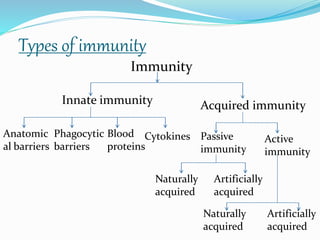
Acquired Immunity is of two types- active and passive
immunity.
1. Active immunity
It is induced by natural exposure to a pathogen or by
vaccination.
It can be categorized into two types-
Naturally acquired and Artificially acquired active immunity.
2. Passive immunity
Passive immunity is achieve by transfer of immune products,
such as antibody or sensitized T-cells, from an immune
individual to non immune one.
It is of two types- Naturally acquired and Artificially
acquired passive immunity
Mechanism of active immunity
• Body’s immune system provide protection by
synthesizing antibodies or immunoglobulins in
response to an antigen.
• Primary immune response takes place when the
host is attacked by certain microbes for first time. The
antibodies start to generate after certain period as the
binding of an antigen with its particular antibody is
very specific.
• Secondary immune response occurs when an
individual is being attacked by the same antigen
subsequently. It is a rapid process.
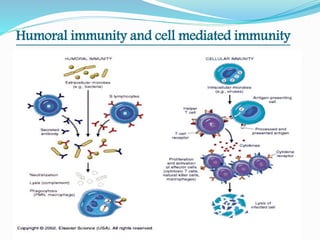
• Acquired active immune response takes two distinct
forms- humoral and cell mediated response.
Humoral immunity and cell mediated immunity
Thank you

Types of immunity

  • 1.
    Presented by- Jahnabi Silponia KumaunUniversity M.Sc. 2nd Sem Types of immunity
  • 2.
    Contents Introduction Types of immunity Naturalor innate immunity  Types of innate immunity  Acquired or adaptive immunity  Types of Acquired immunity  Mechanism of active immunity  References
  • 3.
    Introduction  Immunity isthe ability of the body to protect against all types of foreign bodies like bacteria, virus, toxic substances etc. which enter the body.  As it protects us from disease it is also called disease resistance.  Lack of immunity is known as susceptibility.  Immunity is done by immune system which is a complex network of lymphoid organs such as bone marrow, thymus, spleen etc.
  • 4.
    Types of immunity Immunity Innateimmunity Acquired immunity Anatomic al barriers Phagocytic barriers Blood proteins Cytokines Passive immunity Active immunity Naturally acquired Artificially acquired Naturally acquired Artificially acquired
  • 5.
    Innate Immunity  Itis also called natural or native immunity, consist of mechanisms that exist before infection and are capable of rapid responses to microbes.  It is comprises four types of defense barriers- 1) Anatomical barriers 2) Phagocytic barriers 3) Blood proteins and 4) Cytokines.
  • 6.
    Type Mechanism 1)Anatomical barriers Skin  Mucous membrane 2) Physiologic barriers  Temperature  Low pH 3) Phagocytic barriers (Neutrophils, Macrophages and NK cells) 4) Inflammatory barriers Mechanical barriers retards entry of microbes. Acidic environment (pH 3-5) retards growth of microbes. Mucous entraps foreign microorganism. Body temperature and fever response inhibits growth of some pathogens. Acidic pH of stomach (pH 2) kills most ingested microorganism. Ingest and destroys microbes by endocytosis and phagocytosis) Tissue damage and infection induce leakage of vascular fluid, containing serum protein with antibacterial activity.
  • 7.
    Types of innateimmunity  It is of three types- 1) Species Immunity 2) Racial Immunity 3) Individual Immunity  Species immunity is the total immunity shown by all members of a species against pathogen; e.g. birds immune to tetanus.  Racial immunity is that in which various races show marked difference in their resistance to certain infectious disease.  Individual immunity is very specific for each and every individual despite having same racial background and opportunity for exposure.
  • 8.
    Acquired immunity Acquired oradaptive immunity is the immunity that is developed by the host in its body after exposure to suitable antigen or after transfer of antibodies or lymphocyte from an immune donor. Characteristics of Acquired Immunity 1. Antigenic Specificity 2. Diversity 3. Immunologic memory 4. Self/non-self recognition
  • 9.
    Types of AcquiredImmunity Acquired Immunity is of two types- active and passive immunity. 1. Active immunity It is induced by natural exposure to a pathogen or by vaccination. It can be categorized into two types- Naturally acquired and Artificially acquired active immunity. 2. Passive immunity Passive immunity is achieve by transfer of immune products, such as antibody or sensitized T-cells, from an immune individual to non immune one. It is of two types- Naturally acquired and Artificially acquired passive immunity
  • 10.
    Mechanism of activeimmunity • Body’s immune system provide protection by synthesizing antibodies or immunoglobulins in response to an antigen. • Primary immune response takes place when the host is attacked by certain microbes for first time. The antibodies start to generate after certain period as the binding of an antigen with its particular antibody is very specific. • Secondary immune response occurs when an individual is being attacked by the same antigen subsequently. It is a rapid process. • Acquired active immune response takes two distinct forms- humoral and cell mediated response.
  • 11.
    Humoral immunity andcell mediated immunity
  • 12.