TUBERCULOSIS
TUBERCULOSIS 
It is the most prevalent 
communicable infectious disease. 
Usually involves lungs but may 
effect other organs or tissues in body.
Etiology 
 Pulmonary Tb is caused by 
Mycobacterium tuberculosis. 
 Poor hygiene. 
 Reduced immune status.
Transmission 
It is an Airborne disease. 
Airborne droplets coughed or 
sneezed by the patient.
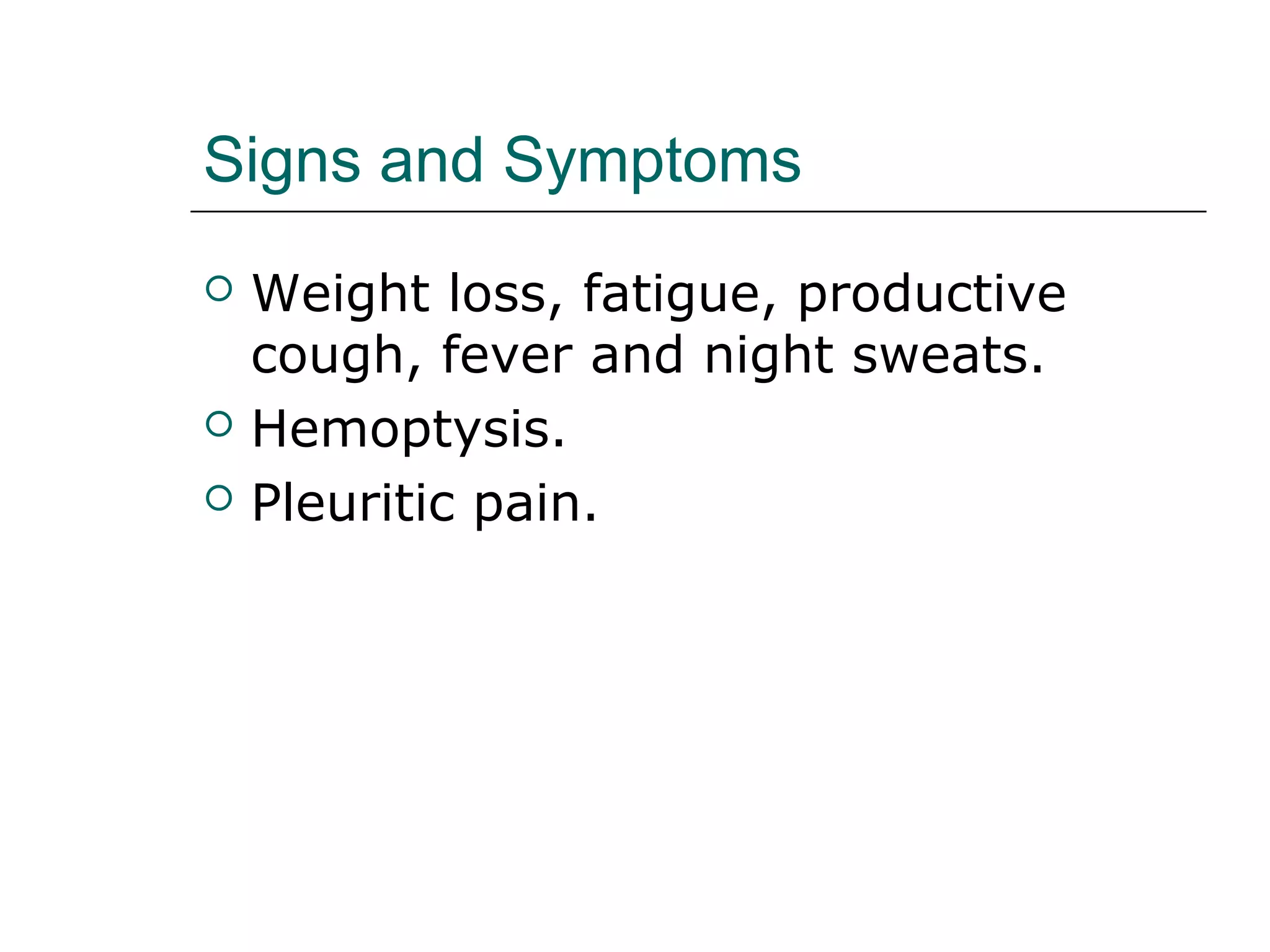
Signs and Symptoms 
 Weight loss, fatigue, productive 
cough, fever and night sweats. 
 Hemoptysis. 
 Pleuritic pain.
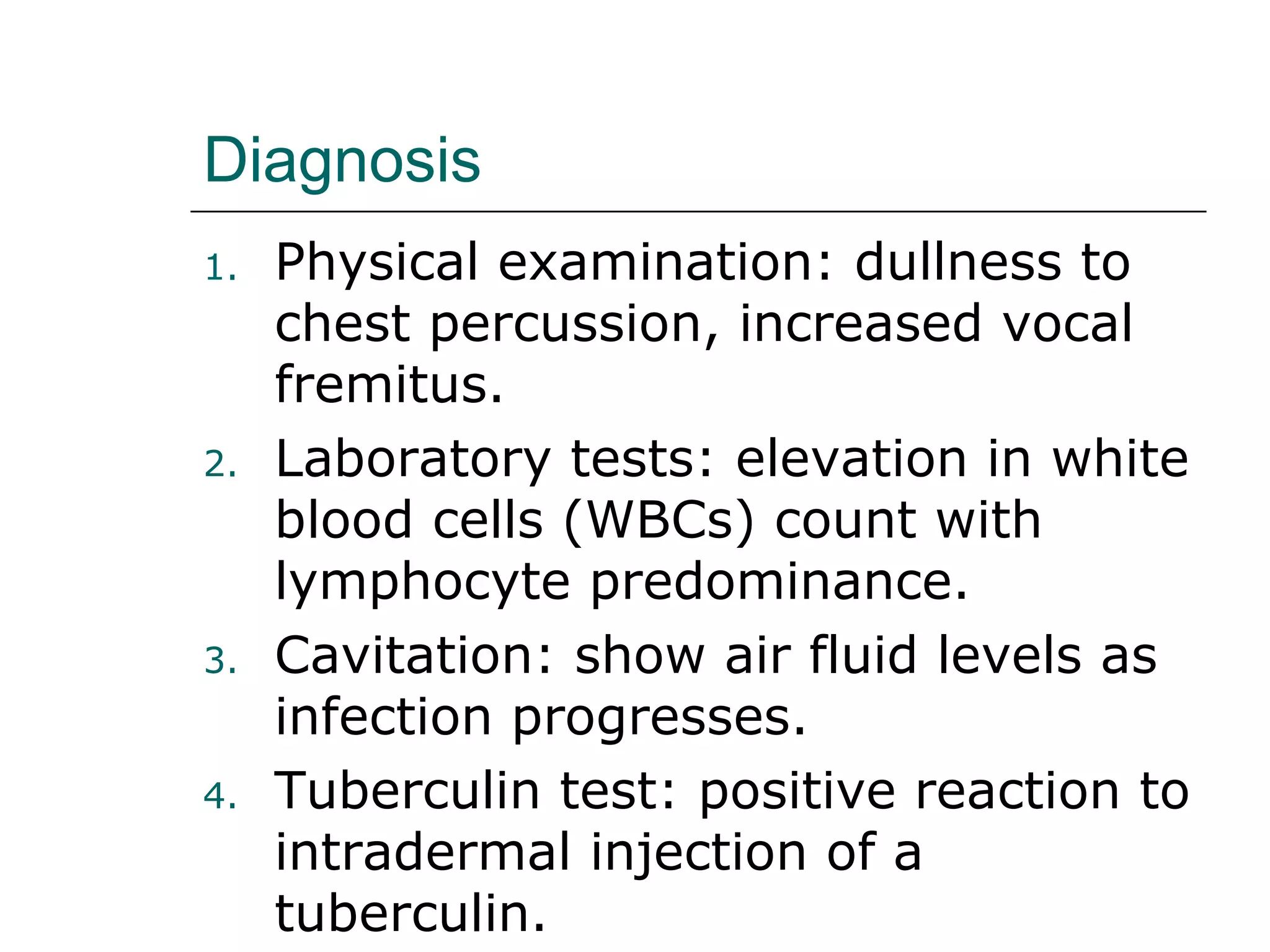
Diagnosis 
1. Physical examination: dullness to 
chest percussion, increased vocal 
fremitus. 
2. Laboratory tests: elevation in white 
blood cells (WBCs) count with 
lymphocyte predominance. 
3. Cavitation: show air fluid levels as 
infection progresses. 
4. Tuberculin test: positive reaction to 
intradermal injection of a 
tuberculin.
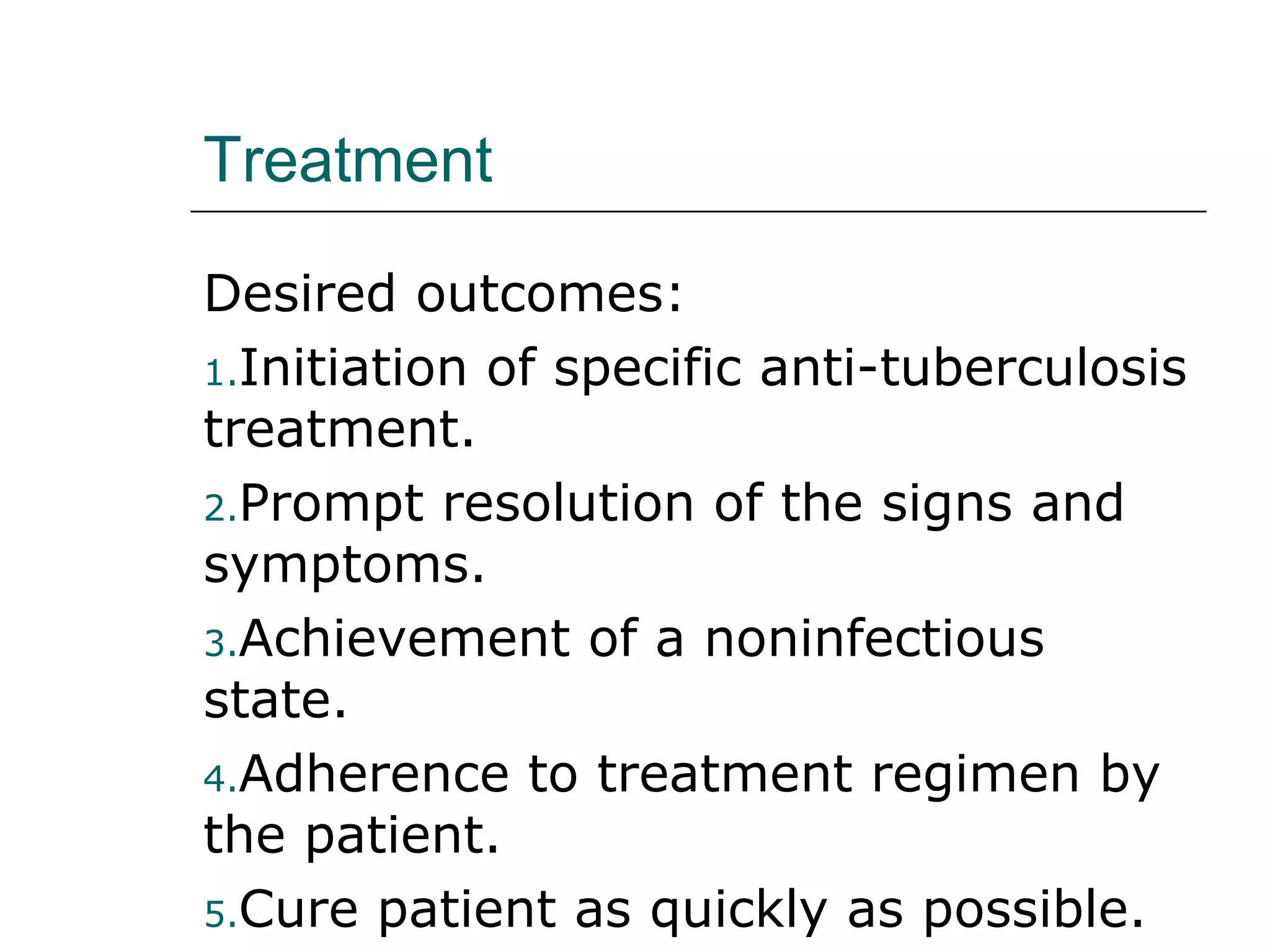
Treatment 
Desired outcomes: 
1.Initiation of specific anti-tuberculosis 
treatment. 
2.Prompt resolution of the signs and 
symptoms. 
3.Achievement of a noninfectious 
state. 
4.Adherence to treatment regimen by 
the patient. 
5.Cure patient as quickly as possible.
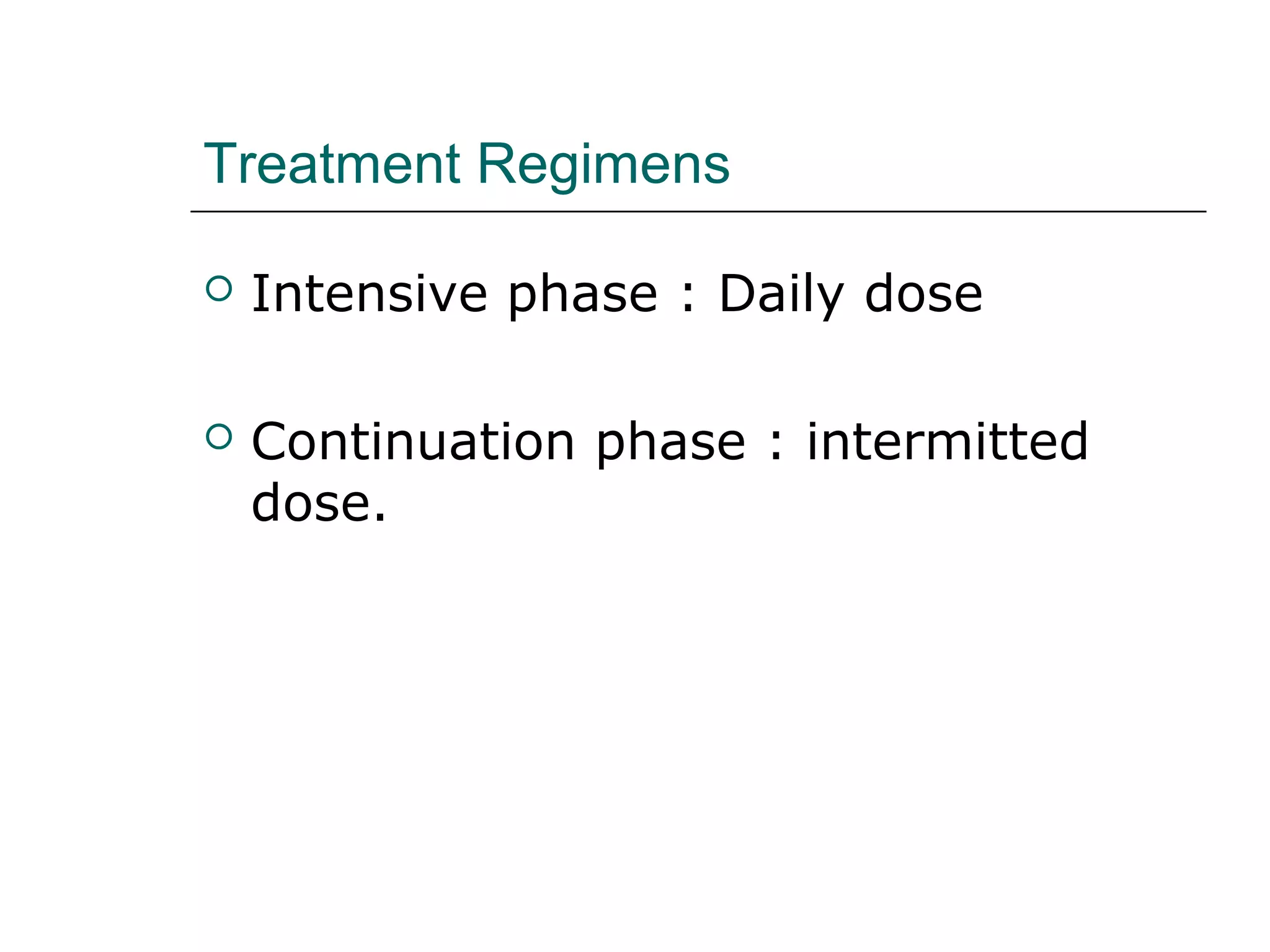
Treatment Regimens 
 Intensive phase : Daily dose 
 Continuation phase : intermitted 
dose.
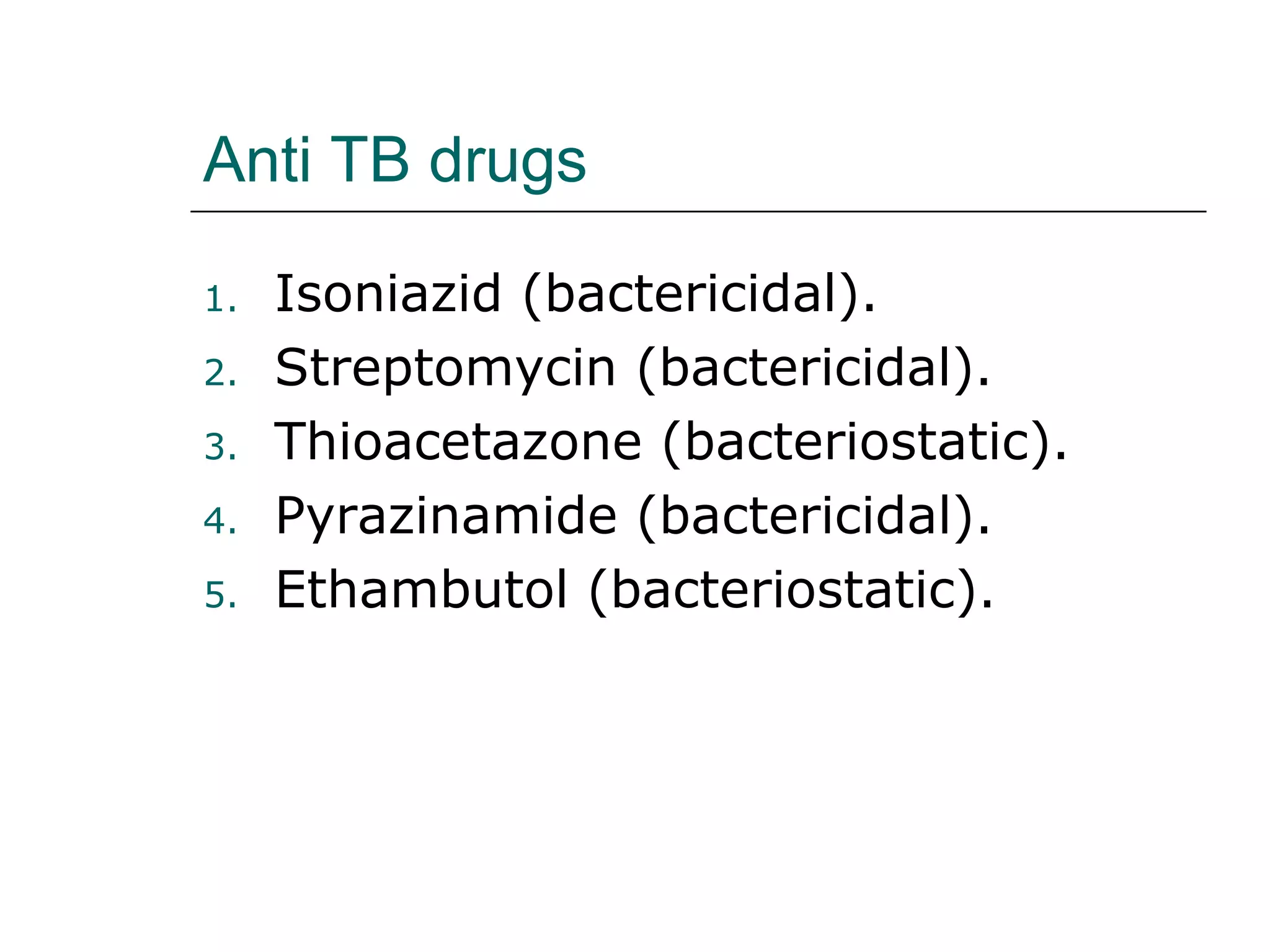
Anti TB drugs 
1. Isoniazid (bactericidal). 
2. Streptomycin (bactericidal). 
3. Thioacetazone (bacteriostatic). 
4. Pyrazinamide (bactericidal). 
5. Ethambutol (bacteriostatic).
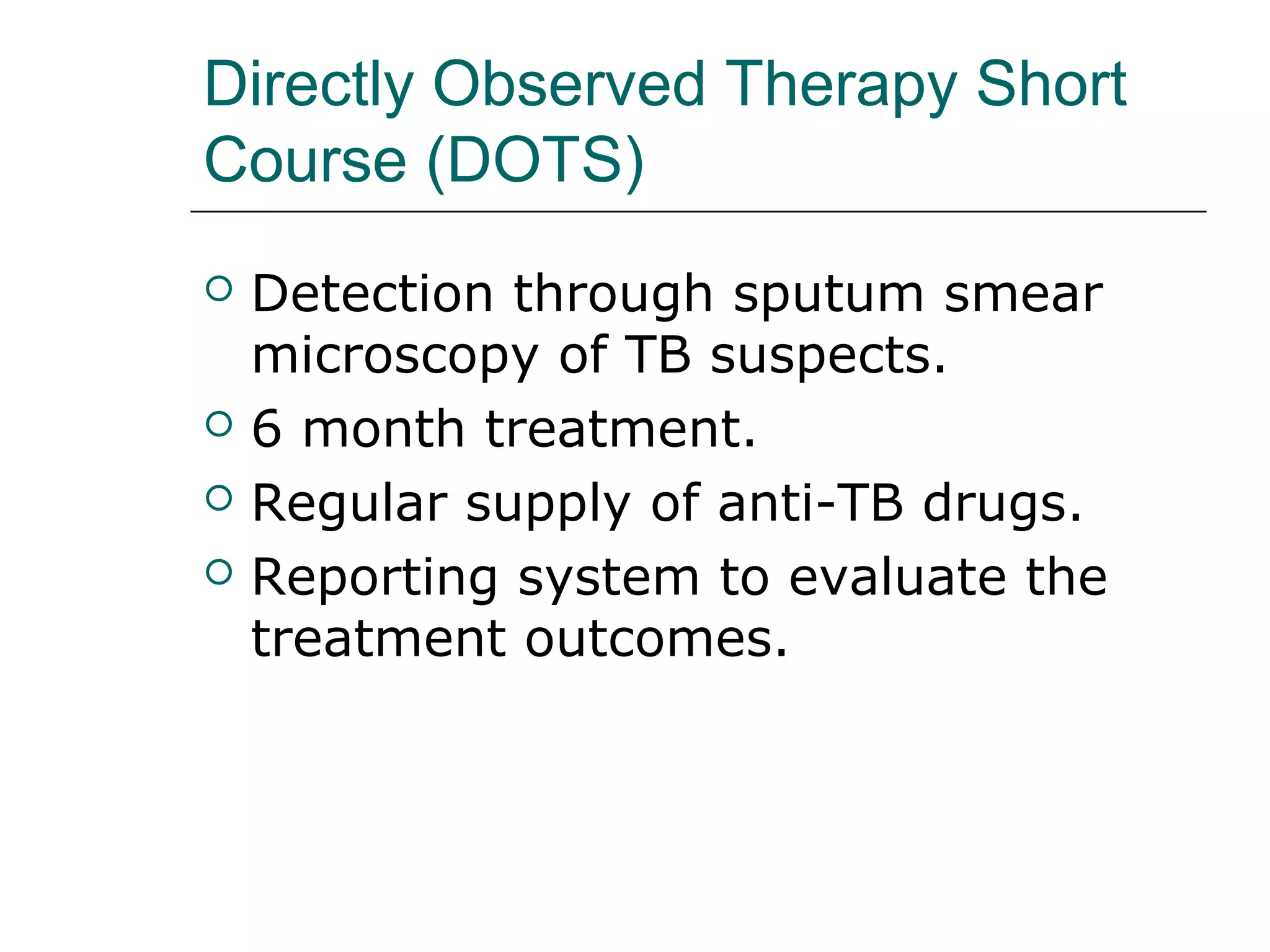
Directly Observed Therapy Short 
Course (DOTS) 
 Detection through sputum smear 
microscopy of TB suspects. 
 6 month treatment. 
 Regular supply of anti-TB drugs. 
 Reporting system to evaluate the 
treatment outcomes.
Thank You !

T.B ppt

  • 1.
  • 2.
    TUBERCULOSIS It isthe most prevalent communicable infectious disease. Usually involves lungs but may effect other organs or tissues in body.
  • 3.
    Etiology  PulmonaryTb is caused by Mycobacterium tuberculosis.  Poor hygiene.  Reduced immune status.
  • 4.
    Transmission It isan Airborne disease. Airborne droplets coughed or sneezed by the patient.
  • 5.
    Signs and Symptoms  Weight loss, fatigue, productive cough, fever and night sweats.  Hemoptysis.  Pleuritic pain.
  • 6.
    Diagnosis 1. Physicalexamination: dullness to chest percussion, increased vocal fremitus. 2. Laboratory tests: elevation in white blood cells (WBCs) count with lymphocyte predominance. 3. Cavitation: show air fluid levels as infection progresses. 4. Tuberculin test: positive reaction to intradermal injection of a tuberculin.
  • 7.
    Treatment Desired outcomes: 1.Initiation of specific anti-tuberculosis treatment. 2.Prompt resolution of the signs and symptoms. 3.Achievement of a noninfectious state. 4.Adherence to treatment regimen by the patient. 5.Cure patient as quickly as possible.
  • 8.
    Treatment Regimens Intensive phase : Daily dose  Continuation phase : intermitted dose.
  • 9.
    Anti TB drugs 1. Isoniazid (bactericidal). 2. Streptomycin (bactericidal). 3. Thioacetazone (bacteriostatic). 4. Pyrazinamide (bactericidal). 5. Ethambutol (bacteriostatic).
  • 10.
    Directly Observed TherapyShort Course (DOTS)  Detection through sputum smear microscopy of TB suspects.  6 month treatment.  Regular supply of anti-TB drugs.  Reporting system to evaluate the treatment outcomes.
  • 11.