
Downloaded 459 times

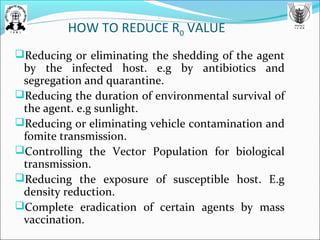
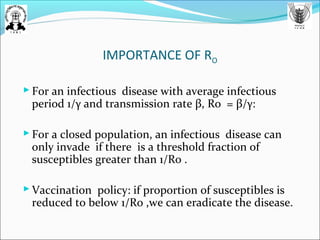
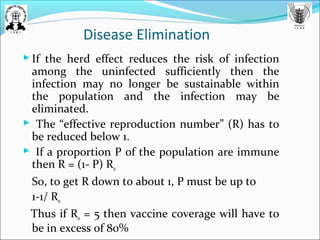
This document discusses herd immunity, including its history, terminology, mechanisms, effects, and importance. Some key points: - Herd immunity occurs when a large proportion of a population is immune to an infectious disease, providing indirect protection to susceptible people. This can occur via vaccination or previous exposure. - Important terminology includes basic reproduction number (R0), which is the number of secondary infections from one case, and critical vaccination level (Vc), which is the threshold of vaccination needed to induce herd immunity. - Herd immunity reduces the probability that susceptible individuals will be exposed to an infectious disease. The critical threshold is when the proportion of immune individuals in a population exceeds 1/R0.


