Angina pectoris 
Sudden,severe,pressing chest pain 
starting substernal &radiate to left 
arm. 
Due to imbalance between 
myocardium oxygen requirement 
and oxygen supply. 
Risk factors : 
Age,sex,obesity.smoking,diabetes.
Classification of angina 
1. Exertional angina, 
Stable,Atherosclerotic,Classic, 
Due to obstruction of coronaries by 
atheroma. 
2. Variant, Vasospastic angina 
due to Spasm of coronaries. 
3- Unstable angina. 
Due to spasm and partial obstruction of 
coronaries.
Nitrates & Nitrites 
Preparations : 
1- Short acting: 
Start within few minutes and total duration 
of action 15-30 minutes. 
A) Nitroglycerine (Glyceryl trinitrate) 
Used as sublingual tablets. 
B) Isosorbide dinitrate 
As sublingual spray. 
C) Amyl nitrite 
Inhalation
2- Long acting 
Nitroglycerine, Isosorbide dinitrate, 
Isosorbide mononitrate,Erythrityl – 
Tetranitrate. 
Action of all start withen hours and 
continue for hours . 
They are given : 
Orally,Ointment,Buccal,Transdermal 
patch,Parenteral.
Absorption 
Well absorbed according to the route: 
GIT for the long acting 
short acting Sublingual 
Transdermal for long acting 
inhaLation
Metabolism 
Through first pass hepatic metabolism . 
Short acting have a low oral bioavailability 
(10-20%),so not given orally to avoid first 
pass metabolism. 
Nitroglycerine metabolites( two dinitro And 
two mononitro forms). 
The dinitro forms are active metabolites 
and have significant vasodilator effect.
Metabolism 
Isosorbide dinitrate metabolite (5- 
mononitrate) is an active metabolite 
used clinically. 
Excretion 
As metabolites through kidney.
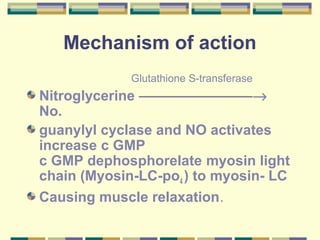
Mechanism of action 
Glutathione S-transferase 
Nitroglycerine ————————® 
No. 
guanylyl cyclase and NO activates 
increase c GMP 
c GMP dephosphorelate myosin light 
chain (Myosin-LC-po4 ) to myosin- LC 
Causing muscle relaxation.
Pharmacological actions 
Nitrates relax all types of smooth muscles 
vascular or non vascular . 
Relax both arteries and veins but more 
effective on veins. 
They have no direct effect on cardiac or 
skeletal muscles. 
NO released stimulate guanylyl cyclase 
In platelets causing increase cGMP that 
decrease platelet aggregation.
Clinical uses 
Short acting for acute attacks 
Long acting for prophylactic. 
Treatment of all types of angina .
1- Angina of effort 
A) Decrease venous return 
B) Decrease ABP 
Both A&B decrease myocardial 
oxygen requirement.
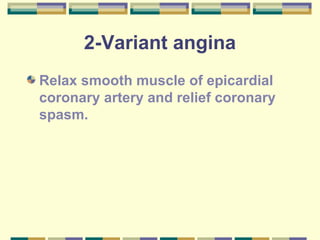
2-Variant angina 
Relax smooth muscle of epicardial 
coronary artery and relief coronary 
spasm.
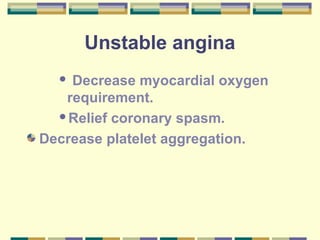
Unstable angina 
 Decrease myocardial oxygen 
requirement. 
Relief coronary spasm. 
Decrease platelet aggregation.
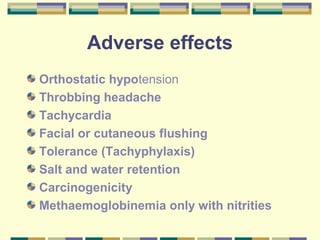
Adverse effects 
Orthostatic hypotension 
Throbbing headache 
Tachycardia 
Facial or cutaneous flushing 
Tolerance (Tachyphylaxis) 
Salt and water retention 
Carcinogenicity 
Methaemoglobinemia only with nitrities
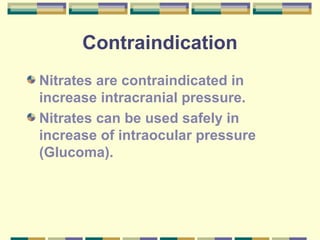
Contraindication 
Nitrates are contraindicated in 
increase intracranial pressure. 
Nitrates can be used safely in 
increase of intraocular pressure 
(Glucoma).
Calcium channel blockers 
1- They block calcium entry in 
myocardium causing ; 
A) decrease myocardium 
contractility & myocardium 
oxygen requirement. 
B) decrease heart rate causing 
decrease in myocardium oxygen 
requirement.
2-Block calcium entry in vascular 
smooth muscles (arterioles) causing 
a)decrease in peripheral 
resistance( after load)------ decrease 
in oxygen requirement. 
• b)Relief of coronary spasm.
Clinical uses 
In all types of angina but very 
effective in variant angina . 
Used mainly in prophylactic therapy.
β-Adrenoceptor blocking 
drugs 
They are not vasodilators 
They are used in treatment of 
angina : 
They decrease both heart rate & 
myocardial contractility that 
decrease in myocardial oxygen 
requirement at rest & in exercise so 
improve exercise tolerance.
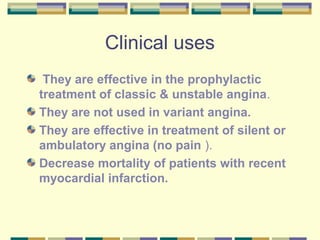
Clinical uses 
They are effective in the prophylactic 
treatment of classic & unstable angina. 
They are not used in variant angina. 
They are effective in treatment of silent or 
ambulatory angina (no pain ). 
Decrease mortality of patients with recent 
myocardial infarction.
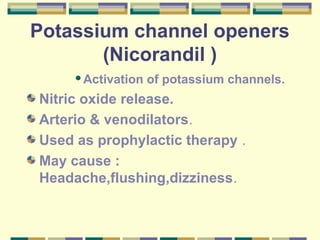
Potassium channel openers 
(Nicorandil ) 
Activation of potassium channels. 
Nitric oxide release. 
Arterio & venodilators. 
Used as prophylactic therapy . 
May cause : 
Headache,flushing,dizziness.
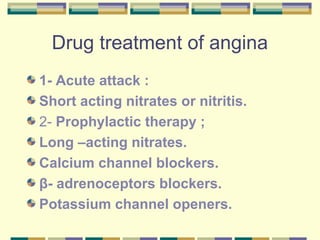
Drug treatment of angina 
1- Acute attack : 
Short acting nitrates or nitritis. 
2- Prophylactic therapy ; 
Long –acting nitrates. 
Calcium channel blockers. 
β- adrenoceptors blockers. 
Potassium channel openers.
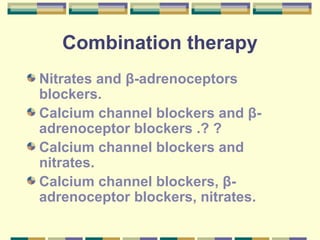
Combination therapy 
Nitrates and β-adrenoceptors 
blockers. 
Calcium channel blockers and β- 
adrenoceptor blockers .? ? 
Calcium channel blockers and 
nitrates. 
Calcium channel blockers, β- 
adrenoceptor blockers, nitrates.
Surgical therapy 
Ballon 
Coronary by pass.

Angina pectoris ppt

  • 1.
    Angina pectoris Sudden,severe,pressingchest pain starting substernal &radiate to left arm. Due to imbalance between myocardium oxygen requirement and oxygen supply. Risk factors : Age,sex,obesity.smoking,diabetes.
  • 2.
    Classification of angina 1. Exertional angina, Stable,Atherosclerotic,Classic, Due to obstruction of coronaries by atheroma. 2. Variant, Vasospastic angina due to Spasm of coronaries. 3- Unstable angina. Due to spasm and partial obstruction of coronaries.
  • 3.
    Nitrates & Nitrites Preparations : 1- Short acting: Start within few minutes and total duration of action 15-30 minutes. A) Nitroglycerine (Glyceryl trinitrate) Used as sublingual tablets. B) Isosorbide dinitrate As sublingual spray. C) Amyl nitrite Inhalation
  • 4.
    2- Long acting Nitroglycerine, Isosorbide dinitrate, Isosorbide mononitrate,Erythrityl – Tetranitrate. Action of all start withen hours and continue for hours . They are given : Orally,Ointment,Buccal,Transdermal patch,Parenteral.
  • 5.
    Absorption Well absorbedaccording to the route: GIT for the long acting short acting Sublingual Transdermal for long acting inhaLation
  • 6.
    Metabolism Through firstpass hepatic metabolism . Short acting have a low oral bioavailability (10-20%),so not given orally to avoid first pass metabolism. Nitroglycerine metabolites( two dinitro And two mononitro forms). The dinitro forms are active metabolites and have significant vasodilator effect.
  • 7.
    Metabolism Isosorbide dinitratemetabolite (5- mononitrate) is an active metabolite used clinically. Excretion As metabolites through kidney.
  • 8.
    Mechanism of action Glutathione S-transferase Nitroglycerine ————————® No. guanylyl cyclase and NO activates increase c GMP c GMP dephosphorelate myosin light chain (Myosin-LC-po4 ) to myosin- LC Causing muscle relaxation.
  • 9.
    Pharmacological actions Nitratesrelax all types of smooth muscles vascular or non vascular . Relax both arteries and veins but more effective on veins. They have no direct effect on cardiac or skeletal muscles. NO released stimulate guanylyl cyclase In platelets causing increase cGMP that decrease platelet aggregation.
  • 10.
    Clinical uses Shortacting for acute attacks Long acting for prophylactic. Treatment of all types of angina .
  • 11.
    1- Angina ofeffort A) Decrease venous return B) Decrease ABP Both A&B decrease myocardial oxygen requirement.
  • 12.
    2-Variant angina Relaxsmooth muscle of epicardial coronary artery and relief coronary spasm.
  • 13.
    Unstable angina Decrease myocardial oxygen requirement. Relief coronary spasm. Decrease platelet aggregation.
  • 14.
    Adverse effects Orthostatichypotension Throbbing headache Tachycardia Facial or cutaneous flushing Tolerance (Tachyphylaxis) Salt and water retention Carcinogenicity Methaemoglobinemia only with nitrities
  • 15.
    Contraindication Nitrates arecontraindicated in increase intracranial pressure. Nitrates can be used safely in increase of intraocular pressure (Glucoma).
  • 16.
    Calcium channel blockers 1- They block calcium entry in myocardium causing ; A) decrease myocardium contractility & myocardium oxygen requirement. B) decrease heart rate causing decrease in myocardium oxygen requirement.
  • 17.
    2-Block calcium entryin vascular smooth muscles (arterioles) causing a)decrease in peripheral resistance( after load)------ decrease in oxygen requirement. • b)Relief of coronary spasm.
  • 18.
    Clinical uses Inall types of angina but very effective in variant angina . Used mainly in prophylactic therapy.
  • 19.
    β-Adrenoceptor blocking drugs They are not vasodilators They are used in treatment of angina : They decrease both heart rate & myocardial contractility that decrease in myocardial oxygen requirement at rest & in exercise so improve exercise tolerance.
  • 20.
    Clinical uses Theyare effective in the prophylactic treatment of classic & unstable angina. They are not used in variant angina. They are effective in treatment of silent or ambulatory angina (no pain ). Decrease mortality of patients with recent myocardial infarction.
  • 21.
    Potassium channel openers (Nicorandil ) Activation of potassium channels. Nitric oxide release. Arterio & venodilators. Used as prophylactic therapy . May cause : Headache,flushing,dizziness.
  • 22.
    Drug treatment ofangina 1- Acute attack : Short acting nitrates or nitritis. 2- Prophylactic therapy ; Long –acting nitrates. Calcium channel blockers. β- adrenoceptors blockers. Potassium channel openers.
  • 23.
    Combination therapy Nitratesand β-adrenoceptors blockers. Calcium channel blockers and β- adrenoceptor blockers .? ? Calcium channel blockers and nitrates. Calcium channel blockers, β- adrenoceptor blockers, nitrates.
  • 24.
    Surgical therapy Ballon Coronary by pass.