UVEITIS
DR. GEETA LAL
UVEITIS
Definition
 Inflammation of the uveal tract and adjacent
intraocular structures
 Uveal tract consists of iris, ciliary body and
choroid
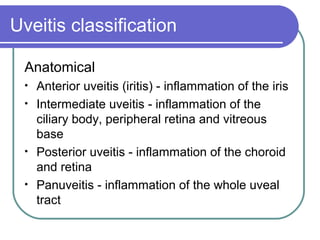
Uveitis classification
Anatomical
• Anterior uveitis (iritis) - inflammation of the iris
• Intermediate uveitis - inflammation of the
ciliary body, peripheral retina and vitreous
base
• Posterior uveitis - inflammation of the choroid
and retina
• Panuveitis - inflammation of the whole uveal
tract
Uveitis aetiology
Autoimmune
Infectious
Neoplastic masquerade syndrome
(lymphoma)
Traumatic/post-operative
Autoimmune uveitis
 Idiopathic
 Sympathetic ophthalmia
• Associated with systemic disease
• HLA-B27 associated
• Psoriatic arthropathy,Crohns disease, ulcerative colitis,
ankylosing spondylitis, Reiters syndrome
• Sarcoidosis
• Behcets disease
• Juvenile idiopathic arthritis
• Collagen vascular disease
• Wegener’s granulomatosis, polyarteritis nodosa
Infectious uveitis
Bacteria
 Syphilis
 Tuberculosis
 Chronic post-operative endophthalmitis from
propionobacterium acnes
Viruses
 Herpes simplex
 Varicella zoster
Protozoa
 Toxoplasmosis
 Toxocariasis
Fungi
 Candida
Uveitis
Acute or chronic
Unilateral or bilateral
In 50% of cases no cause is identified
and it is presumed autoimmune
Acute anterior uveitis
 Symptoms
 Pain, redness, photophobia
 Signs
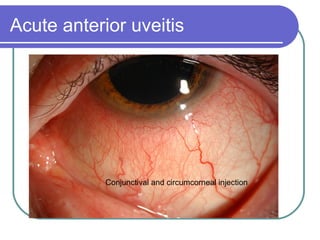
 Circumcorneal hyperaemia/injection
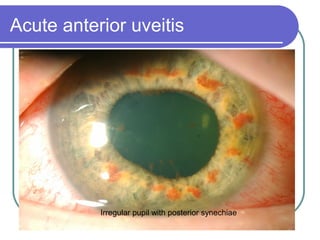
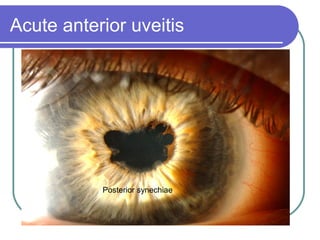
 Miosis, posterior synechiae
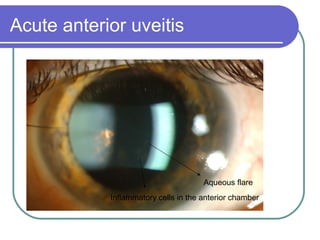
 Cells and flare in the anterior chamber
 Keratic precipitates
 Sometimes high intraocular pressure
Acute anterior uveitis
Conjunctival and circumcorneal injection
Acute anterior uveitis
Irregular pupil with posterior synechiae
Acute anterior uveitis
Aqueous flare
Inflammatory cells in the anterior chamber
Acute anterior uveitis
Posterior synechiae
Intermediate uveitis
 Symptoms
 Floaters
 Gradual blurring of vision
 painless
 Signs
 Inflammatory cells and opacities in the vitreous
 Cystoid macular oedema
 Peripheral retinal vasculitis
Posterior and pan-uveitis
 Symptoms
 Acute or gradual blurring of vision
 Floaters
 Sometimes pain
 Signs variable
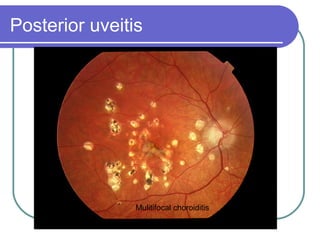
 Choroiditis
 Optic disc swelling
 Retinal vasculitis
 Vitritis
 Anterior chamber inflammation in panuveitis
Posterior uveitis
Mulitifocal choroiditis
Assessing patients with uveitis
1. History and eye examination to classify
according to anatomical diagnosis
2. Past medical history, review of systems,
general medical examination to form
differential diagnosis
3. Relevant investigations
Investigating uveitis
 Based on
 Anatomical diagnosis
 Clinical characteristics
 Patient age and demographics
 Onset of disease
 Past medical history
 Full review of systems considering known systemic disease associations
 Differential diagnosis following history and clinical examination
 Basic investigations performed on most patients
 FBC, ESR, CRP
 Syphilis serology
 Chest x-ray (to detect sarcoidosis)
 Others depend on differential diagnosis, e.g.
 TB – mantoux, CXR
 Sardoidosis – CXR, serum ACE, serum calcium
 Ankylosing spondylitis – sacoriliac joint x-ray, HLA B27
 Wegeners granulomatosis – ANCA, CXR, CT of sinuses, renal investigations
Treatment of acute anterior uveitis
Topical corticosteroids – intensive at first
Dilating drops to prevent formation of
posterior synechiae and relieve pain
Cyclopentolate, atropine
Antiglaucoma medications if necessary
Subconjunctival steroid injection if fails
to respond to drops
Treatment of posterior uveitis
Corticosteroids
Periocular injections
Oral
Intraveous methylprednisolone in acute
severe cases
Systemic immunosuppression
Cyclosporin, tacrolimus, mycophenolote
mofetil, azathioprine, methotrexate
Need close monitoring for side effects
Complications of uveitis
Cataract
Glaucoma
Permanent visual loss
Optic neuropathy
Macular damage from chronic oedema
Retinal detachment
Ankylosing spondylitis
More common in men
Axial skeletal and sacroiliac joints
affected
Gradual flexion deformity due to bony
fusion
HLA B27 +
Recurrent anterior uveitis
Fuch’s heterochromic cyclitis
 Enigmatic disorder of unknown aetiology
 Features
 Unilateral
 Painless chronic anterior uveitis
 Iris heterochromia
 No posterior synechiae
 Cataract formation
 Glaucoma
 Vitreous floaters
 Good prognosis
Sarcoid uveitis
 Idiopathic multisystem disorder
 Clinical features
 Lungs
 Hilar lymphadenopathy in 90%
 Parenchymal infiltrates, fibrosis
 Skin
 Granulomatous painful lesions (erythema nodosum)
 Arthropathy
 Hypercalcemia and elevated serum ace
 Anterior, posterior or pan-uveitis
Toxoplasma chorioretinitis
 Caused by a protozoan called toxoplasma gondi
 Infection acquired by ingestion of undercooked meat or contact
with cat faeces
 Can be transmitted across placenta to fetus and cause congenital
toxoplasmosis
 Cat is primary host, humans and livestock are secondary hosts
 Clinical features
 Vitreous inflammation, focal chorioretinitis
 Treatment
 Pyrimethamine plus sulfadiazine or
 Clindamycin
 Oral corticosteroids
 Topical corticosteroids
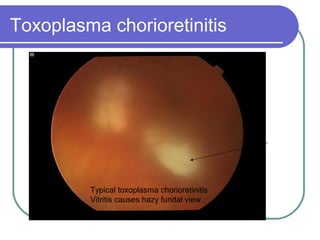
Toxoplasma chorioretinitis
Typical toxoplasma chorioretinitis
Vitritis causes hazy fundal view
Behcet’s disease
 Presumed autoimmune multisystem disease
 Rare in Ireland
 Commonest along silk route from Mediterranean to Far East
 Main clinical features
 Oral ulcers
 Genital ulcers
 Panuveitis and retinal vasculitis
 Acute anterior uveitis with hypopyon
 arthritis
 Poor prognosis without aggressive
immunosuppression
Sympathetic ophthalmia
 Rare disorder in which penetrating ocular
trauma leads granulomatous panuveitis in both
eyes
 Classic autoimmune disease
 Can occur anytime after the initial injury
 Managed with systemic steroids and
immunousuppression
Uveitis in children
 Toxocariasis
 caused by helminth toxocara canis
 acquired from contact with dog faeces
 Blinding panuveitis in children usually uniocular
 Juvenile idiopathic arthritis associated uveitis
 Seronegative for rheumatoid arthritis but commonly ANA
positive
 Deforming arthritis
 Asymptomatic until late in disease – screening important
 Poor prognosis in many
 Cataract, glaucoma, band keratopathy
 Toxoplasmosis
 Idiopathic intermediate uveitis

Uveitis

  • 1.
  • 2.
    UVEITIS Definition  Inflammation ofthe uveal tract and adjacent intraocular structures  Uveal tract consists of iris, ciliary body and choroid
  • 3.
    Uveitis classification Anatomical • Anterioruveitis (iritis) - inflammation of the iris • Intermediate uveitis - inflammation of the ciliary body, peripheral retina and vitreous base • Posterior uveitis - inflammation of the choroid and retina • Panuveitis - inflammation of the whole uveal tract
  • 4.
    Uveitis aetiology Autoimmune Infectious Neoplastic masqueradesyndrome (lymphoma) Traumatic/post-operative
  • 5.
    Autoimmune uveitis  Idiopathic Sympathetic ophthalmia • Associated with systemic disease • HLA-B27 associated • Psoriatic arthropathy,Crohns disease, ulcerative colitis, ankylosing spondylitis, Reiters syndrome • Sarcoidosis • Behcets disease • Juvenile idiopathic arthritis • Collagen vascular disease • Wegener’s granulomatosis, polyarteritis nodosa
  • 6.
    Infectious uveitis Bacteria  Syphilis Tuberculosis  Chronic post-operative endophthalmitis from propionobacterium acnes Viruses  Herpes simplex  Varicella zoster Protozoa  Toxoplasmosis  Toxocariasis Fungi  Candida
  • 7.
    Uveitis Acute or chronic Unilateralor bilateral In 50% of cases no cause is identified and it is presumed autoimmune
  • 8.
    Acute anterior uveitis Symptoms  Pain, redness, photophobia  Signs  Circumcorneal hyperaemia/injection  Miosis, posterior synechiae  Cells and flare in the anterior chamber  Keratic precipitates  Sometimes high intraocular pressure
  • 9.
    Acute anterior uveitis Conjunctivaland circumcorneal injection
  • 10.
    Acute anterior uveitis Irregularpupil with posterior synechiae
  • 11.
    Acute anterior uveitis Aqueousflare Inflammatory cells in the anterior chamber
  • 12.
  • 13.
    Intermediate uveitis  Symptoms Floaters  Gradual blurring of vision  painless  Signs  Inflammatory cells and opacities in the vitreous  Cystoid macular oedema  Peripheral retinal vasculitis
  • 14.
    Posterior and pan-uveitis Symptoms  Acute or gradual blurring of vision  Floaters  Sometimes pain  Signs variable  Choroiditis  Optic disc swelling  Retinal vasculitis  Vitritis  Anterior chamber inflammation in panuveitis
  • 15.
  • 16.
    Assessing patients withuveitis 1. History and eye examination to classify according to anatomical diagnosis 2. Past medical history, review of systems, general medical examination to form differential diagnosis 3. Relevant investigations
  • 17.
    Investigating uveitis  Basedon  Anatomical diagnosis  Clinical characteristics  Patient age and demographics  Onset of disease  Past medical history  Full review of systems considering known systemic disease associations  Differential diagnosis following history and clinical examination  Basic investigations performed on most patients  FBC, ESR, CRP  Syphilis serology  Chest x-ray (to detect sarcoidosis)  Others depend on differential diagnosis, e.g.  TB – mantoux, CXR  Sardoidosis – CXR, serum ACE, serum calcium  Ankylosing spondylitis – sacoriliac joint x-ray, HLA B27  Wegeners granulomatosis – ANCA, CXR, CT of sinuses, renal investigations
  • 18.
    Treatment of acuteanterior uveitis Topical corticosteroids – intensive at first Dilating drops to prevent formation of posterior synechiae and relieve pain Cyclopentolate, atropine Antiglaucoma medications if necessary Subconjunctival steroid injection if fails to respond to drops
  • 19.
    Treatment of posterioruveitis Corticosteroids Periocular injections Oral Intraveous methylprednisolone in acute severe cases Systemic immunosuppression Cyclosporin, tacrolimus, mycophenolote mofetil, azathioprine, methotrexate Need close monitoring for side effects
  • 20.
    Complications of uveitis Cataract Glaucoma Permanentvisual loss Optic neuropathy Macular damage from chronic oedema Retinal detachment
  • 21.
    Ankylosing spondylitis More commonin men Axial skeletal and sacroiliac joints affected Gradual flexion deformity due to bony fusion HLA B27 + Recurrent anterior uveitis
  • 22.
    Fuch’s heterochromic cyclitis Enigmatic disorder of unknown aetiology  Features  Unilateral  Painless chronic anterior uveitis  Iris heterochromia  No posterior synechiae  Cataract formation  Glaucoma  Vitreous floaters  Good prognosis
  • 23.
    Sarcoid uveitis  Idiopathicmultisystem disorder  Clinical features  Lungs  Hilar lymphadenopathy in 90%  Parenchymal infiltrates, fibrosis  Skin  Granulomatous painful lesions (erythema nodosum)  Arthropathy  Hypercalcemia and elevated serum ace  Anterior, posterior or pan-uveitis
  • 24.
    Toxoplasma chorioretinitis  Causedby a protozoan called toxoplasma gondi  Infection acquired by ingestion of undercooked meat or contact with cat faeces  Can be transmitted across placenta to fetus and cause congenital toxoplasmosis  Cat is primary host, humans and livestock are secondary hosts  Clinical features  Vitreous inflammation, focal chorioretinitis  Treatment  Pyrimethamine plus sulfadiazine or  Clindamycin  Oral corticosteroids  Topical corticosteroids
  • 25.
    Toxoplasma chorioretinitis Typical toxoplasmachorioretinitis Vitritis causes hazy fundal view
  • 26.
    Behcet’s disease  Presumedautoimmune multisystem disease  Rare in Ireland  Commonest along silk route from Mediterranean to Far East  Main clinical features  Oral ulcers  Genital ulcers  Panuveitis and retinal vasculitis  Acute anterior uveitis with hypopyon  arthritis  Poor prognosis without aggressive immunosuppression
  • 27.
    Sympathetic ophthalmia  Raredisorder in which penetrating ocular trauma leads granulomatous panuveitis in both eyes  Classic autoimmune disease  Can occur anytime after the initial injury  Managed with systemic steroids and immunousuppression
  • 28.
    Uveitis in children Toxocariasis  caused by helminth toxocara canis  acquired from contact with dog faeces  Blinding panuveitis in children usually uniocular  Juvenile idiopathic arthritis associated uveitis  Seronegative for rheumatoid arthritis but commonly ANA positive  Deforming arthritis  Asymptomatic until late in disease – screening important  Poor prognosis in many  Cataract, glaucoma, band keratopathy  Toxoplasmosis  Idiopathic intermediate uveitis