Jenan Muhammed
ESIC &PGIMSR
 Definition
 Epidemiology
 Etiology
 Pathology
 Types
 Clinical picture
 Differential diagnosis
 Management
 Episcleritis is a benign inflammation of deep
subconjuctival connective tissue in including
superficial scleral lamellae.
 Frequently affects both eyes
 Age- seen in young adults
 Sex- twice common in females
 Idiopathic
 Systemic disease- asso with Gout, Rosacea,
Psoriasis,CT tissue disordes – RA
 Hypersensitivity Rn- Endogenous tubercular or
staphylococcal toxin
 Infectious Episcleritis- HZV, Syphilis, Lyme
disease, tuberculosis
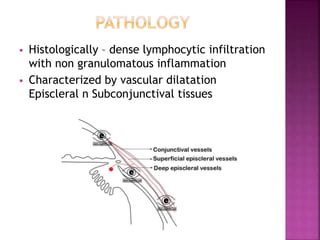
 Histologically – dense lymphocytic infiltration
with non granulomatous inflammation
 Characterized by vascular dilatation
Episcleral n Subconjunctival tissues
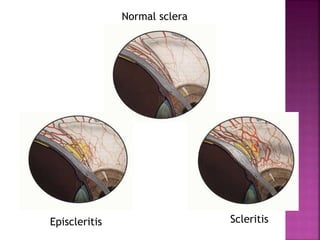
Normal sclera
Episcleritis Scleritis
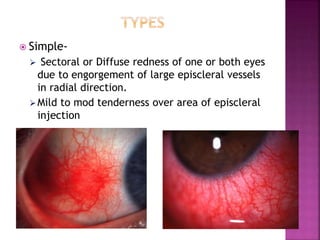
 Simple-
 Sectoral or Diffuse redness of one or both eyes
due to engorgement of large episcleral vessels
in radial direction.
Mild to mod tenderness over area of episcleral
injection
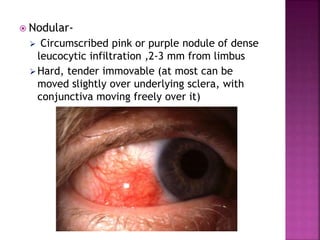
 Nodular-
 Circumscribed pink or purple nodule of dense
leucocytic infiltration ,2-3 mm from limbus
Hard, tender immovable (at most can be
moved slightly over underlying sclera, with
conjunctiva moving freely over it)
 Redness
 Little or no pain
 Ocular discomfort- gritty, foreign body,
burning
 Mild photophobia
 Lacrimation
 Sometimes severe neuralgia
 Mild- lubricants, topical NSAIDs
 Moderate to severe-
 Mild topical steroids- fluorometholone QID
 If unsuccessful – oral NSAIDs (ibuprofen 400
mg oral 3 or 4 times a day, Indomethacin 25
mg TID, aspirin)
Episcleritis

Episcleritis

  • 1.
  • 2.
     Definition  Epidemiology Etiology  Pathology  Types  Clinical picture  Differential diagnosis  Management
  • 3.
     Episcleritis isa benign inflammation of deep subconjuctival connective tissue in including superficial scleral lamellae.  Frequently affects both eyes
  • 4.
     Age- seenin young adults  Sex- twice common in females
  • 5.
     Idiopathic  Systemicdisease- asso with Gout, Rosacea, Psoriasis,CT tissue disordes – RA  Hypersensitivity Rn- Endogenous tubercular or staphylococcal toxin  Infectious Episcleritis- HZV, Syphilis, Lyme disease, tuberculosis
  • 6.
     Histologically –dense lymphocytic infiltration with non granulomatous inflammation  Characterized by vascular dilatation Episcleral n Subconjunctival tissues
  • 7.
  • 8.
     Simple-  Sectoralor Diffuse redness of one or both eyes due to engorgement of large episcleral vessels in radial direction. Mild to mod tenderness over area of episcleral injection
  • 9.
     Nodular-  Circumscribedpink or purple nodule of dense leucocytic infiltration ,2-3 mm from limbus Hard, tender immovable (at most can be moved slightly over underlying sclera, with conjunctiva moving freely over it)
  • 10.
     Redness  Littleor no pain  Ocular discomfort- gritty, foreign body, burning  Mild photophobia  Lacrimation  Sometimes severe neuralgia
  • 11.
     Mild- lubricants,topical NSAIDs  Moderate to severe-  Mild topical steroids- fluorometholone QID  If unsuccessful – oral NSAIDs (ibuprofen 400 mg oral 3 or 4 times a day, Indomethacin 25 mg TID, aspirin)