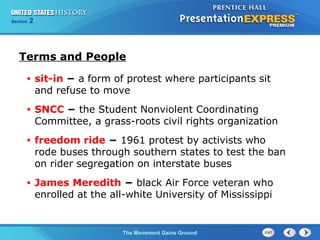
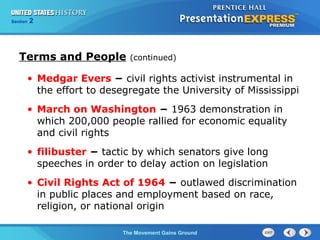
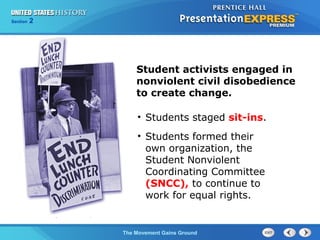
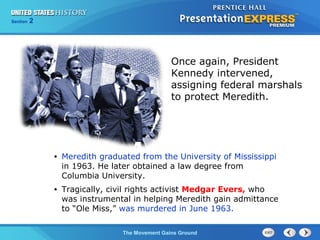
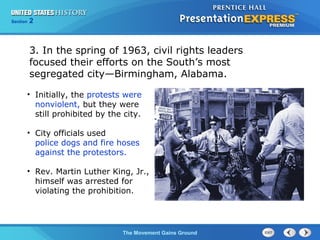
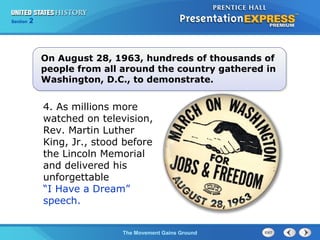
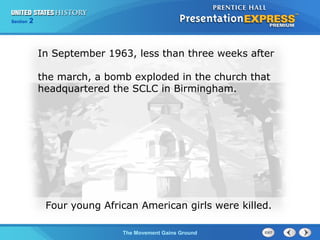
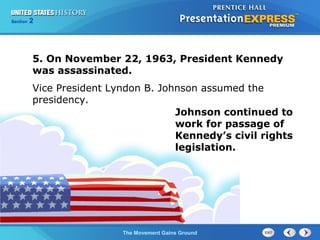
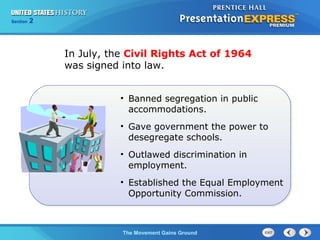
Student activists engaged in sit-ins and freedom rides to protest segregation, gaining the support of organizations like SNCC and attracting the opposition of segregationists. The violent protests in Birmingham and the March on Washington put pressure on Kennedy to propose civil rights legislation. The bill faced resistance through an 80-day filibuster, but passed after Johnson became president, and was signed in 1964 as the Civil Rights Act, banning segregation and discrimination.