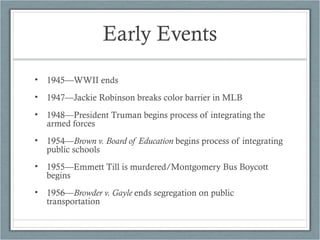
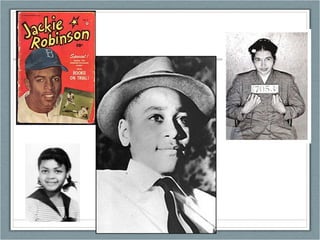
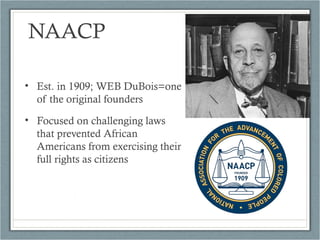
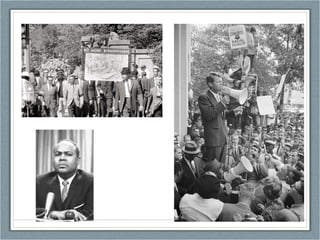
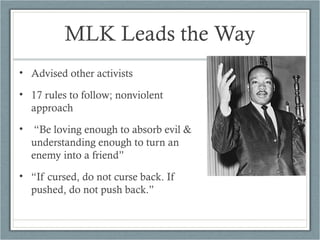
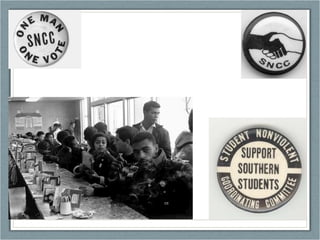
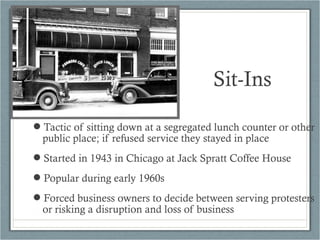
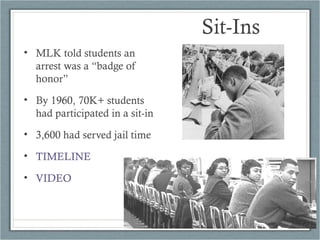
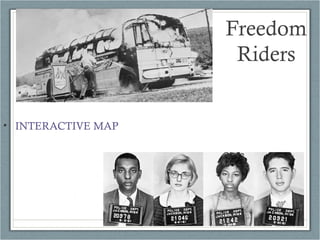
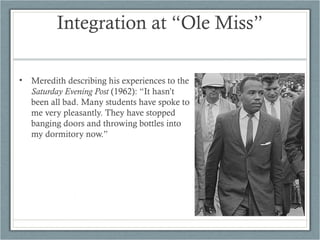
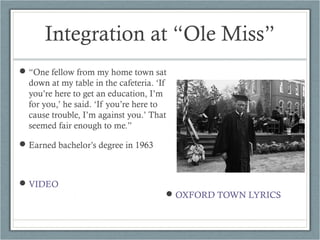
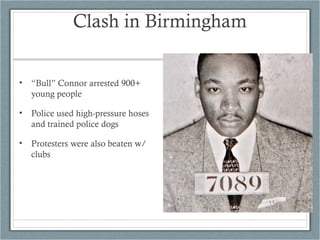
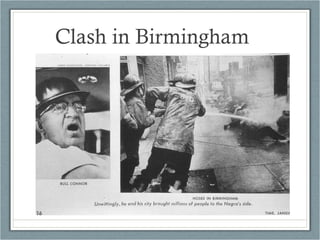
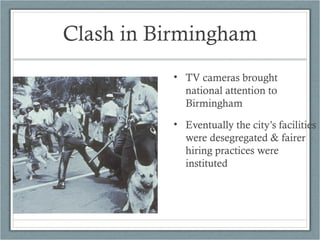
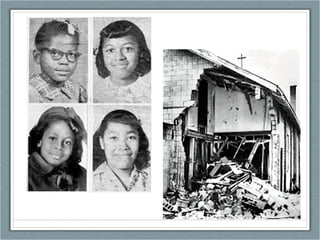
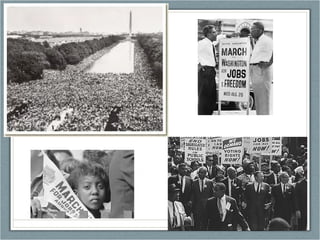
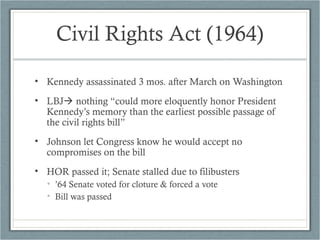
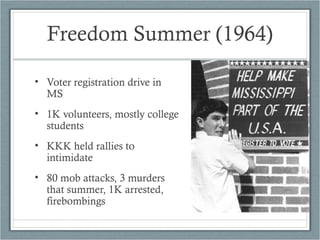
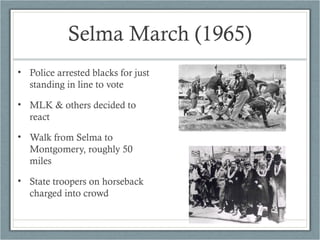
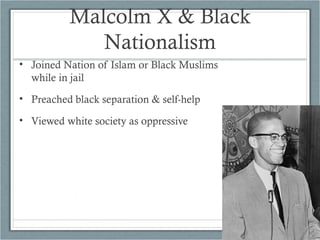
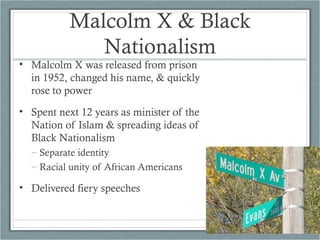
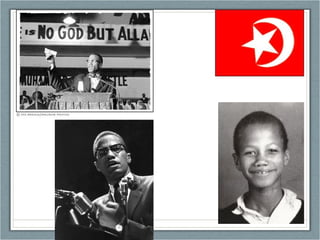
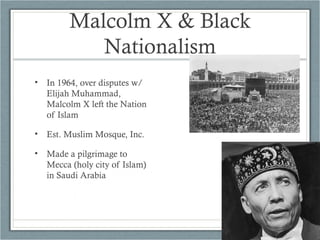
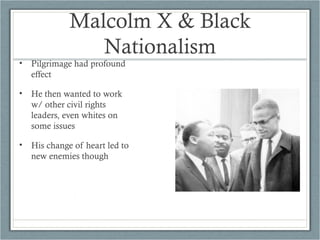
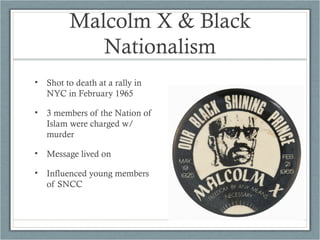
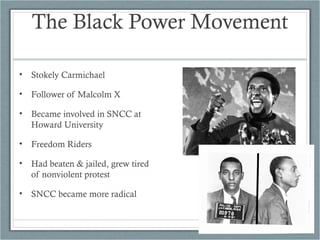
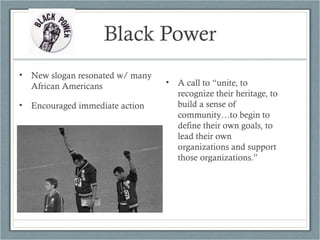
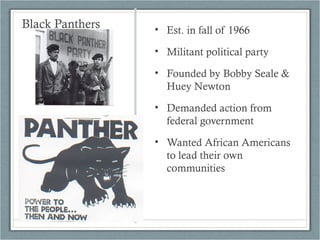
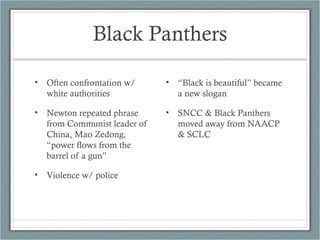
The Civil Rights Movement in the United States gained momentum in the post-World War II era. Key early events and court cases like Jackie Robinson breaking the MLB color barrier, Brown v. Board of Education, and the Montgomery Bus Boycott laid the groundwork. Grassroots organizations like the NAACP, CORE, SCLC, and SNCC employed tactics like sit-ins, freedom rides, and marches to challenge segregation and push for desegregation and voting rights. Figures like MLK and Malcolm X advocated for change through nonviolent and more radical approaches. Landmark legislation like the Civil Rights Act of 1964 and Voting Rights Act of 1965 were passed amid continuing protests, though tensions and divisions within