Section

2

Objectives
• Understand the course of the early years of
World War II in Europe.
• Describe Franklin Roosevelt’s foreign policy in
the mid-1930s and the great debate between
interventionists and isolationists.
• Explain how the United States became more
involved in the conflict.

The Cold War Begins to Involvement
From Isolation
Section

2

Terms and People
• blitzkrieg − lightning war
• Axis Powers − Germany, Italy, Japan, and other
nations that fought together during World War II
• Allies − Britain, France, the Soviet Union, the
United States, China, and other nations that fought
against the Axis Powers during World War II
• Winston Churchill − British prime minister during
World War II

The Cold War Begins to Involvement
From Isolation
Section

2

Terms and People

(continued)

•

Neutrality Act of 1939 − American law that
allowed nations at war to buy U.S. arms if they
paid cash and carried them away on their own
ships

•

Tripartite Pact − three-party agreement
establishing an alliance between Germany, Italy,
and Japan

•

Lend-Lease Act − American law that allowed
the U.S. to lend, lease, sell, or otherwise provide
aid to other nations if doing so helped in the
defense of the United States
The Cold War Begins to Involvement
From Isolation
Section

2

Terms and People
•

(continued)

Atlantic Charter − document signed by
Roosevelt and Churchill that endorsed national
self-determination and an international system of
general security

The Cold War Begins to Involvement
From Isolation
Section

2

How did Americans react to events in
Europe and Asia in the early years of
World War II?
1. Americans were shocked by Japanese
and German aggression.
Yet they remained deeply divided over
American involvement in another war—
especially as they fought the despair of the
Great Depression.

The Cold War Begins to Involvement
From Isolation
Section

2

2. Hopes for peace in Europe faded as it
became clear that efforts to appease Hitler had
failed.

• Hitler violated the Munich Pact, taking over
the remainder of Czechoslovakia
• Germany launched a series of attacks on its
neighbors marked by speed and massive
firepower—a blitzkrieg, or “lightning war.”

The Cold War Begins to Involvement
From Isolation
Section

2

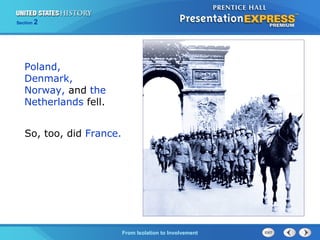
Poland,
Denmark,
Norway, and the
Netherlands fell.
So, too, did France.

The Cold War Begins to Involvement
From Isolation
Section

2

Hitler then turned his fury on Britain.

The Battle of
Britain was
waged in the
air as pilots
fought for
control of the
skies.

The British hid
in shelters
and darkened
homes as
bombs rained
down.

The Cold War Begins to Involvement
From Isolation

Despite
terrible
destruction,
the British
held on.
Section

2

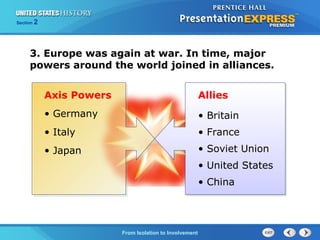
3. Europe was again at war. In time, major
powers around the world joined in alliances.
Axis Powers

Allies

• Germany

• Britain

• Italy

• France

• Japan

• Soviet Union
• United States
• China

The Cold War Begins to Involvement
From Isolation
Section

2

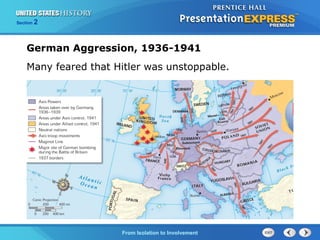
German Aggression, 1936-1941
Many feared that Hitler was unstoppable.

The Cold War Begins to Involvement
From Isolation
Section

2

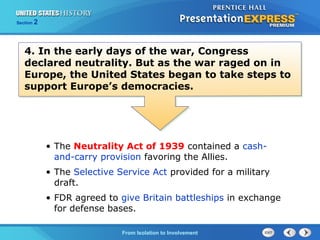
4. In the early days of the war, Congress
declared neutrality. But as the war raged on in
Europe, the United States began to take steps to
support Europe’s democracies.

• The Neutrality Act of 1939 contained a cashand-carry provision favoring the Allies.
• The Selective Service Act provided for a military
draft.
• FDR agreed to give Britain battleships in exchange
for defense bases.
The Cold War Begins to Involvement
From Isolation
Section

2

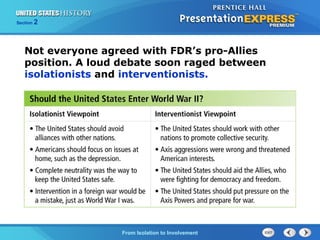
Not everyone agreed with FDR’s pro-Allies
position. A loud debate soon raged between
isolationists and interventionists.

The Cold War Begins to Involvement
From Isolation
Section

2

As conditions worsened overseas,
Roosevelt described what was at stake in
an address to Congress.

He highlighted
four freedoms
precious to
Americans.

• freedom of speech
• freedom of worship
• freedom from want
• freedom from fear

All of these freedoms, he argued, were
threatened by German and Japanese militarism.
The Cold War Begins to Involvement
From Isolation
Section

2

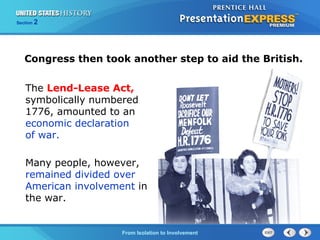
Congress then took another step to aid the British.
The Lend-Lease Act,
symbolically numbered
1776, amounted to an
economic declaration
of war.
Many people, however,
remained divided over
American involvement in
the war.

The Cold War Begins to Involvement
From Isolation
Section

2

5. In 1941, Roosevelt and British prime minister
Winston Churchill signed the Atlantic Charter,
deepening the alliance between the two nations.
German submarines began to fire on American ships
supporting the Allies.

Roosevelt ordered the navy to attack the U-boats
on sight.

War seemed inevitable.
The Cold War Begins to Involvement
From Isolation
Section

2

Section Review
QuickTake Quiz

Know It, Show It Quiz

The Cold War Begins to Involvement
From Isolation

United States History Ch. 14 Section 2 Notes

  • 1.
    Section 2 Objectives • Understand thecourse of the early years of World War II in Europe. • Describe Franklin Roosevelt’s foreign policy in the mid-1930s and the great debate between interventionists and isolationists. • Explain how the United States became more involved in the conflict. The Cold War Begins to Involvement From Isolation
  • 2.
    Section 2 Terms and People •blitzkrieg − lightning war • Axis Powers − Germany, Italy, Japan, and other nations that fought together during World War II • Allies − Britain, France, the Soviet Union, the United States, China, and other nations that fought against the Axis Powers during World War II • Winston Churchill − British prime minister during World War II The Cold War Begins to Involvement From Isolation
  • 3.
    Section 2 Terms and People (continued) • NeutralityAct of 1939 − American law that allowed nations at war to buy U.S. arms if they paid cash and carried them away on their own ships • Tripartite Pact − three-party agreement establishing an alliance between Germany, Italy, and Japan • Lend-Lease Act − American law that allowed the U.S. to lend, lease, sell, or otherwise provide aid to other nations if doing so helped in the defense of the United States The Cold War Begins to Involvement From Isolation
  • 4.
    Section 2 Terms and People • (continued) AtlanticCharter − document signed by Roosevelt and Churchill that endorsed national self-determination and an international system of general security The Cold War Begins to Involvement From Isolation
  • 5.
    Section 2 How did Americansreact to events in Europe and Asia in the early years of World War II? 1. Americans were shocked by Japanese and German aggression. Yet they remained deeply divided over American involvement in another war— especially as they fought the despair of the Great Depression. The Cold War Begins to Involvement From Isolation
  • 6.
    Section 2 2. Hopes forpeace in Europe faded as it became clear that efforts to appease Hitler had failed. • Hitler violated the Munich Pact, taking over the remainder of Czechoslovakia • Germany launched a series of attacks on its neighbors marked by speed and massive firepower—a blitzkrieg, or “lightning war.” The Cold War Begins to Involvement From Isolation
  • 7.
    Section 2 Poland, Denmark, Norway, and the Netherlandsfell. So, too, did France. The Cold War Begins to Involvement From Isolation
  • 8.
    Section 2 Hitler then turnedhis fury on Britain. The Battle of Britain was waged in the air as pilots fought for control of the skies. The British hid in shelters and darkened homes as bombs rained down. The Cold War Begins to Involvement From Isolation Despite terrible destruction, the British held on.
  • 9.
    Section 2 3. Europe wasagain at war. In time, major powers around the world joined in alliances. Axis Powers Allies • Germany • Britain • Italy • France • Japan • Soviet Union • United States • China The Cold War Begins to Involvement From Isolation
  • 10.
    Section 2 German Aggression, 1936-1941 Manyfeared that Hitler was unstoppable. The Cold War Begins to Involvement From Isolation
  • 11.
    Section 2 4. In theearly days of the war, Congress declared neutrality. But as the war raged on in Europe, the United States began to take steps to support Europe’s democracies. • The Neutrality Act of 1939 contained a cashand-carry provision favoring the Allies. • The Selective Service Act provided for a military draft. • FDR agreed to give Britain battleships in exchange for defense bases. The Cold War Begins to Involvement From Isolation
  • 12.
    Section 2 Not everyone agreedwith FDR’s pro-Allies position. A loud debate soon raged between isolationists and interventionists. The Cold War Begins to Involvement From Isolation
  • 13.
    Section 2 As conditions worsenedoverseas, Roosevelt described what was at stake in an address to Congress. He highlighted four freedoms precious to Americans. • freedom of speech • freedom of worship • freedom from want • freedom from fear All of these freedoms, he argued, were threatened by German and Japanese militarism. The Cold War Begins to Involvement From Isolation
  • 14.
    Section 2 Congress then tookanother step to aid the British. The Lend-Lease Act, symbolically numbered 1776, amounted to an economic declaration of war. Many people, however, remained divided over American involvement in the war. The Cold War Begins to Involvement From Isolation
  • 15.
    Section 2 5. In 1941,Roosevelt and British prime minister Winston Churchill signed the Atlantic Charter, deepening the alliance between the two nations. German submarines began to fire on American ships supporting the Allies. Roosevelt ordered the navy to attack the U-boats on sight. War seemed inevitable. The Cold War Begins to Involvement From Isolation
  • 16.
    Section 2 Section Review QuickTake Quiz KnowIt, Show It Quiz The Cold War Begins to Involvement From Isolation