Section

2

Objectives
• Explain how World War II increased
opportunities for women and minorities.
• Analyze the effects of the war on civil
liberties for Japanese Americans and others.
• Examine how the need to support the war
effort changed American lives.

The Cold War Begins Front
The Home
Section

2

Terms and People
•

A. Philip Randolph − African American labor
leader

•

Executive Order 8802 − measure that assured
fair hiring practices in jobs funded with
government money

•

bracero program − program in which laborers
were brought from Mexico to work on American
farms

•

internment − temporary imprisonment

The Cold War Begins Front
The Home
Section

2

Terms and People

(continued)

•

Korematsu v. United States − Supreme Court
case that upheld the government’s wartime
internment policy

•

442nd Regimental Combat Team − Japanese
American combat team that became the most
decorated military unit in American history

•

rationing − system that limits the amount of
certain goods people can buy

•

OWI − Office of War Information, encouraged
support of the war effort

The Cold War Begins Front
The Home
Section

2

How did the war change America at
home?
1. The war stirred patriotism even as it
brought out long-simmering fears and
tensions.
Americans from different backgrounds
living in different places across the country
made huge sacrifices to support the war
effort.

The Cold War Begins Front
The Home
Section

2

Wartime America saw industries gearing up
to produce military goods.

With men joining
the army in huge
numbers, women
stepped into jobs
in businesses and
factories.

The Cold War Begins Front
The Home

Unlike the past,
• Women worked in
both light and
heavy industries.
• Married and older
women worked.
Section

2

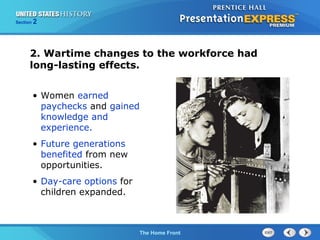
2. Wartime changes to the workforce had
long-lasting effects.
• Women earned
paychecks and gained
knowledge and
experience.
• Future generations
benefited from new
opportunities.
• Day-care options for
children expanded.

The Cold War Begins Front
The Home
Section

2

African Americans hoped for similar job
opportunities, but were disappointed.

Leaders called for a
“Double V” campaign.

Victory against fascism
abroad
Victory against
discrimination at home

3. Yet many jobs, including those in the
government and the military, remained
segregated.
The Cold War Begins Front
The Home
Section

2

Labor leader A. Phillip Randolph urged Roosevelt
to end discrimination in government-funded
training, employment, and military service.

Under pressure, FDR
issued Executive
Order 8802.

Assured fair hiring
practices in
government jobs

4. Such victories set the stage for the civil rights
struggles to come.
The Cold War Begins Front
The Home
Section

2

Migration patterns changed as people
moved across the country—especially to
cities—seeking jobs in wartime industries.

Bracero program
• To alleviate the loss of workers in rural areas,
Mexican laborers were brought in to work on
American farms.
• Agricultural industries would continue to hire
migratory labor in the West for years to come.
The Cold War Begins Front
The Home
Section

2

Population changes and racial tensions at
times triggered violence.

• Urban riots
• Zoot suit attacks
Despite this, African Americans and Mexican
Americans continued to contribute to the war
effort.

The Cold War Begins Front
The Home
Section

2

Wartime fears also led to discrimination against
Americans from Germany, Italy, and Japan.

In time, suspicion focused on Japanese Americans.
They were targeted for a combination of reasons.
• Racism
• Lack of political clout
• Their fewer numbers and relative isolation

The Cold War Begins Front
The Home
Section

2

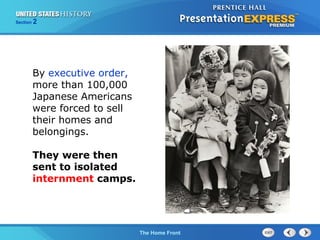
By executive order,
more than 100,000
Japanese Americans
were forced to sell
their homes and
belongings.
They were then
sent to isolated
internment camps.

The Cold War Begins Front
The Home
Section

2

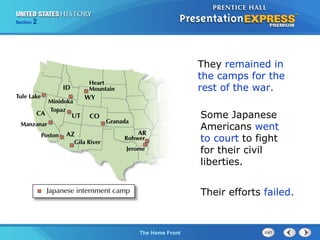
They remained in
the camps for the
rest of the war.
Some Japanese
Americans went
to court to fight
for their civil
liberties.
Their efforts failed.

The Cold War Begins Front
The Home
Section

2

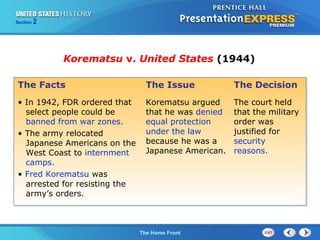
Korematsu v. United States (1944)
The Facts

The Issue

The Decision

• In 1942, FDR ordered that
select people could be
banned from war zones.
• The army relocated
Japanese Americans on the
West Coast to internment
camps.
• Fred Korematsu was
arrested for resisting the
army’s orders.

Korematsu argued
that he was denied
equal protection
under the law
because he was a
Japanese American.

The court held
that the military
order was
justified for
security
reasons.

The Cold War Begins Front
The Home
Section

2

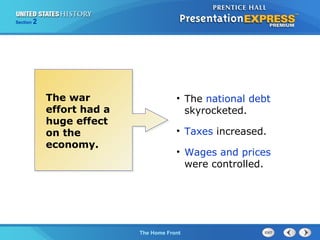
The war
effort had a
huge effect
on the
economy.

• The national debt
skyrocketed.
• Taxes increased.
• Wages and prices
were controlled.

The Cold War Begins Front
The Home
Section

2

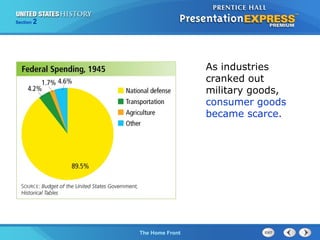
As industries
cranked out
military goods,
consumer goods
became scarce.

The Cold War Begins Front
The Home
Section

2

Americans made many sacrifices,
looking toward victory.

5. Americans
were urged to
do all they could
to support the
war effort, and
they responded
to the call.

• Shopped with
ration books

• Bought war bonds
• Planted victory gardens
• Collected scrap metal
and other materials

The Cold War Begins Front
The Home
Section

2

Section Review
QuickTake Quiz

Know It, Show It Quiz

The Cold War Begins Front
The Home

United States History Ch. 15 Section 2 Notes

  • 1.
    Section 2 Objectives • Explain howWorld War II increased opportunities for women and minorities. • Analyze the effects of the war on civil liberties for Japanese Americans and others. • Examine how the need to support the war effort changed American lives. The Cold War Begins Front The Home
  • 2.
    Section 2 Terms and People • A.Philip Randolph − African American labor leader • Executive Order 8802 − measure that assured fair hiring practices in jobs funded with government money • bracero program − program in which laborers were brought from Mexico to work on American farms • internment − temporary imprisonment The Cold War Begins Front The Home
  • 3.
    Section 2 Terms and People (continued) • Korematsuv. United States − Supreme Court case that upheld the government’s wartime internment policy • 442nd Regimental Combat Team − Japanese American combat team that became the most decorated military unit in American history • rationing − system that limits the amount of certain goods people can buy • OWI − Office of War Information, encouraged support of the war effort The Cold War Begins Front The Home
  • 4.
    Section 2 How did thewar change America at home? 1. The war stirred patriotism even as it brought out long-simmering fears and tensions. Americans from different backgrounds living in different places across the country made huge sacrifices to support the war effort. The Cold War Begins Front The Home
  • 5.
    Section 2 Wartime America sawindustries gearing up to produce military goods. With men joining the army in huge numbers, women stepped into jobs in businesses and factories. The Cold War Begins Front The Home Unlike the past, • Women worked in both light and heavy industries. • Married and older women worked.
  • 6.
    Section 2 2. Wartime changesto the workforce had long-lasting effects. • Women earned paychecks and gained knowledge and experience. • Future generations benefited from new opportunities. • Day-care options for children expanded. The Cold War Begins Front The Home
  • 7.
    Section 2 African Americans hopedfor similar job opportunities, but were disappointed. Leaders called for a “Double V” campaign. Victory against fascism abroad Victory against discrimination at home 3. Yet many jobs, including those in the government and the military, remained segregated. The Cold War Begins Front The Home
  • 8.
    Section 2 Labor leader A.Phillip Randolph urged Roosevelt to end discrimination in government-funded training, employment, and military service. Under pressure, FDR issued Executive Order 8802. Assured fair hiring practices in government jobs 4. Such victories set the stage for the civil rights struggles to come. The Cold War Begins Front The Home
  • 9.
    Section 2 Migration patterns changedas people moved across the country—especially to cities—seeking jobs in wartime industries. Bracero program • To alleviate the loss of workers in rural areas, Mexican laborers were brought in to work on American farms. • Agricultural industries would continue to hire migratory labor in the West for years to come. The Cold War Begins Front The Home
  • 10.
    Section 2 Population changes andracial tensions at times triggered violence. • Urban riots • Zoot suit attacks Despite this, African Americans and Mexican Americans continued to contribute to the war effort. The Cold War Begins Front The Home
  • 11.
    Section 2 Wartime fears alsoled to discrimination against Americans from Germany, Italy, and Japan. In time, suspicion focused on Japanese Americans. They were targeted for a combination of reasons. • Racism • Lack of political clout • Their fewer numbers and relative isolation The Cold War Begins Front The Home
  • 12.
    Section 2 By executive order, morethan 100,000 Japanese Americans were forced to sell their homes and belongings. They were then sent to isolated internment camps. The Cold War Begins Front The Home
  • 13.
    Section 2 They remained in thecamps for the rest of the war. Some Japanese Americans went to court to fight for their civil liberties. Their efforts failed. The Cold War Begins Front The Home
  • 14.
    Section 2 Korematsu v. UnitedStates (1944) The Facts The Issue The Decision • In 1942, FDR ordered that select people could be banned from war zones. • The army relocated Japanese Americans on the West Coast to internment camps. • Fred Korematsu was arrested for resisting the army’s orders. Korematsu argued that he was denied equal protection under the law because he was a Japanese American. The court held that the military order was justified for security reasons. The Cold War Begins Front The Home
  • 15.
    Section 2 The war effort hada huge effect on the economy. • The national debt skyrocketed. • Taxes increased. • Wages and prices were controlled. The Cold War Begins Front The Home
  • 16.
    Section 2 As industries cranked out militarygoods, consumer goods became scarce. The Cold War Begins Front The Home
  • 17.
    Section 2 Americans made manysacrifices, looking toward victory. 5. Americans were urged to do all they could to support the war effort, and they responded to the call. • Shopped with ration books • Bought war bonds • Planted victory gardens • Collected scrap metal and other materials The Cold War Begins Front The Home
  • 18.
    Section 2 Section Review QuickTake Quiz KnowIt, Show It Quiz The Cold War Begins Front The Home