325 Section 1
22 Section 3

Section
Chapter
Chapter

Objectives
• Describe how the New Deal affected different
groups in American society.
• Analyze how the New Deal changed the
shape of American party politics.
• Discuss the impact of Franklin D. Roosevelt
on the presidency.

EffectsBegins
of the
The Cold Effectsof the New Deal
The Cold War Begins New Deal
Section

3

Terms and People
●

Black Cabinet – African American leaders who
served as unofficial advisers to FDR

●

Mary McLeod Bethune – educator and member
of FDR’s Black Cabinet

●

Indian New Deal – program that gave Native
Americans economic assistance and greater
control over their own affairs

●

New Deal coalition – diverse group of southern
whites, northern blue-collar workers, midwestern
farmers, and African Americans that united behind
FDR and the New Deal
The ColdEffects of the New Deal
War Begins
Section

3

Terms and People
●

(continued)

welfare state – government that assumes
responsibility for providing for the welfare of
children and the poor, elderly, sick, disabled, and
unemployed

The ColdEffects of the New Deal
War Begins
Section

3

How did the New Deal change the social,
economic, and political landscape of the
United States for future generations?

1. The New Deal affected people of many
different backgrounds and ways of life.
It also brought fundamental changes to the role
of the federal government.

The ColdEffects of the New Deal
War Begins
Section

3

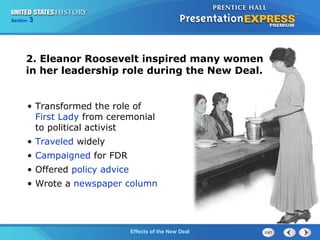
2. Eleanor Roosevelt inspired many women
in her leadership role during the New Deal.
• Transformed the role of
First Lady from ceremonial
to political activist
• Traveled widely
• Campaigned for FDR
• Offered policy advice
• Wrote a newspaper column

The ColdEffects of the New Deal
War Begins
Section

3

Other women also played important roles in the
administration, such as Secretary of Labor
Frances Perkins, the first female Cabinet member.

However, the
New Deal did
not fight to
end gender
discrimination
in the
workplace.

• The WPA and other
agencies made an
effort to employ men
first.
• Women could not work
for the CCC.

The ColdEffects of the New Deal
War Begins
Section

3

African Americans
were hit
especially hard by
the depression.

• 3. The unemployment
rate for African
Americans was nearly
50%.
• Many people urged FDR
to help end racial
discrimination.

Roosevelt asked advice of members of his Black
Cabinet, such as Mary McLeod Bethune.

The ColdEffects of the New Deal
War Begins
Section

3

But he did not always listen. FDR refused to support
an antilynching law, fearing political fallout.

Some New Deal
measures
unintentionally
hurt African
Americans.

• Farm subsidies led
landowners to evict
sharecroppers.
• African Americans often did
not receive equal wages.
• Domestic and farm workers
were exempted from New
Deal programs.

The ColdEffects of the New Deal
War Begins
Section

3

The New Deal’s Commissioner of Indian
Affairs, John Collier, tried to improve
living conditions for Native Americans.

The Bureau of
Indian Affairs
encouraged native
religions,
languages, and
customs.

The ColdEffects of the New Deal
War Begins

The Indian New
Deal:
• Provided funds to
build schools and
hospitals
• Created an Indian
Civilian Conservation
Corps
Section

3

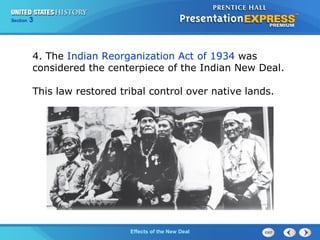
4. The Indian Reorganization Act of 1934 was
considered the centerpiece of the Indian New Deal.
This law restored tribal control over native lands.

The ColdEffects of the New Deal
War Begins
Section

3

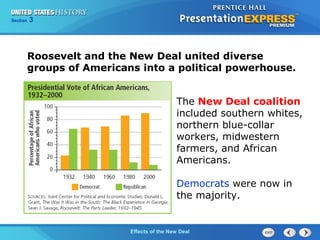
Roosevelt and the New Deal united diverse
groups of Americans into a political powerhouse.
The New Deal coalition
included southern whites,
northern blue-collar
workers, midwestern
farmers, and African
Americans.
Democrats were now in
the majority.

The ColdEffects of the New Deal
War Begins
Section

3

Roosevelt’s New Deal programs also helped
unify a struggling nation.

• Social and ethnic divisions diminished.
• Immigrant communities gained a greater
sense of belonging.
• Programs such as the WPA and CCC allowed
people of different backgrounds to get to
know one another.

The ColdEffects of the New Deal
War Begins
Section

3

With the New Deal, FDR broke from the
tradition of laissez-faire and greatly
expanded the role of government.
New Deal
measures
strengthened
capitalism and
encouraged the
post-WWII
economic
boom.

• Restored trust in the
banks and the stock
market
• Increased homeownership
• Protected workers
• Helped modernize rural
America

The ColdEffects of the New Deal
War Begins
Section

3

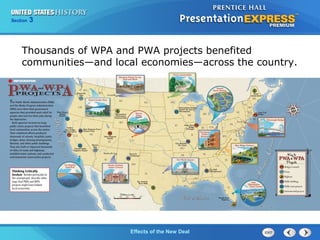
Thousands of WPA and PWA projects benefited
communities—and local economies—across the country.

The ColdEffects of the New Deal
War Begins
Section

3

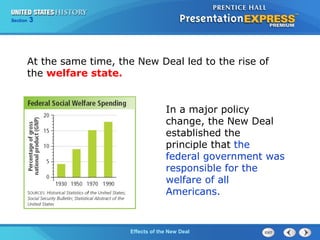
At the same time, the New Deal led to the rise of
the welfare state.
In a major policy
change, the New Deal
established the
principle that the
federal government was
responsible for the
welfare of all
Americans.

The ColdEffects of the New Deal
War Begins
Section

3

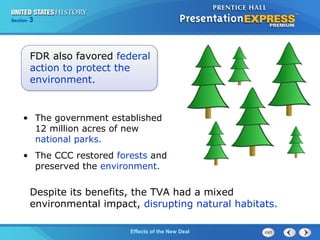
FDR also favored federal
action to protect the
environment.

• The government established
12 million acres of new
national parks.
• The CCC restored forests and
preserved the environment.

Despite its benefits, the TVA had a mixed
environmental impact, disrupting natural habitats.
The ColdEffects of the New Deal
War Begins
Section

3

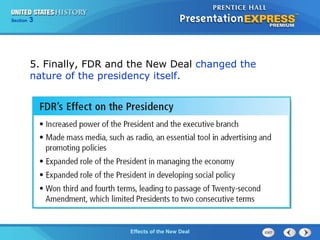
5. Finally, FDR and the New Deal changed the
nature of the presidency itself.

The ColdEffects of the New Deal
War Begins
Section

3

Section Review
QuickTake Quiz

Know It, Show It Quiz

The ColdEffects of the New Deal
War Begins

United States History Ch. 13 Section 3 Notes

  • 1.
    325 Section 1 22Section 3 Section Chapter Chapter Objectives • Describe how the New Deal affected different groups in American society. • Analyze how the New Deal changed the shape of American party politics. • Discuss the impact of Franklin D. Roosevelt on the presidency. EffectsBegins of the The Cold Effectsof the New Deal The Cold War Begins New Deal
  • 2.
    Section 3 Terms and People ● BlackCabinet – African American leaders who served as unofficial advisers to FDR ● Mary McLeod Bethune – educator and member of FDR’s Black Cabinet ● Indian New Deal – program that gave Native Americans economic assistance and greater control over their own affairs ● New Deal coalition – diverse group of southern whites, northern blue-collar workers, midwestern farmers, and African Americans that united behind FDR and the New Deal The ColdEffects of the New Deal War Begins
  • 3.
    Section 3 Terms and People ● (continued) welfarestate – government that assumes responsibility for providing for the welfare of children and the poor, elderly, sick, disabled, and unemployed The ColdEffects of the New Deal War Begins
  • 4.
    Section 3 How did theNew Deal change the social, economic, and political landscape of the United States for future generations? 1. The New Deal affected people of many different backgrounds and ways of life. It also brought fundamental changes to the role of the federal government. The ColdEffects of the New Deal War Begins
  • 5.
    Section 3 2. Eleanor Rooseveltinspired many women in her leadership role during the New Deal. • Transformed the role of First Lady from ceremonial to political activist • Traveled widely • Campaigned for FDR • Offered policy advice • Wrote a newspaper column The ColdEffects of the New Deal War Begins
  • 6.
    Section 3 Other women alsoplayed important roles in the administration, such as Secretary of Labor Frances Perkins, the first female Cabinet member. However, the New Deal did not fight to end gender discrimination in the workplace. • The WPA and other agencies made an effort to employ men first. • Women could not work for the CCC. The ColdEffects of the New Deal War Begins
  • 7.
    Section 3 African Americans were hit especiallyhard by the depression. • 3. The unemployment rate for African Americans was nearly 50%. • Many people urged FDR to help end racial discrimination. Roosevelt asked advice of members of his Black Cabinet, such as Mary McLeod Bethune. The ColdEffects of the New Deal War Begins
  • 8.
    Section 3 But he didnot always listen. FDR refused to support an antilynching law, fearing political fallout. Some New Deal measures unintentionally hurt African Americans. • Farm subsidies led landowners to evict sharecroppers. • African Americans often did not receive equal wages. • Domestic and farm workers were exempted from New Deal programs. The ColdEffects of the New Deal War Begins
  • 9.
    Section 3 The New Deal’sCommissioner of Indian Affairs, John Collier, tried to improve living conditions for Native Americans. The Bureau of Indian Affairs encouraged native religions, languages, and customs. The ColdEffects of the New Deal War Begins The Indian New Deal: • Provided funds to build schools and hospitals • Created an Indian Civilian Conservation Corps
  • 10.
    Section 3 4. The IndianReorganization Act of 1934 was considered the centerpiece of the Indian New Deal. This law restored tribal control over native lands. The ColdEffects of the New Deal War Begins
  • 11.
    Section 3 Roosevelt and theNew Deal united diverse groups of Americans into a political powerhouse. The New Deal coalition included southern whites, northern blue-collar workers, midwestern farmers, and African Americans. Democrats were now in the majority. The ColdEffects of the New Deal War Begins
  • 12.
    Section 3 Roosevelt’s New Dealprograms also helped unify a struggling nation. • Social and ethnic divisions diminished. • Immigrant communities gained a greater sense of belonging. • Programs such as the WPA and CCC allowed people of different backgrounds to get to know one another. The ColdEffects of the New Deal War Begins
  • 13.
    Section 3 With the NewDeal, FDR broke from the tradition of laissez-faire and greatly expanded the role of government. New Deal measures strengthened capitalism and encouraged the post-WWII economic boom. • Restored trust in the banks and the stock market • Increased homeownership • Protected workers • Helped modernize rural America The ColdEffects of the New Deal War Begins
  • 14.
    Section 3 Thousands of WPAand PWA projects benefited communities—and local economies—across the country. The ColdEffects of the New Deal War Begins
  • 15.
    Section 3 At the sametime, the New Deal led to the rise of the welfare state. In a major policy change, the New Deal established the principle that the federal government was responsible for the welfare of all Americans. The ColdEffects of the New Deal War Begins
  • 16.
    Section 3 FDR also favoredfederal action to protect the environment. • The government established 12 million acres of new national parks. • The CCC restored forests and preserved the environment. Despite its benefits, the TVA had a mixed environmental impact, disrupting natural habitats. The ColdEffects of the New Deal War Begins
  • 17.
    Section 3 5. Finally, FDRand the New Deal changed the nature of the presidency itself. The ColdEffects of the New Deal War Begins
  • 18.
    Section 3 Section Review QuickTake Quiz KnowIt, Show It Quiz The ColdEffects of the New Deal War Begins