TrypanosomesTrypanosomes
TrypanosomiasisTrypanosomiasis
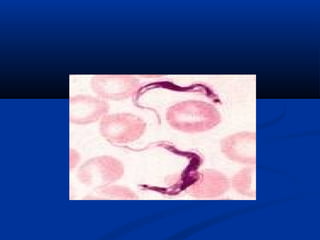
Is a disease caused by a protozoan parasiticIs a disease caused by a protozoan parasitic
disease transmitted by haemo-flagellates of thedisease transmitted by haemo-flagellates of the
genus Trypanosomegenus Trypanosome
African Sleeping SicknessAfrican Sleeping Sickness
Chagas diseaseChagas disease
A blood sucking insect constitute theA blood sucking insect constitute the
intermediate Host and Vectorintermediate Host and Vector
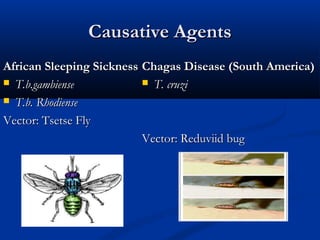
Causative AgentsCausative Agents
African Sleeping SicknessAfrican Sleeping Sickness
 T.b.gambienseT.b.gambiense
 T.b. RhodienseT.b. Rhodiense
Vector: Tsetse FlyVector: Tsetse Fly
Chagas Disease (South America)Chagas Disease (South America)
 T. cruziT. cruzi
Vector: Reduviid bugVector: Reduviid bug
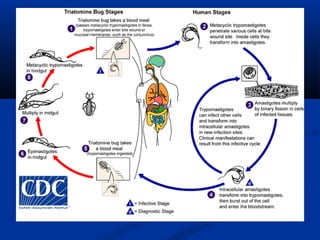
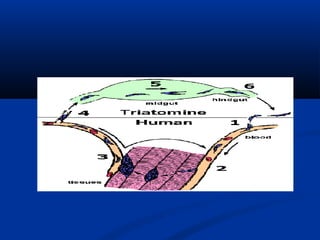
TransmissionTransmission
 T.gambiense and T. rhodesienseT.gambiense and T. rhodesiense
(Inoculative transmission):(Inoculative transmission):
 The trypanosomes migrate to the mouth parts of theThe trypanosomes migrate to the mouth parts of the
vectors so that infection is transmitted by their bite.vectors so that infection is transmitted by their bite.
 T.cruzi:T.cruzi:
 The trypanosomes migrate to the hind and areThe trypanosomes migrate to the hind and are
passed in faeces.passed in faeces.
African TrypanosomoiasisAfrican Trypanosomoiasis
Clinical FeaturesClinical Features
AcuteAcute
 Intermittent feverIntermittent fever
 ChillsChills
 HeadacheHeadache
 LymphadenopathyLymphadenopathy
(posterior Cervical)(posterior Cervical)
ChronicChronic
 Increasing headacheIncreasing headache
 Mental dullnessMental dullness
 ApathyApathy
 SleepinessSleepiness
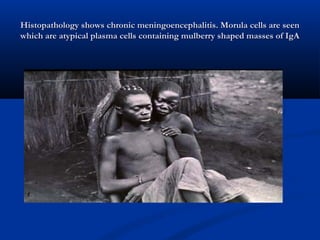
Histopathology shows chronic meningoencephalitis. Morula cells are seenHistopathology shows chronic meningoencephalitis. Morula cells are seen
which are atypical plasma cells containing mulberry shaped masses of IgAwhich are atypical plasma cells containing mulberry shaped masses of IgA
American TrypanosomiasisAmerican Trypanosomiasis
 Also called Chaga’s DiseaseAlso called Chaga’s Disease
 While investigating malaria Carlos ChagasWhile investigating malaria Carlos Chagas
accidentally found the trypanosome in theaccidentally found the trypanosome in the
intestine of a bug, in Brazil in 1909.intestine of a bug, in Brazil in 1909.
 Chags named the parasite T. cruzi after hisChags named the parasite T. cruzi after his
mentor Oswaldo Cruzmentor Oswaldo Cruz
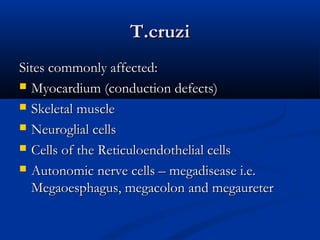
T.cruziT.cruzi
Sites commonly affected:Sites commonly affected:
 Myocardium (conduction defects)Myocardium (conduction defects)
 Skeletal muscleSkeletal muscle
 Neuroglial cellsNeuroglial cells
 Cells of the Reticuloendothelial cellsCells of the Reticuloendothelial cells
 Autonomic nerve cells – megadisease i.e.Autonomic nerve cells – megadisease i.e.
Megaoesphagus, megacolon and megaureterMegaoesphagus, megacolon and megaureter
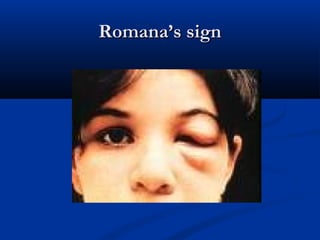
Romana’s signRomana’s sign
DiagnosisDiagnosis
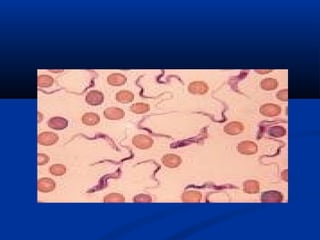
 Demonstration of trypanosomes in blood orDemonstration of trypanosomes in blood or
tissuestissues
 Culture in NNN i.e. Novy-McNeal-NicolleCulture in NNN i.e. Novy-McNeal-Nicolle
mediummedium
 SerologySerology
 XenodiagnosisXenodiagnosis
QUESTIONS???QUESTIONS???

Trypanosomes

  • 1.
  • 2.
    TrypanosomiasisTrypanosomiasis Is a diseasecaused by a protozoan parasiticIs a disease caused by a protozoan parasitic disease transmitted by haemo-flagellates of thedisease transmitted by haemo-flagellates of the genus Trypanosomegenus Trypanosome African Sleeping SicknessAfrican Sleeping Sickness Chagas diseaseChagas disease
  • 4.
    A blood suckinginsect constitute theA blood sucking insect constitute the intermediate Host and Vectorintermediate Host and Vector
  • 5.
    Causative AgentsCausative Agents AfricanSleeping SicknessAfrican Sleeping Sickness  T.b.gambienseT.b.gambiense  T.b. RhodienseT.b. Rhodiense Vector: Tsetse FlyVector: Tsetse Fly Chagas Disease (South America)Chagas Disease (South America)  T. cruziT. cruzi Vector: Reduviid bugVector: Reduviid bug
  • 6.
    TransmissionTransmission  T.gambiense andT. rhodesienseT.gambiense and T. rhodesiense (Inoculative transmission):(Inoculative transmission):  The trypanosomes migrate to the mouth parts of theThe trypanosomes migrate to the mouth parts of the vectors so that infection is transmitted by their bite.vectors so that infection is transmitted by their bite.  T.cruzi:T.cruzi:  The trypanosomes migrate to the hind and areThe trypanosomes migrate to the hind and are passed in faeces.passed in faeces.
  • 8.
    African TrypanosomoiasisAfrican Trypanosomoiasis ClinicalFeaturesClinical Features AcuteAcute  Intermittent feverIntermittent fever  ChillsChills  HeadacheHeadache  LymphadenopathyLymphadenopathy (posterior Cervical)(posterior Cervical) ChronicChronic  Increasing headacheIncreasing headache  Mental dullnessMental dullness  ApathyApathy  SleepinessSleepiness
  • 9.
    Histopathology shows chronicmeningoencephalitis. Morula cells are seenHistopathology shows chronic meningoencephalitis. Morula cells are seen which are atypical plasma cells containing mulberry shaped masses of IgAwhich are atypical plasma cells containing mulberry shaped masses of IgA
  • 12.
    American TrypanosomiasisAmerican Trypanosomiasis Also called Chaga’s DiseaseAlso called Chaga’s Disease  While investigating malaria Carlos ChagasWhile investigating malaria Carlos Chagas accidentally found the trypanosome in theaccidentally found the trypanosome in the intestine of a bug, in Brazil in 1909.intestine of a bug, in Brazil in 1909.  Chags named the parasite T. cruzi after hisChags named the parasite T. cruzi after his mentor Oswaldo Cruzmentor Oswaldo Cruz
  • 13.
    T.cruziT.cruzi Sites commonly affected:Sitescommonly affected:  Myocardium (conduction defects)Myocardium (conduction defects)  Skeletal muscleSkeletal muscle  Neuroglial cellsNeuroglial cells  Cells of the Reticuloendothelial cellsCells of the Reticuloendothelial cells  Autonomic nerve cells – megadisease i.e.Autonomic nerve cells – megadisease i.e. Megaoesphagus, megacolon and megaureterMegaoesphagus, megacolon and megaureter
  • 14.
  • 15.
    DiagnosisDiagnosis  Demonstration oftrypanosomes in blood orDemonstration of trypanosomes in blood or tissuestissues  Culture in NNN i.e. Novy-McNeal-NicolleCulture in NNN i.e. Novy-McNeal-Nicolle mediummedium  SerologySerology  XenodiagnosisXenodiagnosis
  • 16.