Mr. Ali A. Radwan
Introduction :- African Trypanosomiasis, also known as "sleeping sickness” .
- Caused by microscopic parasites of the species Trypanosoma

brucei.
- It is transmitted by the tsetse fly (Glossina species), which is
found only in rural Africa.
- It has been a serious public health problem in some regions of

sub-Saharan Africa.
- The other human form of trypanosomiasis, called Chagas
disease
Trypanosoma life cycle :-
Blood smear

Giemsa stain
Diagnosis :- Diagnosis relies on recognition of the flagellate on

a blood smear .
- Motile organisms may be visible in the buffy coat when
a blood sample is spun down.
- In humans the tsetse fly bite erupts into a red sore and
within a few weeks the person can :

•
•
•
•

Fever
Swollen lymph glands
Aching muscles and joints
Headaches and irritability
In advanced stages :• alteration of the biological clock (the circadian rhythm)
• Confusion
• Slurred speech
• Seizures and difficulty in walking and talking

• These problems can develop over many years and if

not treated
• “Leading over many years to death”
Clinical signs :- Cattle may show enlarged lymph nodes and internal

organs.
- Hemolytic anemia is a characteristic sign.
- Systemic disease and reproductive are common, and

cattle appear to waste away.
- Horses with dourine show signs of ventral and genital

edema and urticarial.
- Infected dogs and cats may show severe systemic signs.
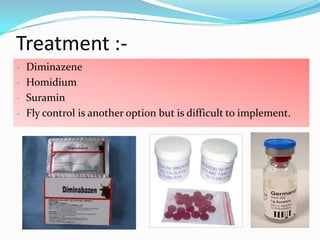
Treatment :- Diminazene
- Homidium
- Suramin
- Fly control is another option but is difficult to implement.
Prevention : The main approaches to controlling African trypanosomiasis

are to reduce the reservoirs of infection and the presence of
the tsetse fly.
 Screening of people at risk helps identify patients at an early

stage.
 Diagnosis should be made as early as possible and before the

advanced stage to avoid complicated .

Trypanosomiasis

  • 1.
    Mr. Ali A.Radwan
  • 2.
    Introduction :- AfricanTrypanosomiasis, also known as "sleeping sickness” . - Caused by microscopic parasites of the species Trypanosoma brucei. - It is transmitted by the tsetse fly (Glossina species), which is found only in rural Africa. - It has been a serious public health problem in some regions of sub-Saharan Africa. - The other human form of trypanosomiasis, called Chagas disease
  • 4.
  • 5.
  • 6.
    Diagnosis :- Diagnosisrelies on recognition of the flagellate on a blood smear . - Motile organisms may be visible in the buffy coat when a blood sample is spun down. - In humans the tsetse fly bite erupts into a red sore and within a few weeks the person can : • • • • Fever Swollen lymph glands Aching muscles and joints Headaches and irritability
  • 7.
    In advanced stages:• alteration of the biological clock (the circadian rhythm) • Confusion • Slurred speech • Seizures and difficulty in walking and talking • These problems can develop over many years and if not treated • “Leading over many years to death”
  • 8.
    Clinical signs :-Cattle may show enlarged lymph nodes and internal organs. - Hemolytic anemia is a characteristic sign. - Systemic disease and reproductive are common, and cattle appear to waste away. - Horses with dourine show signs of ventral and genital edema and urticarial. - Infected dogs and cats may show severe systemic signs.
  • 9.
    Treatment :- Diminazene -Homidium - Suramin - Fly control is another option but is difficult to implement.
  • 10.
    Prevention : Themain approaches to controlling African trypanosomiasis are to reduce the reservoirs of infection and the presence of the tsetse fly.  Screening of people at risk helps identify patients at an early stage.  Diagnosis should be made as early as possible and before the advanced stage to avoid complicated .