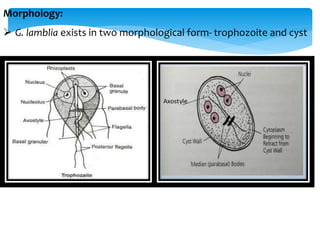
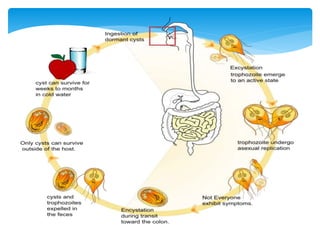
Giardia lamblia is a protozoan parasite that causes giardiasis. It exists in two forms, trophozoite and cyst. The trophozoite attaches to the small intestine and multiplies, causing damage. It then forms cysts which are excreted and can contaminate water and food sources. Infection occurs when cysts are ingested and excyst in the small intestine. Symptoms include diarrhea, abdominal cramps and nausea. Diagnosis involves microscopy of stool samples to identify trophozoites or cysts. Treatment is usually metronidazole to eliminate the trophozoites from the intestine. Prevention involves improved sanitation and hygiene practices.



![CASE_PRESENTATION_ON_subdural_hematoma(SDH)[1 FINAL PPT]-1.pptx](https://cdn.slidesharecdn.com/ss_thumbnails/casepresentationonsubduralhematomasdh1finalppt-1-260129172522-d405d375-thumbnail.jpg?width=640&height=640&fit=bounds)

