TOXOPLASMA GONDII
TOXON : arc , bow
PLASMA: shape , form
Toxoplasma gondii is an obligate
intracellular, parasitic alveolate that
the disease toxoplasmosis.
Scientific name: Toxoplasma gondii
Class: Conoidasida
Genus: Toxoplasma
Domain: Eukaryota
Phylum: Apicomplexa
Family: Sarcocystidae
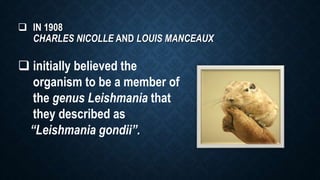
 IN 1908
CHARLES NICOLLE AND LOUIS MANCEAUX
 initially believed the
organism to be a member of
the genus Leishmania that
they described as
“Leishmania gondii”.
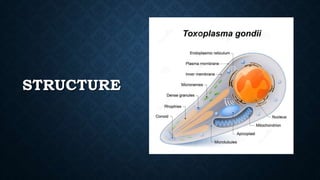
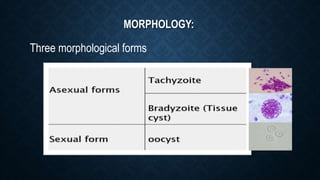
STRUCTURE
MORPHOLOGY:
Three morphological forms
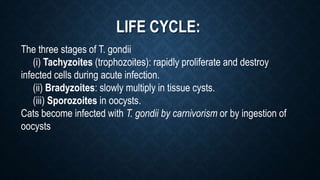
LIFE CYCLE:
The three stages of T. gondii
(i) Tachyzoites (trophozoites): rapidly proliferate and destroy
infected cells during acute infection.
(ii) Bradyzoites: slowly multiply in tissue cysts.
(iii) Sporozoites in oocysts.
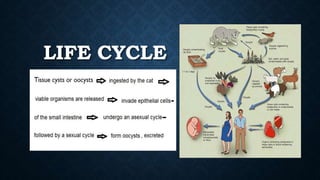
Cats become infected with T. gondii by carnivorism or by ingestion of
oocysts
LIFE CYCLE
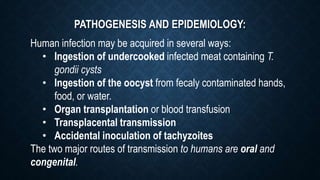
PATHOGENESIS AND EPIDEMIOLOGY:
Human infection may be acquired in several ways:
• Ingestion of undercooked infected meat containing T.
gondii cysts
• Ingestion of the oocyst from fecaly contaminated hands,
food, or water.
• Organ transplantation or blood transfusion
• Transplacental transmission
• Accidental inoculation of tachyzoites
The two major routes of transmission to humans are oral and
congenital.
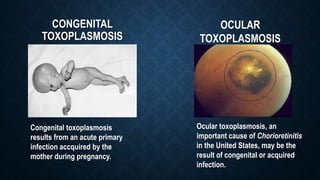
CONGENITAL
TOXOPLASMOSIS
Congenital toxoplasmosis
results from an acute primary
infection accquired by the
mother during pregnancy.
OCULAR
TOXOPLASMOSIS
Ocular toxoplasmosis, an
important cause of Chorioretinitis
in the United States, may be the
result of congenital or acquired
infection.
DIAGNOSIS
 Direct microscopy  Detection of tachyzoites in
blood and tissue cyst in tissue biopsy
 Staining methods:
1. Giemsa
2. PAS
3. Silver stains
4. Immunoperoxidase stain
SEROLOGY:
• Detection of Toxoplasma antigen by ELISA
• Detection of Toxoplasma antibody by
1. Sabin-Feldman dye test
2. IgM ELISA
3. IgG ELISA
4. IgG avidity test
SABIN-FELDMAN DYE TEST:
• Complement mediated neutralization test that requires live tachyzoites.
• Live tachyzoites are incubated with complement and test serum.
• Alkaline methylene blue dye is added and reincubated.
• Toxoplasma antibodies in the serum bind to the antigens in the live
tachyzoites  killed due to complement mediated lysis
• Killed tachyzoites  thin, distorted and colourless
• The dilution of the test serum at which 50% of the tachyzoites are killed 
antibody titer of the test serum
DIAGNOSIS OF T.GONDII
• Toxoplasma antigens in amniotic fluid
• PCR
• IgM antibodies in fetal blood by ELISA
• Ultrasound of fetus at 20 to 24 weeks of gestation
TREATMENT
Congenital toxoplasmosis:
• Spiramycin can treat infection in the pregnant mother.
• Pyrimethamine and sulfadiazine can treat fetal infection (diagnosed during
the pregnancy).
• Sulfadiazine plus pyrimethamine with folinic acid.
Also given steroids. (to infants)
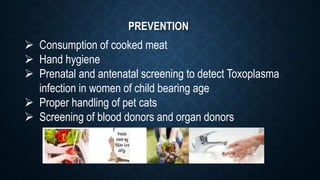
PREVENTION
 Consumption of cooked meat
 Hand hygiene
 Prenatal and antenatal screening to detect Toxoplasma
infection in women of child bearing age
 Proper handling of pet cats
 Screening of blood donors and organ donors
THANKYOU

Toxoplasma gondii

  • 1.
    TOXOPLASMA GONDII TOXON :arc , bow PLASMA: shape , form
  • 2.
    Toxoplasma gondii isan obligate intracellular, parasitic alveolate that the disease toxoplasmosis. Scientific name: Toxoplasma gondii Class: Conoidasida Genus: Toxoplasma Domain: Eukaryota Phylum: Apicomplexa Family: Sarcocystidae
  • 3.
     IN 1908 CHARLESNICOLLE AND LOUIS MANCEAUX  initially believed the organism to be a member of the genus Leishmania that they described as “Leishmania gondii”.
  • 4.
  • 5.
  • 6.
    LIFE CYCLE: The threestages of T. gondii (i) Tachyzoites (trophozoites): rapidly proliferate and destroy infected cells during acute infection. (ii) Bradyzoites: slowly multiply in tissue cysts. (iii) Sporozoites in oocysts. Cats become infected with T. gondii by carnivorism or by ingestion of oocysts
  • 7.
  • 8.
    PATHOGENESIS AND EPIDEMIOLOGY: Humaninfection may be acquired in several ways: • Ingestion of undercooked infected meat containing T. gondii cysts • Ingestion of the oocyst from fecaly contaminated hands, food, or water. • Organ transplantation or blood transfusion • Transplacental transmission • Accidental inoculation of tachyzoites The two major routes of transmission to humans are oral and congenital.
  • 9.
    CONGENITAL TOXOPLASMOSIS Congenital toxoplasmosis results froman acute primary infection accquired by the mother during pregnancy. OCULAR TOXOPLASMOSIS Ocular toxoplasmosis, an important cause of Chorioretinitis in the United States, may be the result of congenital or acquired infection.
  • 10.
    DIAGNOSIS  Direct microscopy Detection of tachyzoites in blood and tissue cyst in tissue biopsy  Staining methods: 1. Giemsa 2. PAS 3. Silver stains 4. Immunoperoxidase stain
  • 11.
    SEROLOGY: • Detection ofToxoplasma antigen by ELISA • Detection of Toxoplasma antibody by 1. Sabin-Feldman dye test 2. IgM ELISA 3. IgG ELISA 4. IgG avidity test
  • 12.
    SABIN-FELDMAN DYE TEST: •Complement mediated neutralization test that requires live tachyzoites. • Live tachyzoites are incubated with complement and test serum. • Alkaline methylene blue dye is added and reincubated. • Toxoplasma antibodies in the serum bind to the antigens in the live tachyzoites  killed due to complement mediated lysis • Killed tachyzoites  thin, distorted and colourless • The dilution of the test serum at which 50% of the tachyzoites are killed  antibody titer of the test serum
  • 13.
    DIAGNOSIS OF T.GONDII •Toxoplasma antigens in amniotic fluid • PCR • IgM antibodies in fetal blood by ELISA • Ultrasound of fetus at 20 to 24 weeks of gestation
  • 14.
    TREATMENT Congenital toxoplasmosis: • Spiramycincan treat infection in the pregnant mother. • Pyrimethamine and sulfadiazine can treat fetal infection (diagnosed during the pregnancy). • Sulfadiazine plus pyrimethamine with folinic acid. Also given steroids. (to infants)
  • 15.
    PREVENTION  Consumption ofcooked meat  Hand hygiene  Prenatal and antenatal screening to detect Toxoplasma infection in women of child bearing age  Proper handling of pet cats  Screening of blood donors and organ donors
  • 16.