WELCOME
TOPIC: GENE REGULATION IN PROKARYOTES
(LAC OPERON)
BY,
SIJI
SKARIAH
 Different genes in an organism are meant for the
synthesis of different proteins.
 All these proteins are not needed at one time.
 The coded information present in DNA is expressed by
the synthesis of specific proteins’
 However,some genes are constantly transcribed and
expressed in all cells at all time,because their product
are constantly needed in all cells.
 Such genes are called constitutive genes or house
keeping genes.
 But some genes expressed only in some type of cells or
on special occasion.
 Such genes are called non constitutive or luxury
genes.
 The contol of gene expression or protein synthesis is
called gene regulation or it is the process of turning
genes on and off
 In prokaryotes, protein synthesis or gene expression is
controlled at transcription level
 The regulation may be negative or positive
i)Negative regulation:
In –ve regulation an inhibitor or
repressor is present in the cell.The binding of inhibitor
prevents or supresses transcription of relevant gene.
ii)Positive regulation:
In positive regulation,an inducer
molecule activates the promoter,which promotes
transcription of mRNA.
 A negatively regulated system may be either inducible
or repressible.
 In inducible gene regulation the structural gene or
genes are induced or ‘switch on’ to produce mRNA.
 The substance which induces the gene for protein
synthesis is known as inducer.
 The gene complex responsible for the synthesis of
inducible enzymes is called inducible system.
 Eg:lac operon
 An eg. of repressible system-Trp operon
REGULATORY PROTEINS
1.ACTIVATORS:
A transcriptional activator is a protein
that increases transcription of a gene or set of genes.
 Most activators are DNA binding proteins that bind
to promoter.
 The DNA site bound by the activator is referred to as
an "activator site.
 Eg:The catabolite activator protein(CAP; also known
as cAMP repressor protein, CRP) activates
transcription at the lac operon of the bacterium E.coli.
2.REPRESSORS:
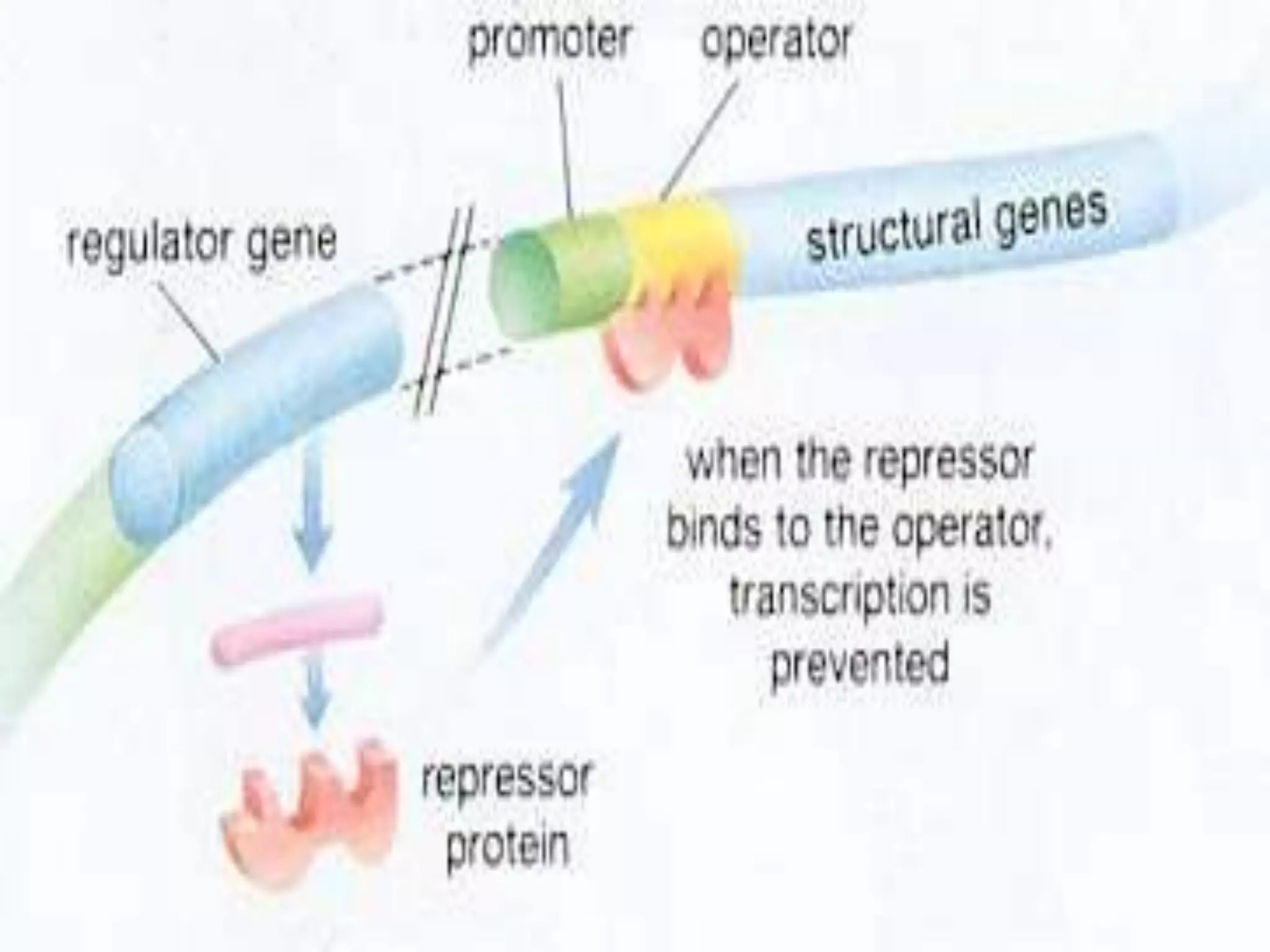
A repressor is a DNA or RNA-binding
protein that inhibits the expression of one or more
genes by binding to the operator.
 A DNA-binding repressor blocks the attachment of RNA
polymerase to the promoter.
 Thus preventing transcription of the genes into mRNA.
 An RNA-binding repressor binds to the mRNA and
prevents translation of the mRNA into protein.
 This blocking of expression is called repression.
 Eg:lac operon
 A corepressor is a molecule that can bind to repressor
and make it bind to the operator tightly, which
decreases transcription.
 A repressor that binds with a corepressor is termed
an aporepressor or inactive repressor.
 One type of aporepressor is the trp repressor, an
important metabolic protein in bacteria.
OPERON
Francis Jacob and Jacques Monad
(1961),explained that gene regulation is by
operon model.
 The operon model for lactose catabolism is called lac
operon.
 An operon is a group of closely linked structure genes
and associated control genes.
 The operon consist of regulatory gene,structural gene,
operator and promoter site.
STRUCTURE OF LAC OPERON
1.Regulatory gene:
 The regulatory gene is the i gene that code for the
repressor protein
 This i gene is expressed in all the time hence it is also
known as a constitutive gene.
2.Structural genes:
 Three structural genes lac z,lac y,lac a involved in the
synthesis of enzymes for the lactose catabolism.
 The 3 genes as transcribed as a polycistronic mRNA.
 Lac z code for Betagalactosidase
 Lac y code for Lac permease
 Lac a code for Transacetylase
3.Promoter
4.Operator
Negative control of lac operon
 The lac repressor is synthesized through the activity
of lac i gene called the regulator gene.
 This repressor is an allosteric protein(A protein whose
shape is changed when it binds a particular molecule)
i)it bind the operator site
ii)it bind the lactose sugar(inducer)
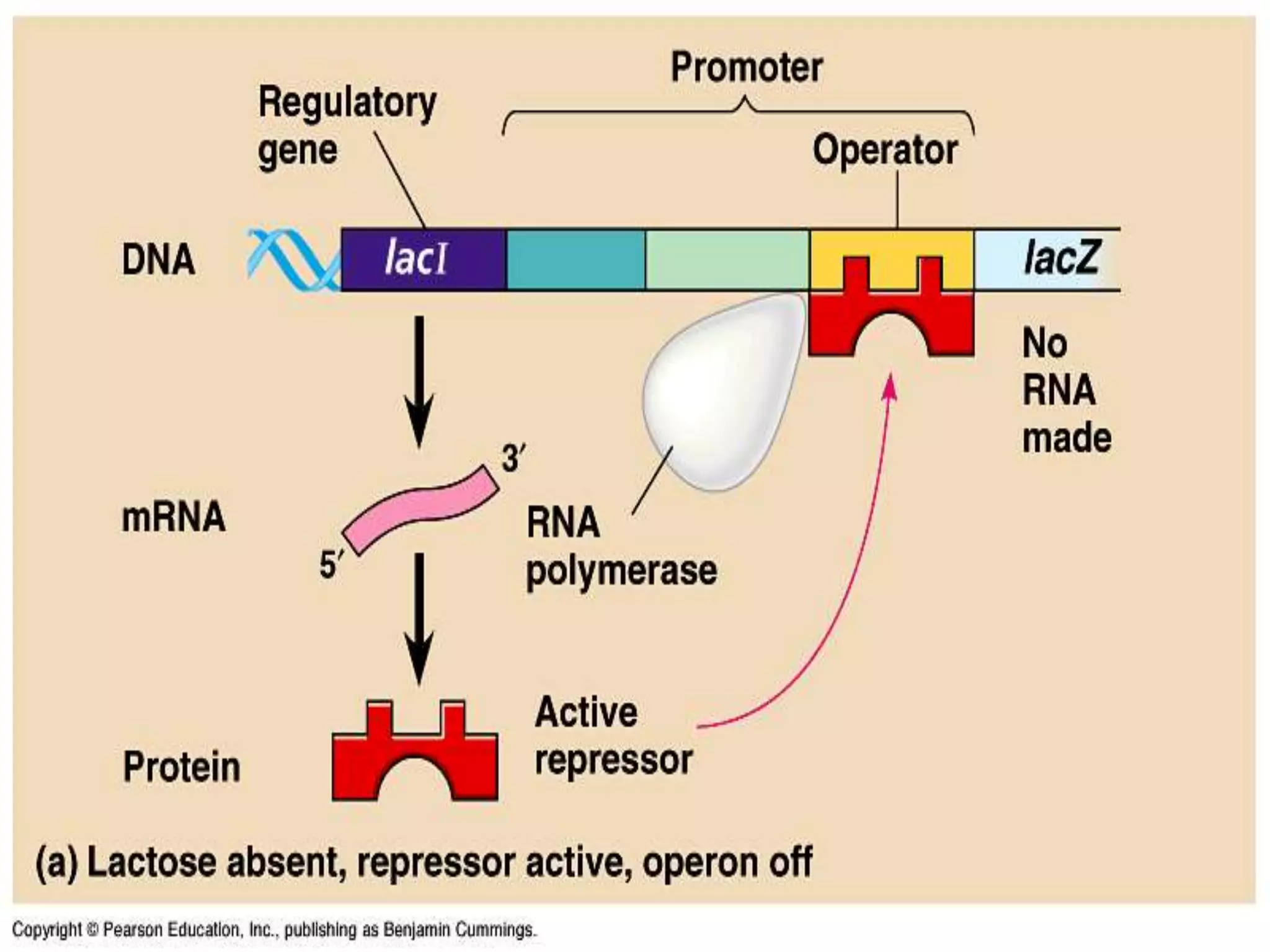
 In the absence of inducer,DNA binding site of
repressor is functional.
 The repressor protein binds to the DNA at the operator
site of the lac locus and blocks the transcription of lac
genes by RNA polymerase.
 The lac enzyme synthesis is inhibited.
Positive control of lac operon
 It is an additional regulatory mechanism which allows
the lac operon to sense the presence of glucose,an
alternative and preferred energy source to lactose.
 If glucose and lactose are both present,cells will use up
the glucose first.
 The presence of glucose in the cell switch off the lac
operon by a mechanism called catabolite reperssion,
which involves a protein called catabolite activator
protein(CAP)
 CAP only binds in the presence of derivative of ATP
called cyclic Adenosine Monophosphate(cAMP)
 CAP binds to a DNA sequence upstream of the lac
promoter and enhances binding of the RNA
polymerase
 Transcription of the operon is enhanced
 cAMP levels are influenced by glucose.
 The enzyme adenylate cyclase catalyze the formation
of cAMP and is inhibited by glucose.
 When glucose is available in the cell,adenylate cyclase
is inhibited and cAMP levles are low
 Under these condition CAP does not bind upstream of
the promoter and the lac operon is transcribed at very
low level.
 When glucose is low, adenylate cyclase is not
inhibited, cAMP is higher and CAP binds increasing
the level of transcription.
 If lactose and glucose are present together the lac
operon will only transcribed at a low level.
Operon
Operon

Operon

  • 1.
    WELCOME TOPIC: GENE REGULATIONIN PROKARYOTES (LAC OPERON) BY, SIJI SKARIAH
  • 2.
     Different genesin an organism are meant for the synthesis of different proteins.  All these proteins are not needed at one time.  The coded information present in DNA is expressed by the synthesis of specific proteins’  However,some genes are constantly transcribed and expressed in all cells at all time,because their product are constantly needed in all cells.
  • 3.
     Such genesare called constitutive genes or house keeping genes.  But some genes expressed only in some type of cells or on special occasion.  Such genes are called non constitutive or luxury genes.  The contol of gene expression or protein synthesis is called gene regulation or it is the process of turning genes on and off
  • 4.
     In prokaryotes,protein synthesis or gene expression is controlled at transcription level  The regulation may be negative or positive i)Negative regulation: In –ve regulation an inhibitor or repressor is present in the cell.The binding of inhibitor prevents or supresses transcription of relevant gene.
  • 5.
    ii)Positive regulation: In positiveregulation,an inducer molecule activates the promoter,which promotes transcription of mRNA.  A negatively regulated system may be either inducible or repressible.  In inducible gene regulation the structural gene or genes are induced or ‘switch on’ to produce mRNA.
  • 6.
     The substancewhich induces the gene for protein synthesis is known as inducer.  The gene complex responsible for the synthesis of inducible enzymes is called inducible system.  Eg:lac operon  An eg. of repressible system-Trp operon
  • 7.
    REGULATORY PROTEINS 1.ACTIVATORS: A transcriptionalactivator is a protein that increases transcription of a gene or set of genes.  Most activators are DNA binding proteins that bind to promoter.  The DNA site bound by the activator is referred to as an "activator site.
  • 8.
     Eg:The cataboliteactivator protein(CAP; also known as cAMP repressor protein, CRP) activates transcription at the lac operon of the bacterium E.coli. 2.REPRESSORS: A repressor is a DNA or RNA-binding protein that inhibits the expression of one or more genes by binding to the operator.
  • 9.
     A DNA-bindingrepressor blocks the attachment of RNA polymerase to the promoter.  Thus preventing transcription of the genes into mRNA.  An RNA-binding repressor binds to the mRNA and prevents translation of the mRNA into protein.  This blocking of expression is called repression.  Eg:lac operon
  • 10.
     A corepressoris a molecule that can bind to repressor and make it bind to the operator tightly, which decreases transcription.  A repressor that binds with a corepressor is termed an aporepressor or inactive repressor.  One type of aporepressor is the trp repressor, an important metabolic protein in bacteria.
  • 11.
    OPERON Francis Jacob andJacques Monad (1961),explained that gene regulation is by operon model.
  • 12.
     The operonmodel for lactose catabolism is called lac operon.  An operon is a group of closely linked structure genes and associated control genes.  The operon consist of regulatory gene,structural gene, operator and promoter site.
  • 14.
    STRUCTURE OF LACOPERON 1.Regulatory gene:  The regulatory gene is the i gene that code for the repressor protein  This i gene is expressed in all the time hence it is also known as a constitutive gene. 2.Structural genes:  Three structural genes lac z,lac y,lac a involved in the synthesis of enzymes for the lactose catabolism.
  • 15.
     The 3genes as transcribed as a polycistronic mRNA.  Lac z code for Betagalactosidase  Lac y code for Lac permease  Lac a code for Transacetylase 3.Promoter 4.Operator
  • 17.
    Negative control oflac operon  The lac repressor is synthesized through the activity of lac i gene called the regulator gene.  This repressor is an allosteric protein(A protein whose shape is changed when it binds a particular molecule) i)it bind the operator site ii)it bind the lactose sugar(inducer)
  • 18.
     In theabsence of inducer,DNA binding site of repressor is functional.  The repressor protein binds to the DNA at the operator site of the lac locus and blocks the transcription of lac genes by RNA polymerase.  The lac enzyme synthesis is inhibited.
  • 21.
    Positive control oflac operon  It is an additional regulatory mechanism which allows the lac operon to sense the presence of glucose,an alternative and preferred energy source to lactose.  If glucose and lactose are both present,cells will use up the glucose first.  The presence of glucose in the cell switch off the lac operon by a mechanism called catabolite reperssion, which involves a protein called catabolite activator protein(CAP)
  • 22.
     CAP onlybinds in the presence of derivative of ATP called cyclic Adenosine Monophosphate(cAMP)  CAP binds to a DNA sequence upstream of the lac promoter and enhances binding of the RNA polymerase  Transcription of the operon is enhanced
  • 23.
     cAMP levelsare influenced by glucose.  The enzyme adenylate cyclase catalyze the formation of cAMP and is inhibited by glucose.  When glucose is available in the cell,adenylate cyclase is inhibited and cAMP levles are low  Under these condition CAP does not bind upstream of the promoter and the lac operon is transcribed at very low level.
  • 24.
     When glucoseis low, adenylate cyclase is not inhibited, cAMP is higher and CAP binds increasing the level of transcription.  If lactose and glucose are present together the lac operon will only transcribed at a low level.