INTRODUCTION OF DNA
INTO HOST CELLS
1
Lecture- 25
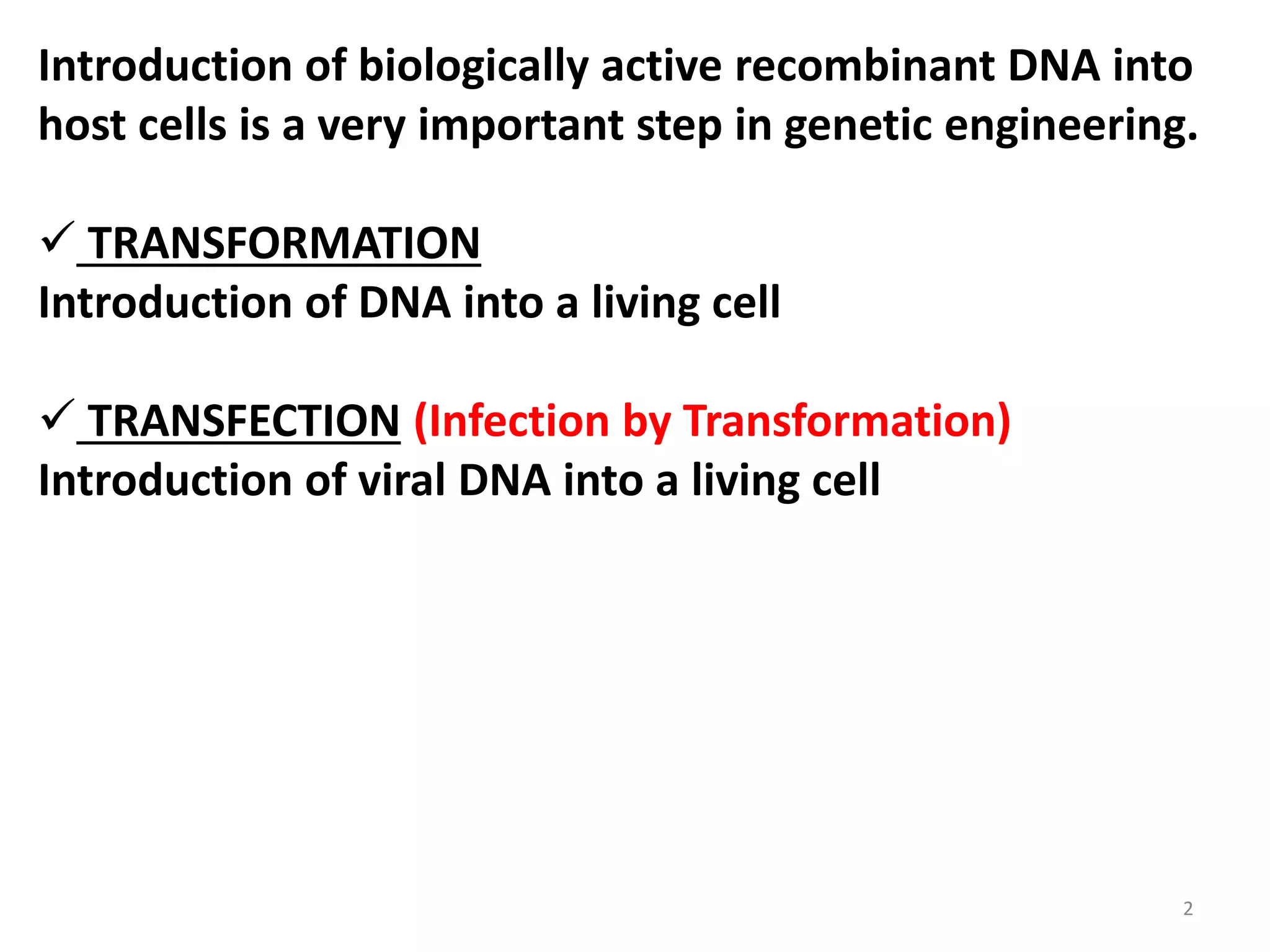
Introduction of biologically active recombinant DNA into
host cells is a very important step in genetic engineering.
 TRANSFORMATION
Introduction of DNA into a living cell
 TRANSFECTION (Infection by Transformation)
Introduction of viral DNA into a living cell
2
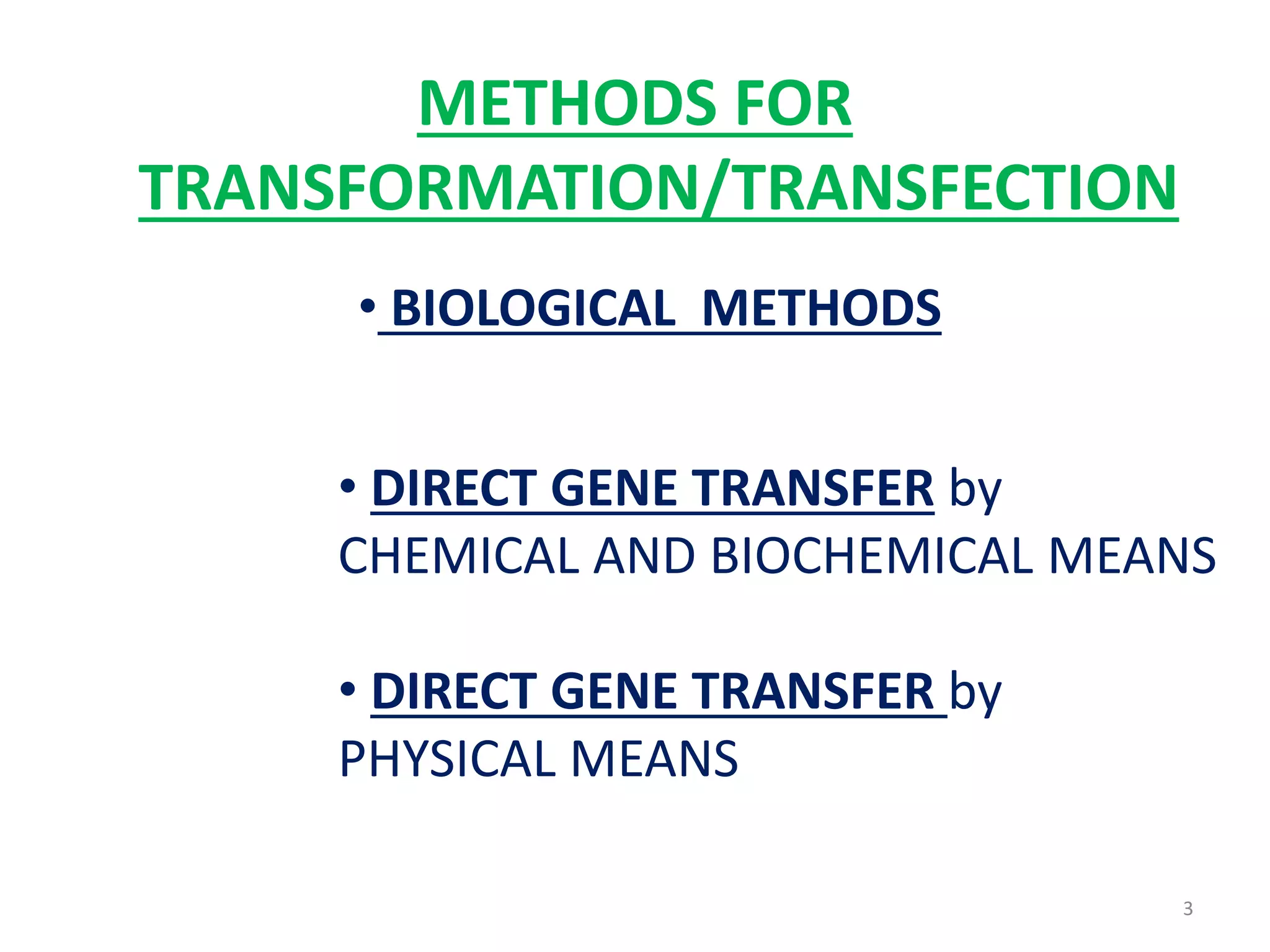
METHODS FOR
TRANSFORMATION/TRANSFECTION
• BIOLOGICAL METHODS
• DIRECT GENE TRANSFER by
CHEMICAL AND BIOCHEMICAL MEANS
• DIRECT GENE TRANSFER by
PHYSICAL MEANS
3
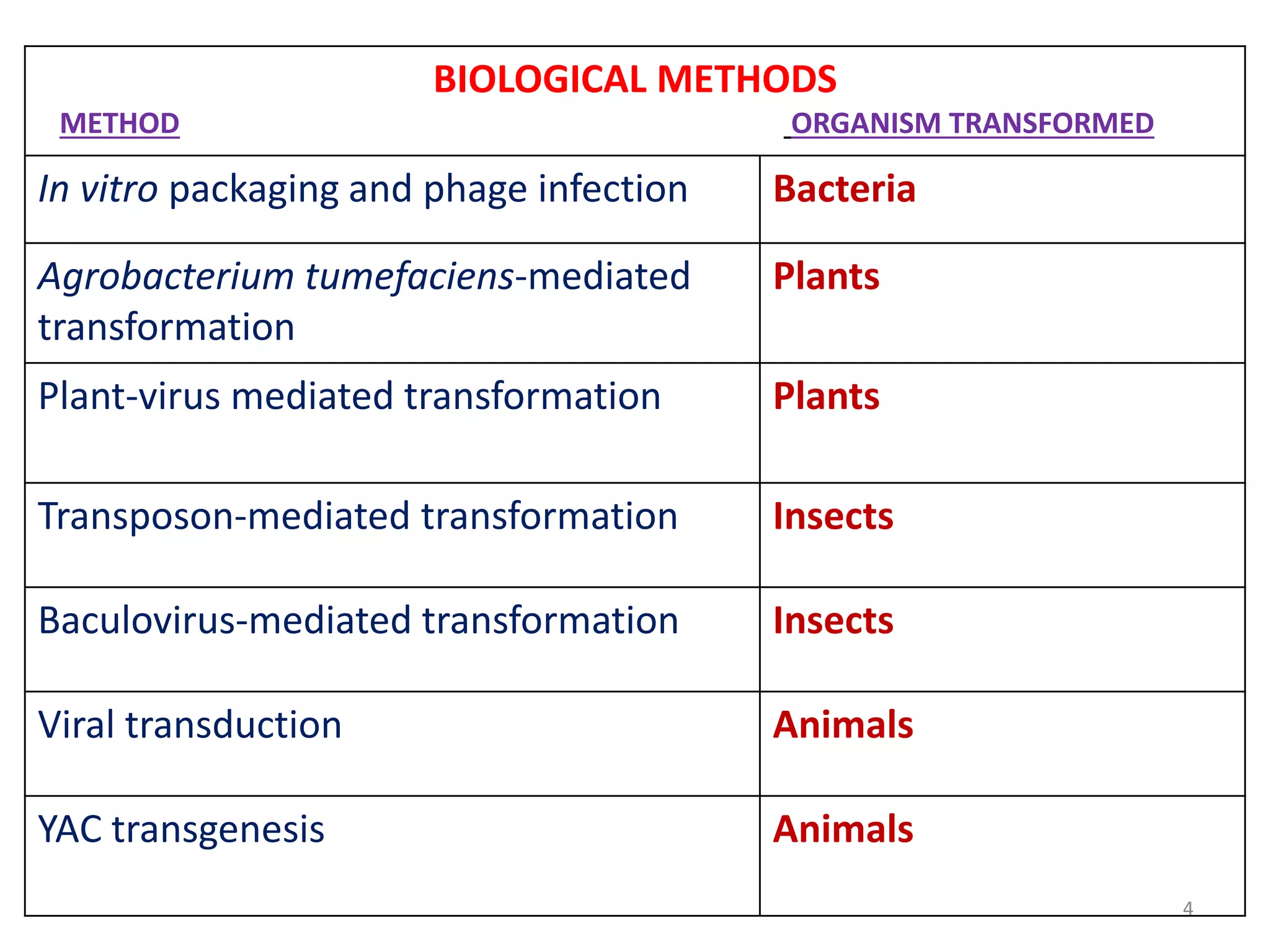
BIOLOGICAL METHODS
METHOD ORGANISM TRANSFORMED
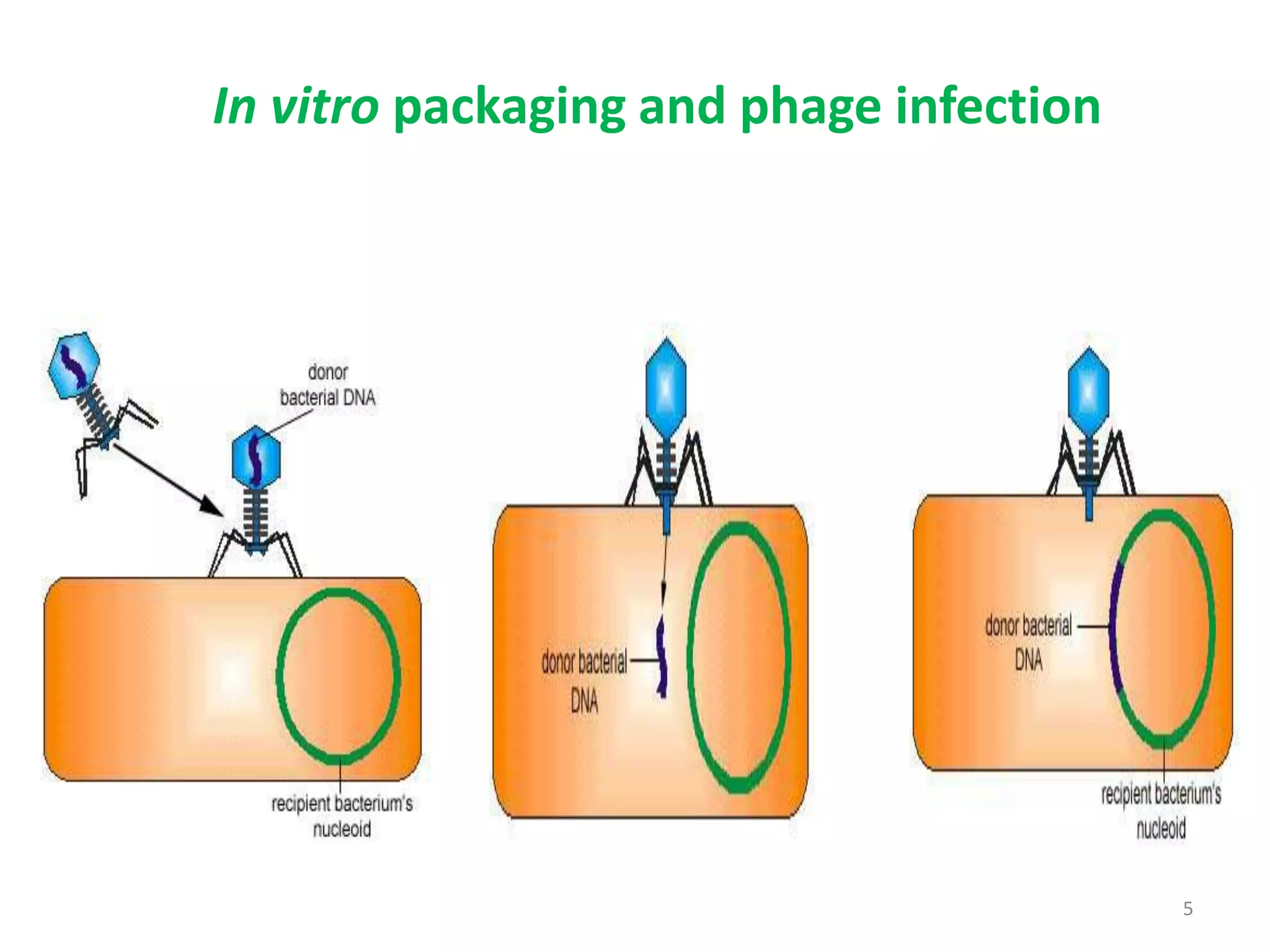
In vitro packaging and phage infection Bacteria
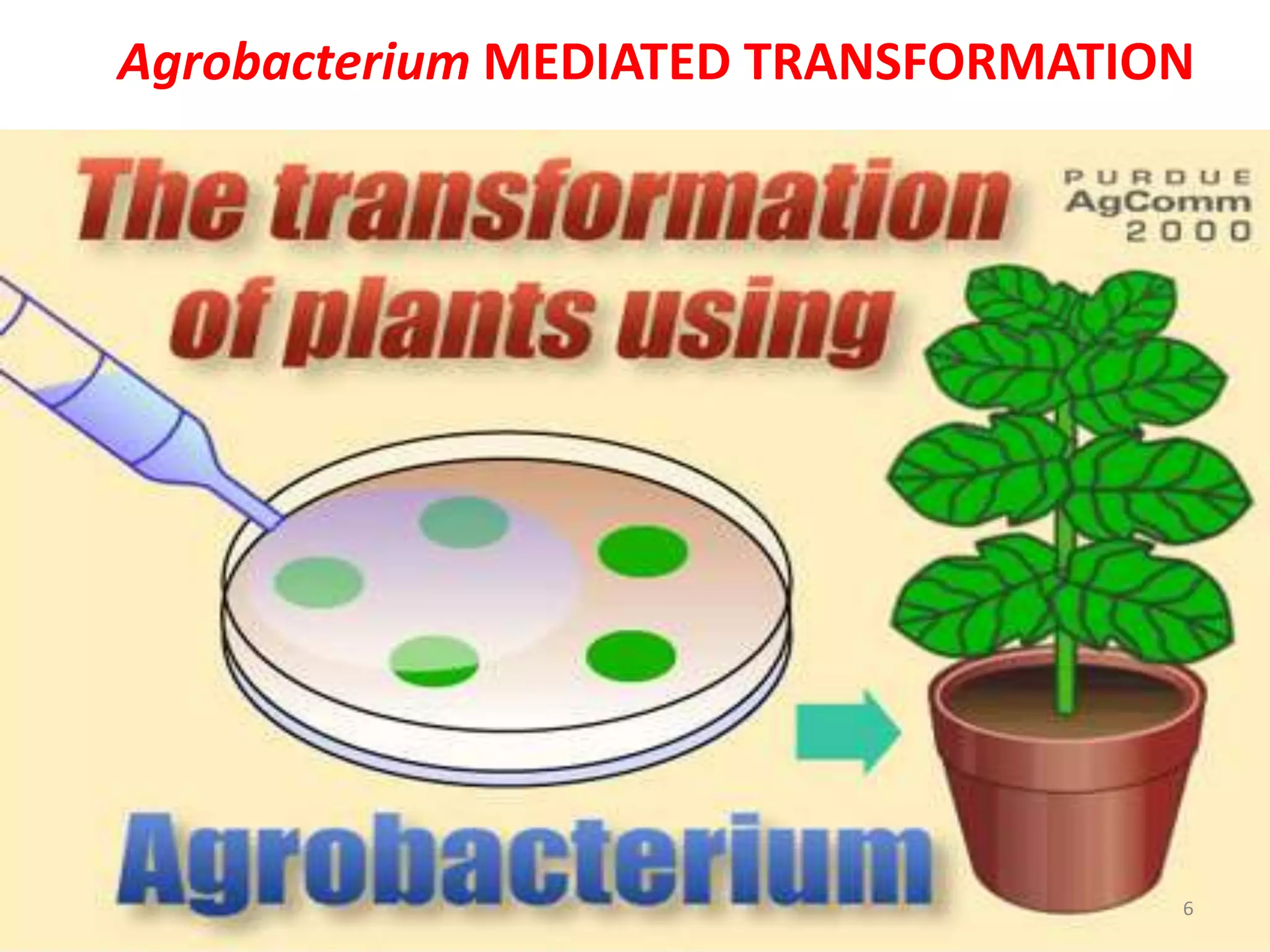
Agrobacterium tumefaciens-mediated
transformation
Plants
Plant-virus mediated transformation Plants
Transposon-mediated transformation Insects
Baculovirus-mediated transformation Insects
Viral transduction Animals
YAC transgenesis Animals
4
In vitro packaging and phage infection
5
Agrobacterium MEDIATED TRANSFORMATION
6
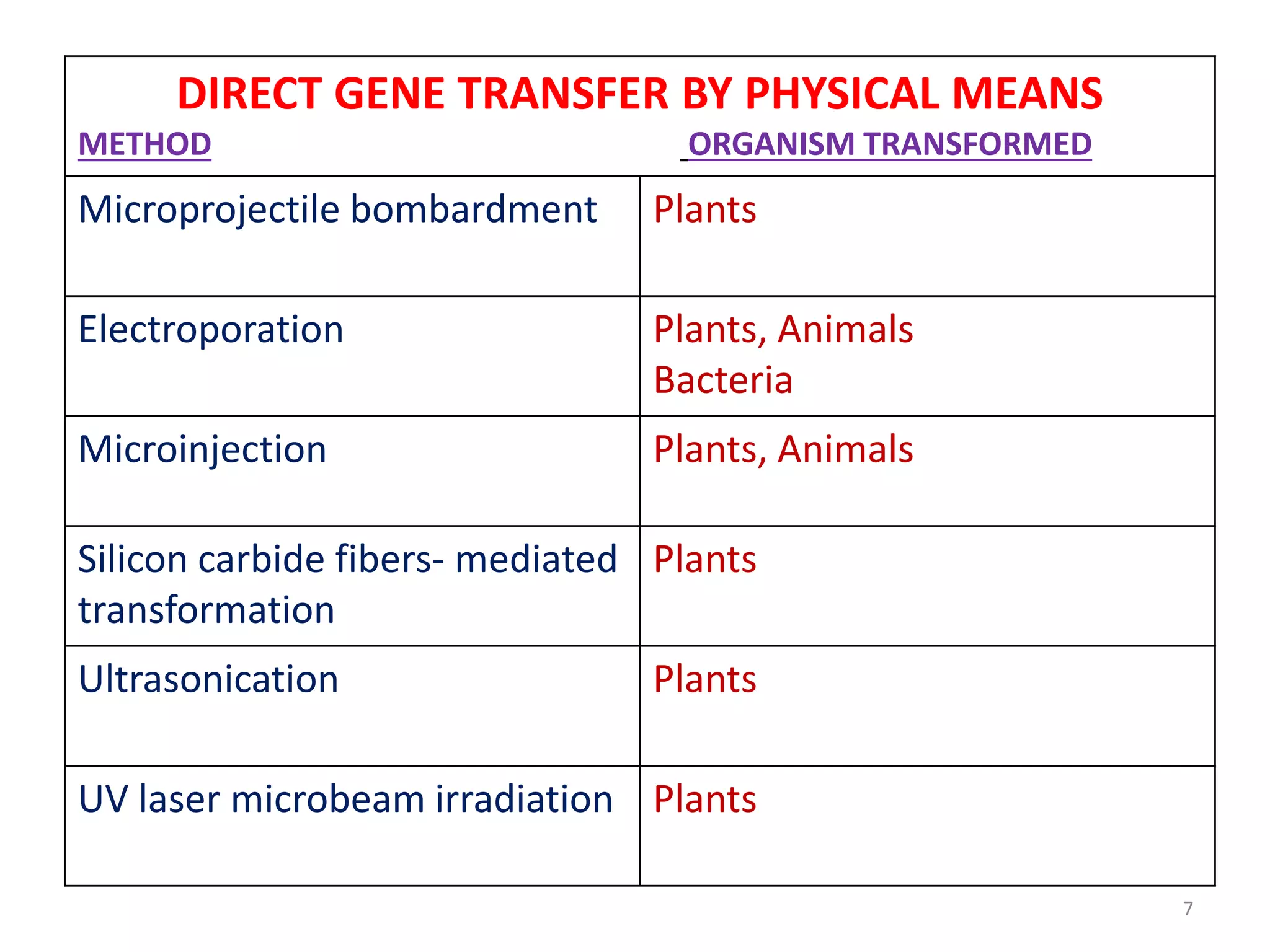
DIRECT GENE TRANSFER BY PHYSICAL MEANS
METHOD ORGANISM TRANSFORMED
Microprojectile bombardment Plants
Electroporation Plants, Animals
Bacteria
Microinjection Plants, Animals
Silicon carbide fibers- mediated
transformation
Plants
Ultrasonication Plants
UV laser microbeam irradiation Plants
7
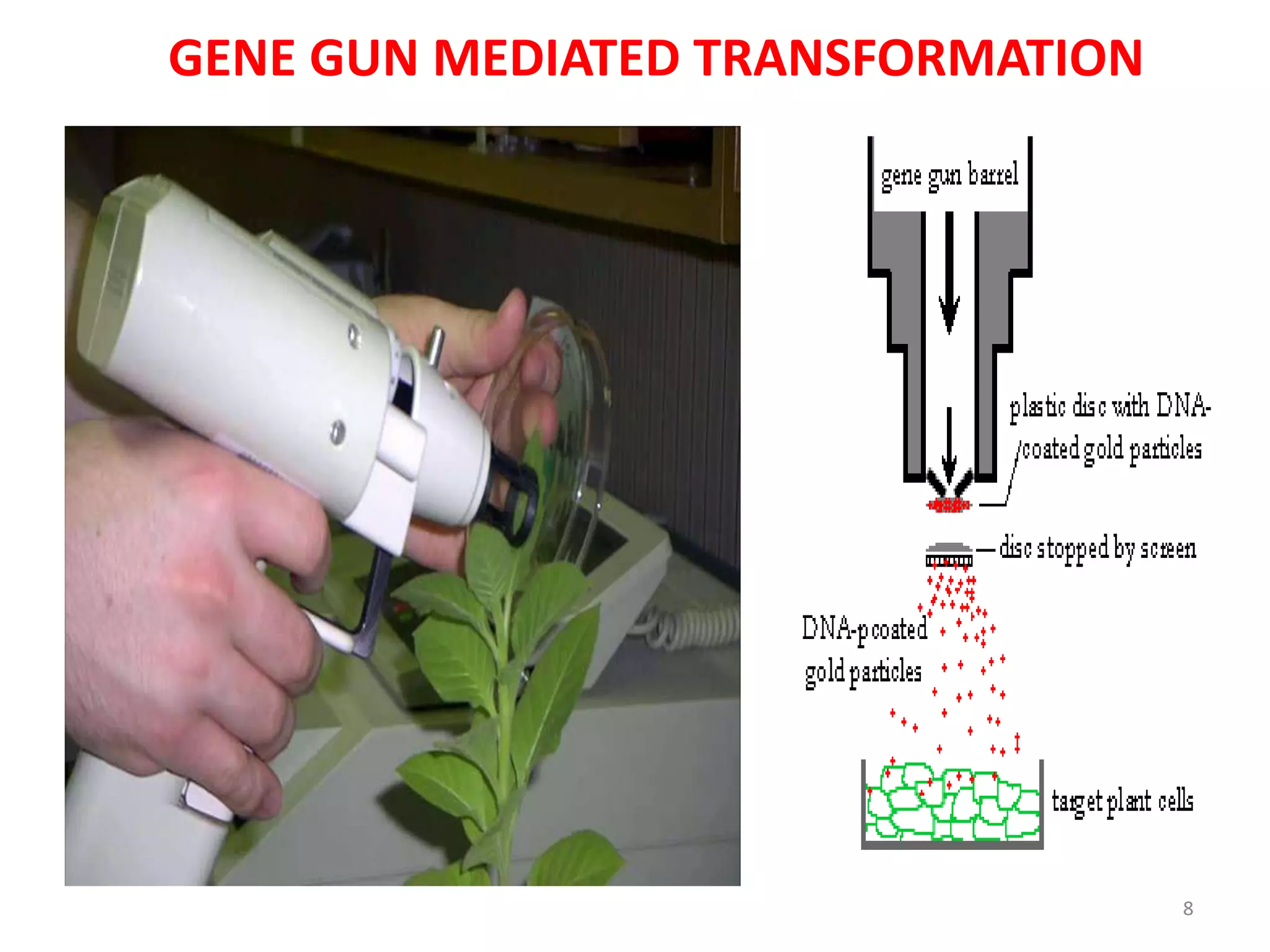
GENE GUN MEDIATED TRANSFORMATION
8
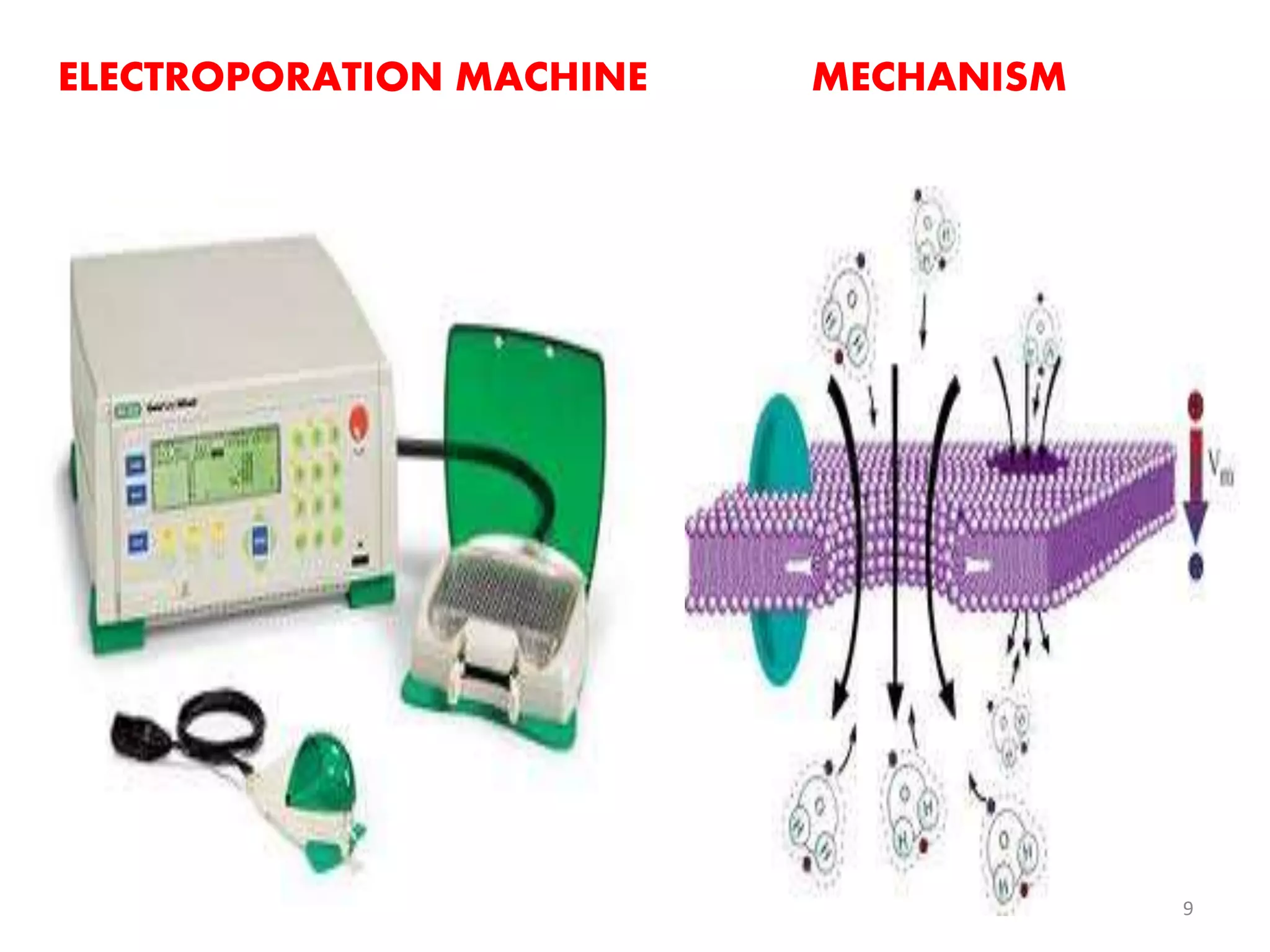
ELECTROPORATION MACHINE MECHANISM
9
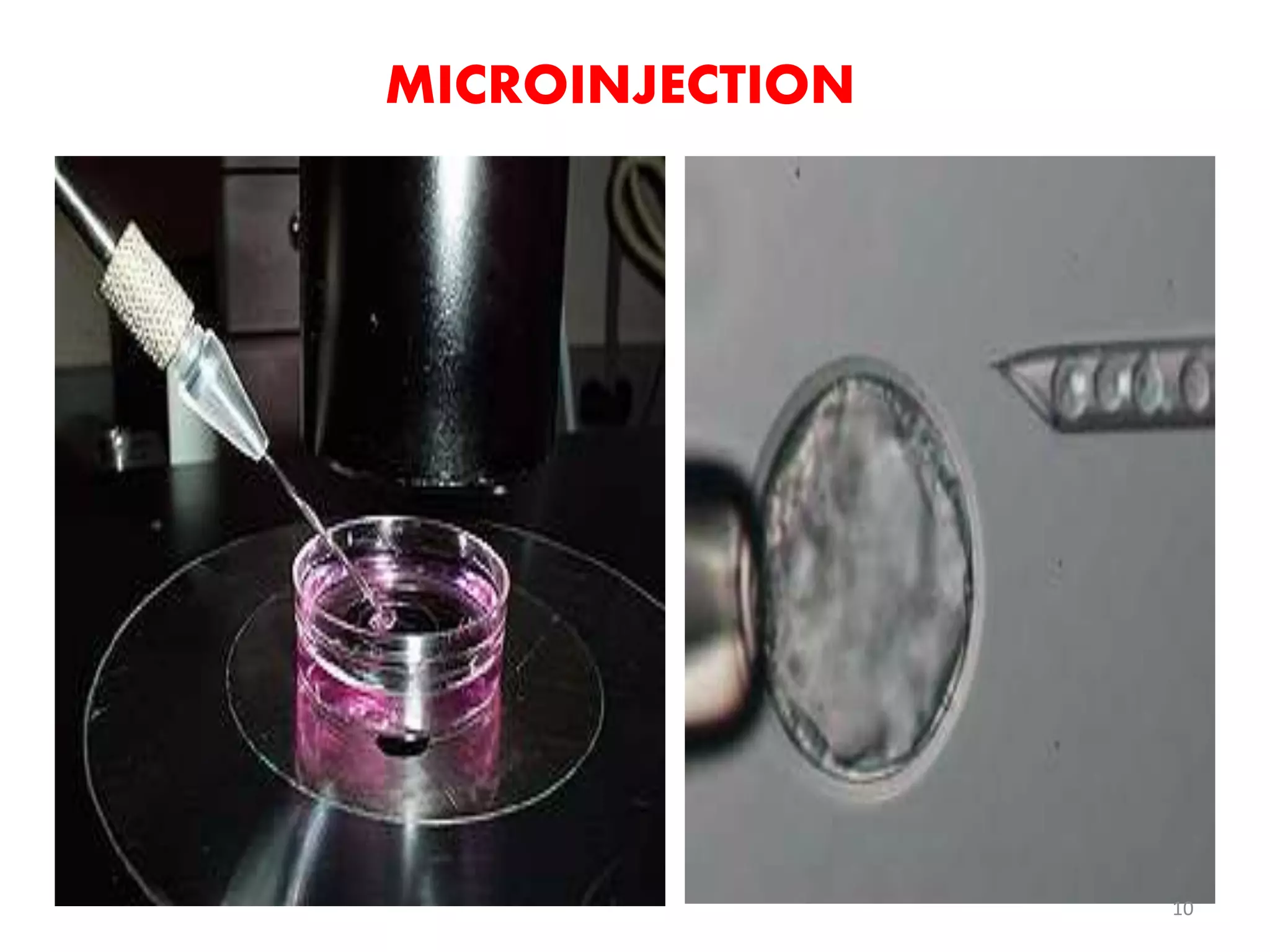
MICROINJECTION
10
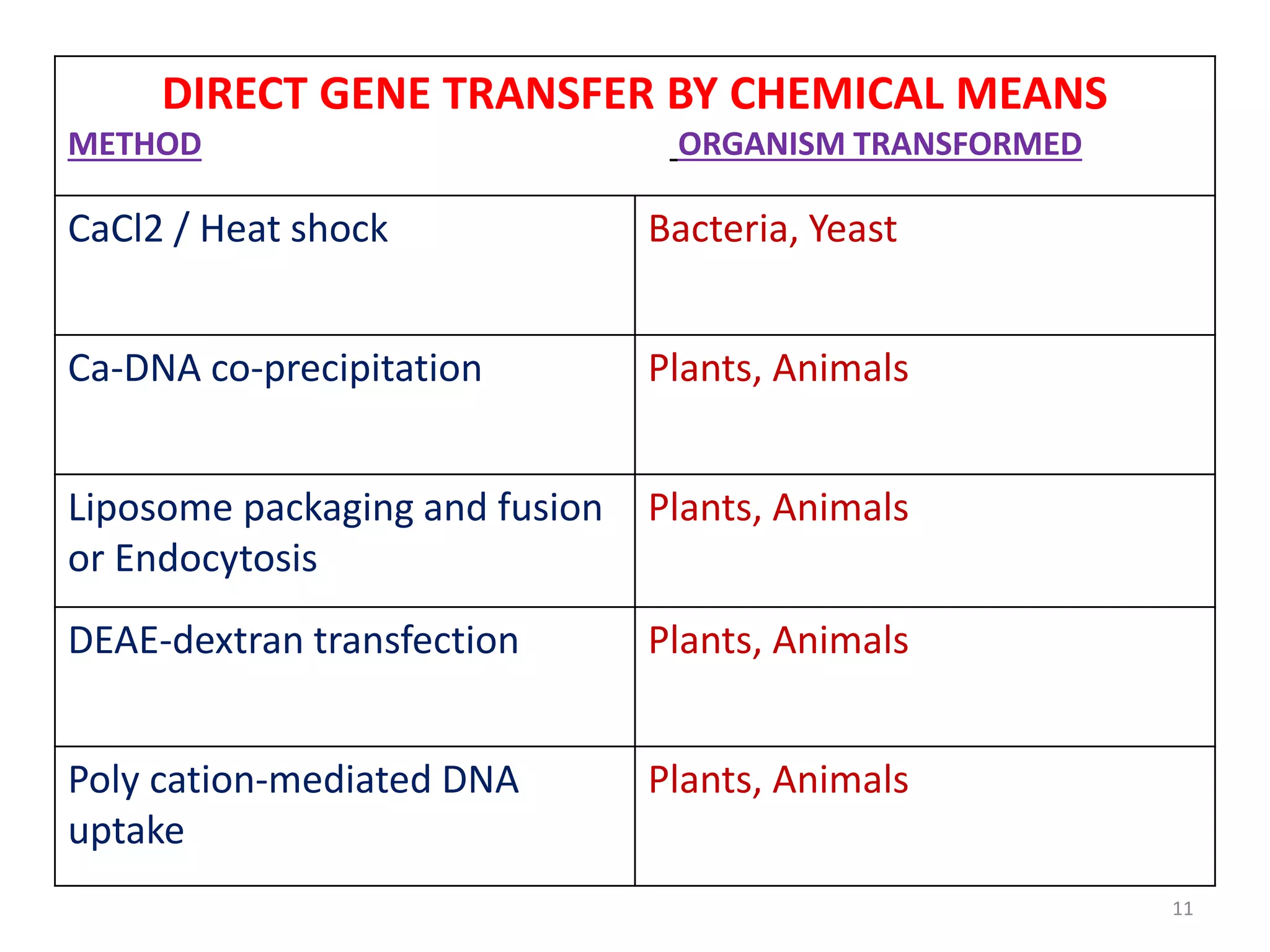
DIRECT GENE TRANSFER BY CHEMICAL MEANS
METHOD ORGANISM TRANSFORMED
CaCl2 / Heat shock Bacteria, Yeast
Ca-DNA co-precipitation Plants, Animals
Liposome packaging and fusion
or Endocytosis
Plants, Animals
DEAE-dextran transfection Plants, Animals
Poly cation-mediated DNA
uptake
Plants, Animals
11
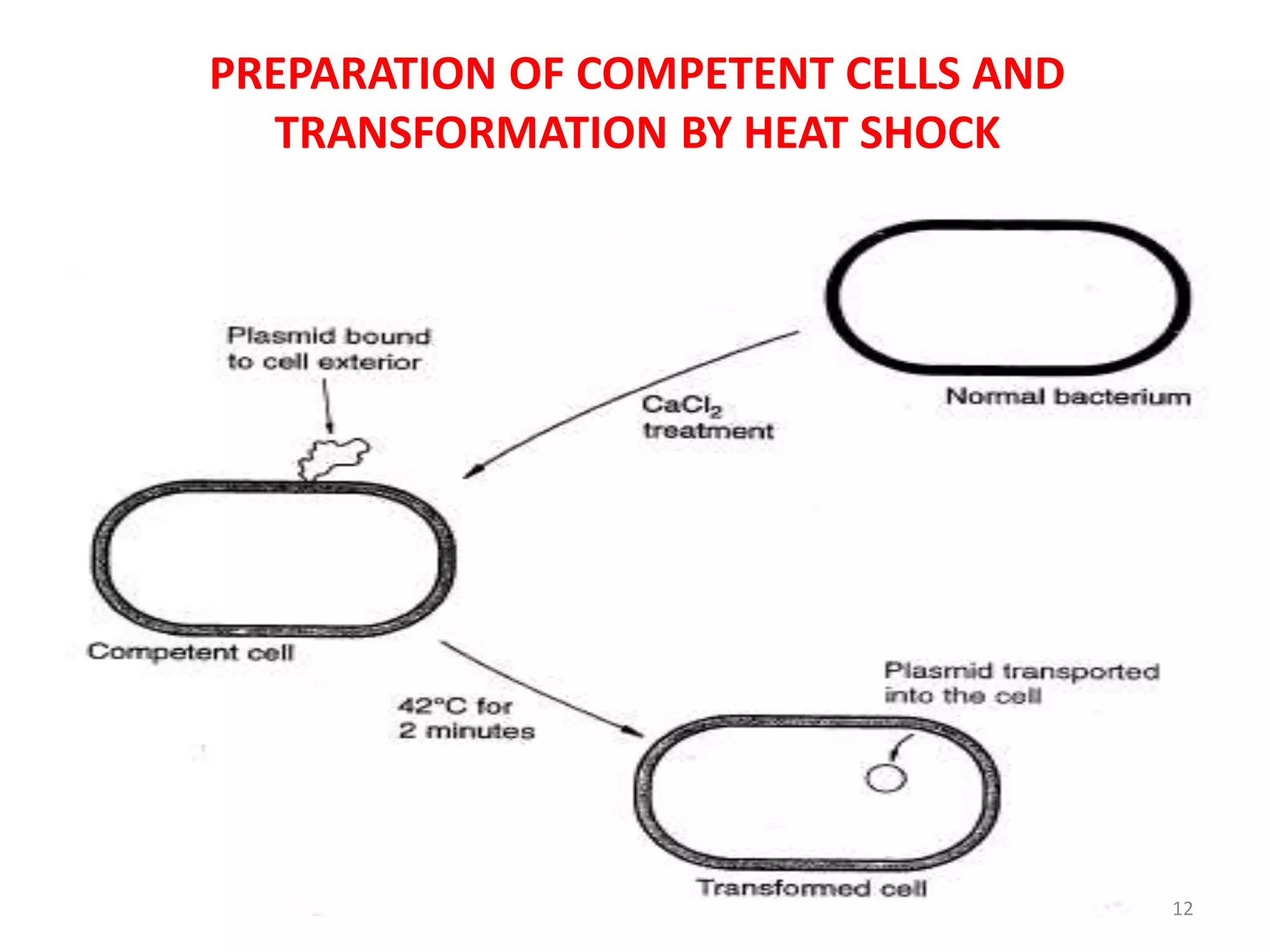
PREPARATION OF COMPETENT CELLS AND
TRANSFORMATION BY HEAT SHOCK
12
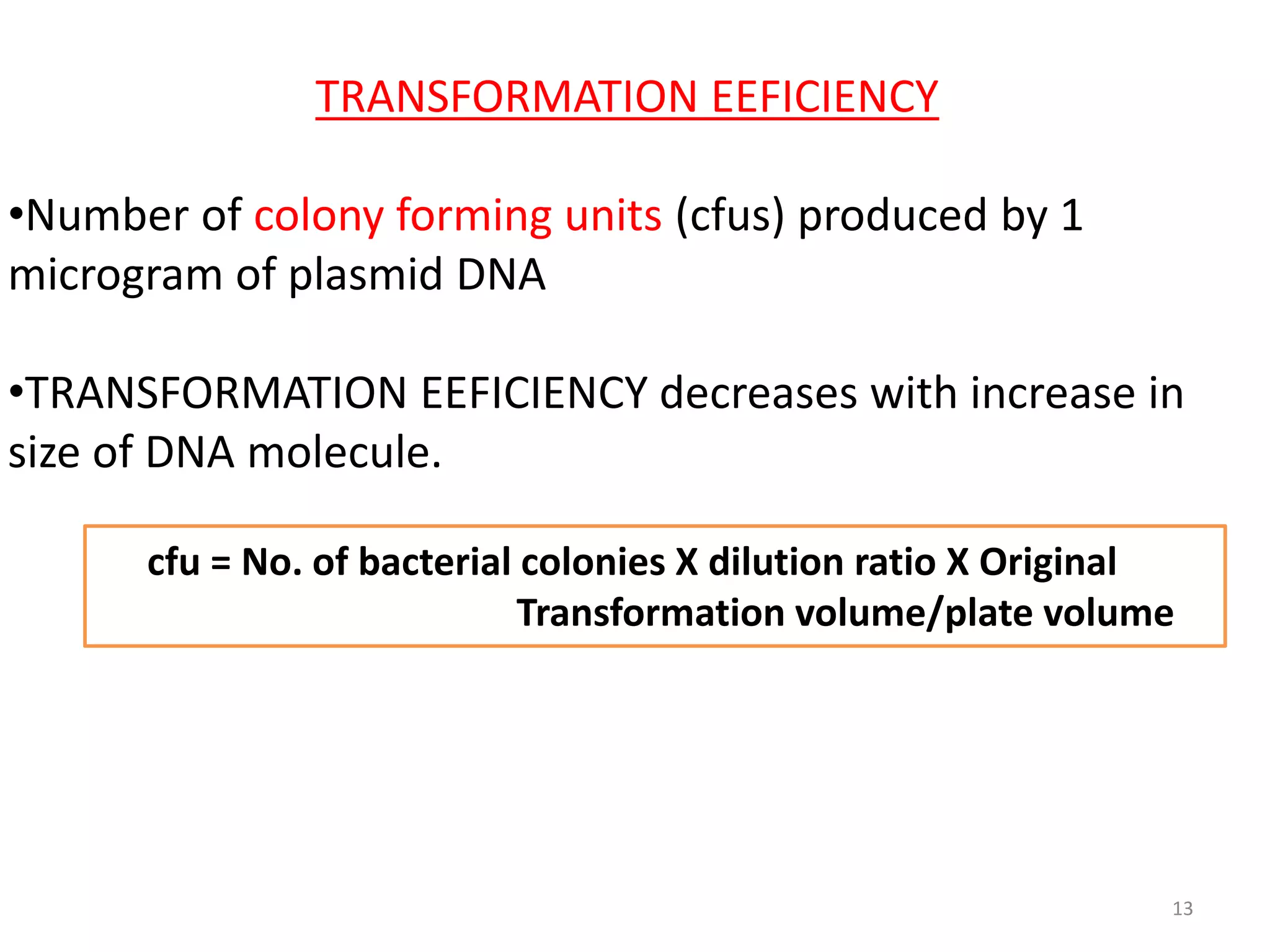
TRANSFORMATION EEFICIENCY
•Number of colony forming units (cfus) produced by 1
microgram of plasmid DNA
•TRANSFORMATION EEFICIENCY decreases with increase in
size of DNA molecule.
cfu = No. of bacterial colonies X dilution ratio X Original
Transformation volume/plate volume
13
FACTORS AFFECTING TRANSFORMATION EEFICIENCY
• GROWTH PERIOD
• TEMPERATURE OF COMPETENT CELLS DURING
PREPARATION, STORAGE AND TRANSFORMATION
• CONCENTRATION OF CaCl2
• CULTURE MEDIUM
14

Lectut btn-202-ppt-l25. introduction of dna into host cells

  • 1.
    INTRODUCTION OF DNA INTOHOST CELLS 1 Lecture- 25
  • 2.
    Introduction of biologicallyactive recombinant DNA into host cells is a very important step in genetic engineering.  TRANSFORMATION Introduction of DNA into a living cell  TRANSFECTION (Infection by Transformation) Introduction of viral DNA into a living cell 2
  • 3.
    METHODS FOR TRANSFORMATION/TRANSFECTION • BIOLOGICALMETHODS • DIRECT GENE TRANSFER by CHEMICAL AND BIOCHEMICAL MEANS • DIRECT GENE TRANSFER by PHYSICAL MEANS 3
  • 4.
    BIOLOGICAL METHODS METHOD ORGANISMTRANSFORMED In vitro packaging and phage infection Bacteria Agrobacterium tumefaciens-mediated transformation Plants Plant-virus mediated transformation Plants Transposon-mediated transformation Insects Baculovirus-mediated transformation Insects Viral transduction Animals YAC transgenesis Animals 4
  • 5.
    In vitro packagingand phage infection 5
  • 6.
  • 7.
    DIRECT GENE TRANSFERBY PHYSICAL MEANS METHOD ORGANISM TRANSFORMED Microprojectile bombardment Plants Electroporation Plants, Animals Bacteria Microinjection Plants, Animals Silicon carbide fibers- mediated transformation Plants Ultrasonication Plants UV laser microbeam irradiation Plants 7
  • 8.
    GENE GUN MEDIATEDTRANSFORMATION 8
  • 9.
  • 10.
  • 11.
    DIRECT GENE TRANSFERBY CHEMICAL MEANS METHOD ORGANISM TRANSFORMED CaCl2 / Heat shock Bacteria, Yeast Ca-DNA co-precipitation Plants, Animals Liposome packaging and fusion or Endocytosis Plants, Animals DEAE-dextran transfection Plants, Animals Poly cation-mediated DNA uptake Plants, Animals 11
  • 12.
    PREPARATION OF COMPETENTCELLS AND TRANSFORMATION BY HEAT SHOCK 12
  • 13.
    TRANSFORMATION EEFICIENCY •Number ofcolony forming units (cfus) produced by 1 microgram of plasmid DNA •TRANSFORMATION EEFICIENCY decreases with increase in size of DNA molecule. cfu = No. of bacterial colonies X dilution ratio X Original Transformation volume/plate volume 13
  • 14.
    FACTORS AFFECTING TRANSFORMATIONEEFICIENCY • GROWTH PERIOD • TEMPERATURE OF COMPETENT CELLS DURING PREPARATION, STORAGE AND TRANSFORMATION • CONCENTRATION OF CaCl2 • CULTURE MEDIUM 14